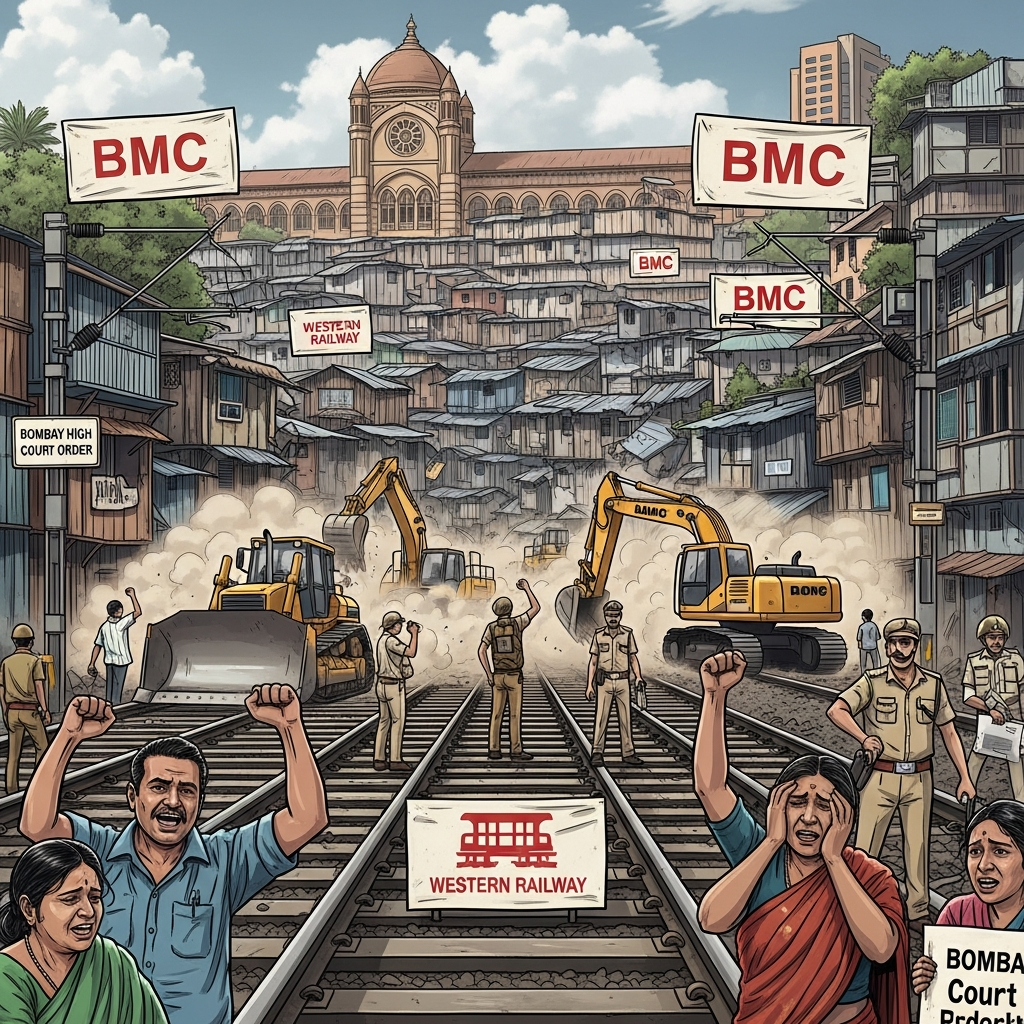
As bulldozers rolled into Garib Nagar, Bandra East, the clash between Mumbai’s relentless urban expansion and the fragile lives of its slum dwellers erupted into full view.


As bulldozers rolled into Garib Nagar, Bandra East, the clash between Mumbai’s relentless urban expansion and the fragile lives of its slum dwellers erupted into full view.
In a major crackdown on unauthorized structures, authorities launched a large-scale demolition drive in Garib Nagar, Bandra East, on May 19, 2026, following a directive from the Bombay High Court. The operation, spearheaded by Western Railway and supported by the BMC and police, targeted nearly 500 illegal homes situated near the railway station, aiming to clear vital land for railway expansion. The drive sparked significant protests from residents and highlighted ongoing tensions over urban redevelopment and rehabilitation in one of Mumbai’s most densely populated neighborhoods.
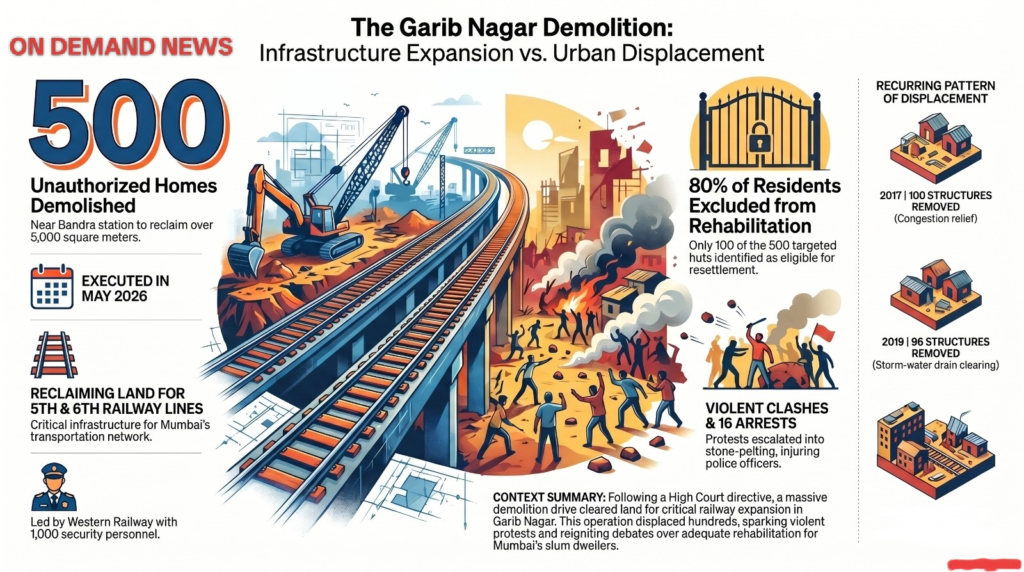
On May 19, 2026, a large-scale demolition drive began in Garib Nagar, Bandra East, following a Bombay High Court directive. The operation, led by Western Railway with support from the Brihanmumbai Municipal Corporation (BMC) and police forces, targeted approximately 500 unauthorized structures situated near the busy Bandra railway station. The primary goal was to reclaim essential land for the expansion of railway lines, a project deemed critical for Mumbai’s transportation infrastructure.
The demolition, conducted under heavy security with over a thousand personnel, was met with strong resistance from residents. Protests escalated into violent clashes, and stone-pelting incidents injured several police officers and led to the arrest of sixteen individuals. While a previous survey identified about 100 huts eligible for rehabilitation—those structures were spared—many residents claimed they were excluded from the list or not properly notified.
This drive is the latest in a series of similar actions in Bandra East, a neighborhood with a history of disputes over redevelopment, unauthorized constructions, and inadequate resettlement efforts. The events have reignited debates about urban planning, social justice, and the challenges of balancing infrastructure growth with the rights and welfare of marginalized communities in Mumbai.
- Timeline & Scope
- The demolition began on May 19, 2026, targeting approximately 500 unauthorized structures in Garib Nagar, adjacent to Bandra East railway station, following a Bombay High Court order.
- By May 22, 2026, about 85% of the work was completed, reclaiming roughly 5,000–5,200 square meters of land crucial for the expansion of the 5th and 6th railway lines.
- Authorities Involved
- Western Railway led the operation, with support from the Maharashtra Police, Railway Protection Force (RPF), and BMC officials.
- Security included around 1,000 personnel: 400 police officers and 600 railway staff.
- Violence & Legal Action
- On May 21, 2026, clashes erupted as residents—numbering between 100 and 150—protested the demolition, resorting to stone and cement block pelting. This led to injuries among at least 4–5 police personnel.
- 16 individuals were arrested and charged under sections of the Bharatiya Nyaya Sanhita, including rioting, unlawful assembly, and assaulting government officials. They were remanded to police custody until May 26, 2026.
- Rehabilitation Measures
- A 2021 survey conducted by Western Railway with MMRDA and NGOs identified around 100 huts eligible for rehabilitation; these were spared from demolition.
- However, many residents claimed they were excluded from the survey or received no formal communication about the eligibility process.
Historical Context: Recurring Demolition Drives in Bandra East
- Past Demolition Efforts
- In 2017, BMC demolished about 100 illegal hutments and parking sheds near Bandra Station East to ease congestion—but the demolition left residents homeless during monsoon.
- In 2019, BMC razed 96 hutments in Behrampada and Garib Nagar to clear encroachments over a storm-water drain, aiming to reduce flooding. Some families were offered alternative housing in Malad and Mahul.
- Earlier, in 2016, 48 hutments and 12 stalls along the Tansa pipeline were removed following a court directive to safeguard water infrastructure.
- Legal Warnings & Notices
- In 2016, after a fatal building collapse in Behrampada, the BMC alerted Western Railway and MMRDA about unsafe structures exceeding height limits (over 14 feet), urging action.
- As far back as 1988–89, slum communities like Indira Nagar in Bandra East fought repeated demolitions and eventually secured High Court stay orders, leading to partial regularization.
Summary: Key Takeaways
- Immediate Need & Safety: The recent demolition was undertaken for railway expansion and safety, under judicial authorization.
- Human Impact: The operation displaced numerous families, many of whom felt neglected by the rehabilitation process.
- Pattern of Recurrence: Demolitions in Bandra East are not new; they reflect long-standing conflicts between urban development, infrastructure safety, and vulnerable communities.
- Legal and Social Dynamics: Repeated court interventions, protests, and litigation highlight the complicated relationship between governance and grassroots resistance.
Summary: key takeaways
- Large-Scale Demolition: Nearly 500 unauthorized homes in Garib Nagar, Bandra East, were demolished starting May 19, 2026, as per a Bombay High Court directive.
- Purpose: The operation aimed to clear land for railway expansion, critical to Mumbai’s infrastructure plans.
- Authorities Involved: The drive was executed by Western Railway, with significant support from the BMC and police.
- Strong Resistance: The demolition was met with violent protests from residents, resulting in injuries and 16 arrests.
- Rehabilitation Issues: Although about 100 huts were identified for rehabilitation, many affected families claimed that the process excluded them or that they were not properly informed.
- Recurring Issue: This incident is part of a pattern of demolitions in Bandra East, reflecting ongoing tensions over unauthorized construction and urban redevelopment.
- Social Impact: The events have intensified debate around urban planning, infrastructure development, and the rights of vulnerable communities in Mumbai.
About the Author