

Introduction
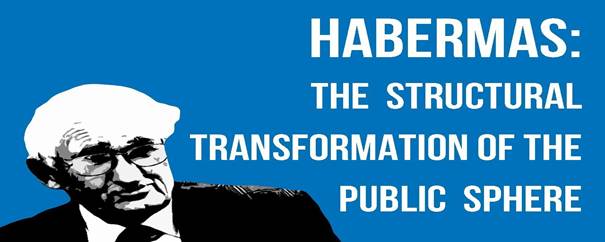
Jurgen Habermas, a renowned German philosopher and sociologist, introduced the concept of the public sphere, which has become a crucial framework for understanding the role of communication and discourse in democratic societies. Habermas’s theory highlights the importance of a vibrant public sphere for the functioning of democracy and the formation of public opinion. Let’s start with the idea of the public sphere and explore some recent examples that illustrate its significance in contemporary society.
Habermas defined the public sphere as a realm of social life where individuals come together as equals to discuss matters of common concern and engage in rational, inclusive deliberation. According to him, the public sphere serves as a counterbalance to state power and economic interests, providing a space for citizens to form opinions, debate ideas, and hold those in power accountable. Habermas emphasized that a healthy public sphere requires open access, free expression, and inclusive participation.
Prominent recent examples showcase the relevance of the public sphere in contemporary society. Social media platforms have emerged as virtual public spheres, enabling people from diverse backgrounds to engage in discussions and share their perspectives.
For example, movements like the Arab Spring and the Black Lives Matter movement have utilized social media to mobilize public opinion, raise awareness, and demand social and political change. These online platforms have facilitated the exchange of ideas and the formation of public discourse on a global scale.
Furthermore, the #MeToo movement serves as another compelling example of the public sphere in action. The movement originated on social media, with individuals sharing their experiences of sexual harassment and assault. Through this collective sharing and engagement, the movement gained momentum, sparking a widespread public conversation about gender inequality, power dynamics, and accountability. The public sphere provided a space for survivors to share their stories, connect with others, and challenge the prevailing social norms.
However, it is important to acknowledge the challenges that the public sphere faces in the digital age. The proliferation of misinformation, echo chambers, and online harassment poses significant threats to the quality and inclusivity of public discourse. Algorithms on social media platforms can prioritize sensationalism and polarization, hindering the formation of reasoned and constructive debates. These challenges indicate that people require critical engagement and media literacy to navigate the complexities of the digital public sphere.
In conclusion, Jurgen Habermas’s idea of the public sphere gives us useful information about how democracy works and how communication affects public opinion. Recent examples such as social media movements and online activism demonstrate the effectiveness of the public sphere in mobilizing collective action, amplifying marginalized voices, and challenging existing power structures.
However, it is essential to address the challenges posed by the digital age to ensure an inclusive and informed public sphere that fosters democratic deliberation and facilitates the exchange of diverse ideas. By actively participating in the public sphere and promoting open and inclusive dialogue, individuals can contribute to the vitality of democracy and the pursuit of social progress.
About the Author