India

INTERPERSONAL RELATIONSHIP AND SOCIAL SKILLS

  1. Understanding the dynamics of healthy relationships
  2. Developing empathy and compassion
  3. Effective teamwork and basics of leadership
  4. Digital communication etiquette
  5. Conflict resolution and negotiation skills
  6. Cultural intelligence and diversity

INTERPERSONAL RELATIONSHIP AND SOCIAL SKILLS

Introduction

Interpersonal relationship and social skills are the foundation for effective communication, cooperation, and harmony in society. These skills include empathy, teamwork, conflict resolution, leadership, and cultural awareness, shaping how individuals connect and collaborate. In India, such abilities are crucial in diverse settings, from families to workplaces and community groups.

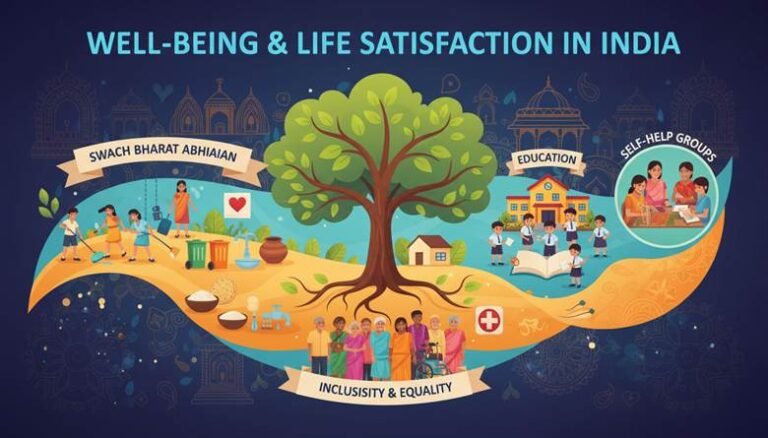
For instance, the Mumbai Dabbawalas demonstrate exceptional teamwork and interpersonal coordination, delivering over 200,000 lunchboxes daily with minimal errors. Another example is the Self-Help Group (SHG) movement in Maharashtra, where rural women unite to support each other financially and emotionally, fostering mutual respect and empowerment. During the COVID-19 pandemic, neighborhood volunteers in cities like Pune and Mumbai provided food, medicine, and emotional support to vulnerable populations, highlighting the power of compassion and social responsibility. These real-life examples underline how strong interpersonal relationships and social skills drive collective success and resilience in India’s dynamic society.

I. UNDERSTANDING THE DYNAMICS OF HEALTHY RELATIONSHIPS

Healthy relationships are fundamental to personal happiness, mental well-being, and the smooth functioning of society. These relationships—whether between family, friends, colleagues, or community members—are built on mutual respect, trust, communication, and emotional support. Understanding their dynamics involves recognizing the elements that make them thrive, the challenges they face, and the real-life contexts in which they develop.
Key Elements of Healthy Relationships

  1. Trust and Honesty: Trust forms the backbone of any strong relationship, enabling open communication and emotional safety. When individuals are honest with each other, it creates a secure environment where vulnerabilities can be shared without fear of judgment.
  2. Respect and Equality: Respect means valuing the other person’s opinions, boundaries, and feelings. Equality ensures that no one dominates or feels inferior in the relationship, leading to balanced power dynamics.
  3. Effective Communication: Healthy relationships require open, clear, and empathetic communication. This includes both verbal and non-verbal cues, active listening, and the expression of thoughts and emotions.
  4. Support and Empathy: Providing emotional and practical support during difficult times strengthens bonds. Empathy—the ability to understand and share another person’s feelings—deepens connections and fosters compassion.
  5. Conflict Resolution: Disagreements are natural, but how they are managed is crucial. Healthy relationships use constructive conflict resolution techniques, such as dialogue, compromise, and forgiveness.

Case Studies

1. Self-Help Groups (SHGs) in Maharashtra

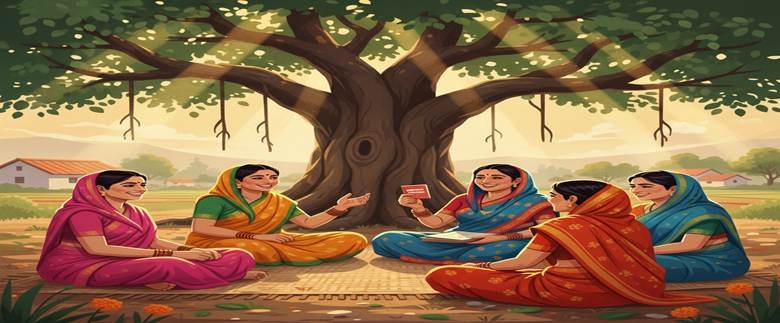
Self-Help Groups, especially among women in rural Maharashtra, highlight the dynamics of healthy relationships within communities. SHGs are small, voluntary associations of women from similar socio-economic backgrounds who come together for mutual financial and emotional support. These groups promote trust, honesty, and equality, as each member has an equal say in group decisions.

Case Example:

In the district of Solapur, the ‘Mahila Bachat Gat’ (women’s savings group) became a source of empowerment for local women. Through regular meetings, members developed open communication, learned to manage conflicts, and provided mutual support during crises such as family illness or crop failure. The collective strength of the group enabled them to start small businesses, improve family finances, and advocate against domestic violence in their villages. The success of the group was rooted in healthy interpersonal dynamics—trust, respect, empathy, and shared responsibility.

2. College Peer Groups

In Indian universities, peer relationships play a significant role in shaping student experiences. Healthy peer relationships foster academic collaboration, personal growth, and emotional well-being.

Conclusion

Healthy relationships are dynamic and require continuous effort from all parties involved. Trust, respect, communication, empathy, and effective conflict resolution are the pillars that sustain these connections. Indian case studies—from rural self-help groups to urban professional networks and families—demonstrate that nurturing these elements leads to stronger, more resilient individuals and communities. Understanding and practicing the dynamics of healthy relationships is essential for personal fulfillment and the overall progress of society.

II. DEVELOPING EMPATHY AND COMPASSION

Introduction

Empathy and compassion are cornerstones of strong social relationships and a harmonious society. While empathy involves understanding and sharing another person’s feelings, compassion inspires positive action to alleviate suffering. In India, the significance of these qualities is evident in numerous community initiatives, educational programs, and social movements.
The Importance of Empathy and Compassion

  • Strengthens Social Bonds: Empathy helps build trust and deeper connections, making communities more resilient.
  • Promotes Social Justice: Compassion empowers individuals to act against injustice and support vulnerable groups.
  • Boosts Mental Health: Both qualities contribute to collective well-being and reduce feelings of isolation.

Ways to Develop Empathy and Compassion

  1. Active Listening: Paying full attention to others’ perspectives without judgment.
  2. Volunteering: Engaging in community service to understand diverse life experiences.
  3. Education and Dialogue: Classroom activities, role-playing, and discussions that encourage students to consider how others feel.
  4. Mindfulness: Practices such as meditation can enhance self-awareness and sensitivity towards others.

Indian Case Studies (Outside Maharashtra)

1. Robin Hood Army (Delhi and Nationwide)

Background:
Founded in Delhi, the Robin Hood Army is a volunteer-based organization that works to eliminate hunger by collecting surplus food from restaurants and distributing it to the needy.

Case Example:

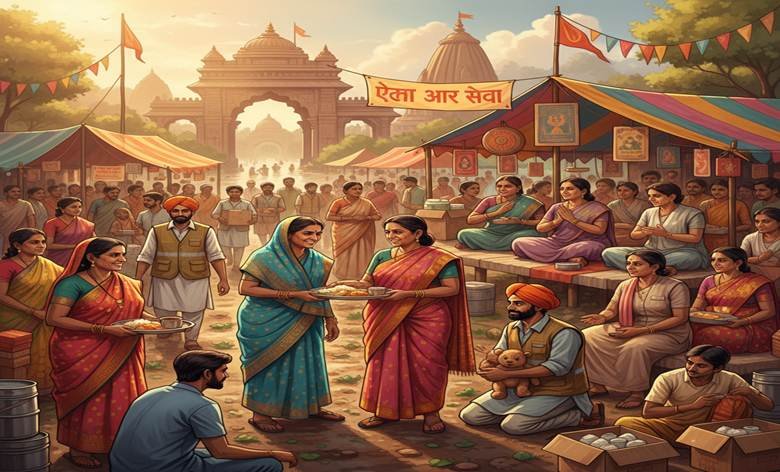
During the COVID-19 lockdowns, hundreds of young volunteers in Delhi and other cities risked their safety to deliver food to migrant workers, daily wage earners, and homeless individuals. They listened to people’s stories of hardship, responded to their needs, and treated everyone with dignity. Their actions exemplified compassion in practice—going beyond sympathy to direct involvement and support.

2. Kerala’s Flood Relief Efforts (2018 and 2021)

Background:
Kerala faced devastating floods in 2018 and subsequent years, resulting in massive displacement and loss.

Case Example:

The state witnessed an extraordinary outpouring of empathy and compassion from ordinary citizens. Volunteers, including students and local residents, set up relief camps, distributed food, and provided medical assistance. People opened their homes to strangers, and local fishermen risked their lives to rescue those stranded, demonstrating collective empathy and selflessness. The government’s “Compassion Kerala” campaign coordinated donations and support from across the nation.

Conclusion

Empathy and compassion are not just personal virtues but social assets that drive community resilience and positive change. From the Robin Hood Army’s service to the flood relief efforts in Kerala, and from Akshaya Patra’s mid-day meals to Goonj’s innovative social work in North India, these case studies reveal the transformative impact of caring for others. By cultivating empathy and compassion through education, volunteering, and awareness, India continues to build a more inclusive and humane society.

III. EFFECTIVE TEAMWORK AND BASICS OF LEADERSHIP

Introduction

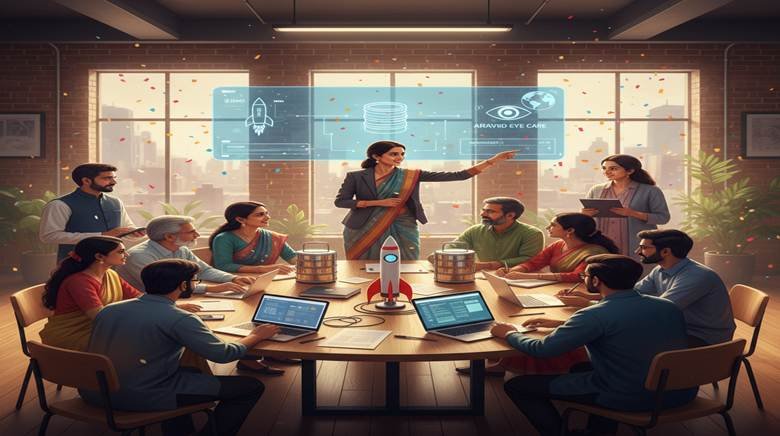
Teamwork and leadership are two interconnected skills essential for success in any collaborative environment, from classrooms to corporations and community projects. While teamwork focuses on how individuals work together to achieve shared goals, leadership ensures there is direction, motivation, and coordination within the group. Both are especially important in India’s multicultural and diverse settings.
Key Characteristics of Effective Teamwork

1. Clear Goals and Purpose

  • Every successful team starts with a shared vision or objective. Knowing what the group aims to achieve provides motivation and helps align individual efforts.
  • Example: In the ISRO Chandrayaan-3 mission, all scientists and engineers worked with the unified goal of achieving a successful lunar landing.

2. Defined Roles and Responsibilities

  • Clear allocation of tasks prevents confusion and overlapping duties. When members understand their specific roles, they can focus on contributing their strengths.
  • Example: In Mumbai’s dabbawala system, each member knows his place in the delivery chain, from collecting lunchboxes to sorting and final delivery.

3. Open and Respectful Communication

  • Effective teams prioritize honest, transparent, and two-way communication. Sharing ideas, feedback, and concerns openly helps identify issues early and fosters trust.
  • Example: In Aravind Eye Care System, regular meetings and open discussions allow doctors, nurses, and staff to coordinate seamlessly and address challenges proactively.

4. Trust and Mutual Respect

  • Trust is the foundation of teamwork. Team members rely on one another to fulfill commitments, and mutual respect allows for healthy disagreements and diverse opinions.
  • Example: Self-Help Groups (SHGs) across India thrive because members trust each other with financial contributions and personal stories, fostering deep bonds.

5. Shared Responsibility and Accountability

  • In effective teams, success or failure is shared. Team members hold themselves and each other accountable for results.
  • Example: In large group projects at Indian universities, coordinated effort is crucial; when everyone feels responsible, outcomes improve and blame games reduce.

6. Constructive Conflict Resolution

  • Disagreements are natural, but effective teams view conflict as an opportunity for growth. Addressing issues constructively leads to better decisions and innovation.
  • Example: In corporate settings, such as Infosys, structured feedback sessions and mediation help resolve conflicts among diverse teams.

7. Flexibility and Adaptability

  • Teams must adapt to changing circumstances, challenges, or feedback. Flexibility in roles and strategy ensures continued progress.
  • Example: During the COVID-19 pandemic, many Indian companies and NGOs quickly restructured teams to focus on relief and remote operations, demonstrating adaptability.

8. Recognition and Celebration of Success

  • Acknowledging achievements and milestones boosts morale and motivates team members to keep contributing.
  • Example: Indian schools and organizations often celebrate team wins in sports, cultural events, or projects, reinforcing the value of collaboration.

Basics of Leadership in Teamwork

1. Setting a Vision: Leaders define the team’s direction and inspire members to work towards it.

2. Motivating and Empowering Others: Good leaders encourage participation, recognize contributions, and provide learning opportunities.

3. Decision-Making: Timely and fair decisions are essential to keep the team moving forward.

4. Delegation: Effective leaders match tasks to members’ strengths, trusting them with responsibility.

5. Leading by Example: Ethical conduct and hard work by leaders set a standard for the team.

Conclusion

Effective teamwork is built on clear goals, defined roles, open communication, trust, shared responsibility, constructive conflict resolution, flexibility, and recognition. Leadership complements these elements by setting vision, motivating, making decisions, delegating, and modeling positive behavior. Indian examples—from ISRO’s scientific feats to SHGs’ grassroots empowerment—prove that when teamwork and leadership are aligned, extraordinary results are possible, even with limited resources or in challenging circumstances.

IV. DIGITAL COMMUNICATION ETIQUETTE

1. Introduction

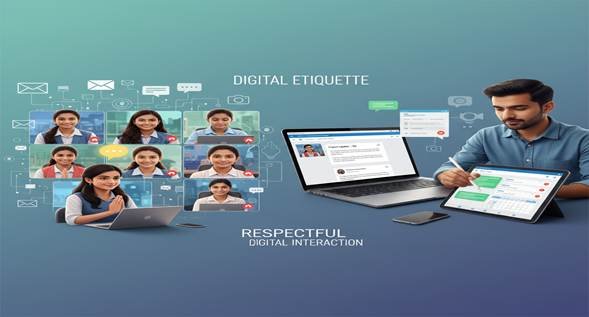
Digital communication etiquette, also known as netiquette, refers to the rules and guidelines for effective, respectful, and professional behavior when communicating via electronic means. With the rapid growth of social media, emails, instant messaging, and video conferencing, digital etiquette has become essential in both personal and professional domains. Proper digital etiquette promotes clarity, prevents misunderstandings, and supports healthy relationships in the virtual world.
2. Key Principles of Digital Communication Etiquette

  • Clarity and Brevity: Messages should be concise and to the point. Avoid jargon and ambiguous language.
  • Respect and Tone: Use polite language, even when disagreeing. Avoid sarcasm or negative comments, especially in written form where tone can be misinterpreted.
  • Appropriate Language and Emojis: Formal communications (emails, work chats) require professional language. Emojis should be used sparingly, if at all, in professional settings.
  • Timeliness: Respond to messages within a reasonable timeframe.
  • Privacy and Confidentiality: Do not share private information or screenshots without consent.
  • Proper Use of Platforms: Use appropriate platforms for different types of communication (e.g., WhatsApp for informal chats, email for official correspondence).
  • Subject Lines and Greetings: Always use relevant subject lines in emails and begin with a courteous greeting.
  • Avoiding Spamming: Do not send unnecessary messages or “reply all” unless essential.

3. Indian Context and Challenges

India’s digital landscape is incredibly diverse, with millions of new internet users each year crossing linguistic, generational, and cultural barriers. Issues like language diversity, digital literacy gaps, and differing social norms often affect digital communication.

Example: During the COVID-19 pandemic, millions of students and teachers shifted to online learning platforms like Zoom, Google Meet, and Microsoft Teams. The sudden transition highlighted the importance of digital etiquette — such as muting microphones when not speaking, using chat features responsibly, and maintaining a professional appearance on video.

4. Case Studies

A. The Rise of Online Education in India

Context:
In 2020, as schools and colleges closed due to the pandemic, classes shifted online. Many teachers and students lacked experience with digital platforms, resulting in etiquette challenges.

Issues:

  • Students would frequently interrupt classes by leaving microphones unmuted.
  • Some students used inappropriate language in chat boxes or group messages.
  • Teachers sometimes sent late-night messages, blurring work-life boundaries.

Solutions Implemented:

  • Schools issued digital etiquette guidelines: mute mics, use “raise hand” features, dress appropriately, and avoid multitasking.
  • Workshops for parents and students on digital citizenship.
  • Teachers learned to schedule messages and respect students’ personal time.

Impact:
These changes fostered more respectful, effective virtual learning environments and reduced misunderstandings.

B. Workplace Digital Communication: Infosys’ Internal Policy

Context:
Infosys, a leading Indian IT company, employs people from diverse backgrounds and locations, making digital communication essential.

Practices:

  • Mandatory training modules on digital communication etiquette for new hires.
  • Email templates and guidelines on tone, addressing cultural differences, and dealing with remote teams.
  • Policies against sharing sensitive information on unofficial platforms.

Result:
Improved professionalism, reduced email misunderstandings, and enhanced collaboration across global teams.

V. CONFLICT RESOLUTION AND NEGOTIATION SKILLS

1. Introduction

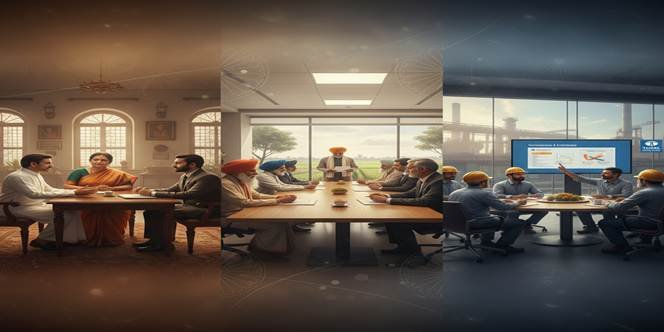
Conflict resolution is the process of resolving a dispute or disagreement between two or more parties. Negotiation skills are the abilities needed to reach a mutually acceptable solution. Both are vital for healthy relationships, efficient teamwork, and a functional society.
2. Core Elements of Conflict Resolution

  • Active Listening: Giving full attention to each party’s concerns.
  • Empathy: Understanding the emotions and perspectives of all involved.
  • Open Communication: Encouraging honest, respectful expression of grievances.
  • Finding Common Ground: Identifying shared interests or goals.
  • Problem-Solving: Brainstorming solutions that address key concerns.
  • Compromise: Being willing to adjust one’s position for overall benefit.
  • Mediation: Involving a neutral third party if needed.

3. Negotiation Skills

  • Preparation: Know your goals, priorities, and the other party’s likely position.
  • Clear Articulation: Express your needs and reasons logically.
  • Listening: Understand the other party’s perspective to find win-win solutions.
  • Patience and Calm: Stay composed, especially when discussions become heated.
  • Flexibility: Be open to alternative solutions and creative compromises.

4. Indian Context and Challenges

India’s social structure, with its linguistic, religious, and cultural diversity, often results in complex conflicts—ranging from interpersonal and community disputes to workplace disagreements and national-level negotiations. Traditional values of respect, hierarchy, and consensus often influence conflict resolution styles.

5. Case Studies

A. Lok Adalats: People’s Courts

Context:
India faces a massive backlog of legal cases. Lok Adalats (People’s Courts) provide an alternative dispute resolution platform, particularly for minor civil and criminal cases.

Process:

  • Disputes are settled through negotiation and compromise, under the guidance of a neutral facilitator.
  • Both parties are encouraged to resolve their issues amicably, without lengthy litigation.

Example:
In 2023, the National Legal Services Authority reported that Lok Adalats settled over 1 crore (10 million) cases, ranging from property disputes to family matters. The system’s success lies in its emphasis on dialogue, empathy, and win-win solutions.

B. Farmers’ Protests and Government Negotiations (2020-2021)

Context:
Introduction of new farm laws led to widespread protests, especially in Punjab, Haryana, and Uttar Pradesh.

Conflict Resolution Process:

  • Multiple rounds of talks between farmer leaders and government officials.
  • Farmers articulated concerns about minimum support prices and contract farming.
  • The government made offers for amendments, while farmers insisted on repealing the laws.

Outcome:

  • The process, although contentious, highlighted the importance of negotiation skills, active listening, and patience.
  • Ultimately, the government agreed to repeal the laws after prolonged dialogue and peaceful protest, demonstrating the effectiveness of negotiation and non-violent resolution.

C. Workplace Mediation: Tata Steel’s Joint Consultative Committees

Context:
At Tata Steel, India’s oldest and largest private steel manufacturer, worker-management conflicts are resolved through Joint Consultative Committees (JCCs).

Process:

  • Regular meetings between management and worker representatives.
  • Open discussion of grievances and proposals.
  • Emphasis on partnership, mutual respect, and shared decision-making.

Outcome:

  • The JCC model has helped maintain industrial peace and high productivity, even during challenging periods such as economic recessions.

VI. CULTURAL INTELLIGENCE AND DIVERSITY

1. Introduction

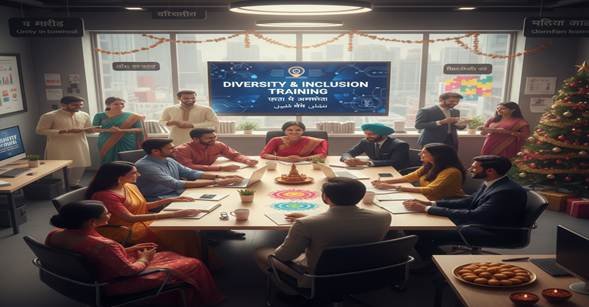
Cultural intelligence (CQ) is the ability to understand, respect, and work effectively with people from different cultural backgrounds. In India—a country known for its “unity in diversity”—cultural intelligence is essential for social harmony, business success, and personal growth.
2. Elements of Cultural Intelligence

  • Cognitive CQ: Knowledge of cultural differences, values, and practices.
  • Motivational CQ: Interest and confidence in interacting across cultures.
  • Behavioral CQ: Ability to adapt one’s behavior and communication style to suit different cultural contexts.
  • Metacognitive CQ: Awareness and regulation of one’s own cultural assumptions and responses.

3. Importance of Diversity

  • Innovation: Diverse teams bring varied perspectives and creative solutions.
  • Resilience: Exposure to different ideas and experiences builds adaptability.
  • Social Cohesion: Respect for diversity reduces prejudice and conflict.

4. Indian Context

India’s diversity is reflected in its 22 official languages, hundreds of dialects, and a mosaic of religions, castes, and traditions. Navigating this diversity requires cultural intelligence in both daily life and organizational settings.

5. Case Studies

A. Infosys and Tata Consultancy Services (TCS): Corporate Diversity Initiatives

Context:
Both companies employ people from across India and the globe. Their workforce represents a spectrum of languages, religions, and backgrounds.

Practices:

  • Diversity training and sensitization workshops.
  • Celebration of multiple festivals (e.g., Diwali, Eid, Christmas, Onam) at offices.
  • Employee Resource Groups for women, LGBTQ+ staff, and various cultural communities.

Result:
These initiatives foster a welcoming environment, reduce workplace bias, and enhance collaboration.

B. Unity in Diversity: The Indian Armed Forces

Context:
The Indian Army, Navy, and Air Force recruit from all regions, castes, and communities.

Practices:

  • Training programs emphasize national identity over regional or religious differences.
  • Soldiers celebrate each other’s festivals, learn basic phrases in multiple languages, and develop deep camaraderie.

Outcome:
The forces’ unity is a testament to the strength that comes from embracing diversity and developing cultural intelligence.

C. Intercultural Student Exchanges: AFS India

Context:
AFS India runs programs for high school and college students from different states and countries to live and learn together.

Experience:

  • Students from Kerala, Gujarat, Assam, and other regions spend time in host families across India or abroad.
  • They learn new languages, adapt to different cuisines, and participate in local festivals.

Impact:
Participants report increased empathy, open-mindedness, and the ability to thrive in diverse settings—hallmarks of high cultural intelligence.

D. Workplace Language Policies: Wipro

Context:
Wipro, a top IT company, has a multilingual workforce.

Practices:

  • Official communications are primarily in English, but the company encourages employees to use regional languages in informal settings.
  • Language learning programs help team members understand each other better.

Outcome:
These steps increase inclusivity, reduce miscommunication, and support retention of talent from different regions.

6. Challenges

Despite positive examples, India still faces hurdles such as regionalism, linguistic divides, and unconscious bias. Overcoming these requires continuous effort in education, policy-making, and leadership.

7. Strategies to Enhance Cultural Intelligence

  • Education: Include cultural studies and sensitivity training in academic curricula.
  • Exposure: Encourage travel, exchange programs, and interaction with diverse groups.
  • Role Models: Highlight leaders and organizations that exemplify cultural intelligence.
  • Dialogue: Facilitate open conversations about prejudice, inclusion, and equity.

Conclusion

Digital communication etiquette, conflict resolution and negotiation skills, and cultural intelligence are indispensable in today’s interconnected, diverse society. Indian case studies—from virtual classrooms and Lok Adalats to corporate diversity policies—demonstrate the practical value of these skills. Cultivating them fosters respectful, effective relationships, empowers innovation, and strengthens the fabric of Indian society.
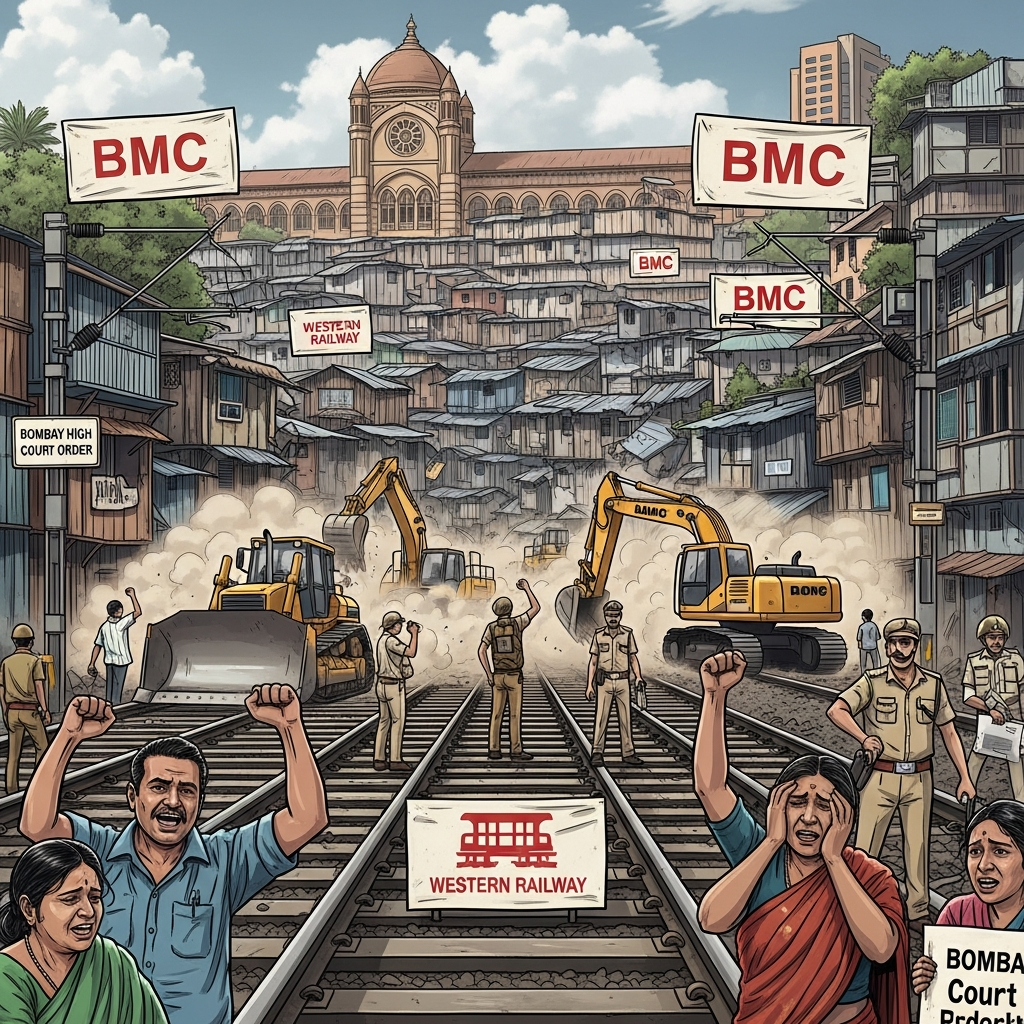
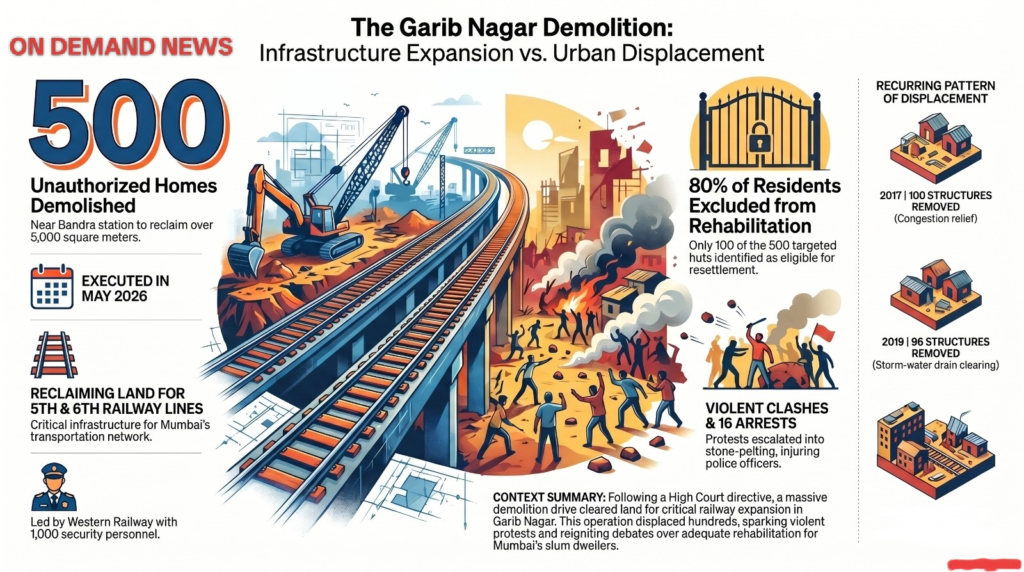
As bulldozers rolled into Garib Nagar, Bandra East, the clash between Mumbai’s relentless urban expansion and the fragile lives of its slum dwellers erupted into full view.

In a major crackdown on unauthorized structures, authorities launched a large-scale demolition drive in Garib Nagar, Bandra East, on May 19, 2026, following a directive from the Bombay High Court. The operation, spearheaded by Western Railway and supported by the BMC and police, targeted nearly 500 illegal homes situated near the railway station, aiming to clear vital land for railway expansion. The drive sparked significant protests from residents and highlighted ongoing tensions over urban redevelopment and rehabilitation in one of Mumbai’s most densely populated neighborhoods.

On May 19, 2026, a large-scale demolition drive began in Garib Nagar, Bandra East, following a Bombay High Court directive. The operation, led by Western Railway with support from the Brihanmumbai Municipal Corporation (BMC) and police forces, targeted approximately 500 unauthorized structures situated near the busy Bandra railway station. The primary goal was to reclaim essential land for the expansion of railway lines, a project deemed critical for Mumbai’s transportation infrastructure.

The demolition, conducted under heavy security with over a thousand personnel, was met with strong resistance from residents. Protests escalated into violent clashes, and stone-pelting incidents injured several police officers and led to the arrest of sixteen individuals. While a previous survey identified about 100 huts eligible for rehabilitation—those structures were spared—many residents claimed they were excluded from the list or not properly notified.

This drive is the latest in a series of similar actions in Bandra East, a neighborhood with a history of disputes over redevelopment, unauthorized constructions, and inadequate resettlement efforts. The events have reignited debates about urban planning, social justice, and the challenges of balancing infrastructure growth with the rights and welfare of marginalized communities in Mumbai.

  • Timeline & Scope
    • The demolition began on May 19, 2026, targeting approximately 500 unauthorized structures in Garib Nagar, adjacent to Bandra East railway station, following a Bombay High Court order.
    • By May 22, 2026, about 85% of the work was completed, reclaiming roughly 5,000–5,200 square meters of land crucial for the expansion of the 5th and 6th railway lines.
  • Authorities Involved
    • Western Railway led the operation, with support from the Maharashtra Police, Railway Protection Force (RPF), and BMC officials.
    • Security included around 1,000 personnel400 police officers and 600 railway staff.
  • Violence & Legal Action
    • On May 21, 2026, clashes erupted as residents—numbering between 100 and 150—protested the demolition, resorting to stone and cement block pelting. This led to injuries among at least 4–5 police personnel.
    • 16 individuals were arrested and charged under sections of the Bharatiya Nyaya Sanhita, including rioting, unlawful assembly, and assaulting government officials. They were remanded to police custody until May 26, 2026.
  • Rehabilitation Measures
    • 2021 survey conducted by Western Railway with MMRDA and NGOs identified around 100 huts eligible for rehabilitation; these were spared from demolition.
    • However, many residents claimed they were excluded from the survey or received no formal communication about the eligibility process.

Historical Context: Recurring Demolition Drives in Bandra East

  • Past Demolition Efforts
    • In 2017, BMC demolished about 100 illegal hutments and parking sheds near Bandra Station East to ease congestion—but the demolition left residents homeless during monsoon.
    • In 2019, BMC razed 96 hutments in Behrampada and Garib Nagar to clear encroachments over a storm-water drain, aiming to reduce flooding. Some families were offered alternative housing in Malad and Mahul.
    • Earlier, in 2016, 48 hutments and 12 stalls along the Tansa pipeline were removed following a court directive to safeguard water infrastructure.
  • Legal Warnings & Notices
    • In 2016, after a fatal building collapse in Behrampada, the BMC alerted Western Railway and MMRDA about unsafe structures exceeding height limits (over 14 feet), urging action.
    • As far back as 1988–89, slum communities like Indira Nagar in Bandra East fought repeated demolitions and eventually secured High Court stay orders, leading to partial regularization.

Summary: Key Takeaways

  • Immediate Need & Safety: The recent demolition was undertaken for railway expansion and safety, under judicial authorization.
  • Human Impact: The operation displaced numerous families, many of whom felt neglected by the rehabilitation process.
  • Pattern of Recurrence: Demolitions in Bandra East are not new; they reflect long-standing conflicts between urban development, infrastructure safety, and vulnerable communities.
  • Legal and Social Dynamics: Repeated court interventions, protests, and litigation highlight the complicated relationship between governance and grassroots resistance.

Summary: key takeaways

  • Large-Scale Demolition: Nearly 500 unauthorized homes in Garib Nagar, Bandra East, were demolished starting May 19, 2026, as per a Bombay High Court directive.
  • Purpose: The operation aimed to clear land for railway expansion, critical to Mumbai’s infrastructure plans.
  • Authorities Involved: The drive was executed by Western Railway, with significant support from the BMC and police.
  • Strong Resistance: The demolition was met with violent protests from residents, resulting in injuries and 16 arrests.
  • Rehabilitation Issues: Although about 100 huts were identified for rehabilitation, many affected families claimed that the process excluded them or that they were not properly informed.
  • Recurring Issue: This incident is part of a pattern of demolitions in Bandra East, reflecting ongoing tensions over unauthorized construction and urban redevelopment.
  • Social Impact: The events have intensified debate around urban planninginfrastructure development, and the rights of vulnerable communities in Mumbai.

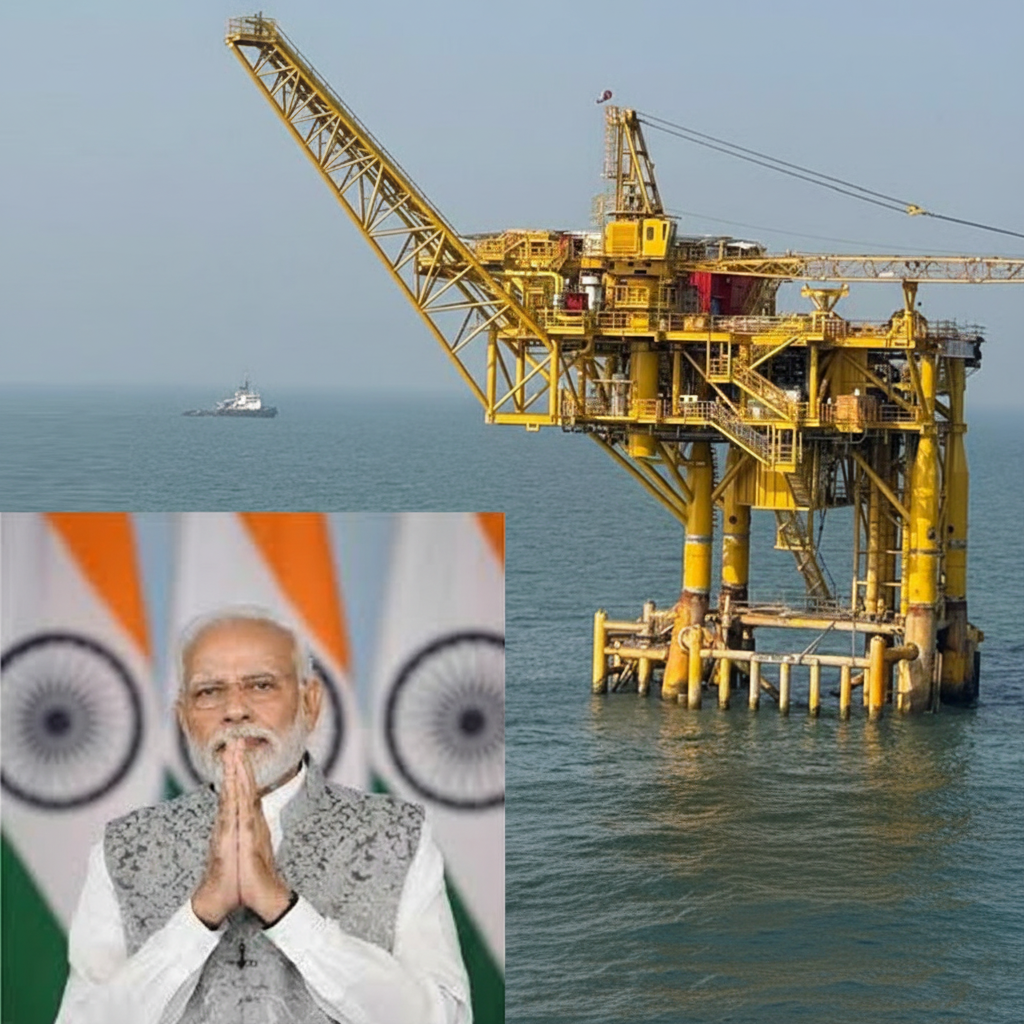
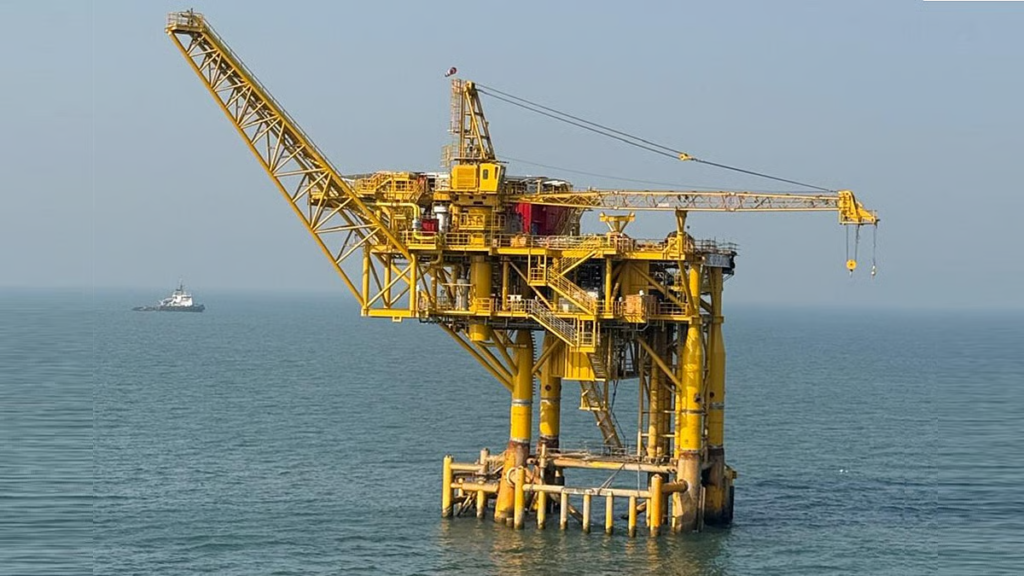
State-owned Oil and Natural Gas Corporation (ONGC) has officially begun natural gas production from its Daman Upside Development Project (DUDP) in the Arabian Sea, about 180 km northwest of Mumbai. The $1 billion project began flowing gas from Platform B-12-24P on March 29, 2026, aimed at boosting domestic supply and reducing import dependence.

India’s natural gas production in the Arabian Sea, particularly near Daman by the Oil and Natural Gas Corporation (ONGC), is receiving considerable attention due to its potential to enhance the country’s energy security and reduce dependence on imports. The recent discoveries and increased output from this region underscore India’s commitment to harnessing its hydrocarbon resources effectively.

The geological formations rich in hydrocarbons have long recognized the Arabian Sea, but the Daman area has emerged as a crucial production zone. The latest estimates suggest that ONGC has successfully drilled multiple wells in this offshore region, leading to a substantial increase in gas output. This boost is not only pivotal for domestic consumption but also positions India strategically within the global energy market.

In a series of exploratory drilling initiatives, ONGC has identified promising reserves of natural gas, with operations expanding to encompass advanced extraction techniques. Cutting-edge technology and a focus on safety and environmental sustainability supplement these efforts. The organization aims to ensure that production activities do not adversely impact marine biodiversity while maximizing output.

Experts suggest that the potential reserves in the Arabian Sea could make a significant contribution to India’s overall natural gas targets as set by national energy policies. The government’s push for cleaner energy sources aligns with the emphasis on natural gas as a transition fuel, facilitating a shift from more polluting forms of energy. This development is particularly relevant given India’s commitments under international climate agreements to reduce emissions and enhance energy efficiency.

The economic implications are also paramount; local economies in regions surrounding Daman are expected to benefit from job creation in the oil and gas sector, alongside ancillary industries. As ONGC ramps up production capabilities, we can anticipate a multiplier effect on local businesses and improvements in infrastructure. Furthermore, greater gas availability may help stabilize domestic gas prices, which have experienced volatility recently.

Extensive research into the geological characteristics of the seabed and surrounding areas supports ONGC’s operations in Daman. The company has partnered with various stakeholders, including academic institutions and environmental organizations, to ensure a comprehensive approach to resource extraction. These collaborations aim to mitigate ecological risks while exploring innovative solutions for gas production.

Looking ahead, the Indian government remains optimistic about tapping further potential reserves in the Arabian Sea. Future investments in infrastructure, such as pipelines and processing facilities, are crucial for sustaining long-term production and ensuring that natural gas can be efficiently transported to consumer markets across the nation.

As the world moves towards a more diversified energy mix, India’s progress in natural gas production supports national development goals and enhances its influence in regional energy dialogues. Maintaining a robust offshore presence will be vital in navigating energy security in an increasingly interconnected globe.

In conclusion, as ONGC forges ahead with its initiatives in Daman, the implications for India’s gas production landscape are profound. Continued investment, innovation, and commitment to sustainable practices will be key as the nation aims to establish itself as a major player in the global energy arena, with the Arabian Sea at the forefront of this evolving narrative.

Key Points of Project

Background:

  • India has significant natural gas reserves in the offshore regions of the Arabian Sea.
  • The Krishna-Godavari (KG) Basin, Mumbai High, and the KG-D6 Block are home to the most notable offshore gas fields.

Key Milestones:

  • Mumbai High Field: Discovered in 1974, it became one of India’s largest producers of crude oil and associated natural gas.
  • KG-D6 Block (Krishna-Godavari Basin): Operated by Reliance Industries, commercial gas production started in April 2009. This deepwater field marked an important milestone in utilizing India’s offshore resources.
  • Recent Developments: In 2023, Reliance Industries and BP (British Petroleum) started production from the MJ field (also known as MJ-1) in the KG-D6 block, further boosting domestic gas output.

Significance:

  • Gas production from the Arabian Sea helps India reduce dependence on imported energy.
  • Supports energy security and the transition to cleaner fuels.

Current Status:

  • India continues to invest in deepwater exploration and development in the Arabian Sea.
  • Major players include ONGC (Oil and Natural Gas Corporation), Reliance Industries, and BP.

Example News (2023):
Reliance Industries and BP commenced production from the MJ field in the Krishna-Godavari Basin (Arabian Sea), expected to meet nearly 15% of India’s domestic gas demand.

By Souvik Das

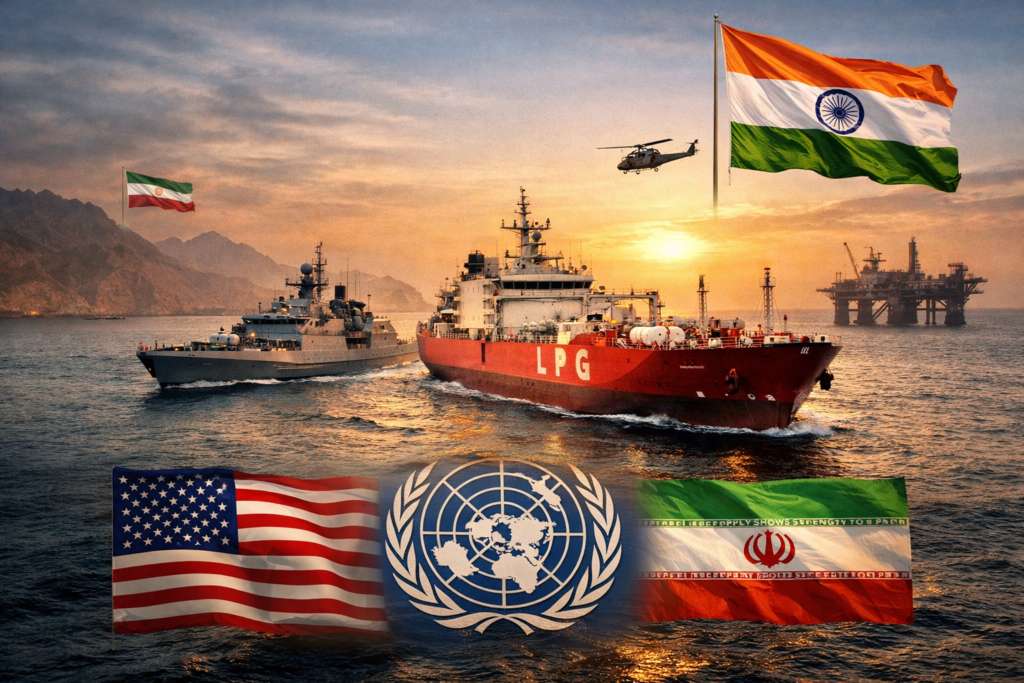
Let’s get one thing straight — what we are witnessing is not an LPG emergency. It’s a stress test. And India is not failing it.Every time there’s geopolitical turbulence, a section of political voices rushes to amplify fear. The current narrative around an alleged LPG crisis is one such example. Yes, supply chains are under pressure. Yes, global tensions are real. But calling it an “emergency” is not just exaggerated — it’s misleading.

India isn’t reacting. India is executing.

At the heart of this issue lies the strategically critical Strait of Hormuz — a chokepoint through which a significant portion of the world’s energy supply passes. With rising tensions involving Iran and Western powers, concerns over LPG shipments are understandable. But here’s what the panic narrative conveniently ignores: India is already ahead of the curve.

The government is in active diplomatic engagement with Iran to ensure safe passage for LPG tankers. This isn’t speculation — it’s policy in motion. Some vessels, including the naval-backed Shivalik, have already successfully crossed the Hormuz corridor. That’s not disruption. That’s controlled navigation through risk.

This is where India’s foreign policy muscle becomes visible.

Unlike reactionary states, India has maintained a balanced and pragmatic approach in international relations. It engages with all sides without becoming a pawn to any. Whether it is maintaining ties with Iran, managing strategic relations with the United States, or navigating tensions in West Asia — India is not choosing sides blindly. It is choosing stability.

And stability is power.

Let’s zoom out. This is not just India’s problem. The ripple effects of prolonged geopolitical conflicts are being felt globally. Energy markets are tightening. Freight costs are rising. Insurance premiums for maritime routes are increasing. Countries across continents are recalibrating their supply chains.

This is what a prolonged conflict looks like.

The ongoing standoff — shaped in part by the assertive posture of Donald Trump and the uncompromising stance of Iran’s newly elevated supreme leadership — is not de-escalating anytime soon. Both sides are signaling strength, not retreat. And when egos dominate diplomacy, the world pays the price.

But here’s the difference: strong nations prepare for impact. Weak narratives amplify fear.

India has diversified its energy basket, built strategic reserves, and strengthened naval capabilities to secure maritime routes. It is not dependent on a single corridor or a single partner. That’s not luck — that’s long-term planning.

Meanwhile, institutions that are supposed to maintain global peace are failing to deliver. The United Nations, once seen as the guardian of international stability, increasingly appears ineffective in preventing or resolving such prolonged conflicts. Statements are issued, meetings are held — but outcomes remain absent.

In a world where global watchdogs are losing bite, national strength matters more than ever.

So, let’s cut through the noise.

There is pressure — yes.
There is uncertainty — absolutely.
But there is no collapse.

India is not scrambling. It is negotiating, securing, and moving forward. The successful passage of LPG shipments through volatile waters is proof of capability, not crisis.

This moment doesn’t expose India’s weakness. It highlights its preparedness. Because in geopolitics, the real story isn’t who shouts the loudest — it’s who delivers under pressure. And right now, India is doing exactly that.

Possible Misconceptions

The ₹2000 figure often refers to ongoing government subsidies for low-value UPI person-to-merchant (P2M) transactions under ₹2000, aimed at small merchants with zero MDR and incentives like 0.15% per transaction. Budget 2026 allocated ₹2000 crore for these subsidies, but they do not cap user limits.

No new UPI rule imposes a ₹2000 transaction limit as of February 2026. Standard UPI limits remain at ₹1 lakh per day and per transaction for most users, set by NPCI and individual banks.

Possible Misconceptions

The ₹2000 figure often refers to ongoing government subsidies for low-value UPI person-to-merchant (P2M) transactions under ₹2000, aimed at small merchants with zero MDR and incentives like 0.15% per transaction. Budget 2026 allocated ₹2000 crore for these subsidies, but they do not cap user limits.

Merchants do not pay Merchant Discount Rate (MDR) on standard UPI person-to-merchant (P2M) transactions from bank accounts, keeping them free. However, they may incur platform fees from payment gateways and interchange fees for specific cases like PPI wallets or credit cards.

Standard Charges

UPI P2M payments from bank accounts have 0% MDR due to government policy since 2020. Small merchants get a 0.15% incentive (not a charge) for transactions up to ₹2000, funded by the government.

When Merchants Pay

  • PPI/Wallets: Interchange fees up to 1.1% on transactions over ₹2000 (e.g., 0.5% fuel, 0.9% supermarkets); small merchants often exempt.
  • RuPay Credit Card UPI: 1.1-2% MDR plus platform fees.
  • Payment Gateways: Separate processing fees (e.g., 2% cap) for security and settlements, regardless of MDR.
Payment TypeMDR/InterchangeApplies To
Bank Account UPI0%All merchants 
PPI > ₹20000.5-1.1%Medium/large merchants 
Credit Card UPI1.1-2%All 

Key Updates (2026)

Government extended subsidies for low-value UPI via ₹1500-2000 crore schemes, ensuring zero MDR for small merchants. Merchants must comply with KYC/QR rules but face no new broad fees on basic UPI.

Differences between small medium and large merchant MDR categories

No new universal MDR categories differentiate small, medium, and large merchants for standard UPI P2M bank transactions in 2026—they remain 0% across all sizes due to government policy.

MDR Applies Only to Specific UPI Types

Categories matter mainly for PPI (wallets) and credit card UPI, where small merchants often get exemptions or lower interchange fees on low-value transactions.

  • Small merchants (typically annual turnover < ₹20 lakh) qualify for zero MDR or subsidies on transactions ≤ ₹2000 via government schemes.
  • Medium/large merchants (higher turnover) pay 0.5-1.1% interchange on PPI > ₹2000 or 1.1-2% on RuPay credit UPI.

Category Differences

Merchant SizeTurnover ThresholdUPI Bank MDRPPI/Credit MDRCaps/Benefits
Small< ₹20 lakh/year 0%Often 0% or subsidized ≤ ₹2000 Incentives up to 0.15% payout 
Medium/Large> ₹20 lakh/year 0%0.5-2% on high-value/PPI No subsidies; platform fees apply 

Legacy RBI card payment caps (pre-UPI focus) set 0.4% MDR for small vs. 0.9% for others, but UPI overrides this with zero MDR policy. Small merchants benefit most from 2026 subsidies (₹2000 crore allocation).

Can small merchants pass MDR charges to customers

No, small merchants cannot legally pass on MDR charges directly to customers for UPI or card payments in India.

RBI Prohibition

The Reserve Bank of India (RBI) mandates that merchants absorb MDR costs without surcharging customers, especially for small businesses (turnover ≤ ₹20 lakh/year). Violations allow customers to file complaints via RBI’s portal under “MDR levied by merchant.”

Exceptions and Practices

  • Convenience Fees: Online platforms/gateways may add small fees (e.g., ₹10 + GST on gateway charges), but not direct MDR on the full amount.
  • Indirect Passing: Some merchants hike MRPs or request separate UPI payments for fees, but this risks RBI action.
  • UPI Specific: Zero MDR policy for bank UPI P2M reinforces no customer charges; applies uniformly.
ScenarioAllowed?Example
Direct MDR SurchargeNo “Pay 2% extra for UPI”
Convenience Fee (Gateway)Limited ₹10 on ₹1000 purchase
Price IncreaseYes, but indirectHigher MRP for all

Small merchants benefit from subsidies (e.g., 0.15% incentive on ≤ ₹2000 UPI), reducing their burden further.

Recent news highlights appointments of Brihanmumbai Municipal Corporation (BMC) members to key statutory committees following the mayor’s induction.

Key Appointments

On February 16, 2026, Mumbai Mayor Ritu Tawde announced members for major committees including the Standing Committee (26 members, BJP securing 10), Improvements Committee, Education Committee, and BEST Committee, totaling 90 corporators.

Notable appointees include BJP’s Ganesh Khankar (group leader), Prabhakar Shinde, Rakhee Jadhav; Shiv Sena (UBT)’s Shraddha Jadhav; and Congress’s Ashraf Azmi.

Election Timeline

Nominations occurred ahead of a February 16 house meeting, with chairpersons for Standing and Education Committees to be elected on February 20, and Improvements and BEST on February 23.

The Brihanmumbai Municipal Corporation (BMC) election occurred in early 2026 after a delay since 2022, covering 227 wards with voting on January 15 and results on January 16. BJP-led Maha Yuti secured a majority, with BJP winning 89 seats, leading to Ritu Tawde’s unopposed election as Mayor around February 10.

Key dates from the State Election Commission schedule:

EventDate
Notification issuedDecember 15, 2025 
Nominations filedDec 23–30, 2025 
Scrutiny of nominationsDec 31, 2025 
Withdrawal deadlineJan 2, 2026 
Final candidate list & symbolsJan 3, 2026 
Polling day (7:30am–5:30pm)Jan 15, 2026 
Vote counting & resultsJan 16, 2026 

Post-Election Committee Process

After corporator elections and mayor induction, statutory committees were reconstituted. Member nominations were announced February 16 ahead of a house meeting, proportional to party strength (BJP dominant with 10/26 Standing Committee seats).

Chairperson elections followed: Standing and Education Committees on February 20; Improvements and BEST Committees on February 23.

Candidate selection for committees drew from elected corporators across parties, including BJP’s Prabhakar Shinde (potential chair), Ganesh Khankar; Shiv Sena (UBT)’s Shraddha Jadhav; Congress’s Ashraf Azmi.

Recent news highlights appointments of Brihanmumbai Municipal Corporation (BMC) members to key statutory committees following the mayor’s induction.

Key Appointments

On February 16, 2026, Mumbai Mayor Ritu Tawde announced members for major committees including the Standing Committee (26 members, BJP securing 10), Improvements Committee, Education Committee, and BEST Committee, totaling 90 corporators.

Notable appointees include BJP’s Ganesh Khankar (group leader), Prabhakar Shinde, Rakhee Jadhav; Shiv Sena (UBT)’s Shraddha Jadhav; and Congress’s Ashraf Azmi.

Election Timeline

Nominations occurred ahead of a February 16 house meeting, with chairpersons for Standing and Education Committees to be elected on February 20, and Improvements and BEST on February 23.

BJP holds the largest share based on party strength.

Committee Breakdown

The Standing Committee (26 members, BJP with 10), Improvements Committee (26), Education Committee (26, including 4 non-corporators), and BEST Committee (16-17 members) saw 90 corporators appointed total on February 16, 2026.

BJP dominated nominations, including Prabhakar Shinde (potential Standing Committee chair candidate).

Prominent Members

Key figures include BJP’s Ganesh Khankar (group leader), Rakhee Jadhav, Prabhakar Shinde; Shiv Sena (UBT)’s Shraddha Jadhav and Kishori Pednekar (opposition leader); Congress’s Ashraf Azmi.

Relatives of leaders like Makarand Narvekar also secured spots.

Upcoming Elections

Chairperson elections for Standing and Education Committees are set for February 20, 2026; Improvements and BEST on February 23.

BMC Election Timeline (2026)

The Brihanmumbai Municipal Corporation (BMC) election occurred in early 2026 after a delay since 2022, covering 227 wards with voting on January 15 and results on January 16. BJP-led Maha Yuti secured a majority, with BJP winning 89 seats, leading to Ritu Tawde’s unopposed election as Mayor around February 10.

Key dates from the State Election Commission schedule:

EventDate
Notification issuedDecember 15, 2025 
Nominations filedDec 23–30, 2025 
Scrutiny of nominationsDec 31, 2025 
Withdrawal deadlineJan 2, 2026 
Final candidate list & symbolsJan 3, 2026 
Polling day (7:30am–5:30pm)Jan 15, 2026 
Vote counting & resultsJan 16, 2026 

Post-Election Committee Process

After corporator elections and mayor induction, statutory committees were reconstituted. Member nominations were announced February 16 ahead of a house meeting, proportional to party strength (BJP dominant with 10/26 Standing Committee seats).

Chairperson elections followed: Standing and Education Committees on February 20; Improvements and BEST Committees on February 23.

Candidate selection for committees drew from elected corporators across parties, including BJP’s Prabhakar Shinde (potential chair), Ganesh Khankar; Shiv Sena (UBT)’s Shraddha Jadhav; Congress’s Ashraf Azmi.

What Locals Need to Know About the List of Platforms That Will Be Shifting

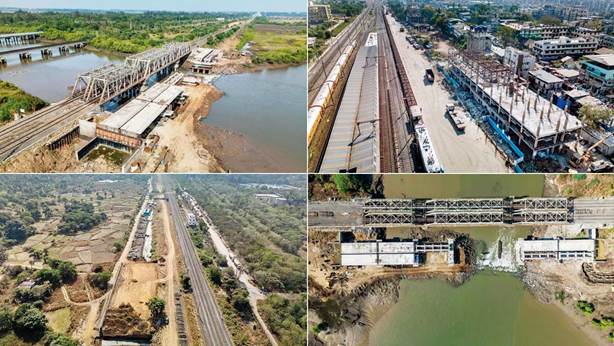
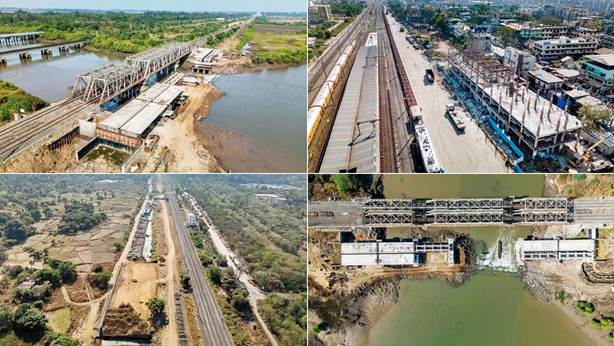
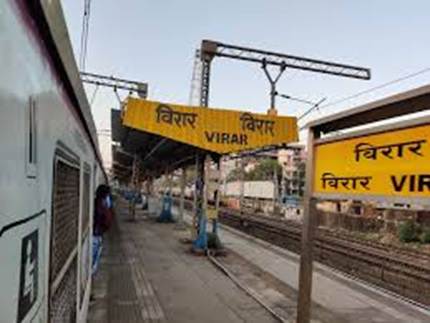
Virar station on the Western Railway line in Mumbai is undergoing a massive reconstruction to become a contemporary transportation hub, similar to the recent upgrades at Borivali station. The ₹3,578 crore Virar-Dahanu Road quadrupling project under MUTP-III aims to reduce congestion and increase passenger flow.

On the Western Railway in Mumbai, one of the railway infrastructure projects that has been progressing for the longest amount of time has now reached a significant stage. It has been confirmed by the Commissioner of Railway Safety (CRS) that the sixth railway line that connects Kandivali and Borivali has been finished and put into operation. By obtaining this license, Western Railway is able to move closer to introducing more local train services on the Churchgate-Borivali and Churchgate-Virar routes, which are both extremely busy. On one of the city’s most congested routes, officials from the railway industry have stated that this new development will assist in alleviating congestion and improving timeliness.

Borivali to Virar. Current stations, including Dahisar, Bhayandar, Naigaon, and Virar, will relocate the positions of their slow line platforms to make room for the new lines in this 26-kilometer segment. The platforms of Dahisar will travel to the north, while those of Bhayander will move to the west, and Virar will move a little bit to the south.

Two new lines will be constructed on the western side of the existing major lines over the full distance from Borivali to Virar. The construction comprises three primary bridges, 16 secondary bridges, one road underpass, and two significant bridges, specifically Bridge No. 73 and 75 spanning the Vasai Creek (Bhayandar Khadi). Construction of the foundations for Bridge 73 has commenced, and an ancient bridge in proximity to Bhayandar is undergoing dismantling.

Areas such as Dahisar to Mira Road have experienced considerable advancement in the clearing of forest land and earthworks owing to prompt approvals. Segments such as Borivali to Dahisar, Mira Road to Bhayandar, and Nalasopara to Virar possess existing minimizing the necessity for additional land acquisition and costly excavation. New stabling lines will be constructed between Naigaon and Vasai to offset repurposed lines in other areas.

Work depending on location

  1. Panju Island: Due to the absence of direct road access to Panju Island, special preparations are being made to carry construction machinery and materials to the island. These arrangements include the use of a dedicated ferry.
  2. Borivali Station: No major renovations are planned for Borivali Station. For the duration of the project, the two new lines will remain in the western portion of the existing corridor. The project will begin at Platforms No. 3 and 5 at Borivali. Since the majority of the property between Borivali and Dahisar is railway land with traction sub-stations, quarters, and stabling (train parking) lines, there has not been a lot of land acquisition done between the two areas. The new lines will travel in the direction of Dahisar over the Sudhir Phadke flyover, which is located right in front of the Borivali station.
  3. Dahisar Station: At Dahisar station, the two new lines will travel in the western direction, close to Platform No. 1 that is already in place. The two new slow line platforms will be consolidated and shifted a little bit to the north because there is not enough space at the station where they are currently located. From the Metro 2A bridge all the way up to the Mira Road station, the construction work has progressed to a more advanced stage. is due to the fact that the forest land that is necessary for the project has already been obtained, and work has begun on the ground. Additionally, three stabling lines that are being relocated from Borivali will be installed along this section of road that connects Dahisar and Mira Road.
  4. Mira Road Station: Existing Platform No. 1 will be replaced by new platforms that will be located to the west of Mira Road.
  5. Bhayandar Station: The platform that is now utilized for ending and originating trains at Bhayandar will be relocated to the western side of the station. Existing Platform No. 1 will be left in its current configuration, and Platform No. 2, which is now being utilized for terminating trains, will be transformed into the new slow platform for Churchgate-bound trains. The subsequent Virar fast platform will be Platform No. 3, which holds the distinction of being the terminal platform. At some point in the future, the slow Platform No. 4 will be transformed into the Churchgate fast platform.
  6. Naigaon station: New platforms are going to be introduced in the western region, according to Naigaon. Between Naigaon and Vasai, there will also be twenty stabling lines that are going to be constructed.
  7. Vasai Station: Major renovations are going to be carried out at Vasai. Following the relocation of the existing structures, 1 that is now in place will be moved to the west by about 8 meters. That it serves as a terminal platform will continue to be its primary function. The new platforms will be constructed at the north end of the west side of the present Platform No. Platform No. 2-3, which is already in existence, will be utilized for the fast line corridor.
  8. Nallasopara Station: A new residential platform located to the west of the existing Platform No. 1 is known as Nallasopara. An island platform will be created out of the currently existent Platform No. 1.
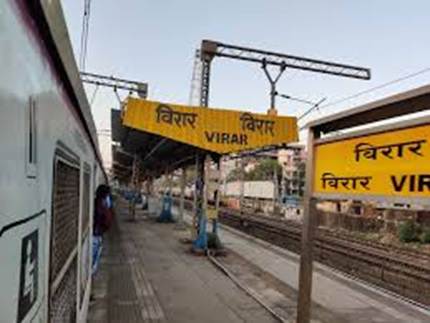
  9. Virar Station: Two more platforms are going to be constructed at the south end of the station, which will result in the station’s expansion even further.

Here are the essential details about the project:

  1. The station will have interconnected platforms with a new, bigger, and updated station deck to improve passenger flow.
  2. A proposed elevated autorickshaw deck, similar to the SATIS (Station Area Traffic Improvement Scheme) project, will segregate commuter and vehicular traffic while allowing cars to pass through.
  3. A new “Home Platform 5A” (5-6 meters wide) is being built on the northwest side, while current platforms 3A and 4A are being expanded to accommodate 15-car suburban trains.
  4. Platform 3A will be expanded to 10 meters and equipped with a double-discharge facility to accommodate high commuter volumes.
  5. Upgrades for 15-car locals on the Dahanu corridor are planned to be completed by early 2026 (March 2026 target).
  6. Due to construction, some Virar services have been curtailed, with certain Dadar-Virar trains ending at Vasai Road.
  7. The project, which is about 47% complete as of February 2026, intends to minimize the terrible overcrowding and disruption that passengers face during peak hours, particularly by separating suburban and long-distance.

स्थानांतरित होने वाले प्लेटफार्मों की सूची के बारे में स्थानीय लोगों को क्या जानने की आवश्यकता है

मुंबई में पश्चिमी रेलवे लाइन पर विरार स्टेशन एक समकालीन परिवहन केंद्र बनने के लिए बड़े पैमाने पर पुनर्निर्माण के दौर से गुजर रहा है, जैसा कि बोरीवली स्टेशन पर हाल ही में उन्नयन किया गया है। एम. यू. टी. पी.-III के तहत 3,578 करोड़ रुपये की विरार-दहानु सड़क चौगुनी परियोजना का उद्देश्य भीड़ को कम करना और यात्रियों के प्रवाह को बढ़ाना है।

Image Source credit: Mid Day

मुंबई में पश्चिमी रेलवे पर, सबसे लंबे समय से चल रही रेलवे अवसंरचना परियोजनाओं में से एक अब एक महत्वपूर्ण चरण में पहुंच गई है। रेलवे सुरक्षा आयुक्त (सीआरएस) ने पुष्टि की है कि कांदिवली और बोरीवली को जोड़ने वाली छठी रेलवे लाइन पूरी हो चुकी है और इसे चालू कर दिया गया है। इस लाइसेंस को प्राप्त करके, पश्चिमी रेलवे चर्चगेट-बोरीवली और चर्चगेट-विरार मार्गों पर अधिक स्थानीय ट्रेन सेवाओं को शुरू करने के करीब जाने में सक्षम है, जो दोनों बेहद व्यस्त हैं। शहर के सबसे भीड़भाड़ वाले मार्गों में से एक पर, रेलवे उद्योग के अधिकारियों ने कहा है कि यह नया विकास भीड़ को कम करने और समयबद्धता में सुधार करने में मदद करेगा।

अब जब बोरीवली 5वीं और 6वीं लाइनें समाप्त हो गई हैं, तो रेलमार्गों ने जिगसॉ पहेली के अगले हिस्से को खत्म करने पर अपना ध्यान केंद्रित किया है, जो बोरीवली से विरार तक फैली रेलवे विस्तार परियोजना है। दहिसर, भायंदर, नायगांव और विरार सहित कई वर्तमान स्टेशन, इस 26 किलोमीटर के खंड में नई लाइनों के लिए जगह बनाने के लिए अपने धीमी लाइन प्लेटफार्मों की स्थिति को स्थानांतरित करेंगे। दहिसर के चबूतरे उत्तर की ओर बढ़ेंगे, जबकि भायंदर के चबूतरे पश्चिम की ओर बढ़ेंगे, और विरार थोड़ा दक्षिण की ओर बढ़ेंगे।

बोरीवली से विरार तक की पूरी दूरी पर मौजूदा प्रमुख लाइनों के पश्चिमी हिस्से में दो नई लाइनों का निर्माण किया जाएगा। निर्माण में तीन प्राथमिक पुल, 16 द्वितीयक पुल, एक सड़क अंडरपास और दो महत्वपूर्ण पुल, विशेष रूप से पुल नं. 73 और 75 वसई खाड़ी (भायंदर खादी) में फैले हुए हैं। पुल नं के लिए नींव का निर्माण। 73 शुरू हो गया है, और भायंदर के निकट एक प्राचीन पुल को तोड़ने का काम चल रहा है।

दहिसर से मीरा रोड जैसे क्षेत्रों ने त्वरित अनुमोदन के कारण वन भूमि और मिट्टी के कार्यों की सफाई में काफी प्रगति का अनुभव किया है। बोरीवली से दहिसर, मीरा रोड से भायंदर और नालासोपारा से विरार जैसे खंडों में मौजूदा रेलवे संपत्ति या स्थापित लाइनें हैं जिनका पुनः उपयोग किया जाएगा, इसलिए अतिरिक्त भूमि अधिग्रहण और महंगी खुदाई की आवश्यकता कम हो जाएगी। अन्य क्षेत्रों में पुनर्निर्मित लाइनों को ऑफसेट करने के लिए नायगांव और वसई के बीच नई स्टेब्लिंग लाइनों का निर्माण किया जाएगा।

स्थान के आधार पर काम

1. पंजू द्वीपः पंजू द्वीप तक सीधी सड़क नहीं होने के कारण, द्वीप तक निर्माण मशीनरी और सामग्री ले जाने के लिए विशेष तैयारी की जा रही है। इन व्यवस्थाओं में एक समर्पित नौका का उपयोग शामिल है।

2. बोरीवली स्टेशनः बोरीवली स्टेशन के लिए किसी बड़े नवीनीकरण की योजना नहीं है। परियोजना की अवधि के लिए, दो नई लाइनें मौजूदा गलियारे के पश्चिमी भाग में रहेंगी। यह परियोजना प्लेटफॉर्म नं. 3 और 5 बोरीवली में। चूंकि बोरीवली और दहिसर के बीच की अधिकांश संपत्ति कर्षण उप-स्टेशनों, क्वार्टरों और स्टेब्लिंग (ट्रेन पार्किंग) लाइनों के साथ रेलवे की भूमि है, इसलिए दोनों क्षेत्रों के बीच बहुत अधिक भूमि अधिग्रहण नहीं किया गया है। नई लाइनें बोरीवली स्टेशन के ठीक सामने स्थित सुधीर फड़के फ्लाईओवर के ऊपर दहिसर की दिशा में चलेंगी।

3. दहिसर स्टेशनः दहिसर स्टेशन पर दो नई लाइनें पश्चिम दिशा में प्लेटफॉर्म नं. 1 जो पहले से ही जगह पर है। दो नए स्लो लाइन प्लेटफार्मों को समेकित किया जाएगा और थोड़ा सा उत्तर की ओर स्थानांतरित किया जाएगा क्योंकि जिस स्टेशन पर वे वर्तमान में स्थित हैं, वहां पर्याप्त जगह नहीं है। मेट्रो 2ए पुल से लेकर मीरा रोड स्टेशन तक, निर्माण कार्य अधिक उन्नत चरण में आगे बढ़ गया है। यह इस तथ्य के कारण है कि परियोजना के लिए आवश्यक वन भूमि पहले ही प्राप्त कर ली गई है, और जमीन पर काम शुरू हो गया है। इसके अतिरिक्त, बोरीवली से स्थानांतरित की जा रही तीन स्टैब्लिंग लाइनें दहिसर और मीरा रोड को जोड़ने वाली सड़क के इस खंड के साथ स्थापित की जाएंगी।

4. मीरा रोड स्टेशनः मौजूदा प्लेटफार्म नं. 1 को नए प्लेटफार्मों द्वारा प्रतिस्थापित किया जाएगा जो मीरा रोड के पश्चिम में स्थित होंगे।

5. भायंदर स्टेशनः भायंदर में ट्रेनों को समाप्त करने और शुरू करने के लिए अब जिस प्लेटफॉर्म का उपयोग किया जाता है, उसे स्टेशन के पश्चिमी हिस्से में स्थानांतरित कर दिया जाएगा। मौजूदा प्लेटफार्म नं. 1 को इसके वर्तमान विन्यास में छोड़ दिया जाएगा, और प्लेटफार्म नं। 2, जिसका उपयोग अब ट्रेनों को समाप्त करने के लिए किया जा रहा है, को चर्चगेट जाने वाली ट्रेनों के लिए नए स्लो प्लेटफॉर्म में बदल दिया जाएगा। इसके बाद का विरार फास्ट प्लेटफॉर्म प्लेटफॉर्म नं. 3, जो अंतिम मंच होने का गौरव रखता है। भविष्य में किसी बिंदु पर, चर्चगेट धीमा प्लेटफॉर्म नं। 4 को चर्चगेट फास्ट प्लेटफॉर्म में बदल दिया जाएगा।

6. नायगांव स्टेशनः नायगांव के अनुसार पश्चिमी क्षेत्र में नए प्लेटफार्म शुरू होने जा रहे हैं। नायगांव और वसई के बीच, बीस स्टेब्लिंग लाइनें भी होंगी जिनका निर्माण किया जा रहा है।

7. वसई स्टेशनः वसई में बड़े पैमाने पर नवीनीकरण होने जा रहे हैं। मौजूदा संरचनाओं के स्थानांतरण के बाद, प्लेटफॉर्म नं। 1 जो अब जगह पर है, उसे लगभग 8 मीटर पश्चिम की ओर ले जाया जाएगा। यह कि यह एक अंतिम मंच के रूप में कार्य करता है, इसका प्राथमिक कार्य बना रहेगा। उस स्थान पर दो नई लाइनें स्थापित करने की योजना है जो पहले पुराने प्लेटफार्मों द्वारा कब्जा कर लिया गया था। नए प्लेटफार्मों का निर्माण वर्तमान प्लेटफार्म नं. 2, और वे धीमी गलियारे द्वारा उपयोग किया जाएगा। प्लेटफार्म नं. 2-3, जो पहले से मौजूद है, का उपयोग फास्ट लाइन कॉरिडोर के लिए किया जाएगा।

8. नालासोपारा स्टेशनः मौजूदा प्लेटफार्म नं. 1 को नालासोपारा के नाम से जाना जाता है। वर्तमान में मौजूद प्लेटफॉर्म नं. 1.

9. विरार स्टेशनः स्टेशन के दक्षिण छोर पर दो और प्लेटफार्मों का निर्माण होने जा रहा है, जिसके परिणामस्वरूप स्टेशन का और भी विस्तार होगा।


परियोजना के बारे में आवश्यक विवरण यहां दिए गए हैंः

1. स्टेशन में यात्रियों के प्रवाह में सुधार के लिए एक नए, बड़े और अद्यतन स्टेशन डेक के साथ आपस में जुड़े प्लेटफार्म होंगे।

2. एसएटीआईएस (स्टेशन एरिया ट्रैफिक इम्प्रूवमेंट स्कीम) परियोजना के समान एक प्रस्तावित एलिवेटेड ऑटोरिक्शा डेक, कारों को गुजरने की अनुमति देते हुए यात्रियों और वाहनों के यातायात को अलग करेगा।

3. उत्तर-पश्चिम की ओर एक नया “होम प्लेटफॉर्म 5ए” (5-6 मीटर चौड़ा) बनाया जा रहा है, जबकि वर्तमान प्लेटफॉर्म 3ए और 4ए का विस्तार 15 डिब्बों वाली उपनगरीय ट्रेनों को समायोजित करने के लिए किया जा रहा है।

4. प्लेटफॉर्म 3ए को 10 मीटर तक विस्तारित किया जाएगा और उच्च यात्रियों की संख्या को समायोजित करने के लिए डबल-डिस्चार्ज सुविधा से सुसज्जित किया जाएगा।

5. दहानु गलियारे पर 15 गाड़ियों वाले स्थानीय लोगों के लिए उन्नयन 2026 की शुरुआत (मार्च 2026 का लक्ष्य) तक पूरा करने की योजना है

6. निर्माण के कारण, कुछ विरार सेवाओं को कम कर दिया गया है, कुछ दादर-विरार ट्रेनें वसई रोड पर समाप्त होती हैं।

परियोजना, जो फरवरी 2026 तक लगभग 47% पूरी हो चुकी है, का उद्देश्य भीड़भाड़ और व्यवधान को कम करना है जो यात्रियों को व्यस्त समय के दौरान सामना करना पड़ता है, विशेष रूप से उपनगरीय और लंबी दूरी को अलग करके।

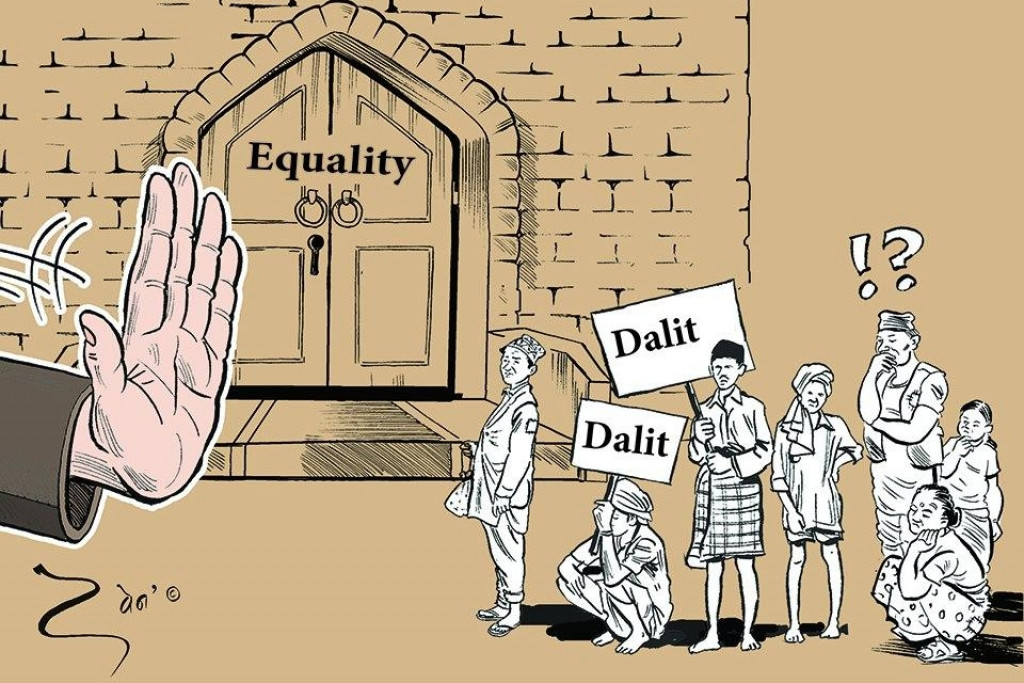
In the realm of media and storytelling, representation holds immense power. It can shape narratives, challenge stereotypes, and amplify the voices of marginalized communities. One important part of representation is talking about the problems and experiences of Dalits, Tribals, and people who are poor. These groups have historically been marginalized and underrepresented, leading to a lack of visibility and perpetuation of stereotypes.

From a journalistic point of view, it is very important to close this gap in representation and give these groups a place to tell their stories and share their points of view. By doing so, journalists can play a pivotal role in bringing to light the realities and complexities of the lives of Dalits, Tribals, and the economically weaker sections. Through in-depth reporting, they can help dismantle stereotypes, shed light on systemic injustices, and advocate for meaningful change.

1. Amplifying Voices

Journalism has the power to amplify the voices of marginalized communities such as Dalits, Tribals, and the economically weaker sections. By giving these communities a platform to share their stories, journalists can challenge dominant narratives and provide a more nuanced look at their experiences.

2. Uncovering Injustices

Through investigative journalism, journalists can uncover and shed light on the deep-rooted injustices and systemic discrimination faced by these communities. By examining social, economic, and political structures, journalists can hold power holders accountable and advocate for social change.

3. Breaking Stereotypes

Media often perpetuates stereotypes about Dalits, Tribals, and the economically weaker sections. Journalists can play a vital role in challenging these stereotypes by presenting diverse and authentic stories that showcase the resilience, achievements, and contributions of these communities.

4. Humanizing Experiences

By sharing individual stories and personal narratives, journalists can humanize the experiences of marginalized communities. This human element helps readers and viewers connect on an emotional level, fostering empathy and understanding.

5. Promoting Inclusivity

Representation of Dalits, Tribals, and economically weaker sections in media is key to encouraging inclusivity. By featuring diverse voices and experiences, journalists contribute to creating a more inclusive society where everyone’s story is valued and acknowledged.

Representation of Dalits, Tribals, and the economically weaker sections in media is of utmost importance. Journalists must close the representation gap, fight stereotypes, and make sure that these communities’ voices are heard. By doing so, journalism can act as a catalyst for social change, promote inclusivity, and advocate for a more equitable society. It is through authentic and diverse representation that we can ensure that the narratives of these marginalized communities are heard, understood, and valued.

A. Unveiling the Unseen: Spotlight on the Stories of Dalits in Indian Media

Introduction

Indian media has the power to shape narratives and influence societal perceptions. However, for far too long, the stories and experiences of Dalits have remained on the fringes, often overlooked or misrepresented. In this section, we will shed light on the importance of highlighting the stories of Dalits in Indian media, exploring the significance of representation and its potential to challenge stereotypes and foster empathy. We will also discuss prominent Bollywood examples that have contributed to unveiling the unseen narratives of Dalits.

Dalits, as an oppressed community, have historically faced discrimination and marginalization. Often, dominant narratives leave their stories untold or overshadow them. Representation in Indian media is crucial to rectify this imbalance, providing a platform for Dalits to share their experiences, challenges, and achievements.

B. Breaking Stereotypes: Bollywood’s Impact

“Article 15” (2019)

Directed by Anubhav Sinha, this hard-hitting film confronts the deeply entrenched caste system in Indian society. Inspired by true events, the movie follows a police officer played by Ayushmann Khurrana, who investigates a crime involving Dalit women. “Article 15” challenges stereotypes and sheds light on caste-based discrimination, urging viewers to question societal norms and biases.

“Fandry” (2013)

Directed by Nagraj Manjule, this Marathi film recounts the experiences of a young Dalit boy, Jabya, living in a caste-segregated village. “Fandry” highlights the challenges faced by Dalit communities and explores themes of love, dreams, and aspirations amidst social barriers. The film’s raw and poignant storytelling sheds light on the realities of caste-based discrimination.

C. Empathy and Understanding through Representation

1. Fostering Empathy

Representation of Dalits in Indian media fosters empathy by humanizing their experiences. By presenting authentic narratives, films and television shows allow audiences to connect with Dalit characters on an emotional level, challenging preconceived notions and promoting understanding.

2. Challenging Stereotypes

Through nuanced storytelling, Indian media has the power to challenge stereotypes associated with Dalits. By portraying diverse Dalit characters with depth and complexity, filmmakers can break away from one-dimensional portrayals, offering a more accurate representation and encouraging audiences to question societal prejudices.

D. Celebrating Dalit Achievements

“Paan Singh Tomar” (2012)

Based on the true story of an athlete turned rebel, this biographical film portrays the life of Paan Singh Tomar, played by Irrfan Khan. It highlights his journey from being a national steeplechase champion to becoming a bandit due to systemic injustice. “Paan Singh Tomar” celebrates the resilience and determination of a Dalit individual, shedding light on the challenges faced by marginalized communities.

“Masaan” (2015)

Set against the backdrop of the Ganges River in Varanasi, “Masaan” explores the lives of various characters from different social backgrounds, including a young Dalit woman named Devi, portrayed by Richa Chadha. The film addresses the intersections of caste, gender, and love, showcasing the aspirations and struggles of individuals from marginalized communities.

E. The Power of Dalit Representation

1. Empowerment and Visibility

Representation of Dalits in Indian media empowers the community by providing visibility and recognition. It allows Dalit individuals to see themselves represented on screen, fostering a sense of pride and inspiring others to break free from societal limitations.

2. Driving Social Change

Through authentic and inclusive storytelling, Indian media has the potential to challenge deep-seated prejudices and drive social change. By bringing the stories of Dalits to the forefront, media can raise awareness about the systemic injustices faced by the community, encouraging discussions and prompting a collective effort towards dismantling caste-based discrimination.

3. Inspiring Resilience

The representation of Dalits in Indian media also serves as a source of inspiration for individuals within the community. By showcasing the achievements, talents, and struggles of Dalit characters, films and shows instill a sense of hope, encouraging others to pursue their dreams and overcome societal barriers.

VI. The Responsibility of Indian Media:

4. Diverse Storytelling

Indian media has a responsibility to ensure diverse storytelling that accurately represents the experiences of Dalits. By collaborating with Dalit filmmakers, actors, and writers, the industry can ensure authentic narratives and avoid misrepresentation or appropriation.

F. Collaboration and Inclusion

The inclusion of Dalit voices in the creative process is vital to capture the nuances and complexities of their experiences. Collaboration with Dalit filmmakers, actors, and writers not only adds authenticity but also fosters a more inclusive and representative media landscape.

Sensitivity and Accuracy

While representing Dalit stories, it is crucial for Indian media to approach the subject matter with sensitivity and accuracy. Thorough research, consultation with the community, and avoiding harmful stereotypes are essential in portraying the experiences of Dalits responsibly.

The representation of Dalits in Indian media is an imperative step toward challenging stereotypes, fostering empathy, and amplifying marginalized voices. Films like “Article 15,” “Fandry,” “Paan Singh Tomar,” and “Masaan” have played a significant role in shedding light on the struggles and resilience of Dalit communities. By providing a platform for their stories, Indian media can help bridge the representation gap, drive social change, and contribute to a more inclusive society.

It is crucial for the industry to continue pushing the boundaries of representation, collaborating with Dalit voices, and ensuring diverse storytelling that accurately portrays the experiences of Dalits. Through these collective efforts, Indian media can not only unveil the unseen narratives of Dalits but also promote empathy, understanding, and meaningful progress toward a more equitable society.

G. Voices Unheard: The Importance of Tribal Representation in Indian Media

Indian media has the power to shape narratives, influence perceptions, and bring marginalized voices to the forefront. However, mainstream media often fails to hear or misrepresent the stories and experiences of tribal communities. In this section, we will go over the significance of tribal representation in Indian media, exploring the importance of giving voice to these communities and shedding light on their rich cultural heritage. We will support our analysis with prominent examples that have contributed to tribal representation in Indian media.

1. The Need for Tribal Representation

Tribal communities, with their distinct cultures, traditions, and struggles, form an integral part of India’s diverse fabric. Yet, they have long faced marginalization and underrepresentation in media. It is crucial to showcase their narratives, challenges, and achievements in order to bridge the gap, challenge stereotypes, and promote understanding and empathy.

H. Portraying Authentic Tribal Stories: Prominent Examples

“Sonchiriya” (2019)

Directed by Abhishek Chaubey, “Sonchiriya” is a gritty drama set in the Chambal region of Madhya Pradesh. The film revolves around a gang of dacoits, some of whom belong to tribal communities. It not only describes the complexities of their lives but also explores themes of identity, oppression, and survival.

“Eeb Allay Ooo!” (2019)

Directed by Prateek Vats, “Eeb Allay Ooo!” is a thought-provoking film that sheds light on the life of a young man employed as a monkey repeller in Delhi. The protagonist belongs to a tribal community and faces numerous challenges while navigating the urban landscape. The film skillfully highlights the struggles faced by tribal individuals in adapting to unfamiliar environments.

1. Preserving Cultural Heritage

a. “Rudhramadevi” (2015)

Directed by Gunasekhar, “Rudhramadevi” is a historical drama that depicts the life of Rani Rudrama Devi, a 13th-century queen from the Kakatiya dynasty in present-day Telangana. The film showcases the rich cultural heritage and warrior spirit of the tribal communities that played a significant role in the region’s history.

b. “Manjhi: The Mountain Man” (2015)

Directed by Ketan Mehta, “Manjhi: The Mountain Man” is a biographical drama based on the life of Dashrath Manjhi, also known as the “Mountain Man.” The film narrates the inspiring story of a tribal man who single-handedly carved a path through a mountain using only a hammer and chisel, symbolizing the determination and resilience of tribal communities.

2. Empowering Tribal Voices

a. Fostering Cultural Exchange

Tribal representation in Indian media fosters cultural exchange and promotes a deeper understanding of tribal traditions, customs, and values. By showcasing the richness and diversity of tribal cultures, media plays a crucial role in preserving and celebrating these unique heritages.

b. Challenging Stereotypes

Authentic tribal representation challenges stereotypes and dispels misconceptions surrounding tribal communities. By portraying multi-dimensional characters with depth and complexity, media can help dismantle preconceived notions, encouraging viewers to embrace a more nuanced appreciation for tribal identities.

3. The Power of Tribal Representation

a. Empowerment and Visibility

Tribal representation in Indian media provides visibility and recognition to these communities, empowering them by acknowledging their stories and experiences. It helps tribal individuals find pride in their cultural heritage and enables younger generations to see themselves reflected positively in media narratives.

b. Promoting Social Change

By highlighting the struggles, aspirations, and achievements of tribal communities, media contributes to promoting social change. Authentic tribal representation in Indian media can raise awareness about the challenges faced by these communities, such as land rights, displacement, and lack of access to basic amenities. It encourages viewers to question systemic injustices, advocate for the rights of tribal communities, and support initiatives that aim to improve their living conditions.

4. The Responsibility of Indian Media

a. Collaborating with Tribal Communities

Indian media has a responsibility to collaborate with tribal communities to ensure accurate and authentic storytelling. By involving tribal filmmakers, writers, and actors in the creative process, media can provide a platform for their voices and perspectives, avoiding misrepresentation or appropriation.

b. Sensitivity and Cultural Respect

While representing tribal stories, it is essential for Indian media to approach the subject matter with sensitivity and cultural respect. Thorough research, consultation with tribal communities, and avoiding harmful stereotypes are crucial to portray the experiences of tribal communities responsibly.

c. Amplifying Grassroots Initiatives

Indian media can play a crucial role in amplifying the efforts of grassroots organizations and individuals working towards the upliftment of tribal communities. By shining a spotlight on initiatives that empower tribal voices and support their rights, media can create awareness and inspire collective action.

Tribal representation in Indian media is of utmost importance in challenging stereotypes, fostering empathy, and amplifying the voices of marginalized communities. Films like “Sonchiriya” and “Eeb Allay Ooo!” have contributed to unveiling the unseen narratives of tribes and highlighting their struggles and resilience. By showcasing the rich cultural heritage and addressing the challenges faced by tribal communities, media can bridge the representation gap and promote a deeper understanding of their lives.

Indian media has a responsibility to collaborate with tribal voices, ensuring diverse and authentic storytelling. By doing so, media can empower tribal communities, challenge misconceptions, and contribute to a more inclusive society that values and celebrates the diverse cultures and experiences of all its members. Let us continue to support and advocate for tribal representation in Indian media, recognizing the transformative power of storytelling in driving social change and promoting equality.

I. Stories of Resilience: Celebrating the Achievements of Dalits, Tribals, and Economically Weaker Sections in Indian Media

Indian media has a significant influence on society, shaping narratives and perceptions. It is crucial for the media to highlight the achievements and resilience of marginalized communities, including Dalits, Tribals, and economically weaker sections. By showcasing their accomplishments, Indian media can challenge stereotypes, promote inclusivity, and inspire positive change. In this section, we will analyze the importance of celebrating the achievements of these communities in Indian media, supported by prominent examples that have shed light on their remarkable journeys.

1. Recognizing Extraordinary Achievements

a. Breaking Social Barriers

Indian media has played a pivotal role in showcasing the extraordinary achievements of individuals from marginalized communities who have broken through social barriers. By highlighting their success stories, media encourages others to believe in their own potential and challenges societal norms that limit opportunities for Dalits, Tribals, and the economically weaker sections.

b. Inspiring Future Generations

By celebrating the accomplishments of individuals from these communities, Indian media provides inspiration for future generations. These stories become a source of motivation and encourage young people to strive for excellence, overcome obstacles, and reach for their dreams, regardless of societal barriers.

2. Prominent Examples of Celebrating Achievements

a. “Neerja” (2016)

Directed by Ram Madhvani, “Neerja” is a biographical film based on the life of Neerja Bhanot, a flight attendant who sacrificed her life while saving passengers during the hijacking of Pan Am Flight 73 in 1986. Sonam Kapoor’s portrayal of Neerja garnered critical acclaim and brought attention to her courage and selflessness. Neerja’s story serves as an example of a brave individual from an economically weaker section who displayed immense strength in the face of adversity.

b. “Newton” (2017)

Directed by Amit V. Masurkar, “Newton” explores the life of a principled government clerk, played by Rajkummar Rao, who goes to great lengths to conduct fair elections in a conflict-ridden area. The film sheds light on the challenges faced by individuals working at the grassroots level and showcases their determination and dedication. It highlights the important role played by individuals from economically weaker sections in upholding democratic values.

3. Challenging Stereotypes and Fostering Empathy

a. “Peepli Live” (2010)

Directed by Anusha Rizvi, “Peepli Live” is a satirical comedy that exposes the exploitative nature of the media and political systems in rural India. The film humorously portrays the struggles of a poor farmer, Natha, played by Omkar Das Manikpuri, who becomes the center of a media circus after declaring his intention to commit suicide. “Peepli Live” challenges stereotypes associated with economically weaker sections, provoking viewers to reflect on the complexities of poverty and the urgency for systemic change.

b. “Talvar” (2015)

Directed by Meghna Gulzar, “Talvar” is a gripping crime drama based on the controversial Aarushi Talwar murder case. The film presents multiple perspectives and explores the flaws in the investigation process. It highlights the plight of the domestic help, played by Konkona Sen Sharma, who comes from an economically weaker section and becomes a key figure in the case. “Talvar” raises questions about the biases and prejudices that often hinder justice for individuals from marginalized backgrounds.

4. Empowerment through Representation

a. Challenging Preconceptions

Indian media has the power to challenge preconceived notions about Dalits, Tribals, and the economically weaker sections by presenting multifaceted and nuanced portrayals of their achievements. These stories break away from one-dimensional stereotypes and humanize the experiences of individuals from these communities, fostering a more empathetic and inclusive society.

b. Inspiring Social Change

By showcasing the achievements of Dalits, Tribals, and the economically weaker sections, Indian media can inspire social change and promote equal opportunities. These stories serve as reminders that talent, determination, and hard work transcend societal barriers, encouraging viewers to challenge systemic inequalities and advocate for a more equitable society.

5. Promoting Inclusivity and Representation

a. Diverse Casting and Storytelling

Indian media should prioritize diverse casting and storytelling to ensure authentic representation. By providing opportunities to actors from marginalized communities, media can amplify their voices, talents, and experiences while also challenging the prevalent underrepresentation.

b. Collaborative Efforts

Collaboration between filmmakers, writers, and individuals from Dalit, tribal, and economically weaker sections is vital to accurately portray their achievements. Engaging with community members ensures that their stories are shared with respect, authenticity, and cultural sensitivity.

6. The Responsibility of Indian Media

a. Ethical and Responsible Reporting

Indian media should uphold ethical and responsible reporting when covering the achievements of individuals from marginalized communities. Sensitivity, accuracy, and avoiding sensationalism are crucial to ensure that their stories are represented in a respectful and meaningful manner.

b. Platform for Amplification

Indian media should actively provide platforms for the voices of Dalits, Tribals, and the economically weaker sections. This can be done through dedicated programs, interviews, and discussions that celebrate their achievements and highlight their contributions to society.

Celebrating the achievements of Dalits, Tribals, and the economically weaker sections in Indian media is a powerful means of challenging stereotypes, promoting empathy, and inspiring positive social change. Films like “Neerja,” “Newton,” “Peepli Live,” and “Talvar” have successfully showcased the resilience, talents, and determination of individuals from these communities. It is crucial for Indian media to continue prioritizing authentic representation, diverse storytelling, and collaboration with community members to ensure that their achievements are recognized, celebrated, and amplified. By doing so, Indian media can contribute to a more inclusive and equitable society where everyone’s accomplishments are acknowledged and celebrated, regardless of their background.

J. The Power of Visibility: How Representation in Indian Media Can Empower Dalit, Tribal, and Economically Weaker Section Communities

Introduction

Representation in Indian media holds immense power, as it shapes narratives, influences perceptions, and reflects societal realities. For far too long, the voices and experiences of marginalized communities, including Dalits, Tribals, and economically weaker sections, have been underrepresented or misrepresented.

In this section, we will delve into the significance of visibility and representation in Indian media, exploring how it can empower these communities. We will support our analysis with prominent examples that highlight the transformative power of visibility and representation.

1. Breaking the Cycle of Underrepresentation

a. Overcoming Stereotypes

Visibility and representation in Indian media provide an opportunity to challenge prevailing stereotypes and misconceptions about Dalits, Tribals, and economically weaker sections. By showcasing diverse narratives and complex characters, media can dismantle one-dimensional portrayals, fostering a deeper understanding and empathy for these communities.

b. Countering Marginalization

Representation offers a platform to counter marginalization and give voice to communities that have been historically excluded or silenced. It empowers Dalits, Tribals, and economically weaker sections by acknowledging their existence, experiences, and contributions to society.

2. Prominent Examples of Empowerment through Representation

a. “Bhonsle” (2018)

Directed by Devashish Makhija, “Bhonsle” follows the journey of a retired Mumbai police officer, played by Manoj Bajpayee, who develops a bond with a young migrant woman from the Northeast. The film highlights the struggles faced by marginalized communities and underscores the importance of solidarity in challenging societal prejudices.

b. “Perariyathavar” (2013)

Directed by Dr. Biju, “Perariyathavar” focuses on the lives of manual scavengers, a marginalized group in India. The film sheds light on their struggles, exploitation, and resilience in the face of social and economic hardships, encouraging viewers to confront the injustices faced by these communities.

3. Empowerment through Representation

a. Enhancing Self-Perception

Visibility in Indian media allows individuals from marginalized communities to see themselves represented positively on screen. This representation fosters a sense of belonging, boosts self-esteem, and nurtures aspirations, empowering them to embrace their identity and strive for success.

b. Inspiring Future Generations

When Dalit, tribal, and economically weaker section individuals see positive and successful role models in Indian media, it inspires future generations to believe in their own potential. Representation cultivates hope, motivation, and ambition, encouraging them to overcome obstacles and pursue their dreams.

4. Fostering Social Change

a. Challenging Prejudices

Representation in Indian media challenges deep-rooted prejudices and biases by humanizing the experiences of marginalized communities. By portraying multidimensional characters and their narratives, media can prompt viewers to question their own biases and work towards dismantling systemic barriers.

b. Advocating for Equality

Visibility and representation in Indian media create opportunities to advocate for equal rights and opportunities. It amplifies the voices of Dalits, Tribals, and economically weaker sections, enabling them to advocate for change, demand justice, and fight against discrimination.

5. The Responsibility of Indian Media

a. Diverse Casting and Storytelling

Indian media must prioritize diverse casting and storytelling to ensure authentic representation. By including actors from these communities and involving their voices in the creative process, media can bring forth nuanced narratives that resonate with their lived experiences.

b. Collaboration and Inclusion

Collaboration between filmmakers, writers, and individuals from marginalized communities is crucial for accurate representation. Engaging with community members ensures that their stories are shared authentically, with cultural sensitivity and respect.

Visibility and representation in Indian media hold the power to empower Dalit, Tribal, and economically weaker section communities. By challenging stereotypes, countering marginalization, and fostering social change, representation becomes a catalyst for empowerment and progress. Films like “Bhonsle” and “Perariyathavar” exemplify the transformative potential of visibility in shaping narratives and inspiring societal change.

Through authentic representation, Indian media enhances self-perception and inspires future generations, fostering a sense of belonging and encouraging individuals from marginalized communities to pursue their aspirations. By challenging prejudices and advocating for equality, media plays a crucial role in dismantling systemic barriers and amplifying the voices of these communities.

To fulfill the responsibility of Indian media, diverse casting and storytelling must be prioritized. Collaboration with community members ensures that their stories are authentically represented, respecting their cultural nuances and experiences. By providing platforms and opportunities for these communities, media can create a more inclusive and equitable industry.

The power of visibility in Indian media lies in its ability to shape narratives, challenge stereotypes, and empower marginalized communities. It is through these representations that society can recognize the richness of diversity and work towards a more inclusive future. By continuing to prioritize authentic representation and amplifying the voices of Dalits, Tribals, and economically weaker sections, Indian media can drive positive social change and inspire a generation that celebrates the strength and resilience of all its members.

A. The Evolution of LGBTQ Representation in Media: From Stereotypes to Authenticity

The representation of the LGBTQ community in media has undergone a remarkable transformation over the years. From being marginalized and reduced to harmful stereotypes, LGBTQ characters and narratives have gradually moved towards authenticity and inclusivity. This section explores the journey of LGBTQ representation in media, highlighting prominent examples from across the world that have contributed to this evolution.

1. Early Stereotypes

In the early days of media, LGBTQ characters were often portrayed through damaging stereotypes, reinforcing societal biases and discrimination. Examples include the flamboyant and overly sexualized depictions of gay men, the predatory and tragic portrayals of lesbian women, and the portrayal of transgender individuals as objects of ridicule. These stereotypes perpetuated misconceptions and limited the understanding of LGBTQ experiences.

2. Challenging Stereotypes and Visibility

As societal attitudes began to shift, so did the portrayal of LGBTQ characters in media. Notable examples include the groundbreaking 1993 film “Philadelphia,” which addressed HIV/AIDS and homophobia, and the popular TV series “Will & Grace,” which depicted a gay man as a lead character in a non-stereotypical manner. These representations helped challenge stereotypes and brought LGBTQ issues into the mainstream consciousness, contributing to greater visibility and understanding.

3. Complex and Multidimensional Characters

In recent years, there has been a significant shift towards portraying LGBTQ characters as complex and multidimensional individuals, reflecting the diversity within the community. One notable example is the critically acclaimed TV show “Pose,” which explores the lives of transgender individuals of color in the ballroom scene of 1980s and 1990s New York. The series provides nuanced portrayals, addressing intersectionality and showcasing the challenges and triumphs of its characters.

4. Intersectionality and Inclusive Storytelling

LGBTQ representation has expanded to embrace intersectionality, recognizing that identities intersect and influence one another. The TV series “Orange is the New Black” is celebrated for its diverse LGBTQ representation, featuring characters from different racial, ethnic, and socioeconomic backgrounds and exploring their complex journeys. By acknowledging the intersectionality of identities, media narratives become more authentic, relatable, and inclusive.

5. International Progress

LGBTQ representation in media is not limited to a single country but is a global phenomenon. Several countries have made notable strides in this regard. For instance, the Indian web series “Made in Heaven” explores the lives of LGBTQ characters in the context of the country’s conservative society, challenging societal norms and shedding light on the struggles faced by the community. In Denmark, the TV series “Rita” showcases a lesbian lead character who navigates her personal and professional life, contributing to the normalization of LGBTQ experiences.

6. Transgender Representation

Transgender representation in media has gained significant attention in recent years, with a greater focus on authentic storytelling. The groundbreaking series “Transparent” follows the journey of a transgender woman and her family, portraying the complexities and challenges of transitioning. Moreover, the film “A Fantastic Woman” from Chile explores the experiences of a transgender woman facing discrimination and grief, earning critical acclaim and an Academy Award for Best Foreign Language Film.

7. Inclusive Animation

Even in the realm of animation, LGBTQ representation has made progress. The animated series “Steven Universe” features LGBTQ characters and relationships, promoting inclusivity and acceptance among younger audiences. Additionally, the film “Luca” from Pixar presents a heartwarming story about two young boys discovering their identity and the power of friendship, resonating with viewers of all ages.

The evolution of LGBTQ representation in media is a testament to the changing cultural landscape and the tireless efforts of advocates for authentic storytelling. From harmful stereotypes to multidimensional characters, media has gradually embraced LGBTQ narratives, challenging societal norms and fostering greater understanding and acceptance. Prominent examples from around the world have played a significant role in this evolution, demonstrating the power of media in shaping public perception and driving social change.

As LGBTQ representation continues to progress, it is important to acknowledge that there is still work to be done. The media industry must strive for more diverse and inclusive storytelling, amplifying the voices of LGBTQ individuals from all walks of life. It is crucial to move beyond tokenism and superficial representation, ensuring that LGBTQ characters are not defined solely by their sexual orientation or gender identity but are portrayed as fully realized individuals with unique experiences, dreams, and aspirations.

Furthermore, the responsibility lies not only with creators and storytellers but also with media consumers. As viewers, we have the power to support and engage with media that authentically represents the LGBTQ community. By actively seeking out and supporting inclusive content, we contribute to the demand for more diverse narratives and encourage the industry to continue evolving.

Conclusion

In conclusion, the evolution of LGBTQ representation in media from harmful stereotypes to authentic portrayals reflects a growing societal understanding and acceptance of the LGBTQ community. Through groundbreaking films, TV series, and other forms of media, we have witnessed the power of storytelling in challenging prejudices, fostering empathy, and promoting inclusivity. As the journey of LGBTQ representation continues, it is vital to prioritize intersectionality, encourage diverse storytelling, and celebrate the complexity of LGBTQ characters. By doing so, we pave the way for a future where LGBTQ individuals are truly seen, heard, and celebrated in the media landscape.

B. Breaking Barriers: Celebrating LGBTQ Characters in Film and Television

In recent years, Indian cinema and television have undergone a significant transformation, gradually embracing diversity and inclusivity. One of the most notable breakthroughs has been the increasing representation of LGBTQ characters on screen. This positive shift marks a significant departure from the traditional portrayal of LGBTQ individuals in Indian media, where they were often relegated to stereotypes or completely ignored. In this section, we will explore the evolution of LGBTQ representation in Indian film and television, highlighting prominent examples and the impact they have had on society.

1. The Early Days: Stereotypes and Silence

For a long time, LGBTQ characters in Indian cinema and television were depicted through stereotypes and caricatures, perpetuating harmful stereotypes and reinforcing societal biases. Homosexual characters were often used for comic relief or as objects of ridicule, failing to address the complexities and realities of their lives. This lack of authentic representation contributed to a culture of silence and ignorance surrounding LGBTQ issues.

2. Winds of Change: International Influence

The global LGBTQ rights movement, coupled with exposure to international cinema and television, played a pivotal role in challenging the status quo and bringing about a more nuanced portrayal of LGBTQ characters in Indian media. Movies and TV shows from around the world have inspired Indian filmmakers and content creators to approach LGBTQ stories with sensitivity and authenticity.

“Fire” (1996)

Deepa Mehta’s groundbreaking film “Fire” created a significant stir in Indian cinema. It portrayed a lesbian relationship between two women trapped in loveless marriages. Despite facing backlash and protests, the film sparked important conversations about sexual identity and desire in India.

“Mango Souffle” (2002)

Directed by Mahesh Dattani, “Mango Souffle” was one of the first Indian films to explore the theme of homosexuality with a blend of humor and sensitivity. The film revolved around a gay man struggling to come out to his conservative family, shedding light on the challenges faced by LGBTQ individuals in a traditional Indian society.

C. Indian Film Industry: Pushing Boundaries

“My Brother… Nikhil” (2005)

Directed by Onir, this film was inspired by the real-life story of Dominic D’Souza, an Indian swimmer who was diagnosed with HIV during the 1980s. It not only highlighted the stigma surrounding HIV/AIDS but also sensitively portrayed a gay relationship. The film shattered stereotypes and showcased the power of love and acceptance in the face of adversity.

“Aligarh” (2016)

Based on the true story of Dr. Shrinivas Ramchandra Siras, “Aligarh” delves into the life of a gay professor who faced discrimination and persecution in a conservative Indian society. Directed by Hansal Mehta, the film shed light on the importance of personal freedoms and the need for acceptance and empathy.

“Maja Ma” (2022)

“Maja Ma,” an Amazon Prime movie starring Madhuri Dixit, has the potential to break new ground by exploring the theme of lesbianism in Indian cinema. The film could depict a compelling and sensitive narrative that delves into the complexities of same-sex relationships between women in a conservative Indian society.

Through the powerful performance of Madhuri Dixit, the film could portray the emotional journey of Pallavi discovering her attraction towards another woman and the challenges she faces in coming to terms with her sexual identity. By addressing lesbianism in a respectful and authentic manner, “Maja Ma” has the potential to contribute to the evolving landscape of LGBTQ representation in Indian cinema and foster greater acceptance and understanding.

3. Television’s Role in Driving Change

“Satyamev Jayate” (2012)

Hosted by Aamir Khan, this widely acclaimed talk show dedicated an episode to the LGBTQ community in India. It brought together LGBTQ individuals, their families, and activists to discuss the challenges they face and the importance of inclusivity. The show sparked nationwide conversations and raised awareness about LGBTQ rights.

“Made in Heaven” (2019)

This Amazon Prime Video series follows two wedding planners in Delhi who navigate the complex dynamics of Indian weddings while dealing with their own personal struggles. The show unapologetically tackles issues of sexuality, gender, and class, portraying LGBTQ characters with depth and empathy.

D. The Ripple Effect: Changing Perceptions

The increased representation of LGBTQ characters in Indian film and television has had a profound impact on society. By challenging stereotypes and highlighting the experiences and struggles of LGBTQ individuals, these stories have played a crucial role in breaking down barriers and fostering acceptance. Here are some ways in which the representation of LGBTQ characters has influenced societal perceptions:

  1. Encouraging Conversations: Authentic portrayal of LGBTQ characters in Indian film and television has opened up conversations about sexual orientation and gender identity. It has allowed people to confront their own biases and challenge societal norms, leading to greater understanding and empathy.
  1. Humanizing LGBTQ Individuals: By depicting LGBTQ characters as multidimensional individuals with hopes, dreams, and emotions, Indian media has humanized them, allowing audiences to connect with their stories on a personal level. This shift has helped break down stereotypes and dismantle preconceived notions about LGBTQ individuals.
  1. Empowering LGBTQ Youth: The increased visibility of LGBTQ characters has had a profound impact on young people who are grappling with their own sexual orientation or gender identity. Seeing relatable and positive portrayals of LGBTQ characters on screen can provide a sense of validation, support, and encouragement to embrace their true selves.
  1. Challenging Legal and Social Barriers: The representation of LGBTQ characters in popular media has played a vital role in influencing public opinion and fostering acceptance, which in turn has contributed to the push for legal and social reforms. It has fueled movements advocating for LGBTQ rights, leading to significant legal milestones, such as the decriminalization of homosexuality in India in 2018.
  1. Increasing Diversity in Narratives: The inclusion of LGBTQ characters in Indian film and television has expanded the narrative landscape and enriched storytelling. It has provided opportunities for LGBTQ actors, writers, and directors to share their own experiences and perspectives, bringing greater authenticity and diversity to the entertainment industry.

The journey of LGBTQ representation in Indian film and television has been a transformative one, marked by significant progress and cultural shifts. From the early days of harmful stereotypes and silence to the present era of nuanced and authentic portrayals, Indian media has come a long way in breaking barriers and celebrating LGBTQ characters.

Prominent examples such as “Fire,” “Mango Souffle,” “My Brother… Nikhil,” “Aligarh,” “Satyamev Jayate,” and “Made in Heaven” have pushed boundaries, challenged societal norms, and paved the way for greater acceptance and inclusion. These stories have not only entertained audiences but also educated and inspired change.

As we celebrate the achievements and progress made so far, it is important to acknowledge that there is still work to be done. Continued efforts are needed to ensure that LGBTQ characters are represented with sensitivity, respect, and authenticity. By embracing diverse stories and amplifying the voices of LGBTQ individuals, Indian film and television can continue to shape public opinion, break down barriers, and create a more inclusive society for all.

E. Behind the Scenes: LGBTQ Filmmakers and Their Impact on Media Representation

In the realm of filmmaking, LGBTQ voices have emerged as powerful catalysts for change, driving forward the representation of LGBTQ characters and stories on the silver screen. These filmmakers bring their unique perspectives and personal experiences to their craft, challenging societal norms and amplifying the voices of marginalized communities. In this section, we will explore the significant impact of LGBTQ filmmakers in reshaping media representation, with a focus on prominent examples from India.

F. Breaking Barriers: Pioneering LGBTQ Filmmakers in India

Over the years, LGBTQ filmmakers in India have played a pivotal role in challenging the status quo and pushing the boundaries of storytelling. By infusing their narratives with authenticity and personal journeys, they have paved the way for a more inclusive cinematic landscape.

Onir

Onir, a trailblazing filmmaker, has been at the forefront of LGBTQ representation in Indian cinema. His film “My Brother… Nikhil” (2005) explored the life of a gay man living with HIV/AIDS, shedding light on the challenges faced by the LGBTQ community. Onir continues to champion LGBTQ stories through films like “I Am” (2010), an anthology film that delves into themes of sexuality and identity.

Faraz Arif Ansari

Faraz Arif Ansari, a queer filmmaker, has been instrumental in creating inclusive narratives in Indian cinema. His directorial debut, “Sisak” (2017), is India’s first silent LGBTQ love story. The film beautifully portrays the budding connection between two gay men on a Mumbai local train, highlighting the complexities and vulnerabilities of queer love.

G. Representation Matters: Impact on Media Landscape

a. Authenticity in Storytelling: LGBTQ filmmakers bring their lived experiences and personal journeys to their storytelling, resulting in authentic and nuanced representations of queer characters and communities. By drawing from their own struggles, triumphs, and identities, these filmmakers provide a much-needed perspective that resonates with LGBTQ audiences and educates the wider public.

b. Challenging Stereotypes: LGBTQ filmmakers challenge prevailing stereotypes and clichés associated with LGBTQ characters, presenting them as fully fleshed-out individuals rather than one-dimensional caricatures. Their stories showcase the diverse range of identities within the LGBTQ community, breaking down misconceptions and fostering empathy.

H. Trailblazing Films: Driving Change in Indian Cinema

  1. “Margarita with a Straw” (2014): Directed by Shonali Bose, this poignant film explores the journey of a bisexual woman with cerebral palsy, played by Kalki Koechlin. The film not only addresses themes of disability but also challenges societal norms around sexuality and relationships, offering a compassionate portrayal of a bisexual character.
  1. “Ek Ladki Ko Dekha Toh Aisa Laga” (2019): Directed by Shelly Chopra Dhar, this heartwarming film features Sonam Kapoor as a young woman navigating her feelings for another woman in a conservative Punjabi family. The film delicately addresses the challenges faced by LGBTQ individuals in traditional Indian households, promoting acceptance and love.

I. Beyond Filmmaking: Advocacy and Representation

a. LGBTQ Film Festivals: LGBTQ filmmakers have played a vital role in organizing and curating LGBTQ film festivals, providing a platform for LGBTQ voices to be heard and celebrated. Festivals like Kashish Mumbai International Queer Film Festival and Reel Desires: Chennai International Queer Film Festival have become important showcases for LGBTQ stories, fostering dialogue and community engagement.

b. Activism and Advocacy: Many LGBTQ filmmakers actively engage in advocacy work, using their platforms to raise awareness, challenge discriminatory laws, and fight for equal rights. By combining their art with social activism, LGBTQ filmmakers have been instrumental in driving social change and dismantling oppressive systems.

J. Future Perspectives: Continuing the Journey

a. Increased Opportunities: The contributions of LGBTQ filmmakers have paved the way for greater representation and inclusivity in the industry. As more LGBTQ voices emerge, it is crucial to create an environment that fosters their talent and provides equal opportunities for storytelling, ensuring that diverse narratives are brought to the forefront.

b. Intersectionality and Diversity: LGBTQ filmmakers have the power to explore intersectional identities and highlight the experiences of LGBTQ individuals from diverse backgrounds. By including voices from different genders, religions, castes, and abilities, these filmmakers can broaden the understanding of LGBTQ issues and foster a more comprehensive representation of the community.

c. Changing Public Perceptions: The impact of LGBTQ filmmakers extends beyond the boundaries of cinema. Their work has the potential to challenge societal norms, educate the public, and shape public opinion. By telling authentic stories and humanizing LGBTQ characters, these filmmakers contribute to dismantling stereotypes, fostering empathy, and promoting acceptance in society.

The influence of LGBTQ filmmakers in reshaping media representation cannot be overstated. Through their creative vision, these filmmakers have challenged stereotypes, highlighted the diverse experiences of LGBTQ individuals, and driven conversations around identity and acceptance. With their unique perspectives, personal journeys, and unwavering dedication, LGBTQ filmmakers in India continue to break barriers, advocate for change, and pave the way for a more inclusive and diverse film industry.

As audiences, it is essential to support LGBTQ filmmakers and their work. By embracing and celebrating their stories, we can contribute to a more inclusive media landscape that reflects the true diversity of our society. Let us continue to amplify LGBTQ voices, encourage authentic storytelling, and create a space where every individual’s story is seen, heard, and valued. Together, we can foster a world where media representation truly reflects the beauty and complexity of the LGBTQ community.

K. Transgender Narratives in Media: Addressing Challenges and Celebrating Progress

In recent years, Indian media has made significant strides in representing transgender characters and shedding light on the challenges faced by the transgender community. These narratives have played a crucial role in raising awareness, challenging societal norms, and promoting inclusivity. In this section, we will explore the journey of transgender narratives in Indian media, highlighting the challenges faced and celebrating the progress made. We will also delve into prominent Bollywood movies that have portrayed transgender characters with depth and sensitivity.

1. Historical Challenges

The representation of transgender individuals in Indian media has historically been fraught with stereotypes, ignorance, and marginalization. Transgender characters were often reduced to caricatures and used for comic relief, perpetuating harmful stereotypes and reinforcing societal biases. However, there has been a gradual shift towards more nuanced and authentic portrayals in recent years.

L. Progressive Portrayals: Bollywood’s Impact

“Laxmii” (2020): Directed by Raghava Lawrence, “Laxmii” features Akshay Kumar in the lead role, portraying a transgender character. The film addresses the discrimination faced by transgender individuals and advocates for their rights. While the film received mixed reviews, it sparked conversations about transgender visibility in mainstream Bollywood cinema.

“Gulabo Sitabo” (2020): Directed by Shoojit Sircar, this comedy-drama features Amitabh Bachchan and Ayushmann Khurrana. Although not explicitly focused on transgender characters, the film includes a subplot involving a transgender woman, played by Vijay Raaz. The character is portrayed with empathy and serves as a catalyst for exploring themes of acceptance and understanding.

M. Independent Cinema: Embracing Authenticity

“Narthaki” (2016): Directed by Arun Mozhi Manickam, “Narthaki” is a Tamil film that explores the life of a transgender classical dancer. The film delves into the challenges faced by the protagonist, addressing issues of societal acceptance, gender identity, and artistic expression. “Narthaki” received critical acclaim for its sensitive portrayal and authentic representation.

“Ka Bodyscapes” (2016): Directed by Jayan Cherian, “Ka Bodyscapes” delves into the lives of three individuals, including a transgender woman, navigating personal and societal struggles. The film tackles topics such as LGBTQ rights, artistic freedom, and religious conservatism. Despite facing censorship challenges in India, the film garnered international recognition for its bold storytelling.

N. The Role of Digital Platforms

“The Married Woman” (2021): Based on the novel by Manju Kapur, this web series explores the journey of Astha, a married woman who falls in love with a transgender artist named Peeplika. The series sensitively portrays the complexities of Astha’s self-discovery, her exploration of unconventional love, and Peeplika’s struggles with societal acceptance.

“Bombay Begums” (2021): Directed by Alankrita Shrivastava, this Netflix series portrays the lives of five women from diverse backgrounds in Mumbai. The character of Ayesha, played by Plabita Borthakur, is a transgender woman who grapples with her identity and fights against discrimination. The series highlights the challenges faced by transgender individuals while showcasing their resilience and strength.

O. Celebrating Progress and Addressing Challenges:

  1. Representation Matters: The inclusion of transgender narratives in Indian media plays a crucial role in raising awareness, challenging stereotypes, and promoting acceptance. Authentic representation humanizes transgender individuals, fosters empathy, and educates the public about the challenges they face.
  1. Advocacy and Sensitization: Films and web series that tackle transgender narratives have the power to act as catalysts for social change. They provide a platform for advocacy and sensitization, encouraging dialogue and challenging societal prejudices. By addressing the challenges faced by the transgender community, these narratives promote inclusivity and foster a more accepting society.
  1. Collaborative Efforts: The progress made in representing transgender narratives in Indian media is a result of collaborative efforts between filmmakers, activists, and members of the transgender community. By involving transgender individuals in the creative process, these narratives gain authenticity and ensure that the stories are told with sensitivity and respect.
  1. Empowering Transgender Voices: The inclusion of transgender characters in mainstream Bollywood movies and web series not only creates visibility but also opens up opportunities for transgender actors to showcase their talent and break stereotypes. It allows them to share their own experiences and challenges, providing a platform for their voices to be heard.

The journey of transgender narratives in Indian media has been marked by both challenges and progress. From being relegated to harmful stereotypes to gradually embracing authentic portrayals, Indian cinema is making significant strides in representing the transgender community. Movies like “Laxmii,” “Gulabo Sitabo,” and “Narthaki,” and web series like “The Married Woman” and “Bombay Begums” have contributed to raising awareness, fostering dialogue, and challenging societal norms.

It is essential to continue the momentum and ensure that transgender narratives receive the attention they deserve. Filmmakers and content creators must prioritize authentic representation, involve transgender individuals in the creative process, and collaborate with activists to tell these stories with sensitivity and respect. By doing so, Indian media can continue to contribute to the empowerment of the transgender community, promote inclusivity, and drive social change.

As audiences, it is our responsibility to support and appreciate these narratives. By engaging with movies and web series that authentically represent transgender characters, we can contribute to a more inclusive and diverse media landscape. Let us celebrate the progress made thus far, while also recognizing the importance of continuing to amplify transgender voices and advocate for their rights in Indian media and society at large. Together, we can foster a more inclusive and accepting world for everyone.

P. Beyond the Binary: Non-Binary and Genderqueer Representation in Media

The traditional gender binary of male and female has long dominated mainstream media, leaving little room for non-binary and genderqueer individuals to see themselves reflected on screen. However, in recent years, there has been a remarkable shift as media creators have begun to acknowledge and represent the diverse gender identities that exist beyond the binary. In this section, we will explore the significance of non-binary and genderqueer representation in media, with a particular focus on prominent global movies and TV shows, including the impactful series “Sex Education” by Netflix.

1. Understanding Non-Binary and Gender-Queer Identities

Non-binary and genderqueer individuals identify outside the binary categories of male and female. They may identify as both, neither, a combination, or another gender identity altogether. Representation of these identities in media is essential in validating their experiences and dismantling societal norms that perpetuate the binary gender system.

2. Challenging the Status Quo: Impactful Global Movies

“Boys Don’t Cry” (1999)

This groundbreaking film, directed by Kimberly Peirce, is based on the real-life story of Brandon Teena, a transgender man. While the film primarily focuses on Brandon’s experiences, it sheds light on the complexities of gender identity and challenges faced by individuals who don’t conform to societal expectations. Hilary Swank’s powerful performance earned her an Academy Award for Best Actress.

“The Danish Girl” (2015)

Directed by Tom Hooper, this film is inspired by the life of Lili Elbe, one of the first known recipients of gender confirmation surgery. The story portrays Lili’s journey as a transgender woman and the support she receives from her spouse, Gerda Wegener. Eddie Redmayne’s sensitive portrayal of Lili earned him critical acclaim and an Academy Award nomination.

Q. Television’s Role in Representation: Prominent TV Shows

“Transparent” (2014-2019)

This groundbreaking series, created by Jill Soloway, follows the life of Maura Pfefferman, a transgender woman navigating her transition. The show delves into the experiences of Maura and her family as they confront their own identities and navigate relationships. “Transparent” played a significant role in bringing transgender stories to the mainstream and fostering empathy and understanding.

“Pose” (2018-present)

Set in the late 1980s and early 1990s, “Pose” explores the African-American and Latino LGBTQ ballroom culture in New York City. The series highlights the lives of various characters, including Angel, a transgender woman, and portrays their resilience, creativity, and challenges faced in a society marked by prejudice and discrimination. The show has received critical acclaim for its authentic representation and diverse cast.

1. “Sex Education” and Non-Binary Representation

The Netflix series “Sex Education” has garnered praise for its inclusive approach to sexuality and gender. In its third season, the show introduces the character of Cal, portrayed by non-binary actor Dua Saleh. Cal’s journey as a non-binary student navigating high school allows for meaningful discussions around gender identity and the challenges faced by non-binary individuals.

2. Impact and Importance of Representation

Non-binary and genderqueer representation in media holds immense significance. By depicting these identities with depth and authenticity, media creators provide a platform for non-binary individuals to see themselves reflected positively. It challenges societal norms, educates the public, and fosters understanding and acceptance.

Representation in media also has a ripple effect, empowering non-binary and genderqueer individuals to embrace their identities and encouraging broader conversations around gender diversity. It allows audiences to expand their understanding of gender and promotes inclusivity.

The growing representation of non-binary and genderqueer identities in global movies and TV shows signifies a powerful shift in media towards inclusivity and acceptance. Movies like “Boys Don’t Cry” and “The Danish Girl” and TV series like “Transparent” and “Pose” have contributed to raising awareness and fostering empathy. The inclusion of non-binary characters in shows like “Sex Education” further strengthens the representation of diverse gender identities.

As media continues to evolve, it is vital for creators to prioritize authentic and positive portrayals of non-binary and genderqueer individuals. By doing so, media can become a catalyst for social change, challenging norms and fostering a world that embraces and celebrates the richness of gender diversity.

R. Queer Representation in Film-making: Unleashing the Power of LGBTQ Storytelling

The landscape of Indian filmmaking is undergoing a transformative shift, with an increasing number of movies and web series embracing LGBTQ storytelling. This progressive wave of queer representation in Bollywood is breaking barriers, challenging societal norms, and amplifying the voices and experiences of the LGBTQ community. In this section, we will explore the significance of queer representation in Indian filmmaking and examine prominent Bollywood movies and web series that have contributed to this empowering movement.

1. From Stereotypes to Authenticity: The Changing Narrative

“Dostana” (2008)

While not centered on LGBTQ characters, “Dostana” played a significant role in initiating conversations around homosexuality in Indian cinema. The film follows two men pretending to be a gay couple, using humor to challenge stereotypes and open up discussions on LGBTQ representation. While it was met with mixed responses, “Dostana” marked a crucial starting point for future explorations of queer themes in Bollywood.

“My Brother… Nikhil” (2005)

Directed by Onir, this impactful film sheds light on the life of a gay man diagnosed with HIV/AIDS and the challenges he faces within a society steeped in prejudice. “My Brother… Nikhil” not only addresses LGBTQ issues but also emphasizes the importance of compassion, acceptance, and the power of familial bonds. It served as a milestone in highlighting the struggles and resilience of the queer community in India.

2. Pioneering the Path: Bollywood’s Trailblazers

“Margarita with a Straw” (2014)

Directed by Shonali Bose, this powerful coming-of-age drama follows the journey of a young bisexual woman with cerebral palsy, portrayed brilliantly by Kalki Koechlin. The film fearlessly explores themes of sexuality, disability, and self-discovery, challenging societal norms and offering a poignant portrayal of queer experiences. “Margarita with a Straw” shattered barriers and ushered in a new era of authentic representation.

“Ek Ladki Ko Dekha Toh Aisa Laga” (2019)

Directed by Shelly Chopra Dhar, this heartfelt film features Sonam Kapoor Ahuja as a young woman who falls in love with another woman. The movie sensitively addresses the challenges faced by LGBTQ individuals within a traditional Indian family, highlighting the significance of love, acceptance, and breaking free from societal expectations. “Ek Ladki Ko Dekha Toh Aisa Laga” emphasized the power of familial bonds in fostering understanding and acceptance.

S. Embracing Authentic Narratives: Web Series Leading the Way

“Made in Heaven” (2019)

Created by Zoya Akhtar and Reema Kagti, this Amazon Prime Video series fearlessly delves into themes of sexuality, gender, and class through the lives of two wedding planners in Delhi. The show presents diverse queer characters with depth and complexity, challenging stereotypes and promoting inclusivity. “Made in Heaven” addresses queer experiences within the context of modern urban life and sets a new standard for LGBTQ representation.

“Four More Shots, Please!” (2019-present)

Created by Rangita Pritish Nandy, this popular Amazon Prime Video series centers around the lives of four women in Mumbai. The character of Umang Singh, portrayed by Bani J, is a bisexual gym trainer navigating her sexual identity and relationships. “Four More Shots Please!” celebrates diversity, normalizes LGBTQ experiences, and explores the complexities of love, friendship, and self-discovery.

T. Challenging Stereotypes and Ignorance

Queer representation in Indian filmmaking challenges stereotypes, dispels ignorance, and fosters greater understanding and acceptance of the LGBTQ community. By portraying diverse and authentic narratives, these movies and web series challenge the prevalent stereotypes surrounding queer individuals, breaking down barriers and promoting empathy.

a. Amplifying LGBTQ Voices

Through queer representation, Indian filmmaking amplifies the voices of the LGBTQ community, giving them visibility and agency in the storytelling process. By centering LGBTQ characters and their experiences, these narratives empower individuals within the community, validating their identities and fostering a sense of pride.

b. Fostering Dialogue and Education

Queer representation in Bollywood sparks important conversations and promotes education about LGBTQ issues. By depicting the struggles, triumphs, and everyday lives of LGBTQ characters, these films and series provide a platform for dialogue, allowing audiences to engage with diverse perspectives and challenge preconceived notions.

c. Influencing Social Change

The impact of queer representation in Indian filmmaking extends beyond the screen, influencing societal attitudes and driving social change. By presenting LGBTQ characters as relatable and multi-dimensional, these narratives humanize queer experiences, encouraging empathy and dismantling prejudices. As more people engage with these stories, it creates a ripple effect, fostering a more inclusive and accepting society.

U. The Road Ahead: A Continued Commitment

While significant progress has been made, there is still a long way to go in achieving full and meaningful queer representation in Indian filmmaking. It is essential for filmmakers, producers, and industry stakeholders to continue prioritizing diverse storytelling and authentic LGBTQ narratives.

Additionally, it is crucial to include LGBTQ individuals in the creative process, ensuring that their voices are heard and their perspectives are authentically represented. Collaborative efforts between filmmakers and the LGBTQ community can result in more nuanced and accurate portrayals, further enriching the storytelling landscape.

Moreover, supporting and celebrating queer representation in Indian filmmaking as audiences is vital. By actively engaging with and promoting movies and web series that champion LGBTQ narratives, viewers can contribute to a more inclusive media culture and advocate for further progress in representation.

Queer representation in Indian filmmaking is a powerful force that challenges stereotypes, amplifies LGBTQ voices, fosters dialogue, and influences societal attitudes. Through movies like “Margarita with a Straw” and “Ek Ladki Ko Dekha Toh Aisa Laga” and web series such as “Made in Heaven” and “Four More Shots Please!,” Bollywood is paving the way for authentic and diverse storytelling.

By embracing and celebrating queer representation in Indian filmmaking, we can contribute to a more inclusive society, where LGBTQ individuals are seen, heard, and valued. Let us continue to support and advocate for LGBTQ narratives, recognizing the transformative power of storytelling and the importance of diverse representation in shaping a more accepting and equal future.

V. Role of journalism in shaping LGBTQ representation in the media

In recent years, the representation of the LGBTQ (Lesbian, Gay, Bisexual, Transgender, and Queer) community in the media has become an increasingly significant topic of discussion. This paradigm shift in media portrayal reflects a broader societal transformation, as voices that were once marginalized are now being recognized and celebrated. This section aims to delve into the crucial role of journalism in shaping LGBTQ representation in the media, exploring its impact, challenges, and progress made thus far.

1. Pioneering Visibility

Journalism plays a pivotal role in amplifying the voices and stories of the LGBTQ community, fostering visibility, and challenging long-standing stereotypes. By providing a platform for diverse perspectives, journalists can shed light on the experiences, struggles, and achievements of LGBTQ individuals. Through interviews, personal narratives, and investigative reporting, journalists have the power to humanize and contextualize LGBTQ issues, thus breaking down societal barriers and fostering empathy.

2. Advocacy for Social Change

Journalism has the power to advocate for social change and push the boundaries of public discourse surrounding LGBTQ rights. Journalists can highlight the discrimination, violence, and inequalities faced by the community, leading to informed public debates and discussions. By raising awareness and challenging prejudice, journalists can contribute to shaping policies, laws, and public opinion, ultimately driving positive social change.

3. Intersectionality and Inclusive Storytelling

It is crucial for journalists to understand and embrace the intersectional nature of LGBTQ identities. Intersectionality recognizes that individuals can experience discrimination and oppression based on multiple facets of their identities, such as race, gender, class, or disability. Journalists must strive to represent diverse voices within the LGBTQ community, recognizing and addressing the unique challenges faced by individuals at these intersections. By adopting inclusive storytelling practices, journalists can ensure that the experiences and struggles of all LGBTQ individuals are authentically represented.

4. Ethical Considerations

Journalists covering LGBTQ issues must be mindful of ethical considerations to avoid reinforcing harmful stereotypes or invading individuals’ privacy. Sensitivity, respect, and informed consent are crucial when reporting on personal stories within the LGBTQ community. It is essential for journalists to approach their work with cultural competency, seeking to understand the nuances and complexities of gender and sexual identities. By adhering to ethical standards, journalists can create a safe and supportive environment for LGBTQ individuals to share their stories.

5. Progress and Challenges

While progress has been made in LGBTQ representation, challenges persist. Journalists must confront biases within the media industry, ensuring that newsrooms and editorial teams are diverse and inclusive. It is imperative to address the lack of representation of transgender and non-binary individuals, as well as LGBTQ voices from marginalized communities. Additionally, journalists should strive for ongoing self-education and awareness to avoid perpetuating harmful stereotypes or biases unintentionally.

The representation of the LGBTQ community in media is a dynamic and evolving process that relies on the dedication and commitment of journalists. Through their reporting, journalists can foster visibility, advocate for social change, embrace intersectionality, and navigate ethical considerations. By amplifying diverse voices and challenging societal norms, journalism can play a pivotal role in transforming media representation and creating a more inclusive and accepting society. As future journalists, it is essential for university students to understand the power and responsibility they hold in shaping the narrative surrounding LGBTQ issues, ultimately striving for equality and justice for all.

INSTAGRAM