On Demand

MODULE-VI

Selecting a suitable media option (advantages and disadvantages)

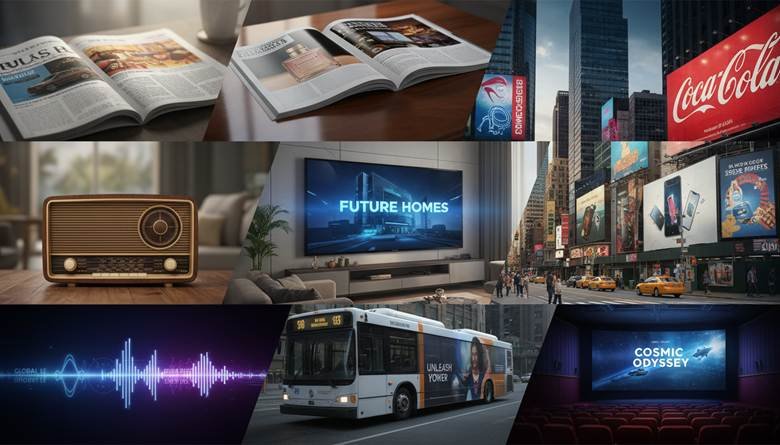
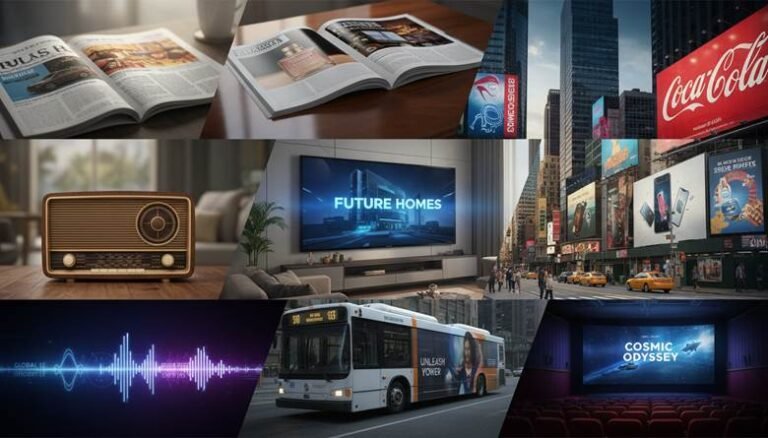
A. Newspaper

B. Magazine

C. Television (National, Regional, and Local)

D. Radio

E. Outdoor and out-of-home

F. Transit

G. Cinema Advertising

Selecting a suitable media option

How to Select a Suitable Media Option for Advertising

1. Identify Target Audience: Understand demographics, interests, and media habits. For example, if your product targets urban youth, digital and social media or FM radio (like Radio Mirchi) may be more effective. For rural audiences, radio or regional newspapers like Dainik Jagran work well.

2. Define Objectives: Clarify the campaign goal—awareness, sales, or engagement. For a new product launch aiming for mass awareness, national TV channels (e.g., Star Plus) or popular newspapers (The Times of India) provide broad reach. For detailed product information, magazines allow in-depth ads.

3. Budget Consideration: Evaluate costs versus expected returns. Television and cinema offer high impact but are expensive, suited for large brands (e.g., Coca-Cola TV ads during IPL). Local businesses might prefer cost-effective options like bus or transit ads.

4. Message Type: Decide if your message needs visuals, sound, or both. Visual products (like fashion) benefit from glossy magazines (Vogue India) or billboards. Audio-focused messages work on radio.

5. Geographic Targeting: Select media that best covers your target location. Regional TV channels, local newspapers, or city outdoor hoardings can target specific cities or states.

6. Media Consumption Trends: Consider changing habits. If your audience shifts to digital, explore online ads or streaming platforms.

Example: A fitness brand launching a new protein bar for urban millennials could use Instagram and YouTube ads (digital), ads in health magazines (print), and posters in gyms (OOH). In contrast, an agricultural product for farmers might choose regional radio, rural newspapers, and local bus ads.

Conclusion: Selecting the right media involves matching your audience, message, objectives, and budget to the strengths of each medium, ensuring maximum impact for your advertising campaign.
A. NEWSPAPER ADVERTISING

Advantages

1. Broad Reach and Accessibility:

Newspapers are one of the most widely circulated media forms, particularly in countries like India, where both national and regional newspapers thrive in multiple languages. This makes them ideal for reaching a vast and diverse audience. For example, publications like The Times of India and Dainik Bhaskar have millions of readers daily.

2. Local and Regional Targeting:

With different editions and supplements, newspapers allow advertisers to focus on specific cities or regions. This is especially valuable for brands seeking to promote products or services relevant to a particular area.

3. Short Lead Time:

Advertisements can be placed quickly, even a day or two before publication, making newspapers suitable for time-sensitive promotions, sales, or events.

4. Credibility and Trust:

Newspapers are often regarded as reliable sources of news and information, lending credibility to the ads placed within them.

5. Variety of Formats:

From small classified ads to large display ads (full page or half page), advertisers have flexibility regarding size, positioning, and frequency.

Disadvantages

1. Short Lifespan:

Newspapers are typically read within a day, after which they are discarded. This limits the duration of ad exposure.

2. Limited Visual Appeal:

Due to print limitations, especially in black-and-white sections, newspapers can’t match the visual impact of other media like TV or glossy magazines.

3. Declining Readership Among Youth:

With the rise of digital and social media, younger audiences increasingly consume news online, reducing the effectiveness of print newspapers for certain demographics.

4. High Clutter:

Newspapers often contain many ads, especially on weekends or festival days, making it easy for individual advertisements to become lost among others.

5. Limited Engagement:

Newspaper ads are passive; readers can easily skip over them unless they are particularly eye-catching or relevant.

Example

In India, brands like Reliance Jio and Amazon frequently use front-page newspaper ads to announce new launches or sales. For instance, the Jio launch in 2016 was accompanied by a series of full-front-page ads in major newspapers, helping create massive awareness and buzz across the country.

Case Study

Amul’s Topical Ads:

Amul, a leading dairy brand in India, has long used newspaper advertising to deliver witty, topical ads reflecting current events. These ads promote products and engage readers by connecting with trending news, enhancing brand recall and affinity.

B. MAGAZINE ADVERTISING

Advantages

1. Niche Targeting:

Magazines cater to specific interests or demographics (e.g., technology, health, fashion, and business). Advertisers can choose titles that closely align with their target audience, ensuring efficient use of their budget. For example, Femina targets women, while Digit reaches tech enthusiasts.

2. High-Quality Visuals and Production:

Magazines are produced on high-quality paper with professional layouts, allowing for vibrant, full-color ads that capture attention and enhance brand image.

3. Longer Shelf Life:

Unlike newspapers, magazines are often kept for weeks or months and may be read multiple times, increasing the frequency of ad exposure.

4. Prestige and Authority:

Advertising in respected magazines can add prestige to a brand, as readers often perceive such publications as authorities in their respective domains.

5. Engagement:

Magazine readers typically spend more time with each issue, are more engaged, and are less likely to skip over advertising content, especially if it is creative and relevant.

Disadvantages

1. Longer Lead Time:

Because magazines usually work on monthly or biweekly cycles, advertisers must plan content well in advance, making them less flexible for last-minute promotions.

2. Higher Costs:

Premium placements in glossy magazines can be expensive, especially for full-page or inside-cover ads.

3. Limited Reach:

Compared to newspapers or television, magazines generally have a smaller circulation, limiting their reach to a more selective audience.

4. Possible Ad Clutter:

Popular magazines can have many ads packed into each issue, potentially diluting the effect of a single advertisement.

5. Limited Frequency:

Most magazines are not published daily, reducing the frequency with which readers see any given ad compared to daily newspapers or television.

Example

Luxury brands like Rolex and Louis Vuitton frequently advertise in high-end magazines such as Vogue India or GQ India to reach affluent, style-conscious readers. Similarly, Maruti Suzuki advertises new car models in auto magazines like Autocar India to target automobile enthusiasts.

Case Study

L’Oréal in Fashion Magazines:

L’Oréal India launched a campaign for its new hair color products across leading fashion magazines like Femina and Elle. The campaign featured celebrity endorsements and glossy visuals, aligning the brand with fashion and beauty trends. The result was an increase in brand perception as being modern and stylish and a noticeable uptick in product inquiries and sales among urban women.

Comparative Insights

While both newspapers and magazines are traditional print media, their usage depends largely on campaign objectives, target audience, and budget:

  • Newspaper advertising excels at providing broad, immediate reach, especially for time-sensitive or region-specific campaigns. Its credibility and accessibility make it a preferred medium for major announcements and retail offers. However, its impact is often short-lived, and it struggles to engage younger, digital-savvy audiences.
  • Magazine advertising is best for building an aspirational brand image among targeted interest groups. Its high-quality visuals and longer shelf life allow for more profound engagement with the audience, making it ideal for luxury, lifestyle, and niche products. The trade-off is higher cost and less flexibility.

Integrated campaigns often use a combination of both to maximize reach (via newspapers) and engagement (via magazines), as seen in product launches or festival promotions by FMCG and lifestyle brands in India.

Conclusion

Selecting between newspaper and magazine advertising requires a clear understanding of the product, audience, and campaign goals. Newspapers offer immediacy and mass coverage, making them suitable for broad-based or urgent campaigns. Magazines provide focused, high-quality engagement, ideal for brands seeking lasting impact among specific interest groups. Successful media planners skillfully balance these options to deliver optimal results for their clients or brands.

C. TELEVISION ADVERTISING

Advantages

  1. Massive Reach: Television provides access to a vast and diverse audience, making it ideal for mass-market products. National channels like Star Plus or Sony reach tens of millions across India.
  2. High Impact with Audio-Visual Appeal: Combining sight, sound, and motion allows for emotionally compelling storytelling and memorable brand messages. Jingles, visuals, and celebrity endorsements have high recall.
  3. Targeted Advertising: Regional and local channels enable segmentation based on language, geography, and culture (e.g., advertising in Sun TV for Tamil-speaking audiences).
  4. Brand Credibility and Prestige: TV advertising is considered authoritative, often elevating brand perception, especially for new launches.
  5. Suitable for Demonstrations: Advertisers can effectively explain or demonstrate complex products, such as home appliances or beauty products.
  6. Time Slot Flexibility: Ads can be run during prime time, non-prime, or specific program slots to match target audience habits.
  7. Event-Based Marketing: Live broadcasts (e.g., cricket matches, award shows) attract huge, engaged audiences, ideal for launches.
  8. High Frequency and Repetition: Campaigns can run repeatedly, increasing the likelihood of message retention.
  9. Influences Purchase Decisions: TV ads often drive impulse buying due to persuasive visuals and repeated messaging.
  10. Measurability: Modern TV metrics (e.g., BARC ratings in India) help advertisers evaluate campaign effectiveness.

Disadvantages

  1. High Costs: Production and airtime, especially during prime slots or major events, are expensive—often unaffordable for small businesses.
  2. Ad Clutter: Viewers are bombarded with many ads per break, diluting individual brand impact and causing “ad fatigue.”
  3. Limited Targeting Precision: While regional targeting exists, TV is less precise than digital platforms, leading to potential wastage.
  4. Short Shelf Life: TV ads are fleeting; if a viewer misses the broadcast, they lose the opportunity unless the ads are repeated frequently.
  5. Ad Avoidance: With remote controls, DVRs, and OTT platforms, viewers can skip ads, reducing effectiveness.
  6. Long Lead Times: Producing high-quality TV commercials and booking slots requires significant time and planning.
  7. Regulatory Restrictions: There are strict guidelines for certain product categories (e.g., alcohol, tobacco) and content censorship.
  8. Limited Interactivity: TV is a “one-way” medium; viewers cannot interact with the ad in real time.
  9. Measurement Challenges: Despite improvements, tracking exact ROI and attribution is more challenging than with digital media.
  10. Regional Barriers: Language and cultural differences can limit the effectiveness of national campaigns if not localized.

Examples

  • Coca-Cola’s “Share a Coke” Campaign: Ran across national TV channels during IPL, with regionally tailored messages for local markets.
  • Surf Excel’s “Daag Acche Hain” (Stains are Beneficial Campaign: Aired in multiple Indian languages on both regional and national channels, boosting market share across the country.

Case Study

Cadbury Dairy Milk’s “Kuch Meetha Ho Jaaye”

Cadbury ran a series of emotionally charged TV ads during festive seasons (e.g., Diwali) on national and regional channels. The ads were tailored to different states (using local actors and languages). Sales increased significantly during campaign periods, and Cadbury cemented its association with Indian festivals.

D. Radio Advertising

Advantages

  1. Cost-Effectiveness: Production and airtime costs are much lower than television, making radio accessible for small and medium businesses.
  2. Local and Regional Targeting: Stations cater to specific cities or regions, enabling precise geographic targeting (e.g., Radio Mirchi Delhi vs. Radio Mirchi Pune).
  3. High Frequency: Ads can be aired several times a day, increasing the likelihood of listener recall.
  4. Immediacy and Flexibility: Radio allows quick changes to ad copy or schedule, suitable for time-sensitive promotions.
  5. Mobile Listenership: Radio is consumed in cars, workplaces, and on mobile phones, reaching people on the move.
  6. Personal Touch: Radio jockeys (RJs) and live reads can make ads feel conversational and trustworthy.
  7. Less Ad Avoidance: Listeners are less likely to skip ads, especially during commutes or routine activities.
  8. Niche Audience Programming: Station design shows for specific demographics (youth, professionals, homemakers), allowing targeted messages.
  9. Integration with Promotions: Radio can drive engagement through contests, call-ins, and listener participation.
  10. Reinforcement of Local Events: Ideal for promoting local sales, events, or community initiatives.

Disadvantages

  1. No Visual Element: Radio relies solely on audio, limiting the ability to demonstrate products or show branding.
  2. Ephemeral Messaging: Ads are transient; if a listener misses it, there’s no way to “replay” unless repeated.
  3. Limited National Reach: Most stations are local or regional; national campaigns require multiple station buys.
  4. Background Medium: Listeners may treat radio as background noise and not devote full attention to ads.
  5. Audience Measurement Issues: Radio audience metrics are less robust than TV or digital, making campaign evaluation difficult.
  6. Clutter and Repetition: High ad frequency can cause listener fatigue and reduce ad effectiveness.
  7. Limited Content Control: Ads may be placed next to competing or inappropriate content, affecting brand image.
  8. Time Constraints: Most ads are brief (15–30 seconds), limiting message complexity.
  9. Language Barriers: In multilingual societies, a single station may not cover all language groups.
  10. Declining Listenership Among Youth: Music streaming and podcasts are reducing traditional radio’s appeal for younger audiences.

Examples

  • Big Bazaar’s “Wednesday Bazaar” Offers: Local radio stations in Mumbai and Delhi promoted mid-week sales, driving significant store traffic.
  • Swiggy and Zomato: Food delivery brands use radio to advertise special deals during lunch and evening commute hours in metro cities.

Case Study

Red FM’s “Bajaate Raho” Social Campaigns

Red FM initiated campaigns like “Malishka Ko Matt Suno” (on Mumbai’s monsoon pothole issues) using RJ Malishka’s satirical songs. The campaign generated massive listener engagement, media coverage, and even policy response from local authorities, demonstrating radio’s power for local activism and brand building.

Comparative Insights

Television is unmatched for mass reach and visual storytelling, making it essential for large brands, new product launches, and brand-building exercises. However, high costs, ad avoidance, and measurement issues are notable downsides. Regional and local TV allow for cultural and linguistic targeting but require careful content adaptation.

Radio excels in local targeting, cost-effectiveness, and frequency, making it ideal for city-level promotions, small businesses, and event-based marketing. Its limitations in visuals and its shrinking youth audience require creative audio strategies and integration with other media.

Best Practices: Many Indian brands use both TV and radio to complement each other—TV for awareness and image, radio for reminders and local call-to-action.

Conclusion

Choosing between television and radio depends on budget, campaign goals, target audience, and message complexity. TV offers unmatched reach and engagement for mass campaigns, while radio provides affordability, frequency, and local relevance. Effective media planning often involves a strategic blend of both, maximizing the unique strengths of each platform.

Selecting a Suitable Media Option for Brand or Product Advertising

D. Radio Advertising

1. Introduction

Radio advertising is a form of audio marketing that reaches audiences through broadcast radio stations. It has been an enduring medium in India, particularly due to its accessibility and wide reach, covering both urban and rural populations. Brands and advertisers use radio to deliver product information, promotions, and brand messages in a cost-effective way. The format includes spot ads, sponsored shows, jingles, and live mentions.

2. Advantages of Radio Advertising

  1. Wide Geographic Reach: Radio signals penetrate remote and rural areas where other media options may not reach, making it ideal for pan-India campaigns.
  2. Cost-Effective: Producing and airing radio ads is generally less expensive than television or print advertising.
  3. High Frequency and Repetition: Radio allows advertisers to repeat their message several times a day, increasing recall among listeners.
  4. Targeted Advertising: With multiple stations catering to specific age groups, languages, and interests, brands can choose stations that best fit their target audience.
  5. Quick Production and Flexibility: Radio ads can be produced and modified quickly, allowing advertisers to respond to market changes or promotions with ease.
  6. Personal and Localized Appeal: Radio connects with listeners on a personal level and can be tailored for local dialects or cultures, making messages more relatable.
  7. Theater of the Mind: The audio-only format encourages listeners to imagine and visualize, leading to more profound engagement.
  8. On-the-Go Medium: People listen to radio while commuting, working, or doing household chores—making it a mobile and flexible medium.
  9. Less Ad Clutter: Compared to digital platforms, radio has fewer advertisements per hour, making each ad more noticeable.
  10. Credibility and Trust: Established radio personalities and stations can lend credibility to brand messages through endorsements or sponsorships.

3. Disadvantages of Radio Advertising

  1. No Visual Element: Inability to show products or demonstrate features makes it challenging for visual brands.
  2. Short Attention Span: Listeners may tune out or not pay full attention, especially if ads are not creative or engaging.
  3. Limited Data and Tracking: Measuring the effectiveness and reach of radio ads is less precise compared to digital media.
  4. Brief Exposure Time: Radio ads are short and can be missed easily if the listener is distracted or switches stations.
  5. Background Medium: Many people use radio as background noise, reducing the impact of messages.
  6. Language and Literacy Barriers: Multilingual markets require producing ads in several languages, increasing complexity.
  7. Limited Creative Possibilities: Restricted to audio, lacking visual or interactive elements.
  8. Frequency Required: Repetitive airing is needed for message retention, increasing overall costs.
  9. Zapping and Switching: Listeners can easily change stations during ad breaks.
  10. Competition from Streaming: Growth of music streaming and podcasts threatens the audience base of traditional radio.

E. Outdoor and Out-of-Home (OOH) Advertising

1. Introduction

Outdoor and out-of-home advertising refers to any advertising that reaches consumers when they are outside their homes. This includes billboards, hoardings, bus shelters, kiosks, and digital screens placed in public locations. In India, OOH remains a powerful tool for mass visibility, especially in metros and high-traffic areas.

2. Advantages of Outdoor and OOH Advertising

  1. High Visibility: Billboards and hoardings are hard to miss, especially when placed in strategic, high-traffic locations.
  2. Continuous Exposure: OOH ads are seen 24 hours a day, 7 days a week, ensuring repeated brand impressions.
  3. Geographic Flexibility: Brands can target specific areas, neighborhoods, or cities based on their marketing needs.
  4. Large Creative Canvas: The size of billboards and digital screens allows for impactful, eye-catching creative work.
  5. Broad Audience Reach: OOH reaches commuters, pedestrians, and travelers, covering multiple demographics.
  6. Boosts Brand Recall: Constant exposure to the same ad reinforces the brand message and aids recall.
  7. Cost-Effective on CPM: A high number of impressions relative to cost makes it efficient for mass awareness.
  8. Complement to Other Media: OOH amplifies and supports TV, radio, and digital campaigns by reinforcing the message.
  9. Difficulty to Ignore: OOH ads are placed in unavoidable locations, making them hard to bypass or skip.
  10. Supports Local Businesses: Ideal for promoting localized offers, events, or store openings.

3. Disadvantages of Outdoor and OOH Advertising

  1. Limited Message Length: Short viewing time means messages must be concise, limiting information conveyed.
  2. Vulnerable to Weather and Vandalism: Exposure to elements and public spaces can damage ads or reduce their visibility.
  3. Difficult Audience Measurement: Tracking actual views and conversions is challenging compared to digital media.
  4. High Initial Investment: Premium locations require significant upfront costs for design, production, and space rental.
  5. Zoning Laws and Permits: Legal restrictions in some areas restrict placement and size of OOH ads.
  6. Potential for Visual Pollution: Too many ads can clutter the urban landscape, reducing effectiveness and causing public backlash.
  7. Non-Targeted: OOH offers broad exposure but limited ability to reach specific niches or segments.
  8. Short Attention Span: Consumers often spend only a few seconds glancing at an ad while passing by.
  9. Creative Limitations: Static formats limit storytelling and product demonstration.
  10. Ad Wear-Out: Prolonged exposure to the same ad can cause audiences to ignore it over time.

F. Transit Advertising

1. Introduction

Transit advertising uses public transportation vehicles and related infrastructure to display advertisements. This includes ads on buses, trains, autos, metros, and in or around stations. In India, with its vast and busy public transport network, transit advertising offers brands a way to reach a captive, moving audience.

2. Advantages of Transit Advertising

  1. Captive Audience: Commuters are often unable to avoid ads while waiting for or riding on public transportation.
  2. Extensive Geographic Coverage: Ads move across different routes and locations, increasing reach.
  3. High Frequency: Daily commuters see the same ads repeatedly, boosting recall.
  4. Cost-Effective for Urban Reach: Lower cost compared to TV or print for large urban populations.
  5. Mass Appeal: Reaches a wide demographic, including students, workers, and families.
  6. Creative Flexibility: Ads can be placed inside or outside vehicles, at stations, on digital screens, etc.
  7. Enhances Brand Visibility: Moving ads attract attention from motorists, pedestrians, and other commuters.
  8. Inescapable Medium: Ads cannot be skipped, paused, or blocked.
  9. Ideal for Local Promotions: Great for promoting events, stores, or services in specific areas.
  10. Good for Repetitive Exposure: Regular commuters encounter the same ads on their daily routes.

3. Disadvantages of Transit Advertising

  1. Limited Viewing Time: Fast-moving vehicles mean ads are often seen only briefly.
  2. Space Constraints: Physical limitations restrict the amount of information or detail in the ad.
  3. Vandalism and Wear: Ads can be damaged, defaced, or obscured by dust and weather.
  4. Dependent on Transit Patterns: Effectiveness varies with route popularity and passenger volume.
  5. Risk of Overexposure: Daily commuters may become blind to recurring ads.
  6. Difficult Targeting: Limited ability to reach highly specific audience segments.
  7. Measurement Challenges: Tracking actual engagement or conversions is difficult.
  8. Weather Impact: Rain, smog, or darkness can reduce visibility of outdoor transit ads.
  9. Regulatory Restrictions: Some cities or transit authorities limit the types and formats of ads allowed.
  10. Temporary Nature: Ads are tied to the schedule and service of the transit vehicle, limiting campaign duration.

G. Cinema Advertising

1. Introduction

Cinema advertising involves showcasing commercials, product placements, or promotional content on the big screen before, during, or after film screenings in theaters. In India, where movie-going is a popular social activity, cinema advertising reaches audiences in a unique, immersive setting.

2. Advantages of Cinema Advertising

  1. Captive Audience: Viewers are in a fixed, darkened environment, making ad avoidance nearly impossible.
  2. Attention and Engagement: The scale of the big screen, coupled with surround sound, ensures high impact and attention.
  3. High Production Quality: Brands can leverage high-quality visuals and sound to create memorable ads.
  4. Targeted Local Reach: Theatres can be selected based on locality, allowing geo-targeting of ads.
  5. Longer Message Duration: Cinema allows for longer commercials, enabling storytelling and detailed product information.
  6. Prestige Factor: Cinema ads are often associated with premium brands and big launches, enhancing brand image.
  7. High Recall Value: The immersive experience leads to better brand and message retention.
  8. Engaged Demographics: Audiences are relaxed and receptive, and cinema often attracts youth, families, and urban consumers.
  9. Supplementary Opportunities: Brands can conduct on-ground activations, distribute samples, or sponsor events in the cinema lobby.
  10. Less Clutter: Fewer ads compared to TV or digital; each ad gets more attention.

3. Disadvantages of Cinema Advertising

  1. Limited Reach: Only those who attend cinemas see the ads; not ideal for products needing mass exposure.
  2. High Production Costs: Quality standards for cinema require high investment in ad creation.
  3. Fixed Schedules: Ads are played at set times before movies, limiting exposure to specific time slots.
  4. Audience Fluctuations: Cinema attendance can vary seasonally or with the popularity of films.
  5. No Immediate Response: Cinema does not allow for direct interaction or immediate action from the audience.
  6. Difficult to Measure ROI: Tracking the effectiveness and conversion rate of cinema ads is challenging.
  7. Ad Skipping (Arriving Late): Some viewers deliberately arrive after the ads to avoid them.
  8. Limited Frequency: Audiences may only visit the cinema occasionally, reducing repeated exposure.
  9. Inflexible Once Booked: Once an ad is scheduled, changes are difficult or impossible.
  10. Not Suitable for Urgent Messages: Long lead times for booking and production make it less suitable for timely promotions.
Ethical decision-making and social responsibility

  1. Understanding ethical principles and moral reasoning
  2. Case-based ethical decision-making
  3. Social responsibility & sustainability (SDGs)
  4. Academic and professional integrity
  5. Cyber ethics & data privacy
  6. Building trusting relationships
  7. Promoting social justice and equality

ETHICAL DECISION MAKING & RESPONSIBILITY

Introduction

Ethical decision-making involves choosing actions that are morally right and fair, considering both individual and societal values. It requires an understanding of what is right and wrong, the ability to evaluate possible consequences, and the courage to choose the most responsible option, even in difficult situations.
Responsibility in this context refers to the duty that individuals, organizations, or governments have to act ethically and be accountable for their decisions. This includes respecting human rights, promoting justice, and ensuring that actions do not harm others.
Example:
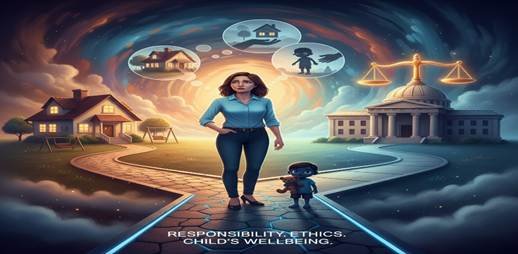
Imagine a social worker who discovers that a child in their care is being abused at home. The social worker faces an ethical dilemma: reporting the abuse could break the family’s trust and might have negative short-term consequences for the child, but failing to report would leave the child at risk. Ethical decision-making requires the social worker to consider the rights and best interests of the child, the legal duty to report abuse, and the long-term welfare of all involved. Acting responsibly, the social worker chooses to report the abuse to authorities, prioritizing the child’s safety and upholding their professional and ethical responsibilities.

In summary, ethical decision-making and responsibility are essential for promoting human rights and social development. They ensure that moral values guide actions, protect vulnerable groups, and foster trust and justice in society.

I. UNDERSTANDING ETHICAL PRINCIPLES AND MORAL REASONING

Ethical principles are fundamental guidelines that help individuals distinguish between right and wrong. They provide a foundation for moral behavior and are essential in guiding actions and decisions, especially in the fields of human rights and social development. The most commonly recognized ethical principles include

  • Respect for Autonomy: Recognizing individuals’ rights to make their own decisions, free from coercion or manipulation.
  • Beneficence: The obligation to act in ways that promote the welfare of others.
  • Non-maleficence: The duty to avoid causing harm.
  • Justice: Ensuring fairness and equitable treatment for all.
  • Fidelity: Remaining trustworthy and committed to one’s duties and obligations.
Moral reasoning is the process by which individuals use these principles to evaluate situations, make judgments, and choose actions. It involves critical thinking, empathy, and an understanding of the broader impact of one’s choices. Several ethical theories guide moral reasoning:


  • Deontological Ethics (Duty-Based): Focuses on following rules or duties regardless of the consequences. For example, one might always tell the truth because it is inherently right.
  • Consequentialism (Outcome-Based): Judges actions based on their outcomes. The most well-known form is utilitarianism, which seeks the greatest good for the highest number.
  • Virtue Ethics: Emphasizes the importance of moral character and virtues such as honesty, compassion, and courage.
  • Care Ethics: Stresses the importance of interpersonal relationships, care, and empathy in moral decision-making.

Application Example:

A public health official deciding whether to impose a lockdown during a pandemic must use moral reasoning. The official weighs the principle of beneficence (protecting public health) against autonomy (restricting individual freedom). Using deontological ethics, they might prioritize rules for safety, while a utilitarian approach would focus on minimizing overall harm. II. Case-Based Ethical Decision Making

II. CASE-BASED ETHICAL DECISION MAKING

Case-based ethical decision-making (also known as casuistry) involves analyzing real-life situations or hypothetical cases to apply ethical principles in context. This approach recognizes that ethical dilemmas are often complex and that rigidly applying rules does not always resolve them.

The typical process includes:

  1. Identifying the Ethical Issue: Clearly define the dilemma or conflict.
  2. Gathering Relevant Facts: Understand all aspects of the case, including stakeholders, facts, and potential impacts.
  3. Considering Stakeholders: Identify who is affected and whose interests and rights must be considered.
  4. Applying Ethical Principles: Use relevant ethical theories and principles to analyze the possible actions.
  5. Exploring Alternatives: Evaluate different courses of action and their likely outcomes.
  6. Making a Decision: Choose the action that is most ethically justifiable.
  7. Reflecting on the Outcome: Assess whether the decision achieved the desired ethical result.

Example Case:

A social worker learns that a teenage client is pregnant and wishes to keep it secret. The social worker must decide whether to respect the client’s confidentiality (autonomy) or inform the parents (possibly beneficence or non-maleficence if the teen is at risk).

  • Ethical Issue: Confidentiality vs. duty of care.
  • Facts: The age of the client, legal requirements, the family situation, and potential risks.
  • Stakeholders: The teenager, her parents, the social worker, and possibly the unborn child.

Application:

  • Respect for autonomy suggests keeping the secret if the teen is competent.
  • Beneficence and non-maleficence require ensuring the teen’s safety and well-being.
  • Legal requirements (e.g., mandatory reporting laws) may mandate disclosure if there is risk.
  • Decision: After weighing all factors, if the teen is at risk, the social worker may decide to inform the parents or relevant authorities, guided by both ethical principles and legal obligations.
  • Reflection: The social worker reviews the consequences and considers how to better support the client.

Importance:
Case-based reasoning allows for flexibility and sensitivity to context, ensuring ethical decisions are both principled and practical. It acknowledges that every situation is unique and may require tailored solutions.

III. SOCIAL RESPONSIBILITY & SUSTAINABILITY (SDGs) WITH EXAMPLE

Social responsibility is the ethical obligation of individuals and organizations to act for the benefit of society at large. It involves going beyond personal or organizational interests to consider the broader impact of actions on communities, the environment, and future generations.

Sustainability refers to meeting the needs of the present without compromising future generations’ ability to meet their own needs. It encompasses environmental stewardship, social equity, and economic viability.

The Sustainable Development Goals (SDGs)

The United Nations Sustainable Development Goals (SDGs) are a global call to action to end poverty, protect the planet, and ensure peace and prosperity for all by 2030. There are 17 SDGs, including:

  • No Poverty
  • Zero Hunger
  • Good Health and Well-being
  • Quality Education
  • Gender Equality
  • Clean Water and Sanitation
  • Affordable and Clean Energy
  • Decent Work and Economic Growth
  • Reduced Inequality
  • Sustainable Cities and Communities
  • Responsible Consumption and Production
  • Climate Action
  • Life Below Water
  • Life on Land
  • Peace, Justice, and Strong Institutions
  • Partnerships for the Goals

Importance of Social Responsibility & Sustainability

  • Protects Human Rights: Ensures that basic rights and freedoms are respected and promoted.
  • Promotes Equity: Reduces social and economic inequalities.
  • Preserves the Environment: Encourages responsible use of resources and reduces pollution and waste.
  • Fosters Trust: Builds public confidence in institutions and organizations.
  • Ensures Long-Term Viability: Supports the ongoing well-being of communities and the planet.

Example: Corporate Social Responsibility (CSR) for SDG 13 (Climate Action)

Case Example:

A multinational corporation recognizes its carbon footprint contributes to climate change. As part of its Corporate Social Responsibility (CSR) strategy and commitment to SDG 13 (Climate Action), the company implements several initiatives:

  • Investing in Renewable Energy: The company transitions its operations from fossil fuels to solar and wind energy, reducing greenhouse gas emissions.
  • Sustainable Supply Chain: It partners with suppliers who follow environmentally friendly practices and reduces packaging waste.
  • Employee Engagement: Employees are encouraged to adopt green practices, such as carpooling and recycling at the workplace.
  • Community Projects: The company invests in local reforestation efforts and supports environmental education in schools.

Outcomes:
These actions not only help reduce the company’s environmental impact but also improve its public image, attract eco-conscious consumers and investors, and inspire other businesses to adopt sustainable practices.

Analysis:
By aligning its business strategy with the SDGs, the company demonstrates social responsibility and a commitment to sustainability. This benefits not just the company but also the wider society and environment, contributing to global efforts to combat climate change.

IV. ACADEMIC AND PROFESSIONAL INTEGRITY

Academic and professional integrity refers to upholding ethical standards and honesty in all academic and workplace activities. It is foundational to trust, credibility, and respect in education and professional environments.

Key Principles:

  • Honesty: Presenting work truthfully and acknowledging sources.
  • Fairness: Treating others impartially and following rules.
  • Respect: Valuing the contributions and rights of others.
  • Responsibility: Being accountable for one’s actions.
  • Trust: Building confidence through consistent ethical behavior.

Academic Integrity

In academic settings, integrity means submitting original work, avoiding plagiarism, and giving credit to others’ ideas. It also includes following the rules during exams, assignments, and research.

Example:
A university student is assigned an essay. Although tempted to copy material from the internet, the student instead researches, writes original content, and cites all references properly. This upholds academic integrity, ensuring the student’s grades reflect true understanding and effort.

Academic dishonesty, such as cheating, falsifying data, or plagiarism, undermines the value of education. It can lead to disciplinary action and damages reputations.

Professional Integrity

In the workplace, professional integrity involves delivering accurate work, respecting confidentiality, and avoiding conflicts of interest. Professionals are expected to adhere to codes of conduct and ethical guidelines relevant to their field.

Example:
A healthcare worker discovers an error in patient records that could affect treatment. Instead of ignoring it, the worker promptly reports the mistake and helps correct it, safeguarding patient welfare and maintaining the trust of colleagues and patients.

Professional dishonesty, such as falsifying reports or breaching confidentiality, can result in loss of trust, legal consequences, and harm to stakeholders.

Importance

  • Builds Trust: Integrity creates a trustworthy environment, essential for collaborative learning and professional success.
  • Ensures Fairness: Ethical behavior ensures equal opportunities and fair assessment.
  • Promotes Excellence: Upholding standards encourages genuine achievement and innovation.
  • Prevents Harm: Honest actions protect individuals and organizations from reputational and legal risks.

Fostering Integrity

  • Education: Training on academic and professional ethics.
  • Clear Policies: Well-communicated rules and consequences.
  • Support Systems: Resources for reporting and addressing misconduct.
  • Role Models: Leaders and teachers demonstrating ethical behavior.

Conclusion:
Academic and professional integrity are vital for personal growth, institutional credibility, and societal trust. Upholding these principles ensures that qualifications and professional achievements are meaningful and respected.

V. CYBER ETHICS & DATA PRIVACY

Cyber ethics refers to the moral principles guiding behavior and decision-making online, while data privacy concerns the protection of personal information in the digital world. Both are critical in today’s technology-driven society.

Cyber Ethics

Cyber ethics addresses issues like honesty, respect, responsibility, and fairness in digital interactions. It includes:

  • Respecting Others: Not engaging in cyberbullying, harassment, or spreading false information.
  • Intellectual Property: Not copying or distributing software, music, or content illegally.
  • Responsible Use: Using the internet in ways that do not harm others or society.

Example:
A student receives answers to an online test through a messaging app. Instead of using them, the student reports the incident to the instructor, upholding cyber ethics by choosing honesty over dishonest advantage.

Data Privacy

Data privacy involves controlling how personal information is collected, stored, and shared. It is essential for protecting individuals from misuse of their data by companies, hackers, or governments.

Key Concepts:

  • Consent: Individuals must agree to how their data is used.
  • Security: Organizations must protect data from unauthorized access.
  • Transparency: Clear information about data collection and usage.

Example:
A mobile app asks users for access to their contacts and location. An ethical company explains why it needs this information, allows users to opt out, and respects their privacy while building trust.

Challenges

  • Data Breaches: Unauthorized access to personal data can lead to identity theft and financial loss.
  • Surveillance: Excessive monitoring infringes on privacy rights.
  • Misinformation: The spread of false information can harm individuals and society.

Legal and Ethical Responsibilities

  • Laws: Regulations like the General Data Protection Regulation (GDPR) in Europe set standards for data privacy.
  • Best Practices: Organizations should use encryption, minimize data collection, and allow users control over their information.

Conclusion

Practicing cyber ethics and safeguarding data privacy is essential for protecting rights, fostering trust, and ensuring responsible digital citizenship. Everyone—individuals, organizations, and governments—must act ethically to create a safe and fair online environment.

VI. BUILDING TRUSTING RELATIONSHIPS

Building trusting relationships is essential in both personal and professional life, especially in human rights and social development work. Trust is the foundation for effective collaboration, open communication, and achieving shared goals.

Elements of Trust

  • Honesty: Openness and truthfulness in interactions.
  • Reliability: Consistently fulfilling promises and obligations.
  • Respect: Valuing others’ perspectives and dignity.
  • Empathy: Understanding and caring about others’ experiences and feelings.
  • Transparency: Clear, open communication about intentions and actions.

Importance in Human Rights and Social Development

  • Empowerment: Trust enables individuals and communities to express needs and participate in decisions affecting them.
  • Collaboration: Effective partnerships are built on trust, leading to sustainable change.
  • Conflict Resolution: Trust helps resolve disputes and fosters reconciliation.
  • Service Delivery: Beneficiaries are more likely to seek support from trusted organizations.

Example:
An NGO working with refugees builds trust by involving community leaders in program design, listening to concerns, and following through on commitments. This collaborative approach ensures programs address real needs and encourages community participation.

Strategies for Building Trust

  • Active Listening: Giving full attention and responding thoughtfully.
  • Consistency: Acting in line with stated values and policies.
  • Accountability: Admitting mistakes and taking responsibility.
  • Inclusivity: Engaging diverse voices and perspectives.
  • Confidentiality: Respecting privacy and protecting sensitive information.

Challenges

  • Past Harms: Previous betrayals or abuses can make trust difficult to establish.
  • Cultural Differences: Misunderstandings can arise from differing norms or values.
  • Power Imbalances: Unequal relationships can hinder open communication.

Overcoming Challenges

  • Patience: Building trust takes time and repeated positive interactions.
  • Transparency: Clearly explaining intentions and processes.
  • Capacity Building: Empowering others to take active roles.

Conclusion

Trust is fundamental to social development, advocacy, and human rights protection. By demonstrating honesty, respect, and accountability, individuals and organizations can build strong, lasting relationships that enable meaningful progress.

VII. PROMOTING SOCIAL JUSTICE AND EQUALITY

Social justice is the principle that all individuals deserve equal rights, opportunities, and treatment. Equality ensures everyone has the same access to resources, opportunities, and protections, regardless of background.

Core Principles

  • Equity: Addressing systemic barriers so everyone can achieve similar outcomes.
  • Inclusion: Ensuring diverse groups are represented and have a voice.
  • Non-Discrimination: Opposing bias based on race, gender, religion, or other characteristics.
  • Participation: Enabling all individuals to engage in decision-making.

Importance

  • Human Dignity: Everyone has inherent worth and deserves respect.
  • Peaceful Societies: Reducing inequality prevents conflict and supports stability.
  • Economic Growth: Inclusive societies are more innovative and prosperous.

Strategies for Promoting Social Justice

  • Advocacy: Raising awareness about inequalities and calling for policy change.
  • Education: Teaching about rights, diversity, and tolerance.
  • Legal Protection: Enforcing laws against discrimination and promoting affirmative action.
  • Community Engagement: Involving marginalized groups in program design and leadership.

Example:
A government introduces free primary education for all children, regardless of gender, income, or ethnicity. This policy promotes equality by removing financial barriers and ensures every child can achieve their potential.

Challenges

  • Structural Inequality: Deep-rooted systems of oppression, such as racism or sexism.
  • Lack of Resources: Limited funding for social programs and services.
  • Resistance to Change: Societal attitudes or interests that oppose reforms.

Overcoming Challenges

  • Coalition Building: Working with diverse groups to amplify voices.
  • Policy Reform: Updating laws and regulations to address injustice.
  • Monitoring and Accountability: Tracking progress and holding institutions answerable.

Conclusion

Promoting social justice and equality is essential for human rights and sustainable development. By addressing barriers, ensuring inclusion, and empowering all people, societies can move toward fairness, dignity, and collective well-being.

CONTRACT & NEGOTIATIONS

Introduction

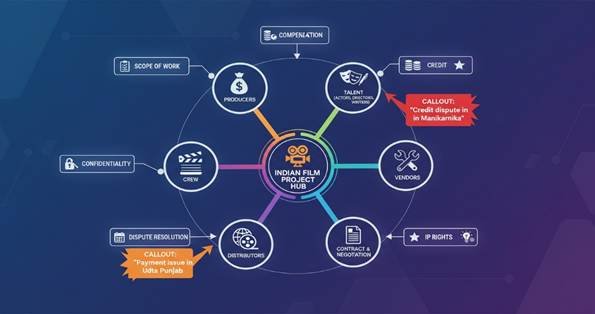
Contract and negotiation are at the heart of effective film project management, ensuring clear expectations and legal protection for all parties involved in a production.

In the Indian film industry, contracts formalize relationships among producers, talent (actors, directors, writers), crew, vendors, and distributors. Key elements of these agreements include the scope of work, compensation, credit, intellectual property rights, timelines, confidentiality, and dispute resolution mechanisms.

Negotiation is the process of aligning the interests of different stakeholders. For example, an actor might negotiate for profit-sharing or creative input, while a director may seek control over the final edit. Crew members, often represented by unions like FWICE (Federation of Western India Cine Employees), negotiate standardized rates and working conditions. Writers, supported by organizations such as the Screenwriters Association (SWA), secure rights for credit and royalties.

Typical contracts in film project management include:

  • Talent contracts (defining roles, compensation, and exclusivity)
  • Crew and service agreements (outlining job responsibilities and payment)
  • Location and equipment rental agreements (detailing usage, fees, and damages)
  • Music licensing and sync rights (specifying terms for the use of music)
  • Distribution and sales contracts (covering release, territories, and revenue sharing)

Clear, legally binding contracts reduce the risk of disputes, delays, and financial losses. Real-world cases—such as disagreements over credit in “Manikarnika” or payment issues in “Udta Punjab”—highlight the importance of precise agreements and thorough negotiation.

Ultimately, successful film project management depends on contracts that balance creative freedom with legal safeguards, allowing filmmakers to focus on storytelling while minimizing risks and protecting everyone’s interests.

I. TALENT CONTRACTS (ACTORS, DIRECTORS, WRITERS)

Talent Contracts (Actors, Directors, Writers) in Film Making: Contracts & Negotiations

Talent contracts are foundational legal documents in film making, defining the relationship between a production company and creative professionals such as actors, directors, and writers. These agreements not only outline the scope of work, compensation, and credit, but also establish clear boundaries for intellectual property rights, creative control, and dispute resolution. Effective negotiation and drafting of talent contracts are essential to prevent misunderstandings and protect both the production and the talent involved.

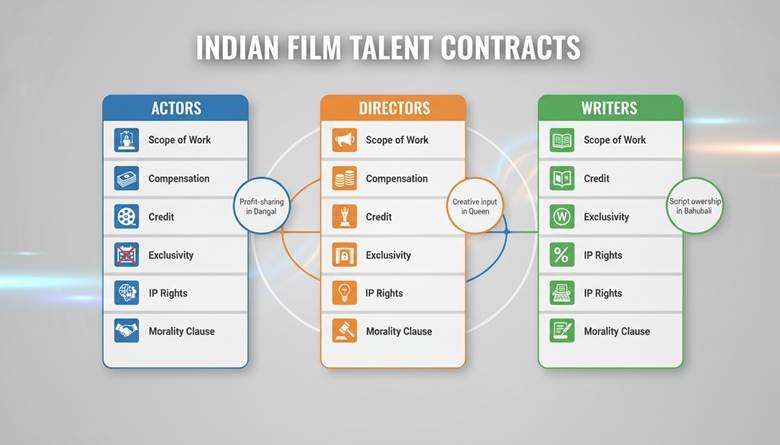
1. Key Elements of Talent Contracts

  • Scope of Work: Specifies the creative responsibilities of the talent (e.g., acting in a lead role, directing the entire film, writing the screenplay).
  • Compensation Structure: May include a fixed fee, performance bonuses, or profit-sharing arrangements (percentage of box office or net profits).
  • Credit and Attribution: Defines how the talent will be credited on screen and in promotional material.
  • Exclusivity Clauses: Restricts talent from working on competing projects during the contract period.
  • Schedule and Availability: Outlines the dates and time commitment expected from the talent.
  • Termination and Exit Clauses: Details circumstances under which either party can terminate the contract.
  • Intellectual Property Rights: Clarifies ownership of creative output (e.g., script rights, performance rights).
  • Morality and Behavior Clauses: Ensures talent upholds certain standards, protecting the film’s reputation.

2. Negotiation Dynamics

Negotiation is a two-way process where both the producer and talent strive to maximize their interests. High-profile actors and directors often negotiate for profit participation, script or edit approval, or a say in casting. Writers may negotiate for royalties, screen credit, and creative input, especially if they are adapting their own work.

Negotiation Examples:

  • Profit Sharing: In “Dangal” (2016), actor Aamir Khan reportedly chose a profit-sharing model over a fixed fee, ensuring he benefited directly from the film’s box office success.
  • Creative Control: Director Sanjay Leela Bhansali is known for negotiating extensive creative control in his contracts, including final cut privileges.

3. Case Studies and Real-World Examples

Case Study 1: “Manikarnika: The Queen of Jhansi” (2019)

  • Context: The film saw a dispute between co-director Krish and lead actress Kangana Ranaut, who took over directorial duties mid-production.
  • Contractual Issue: The controversy centered around directorial credit and creative control. Allegedly, the absence of a clear, binding contract on directorial roles led to public disputes and confusion over final credits.
  • Lesson: Detailed clauses regarding creative decision-making and credit attribution are crucial for avoiding such conflicts.

Case Study 2: Writer’s Rights and SWA Intervention

  • Context: The Screenwriters Association (SWA) of India has intervened in several cases where writers were denied full credit or adequate compensation.
  • Example: For the film “Stree” (2018), writers Raj Nidimoru and Krishna D.K. successfully negotiated for both payment and screen credit, with SWA support ensuring industry standards were met.
  • Lesson: Strong contracts, coupled with union support, empower talent to claim their due recognition and royalties.

Case Study 3: Royalty and Residuals in Music Biopics

  • Context: In biographical films like “The Dirty Picture” (2011) and “Sanju” (2018), writers and actors negotiated for ongoing royalties based on the film’s continued commercial success (TV, streaming, and international releases).
  • Lesson: Talent contracts should consider emerging revenue streams (e.g., OTT platforms, global markets) rather than focusing solely on domestic theatrical release.

Example: “Queen” (2013) and Creative Input

  • Actress Kangana Ranaut negotiated for creative input, including improvisation of dialogues, which became a hallmark of her character and contributed to the film’s critical success.
  • The contract included clauses allowing for such improvisation, demonstrating the value of flexible, creative-friendly agreements.

4. Risks and Disputes from Poorly Drafted Contracts

  • Ambiguity: Vague contracts can lead to disputes, such as disagreements over the extent of creative input or final authority.
  • Delayed Payments: Without clear compensation deadlines and penalties, talent may face delayed or incomplete payments, as reported by various crew and actors in Bollywood.
  • Misattribution: Lack of clarity on credit can result in legal battles, as seen in the “Manikarnika” dispute.

5. Role of Industry Associations

  • Screenwriters Association (SWA): Provides standardized contract templates, legal support, and resolves disputes on credit and compensation for writers.
  • Federation of Western India Cine Employees (FWICE): Advocates for fair pay and safe working conditions for crew, establishing minimum standards for contracts.

6. Sample Talent Contract Clause

The Actor agrees to render exclusive services for the Production during the period from 1st August 2024 to 15th October 2024. The Producer shall pay the Actor a total fee of INR 1.5 Crore, payable in three installments. The Actor shall receive top billing and onscreen credit as ‘Lead Actor’. Any breach of confidentiality or moral clauses may result in immediate termination of this agreement.

7. Conclusion

Talent contracts are the backbone of professional film making, especially in India’s dynamic and vibrant industry. Well-negotiated agreements ensure that creative contributors are fairly compensated, credited, and protected, while producers secure the rights and stability needed for smooth production. As the industry evolves—with new revenue streams and global opportunities—talent contracts and negotiations must adapt, emphasizing clarity, flexibility, and legal rigor.

II. Crew and Service Agreements in Indian Film Industry

Introduction

In the world of film production, crew and service agreements are vital contracts that outline the roles, responsibilities, and rights of the technical and support teams working behind the scenes. These agreements not only ensure smooth workflow but also provide legal protection and clarity for both the crew members and the producers.

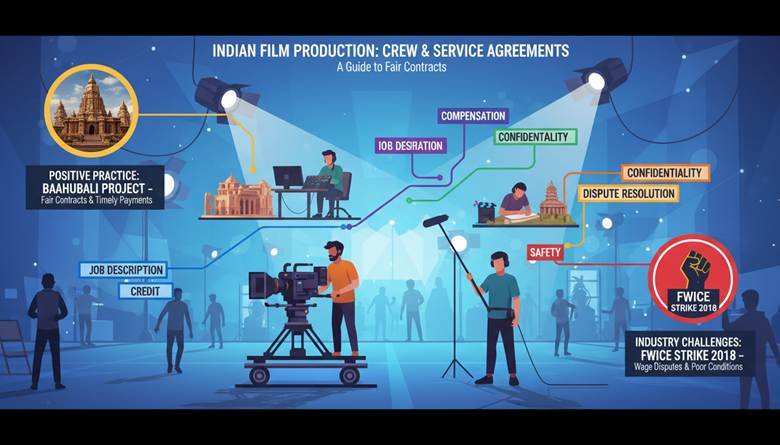
Key Elements of Crew and Service Agreements

  • Job Description & Scope of Work: Defines exact duties (e.g., cinematography, sound engineering, editing).
  • Compensation & Payment Schedule: May be based on a daily, weekly, or project basis, often reflecting industry standards or union rates.
  • Work Schedule: Outlines number of working days, shift timings, and provisions for overtime.
  • Credit: Specifies whether and how the crew member will be credited in the film.
  • Confidentiality Clause: Prevents disclosure of sensitive project information.
  • Health, Safety & Insurance: Details coverage for accidents, injuries, or equipment damage on set.
  • Termination Clause: Lays out grounds for dismissal or contract cancellation.
  • Dispute Resolution: Procedures to follow in case of disagreements.

Negotiation Process

Negotiation in crew and service agreements primarily revolves around pay rates, scope of work, overtime compensation, and credit. In India, many crew members are represented by unions such as FWICE (Federation of Western India Cine Employees), which standardize pay scales and working conditions. However, negotiations become significant for non-unionized or specialized roles, or in high-profile projects where unique skills are in demand.

Example: “Baahubali” (2015–2017)

The production of “Baahubali: The Beginning” and “Baahubali: The Conclusion” serves as an excellent example of comprehensive crew and service agreements in action. Given the scale and complexity of the project, the producers employed hundreds of technicians, VFX artists, set designers, and support staff. Each crew member had a clearly drafted contract specifying their job role, deliverables, work duration, and compensation.

  • VFX & Technical Crew: The agreements with VFX vendors such as Makuta VFX included detailed deliverables, timeline milestones, and confidentiality clauses due to the visual spectacle and secrecy around the film’s plot and special effects.
  • Safety Provisions: With numerous action sequences and large sets, the contracts included clauses for safety protocols and insurance coverage for crew injuries.

These detailed agreements contributed to a disciplined workflow and minimized disputes, helping the films to not only achieve massive box office success but also set new industry standards for professionalism and crew welfare.

Case Study: FWICE Strike in Bollywood (2018)

In August 2018, a major dispute arose when thousands of members of the Federation of Western India Cine Employees (FWICE) went on strike over unpaid wages and demands for better working conditions. The strike brought several film and TV productions in Mumbai to a standstill.

Key Issues:

  • Crew members complained about delayed payments, lack of proper contracts, and non-adherence to standardized rates.
  • Producers were accused of hiring non-unionized workers at lower pay and without proper agreements, undermining union standards.

Negotiation & Resolution:

  • After intense negotiations between FWICE, producers, and film industry representatives, a resolution was reached.
  • Producers agreed to honor standardized contracts, ensure timely payments, and respect union-negotiated rates and conditions.
  • This strike highlighted the importance of formal, written crew agreements and the power of collective bargaining in ensuring fair treatment and smooth project execution.

Conclusion

Crew and service agreements are the backbone of any successful Indian film production. They ensure that technical and support staff are fairly compensated, credited, and protected. High-profile films like “Baahubali” demonstrate the positive impact of clear, comprehensive agreements, while industry-wide disputes such as the 2018 FWICE strike underscore the risks of neglecting standardized contracts. Well-negotiated crew agreements not only safeguard worker rights but also contribute to the efficiency, safety, and success of film projects in India.

III. LOCATION AND EQUIPMENT RENTALS IN INDIAN FILMMAKING

1. Importance of Location in Filmmaking

Locations play a crucial role in storytelling, as they add authenticity, mood, and context to a film. In India, diverse landscapes—from the bustling streets of Mumbai to the serene backwaters of Kerala—offer filmmakers a wide range of visual possibilities. The right location can enhance a film’s narrative, while the wrong one can detract from its believability.

Examples:

  • Mumbai: Often used for urban, cosmopolitan stories (e.g., “Wake Up Sid,” “Gully Boy”).
  • Rajasthan: Popular for historical or royal settings (e.g., “Jodhaa Akbar”).
  • Kerala: Preferred for natural beauty and rural stories (e.g., “Dil Se,” “Bangalore Days”).
  • Kolkata: Chosen for its colonial architecture and cultural vibe (e.g., “Piku,” “Kahaani”).

2. The Process of Location Scouting and Permissions

Location scouting involves finding places that fit the director’s vision and logistical needs. In India, this process includes:

  • Research and Planning: Directors and location managers shortlist potential sites.
  • Recce (Reconnaissance): Visiting and evaluating locations for accessibility, lighting, sound, and facilities.
  • Permissions: Securing legal permissions from local authorities, police, and sometimes residents. This often involves paperwork and fees.

Case Study: “Slumdog Millionaire” (2008)

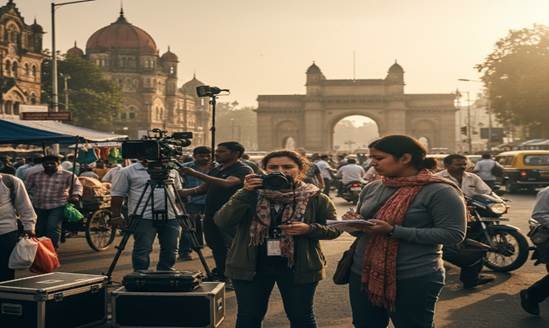
Most of “Slumdog Millionaire” was shot on location in Mumbai’s slums. Director Danny Boyle’s team had to navigate complex permissions and local sensitivities. The film’s authenticity was heightened by its real locations, but this also meant dealing with challenges like crowd control and unpredictable weather.

3. Equipment Rentals in India

Filmmaking equipment (cameras, lights, grip gear, sound equipment) can be prohibitively expensive to own, especially for students and independent filmmakers. Renting solves this problem.

Key Points:

  • Major Rental Hubs: Mumbai, Hyderabad, Chennai, Delhi, and Bangalore.
  • Equipment Types: Cameras (Arri, RED, Canon), lenses, lighting (LEDs, HMIs), grip equipment (dollies, jibs), audio gear.
  • Rental Process:
    • Choose equipment based on project needs and budget.
    • Check availability and book in advance, especially during peak seasons.
    • Sign rental agreements and submit ID proofs or security deposits.
    • Inspect gear before accepting and after returning it.

Indian Examples:

  • Qube Cinemas (Chennai): Known for camera and post-production equipment rentals.
  • Accord Equips (Mumbai): Offers a wide range of filmmaking gear and is popular with Bollywood productions.
  • RS Visuals (Delhi): Provides rental solutions for cameras and lighting.

Case Study: “Lunchbox” (2013)

Director Ritesh Batra’s team rented most of their equipment from Mumbai-based rental companies to shoot in crowded trains and apartments. The use of compact, high-quality digital cameras allowed the crew to work efficiently in tight locations and within a limited budget.

4. Challenges and Best Practices

Challenges:

  • High Demand: During festival seasons or major shoots, equipment and locations may be booked out.
  • Logistics: Transporting equipment across states requires permits, and delicate gear can be damaged en route.
  • Permissions: Bureaucratic delays, especially for public areas, can disrupt schedules.

Best Practices:

  • Always have backup equipment and alternate locations.
  • Build relationships with rental providers for better deals and flexibility.
  • Hire experienced location managers to streamline permissions.

IV. MUSIC LICENSING AND SYNC RIGHTS IN INDIAN FILMS

1. What is Music Licensing and Sync Rights?

  • Music Licensing: The process by which filmmakers obtain legal permission to use copyrighted music in their films.
  • Sync Rights: The right to synchronize a piece of music with visual media (film, TV, ads).

In India, most music used in films is composed specifically for them. However, using pre-existing tracks (Indian or international) requires obtaining sync rights.

2. The Indian Context

  • Bollywood and regional industries often rely on original scores.
  • Independent filmmakers sometimes use existing songs, necessitating licensing.
  • Copyright is typically owned by music labels (e.g., T-Series, Sony Music India).

3. The Licensing Process

  • Identify the Rights Holder: Usually the music label or composer.
  • Negotiate Terms: Duration, territory, medium (theatrical, OTT, TV), and fee.
  • Agreement: Legal contract specifying usage and payment.
  • Payment: Licensing fees can range from a few thousand to several lakhs of rupees depending on the song’s popularity and scope of usage.

Indian Example:

  • T-Series: As the largest music label, T-Series holds sync rights to thousands of Bollywood tracks. Any filmmaker wanting to use a T-Series song must negotiate with the company.

4. Case Study: “Gully Boy” (2019)

“Gully Boy” is a prime example of modern Indian filmmaking where music licensing played a major role. The film featured both original compositions and tracks by independent Indian hip-hop artists.

  • Original Music: Created for the film and owned by the producers.
  • Existing Tracks: For songs not created specifically for the film, the producers obtained sync rights from the original artists and labels.
  • Outcome: The film’s soundtrack boosted the careers of several independent artists and set a precedent for hip-hop music licensing in Indian cinema.

5. Case Study: “Mere Sapno Ki Rani” in “The Namesake” (2006)

In Mira Nair’s “The Namesake,” the classic Bollywood song “Mere Sapno Ki Rani” was used in an iconic scene. The producers had to:

  • Contact Saregama (the rights holder)
  • Negotiate a fee for international usage
  • Sign a sync licensing agreement

This is a classic example of Indian music being licensed for global cinema.

6. Challenges in Music Licensing in India

  • Multiple Rights Holders: Sometimes, the composer, lyricist, and music label each hold different rights, making negotiations complex.
  • High Costs: Popular tracks can be expensive to license, especially for low-budget films.
  • Piracy Issues: Unauthorized use of music is common, but can lead to legal trouble and festival disqualification.

7. Best Practices

  • Plan Early: Identify music needs during pre-production and start licensing negotiations early.
  • Use Royalty-Free or Indie Music: For smaller budgets, consider platforms like Epidemic Sound or collaborate with independent musicians.
  • Legal Consultation: Always have a lawyer review licensing contract.

Conclusion

Both location and equipment rentals and music licensing & sync rights are critical aspects of filmmaking in India. Choosing the right location and accessing quality equipment can elevate production value, while proper music licensing ensures legal safety and enhances storytelling. By studying successful Indian case studies and understanding industry practices, filmmakers can navigate these complex processes more effectively and bring their creative visions to life.

V. DISTRIBUTION AND SALES CONTRACTS IN INDIAN CINEMA

1. Introduction to Distribution and Sales Contracts

Distribution and sales contracts are legal agreements that determine how a film reaches its audience and how revenue is shared. In India, these contracts are crucial, as the film industry features a vast release network—domestic, international, theatrical, digital, and satellite.

Key Elements:

  • Rights Granted: The specific rights being sold (theatrical, OTT, TV, overseas, home video, etc.)
  • Territory: The geographic regions covered by the deal.
  • Duration: How long the distributor can exploit the film.
  • Revenue Sharing: The split of income between producer and distributor.
  • Minimum Guarantee (MG): An upfront fee paid by the distributor, often used to finance the film.

2. Types of Distribution Deals in India

  • Theatrical Distribution: Rights to release the film in cinemas.
  • Satellite Rights: Rights to broadcast films on TV channels.
  • OTT/Digital Rights: Rights to stream films on platforms like Netflix, Amazon Prime, Disney+ Hotstar.
  • Music Rights: Sale of soundtrack/music.
  • International Distribution: Overseas release, including in countries with large Indian diasporas.

Example:

  • “Dangal” (2016): Secured separate distribution deals for China, which contributed significantly to its box office.

3. The Process of Distribution in India

  • Negotiation: Producers negotiate with distributors and sales agents, sometimes even before the film is completed.
  • Contract Finalization: Legal teams draft and review contracts covering all rights and obligations.
  • Release Strategy: Distributors plan release windows—festivals, theatrical, digital, TV, etc.
  • Revenue Collection: The distributor collects revenue from exhibitors and remits the producer’s share as per the contract.

4. Indian Case Study: “Baahubali: The Beginning” (2015)

  • Pan-India Release: “Baahubali” was released in multiple Indian languages and internationally.
  • Distribution Contracts: The producers signed deals with different distributors for Telugu, Tamil, Hindi, and Malayalam markets. Karan Johar’s Dharma Productions distributed the Hindi version.
  • Satellite & Digital Rights: Hotstar acquired digital rights; Star TV acquired satellite rights for a record sum.
  • Revenue Model: The film’s revenue was maximized through a combination of minimum guarantee deals and revenue sharing.

Key Takeaway:

The success of Baahubali was built on well-structured contracts that ensured wide distribution, robust pre-release business (satellite, digital, and overseas rights), and transparent revenue sharing.

5. Sales Agents and International Markets

For Indian films aiming at overseas audiences, sales agents play a vital role. They represent the film at international markets, festivals, and negotiate with foreign distributors.

Example:

  • “Lunchbox” (2013): International sales agent The Match Factory helped secure releases in over 30 countries, boosting the film’s global profile.

6. Challenges in Distribution Contracts

  • Delayed Payments: Distributors sometimes delay payments or fail to report accurate box office numbers.
  • Piracy: Impacts potential earnings, especially for smaller films.
  • Market Fragmentation: India’s linguistic and regional diversity requires multiple deals.

7. Best Practices for Filmmakers

  • Legal Review: Always have contracts reviewed by experienced entertainment lawyers.
  • Transparent Accounting: Insist on regular, audited statements.
  • Clear Rights Allocation: Specify exactly what’s being sold and what’s retained.

VI. FIAPF, SWA, FWICE: Roles and Impact

1. FIAPF (International Federation of Film Producers Associations)

Overview

  • FIAPF is an international organization that represents producers’ interests and regulates international film festivals.
  • It accredits festivals like Cannes, Berlin, and the International Film Festival of India (IFFI).

Indian Example:

  • IFFI (Goa): Accredited by FIAPF, giving it global recognition and making it a key platform for Indian and international films.

Case Study:

  • IFFI’s Growth Post-Accreditation: After gaining FIAPF accreditation, IFFI attracted higher-quality international entries, more buyers, and greater media attention, boosting the global profile of Indian cinema.

2. SWA (Screenwriters Association)

Overview

  • SWA is India’s primary body for screenwriters and lyricists.
  • It helps protect writers’ rights, arbitrate disputes, and set industry standards for contracts and credits.

Functions:

  • Registration of Scripts: Protects original work from plagiarism.
  • Contract Assistance: Offers model contracts and legal advice.
  • Credit Disputes: Mediates conflicts over screenwriting and lyric credits.
  • Workshops and Training: Hosts events for skills development.

Indian Example:

  • SWA vs. Film Producer: In several cases, SWA has intervened when writers claimed their scripts were used without credit or payment. In 2019, multiple writers credited SWA for settling disputes regarding films like “Luka Chuppi” and “Manikarnika.”

Case Study:

  • “Manikarnika: The Queen of Jhansi” (2019): The film faced a controversy over writing credits. SWA mediated between the writers and producers, resulting in fair credit allocation.

3. FWICE (Federation of Western India Cine Employees)

Overview

  • FWICE is a union representing technicians, crew, and other workers in the Mumbai film industry.
  • It covers a wide range of crafts—camera, sound, makeup, set workers, etc.

Functions:

  • Wages and Working Conditions: Negotiates minimum wages, working hours, and safety norms.
  • Dispute Resolution: Handles labor disputes and strikes.
  • Welfare Programs: Offers health and accident insurance, financial aid, etc.

Indian Example:

  • FWICE Strike (2017): FWICE called a strike demanding better wages and working conditions. Major productions came to a halt until producers agreed to revised terms.

Case Study:

  • FWICE vs. Producers Guild Strike (2018):
    • Background: FWICE demanded higher minimum wages and improved safety for crew.
    • Impact: Over 20,000 workers participated. Shooting of major projects like “Housefull 4” and TV serials was paused.
    • Resolution: After intense negotiations, producers agreed to updated wage structures and safety protocols.

4. Importance of These Organizations

  • Ensuring Fairness: They protect the rights and welfare of creators and workers.
  • Industry Standards: They help set ethical, legal, and safety standards.
  • Dispute Resolution: They offer neutral platforms for resolving industry conflicts.

5. The Role in Modern Indian Filmmaking

As the Indian film industry globalizes and diversifies (with the growth of OTT platforms, indie cinema, and international co-productions), the roles of FIAPF, SWA, and FWICE have become more significant.

Examples:

  • SWA registration is now a requirement for many script submissions to production houses and studios.
  • FWICE has collaborated with OTT platforms like Netflix and Amazon Prime to set new standards for crew welfare and safety.
  • FIAPF accreditation has helped Indian films gain more visibility at international festivals.

Conclusion

Distribution and sales contracts are the backbone of a film’s commercial success in India. Well-negotiated contracts ensure that a film reaches its intended audience and that profits are shared fairly among stakeholders. Indian blockbusters like “Baahubali” and “Dangal” exemplify the importance of strategic distribution deals, not just domestically but also internationally.

Meanwhile, organizations like FIAPF, SWA, and FWICE play a pivotal role in safeguarding the interests of Indian filmmakers, writers, and technicians. Through advocacy, dispute resolution, and the setting of industry standards, they help make the Indian film industry more professional, fair, and globally competitive.

Indian Film Industry: The Road Ahead

As the industry evolves, especially with the rise of digital platforms and international collaborations, understanding the legal and organizational landscape becomes even more crucial for filmmakers. Whether it’s drafting a robust sales contract, registering a script, or ensuring fair working conditions, knowledge of these systems is essential for anyone aspiring to build a lasting career in Indian cinema.

A. BRANDING – PACKING AND PACKAGING – ROLE AND IMPORTANCE

1. Branding

Meaning of Branding

Branding is the process of creating a unique identity for a product, service, or company through names, symbols, designs, and consistent messaging. It defines how consumers perceive and remember a product or company.

Role and Importance of Branding

  • Differentiation: Branding distinguishes a product from its competitors. In a crowded marketplace, strong branding helps customers instantly recognize products.
  • Trust and Loyalty: A reliable brand builds trust; loyal customers are more likely to repurchase and recommend the brand.
  • Perceived Value: Branded products often command higher prices because customers associate them with quality and reliability.
  • Emotional Connection: Branding can evoke emotions, making customers feel attached and involved with a brand.
  • Simplifies Choices: With countless options, customers often choose familiar brands, reducing their decision-making effort.
  • Facilitates Promotion: A strong brand makes advertising more effective and memorable.

Indian Brand Example: Tata

  • Tata is a symbol of trust, quality, and integrity in India. Whether it’s Tata Salt, Tata Motors, or Tata Tea, the brand’s reputation encourages customers to prefer its products over others.

Case Study: Parle-G

  • Parle-G biscuits are a staple in Indian households and are recognized by their iconic yellow-and-white packaging featuring a child’s face.
  • The brand’s consistent quality, affordable pricing, and emotional advertising (“G for Genius”) have made Parle-G the world’s largest-selling biscuit.
  • During the COVID-19 lockdown, Parle-G saw record sales as people turned to trusted brands in uncertain times.

2. Packing and Packaging

Meaning

  • Packing refers to the physical wrapping or container that holds and protects the product during handling, storage, and transport.
  • Packaging involves the design, aesthetics, and information provided on the product container or wrapper. It acts as the product’s “silent salesman” on the shelf.

Role and Importance

a) Protection

  • Packaging shields products from physical damage, contamination, spoilage, and tampering.
  • For food items, packaging is critical for maintaining freshness and hygiene.

b) Attraction & Promotion

  • Attractive packaging grabs attention and can influence purchase decisions, especially for impulse buys.
  • Creative and colorful designs make products stand out in retail stores.

c) Communication

  • Packaging provides essential information: ingredients, usage instructions, expiry dates, price, and legal disclaimers.
  • It can also showcase the brand’s story or values, building a deeper connection with customers.

d) Convenience

  • Good packaging makes products easier to handle, carry, store, and use.
  • Features like resealable packs, easy-pour spouts, or portion packs add value.

e) Legal Compliance

  • Packaging must meet safety and regulatory requirements (e.g., food safety standards, proper labeling).

Indian Brand Example: Amul Butter

  • Amul Butter is instantly recognized by its blue and yellow foil and the beloved Amul Girl mascot.
  • The packaging keeps the butter fresh and ensures hygiene, while the cartoon strips featured on the pack entertain and reinforce Amul’s witty, relatable image.
  • Amul’s consistency in packaging has made the brand iconic over decades.

Case Study: Paper Boat (Hector Beverages)

  • Paper Boat drinks, inspired by traditional Indian recipes (like Aam Panna, Jaljeera), use soft, pouch-style packaging.
  • The design evokes nostalgia and storytelling, reminding people of their childhood and cultural roots.
  • Convenient, spill-proof, and visually appealing, Paper Boat’s packaging differentiates it from conventional plastic bottles and cartons in the beverage market.
  • The brand’s unique packaging has played a significant role in its rapid growth and popularity.

Why Branding, Packing, and Packaging Matter—A Summary

Branding

  • Helps products stand out in a crowded market.
  • Encourages repeated purchases and builds long-term customer relationships.
  • Allows companies to charge premium prices.
  • Makes promotion and advertising more effective.

Packing and Packaging

  • Essential for product safety, freshness, and convenience.
  • Is a critical marketing tool—attracts buyers and communicates key information.
  • Reinforces branding through consistent colors, logos, and design.
  • Can reflect the brand’s personality and values (e.g., sustainability, nostalgia).

More Indian Examples

  • Dabur Chyawanprash: The red jar with a yellow cap is instantly recognizable. The packaging communicates health, tradition, and trust.
  • Maggie Noodles: The bright yellow packet is symbolic of quick, tasty, and comfort food for millions of Indians.
  • Boroline: The green tube with a metallic finish and elephant logo is iconic, symbolizing trust and effectiveness in Indian homes for decades.

Conclusion

Branding, packing, and packaging are not just business functions—they shape how customers perceive, choose, and remain loyal to products and companies. Indian brands like Tata, Parle-G, Amul, and Paper Boat have shown that combining strong branding with attractive, functional packaging creates lasting success in India’s dynamic marketplace.

B. PRICING – OBJECTIVES- FACTORS INFLUENCING PRICING POLICY AND PRICING STRATEGY

1. Pricing Objectives

Pricing objectives are the goals that guide how a company sets the prices for its products or services. These objectives shape overall business direction and depend on the company’s mission, market conditions, and competitive landscape. Common objectives include:

  • Profit Maximization: Setting prices to achieve the highest possible profit.
    • Example: Apple’s iPhones in India are priced high to maximize profit per unit.
  • Sales Maximization: Pricing aimed at increasing sales volume rather than profit per unit.
    • Example: Jio’s initial strategy of low-cost telecom plans to quickly gain millions of users.
  • Market Share Leadership: Keeping prices low to grab a larger portion of the market.
    • Example: Ola and Uber’s competitive pricing in Indian cities to increase their user base.
  • Survival: Sometimes, companies set very low prices just to keep operating, especially in tough times.
    • Example: During market slowdowns, many small retailers offer heavy discounts to attract customers.
  • Product Quality Leadership: Higher prices set to reflect superior quality and create a premium brand image.
    • Example: FabIndia’s premium pricing for handcrafted garments and home décor.

2. Factors Influencing Pricing Policy

Pricing is never random; several internal and external factors influence how a company sets its prices:

A. Internal Factors

  • Cost of Production: Includes raw materials, labor, and overheads. Prices must cover these costs and allow for profit.
    • Example: Amul’s pricing for milk and butter factors in procurement, processing, and distribution costs.
  • Business Objectives: Whether the focus is profit, sales growth, market entry, or brand building.
    • Example: Patanjali’s affordable pricing aligns with its goal of making wellness products accessible to common people.
  • Company Image and Brand Positioning: Premium brands can charge more.
    • Example: Taj Hotels charges higher prices than budget hotel chains due to its luxury positioning.
  • Product Life Cycle Stage: New products might be priced low to attract customers (introduction), while mature products may have stable or declining prices.

B. External Factors

  • Demand: High demand can allow for higher prices.
    • Example: Mangoes are priced higher in the peak season due to high demand.
  • Competition: Prices set in response to rival products.
    • Example: FMCG companies like HUL and ITC often match each other’s prices on soaps or biscuits.
  • Consumer Perception: The perceived value of the product matters.
    • Example: Consumers may pay more for organic or eco-friendly products from brands like Organic India.
  • Government Regulations: Price controls, taxes, and subsidies can affect pricing.
    • Example: The Indian government sets price caps on essential medicines.
  • Economic Conditions: Inflation or recession can impact how much people are willing to pay.

3. Pricing Strategies

Companies adopt different pricing strategies based on their objectives, market position, and competition:

A. Penetration Pricing

  • Definition: Setting a low price to enter the market quickly and attract customers.
  • Indian Example: When Reliance Jio launched, it offered free and very cheap data plans, which helped it disrupt the telecom sector and gain a huge subscriber base.
  • Result: Forced competitors like Airtel and Vodafone to lower prices, benefiting consumers.

B. Price Skimming

  • Definition: Setting a high initial price for a new or unique product, then lowering it over time.
  • Indian Example: Samsung and Apple often use this for new smartphone launches. Early adopters pay a premium, and the price drops as the product matures and competition increases.

C. Competitive Pricing

  • Definition: Pricing products in line with or slightly below competitors.
  • Indian Example: FMCG brands like HUL (Lifebuoy, Dove) and ITC (Vivel, Fiama) keep their product prices close to each other to stay competitive in the market.

D. Psychological Pricing

  • Definition: Setting prices that seem lower (like ₹99 instead of ₹100) to make customers feel they’re getting a better deal.
  • Indian Example: Most retail shops and e-commerce websites in India use psychological pricing (₹499, ₹999) to make prices look attractive.

E. Value-Based Pricing

  • Definition: Setting prices based on the perceived value to the customer, rather than just cost.
  • Indian Example: FabIndia and Forest Essentials price their products higher because customers perceive them as high-quality, natural, and exclusive.

Case Study: Patanjali Ayurved

Patanjali entered the Indian market with herbal and Ayurvedic products at prices significantly lower than established brands. Its pricing strategy was rooted in:

  • Penetration Pricing: Low prices made its products accessible to rural and urban consumers alike.
  • Value Proposition: Promoted health, natural ingredients, and “Made in India” appeal.
  • Result: Patanjali quickly gained market share, forcing giants like HUL and Colgate to introduce natural and Ayurvedic variants at competitive prices.

Conclusion

Pricing decisions are crucial for business success. Indian companies use a mix of objectives and strategies, influenced by costs, market demand, competition, and consumer expectations. Brands like Jio, Amul, Patanjali, and FabIndia show how effective pricing can capture market share, build brand value, and ensure long-term growth in India’s dynamic market.

C. PHYSICAL DISTRIBUTION – MEANING – FACTOR AFFECTING CHANNEL SELECTION -TYPES OF MARKETING CHANNELS

1. Meaning of Physical Distribution

Physical distribution is the process of delivering finished products from manufacturers to consumers efficiently and cost-effectively. It involves all activities required to move goods—including transportation, warehousing, inventory management, and order processing—so that customers receive the right product, at the right place, at the right time.

Key Components:

  • Transportation: Physically moving goods via road, rail, air, or water.
  • Warehousing: Safely storing products until they are needed in the market.
  • Inventory Management: Ensuring enough stock is available without overstocking.
  • Order Processing: Efficiently handling and fulfilling customer orders.
  • Logistics: Planning, implementing, and controlling the flow of products.

2. Factors Affecting Channel Selection

Choosing the right distribution channel is crucial for a company’s success. The selection depends on several internal and external factors:

A. Product Characteristics

  • Nature of Product: Perishable items (like milk) need quick and direct channels; durable goods (like electronics) can use longer channels.
    • Example: Amul uses a direct, cold-chain network for dairy products to maintain freshness.

B. Market Characteristics

  • Customer Location: Widely spread customers need more intermediaries.
    • Example: FMCG brands like HUL reach rural and urban India through an extensive distribution network.
  • Market Size: Larger markets tend to need multi-level channels.

C. Company Characteristics

  • Financial Strength: Large companies can afford their own logistics and retail chains.
    • Example: Reliance Retail manages its own stores and supply chain.
  • Managerial Expertise: Companies with experienced managers may handle their own distribution.

D. Channel Characteristics

  • Availability of Intermediaries: If capable wholesalers and retailers are available, companies may use them to reach markets.
  • Cost and Margins: Channels that are cost-effective and provide better margins are preferred.

E. Competitive Factors

  • Companies may choose channels similar to their competitors to remain competitive.
    • Example: Most soft drink brands in India use a two-level channel because their competitors do the same.

F. Environmental Factors

  • Legal Requirements: Laws and regulations may mandate certain distribution practices.
  • Infrastructure: Good roads, railways, and technology make wider distribution possible.

3. Types of Marketing Channels

Marketing channels are the paths through which products flow from manufacturer to consumer. The main types are:

A. Direct Channel (Zero-Level Channel)

  • Manufacturer → Consumer
  • No intermediaries; goods are sold directly.
  • Indian Example: Amul parlors sell dairy products directly to customers; FabIndia’s company-owned stores.

B. Indirect Channels (With Intermediaries)

1. One-Level Channel

  • Manufacturer → Retailer → Consumer
  • Suitable for expensive or specialty goods.
  • Indian Example: Bata shoes are sold from company-owned showrooms directly to customers.

2. Two-Level Channel

  • Manufacturer → Wholesaler → Retailer → Consumer
  • Common for fast-moving consumer goods (FMCG), where products need to reach a wide market.
  • Indian Example: Parle-G biscuits are manufactured by Parle, supplied to wholesalers, then to thousands of kirana stores for sale to consumers.

3. Three-Level Channel

  • Manufacturer → Agent → Wholesaler → Retailer → Consumer
  • Used for imported goods or products needing wider reach or specialized handling.
  • Indian Example: Imported luxury cosmetics or international electronics brands often use this channel.

C. Modern Channels (Omnichannel & E-commerce)

  • E-commerce: Manufacturers use platforms like Amazon, Flipkart, and Myntra to sell directly to consumers all over India.
  • Omnichannel: Brands integrate online and offline channels to provide a seamless shopping experience.
  • Indian Example: Reliance Digital sells products in stores and through its own e-commerce website.

4. Indian Case Studies

A. Amul’s Physical Distribution Model

  • Amul is India’s largest dairy brand and a great example of efficient physical distribution.
  • Structure:
    • Milk is collected from millions of rural farmers and sent to village societies.
    • Then, it moves to district unions and state-level federations.
    • After processing, products are distributed to retailers and Amul parlors in cities and towns.
  • Key Point: Amul’s cold chain ensures that milk and dairy products remain fresh, even in remote areas. This distribution strength has helped Amul dominate the Indian dairy market.

B. Flipkart’s E-commerce Logistics

  • Flipkart, a leading online marketplace, has built a robust logistics arm (Ekart).
  • Features:
    • Uses warehouses, fulfillment centers, and last-mile delivery agents.
    • Ensures quick delivery to urban and remote pin codes across India.
  • Impact: Efficient logistics and multiple channel options (website, app, third-party sellers) help Flipkart deliver millions of products quickly, even during sales events.

C. Patanjali’s Hybrid Channels

  • Patanjali Ayurved uses both traditional and modern channels:
    • Products reach customers through small retailers, large modern trade outlets, and Patanjali-branded mega stores.
    • The hybrid approach ensures mass reach and brand visibility.

5. Conclusion

Physical distribution is a backbone of marketing success. By choosing the right channels, Indian brands like Amul, Flipkart, and Patanjali ensure their products are available where and when customers need them. The right mix of direct, indirect, and modern channels helps companies reach diverse markets, manage costs, and build a loyal customer base across India’s vast landscape.

C. PROMOTION – MEANING AND SIGNIFICANCE OF PROMOTION. PROMOTION TOOLS (BRIEF)

1. Meaning of Promotion

Promotion in marketing refers to all activities a company undertakes to communicate the features and benefits of its products or services to target customers, with the objective of influencing their purchase decisions. It is about informing, persuading, and reminding customers through different channels and techniques. Promotion is a vital component of the marketing mix and is essential for both new and established products.


2. Significance of Promotion

Promotion is much more than just advertising. It plays several critical roles in a business’s success:

A. Creates Awareness

  • Introduction of a new product or brand requires customers to know about its existence.
  • Example: When Apple launches a new iPhone in India, massive advertising campaigns create buzz and awareness.

B. Persuades Consumers

  • Promotion emphasizes product benefits, unique selling points (USPs), and value, encouraging customers to choose one brand over another.
  • Example: Surf Excel’s “Daag Acche Hain” campaign persuades parents that stains are a sign of learning, making the brand emotionally appealing.

C. Educates Customers

  • Promotion informs customers about product usage, safety, features, and advantages.
  • Example: Dettol’s campaigns educate about handwashing and hygiene, especially during the COVID-19 pandemic.

D. Boosts Sales

  • Well-designed promotions increase short-term and long-term sales by encouraging more people to buy.
  • Example: Flipkart’s “Big Billion Days” sales see huge surges in orders due to aggressive promotion and discounts.

E. Builds Brand Image and Loyalty

  • Consistent, creative promotion helps build a strong brand personality and long-term loyalty.
  • Example: Amul’s witty, topical ads have built an iconic, trustworthy image over decades.

F. Counters Competition

  • In markets with many brands, promotion maintains visibility and defends market share.
  • Example: Pepsi and Coca-Cola’s constant promotional rivalry in India keeps both brands in the public eye.

G. Supports Other Marketing Efforts

  • Promotion aids distribution and pricing strategies by increasing product demand and helping justify price points.

3. Promotion Tools (The Promotion Mix)

Promotion is not just about TV ads. Marketers use a “promotion mix,” which includes several tools to reach and influence customers:

A. Advertising

  • Definition: Paid, non-personal communication through mass media (TV, radio, print, online, outdoor).
  • Role: Builds widespread awareness quickly and shapes brand perception.
  • Indian Example: Amul’s billboard ads, Vodafone’s ZooZoo TV commercials, and Asian Paints’ memorable jingles.
  • Case Study: Fevicol’s (Pidilite) humorous, creative ads (“Fevicol ka jod hai, tootega nahi”) have turned the brand into a household name, making “Fevicol” synonymous with strong adhesive.

B. Sales Promotion

  • Definition: Short-term incentives to encourage immediate purchase (discounts, coupons, contests, free samples, buy-one-get-one offers).
  • Role: Drives quick sales and attracts new customers.
  • Indian Example: Big Bazaar’s “Wednesday Bazaar” with special discounts; Maggi offering free sachets with larger packs.
  • Case Study: During Diwali, Titan offers festive discounts and gift packs, boosting sales and attracting festive shoppers.

C. Personal Selling

  • Definition: Face-to-face interaction between sales representatives and potential buyers to explain, demonstrate, and persuade.
  • Role: Best for high-value or complex products requiring explanation.
  • Indian Example: Car sales at Maruti Suzuki showrooms; LIC insurance agents personally explaining policies to customers.
  • Case Study: HDFC Bank’s representatives visit offices and homes to explain new financial products, building relationships and trust.

D. Public Relations (PR)

  • Definition: Managing and cultivating a positive image and goodwill through media, events, and community activities.
  • Role: Builds trust, credibility, and a favorable public image.
  • Indian Example: Tata Group’s CSR activities and community projects; Infosys Foundation’s educational and healthcare initiatives.
  • Case Study: When Amul extended support to dairy farmers during crises, positive media coverage strengthened its reputation as a socially responsible brand.

E. Direct Marketing

  • Definition: Direct communication with individual customers through emails, SMS, catalogs, telemarketing, or personalized online ads.
  • Role: Delivers tailored offers and information, and enables immediate response.
  • Indian Example: Amazon and Myntra send personalized app notifications and email offers based on browsing and purchase history.
  • Case Study: MakeMyTrip uses SMS and push notifications to alert users about flash sales and limited-time offers, increasing bookings.

F. Digital and Social Media Marketing

  • Definition: Using online platforms (Facebook, Instagram, Twitter, YouTube, Google Ads) to engage, inform, and influence consumers.
  • Role: Enables interactive, real-time communication and viral brand messages.
  • Indian Example: Zomato’s witty tweets, Swiggy’s Instagram campaigns, and Flipkart’s influencer partnerships.
  • Case Study: The “Share a Coke” campaign in India used social media and personalized bottles to generate massive online buzz and customer engagement.

4. Summary Table: Promotion Tools and Indian Examples

Promotion ToolExample BrandDescription/Case Study
AdvertisingAmul, FevicolIconic, creative, and memorable mass media ads
Sales PromotionBig Bazaar, TitanDiscounts, contests, festive offers
Personal SellingMaruti Suzuki, LICCar showrooms, insurance agents, bank representatives
Public RelationsTata, AmulCSR, positive media coverage
Direct MarketingAmazon, MakeMyTripApp notifications, SMS, email offers
Digital MarketingZomato, FlipkartSocial media, influencer, and viral online campaigns

5. Conclusion

Promotion is the lifeblood of modern marketing. It does not just sell products; it builds relationships, shapes perceptions, and drives business growth. Successful Indian brands like Amul, Fevicol, Tata, and Flipkart use a mix of advertising, sales promotion, PR, and digital marketing to engage customers, stand out from competition, and ensure long-term loyalty and success.

By Souvik Das

Let’s get one thing straight — what we are witnessing is not an LPG emergency. It’s a stress test. And India is not failing it.Every time there’s geopolitical turbulence, a section of political voices rushes to amplify fear. The current narrative around an alleged LPG crisis is one such example. Yes, supply chains are under pressure. Yes, global tensions are real. But calling it an “emergency” is not just exaggerated — it’s misleading.

India isn’t reacting. India is executing.

At the heart of this issue lies the strategically critical Strait of Hormuz — a chokepoint through which a significant portion of the world’s energy supply passes. With rising tensions involving Iran and Western powers, concerns over LPG shipments are understandable. But here’s what the panic narrative conveniently ignores: India is already ahead of the curve.

The government is in active diplomatic engagement with Iran to ensure safe passage for LPG tankers. This isn’t speculation — it’s policy in motion. Some vessels, including the naval-backed Shivalik, have already successfully crossed the Hormuz corridor. That’s not disruption. That’s controlled navigation through risk.

This is where India’s foreign policy muscle becomes visible.

Unlike reactionary states, India has maintained a balanced and pragmatic approach in international relations. It engages with all sides without becoming a pawn to any. Whether it is maintaining ties with Iran, managing strategic relations with the United States, or navigating tensions in West Asia — India is not choosing sides blindly. It is choosing stability.

And stability is power.

Let’s zoom out. This is not just India’s problem. The ripple effects of prolonged geopolitical conflicts are being felt globally. Energy markets are tightening. Freight costs are rising. Insurance premiums for maritime routes are increasing. Countries across continents are recalibrating their supply chains.

This is what a prolonged conflict looks like.

The ongoing standoff — shaped in part by the assertive posture of Donald Trump and the uncompromising stance of Iran’s newly elevated supreme leadership — is not de-escalating anytime soon. Both sides are signaling strength, not retreat. And when egos dominate diplomacy, the world pays the price.

But here’s the difference: strong nations prepare for impact. Weak narratives amplify fear.

India has diversified its energy basket, built strategic reserves, and strengthened naval capabilities to secure maritime routes. It is not dependent on a single corridor or a single partner. That’s not luck — that’s long-term planning.

Meanwhile, institutions that are supposed to maintain global peace are failing to deliver. The United Nations, once seen as the guardian of international stability, increasingly appears ineffective in preventing or resolving such prolonged conflicts. Statements are issued, meetings are held — but outcomes remain absent.

In a world where global watchdogs are losing bite, national strength matters more than ever.

So, let’s cut through the noise.

There is pressure — yes.
There is uncertainty — absolutely.
But there is no collapse.

India is not scrambling. It is negotiating, securing, and moving forward. The successful passage of LPG shipments through volatile waters is proof of capability, not crisis.

This moment doesn’t expose India’s weakness. It highlights its preparedness. Because in geopolitics, the real story isn’t who shouts the loudest — it’s who delivers under pressure. And right now, India is doing exactly that.

वसई-विरार सफाई कर्मचारी हड़ताल क्योंकि उन्हें अभी तक भुगतान नहीं किया गया है, और ठेकेदारों में बदलाव से शहर की सफाई सेवाएं बंद हो जाती हैं। कचरा मजदूर मंगलवार को हड़ताल पर चले गए, जिससे हर दिन चीजों को साफ रखना मुश्किल हो गया है। शहर के कई इलाकों में कूड़े के ढेर लगे हुए हैं।

वसई: वसई में 400 से 500 वी. वी. सी. एम. सी. सफाई कर्मचारियों द्वारा पी. एफ., ग्रेच्युटी और उचित वेतन के लिए हड़ताल की गई क्योंकि उन्हें एक नए श्रमिक ठेकेदार की आदत हो गई थी। सफाई सेवाओं में बाधा आई है क्योंकि श्रमिक मांग कर रहे हैं कि काम पर वापस जाने से पहले उनके अधिकारों का सम्मान किया जाए।

वसई-विरार नगर निगम (वी. वी. सी. एम. सी.) के कई सफाई कर्मचारियों ने अपने लंबे समय से चले आ रहे अनुरोधों को पूरा नहीं करने के विरोध में मंगलवार को वसई में हड़ताल की। विरोध प्रदर्शन में चार सौ से पाँच सौ सफाई कर्मचारी शामिल थे, जिन्होंने कुछ स्थानों पर सफाई बंद कर दी।

वसई विरार नगर निगम (वी. वी. एम. सी.) के सफाई कर्मचारी जो चाहते हैं उसे पाने के लिए मंगलवार को वसई में हड़ताल पर चले गए। तीन सौ से पाँच सौ सफाईकर्मियों ने भाग लिया है। कंपनी द्वारा पुराने के स्थान पर एक नया सौदा किया गया है। लेकिन उन्होंने कहा कि लंबे समय से वहां काम कर रहे श्रमिकों की जरूरतों को पूरा किया जाना चाहिए।

पिछले कुछ वर्षों से वसई विरार नगर निगम ने अनुबंध के आधार पर सफाई का काम करने के लिए हजारों लोगों को काम पर रखा है। वे सड़कों पर झाड़ू लगा रहे हैं, हर दिन कचरा उठा रहे हैं और फेंक रहे हैं, दवाओं का छिड़काव कर रहे हैं और गड्ढों की सफाई कर रहे हैं। लेकिन इन श्रमिकों को मुश्किलों का सामना करना पड़ रहा है क्योंकि नगरपालिका उन्हें सही उपकरण प्रदान नहीं करती है। कई बार अधिकारियों से शिकायत करने के बावजूद कोई कार्रवाई नहीं की जा रही है।

कंपनी ने अब 20 जनवरी को काम पर रखे गए पिछले ठेकेदार का अनुबंध समाप्त कर दिया है। 2025-26 से 2030-31 तक पांच वर्षों के लिए एक नया ठेकेदार नियुक्त किया गया है। इस वजह से नगर निगम ने पहले के ठेकेदारों को अपना काम बंद करने के लिए कहा।

हालांकि, इस आदेश के बाद से, हर दिन शहर की सफाई करने वाले लोगों ने हिंसक आंदोलन शुरू कर दिया है। मजदूर मंगलवार को वसई पश्चिम के साईनाथ नगर इलाके में विरोध करने के लिए इकट्ठा हुए। हमने लंबे समय तक साथ काम किया है। लोगों का कहना है कि नगरपालिका ने अनुबंध बदलकर सफाई कर्मचारियों के साथ अन्याय करने की कोशिश की, क्योंकि हमें अभी तक भविष्य निधि या ग्रेच्युटी जैसे कोई अन्य लाभ नहीं मिले हैं। हमें नए ठेकेदार से कोई समस्या नहीं है, लेकिन हमारे श्रमिकों को जो लाभ मिल रहा है, वह हमें कब मिलेगा? टॉयलेट क्लीनर गीतेश घरत ने पूछा।

हड़ताल के लिए तैयार

विरोध शुरू हुआ क्योंकि नगर निगम ने पुरानी के बजाय एक नई श्रम एजेंसी को काम पर रखने का विकल्प चुना। ठेकेदारों में बदलाव आया है, लेकिन श्रमिकों, जिनमें से कई वर्षों से शहर के साथ हैं, का तर्क है कि पहले उनके अधिकारों और लाभों की रक्षा की जानी चाहिए।

वी. वी. सी. एम. सी. हजारों अस्थायी सफाई कर्मचारियों को सड़कों की सफाई और हर दिन कचरा उठाने जैसे महत्वपूर्ण काम करने के लिए काम पर रखता है। कचरे को उन जगहों पर ले जाना जहाँ इसे फेंका जा सकता है।

कीटनाशकों को लगाना और नालियों की सफाई करना

भले ही वे ये महत्वपूर्ण काम कर रहे हैं, श्रमिकों का कहना है कि उनके पास बुनियादी उपकरण नहीं हैं और उन्हें लंबे समय से समस्याएं हो रही हैं। उनका कहना है कि निगम ने बार-बार उनकी शिकायतों को नजरअंदाज किया है।

नए अनुबंधों को लेकर लड़ाई हुई।

20 जनवरी से, पूर्व ठेकेदार का कार्यकाल समाप्त हो गया, और एक नए को 2025-26 से 2030-31 तक पांच साल के लिए काम पर रखा गया। नतीजतन, निगम ने पूर्व कर्मचारियों को पहले की तरह काम करना बंद करने के लिए कहा।

मजदूर इस आदेश से नाराज थे, और मंगलवार को वे वसई पश्चिम के साईनाथ नगर इलाके में मिले और कहा कि वे क्या सोचते हैं। श्रमिक स्पष्ट करते हैं कि वे नए ठेकेदार के खिलाफ नहीं हैं, बल्कि इस विचार के खिलाफ हैं कि वे समय के साथ अर्जित भत्तों को खो सकते हैं।

कर्मचारियों का बयान

विरोध प्रदर्शन के दौरान सफाई कर्मचारी गीतेश घरत ने श्रमिकों की भलाई के बारे में कई महत्वपूर्ण सवाल पूछे। श्रमिक मांग कर रहे हैं कि उनके भविष्य निधि (पीएफ) और ग्रेच्युटी का भुगतान तुरंत किया जाए, क्योंकि वे कहते हैं कि उन्हें वर्षों से भुगतान नहीं किया गया है। मुख्य मांगों में से एक “समान काम के लिए समान वेतन” है। कुछ लोग उन पूर्व श्रमिकों के बारे में चिंतित थे जो सेवानिवृत्त हो गए थे या अपनी बकाया राशि प्राप्त किए बिना ही उनकी मृत्यु हो गई थी।

विरोध कर रहे श्रमिकों ने कहा, “निगम को नए अनुबंध को अंतिम रूप देने से पहले श्रमिकों को विश्वास में लेना चाहिए था और इन लंबित मुद्दों का समाधान करना चाहिए था।

लोग इस बात से चिंतित हैं कि शहर अब कितना साफ है क्योंकि हड़ताल के कारण दैनिक कचरा संग्रह अभी भी गड़बड़ है। इस बिंदु पर, श्रमिकों ने कहा है कि वे तब तक काम पर वापस नहीं जाएंगे जब तक कि उन्हें उनकी सामाजिक सुरक्षा और अवैतनिक बिलों के बारे में विशिष्ट गारंटी नहीं दी जाती।

ENGLISH TRANSLATION

A strike by city workers makes the city less clean.

Vasai-Virar sanitation workers go on strike because they haven’t been paid yet, and a change in contractors stops city cleaning services. The garbage workers went on strike on Tuesday, which has made it harder to keep things clean every day. There are garbage piles in many parts of the city.

A stop-work strike by 400 to 500 VVCMC sanitation workers in Vasai called for PF, gratuity, and fair pay as they got used to a new labor contractor. Cleaning services have been hampered because workers are demanding that their rights be respected before they can go back to work.

Many sanitation workers from the Vasai-Virar City Municipal Corporation (VVCMC) went on a “stop-work” strike in Vasai on Tuesday to protest not getting their long-standing requests met. Four hundred to five hundred sanitation workers were involved in the protest, which stopped cleaning in some places.

Sanitation workers from Vasai Virar Municipal Corporation (VVMC) went on strike in Vasai on Tuesday to get what they want. Three hundred to five hundred cleaning workers have taken part. A new deal has been made by the company in place of the old one. But he said that the needs of the workers who have been there for a long time should be met.

For the past few years, the Vasai Virar Municipal Corporation has hired thousands of people to do cleaning work on a contract basis. They are sweeping the streets, picking up and throwing away trash every day, spraying medicines, and cleaning out ditches. But these workers are having a hard time because the municipality doesn’t provide them with the right tools. Even though complaining to the officials several times, nothing is being done about it.

The company has now ended the contract of the previous contractor they hired on January 20. A new contractor has been hired for five years, from 2025–26 to 2030–31. Because of this, the city corporation told the earlier contractors to stop their work.

However, since this order, the people who clean the city every day have started a violent movement. The workers got together in the Sainath Nagar area of Vasai West on Tuesday to protest. We’ve worked together for a long time. People say that the municipality tried to be unfair to the safai karamcharis by changing the contract, since we haven’t gotten any other perks like the provident fund or the gratuity yet.

“We don’t have a problem with the new contractor, but when will we get the benefits that our workers are getting?” asked Gitesh Gharat, a toilet cleaner.

Set off for Strike

The protest started because the Municipal Corporation chose to hire a new labor agency instead of the old one. There has been a change in contractors, but the workers, many of whom have been with the city for years, argue that their rights and benefits must be protected first.

The VVCMC hires thousands of temporary sanitation workers to do important jobs like cleaning the streets and picking up trash every day. Taking trash to places where it can be dumped.

Putting down pesticides and cleaning gutters

Even though they are doing these important jobs, workers say they don’t have basic tools and have been having problems for a long time. They say that the Corporation has ignored their complaints over and over again.

There was a fight over new contracts.

With effect from January 20, the former contractor’s term ended, and a new one was hired for five years, from 2025–26 to 2030–31. As a result, the Corporation told the former employees to stop working the way they were.

The workers were angry about this order, and on Tuesday they met in the Sainath Nagar area of Vasai West to say what they thought. The workers make it clear that they are not against the new contractor, but rather the idea that they might lose the perks they have earned over time.

Statement from Workers

During the protest, sanitation worker Gitesh Gharat asked a number of important questions about the workers’ well-being. Workers are asking that their Provident Fund (PF) and Gratuity be paid right away, since they say they haven’t been paid in years. One of the main demands is “Equal Pay for Equal Work.” Some people were worried about former workers who retired or died without getting the money they were owed.

“The Corporation should have taken the workers into confidence and addressed these pending issues before finalizing the new contract,” said the workers who were protesting.

People are worried about how clean the city is now that daily trash collection is still messed up because of the strike. At this point, the workers have said that they won’t go back to work until they are given specific guarantees about their social security and unpaid bills.

भारतीय जनता पार्टी के लिए संगठन पर्व केवल एक प्रक्रिया नहीं, बल्कि लोकतंत्र का उत्सव है। जहाँ अन्य दल परिवार-केंद्रित राजनीति तक सीमित रहे हैं, वहीं भाजपा एकमात्र ऐसी पार्टी है, जो बूथ स्तर से लेकर राष्ट्रीय स्तर तक पारदर्शी, सहभागी और लोकतांत्रिक तरीके से अपने नेतृत्व का चयन करती है।

जनसंघ की स्थापना से लेकर भारतीय जनता पार्टी के गठन और अब तक चुने गए राष्ट्रीय अध्यक्षों की परंपरा इस सच्चाई का जीवंत प्रमाण है कि भाजपा में बड़े पद और बड़ी ज़िम्मेदारियाँ किसी परिवार से नहीं, बल्कि परिश्रम, समर्पण, जनसेवा और देशसेवा के आधार पर तय होती हैं।

आज हम वार्ड क्रमांक 2 की बात कर रहे हैं, जहां भाजपा ने विरार पश्चिम ग्लोबल सिटी की सभी चार सीटों पर जीत हासिल की है।

आज हम विरार वेस्ट ग्लोबल सिटी के बारे में बात करने जा रहे हैं। ग्लोबल सिटी जहां भाजपा उम्मीदवार ने ग्लोबल सिटी में ऐतिहासिक बदलाव की नींव रखी एक ऐसी जगह जहाँ लोग अपने जीवन में बदलाव लाना चाहते हैं और इसी वजह से यहां की जनता ने भारी परिपक्वता के साथ भाजपा उम्मीदवार को मतदान किया।

ग्लोबल सिटी की आबादी अपने-अपने क्षेत्रों में कई समस्याओं का सामना कर रही है, खासकर यहाँ पानी की समस्या। यहां लोग मानव की मूलभूत आवश्यकताओं का सामना कर रहे हैं। यहां ग्लोबल सिटी की पूरी आबादी पानी के टैंक पर निर्भर है और इससे दैनिक जीवन में कई समस्याएं पैदा होती हैं। उदाहरण के लिए, पानी के टैंक पर निर्भरता प्रत्येक समाज या प्रत्येक व्यक्ति के भरण-पोषण के खर्च को बढ़ा रही है। इस क्षेत्र में खराब पानी की वजह से लोगों को कई बीमारियों का सामना करना पड़ रहा है और यह ग्लोबल सिटी में एक बड़ी समस्या है।

खराब पानी के अलावा, यहाँ के लोगों को और भी कई समस्याओं का सामना करना पड़ रहा है और यही कारण है कि लोग बदलाव के लिए वोट देते हैं। यहां भाजपा उम्मीदवार ग्लोबल सिटी के आम नागरिकों से वादा किया है कि वे निकट भविष्य में इन सभी समस्याओं का समाधान करेंगे और यही कारण है कि लोग भाजपा उम्मीदवार और उनके वादों पर भरोसा जताते हुए भाजपा उम्मीदवार के पक्ष में मतदान किया।

वार्ड क्रमांक 2 में भाजपा उम्मीदवारों ने चारों सीटों पर शानदार जीत हासिल की है, जो उनके प्रति जनता के समर्थन और उनके वादों को दर्शाती है। यहां लोगों ने भाजपा पर भरोसा दिखाया और भाजपा उम्मीदवार के पक्ष में मतदान किया।

पार्टी सदस्यों, सभी बड़े नेताओं और उम्मीदवारों की कड़ी मेहनत के कारण ही बहुजन विकास अघाड़ी पार्टी के सदस्यों के खिलाफ जीत हासिल करने में मदद मिली। यहां भाजपा उम्मीदवार ने काफी मेहनत की और इसी मेहनत की बदौलत उन्हें वार्ड क्रमांक 2 में भारी बहुमत से जीत हासिल हुई। भाजपा उम्मीदवार और पार्टी सदस्यों के अथक प्रयासों के कारण, जिन्होंने भाजपा के समर्थन में जीत दिलाने के लिए दिन-रात संघर्ष किया, यह संभव हो पाया।

विरार वेस्ट ग्लोबल सिटी वार्ड क्रमांक 02 के सभी विजयी उम्मीदवारों को ondemandnewz.com की तरफ से बधाई।

OTT & Theatrical Synergy

  • Netflix, Amazon Prime Video, JioCinema, Hotstar strategies
  • Pre-release buzz vs. post-release engagement

Introduction

The entertainment industry has undergone a significant transformation with the rise of over-the-top (OTT) streaming platforms alongside traditional theatrical releases. OTT platforms, such as Netflix, Amazon Prime Video, and Disney+, deliver content directly to viewers via the internet, bypassing conventional distribution channels. Meanwhile, theatrical releases continue to offer the communal, big-screen experience that remains a cornerstone of the film industry.

The synergy between OTT platforms and theatrical releases represents a dynamic shift in content distribution and consumption. Rather than existing as mutually exclusive options, these two modes increasingly complement each other. Theatrical releases can serve as high-profile events that build anticipation and buzz, while OTT platforms offer films a longer lifecycle, reaching wider and more diverse audiences.

This synergy enables filmmakers and studios to maximize revenue, enhance audience engagement, and experiment with new release strategies, such as simultaneous or staggered premieres. As consumer preferences evolve, the collaboration between OTT and theatrical channels is reshaping the future of entertainment, offering greater flexibility and accessibility while preserving the unique value of both experiences.

A. NETFLIX, AMAZON PRIME VIDEO, JIOCINEMA, HOTSTAR STRATEGIES

Here’s a refined and structured overview of OTT & theatrical synergy, including strategic approaches by Netflix, Amazon Prime Video, and JioHotstar (successor to JioCinema and Hotstar), along with illustrative case studies and film examples.


1. OTT & Theatrical Synergy: A New Distribution Paradigm
OTT platforms and theatrical releases are increasingly viewed not as competing channels, but as complementary tools. Theatrical runs can build cultural impact and prestige, while OTT ensures wider reach and longer tail viewership. This synergy allows studios and platforms to optimize both revenue and audience engagement.


2. Netflix Strategies

  • Awards-Driven Limited Theatrical Runs
    Netflix frequently employs short theatrical releases to qualify for awards while prioritizing streaming.  Roma (2018), for example, premiered in select theaters across 42 countries just three weeks before streaming, earning 10 Oscar nominations and winning Big Three awards.
  • “Sneak-Preview” Hybrid Model
    More recently, Netflix experimented with a hybrid model for Glass Onion: A Knives Out Story—a 17-day theatrical run in 696 U.S. theaters, followed by a blackout period before streaming.
  • Major Blockbusters on IMAX
    In 2025, Netflix announced a pivot toward large-scale theatrical engagement with Greta Gerwig’s The Chronicles of Narnia reboot. The film will play exclusively on around 1,000 IMAX screens across 90 countries for up to four weeks before debuting on Netflix, supported by a robust marketing campaign.

3. Amazon Prime Video Strategies

  • Traditional Wide Release for Prestige
    Amazon broke ground earlier with Manchester by the Sea (2016), which secured a wide theatrical release (over 1,200 theaters) before streaming, earning critical acclaim and Best Picture nominations.
  • Hybrid Releases with Short Windows
    A more recent example is Red One, which had a 28-day theatrical window before streaming on Prime Video. The film grossed $175 million globally and maintained strong box office retention.
  • Expanding Indian Theatrical Footprint
    Starting in 2026, Amazon MGM Studios plans to release 3–4 Indian films theatrically each year before streaming, signaling a renewed focus on theatrical-first strategies in India.

4. JioHotstar (formerly JioCinema & Hotstar)

  • Platform Consolidation and Vertical Integration
    In February 2025, JioCinema and Disney+ Hotstar merged under the JioStar joint venture, launching JioHotstar, which now combines extensive content libraries and sports rights with vertical distribution control.
  • OTT-After-Theatrical Model in Indian Cinema
    Several Indian films have followed a traditional theatrical-first release before transitioning to streaming on JioHotstar:

• Subham (Telugu horror-comedy) – theatrical release on May 9, 2025; OTT debut on JioHotstar from June 13, 2025.
• DNA (Tamil thriller) – theatrical release on June 20, 2025; OTT streaming from July 19, 2025.
• Ronth (Malayalam crime thriller) – theatrical release mid-June 2025; OTT from July 22, 2025.
• Sweetheart! (Tamil romantic comedy)—theatrical release March 14, 2025; OTT from April 11, 2025.

  • Direct OTT Releases & Mixed Strategies
    Sarzameen (Hindi action drama) skipped theatrical release and launched directly on JioHotstar on July 25, 2025.
    Soothravakyam (Malayalam suspense thriller) was released theatrically on July 11, 2025; its OTT rights were acquired by Lionsgate Play and Amazon Prime Video in August.

5. Key Insights and Comparative Analysis

  • Netflix focuses on prestige and cultural buzz through strategic theatrical windows, with recent expansion into large-scale blockbusters to amplify global impact.
  • Amazon Prime Video balances prestige (wide releases) with efficiency (short theatrical windows), especially in markets like India.
  • JioHotstar benefits from full vertical integration, enabling flexible release strategies—from traditional theatrical runs to direct OTT premieres—tailored to regional content and audience preferences.

6. Case Study Highlights

  • Roma (Netflix): Prestige-driven theatrical release, Oscar recognition.
  • Glass Onion: Hybrid sneak-preview model.
  • Narnia Reboot: IMAX-first strategy.
  • Manchester by the Sea (Amazon): Traditional theatrical-first success.
  • Red One: Short-window hybrid release.
  • Subham, DNA, and Ronth: Indian films with clear theatrical-to-OTT trajectories.
  • Sarzameen: Direct OTT premiere.
  • Soothravakyam: Theatrical release with multi-platform OTT licensing.

B. PRE-RELEASE BUZZ VS. POST-RELEASE ENGAGEMENT

Below is a structured analysis of OTT & Theatrical Synergy: Pre-release Buzz vs. Post-release Engagement, including international and national (Indian) case studies, film examples, and a summary.


OTT & Theatrical Synergy:

Pre-release Buzz vs. Post-release Engagement

1. The Concept

  • Pre-release Buzz:
    The excitement and anticipation generated before a film’s release are driven by marketing, trailers, social media, star cast, and exclusive previews—especially through theatrical premieres.
  • Post-release Engagement:
    The sustained interaction and discussion after the film’s release, primarily supported by OTT availability, social media trends, user reviews, memes, and repeat viewing.

Synergy:
Theatrical releases create event-like anticipation (buzz), while OTT ensures the film remains in the cultural conversation, accessible to broader audiences for a longer period (engagement).


2. International Case Study: Glass Onion: A Knives Out Mystery (Netflix, 2022)

  • Pre-release Buzz:
    Netflix gave the film a limited one-week theatrical run in major markets before streaming. The star-studded cast, mystery genre, and director Rian Johnson’s reputation generated massive media and social media attention.
    Result: Sold-out shows, headlines about Netflix’s rare theatrical move, and Oscar buzz.
  • Post-release Engagement:
    After streaming began, the film trended globally on Netflix, sparking meme culture, fan theories, and extensive online discussion. The accessibility on OTT enabled viewers who missed the theatrical window to watch and discuss it, keeping the film relevant for weeks.

3. National (Indian) Case Study: Jawan (2023)

  • Pre-release Buzz:
    Starring Shah Rukh Khan, Jawan had a massive promotional campaign, with trailers, music launches, and nationwide media coverage. The theatrical release was treated as a cultural event; advance bookings broke records.
  • Post-release Engagement:
    After an extremely successful theatrical run, the film debuted on Netflix. The OTT release sparked renewed conversations, with fans dissecting plot twists, sharing clips, and introducing the film to new audiences who hadn’t seen it in theaters. The #JawanOnNetflix trend brought the film back into the spotlight, amplifying its lifecycle.

4. Comparative Examples

  • International:
    • Roma (Netflix): Limited theatrical run for Oscar buzz, then global post-release discussion upon streaming.
    • Dune (Warner Bros.): Simultaneous release in theaters and HBO Max. Pre-release anticipation for visuals, post-release engagement focused on accessibility and rewatchability online.
  • National (India):
    • RRR (2022): Extensive theatrical campaign, followed by viral OTT popularity on Netflix and ZEE5, which reached international audiences and fueled post-release social media trends.
    • Shershaah (2021): Skipped theatrical release due to COVID-19 but leveraged OTT (Amazon Prime Video) for post-release engagement, with songs and scenes trending long after launch.

5. Summary

  • Pre-release Buzz is most effectively built through theatrical events, media campaigns, and exclusivity, making the release an “event.”
  • Post-release engagement thrives on OTT platforms, which provide longevity and accessibility and encourage ongoing discussions, memes, and repeat viewing.
  • The synergy of these strategies maximizes both box office returns and long-term popularity, as seen in both international and Indian contexts.

In essence:
Theatrical releases ignite anticipation and cultural excitement, while OTT platforms ensure films remain relevant, discussed, and accessible—prolonging their impact well beyond opening weekend.

A. Evolution of Advertising

Introduction

We know it when we see it. We are exposed to it thousands of times every day. Most of us are reasonably proficient, although rarely perfect, at distinguishing it from other kinds of messages. But what is this thing called advertising?

In other words, advertising is the act of calling public attention to an idea, product, or service through paid announcements by an identified sponsor. But there’s more to advertising. An average human is exposed to around thousands of advertising messages in a day. Advertisements come in many different ways, like shapes, sizes, colors, patterns, and forms.

Definition

According to Philip Kotler, “Advertising is any paid form of non-personal presentation and promotion of goods, services, or ideas by an identified sponsor.”

According to Frank Presbrey, “Advertising is a printed, written, oral, and illustrated art of selling. Its objective is to encourage sales of the advertiser’s products and to create in the minds of people, individually or collectively, an impression in favor of the advertiser’s interest.”

According to Wheeler, “Advertising is any form of paid non-personal pre­sentation of ideas, goods, and services for the purpose of inducing people to buy.”

The mediums used are print, broadcast, and direct.

According to William Stanton, “Advertising consists of all activities involved in presenting to a group a non-personal, oral or visual, openly sponsored, identified message regarding a product, service, or idea. The message, called an advertisement, is disseminated through one or more media and is paid for by the identified sponsor.”

A. Evolution of Advertising

Advertisements have come a long way in the past century or so. As it’s had to adapt and change to suit new mediums and audiences constantly. To raise the value of the advertising of today and imagine the advertising of tomorrow, we need to comprehend the origin and evolution of advertising.

Advertising was produced by a market-driven system and developed in a capitalistic, free enterprise market economy in which mass production utilized advertising as an essential tool. Urbanization, transportation expansion, and communication advancements all facilitated the use and growth of advertising, the result of which is that advertising is firmly entrenched as a business function in different societies with deeply rooted economic and cultural foundations.

Advertising is the result of years of development in capitalism and its use in mass communication media. We can define advertising as a form of commercial mass communication designed to promote the sale of a product or service or a message on behalf of an institution, organization, or candidate for political office. That implies concepts such as market, publics, sponsors, persuasion, products, services, mass communication, etc.

1. The Beginning

In the Middle Ages, together with street callers, brands appeared on products for identifying the maker, giving them a sign of individuality from a manufacturer from others, allowing for differentiation, for example, between wines and geographical areas such as Osnabruck and Westphalia.

In this period, a big number of people can’t read.  So, signs that today would say “cobbler,” “miller,” “tailor,” or “blacksmith” would use an image associated with their trade, such as a boot, a suit, a hat, a clock, a diamond, a horseshoe, a candle, or even a bag of flour.

Gutenberg’s printing press (1438) really began the era of mass communication in that now printed materials could be mass-produced, whereas prior to the printing press, books and other printed materials had to be made individually.  A Londoner printed the first English newspaper in 1622, and the first ad appeared in 1625.  

That 1622’s first newspaper was the Weekly News, by Nicholas Brown and Thomas Archer. Other newspapers of this time were the Mercurius Britannicus, in 1665, and La Gazzette from Paris by Théophraste Renaudot in 1630. Those were considered beginners                                of modern advertising, despite the fact that the first newspaper announcement appeared in 1650 in the Several Proceedings in Parliament; it was about offering a reward for returning twelve stolen horses.

2. Propaganda and Mechanization

Today, the word ‘propaganda’ carries a negative and harmful connotation.

During World War I, advertising became a medium for propaganda. Governments used advertising to convince their citizens to join the military. This period also saw increased mechanization of the industry, making ads more costly.

a. Why do the war perpetrators use propaganda?

  1. Each of the nations that participated in World War One from 1914 to 1918 used propaganda posters.
  2. They used posters to:
  3. Justify their involvement to their own population
  4. As a means of recruiting men
  5. A way to raise money and resources to sustain the military campaign.
  6. To urge conservation

b. Why Posters?

  1. Television had not yet been invented
  2. Not everyone owned or had access to a radio
  3. Posters were the most effective means of getting a message across

3. The Emergence of New Media

The major media types or groups that have been introduced since the beginning of the twentieth century include film, sound recordings, radio, television, personal computers, videocassettes, video games, and the Internet. During this time, new mass media, radio, and cinema became commercially available in the first part of the 20th century; the advertising industry quickly took advantage of their reach, spread, and popularity.

New media are forms of media that are native to computers, computational, and rely on computers for redistribution. Some examples of new media are telephones, computers, virtual worlds, single media, website games, human-computer interfaces, computer animation, and interactive computer installations.

New media are often contrasted to “old media,” such as television, radio, and print media, although scholars in communication and media studies have criticized rigid distinctions based on oldness and novelty. New media does not include television programs (only analogue broadcast), feature films, magazines, or books, unless they contain technologies that enable digital generative or interactive processes.

Wikipedia, an online encyclopaedia, is a good example of new media, combining Internet-accessible digital text, images, and video with web links; creative participation of contributors; interactive feedback of users; and formation of a participant community of editors and donors for the benefit of non-community readers.

Facebook is another type of new media, belonging to the category of social media model, in which most users are also participants. Another type of new media is Twitter, which also belongs to the social media category, through which users interact with one another and make announcements that the public receives. Both Facebook and Twitter have risen in usage recently and have become an online resource for acquiring information.

4. The Creative Advertising Revolution

At that time there was not a great deal of competition for an advertising message. Television was just beginning; people had time to read. But it was clear to us that there would soon be tremendous competition for the attention of the consumer. And that unless the advertising message was put down in a fresh way that made people select it out of a bombardment of messages and that made people care and respond to it, it was not even going to be perceived.

Before 1949, typically advertising copywriters would write ad copy and then take the text to their art department to lay out the ad.  Bernbach’s advertising firm, Doyle Dane Bernbach, combined copywriters and graphic designers into one collaborative creative team that sought to produce ads that were original, fresh, and imaginative. Doyle Dane Bernbach’s ads were prominent drivers of a creative revolution in U.S. advertising.

Competition for attention today has reached a level that Bill Bernbach probably never imagined.  A creative revolution in advertising today requires deep changes in business organization and integrating sense in communication across words, images, and personal actions.

The ad that changed advertising

Carl Hahn had contracted his agency, Doyle Dane Bernbach (DDB), to promote a car called the Volkswagen in the United States. Bernbach’s problem was that Hahn’s call came at the end of the fifties, when America was in a deep love affair with stylish vehicles made in Detroit, USA. How could DDB sell a small, ugly, cheap, foreign car that Hitler had a hand in creating to the American public? Luckily for Hahn, Bill Bernbach was the most innovative ad man of his time, being a key player in what is today known as the Creative Revolution.

The campaign that DDB put together for Volkswagen in 1959 would not only make their car “as American as apple pie” but also be recognized by Advertising Age as being the greatest ad of all time and change the industry forever.

4. Contemporary Advertising

Contemporary advertising attracting customers to their product range has become more difficult because consumers have become more literate in technology and, therefore, can research items before purchase. Nowadays remote controls are in the hands of every individual, and the access to hundreds of cable channels means that advertising must generate interest among the viewers. Along with these experiments, there are also new leading edges, such as Internet and social media marketing. In contemporary times advertisers and agencies today see innovations like digital ads and interactive advertising as challenges and opportunities rather than difficulties.

Contemporary advertising are methods of advertising that are basically generic in nature and are widely used. It can be used to build the relationship with the client through market sensing and recognizing categories of clients according to their choice. It also helps to bridge the gap via the use of digital inbound marketing techniques.

The Future of Advertising

Yulia Khansvyarova, Head of Digital Marketing at SEMrush,

“I have no doubts that the future of advertising lies in the digital world. Traditional marketing channels have exhausted themselves and are now stepping back. In my opinion, the future of digital advertising is about personalization, multi-device targeting, and building a unified user-centered ecosystem. Right now such ecosystems are just appearing.

There is a lot of talk about cross-device tracking, mobile ads, and different marketing channels used as a complex. But in reality, if you want to build a system that will be able to keep an eye on user behavior and follow all user steps in decision-making, you will still need to code a lot and build a custom solution yourself. In the nearest future, I guess, this situation will change for the better.”

There’s no question that technology will continue to shape the future of advertising. We’ve already seen dramatic shifts in form and factor, powered by technologies such as 3D, artificial intelligence, augmented reality, and virtual reality. As the landscape continues to change, advertisers that don’t follow suit risk getting left behind.

Artificial intelligence will eliminate the loopholes in the existing digital advertising processes. AI relies on data-driven accumulated information; the AI-based neural networks are capable of experience-based self-learning. This means that with more interaction or repeated application, they evolve to become better and better. To put it into perspective, in the context of advertising, AI can provide the consumer behavior patterns with more precision; it can help create better campaigns by identifying more focused target consumer groups and more.

It is tough to forecast what form advertising will take in the future. But one thing is sure: it will continue to advance and strive to become more useful to business and to the consumer.

B. Importance of Advertising

Introduction

We come across the different types of advertisements in our day-to-day life. In these times of social, economic, and political change, it’s more important than ever to build trust using reputable, respected communications and channels in your marketing. The success of any business, large or small, depends on that business’s ability to market their products and services effectively. Having a great product and great customer service, but if people don’t know your business exists, you are not going to have any sales!

Consumer expectations remain higher than ever when it comes to advertising, or rather, the lack of it. The effectiveness of advertising depends on the assessment of the consumer’s motivation in buying and a direct or indirect appeal to that motivation; sometimes it depends on the creation of that motivation by an appeal to a range of consumers’ natures. Advertisements are of countless importance for any business activity, as they appeal to people to use the particular service.

Now let’s find out why advertising is important for any business.

1. Launch of new product or services

Introducing a new product to the market gives a company the chance to endorse its new offering and encourage its reputation and image at the same time. Launching a new product can be an exciting time for any company. Whether it is the first product the company has offered or an addition to an already existing line, the eagerness is catching the dreams of instant success.

Example:

a. Pingit by Barclays

In 2012, Barclays launched the mobile app Pingit, a mobile payment service that lets users transfer money easily through their mobile phones. Available only for U.K. residents, the service allows users to transfer money to other people using only their phone numbers. Soon after the app was launched, Barclays made the most of its social media buzz to collect real-time user feedback.

b. Chrome by Google (Thailand Launch)

Google wanted to introduce its Chrome browser to a more diverse market by bringing it to Thailand. But launching a product in a diverse market comes with its own challenges, as you need to adapt your strategy according to cultural preferences. Realizing that people in Thailand appreciate traditional storytelling, Google decided to implement that into their product launch campaign.

They chose to tell the story of Ramakien, a national epic that stems from the Hindu story of Ramayana and focuses on the triumph of good over evil. The idea was to use visual storytelling to demonstrate the features of Chrome while bringing the ancient story to life. This helped users understand the browser’s capabilities without having to watch a long, boring tutorial. They even added in-story games so that the audience remained intrigued throughout the interactive experience.

2. Source of income

Advertising revenue is the monetary income that individuals and businesses earn from displaying paid advertisements on their websites, social media channels, or other platforms surrounding their internet-based content. In September 2018, the U.S. Internet advertising market was estimated to be worth $111 billion, with market share being held mostly between Google, Facebook, Amazon, and Microsoft. These companies earn revenue through online advertising but also have initiated pathways for individual users and social media “influencers” to earn an income. Individuals and businesses can earn advertising revenue through advertisement networks such as Google AdSense, YouTube monetization, and others.

3. Advertisement and Sales Promotion

Sales promotion is implemented to attract new customers, to hold present customers, to counteract competition, and to take advantage of opportunities that are revealed by market research. It is made up of activities, both outside and inside activities, to enhance company sales. Outside sales promotion activities include advertising, publicity, public relations activities, and special sales events. Inside sales promotion activities include window displays, product and promotional material displays, and promotional programs such as premium awards and contests.

Sale promotions often come in the form of discounts. Discounts impact the way consumers think and behave when shopping. The type of savings and its location can affect the way consumers view a product and affect their purchase decision. The two most common discounts are price discounts (“on sale items”) and bonus packs (“bulk items”). Price discounts are the reduction of an original sale by a certain percentage, while bonus packs are deals in which the consumer receives more for the original price. Many companies present different forms of discounts in advertisements, hoping to convince consumers to buy their products.

4. Increases sales

Advertising increases the visibility of your brand. This attracts prospects who need your product. Whether you are trying to encourage new customers to buy an existing product or launching a new service, there are many advertising channels to choose from.

It’s important to choose an advertising strategy that suits your business and targets the right audience, and you have to choose the right type of advertising, which will increase sales.

5. Maximizes profit

Advertising is a technique used by firms in monopolistic competition to create product differentiation and gain some control of the market, and as a result, charge a higher price. Excessive advertising will serve to inform consumers about the physical difference in the product, and the perceived difference will lead to increased product differentiation. If advertising convinces customers that the product is superior to the competitor’s, then the firm would charge a higher price

6. Advertisement make aware and educate them.

Advertising helps to make consumers aware of a product and aims to build preference for that product over its competitors. If advertising succeeds in those two tasks, consumers will choose the advertised product when they make their next purchase. Advertising helps to protect consumers against false advertisements, which improves the information consumers can use to make decisions about which products and services to buy.

An advertisement benefits both the seller and the consumer. Sellers can promote their goods through ads. On the other hand, consumers can know the information of goods and discount deals available in the market, so they can make informed decisions.

7. Is Art, Science, and Profession

Is advertising an art or a science? This debate continues to rage endlessly. According to Bill Bernbach, “Advertising is fundamentally persuasion, and persuasion happens to be not a science, but an art.” Advertising is all about the art of persuasion, of selling products and services. An advertiser is a salesperson creating sales for business by making people want to buy things.

“The more creative an ad is, and the better it works, the harder it is to actually pre-test that using conventional methods like question and answer,” Pynta said. “The ads are often indirect, they’re quirky, they’re different, and the traditional sort of methods struggle to capture that.

To succeed in the fast-paced world of today’s marketing, the modern marketer must be multi-dimensional, with multifaceted knowledge ability. Although art and science tend to lean toward different ends of the creative spectrum, the modern marketer must channel both artistry and science. Social media today reported on an infographic by Matt Wesson from Pardot that explains the dual role of the modern marketer.

According to the infographic, marketers today need to find a balance between art and science. In the ever-evolving marketing landscape, the role of the marketer is no longer reliant upon an ad campaign’s level of catchiness. It’s simply not enough. Marketers must harness both the left brain and the right brain to communicate successfully.

Social media today suggests that modern marketers “have a strategic and analytical mind dedicated to measurable metrics but that is always craving a creative outlet.” As the infographic suggests, the modern marketer is one part artist and one part scientist. Create a seamless blend of creativity and analytics, and marketing success is attainable.

8. Element of a marketing mix

The marketing mix consists of four important variables of marketing, or the 4 Ps: Product, Price, Promotion, and Place. Aside from the traditional 4 Ps, there are also other variables like packaging, position, and pace.

9. Persuasion for results

Advertising uses persuasion to make people act in a desired direction.

It pursues people to:

  1. Purchase (buy) products,
  2. Subscribe a service,
  3. Invest in ideas,
  4. Attend events, and so on.

10. Monitor demand and supply

Advertising spending is one of those ambiguous areas of supply and demand theory where we don’t really know exactly what will happen, but we can make a pretty good guess. Advertising is an effective way to build brand awareness and to tell consumers about the benefits of your product or service.

Creating targeted advertising campaigns can help businesses increase demand for their offerings. But advertising also costs firms money.  The distinction we have to keep in mind is whether or not advertising affects the marginal cost of production or whether their advertising budget is fixed.  The difference between these two methods decides whether or not to supply the side. However, if an advertising campaign is unsuccessful, it can also reduce the demand for the products or services. It’s important to understand how advertising works and the ways it can change the demand or supply for your product.

11. Build’s brand image

Brand advertising is a form of advertising used to establish connections and build strong, long-term relationships with consumers over time. Companies that use brand advertising aim to get long-term positive recognition by establishing brand identity, credibility, and loyalty and connecting with prospects intellectually and emotionally to motivate them to take action in the future.

For example: BMW

Better customer experiences mean happier customers, and happier customers mean better brand equity! So how do leading brands find that sweet spot with local marketing?

BMW is one of the best examples of a brand doing this right. As one of the most well-known brands in the automotive industry, today BMW is synonymous for car buyers with both refined elegance and blistering performance. Featuring a diverse line of luxury sedans, convertibles, and coupes, BMW offers the very finest in automotive engineering. You’re probably thinking of one or two of their “Ultimate Driving Machine” ads just hearing about it.

But the true piece de resistance for BMW’s brand equity is the customer’s dealership experience. Through powerful local marketing—advertisements, on-premise marketing materials, direct mail campaigns, co-op programs, and more—the organization’s unique values are delivered right to the brand’s customers where they already are. In this article, we’re going to dive right into how BMW makes this all happen to learn how a great brand builds up brand equity through exceptional local marketing.

Source: https://www.campaigndrive.com

12. Target-oriented

Targeted advertising is a form of online advertising that is directed towards audiences with certain traits, based on the product or person the advertiser is promoting. These traits can either be demographic, which are focused on race, economic status, sex, age, level of education, income level, and employment, or they can be psychographic, which are focused on the consumer’s values, personality, attitudes, opinions, lifestyles, and interests. They can also be behavioral variables, such as browser history, purchase history, and other recent activity. Targeted advertising is focused on certain traits, and the consumers who are likely to have a strong preference will receive the message instead of those who have no interest and whose preferences do not match a product’s attribute. This eliminates wastage.

13. Generate employment

Advertising is a type of marketing communication used to promote or sell something—like goods, services, or ideas. Because there are so many steps to creating an advertisement, and given the varied types of jobs in the industry as a whole, there are many advertising job titles and descriptions.

Advertising is usually paid for by sponsors and viewed through various media such as websites, newspapers, magazines, television, radio, outdoor advertising, or direct mail. An advertising firm might create advertising campaigns for various clients or for one company. Advertising gives companies the opportunity to differentiate themselves and highlight their unique selling points.

Advertising increases the sale of goods, which enables the advertisers to produce goods on a large scale. Advertising thus provides employment to a huge number of people and raises their standard of living.

C. Features of Advertising

Introduction

An advertisement is a way of marketing a brand, a product, or a service. Everything needs to be popularized and promoted by way of an advertisement. Hence, understanding advertising is very necessary. Here are some features of advertisements:

1. Advertisement must have paid form

Advertising is an art, and it requires skills. There are advertising companies that offer advertising services to companies and charge them heavily for the services that they provide. However, sometimes companies end up paying billions on an advertising campaign and don’t get effective results in return. Effective advertising is that which generates much more profit than what a company has paid to get the service. Advertising is always a paid form of communication and hence commercial in nature.

2. It is nonpersonal. The person need not be present

Advertising should be impersonal. You can make an ad for a targeted group of people. That does not mean you can direct a message towards an individual through advertising.

For example, if an ad agency of some product, on its own, advertises a brand about a particular product, it will convey to the consumers necessary information regarding that product, but no expenditure has been incurred by the seller for these advertisements.

3. Advertising has to promote goods, services & ideas

It is directed towards increasing the sale of the products and services of a business unit. Advertising is aimed at promoting and selling not only tangible and physical goods but also ideas and services like banking and insurance companies.

4. There must be an identified sponsor

Another feature of advertising is that its sponsor can be identified. Whenever we come across an advertisement, its sponsor is easily identified. Advertising discloses or identifies the source of the opinions and ideas it presents. On the other hand, the sponsor for publicity or propaganda can remain unidentified.

D. Benefits of Advertising

Introduction

According to C.L. Bolling, “Advertising can be described as the art of creating a demand for an article or a service. From the various definitions of advertising mentioned above, the key elements of advertising are:

  • It is the non-personal selling of goods or services or ideas to the public in general.
  • It carries a message to the customers and reminds them carefully.
  • It informs the existing and prospective customers about the quality and utility of the goods or service.
  • It builds interest in new products, new technology, new business concerns, etc.
  • It is sponsored and paid for.
  • It creates awareness regarding the products, etc.

The main benefits of advertising are as under:

Benefits to Manufacturers

  • It increases sales volume by creating attraction towards the product.
  • It helps with the easy introduction of new products into the markets by the same manufacturer.
  • It helps to create an image and reputation not only of the products but also of the producer or advertiser. In this way, it creates goodwill for the manufacturer.
  • Retail price and maintenance are also possible by advertising where price appeal is the promotional strategy.
  • It helps to establish direct contact between manufacturers and consumers.
  • It leads to smoothing the demand of the product. It saves the product from seasonal fluctuations by discovering new and new usages of the product.
  • It creates a highly responsive market and thereby quickens the turnover that results in lower inventory.
  • Selling cost per unit is reduced because of increased sale volume. Consequently, product overheads are also reduced due to mass production and sale.
  • Advertising gives the employees a feeling of pride in their jobs and in being in the service of such a concern of repute. It thus inspires the executives and workers to improve their efficiency.
  • Advertising is necessary to meet the competition in the market and to survive.

Benefits to Wholesalers

  • Advertisements facilitate easy sale of product; they reduce the selling efforts and the selling expenses of the wholesalers.
  • It increases the stock turnover rate of the wholesalers.
  • The reputation for a product created by the manufacturer through advertisements is shared by the wholesalers.
  • Advertising provides product information to the wholesalers.

Benefits to retailers

  • Advertisements reduce the sales efforts and the selling expenses of the retailers, as the consumers are already aware of the availability and the features of the advertised products.
  • It contributes to large sales volume.
  • It increases the stock turnover rate of the retailers.
  • The reputation of the product created by the manufacturer through advertisement is shared by the retailers.
  • It enables the retailers to have product information.
  • Advertising builds up prestige for the retailers’ shops
  • It stabilizes the prices and thereby protects the retailers against any loss resulting from price fluctuations.
  • A small retailer cannot afford to employ salesmen for canvassing to get orders. But because of the advertisements placed by the manufacturer, he can get orders easily.

Benefits to salesman

  • Introducing the product becomes quite easy and convenient because the manufacturer has already advertised the goods, informing the consumers about the product and its quality.
  • Advertising prepares necessary ground for a salesman to begin his work effectively. Hence, sales efforts are reduced.
  • The contact established with the customer by a salesman is made permanent through effective advertising because a customer is assured of the quality and price of the product.
  • The salesman can weigh the effectiveness of advertising when he makes direct contact with the consumers.

Benefits to consumers

  • An advertisement brings the new products to the notice of the consumers and helps them satisfy their wants.
  • It raises the standard of living of the consumers by stimulating their desire for a variety of new products.
  • It provides protection against deception, because advertised products are, generally, of good quality.
  • It saves time, effort, and money for the consumers in obtaining information about the product.
  • Advertisements contribute to the reduction in the selling prices of goods for the consumers by encouraging increased sales and production.
  • By providing information about the relative merits of the various goods available in the market, advertising helps the consumer in intelligent buying.
  • Prices of advertised goods are known to the consumers. As such, the consumers can get the goods at the advertised retail prices and protect themselves against the higher prices that may be charged by the dealers.
  • Modern advertisement is highly informative. Through it, the consumers can know the varied uses of the products.

Benefits to society

  • Advertising, in general, is educative in nature.
  • Advertising leads to large-scale production, creating more employment opportunities for the public in various jobs directly or indirectly.
  • It initiates a process of creating more wants and their satisfaction, a higher standard of living. For example, advertising has made more popular and universal the uses of such inventions as the automobile, radio, and various household appliances.
  • Newspapers would not have become so popular and so cheap if there had been no advertisements. The cheap production of newspapers is possible only through the publication of advertisements in them. It sustains the press.
  • It assures employment opportunities for the professional men and artists.
  • Advertising does provide a glimpse of a country’s way of life. It is, in fact, a running commentary on the way of living and the behavior of the people and is also an indicator of some of the future in this regard.

E. Limitation of advertising

The following are the main limitations of advertising:

1. Less Forceful

Absence of personal touch makes advertising less forceful. Paying attention to the message is not compulsory for the customers. For example, jewelry advertisements do not give a personal touch to male viewers.

2. Lack of Feedback

It is very difficult to judge the effectiveness of an advertising message, as there is no accurate feedback regarding its impact. For example, in times of political surveys, respondents are not clear about the political parties, their agenda, or work, and sometimes the biased nature of respondents also limits the feedback. 

3. Inflexibility

Advertising messages are standardized and hence cannot be changed according to the requirements of different customers. This is a limitation of advertising because society is divided into a number of segments like demographic, geographic, psychographic, etc. However, the market is diversified by large different viewers; hence, one particular product advertisement targets a limited specific group. For example, baby diaper advertisements (Pampers, Huggies, etc.) are mainly targeted to newborn babies.

4. Low Effectiveness

An increase in the volume of advertising has made it difficult to make any advertising message in general be received properly by the target customers. Many messages don’t really get even noticed, not to speak of being effective, etc. For example, on the TV channel or on the road in India, there are more advertisements than content, which is irritating and distracting us, and we look for advertisement-free channels.

F. Effects of Advertising

The image of definite, attractive, unique, memorable, and encouraging advertisements has all the time had a deep impact on the society, be it positive or negative. So, if an advertisement is positive and has good principles, it helps to better the society we exist in. However, on the other hand, if an advertisement is ambiguous or undesirable, it strongly affects the society in a negative manner. So, there are thousands of advertisements produced every year, and most of them disappear with a certain impact, intentionally or unintentionally, in the minds of the public.

There are many advertisements that have a positive impact on the minds of people, such as the advertisement promotion of “TATA Tea” with its tagline “jaago re,” which is significantly cheering to the public, as it has a positive communication to “awaken” the people of India in the direction of their real aims and duties. P&G advertisement promotion also has a positive impact on the society, as it donates a piece of the sales earned to an NGO named “Shiksha.”

This advertising campaign inculcates a sense of awareness and care among the masses. Even the advertisement campaigns of certain financial firms serve to be helpful to the society, as they make the public aware of how certain significant and useful financial matters work. Such advertisement campaigns include that of LIC, Manappuram Gold Loan, bank advertisements, SEBI, etc.  

Thus, there are a variety of such advertisements that have a positive impact on the society we live in and are therefore advantageous as well. However, there is a greatly more shady and grave side of this field, which is a serious matter of concern. While there are definite advertisements that have a positive outcome on the society, there are many more advertisements that have a very negative impact on the society and drag it towards the wrong direction. 

For example, the Center Fruit advertisement shows that, immediately by considering the name of the product, one’s tongue starts lisping and goes out of control. Another example of such overstatement is the recent 5 Star advertisement campaign, which shows that, on eating the chocolate, due to its flimsiness, one gets lost into the world of his own…!! Also, in the Fevistick ad campaign, they show that whatever thing can be joined by using the product, just anything, and that too in no time! Even if the coin given for change while buying the Fevistick is kept on the product, it gets fixed to it! In Happydent White’s advertisement, one’s teeth start shining the moment he/she chews the product, and then the teeth can serve as an alternative to tube lights…!!

There are a variety of such advertisements that show an extremely overstated use of the product/service to be marketed. Due to such advertisements, even if the public knows the real usefulness of the product, they will go and buy the product. Looking at the nationwide point of view, this is a total waste of resources. In a way, it is fooling the public to sell the products. 

The major aim of approximately all firms to sell their products is the youth. Thus, nearly all advertisements made today are youth-centered. While making the advertisements, they comprise certain matter that no doubt attracts the youth but is frequently harmful for them and others. For example, advertisements of Thums Up, Mountain Dew, Bajaj Pulsar, etc., show a convincing deadly stunt, which increases the “cool quotient” of the product. Though there is a small mark of disclaimer at the underside of the screen while the advertisement is broadcasted, the youth jumps to copy the stunts, and the penalty of such actions may be deadly. So, the youth tries to copy the stunts shown in the advertisements in pleasure, and then insensitive penalties follow.

Thus, various advertisements direct attention to the social evils that are well-known in the nation. The most horrible example is the treatment of women. The way women are projected in the advertisements today has led to certain terrible stereotypes. They are just kept to grab the interest of the public in the direction of the product. Nowadays, instead of giving sufficient information about the product, the makers choose to keep women for the sake of attainment of attention.

If women are offended in the society today, much of it is due to such advertisements! Just for the sake of exceeding the sales, the dignity of a gender is put at risk. You must have seen all the advertisements for “AXE” deodorants.  It is the most awful example of how women are used to give the wrong impression to the public towards the product to be sold. There are many more such examples of advertisements, like those of Set Wet, Engagement Deodorants, Wild Stone, Fair and Handsome, Gillette, Mahindra Centro Bike, etc., which project women just as a symbol of seduction to draw more customers in the direction of the product. 

Thus, the advertisements mainly influence the society both positively and negatively, and also the society affects the advertisements being made in the country, up to a convinced extent. However, as accountable to citizens of India, we should feel free to convey our thoughts against any such advertisement that we find deceptive or unwanted and try to recover the condition of our society with little but with the best we can do! Anyways, we can never run away from this outcome of advertisements. We will remain on altering the advertisements they make and will keep on changing us.

CRITICISM OF ADVERTISING

Introduction

The shaping of the most frequent criticism of advertising depends on who is doing the criticizing. Advertisers complain about the high cost to advertise. Consumers criticize ambiguous claims and products that don’t live up to their advertising. Advertising has been criticized as long as it has existed. Several objections have been raised to advertising, and some people criticize advertising as a social waste. The following is the criticism of advertising:

1. Elevated Price: It is said that large amounts used up on advertising raise the cost of distribution, which is transferred to customers in the form of higher prices. This disagreement may be true in the case of inelastic demand, when advertising just transfers demand from one producer to another. But efficient advertising frequently creates demand and increases the level of production. Large-scale operations result in lower costs and lower prices. In developed countries, businessmen have condensed costs and prices while spending millions on advertising every year.

2. Uneconomical Consumption: Advertising increases the needs of people and encourages harmful consumption. By exploiting human sentiments, it persuades people to buy products that they do not need or cannot have enough money to buy. Advertising promotes artificial living and wastefulness and creates demand for unimportant goods. This claim may be true to some level, but it is based on the statement that satisfaction of psychological needs is not as significant as that of physiological needs. Moreover, new tastes and better emotional experiences of life are necessary for the growth of civilization. By itself, advertising cannot force people to buy things that they consider needless.

3. Misleads the Consumer: It is said that advertising is frequently misleading and misrepresents facts to the consumer. Overstated and elaborate languages are used to fool innocent consumers. They are induced or defrauded through fake testimonials and false comparisons to buy goods of doubtful value. There is no denying the detail that some firms spoil in false and misleading advertising, and dishonest use of advertising by them destroys public confidence in advertising. But just because a few people use wrong advertising, it does not mean that advertising itself is bad or unnecessary.

4. Creates domination: Advertising creates brand preferences and restricts open competition. Large firms, which can pay for huge amounts of money on advertising, remove small firms by creating brand domination. Advertising thus encourages the continued existence of the mightiest rather than the best. But promotion creates only a temporary brand monopoly, as after some time other brands offer competition. For instance, the ‘Amul’ brand of butter enjoys domination of the brand but has to face competition from Vita, Neutralite, Go, and other brands of butter.

5. Wastage of National Resources: In order to make use of advertising, producers create unimportant differences in their products. The expensive resources that can be used to create new industries are exhausted in the production of needless varieties and designs. Appearance, design, and style have become more significant than the physical usefulness of the product. Manipulative and aggressive advertising leads to criminal wastage of resources.

6. Undermines Social Values: Advertisement is a kind of daydreaming for the people. These days it is pleasing the people away from actuality and into the kingdom of artificiality. Through its medium, people get information about new products.

7. Confuses the Buyers: Many a time a twisted description of reality is shown in the advertising. Believing in advertising, consumers buy the product. They come to understand later that the information given in the advertisement was something else, whereas the actual product was quite different from it. On its use, they feel cheated.

8. Encourages Sale of Inferior Products: Every company projects its product as the greater one in the advertisement. Therefore, the buyer is incapable of deciding as to which product is actually good. It affects other sellers also. Therefore, it is said that advertisement encourages the sale of low-grade products.

9. Some Advertisement Is in Bad Taste: Many times, unclean language and unpleasant pictures are used in advertising in order to be a focus for a particular class. They may be offensive to a particular class. It causes decay of social values.

10. Annoyances and Cautions: Other criticisms of advertising are that most of it is ridiculous or abusive and often entices people to buy things they don’t need or want. What’s ridiculous or abusive to one person, however, may be funny or heading for to another. So before running an advertisement, advertisers sometimes rely on focus groups to give their impartial opinions.

G. 5M’s of advertising

Introduction

The five M’s of advertising are described by Philip Kotler in his book Marketing Management, Eleventh Edition (Prentice Hall). Advertising is any paid form of non-personal presentation and promotion of ideas, goods, or services by an identified sponsor.

In developing an advertising program, always start with identifying the target market and the buyer’s motives. Advertising is one of the most popular and powerful tools of market promotion. It involves several decisions. Some experts explain advertising decisions and activities in the form of five ‘M’s as under: mission, money, message, media, and measurement.

1. The first ‘M’ stands for Mission – Advertising Objectives

Advertising objectives can be classified as to whether their aim is:

To inform: This aim of advertising is generally true during the pioneering stage of a product category, where the objective is building a primary demand.

This may include:

  • Telling the market about a new product.
  • Suggesting new uses for a product.
  • Informing the market of a price change.
  • Informing how the product works.
  • Describing available services.
  • Correcting false impressions.
  • Reducing buyers’ fears.
  • Building a company image

To persuade: Most advertisements are made with the aim of persuasion. Such advertisements aim at building a selective brand.

To remind: Such advertisements are highly effective in the maturity stage of the product. The aim is to keep the consumer thinking about the product.

2. The second ‘M’ stands for Money – Advertising Budget

As time is important in the advertisement, how can you ignore your budget? Money is also a critical decision while going for advertisement.

Different media charge different costs. The Internet is cheap media to advertise, but everyone cannot use the Internet in his advertisement strategy.

TV is a more costly but effective medium for advertisements. Most of the companies reserve media budgets separately.

Every type of media has different package for advertisements; for example, newspapers have so many packages for advertisements, and TV channels also have different budget packages according to time

3. The third ‘M’ stands for Message – Creating Advertising Message and Copy

Message generation can be done in the following ways:

Inductive: By talking to consumers, dealers, experts, and competitors. Consumers are the major source of good ideas. Their feeling about the product, its strengths, and weaknesses gives enough information that could aid the message generation process.

Deductive: John C. Meloney proposed a framework for generating advertising messages.

According to him, a buyer expects four types of rewards from a product:

  • Rational
  • Sensory
  • Social
  • Ego Satisfaction.

Buyers might visualize these rewards from:

  • Results-of-use Experience
  • Product-in-use Experience
  • Incidental-to-use Experience

4. The fourth ‘M’ stands for Media—Advertising Media Selection and Media Scheduling

Definitely, the selection of media is the most important component in the advertisement. There are so many media available for advertisement, but selection is at the same time so much more critical.

The decision of media selection depends on the target market because the organization will first analyze how its target market gets information about the organization, whether they are connected to the internet or through traditional media like the newspaper.

Use of media is also critical because of the money budget and time budget. Different media charge different costs at different times.

It is the promotional manager’s duty to study which time is effective with which media.

5. The fifth ‘M’ stands for Measurement—Measuring and Evaluating Advertising Effectiveness (MEAE)

Evaluating the effectiveness of the Advertisement Program is very important, as it helps prevent further wastage of money and helps make corrections that are important for further advertisement campaigns. Researching the effectiveness of the advertisement is the most used method of evaluating the effectiveness of the Advertisement Program. Research can be in the form of:

  • Communication-Effect Research
  • Sales-Effect Research

Introduction

Women are becoming more and more important in Indian politics.  They have a big impact on policy, increase democratic involvement, and drive social change, even though there are still problems. Their importance comes from the fact that more and more of them are voting, running for office, being organizers, and becoming leaders at all levels, from local self-government to Parliament.

Where Do Women Stand in India?

Role of Women in Indian Politics

  • Voters and Mobilizers: Women’s voter turnout has seen impressive growth, reaching over 65% in recent national elections. Political parties now actively target “women’s votes,” recognizing their importance in electoral outcomes.
  • Legislative Representation: Women constitute about 14% of Lok Sabha members and 9% in state assemblies. Although low by global standards, these numbers are increasing steadily.
  • Leaders and Ministers: Women have held top roles—Prime Minister (Indira Gandhi), Chief Ministers, and union and state cabinet ministers—demonstrating competence in governance, diplomacy, and policy.
  • Grassroots Leadership: In local self-government, reservation policies (one-third of seats in Panchayats and Urban Local Bodies, with many states having 50% reservations) have resulted in women comprising up to 44% of grassroots representatives, empowering millions across India.
How Women Are Redefining Indian Politics in 2025 - Samachar ...

Significance

  • Deepening Democracy: Women’s presence broadens the perspectives in decision-making, promotes inclusive policies—especially in health, education, and welfare—and strengthens democratic functioning.
  • Empowerment and Social Change: Women leaders challenge patriarchal norms, drive gender-sensitive reforms, and serve as role models, inspiring new generations to engage in politics and advocacy.
  • Enhanced Representation: Parliamentary debates and legislation increasingly address issues central to women—such as safety, health, education, and legal rights—because of women’s active representation.
  • International Commitments: India is a signatory to global conventions (CEDAW, Beijing Declaration) and continues to align domestic policy with global gender equality goals.

Key Developments

  • Women’s Reservation (106th Amendment, 2023): The Women’s Reservation Act reserves 33% of seats for women in Lok Sabha and State Assemblies, further advancing representation (to be implemented after the next census).
  • Capacity-building Initiatives: Training, leadership programs, and “pink booths” during elections foster participation and skill development.
  • Empowerment through SHGs: Over 10 crore women in Self Help Groups are transforming rural economies, gaining economic and political clout.

Challenges

  • Gender Discrimination & Violence: Social norms, patriarchal attitudes, violence, and resource limitations still hinder women’s full participation in politics.
  • Underrepresentation: Despite progress, women’s share in higher legislative bodies remains low; effective implementation of reservation policies is needed.

Data at a Glance

LevelWomen’s Representation (2024)
Lok Sabha13.6% (74 MPs)
State Assemblies9% average
Local Self-Government44% (Panchayats/ULBs)

Women are thus central to India’s political future—as voters, representatives, leaders, and agents of change—with their role and importance set to increase further with meaningful policy reforms and societal support.

INSTAGRAM