On Demand

Introduction

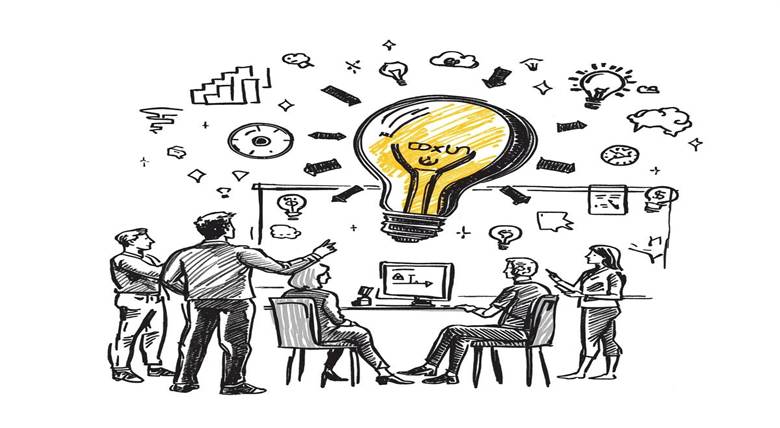
Business creation involves the systematic process of identifying opportunities, developing ideas, and launching a new enterprise through structured steps like feasibility analysis and planning. This entrepreneurial journey transforms concepts into viable, operational businesses that address market needs. Common challenges include securing finance and navigating legal requirements.​

Key Steps

The process typically follows these core stages:

  • Identify business opportunities by scanning markets for inefficiencies or unmet needs.​
  • Generate and refine ideas through creativity, drawing from personal experience, market surveys, or trends.​
  • Conduct feasibility studies covering market, technical, financial, and socio-economic aspects to assess viability.​
  • Prepare a detailed business plan outlining strategy, operations, marketing, and financial projections.​
  • Launch by handling legal formalities, securing resources, and implementing operations.​

Example

Airbnb exemplifies business creation: founders Brian Chesky and Joe Gebbia spotted a hotel shortage during a San Francisco conference in 2007, rented out air mattresses in their apartment, and built a platform connecting hosts with travelers. Despite early funding struggles, persistence led to a $74 billion market cap by solving a common accommodation problem.​

Case Studies

CompanyOrigin StoryKey Success Factors
SquareCo-founder Jim McKelvey couldn’t accept a credit card for a $2,000 glassware sale, prompting a simple mobile POS system with Jack Dorsey.​Solved everyday merchant pain points; innovated for untapped markets despite profitability hurdles.
Ola CabsBhavish Aggarwal founded it in 2010 to offer reliable rides in India, focusing on customer needs like surge pricing alternatives.​Customer-centric features and adaptation to urban mobility demands boosted market share.
ZomatoDeepinder Goyal started in 2008 as a restaurant database, expanding to food delivery internationally.​Leveraged tech skills for global scaling, diversifying revenue in food tech.

Steps to create a business from idea to launch

Creating a business from idea to launch requires a structured sequence of steps to validate the concept, secure resources, and execute effectively. This process minimizes risks and builds a foundation for growth. Key stages include ideation, planning, legal setup, and market entry.​

Core Steps

Follow these sequential steps to transform an idea into a launched business:

  1. Develop the idea: Brainstorm and refine your concept by identifying a market problem and solution.​
  2. Conduct market research: Analyze demand, competitors, target audience, and trends to confirm viability.​
  3. Create a business plan: Outline strategy, operations, marketing, finances, and projections for guidance and funding.​
  4. Choose structure and name: Select a legal form (e.g., sole proprietorship, LLC) and register a unique business name.​
  5. Secure funding: Explore options like bootstrapping, loans, investors, or grants to cover startup costs.​
  6. Handle legal and admin tasks: Register the business, get licenses/permits, get an EIN/tax ID, open a bank account, and set up insurance.​
  7. Build brand and operations: Develop logo, website, source products/supplies, and establish processes.​
  8. Market and launch: Promote via social media, SEO, and campaigns; launch the product/service to customers.​

Case study of a successful Indian startup journey

Ola Cabs provides a compelling case study of a successful Indian startup, founded by Bhavish Aggarwal, who pivoted from a travel booking site to revolutionizing urban mobility after a frustrating taxi experience in 2010. The company grew from a single-room office in Mumbai to operating in over 250 cities across multiple countries, achieving unicorn status valued at $1.5 billion. Its journey highlights problem-solving, rapid adaptation, and deep market penetration in tier-2/3 cities.​

Origin and Idea

Bhavish Aggarwal, an IIT Bombay graduate, left a stable Microsoft job in 2010 to launch OLAtrips.com for holiday packages. A pivotal bad taxi ride—where the driver abandoned him midway—exposed India’s fragmented transport system, prompting a pivot to on-demand cab aggregation. Starting modestly, Aggarwal handed out business cards at upscale spots, aiming for just 100 daily rides.​

Growth Milestones

  • Secured early angel investments from IIT peer Zishaan Hayath and others like Anupam Mittal (~₹5 million), followed by Tiger Global ($4 million then $20 million).​
  • Expanded aggressively post-2013 Uber entry, reaching 100+ cities by 2016 (vs. Uber’s 30), introducing India-specific features like vernacular support and cash payments.​
  • Attracted massive funding from SoftBank ($210 million in 2014), fueling diversification into food delivery, fintech (Ola Money), EVs (Ola Electric), and AI (Krutrim).​

Challenges Overcome

Intense price wars with Uber strained finances, while state-specific regulations, driver protests, and union issues created hurdles. Ola countered by localizing solutions, training drivers, and pushing deeper into non-metro markets where competitors lagged. The COVID-19 pandemic hit ride demand, but acceleration into EVs sustained momentum.​

Key Lessons Aggarwal’s success stems from solving real Indian problems over copying models, relentless pivots based on data, and betting on “Bharat” beyond metros. Resilience amid family doubts and funding droughts underscores his vision for tech-driven GDP growth.
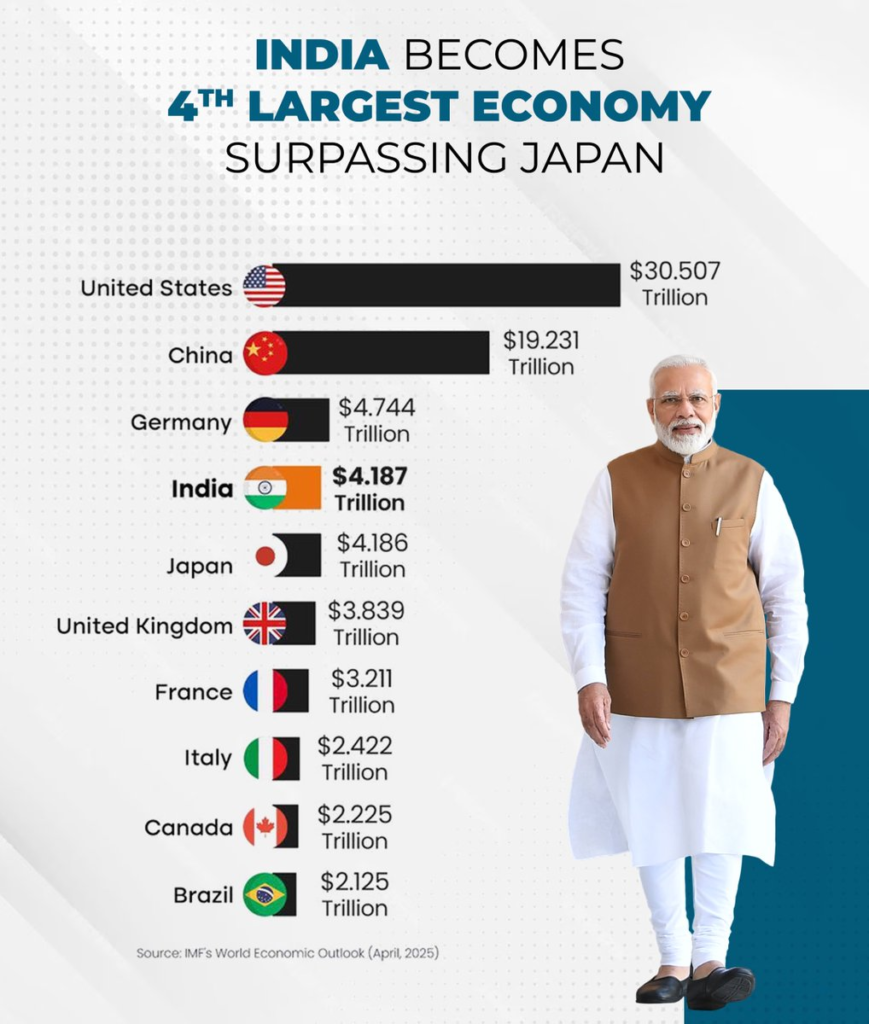
Government data indicates India’s GDP is US$4.18 trillion, with forecasts suggesting it may exceed Germany’s by 2026, notwithstanding global trade obstacles.

India has surpassed Japan to emerge as the fourth-largest economy globally, with a GDP estimated at $4.18 trillion. The increase signifies a decade marked by swift growth, robust domestic demand, and significant reforms, despite ongoing challenges such as low per capita income, pressures for job creation, and uncertainties in global trade that continue to influence India’s economic path.

The central government has declared that India has surpassed Japan to emerge as the world’s fourth-largest economy, boasting a size of $4.18 trillion, as stated in an official press release issued on Monday, 29 December 2025.

India is poised to surpass Germany, emerging as the third-largest economy by 2030, supported by robust growth figures.

“India, with a GDP of $4.18 trillion, has eclipsed Japan to emerge as the fourth-largest economy globally and is on track to overtake Germany within the next 2.5 to 3 years, with a projected GDP of $7.3 trillion by 2030,” as stated in the release.

The United States and China represent the foremost economies globally, as determined by their respective gross domestic product (GDP) figures.

New Delhi’s optimistic evaluation persists in the face of economic concerns following Washington’s imposition of substantial tariffs on its acquisitions of Russian oil in August.

India articulated that its sustained growth is indicative of its fortitude in the face of ongoing global trade uncertainties.


What are the driving forces behind India’s growth narrative?

The central government, in its recent announcement, highlighted India’s growth trajectory, noting that the GDP has reached a six-quarter peak during the July-September period of the financial year concluding in 2025-26.

The nation’s development arises from its steadfastness in the face of ongoing global trade ambiguities. The domestic drivers within India, propelled by private consumption, have been pivotal in bolstering the nation’s GDP growth.

The government has also pointed out that inflation staying beneath the lower threshold, a decrease in unemployment, and enhanced export performance are among the key indicators that bolster India’s growth trajectory.

“The financial landscape has remained favorable, characterized by robust credit inflows to the commercial sector, while demand conditions persist with vigor, bolstered by an additional enhancement of urban consumption,” the government stated. The International Monetary Fund’s forecasts for 2026 estimate India’s economy to reach US$4.51 trillion, surpassing Japan’s projected US$4.46 trillion.

The United States holds the position of the world’s largest economy, while China ranks as the second largest.

The upward trajectory of growth has exceeded expectations, with GDP reaching a six-quarter peak in the second quarter of 2025-26, illustrating India’s robustness in the face of ongoing global trade uncertainties, it noted. The expansion was fundamentally supported by domestic drivers, prominently characterized by strong private consumption.

The announcement indicated that global organizations have reflected this optimism and referenced forecasts provided by multiple sources. The World Bank anticipates a growth rate of 6.5% for the year 2026, while Moody’s forecasts that India will continue to be the fastest-growing economy within the G20, projecting growth rates of 6.4% in 2026 and 6.5% in 2027. The International Monetary Fund has elevated its projections to 6.6% for 2025 and 6.2% for 2026, while the Organisation for Economic Cooperation and Development anticipates a growth rate of 6.7% in 2025 and 6.2% in 2026. Furthermore, the S&P forecasts a growth of 6.5% for the current fiscal year and 6.7% for the subsequent year. The Asian Development Bank has revised its 2025 estimate upward to 7.2%, while Fitch has increased its FY26 projection to 7.4%, attributing this adjustment to heightened consumer demand.

“India stands as one of the most rapidly advancing major economies globally and is strategically poised to maintain this trajectory.” The government stated, “With the aspiration of achieving high middle-income status by 2047, the centenary of its independence, the nation is constructing upon robust foundations of economic growth, structural reforms, and social advancement.”

The announcement underscored that inflation persists beneath the lower tolerance threshold, unemployment is on a downward trajectory, and export performance is steadily enhancing. Moreover, the financial landscape has remained favorable, characterized by robust credit inflows to the commercial sector, while demand conditions persist with resilience, bolstered by an additional enhancement in urban consumption.

The upward trajectory of growth has exceeded expectations, with GDP reaching a six-quarter peak in the second quarter of 2025-26, illustrating India’s robustness in the face of ongoing global trade uncertainties, as noted.

The expansion was fundamentally supported by domestic drivers, prominently featuring strong private consumption.

The announcement additionally indicated that global organizations have resonated with this optimism, referencing forecasts articulated by diverse bodies.

The World Bank anticipates a growth rate of 6.5% for the year 2026, while Moody’s forecasts that India will continue to be the fastest-growing economy within the G20, with projected growth rates of 6.4% in 2026 and 6.5% in 2027.

The International Monetary Fund has adjusted its growth projections to 6.6% for the year 2025 and 6.2% for 2026, while the Organisation for Economic Co-operation and Development anticipates a growth rate of 6.7% in 2025 and 6.2% in 2026.

Furthermore, S&P projects a growth rate of 6.5% for the current fiscal year and 6.7% for the subsequent year; the Asian Development Bank has revised its 2025 forecast upward to 7.2%; and Fitch has elevated its FY26 projection to 7.4% in light of heightened consumer demand.

Introduction

Agricultural marketing involves the gathering, storage, preparation, shipping, and delivery of various farming supplies throughout the country. When it comes to agriculture marketing, the sale of a product rests on several factors, such as how much demand there is for it at that moment and how much space is available for storage.

Before independence, farmers who sold their goods to sellers had to deal with many wrong weights and hacked accounts. The farmers lacked accurate information about prices, which forced them to sell their goods at low prices due to insufficient storage facilities.

The product might sometimes be sold at a weekly village market in the village of the farmer or in a village nearby. If these shops aren’t open, the goods are sold at the mandi or at unofficial markets in a nearby village or town. So, the government did several things to keep the traders in line.

Definition

Agriculture marketing, in a very limited sense, means getting farm products from farmers to people who will buy them. The decision to grow a crop for sale initiates agricultural marketing, according to the National Commission on Agriculture. It includes all parts of the market structure, both functional and institutional, as well as technical and economic factors. It also includes operations before and after the harvest, such as sorting, storing, transporting, and distributing.

A. The wider part of marketing in India

  • Balancing demand and supply
  • To transmit macroeconomic signals to farmers and producers.
  • The strategy involves offering incentives to producers in order to boost their production and output levels.
  • The aim is to encourage the efficient utilization of resources within the production and distribution system.

B. Challenges in marketing agricultural produce in India.

  1. Insufficient storage and warehouse facilities in India lead to the wastage of farming products and a reduction in farmers’ earnings.
  2. Inefficient transportation infrastructure: India’s transportation infrastructure isn’t up to par, which raises the cost of moving goods and makes Indian farming products less competitive on the world market.
  3. Broken supply chain: In India, the supply chain for agricultural goods is fragmented, involving many middlemen. This can lead to high trade costs, which means farmers can’t make as much money.
  4. Not enough market information: Indian farmers often don’t have enough market information, which makes it challenging for them to decide how to sell their goods.
  5. Quality of Produce: The Green Revolution and other “Lab to Land” programs have expanded the potential for food production. However, with rising incomes and living standards, stricter health and safety rules, and a lot of new processing industries, there is a need to improve both the quantity and quality of food that can be grown. This issue has limited the potential of agriculture for selling food on both the national and international markets.
  6. Less consumer satisfaction: customer loyalty is the most important thing in any marketing system. If farmers don’t grade, sort, standardize, and clean their products properly, they won’t sell for as much on the international market when they ship them.
  7. Prices change all the time: In India, the prices of agricultural products change all the time, which makes it challenging for farmers to plan their production and selling.

C. The Indian government wants to improve marketing in a number of reforms.

  1. Improvements to the infrastructure of the supply chain: The Indian government is spending money to improve the infrastructure of the supply chain, which includes buildings for storage and transportation.
  2. Setting up markets for farming goods: Agricultural Produce Market Committees (APMCs) were set up by the Indian government to make sure that agricultural goods have a safe place to trade.
  3. Promoting contract farming: The Indian government is supporting contract farming, which helps farmers get a better price for their crops and helps them plan how they will grow and sell them.
  4. Supporting direct marketing: The Indian government supports direct marketing for farming products. This helps farmers get a better price for their goods by cutting out middlemen.
  5. Giving farmers information about the market: The Indian government provides farmers information about the market through mobile apps, SMS services, and toll-free helplines.

D. Issues in agricultural marketing

1. Today, Indian farmers can sell their goods at:

  • The farmgate or local market (haat) is for village aggregators, and the APMC (agricultural product market committee) is for private traders.
  • So that the government can obtain the minimum support price (MSP),
  • But there are some problems with all three ways to sell.

2. MSP

  • The MSP was promised for 23 crops, but it has only been implemented for 3 crops.
  • Produce that meets the standards for “fair average quality” is the only one that gets MSP.
  • There aren’t any government procurement centers in every part of the country.
  • Also, the next step in the rise of agricultural income will be high-yield goods like dairy products, vegetables, fruits, and so on. However, the government is still giving MSP to cereals.

3. APMC

a. In theory, there is more than one buyer for an APMC, but in fact, there is no open auction system for setting prices through transparent bidding.

b. In most APMCs, buyers have to go through licensed aadhatiyas to make purchases.

  • People in the middle are paid for their “services” by both the buyer and the seller.
  • The aadhatiya also often lends money to farmers and provides them seeds, fertilizer, and chemicals on credit. Therefore, they have to sell through him and pay their debts forever.

c. Furthermore, mandi fees vary by state and type of goods, but they are usually between 0.5% and 5% of the sale price.

d. Adding more mandi fees to trade between states would be like taxing people twice, which goes against the idea of a single national market.

e. Sale in distress because of a lack of storage space

  • When it comes to mandis, prices are lowest three to four months after harvest and highest right before harvest.
  • Farmers make the most sales right after harvest because they need to buy things for the next planting season.

4. To correct this APMC problem

  • The Model Agricultural Produce Market Committees (APMCs) Act was made by the Union Agriculture Ministry.
  • The Act wants to provide farmers more options for selling their crops. It does this by letting private markets operate (instead of just APMCs), letting farmers buy in bulk directly from the farm gate, labeling warehouses or cold storages to be markets, and getting rid of the idea of a “market area.”
  • This is because the definition of “market area” has an effect on how much money APMCs can make.

5. Changes in prices

  • Uncontrolled patterns of oversupply and shortage are what make prices change all the time.
  • Price predictions for a certain good are often based on trends from previous years, but these trends might not be accurate this year, potentially leading to oversupply or shortage.

E. Reforms are needed in APMC.

1. Standardized market charges

  • A consistent mandi tax of either 0.25% or 0.50% is suggested to be imposed statewide on foodgrains, oilseeds, and fruits & vegetables.
  • The central and state governments could reimburse the losses incurred by APMCs, following the model of the Goods and Services Tax.

2. Abolish Aadhatiya-centered commerce.

  • All transactions in Agricultural Produce Market Committees (APMCs) should be conducted via open auctions, with participation from numerous bidders for each batch of produce. Trades should occur directly between buyers and sellers, without intermediaries demanding fees.
  • Aadhatiya can only participate in the capacity of a trader.

3. Activate sample-based sales.

  • Today, the farmer takes all his produce to the APMC, where buyers do physical inspections before placing bids.
  • This leads to duplicate transportation, from the farm gate to APMC and then from APMC to the final destination.
  • If grading and sorting facilities are nearby the farm gate, the farmer merely needs to bring a sample of his crop and the necessary quality certification paperwork to the mandi. It would be a cost-effective and time-saving solution.

4. Storage and banking amenities in close proximity to APMCs

  • To prevent distress sales, having bagging and storage facilities, as well as offering loans based on warehouse receipts, can help satisfy urgent cash needs. These should be located near APMCs.
  • Encourage the establishment of Farmer Producer Organizations in marketing.
  • Encourage farmer producer organizations/companies to engage in direct marketing of their members’ produce to major buyers and processors.
  • It will lead to increased competition and improved pricing at APMCs.

5. Relax or abolish the Essential Commodities Act (ECA).

  • ECA imposes limitations on the transportation of goods, inventory management, pricing, and implementation of innovative technologies.
  • Removing these prohibitions under ECA and other laws will increase commerce and result in improved profits for farmers.
  • The concept of “ease of doing business” is essential for agriculture as well as other industries.

6. e-NAM

  • The government established an electronic national agriculture market (eNAM) to link all regulated wholesale produce marketplaces via a nationwide trade site.
  • Its efficiency relies on the involvement of traders from various markets.

7. Risk management

  • Crop insurance plans provide farmers with protection against weather-related hazards as part of risk management.
  • The majority of the premium in the Pradhan Mantri Fasal Bima Yojana is covered by the Government.
  • Although still being developed, this system is more thorough and user-friendly than any prior ones.

8. Expand the quantity of markets

  • As per the Ashok Dalwai Committee, India requires a minimum of 30,000 agricultural produce markets, compared to the current number of around 6,500.
  • A “mini-market” concept is needed to narrow this significant disparity.
  • The government’s announcement of GRAMs (Gramin rural agricultural market) is a positive step.
  • With widespread electronic connection and dependable rural roads, GRAMs can develop into sustainable centers for economic activity and job creation.

9. Producer consolidation

  • Consolidating small and fragmented farms into larger, more sustainable holdings can enhance producers’ ability to obtain financing and high-quality inputs, as well as achieve higher prices for their products.
  • This will also encourage necessary investments in land development, improvement, and agricultural mechanization.

INSTAGRAM