Business

Introduction

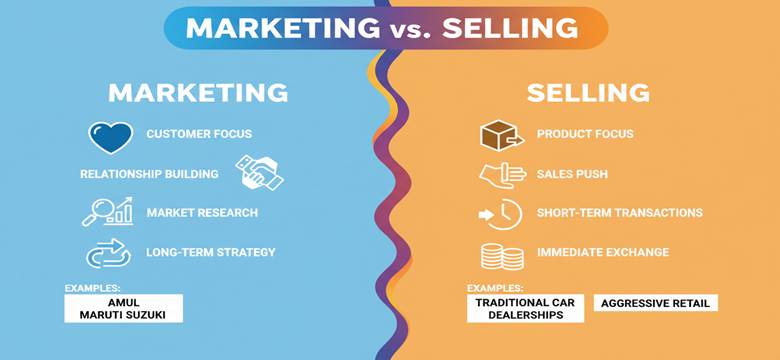
While often used interchangeably, marketing and selling are two distinct concepts in business. Understanding the difference is crucial for anyone aspiring to build long-lasting brands and successful organizations. Marketing is a broader, customer-oriented process, whereas selling is a narrower, product-focused activity. Let’s explore their differences, supported with real-world examples and case studies from both Indian and international brands.


Definitions

Marketing:
Marketing is a comprehensive process that starts with identifying customer needs, creating value through products or services, communicating that value, delivering satisfaction, and building long-term relationships. Marketing involves market research, product development, pricing, distribution, promotion, and after-sales service. The focus is on customer satisfaction and relationship building.

Selling:
Selling is the activity of persuading or influencing a customer to buy a product or service. It is a part of marketing, concerned mainly with the transfer of goods or services from the seller to the buyer, often through direct or indirect sales techniques. The focus is on increasing sales volume.


Key Differences

AspectMarketingSelling
FocusCustomer needs and satisfactionProduct features and sales targets
ApproachPull (creating demand)Push (convincing to buy)
OrientationLong-term relationship, brand loyaltyShort-term, transaction-based
Starting PointMarket research and consumer insightsProduct development
End GoalCustomer delight and retentionSale completion
StrategyIntegrated (4Ps/4Cs, customer journey)Stand-alone sales tactics
ProcessStarts before production, continues after saleStarts after production, ends at sale

Example: Indian Brand—Maruti Suzuki

Marketing Approach:

Maruti Suzuki is India’s largest car manufacturer. Instead of just pushing cars, it invests heavily in market research, after-sales service, and customer feedback. Maruti identifies what Indian families need—fuel efficiency, affordable pricing, straightforward maintenance, and widespread service centers. It uses advertising, roadshows, and digital campaigns to raise awareness and build trust, often positioning its cars as “family cars for India.”

Selling Approach:

A car dealer employing a selling approach would focus on convincing a walk-in customer to buy whichever model is in stock, offering discounts, and pushing for immediate sales, even if the car isn’t the best fit for the customer’s needs.

Result:

Maruti Suzuki’s marketing focus has made it a market leader, with high customer loyalty and repeat purchases.

______________________________________________________________________________

Example: Foreign Brand – Apple

Marketing Approach:

Apple is renowned for its marketing. Before launching a product, it studies customer needs (design, usability, innovation). It creates anticipation through teasers, product launches, and storytelling. Apple focuses on building an ecosystem (iPhone, iPad, Mac, Apple Watch) and an emotional connection with users. The company continues engagement through seamless customer support and updates.

Selling Approach:

A pure selling focus would see Apple stores just trying to clear inventory by pushing unsold models, offering discounts, and using aggressive sales pitches without regard for customer fit or satisfaction.

Result:

Apple’s marketing has built one of the world’s most loyal customer bases, allowing it to charge premium prices and maintain high brand equity.


Case Study 1: Amul (India) – Marketing Excellence

Background:
Amul, the iconic dairy cooperative, is renowned for its witty, topical ad campaigns and a customer-first approach.

Marketing Approach:

  • Product Development: Introduces new products (e.g., Amul Kool, ice cream) based on consumer feedback and market trends.
  • Brand Building: The Amul Girl campaigns build emotional resonance and keep the brand top-of-mind.
  • Distribution: Ensures products reach even the remotest villages, meeting customer needs everywhere.
  • Customer Focus: Affordable pricing, quality assurance, and social impact (uplifting rural farmers).

Selling Approach:

A selling-driven dairy company might focus only on pushing milk or butter stocks through discounts or bulk deals, with little regard for customer preference, innovation, or brand building.

Impact:
Amul’s marketing has made it a beloved brand, with the highest market share and customer trust in India’s dairy sector.


Case Study 2: Tesla (International) – Marketing vs. Selling

Background:
Tesla, the US-based electric vehicle (EV) company, has disrupted the global automobile market.

Marketing Approach:

  • Customer Orientation: Focuses on solving environmental concerns, providing sustainable yet high-performance vehicles.
  • Innovative Product: Incorporates customer feedback into software updates and new features.
  • Direct-to-Consumer Model: Sells cars online, skipping traditional dealerships, simplifying the buying process.
  • Community Building: Engages owners through events, referral programs, and over-the-air updates.

Selling Approach:

Traditional automakers often rely on dealerships, which may prioritize moving unsold inventory, offering discounts, or upselling additional features, rather than focusing on each customer’s unique needs.

Impact:
Tesla’s marketing has created a passionate global community, high pre-order volumes, and brand advocates—often without spending much on traditional advertising.


Comparative Table: Marketing vs. Selling

ScenarioMarketing-Oriented ApproachSelling-Oriented Approach
Automobile SalesMaruti Suzuki analyzes customer needs, designs cars accordingly, builds service networks, and uses storytelling adsA dealer pushes whatever car is in stock, offers discounts, and focuses on closing the sale
Technology ProductsApple studies user behavior, launches innovative products, invests in branding, and supports customers post-saleA store tries to sell old models with aggressive promotions and little concern for fit

Key Takeaways

  • Marketing is about understanding and serving customer needs, building brands, and fostering relationships.
  • Selling is about persuading customers to buy what the company has produced, with a narrower focus on immediate sales.
  • Marketing starts much before the product is made and continues long after the sale, while selling is just one part of the overall marketing process.
  • Brands like Maruti Suzuki, Amul, Apple, and Tesla succeed because they focus on marketing—not just selling—building lasting value for customers and society.

Conclusion

Marketing and selling may both aim to generate revenue, but their approaches and impacts are fundamentally different. Marketing is holistic, strategic, and customer-driven, leading to long-term success and brand loyalty. Selling is tactical, product-driven, and short-term focused. The most successful Indian and international brands are those that prioritize marketing as the core of their business philosophy.

Introduction

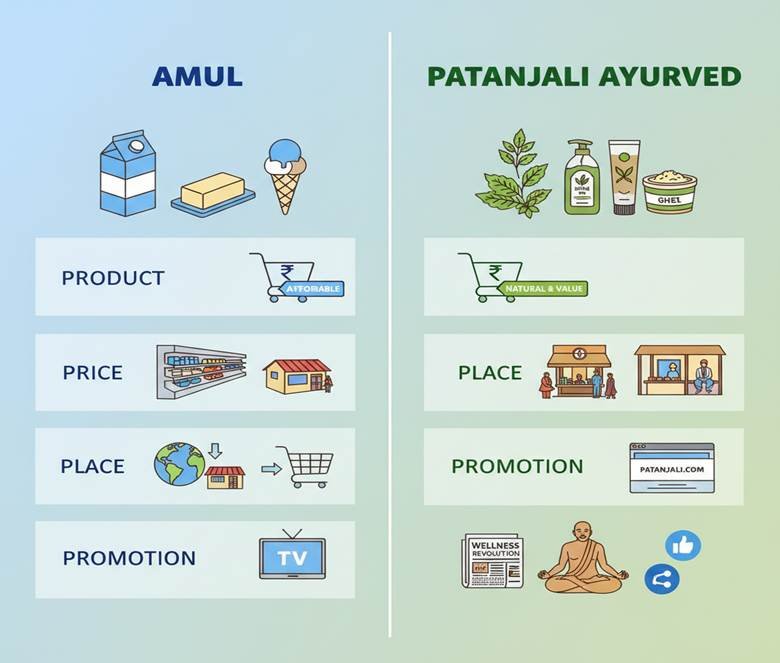
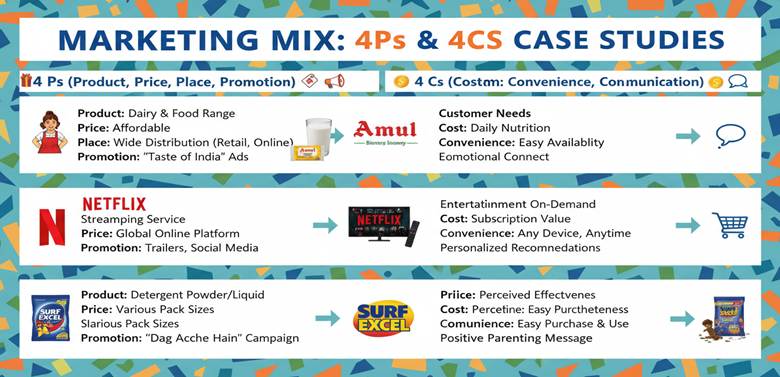
The marketing mix is a foundational model for businesses, guiding them to effectively market their products and services. Traditionally composed of the 4P’sProduct, Price, Place, and Promotion—this model has evolved into the more customer-centric 4C’s—Customer Solution, Cost, Convenience, and Communication. Understanding both frameworks and how they interrelate is vital for designing successful marketing strategies in today’s dynamic marketplace.


The 4 Ps of Marketing

The 4 Ps represent the controllable elements businesses use to satisfy customer needs, influence demand, and achieve their objectives.


1. Product

Definition:
The tangible good or intangible service offered to satisfy customer needs and wants.

Example:
Apple’s iPhone is a product dethat features regular updates, aleek design, and advanced technology.

Key Product Decisions:

  • Key product decisions include features, quality, design, brand name, packaging, services, and guarantees.

2. Price

Definition:
The amount of money customers must pay to acquire the product or service.

Example:
Netflix uses tiered subscription pricing, catering to different audience segments.

Key Price Decisions:

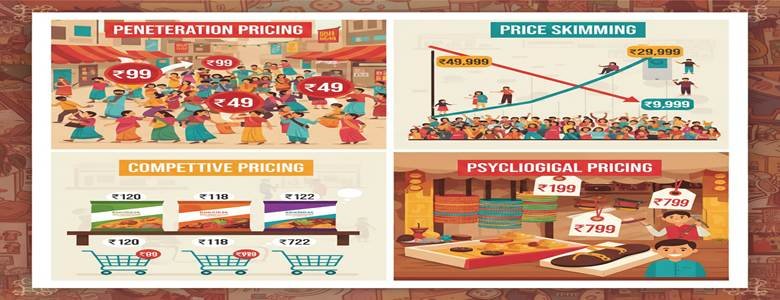
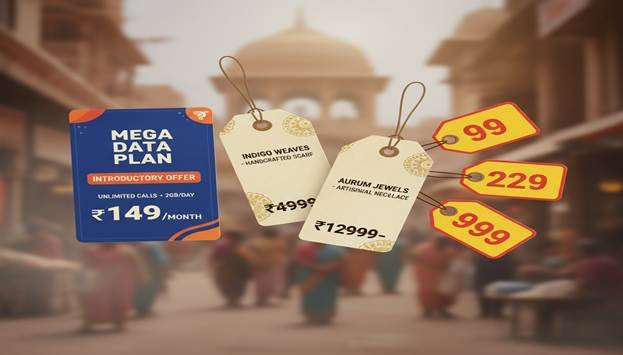
  • Key price decisions include pricing strategy (premium, competitive, penetration), discounts, payment plans, and psychological pricing.

3. Place (Distribution)

Definition:
The channels and locations that make the product available to customers.

Example:
Amazon’s vast distribution network ensures that it delivers products quickly, even to remote Indian towns.

Key Place Decisions:

  • Distribution channels, market coverage, inventory, logistics, retail locations, and e-commerce.

4. Promotion

Definition:
The activities that communicate the product’s value and persuade customers to purchase.

Example:
Cadbury’s Diwali campaigns use emotional storytelling and media to boost chocolate sales during festivals.

Key Promotion Decisions:

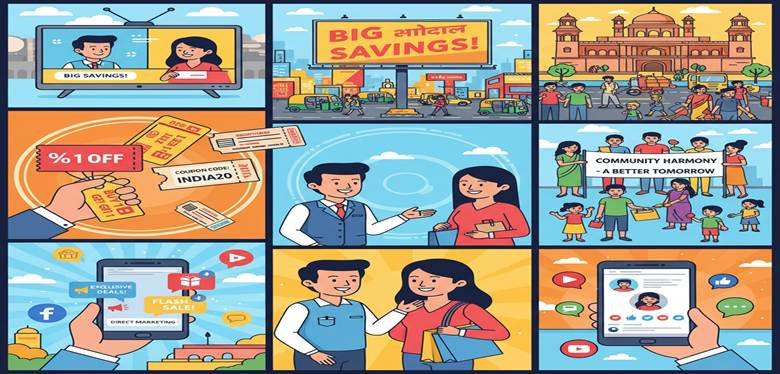
  • Advertising, sales promotions, public relations, direct marketing, digital marketing, and influencer partnerships.

The 4 Cs of Marketing

The 4C’s framework shifts focus from the business to the customer, emphasizing value creation, cost, convenience, and open communication.


1. Customer Solution (vs. Product)

Definition:
Understanding and providing solutions to customer problems rather than just selling a product.

Example:
BYJU’S offers interactive learning solutions, not just educational content, making online study engaging for students.


2. Cost to Customer (vs. Price)

Definition:
The total cost that a customer incurs, including price, shipping, time, and psychological costs.

Example:
Flipkart’s “No Cost EMI” and hassle-free returns reduce the financial and mental cost of online shopping for customers.


3. Convenience (vs. Place)

Definition:
Making it as easy as possible for customers to acquire and use the product or service.

Example:
Swiggy’s user-friendly app and quick delivery make ordering food extremely convenient.


4. Communication (vs. Promotion)

Definition:
Two-way dialogue with customers, focusing on engagement, listening, and relationship-building.

Example:
Zomato uses social media not only for promotion but also to respond to feedback and connect with users.


Table: 4P’s vs. 4C’s

4P’s4C’sExample
ProductCustomer SolutionBYJU’S learning platform
PriceCostFlipkart’s No Cost EMI, free shipping
PlaceConvenienceSwiggy’s doorstep food delivery
PromotionCommunicationZomato’s social media engagement

Case Study 1: Amul—Mastering the 4P’s and 4C’s

Background:
Amul is India’s largest dairy brand, known for its diverse product range, strong rural network, and iconic advertising.

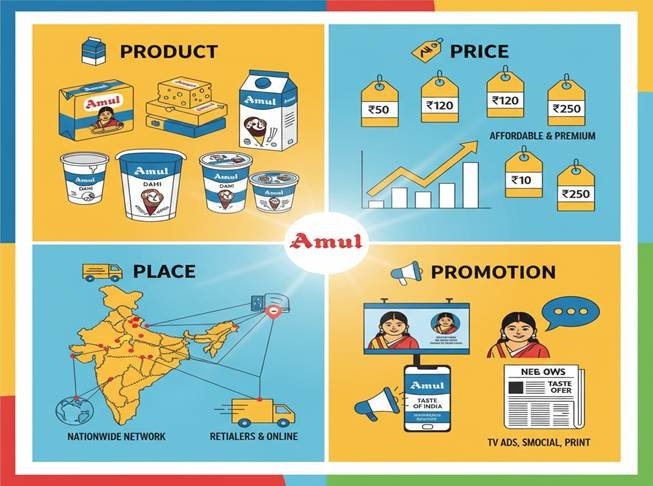
Application of 4 Ps:

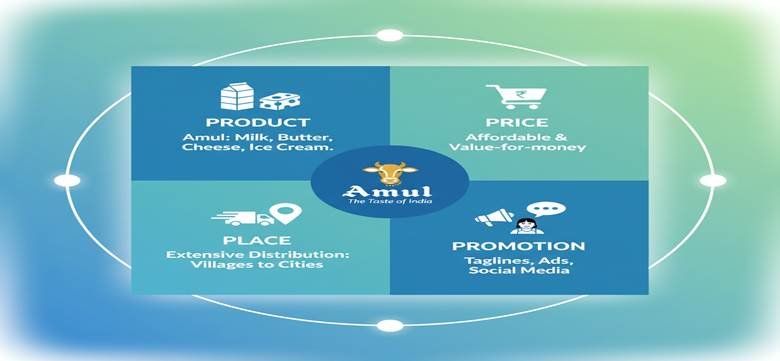
  • Product: Offers a wide range—milk, cheese, butter, yogurt, ice cream. Constant innovation (e.g., Amul Kool, Amul Dark Chocolate).
  • Price: Affordable pricing to reach all segments, with value packs and festival discounts.
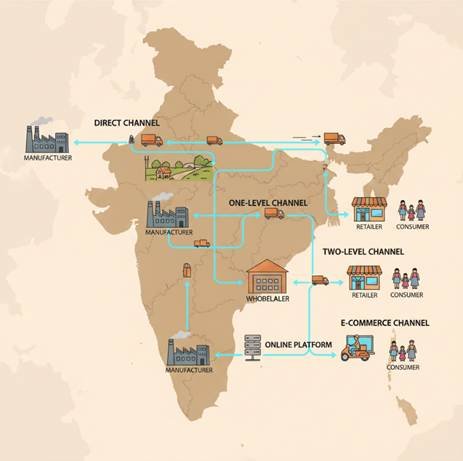
  • Place: Nationwide distribution, from major cities to rural villages, through 10,000+ distributors and 1 million+ retailers.
  • Promotion: Famous Amul Girl ad campaigns, topical billboards, TV ads, digital presence.

Application of 4C’s:

  • Customer Solution: Healthy, affordable dairy options that address Indian dietary needs.
  • Cost: Focuses on affordability, easy availability, and bundling to reduce customer expense.
  • Convenience: Products available everywhere—from supermarkets to local kirana stores.
  • Communication: Engages with consumers through clever ads, social media, and public events.

Result:
Amul has built unmatched brand loyalty, expanded across India and abroad, and uplifted millions of rural dairy farmers through its cooperative model.


Case Study 2: Netflix – Customer-Centric Marketing

Background:
Netflix revolutionized entertainment with its on-demand streaming model.

4P’s:

  • Product: Vast, diverse content library; regular new releases.
  • Price: Multiple subscription levels; affordable plans for the Indian market.
  • Place: Available worldwide, accessible on any internet-enabled device.
  • Promotion: Digital ads, social media, personalized recommendations.

4C’s:

  • Customer Solution: Solves the problem of limited entertainment choices and rigid TV schedules.
  • Cost: No long-term contracts, affordable monthly payments, free trials.
  • Convenience: Watch anytime, anywhere; offline downloads.
  • Communication: Uses viewer data to recommend shows, invites user feedback, and adapts content per audience tastes.

Result:
Netflix’s customer focus has made it the global leader in streaming, with growing market share in India through local content and pricing.


Case Study 3: Surf Excel – Emotional Marketing

Background:
Surf Excel, a detergent brand from Hindustan Unilever, excels at connecting with its audience through emotional storytelling.

4P’s:

  • Product: High-quality detergent, various variants (liquid, powder, bar).
  • Price: Competitive pricing, discounts during festivals.
  • Place: Widely distributed—urban supermarkets, rural shops, e-commerce.
  • Promotion: The “Daag Acche Hain” (Stains are Good) campaign uses emotional stories of children learning values.

4C’s:

  • Customer Solution: Removes tough stains, cares for clothes, and resonates with family values.
  • Cost: Value packs, affordable refills, and promotional offers.
  • Convenience: Available everywhere and in different sizes.
  • Communication: Two-way engagement via social media and customer care.

Result:
Surf Excel is a market leader in India, known for its memorable campaigns and strong customer loyalty.


4P’s and 4C’s in Practice: Real-World Applications

Digital Startups

  • Example: Paytm
    • Product/Customer Solution: Secure, rapid digital payments.
    • Price/Cost: Free wallet, low charges for merchants.
    • Place/Convenience: Accepted at millions of stores; app-based.
    • Promotion/Communication: Cashback offers, festival campaigns, customer support.

Global FMCGs

  • Example: Coca-Cola
    • Product/Customer Solution: Variety of beverages for every taste.
    • Price/Cost: Small packs for price-sensitive markets.
    • Place/Convenience: Available in every major country, even in remote locations.
    • Promotion/Communication: Localized ads, global campaigns, community engagement.

Conclusion

The 4P’s and 4C’s frameworks remain central to modern marketing. The 4P’s help businesses structure their offerings, pricing, reach, and messaging, while the 4C’s ensure the focus remains on solving customer problems, minimizing cost, maximizing convenience, and fostering open communication.

Indian brands like Amul and Surf Excel, and global leaders like Netflix and Coca-Cola, succeed because they seamlessly blend both approaches—offering great products at the right price, making them easy to access, and communicating in a way that builds trust and loyalty.

Aspiring marketers should master both the 4P’s and 4C’s—adapting them to new technologies, market dynamics, and customer behaviors for success in the ever-changing world of business.

ADVANTAGES & SCOPE OF MARKETING

Introduction

Marketing stands at the heart of every successful business venture. It raises awareness, stimulates demand, builds brands, and forges deep connections between companies and customers. The role of marketing has evolved far beyond simple selling—today, it’s about understanding customer needs, creating value, and contributing to economic and societal progress. In this note, we’ll explore the advantages and scope of marketing, illustrated with real-world examples and a detailed case study.

I. Advantages of Marketing

1. Increases Sales and Revenue

Effective marketing generates awareness, attracts customers, and stimulates demand, directly boosting sales and revenue.

Example: When Apple launches a new iPhone, its marketing campaigns—built on anticipation, sleek visuals, and customer testimonials—drive millions to stores and online platforms, resulting in record-breaking sales.

2. Builds Brand Recognition and Loyalty

Marketing helps create a unique brand identity, making products or services memorable and trustworthy. It also fosters loyalty by staying top-of-mind for customers.

Example: Amul’s witty “Amul Girl” ads and topical billboards have made it a household name in India for decades, earning trust across generations.

3. Facilitates Market Expansion

Thorough marketing research identifies new markets and customer segments, enabling businesses to expand beyond their initial footprint.

Example: Ola Cabs, after dominating Indian metros, used targeted digital marketing to expand into international cities like London and Sydney.

4. Encourages Innovation

Understanding changing customer needs and emerging trends through marketing insights drives companies to innovate and diversify their offerings.

Example: Patanjali launched herbal and ayurvedic products in response to a surge in demand for natural goods, disrupting the Indian FMCG market.

5. Improves Standard of Living

Marketing introduces new products and services that enrich lives, making them more convenient, enjoyable, or healthy.

Example: Reliance Jio’s affordable data plans made high-speed internet accessible to millions, enabling education, entertainment, and entrepreneurship even in rural India.

6. Supports Economic Growth

Marketing creates direct and indirect jobs, encourages entrepreneurship, and stimulates business activity, contributing to national and global economic growth.

Example: The Indian advertising industry not only provides employment to creatives and media professionals but also boosts demand in manufacturing, packaging, and logistics.

7. Promotes Social Welfare

Social marketing campaigns can influence positive behaviors, raise awareness of critical issues, and encourage public participation in social welfare

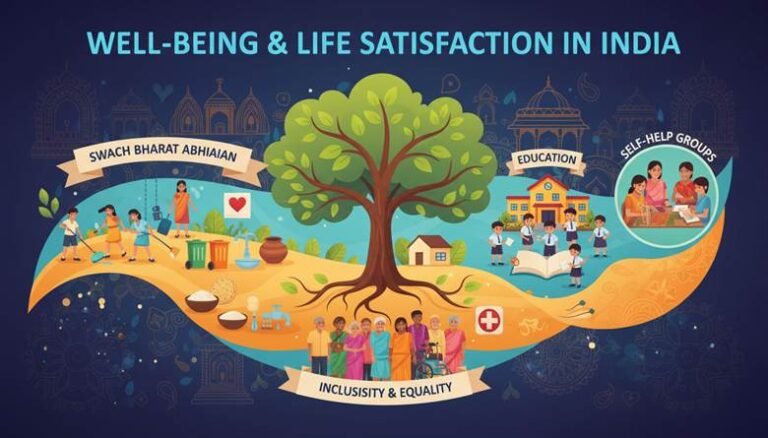
Example: The Swachh Bharat Abhiyan campaign used mass media, celebrity endorsements, and digital content to promote cleanliness and hygiene across India.

II. Scope of Marketing

Marketing today covers a vast and dynamic spectrum, touching every aspect of business and society.

1. Goods and Services Marketing

Covers both tangible products (FMCG, electronics, automobiles) and intangible services (banking, insurance, healthcare, hospitality).

Example: Zomato markets not just its food delivery service but also helps restaurants gain visibility through targeted promotions.

2. Digital and Social Media Marketing

Embraces SEO, content marketing, influencer partnerships, mobile apps, and online advertising.
Example: Netflix uses data-driven marketing and personalized recommendations to attract and retain subscribers worldwide.

3. Event and Experience Marketing

This type of marketing centers on promoting events, sports, festivals, and unique customer experiences.
Example: The Indian Premier League (IPL) is marketed as a cricket carnival, drawing sponsors, advertisers, and fans from across the globe.

4. Person, Place, and Idea Marketing

Includes promotion of people (celebrity branding), places (tourism), and ideas (social campaigns).
Example: “Incredible India” promotes India as a diverse and welcoming tourist destination to global travelers.

5. Nonprofit and Social Marketing

Nonprofit and social marketing is used by NGOs and governments to promote social causes and influence positive behavior change.
Example: Pulse polio campaigns leverage marketing to achieve universal immunization against polio in India.

6. Rural and International Marketing

Adapts strategies to rural populations or foreign markets, accounting for cultural and economic differences.
Example: Hindustan Unilever’s “Shakti Amma” program empowers rural women to become direct sales agents, expanding reach into remote villages.

7. B2B and B2C Marketing

Business-to-Business (B2B) marketing targets organizations, while Business-to-Consumer (B2C) marketing targets end-users.

Example: Tata Steel markets construction materials to infrastructure companies (B2B) and steel cookware to households (B2C).

Case Study: Amul—Iconic Success through Marketing


Background

Founded in 1946, Amul is India’s largest dairy cooperative. Its marketing journey offers a masterclass in building a successful business while uplifting rural society.

Advantages Demonstrated by Amul

  • Brand Recognition: The Amul Girl, with her clever, topical humor, is instantly recognizable and has become a part of Indian pop culture.
  • Market Expansion: Amul operates throughout India and exports globally, thanks to its vast distribution network and adaptive marketing.
  • Innovation: Introduced new products (Amul Kool, Amul Ice Cream, flavored milk) based on evolving consumer tastes and nutrition trends.
  • Social Welfare and Economic Growth: The cooperative structure ensures millions of rural dairy farmers receive fair prices, empowering women and stimulating rural economies.
  • Customer Loyalty and Trust: Reputation for quality and consistency has made Amul a default choice for many Indian households.

Scope Demonstrated by Amul

  • Goods and Services: Offers a diverse product portfolio, from milk and butter to chocolates, paneer, and ice creams.
  • Digital Marketing: Maintains an active presence on social media, engaging young consumers and leveraging topical trends.
  • Event and Sponsorship Marketing: Partners with sports, cultural, and educational events to connect with audiences nationwide.
  • Rural and Urban Marketing: Distributes products to metropolitan supermarkets and the smallest village shops alike.
  • Social and Cooperative Marketing: Promotes the values of community development, empowerment, and ethical business.

Amul’s Marketing Features in Action

  1. Customer Orientation: Amul consistently adapts to changing consumer preferences, introducing products like lactose-free milk and low-fat ice cream.
  2. Integrated Approach: Its iconic ads are unified across print, billboards, and digital media, ensuring consistent messaging.
  3. Continuous Innovation: Launches seasonal products (like festive sweets) and new flavors to stay relevant.
  4. Relationship Building: Maintains deep ties with farmers, distributors, retailers, and consumers, focusing on long-term engagement.

Conclusion

Marketing’s advantages extend well beyond boosting sales—they include brand building, fostering innovation, enabling market expansion, and supporting economic and social progress. The scope of marketing is vast and ever-expanding, embracing goods, services, digital platforms, rural and global strategies, and even ideas and causes.

State-owned Oil and Natural Gas Corporation (ONGC) has officially begun natural gas production from its Daman Upside Development Project (DUDP) in the Arabian Sea, about 180 km northwest of Mumbai. The $1 billion project began flowing gas from Platform B-12-24P on March 29, 2026, aimed at boosting domestic supply and reducing import dependence.

India’s natural gas production in the Arabian Sea, particularly near Daman by the Oil and Natural Gas Corporation (ONGC), is receiving considerable attention due to its potential to enhance the country’s energy security and reduce dependence on imports. The recent discoveries and increased output from this region underscore India’s commitment to harnessing its hydrocarbon resources effectively.

The geological formations rich in hydrocarbons have long recognized the Arabian Sea, but the Daman area has emerged as a crucial production zone. The latest estimates suggest that ONGC has successfully drilled multiple wells in this offshore region, leading to a substantial increase in gas output. This boost is not only pivotal for domestic consumption but also positions India strategically within the global energy market.

In a series of exploratory drilling initiatives, ONGC has identified promising reserves of natural gas, with operations expanding to encompass advanced extraction techniques. Cutting-edge technology and a focus on safety and environmental sustainability supplement these efforts. The organization aims to ensure that production activities do not adversely impact marine biodiversity while maximizing output.

Experts suggest that the potential reserves in the Arabian Sea could make a significant contribution to India’s overall natural gas targets as set by national energy policies. The government’s push for cleaner energy sources aligns with the emphasis on natural gas as a transition fuel, facilitating a shift from more polluting forms of energy. This development is particularly relevant given India’s commitments under international climate agreements to reduce emissions and enhance energy efficiency.

The economic implications are also paramount; local economies in regions surrounding Daman are expected to benefit from job creation in the oil and gas sector, alongside ancillary industries. As ONGC ramps up production capabilities, we can anticipate a multiplier effect on local businesses and improvements in infrastructure. Furthermore, greater gas availability may help stabilize domestic gas prices, which have experienced volatility recently.

Extensive research into the geological characteristics of the seabed and surrounding areas supports ONGC’s operations in Daman. The company has partnered with various stakeholders, including academic institutions and environmental organizations, to ensure a comprehensive approach to resource extraction. These collaborations aim to mitigate ecological risks while exploring innovative solutions for gas production.

Looking ahead, the Indian government remains optimistic about tapping further potential reserves in the Arabian Sea. Future investments in infrastructure, such as pipelines and processing facilities, are crucial for sustaining long-term production and ensuring that natural gas can be efficiently transported to consumer markets across the nation.

As the world moves towards a more diversified energy mix, India’s progress in natural gas production supports national development goals and enhances its influence in regional energy dialogues. Maintaining a robust offshore presence will be vital in navigating energy security in an increasingly interconnected globe.

In conclusion, as ONGC forges ahead with its initiatives in Daman, the implications for India’s gas production landscape are profound. Continued investment, innovation, and commitment to sustainable practices will be key as the nation aims to establish itself as a major player in the global energy arena, with the Arabian Sea at the forefront of this evolving narrative.

Key Points of Project

Background:

  • India has significant natural gas reserves in the offshore regions of the Arabian Sea.
  • The Krishna-Godavari (KG) Basin, Mumbai High, and the KG-D6 Block are home to the most notable offshore gas fields.

Key Milestones:

  • Mumbai High Field: Discovered in 1974, it became one of India’s largest producers of crude oil and associated natural gas.
  • KG-D6 Block (Krishna-Godavari Basin): Operated by Reliance Industries, commercial gas production started in April 2009. This deepwater field marked an important milestone in utilizing India’s offshore resources.
  • Recent Developments: In 2023, Reliance Industries and BP (British Petroleum) started production from the MJ field (also known as MJ-1) in the KG-D6 block, further boosting domestic gas output.

Significance:

  • Gas production from the Arabian Sea helps India reduce dependence on imported energy.
  • Supports energy security and the transition to cleaner fuels.

Current Status:

  • India continues to invest in deepwater exploration and development in the Arabian Sea.
  • Major players include ONGC (Oil and Natural Gas Corporation), Reliance Industries, and BP.

Example News (2023):
Reliance Industries and BP commenced production from the MJ field in the Krishna-Godavari Basin (Arabian Sea), expected to meet nearly 15% of India’s domestic gas demand.

In the fast-evolving landscape of Bollywood filmmaking and marketing, execution simulation has emerged as a valuable strategy for ensuring the smooth rollout of large-scale promotional campaigns and production processes. Execution simulation involves the detailed planning and rehearsal of campaign activities, release sequences, or even scene setups before their actual implementation. This proactive approach allows filmmakers and marketing teams to identify potential challenges, fine-tune logistics, and optimize coordination among various stakeholders.

For example, before launching a nationwide trailer release or orchestrating a multi-city promotional tour, Bollywood teams often conduct simulation exercises to predict audience response, manage technical requirements, and streamline event execution. Films like “Pathaan” and “Jawan” have benefited from such simulations, where pre-launch rehearsals and mock campaigns helped the teams deliver high-impact, seamless experiences for both audiences and partners. By embracing execution simulation, Bollywood ensures that creative vision is translated into successful on-ground and digital initiatives, minimizing risks and maximizing engagement.

Execution Simulation: Mock Social Media Rollouts, Press Releases, and Influencer Briefs

Execution simulation is the process of rehearsing or staging promotional activities before they go live, ensuring flawless execution and maximum impact. In the Indian film industry, this practice is increasingly used for social media campaigns, press releases, and influencer collaborations to anticipate challenges, refine messaging, and optimize timing.


Case Study: “Gully Boy” (2019)

1. Mock Social Media Rollouts:
Before launching the first “Gully Boy” trailer and music singles, the marketing team conducted internal simulations. They tested various posting times, visual creatives, and hashtag strategies across platforms like Instagram, Twitter, and Facebook to predict engagement patterns and identify the most impactful launch sequence. This allowed them to schedule posts for maximum reach, coordinate trending hashtags, and prepare for high-volume fan interaction.

2. Press Release Dry Runs:
Drafts of press releases announcing event dates, cast interviews, and music launches were circulated among internal teams and select media partners for feedback. By simulating the press release distribution, they ensured messaging consistency and readiness to handle press queries, minimizing the risk of miscommunication.

3. Influencer Briefs:
The team developed detailed influencer briefs and ran simulations wherein influencers, including hip-hop artists and youth icons, were guided on messaging, hashtags, and timing. This rehearsal helped synchronize influencer posts with key campaign milestones, amplifying the film’s digital presence on launch days.

Outcome:
The coordinated effort resulted in “Gully Boy” trending nationwide on social media, widespread media coverage, and organic influencer engagement, contributing to the film’s strong box office opening and cultural impact.


Other Examples

  • “Pathaan” (2023):
    Before the official trailer drop, Yash Raj Films’ digital team conducted mock rollouts to test server loads, hashtag virality, and emergency protocols for handling negative comments or leaks.
  • “Brahmāstra” (2022):
    Simulated influencer campaigns ensured that prominent content creators and Bollywood stars posted coordinated messages, maximizing reach and creating a sense of event around each new asset release.

Conclusion:
Execution simulation of social media campaigns, press releases, and influencer briefs enables Indian film teams to anticipate challenges, streamline communication, and create well-coordinated promotional blitzes. These rehearsals are increasingly vital for ensuring that marketing efforts land effectively in a competitive, high-stakes environment like Bollywood.

Execution Simulation in Tollywood: Examples and Case Study

Execution simulation refers to the practice of rehearsing promotional strategies—like social media campaigns, press releases, and influencer collaborations—before their public launch. This helps ensure flawless implementation, consistent messaging, and maximum audience impact. Tollywood, known for its innovative marketing, has effectively used these techniques for several big-ticket releases.


Case Study: “RRR” (2022)

1. Mock Social Media Rollouts:
For “RRR,” the team conducted internal simulations of teaser and trailer launches. They experimented with different posting schedules, hashtag strategies, and content formats across platforms, including Twitter, Instagram, and Facebook. The aim was to determine optimal post timings and hashtags (#RRRMovie, #RRRTrailer) that would trend and maximize fan engagement both in India and internationally. Simulations also included rehearsing rapid responses to anticipated fan queries or viral moments.

2. Press Release Simulations:
The PR team drafted and internally reviewed press releases announcing cast appearances, release date changes, and milestone achievements (such as record-breaking pre-release business). Mock distributions were performed to key media contacts to ensure clarity and consistency and to prepare for possible media questions or crisis situations (e.g., pandemic-induced delays).

3. Influencer Brief Simulations:
Tollywood stars like Ram Charan and Jr. NTR, as well as South Indian influencers and content creators, received detailed briefs about when and how to post about “RRR.” The marketing team ran mock influencer campaigns, synchronizing posts with key milestones such as teaser drops and music launches. Influencers rehearsed sharing reaction videos, challenges, and countdowns, ensuring uniform messaging and timing.

Outcome:
These simulations helped “RRR” dominate social media trends during every promotional event. The trailer and song launches set YouTube records, and influencer campaigns contributed to massive digital conversations, making “RRR” a pan-India and global box office phenomenon.


Other Tollywood Examples

  • “Baahubali 2” (2017):
    The marketing team orchestrated mock rollouts for major reveals, tested server loads for the official website, and coordinated influencer posts supporting #WKKB (Why Kattappa Killed Baahubali), ensuring that every release was a digital event.
  • “Pushpa: The Rise” (2021):
    Influencer simulations were conducted for the viral “Srivalli” step challenge, preparing content creators ahead of the song launch so that dance covers and reaction videos could flood social media immediately upon release.

Conclusion:
Execution simulation—through mock social media rollouts, rehearsed press releases, and coordinated influencer briefs—has become a best practice in Tollywood. These strategies help teams anticipate challenges, synchronize large-scale campaigns, and amplify their film’s reach, contributing directly to the massive success of modern Telugu cinema across India and worldwide.

Execution Simulation in Mollywood: Mock Social Media Rollouts, Press Releases, and Influencer Briefs

Execution simulation involves rehearsing key promotional activities—such as social media campaigns, press releases, and influencer partnerships—before they are made public. This proactive approach helps Mollywood filmmakers ensure their promotional messaging is well-coordinated, impactful, and free from potential pitfalls, maximizing the effectiveness of each campaign.


Case Study: “Drishyam 2” (2021)

1. Mock Social Media Rollouts:
For “Drishyam 2,” the digital marketing team conducted internal simulations of teaser and trailer launches. They tested various post timings on platforms like Facebook, Twitter, and Instagram to identify the best slots for maximum engagement. Hashtag usage (#Drishyam2, #GeorgeKuttyReturns) and creative formats were also trialed to see which versions resonated best during the test runs.

2. Press Release Simulations:
Drafts of press releases announcing the film’s direct release on Amazon Prime Video, as well as key cast interviews and milestone achievements, were circulated internally and among trusted media partners. This allowed the team to ensure clarity, messaging consistency, and preparedness for potential media queries—especially given the film’s unique direct-to-digital launch strategy during the pandemic.

3. Influencer Brief Simulations:
The team prepared influencer briefs in advance for Malayalam film reviewers, popular YouTubers, and Instagram creators. These briefs included suggested posting times, hashtags, and talking points. Influencers took part in mock campaigns, aligning their posts with the film’s official content schedule to guarantee a coordinated digital push when the film launched.

Outcome:
The execution simulation enabled a smooth, high-impact promotional rollout. “Drishyam 2” quickly trended on social media, with positive buzz amplified by influencers and timely press coverage. The seamless, well-orchestrated campaign contributed to the film’s rapid success on digital platforms and strong word-of-mouth both in Kerala and among the global Malayali audience.


Other Mollywood Examples

  • “Minnal Murali” (2021):
    The superhero film’s team rehearsed Twitter and Instagram campaigns, including coordinated influencer challenges and memes, ahead of the Netflix release. Press release simulations helped manage international media outreach, given the film’s global appeal.
  • “Kurup” (2021):
    Influencer and social media simulations ensured that the film’s period look and teaser releases were amplified across Malayalam and other South Indian online communities, with pre-prepared responses for anticipated fan questions and viral moments.

Conclusion:
Execution simulation of promotional activities—including mock social media rollouts, press release rehearsals, and influencer briefings—has become an important success factor in Mollywood. These careful preparations help Malayalam films deliver impactful, synchronized campaigns that maximize audience engagement and contribute to box office and streaming success.

Content Calendar & Asset Creation

A. Trailer drops, festival tie-ins, influencer outreach

B. Regional language adaptations and subtitling

In today’s highly competitive Indian film industry, a well-structured marketing strategy is vital to generate buzz and ensure audience engagement. Two critical components of this strategy are the development of a content calendar and the systematic creation of promotional assets. A content calendar helps filmmakers and marketing teams plan, schedule, and organize the release of various content pieces—such as trailers, posters, songs, behind-the-scenes videos, and social media updates—across different platforms. Meanwhile, asset creation focuses on producing high-quality promotional materials that resonate with the film’s target audience and sustain excitement throughout the campaign.

For example, during the lead-up to the release of the film “RRR,” the marketing team meticulously planned a content calendar that included teaser releases, character posters, music launches, interactive social media activities, and cast interviews. Each asset was strategically timed and tailored to different audience segments, ensuring maximum visibility and continuous engagement before the film’s release.

A. Trailer drops, festival tie-ins, influencer outreach

Introduction

In the evolving landscape of Bollywood marketing, innovative promotional strategies play a crucial role in building anticipation and expanding a film’s reach. Among these, trailer drops, festival tie-ins, and influencer outreach have emerged as powerful tools. A well-timed trailer drop can generate instant buzz and set the tone for a film’s release. Festival tie-ins leverage the festive spirit and heightened media attention, aligning film promotions with cultural events to tap into a wider audience. Influencer outreach, through collaborations with digital creators and celebrities, helps films engage directly with fans on social media, enhancing visibility and relatability. When executed strategically, these elements can significantly amplify a film’s pre-release momentum.


Case Study: “Brahmāstra: Part One – Shiva” (2022)

Trailer Drops:
The trailer for “Brahmāstra” was released with immense fanfare, accompanied by countdowns and teaser campaigns on social media. The event was live-streamed across platforms, engaging millions of fans and creating widespread anticipation.

Festival Tie-ins:
The film’s marketing team aligned several promotions with major Indian festivals, such as Diwali and Raksha Bandhan. Special teasers and exclusive content were unveiled during these periods, capitalizing on increased family and community gatherings to maximize reach.

Influencer Outreach:
Influencers and popular Bollywood personalities were invited to early screenings and promotional events. Their positive reviews, reactions, and social media posts contributed to organic buzz. The cast also actively participated in social media challenges, further boosting online engagement.

Result:
This integrated approach helped “Brahmāstra” achieve massive pre-release visibility, resulting in strong opening weekend box office numbers and sustained audience interest.

B. Regional language adaptations and subtitling

India’s linguistic and cultural diversity presents both unique challenges and significant opportunities for the Bollywood film industry. To reach audiences beyond the Hindi-speaking belt, Bollywood increasingly relies on regional language adaptations and subtitling. By dubbing films into various Indian languages—such as Tamil, Telugu, Bengali, and Malayalam—or providing accurate subtitles, filmmakers can expand their reach to millions of viewers across different states. These adaptations not only enhance accessibility and inclusivity but also boost box office collections and viewer engagement nationwide. As audiences grow more receptive to content in their own languages, regional adaptations and effective subtitling have become vital strategies for Bollywood films seeking pan-India appeal and greater cultural resonance.

Importance of Indian Regional Language Adaptations and Subtitling of Bollywood Films

India is home to a multitude of languages and dialects, making linguistic inclusivity essential for any film aiming for nationwide success. Adapting Bollywood films into regional languages through dubbing or providing subtitles serves several important purposes:

  • Wider Reach: Language adaptations allow films to reach audiences beyond the Hindi-speaking regions, opening up new markets and increasing box office potential.
  • Cultural Inclusivity: Regional adaptations and subtitles make content accessible to diverse audiences, respecting linguistic and cultural differences.
  • Enhanced Viewer Engagement: Audiences are more likely to connect with and enjoy films in their native language, resulting in positive word-of-mouth and repeat viewership.
  • Pan-India Appeal: Dubbing and subtitling help Bollywood films transcend regional barriers, contributing to the trend of pan-Indian blockbusters.
  • Global Accessibility: Subtitles, especially in English and other international languages, enable Indian films to reach global audiences, including non-resident Indians and foreign viewers.

Case Study: “Dangal” (2016)

Overview:
“Dangal,” starring Aamir Khan, is a Bollywood sports drama based on the real-life story of wrestler Mahavir Singh Phogat and his daughters.

Regional Language Adaptations:
The film was dubbed and released in multiple Indian languages, including Tamil and Telugu, alongside its original Hindi version.

Subtitling:
“Dangal” was also released with English subtitles, making it accessible to non-Hindi speakers in India and abroad.

Impact:

  • The film’s regional versions performed exceptionally well in South Indian states, significantly boosting overall box office collections.
  • Subtitling enabled broader accessibility, contributing to the film’s international success, especially in non-Hindi-speaking countries like China, where it became a massive hit.
  • The inclusive language strategy helped “Dangal” become one of the highest-grossing Indian films of all time.

Other Examples

  • “Baahubali” (originally Telugu): Its Hindi-dubbed version became a blockbuster in North India, while the film was simultaneously released in Tamil and Malayalam.
  • “Pathaan” (2023): Released with dubbed versions in Tamil and Telugu, along with subtitles for digital platforms, maximizing pan-Indian and global reach.

Conclusion:
Indian regional language adaptations and subtitling are not just technical necessities; they are strategic tools that empower Bollywood films to connect with diverse audiences, enhance commercial success, and build a truly national—and international—fanbase.

Film campaign planning is the strategic process of organizing and executing promotional activities to generate awareness, excitement, and audience engagement for a film before and after its release. The planning typically involves setting clear objectives, identifying target audiences, choosing the right communication channels, developing creative content, scheduling promotional events, and continuously monitoring and optimizing the campaign based on analytics.


Key Steps in Film Campaign Planning

  1. Objective Setting: Define what the campaign aims to achieve (e.g., high box office, brand partnerships, franchise building).
  2. Audience Identification: Determine the primary and secondary target audiences.
  3. Content Creation: Develop posters, trailers, teasers, interviews, and interactive content.
  4. Channel Selection: Choose platforms—TV, radio, print, outdoor, and especially digital (social media, YouTube, OTT ads).
  5. Event Planning: Organize launch events, press conferences, and fan interactions.
  6. Analytics & Optimization: Track performance metrics (reach, engagement, sentiment) and adjust the campaign accordingly.

Indian Movie Example: “Gully Boy” (2019)

Campaign Overview:

  • Objective: Build hype for a youth-centric film inspired by Mumbai’s rap culture, aiming for both critical acclaim and youth engagement.
  • Target Audience: Urban youth, hip-hop fans, and Bollywood moviegoers.

Campaign Strategies:

  • Trailer & Song Launch:
    • The song “Apna Time Aayega” dropped on YouTube and music platforms, instantly going viral.
  • Social Media Engagement:
    • Ranveer Singh and Alia Bhatt engaged fans on Instagram, sharing rap challenges and behind-the-scenes videos.
    • Interactive hashtags like #GullyBoyChallenge encouraged user-generated content and rap entries.
  • Collaborations:
    • We collaborated with Indian rappers and influencers who shared original music and remixes.
  • Street Events:
    • The events included live rap battles and flash mobs in major cities.
  • Analytics:
    • We utilized YouTube Studio and Meta Insights for monitoring engagement and optimizing content, with a particular focus on cities and demographics demonstrating the highest level of interest.

Outcome:

  • The result was a significant increase in online buzz and viral trends.
  • The film had a strong box office opening and achieved critical success.
  • The movie significantly increased the mainstream popularity of hip-hop culture in India.

In summary:
Film campaign planning is a structured and data-driven approach to promoting a movie. Using “Gully Boy” as an example, we see how a well-planned campaign—leveraging digital, grassroots, and influencer marketing—can generate excitement and drive a film’s commercial and cultural success.

Campaign Planning: Case Study of “Baahubali 2: The Conclusion” (2017)

Film Overview:
“Baahubali 2: The Conclusion” is an epic action film and one of the most successful Indian movies, released in multiple languages nationwide.


1. Objective Setting

  • Primary Goal: Maximize nationwide box office revenue and create a pan-India phenomenon.
  • Secondary Goals: Boost merchandise sales, expand franchise potential, and enhance digital footprint.

2. Target Audience

  • Demographics: All age groups, across urban and rural India, including non-Telugu-speaking regions.
  • Geographic Focus: National (Telugu, Hindi, Tamil, Malayalam, and Kannada markets) and the Indian diaspora abroad.

3. Campaign Strategies

A. Pre-Release Buzz

  • Teaser & Trailer Launch:
    • The teaser and trailer were released on YouTube and social media, garnering millions of views within a matter of hours.
    • There were exclusive trailer launch events held in multiple cities.
  • Social Media Campaigns:
    • “#WKKB” (Why Kattappa Killed Baahubali) trended on Twitter, creating curiosity and viral discussions.
    • Official pages posted behind-the-scenes content, character posters, countdowns, and interactive quizzes.
  • Influencer Collaborations:
    • Regional and national celebrities promoted the film.
    • Popular social media accounts amplified memes and fan theories.

B. Partnerships & Merchandising

  • Brand Tie-ups:
    • Amul, Ola, and apparel brands formed partnerships for co-branded promotions.
    • Merchandising included toys, apparel, and comic books.
  • In-Theatre & Outdoor Promotions:
    • Life-size statues, billboards, and mall installations recreated iconic scenes for audience engagement.

C. Regional Customization

  • We customized trailers and posters to cater to various regional markets.
  • We conducted interviews and made TV show appearances in multiple languages.

D. Analytics & Optimization

  • We utilized YouTube Studio and Meta Insights to track engagement and make necessary adjustments to our ad spending.
  • Google Analytics tracked official website traffic and ticket sales conversions.

4. Evaluation & Results

  • Reach:
    Trailers and songs collectively reached hundreds of millions across platforms before release.
  • Engagement:
    Social media posts received record-breaking likes, comments, and shares.
    “#Baahubali2” trended consistently pre- and post-release.
  • Box Office:
    The film set new records, becoming the highest-grossing Indian film at the time.
  • Franchise Growth:
    The massive campaign success paved the way for spin-offs, animated series, and a dedicated fan community.

Conclusion

“Baahubali 2: The Conclusion” exemplifies how strategic campaign planning—including viral content, regional customization, cross-platform promotion, and data-driven optimization—can turn a film release into a national event and commercial milestone.

Analytics & Optimization

  • Tools: Google Analytics, YouTube Studio, Meta Insights
  • Metrics: reach, engagement, sentiment, virality

A. Tools: Google Analytics, YouTube Studio, Meta Insights

Analytics and optimization have become indispensable for Indian film marketers seeking to maximize their reach, engagement, and box office returns. By leveraging powerful digital tools, filmmakers can monitor audience behavior, fine-tune promotional strategies, and measure campaign effectiveness in real time.


Key Tools & Their Uses

1. Google Analytics
Google Analytics tracks user activity on official movie websites, including page visits, user demographics, traffic sources, and conversion actions (e.g., trailer views, ticket sales).

2. YouTube Studio
Analyzes performance metrics for video content such as trailers, songs, and behind-the-scenes footage, including views, watch time, audience retention, and engagement (likes, comments, shares).

3. Meta Insights (Facebook & Instagram Insights)
Monitors how film promotions perform on social media: reach, engagement, follower growth, audience demographics, and sentiment analysis of comments and shares.


Case Study: “Baahubali 2: The Conclusion” (2017)

Background:
“Baahubali 2” was one of the most anticipated Indian films, and its digital marketing campaign was both innovative and data-driven.

Use of Analytics Tools:

  • YouTube Studio:
    • The official trailer amassed over 100 million views within a week.
    • Marketers used analytics to determine peak engagement times, optimizing the release of subsequent promotional videos.
    • Audience retention rates helped refine the length and format of future teasers.
  • Meta Insights:
    • Facebook and Instagram campaigns were monitored for reach and engagement.
    • Posts featuring character posters and short video clips were boosted after analytics showed higher interaction rates compared to static images.
    • Real-time sentiment analysis allowed the team to quickly address negative comments and misinformation.
  • Google Analytics:
    • The film’s website tracked spikes in traffic during trailer and song releases.
    • Data revealed which regions showed the most interest, guiding targeted ad spending and regional promotions.
    • Conversion tracking measured how many website visitors went on to book tickets through affiliated platforms.

Optimization Results:

  • Dynamic Ad Spend:
    Budgets were shifted to regions and platforms showing the highest engagement, maximizing ROI.
  • Content Refinement:
    Types of posts and videos were adapted based on analytics feedback, focusing more on content that generated organic shares and positive sentiment.
  • Box Office Impact:
    The data-driven approach contributed to massive pre-release hype, resulting in record-breaking opening collections.

Other Examples

  • “Gully Boy” (2019):
    I utilized YouTube Studio to track the viral reach of the “Apna Time Aayega” music video, thereby optimizing subsequent releases for similar audience demographics and interests.
  • “Pathaan” (2023):
    Using Meta Insights, we monitored public sentiment during controversies and tailored our PR messaging accordingly, which helped us overcome boycott calls and ensured a successful release.

Conclusion

By integrating tools like Google Analytics, YouTube Studio, and Meta Insights into their marketing strategies, Indian filmmakers are able to:

  • Monitor real-time audience behavior and sentiment.
  • Optimize content and ad spending,
  • Maximize engagement and box office outcomes.

Analytics and optimization are now at the core of every major film campaign in India, turning data into a key driver of cinematic success.

B. Metrics: reach, engagement, sentiment, virality

Analytics & Optimization: Key Metrics in Indian Film Marketing

Modern Indian film marketing relies on digital analytics to measure and optimize campaign effectiveness. The most important metrics include:

  • Reach: Number of unique users who see the promotional content.
  • Engagement: Interactions such as likes, shares, comments, and clicks.
  • Sentiment: Audience attitudes reflected in comments and posts—positive, negative, or neutral.
  • Virality: The speed and extent to which content is organically shared and spreads across platforms.

Case Study 1: Old Movie Example—”Chennai Express” (2013)

Campaign Overview:

  • The marketing team used early social media platforms (Facebook, Twitter, and YouTube) to maximize the film’s online visibility.

Key Metrics:

  • Reach: The trailer and song videos cumulatively reached millions of viewers in the months leading up to release.
  • Engagement: Shah Rukh Khan and Deepika Padukone’s direct engagement with fans via live chats, behind-the-scenes videos, and contests led to high interaction rates.
  • Sentiment: Social listening tools monitored fan reactions; overwhelmingly positive sentiment led to even more aggressive digital pushes.
  • Virality: The “Lungi Dance” song went viral, being widely shared and adapted, significantly boosting the film’s hype.

Optimization:
When the team noticed higher engagement on regional pages, they increased content in local languages, which further expanded the film’s reach and contributed to its blockbuster status.


Case Study 2: New Movie Example—”Pathaan” (2023)

Campaign Overview:

  • “Pathaan” leveraged Instagram, YouTube, and Facebook for digital-first promotions, tracking metrics through advanced analytics tools.

Key Metrics:

  • Reach: The trailer reached over 50 million views within 24 hours on YouTube alone.
  • Engagement: High levels of likes, shares, and comments on teasers and song releases, especially on Instagram and YouTube.
  • Sentiment: When the film faced boycott trends, sentiment analysis showed a split in audience opinion. The marketing team quickly increased positive PR and influencer support to balance sentiment.
  • Virality: The “Besharam Rang” song and action sequences became viral trends, spawning memes and reels on social media.

Optimization:
By tracking which songs, dialogues, and scenes generated the most buzz and positive sentiment, the team doubled down on similar content and real-time fan engagement, helping the film overcome controversy and break box office records.


Conclusion

  • Analytics & optimization using metrics like reach, engagement, sentiment, and virality help Indian filmmakers and marketers understand what resonates with audiences.
  • By closely monitoring these metrics and adapting strategies in real time—as seen with both “Chennai Express” and “Pathaan”—film promotions achieve greater impact, broader reach, and higher box office success.

The Indian film industry, particularly Bollywood, faces frequent crises from scandals, box-office flops, and external disruptions like pandemics. Crisis management in this sector involves swift PR strategies, narrative control, and reputation rebuilding to sustain its glamour image.

Crisis management refers to the strategies and actions taken by film producers, studios, and PR teams to handle negative situations such as controversies, organized backlash, review bombing, or boycott trends that threaten a film’s reputation and commercial success.

Common Crisis Scenarios:

  • Controversies: Content offending religious, cultural, or political groups (e.g., “Padmaavat,” “PK”).
  • Review Bombing: Deliberate negative online ratings/reviews, often organized on platforms like IMDb or Google.
  • Boycott Trends: Social media movements calling for boycotts over actors’ statements, film content, or affiliations (#BoycottBollywood).

Crisis Management Strategies:

  1. Proactive Monitoring:
    Use analytics and social listening tools to detect early signs of backlash across social media and review platforms.
  2. Transparent Communication:
    Address the controversy openly through press releases, interviews, or social media statements. Clarify artistic intent or offer apologies if justified.
  3. Engagement with Stakeholders:
    Initiate dialogue with offended groups, community leaders, or critics to defuse tension (as seen with “Padmaavat”).
  4. Content Adjustments:
    Make necessary edits or changes when required by censors or after constructive feedback (e.g., costume changes in “Pathaan”).
  5. Influencer and Fan Support:
    Mobilize celebrities, influencers, and loyal fan bases to share positive messages and counter negative narratives.
  6. Legal Action:
    Pursue legal recourse against misinformation, threats, or unlawful bans if needed.

Crisis management in the Indian film industry, focusing on handling controversies, review bombing, and boycott trends, with relevant examples and case studies:


Crisis Management in Indian Cinema

Crisis management in the Indian film industry involves actively monitoring, addressing, and mitigating negative publicity, controversies, or organized backlash—such as review bombing and boycott trends—to protect a film’s reputation and financial prospects.


Old Example: Padmaavat (2018)

  • Controversy: “Padmaavat” faced major protests and calls for bans due to alleged historical inaccuracies and perceived insults to Rajput sentiments.
  • Crisis Management: The filmmakers engaged in dialogue with community leaders, made edits as requested by the censor board, and issued public clarifications. The cast and crew used social media to appeal for peace and explain the film’s intent.
  • Result: Despite the controversy, the film managed a successful release and became a box-office hit, showing the effectiveness of transparent communication and strategic crisis response.

Recent Example: Laal Singh Chaddha (2022)

  • Controversy: The film faced online boycott trends and review bombing, largely due to old statements by lead actor Aamir Khan.
  • Crisis Management: The makers and star addressed concerns publicly, clarified intentions, and appealed for fair viewing. We closely monitored social media sentiment and engaged influencers to promote positive narratives.
  • Result: Despite these efforts, the film’s box office was affected, highlighting that while crisis management can mitigate impact, deep-seated boycott trends remain challenging to overcome in the digital age.

Another Recent Example: Pathaan (2023)

  • Controversy: “Pathaan” faced boycott calls and social media outrage over costumes and song content.
  • Crisis Management: The team swiftly edited controversial scenes, engaged with media to clarify the context, and launched a positive PR campaign emphasizing the film’s entertainment value.
  • Result: The film broke box office records, demonstrating that proactive management, quick content adjustments, and positive engagement can defuse crises.

Conclusion

Indian filmmakers now use a combination of

  • Active listening (through analytics and sentiment tracking),
  • Transparent communication (clarifying intentions and apologizing if needed),
  • Strategic engagement (with fans, media, and influencers) to manage and sometimes overcome controversies, review bombing, and boycott trends.

Effective crisis management can preserve a film’s reputation and sometimes even turn controversy into greater curiosity and box office success.

Financial Projections for Business Textbooks:

1. Film Production Management Management and Coordination by Deborah S. Patz

2. Surviving Production: The Art of Production Management for Film and Television by Deborah S. Patz

3. Film Production Management by Bastian Cleve

Textbooks on financial projections provide frameworks for forecasting revenues, expenses, and cash flows, often integrating case studies from startups and established firms to illustrate real-world applications. These resources are vital for media professionals crafting business plans for campaigns or production ventures.

Key titles emphasize Excel-based modeling, scenario analysis, and startup projections with practical examples.

  • Financial Modeling for Startups and Professionals focuses on a six-step process using IT case studies, covering income statements, balance sheets, and cash flows via downloadable worksheets.
  • Financial Statement Simulation Models teaches long-term projections, risk assessment with Monte Carlo simulations, and Excel tools like Scenario Manager for uncertain environments.
  • Case Studies for Corporate Finance (World Scientific) compiles 51 cases from 1985–2014, including Time Warner, Disney, Exxon-Mobil, and Apple, with solutions for financial decision-making.

Case Study Highlights

SBDC’s Beginner’s Guide uses Mateo (food cart expansion) and River (nature daycare) to demonstrate revenue forecasting, business models, and lender-ready statements.
Forecasting studies showed that retail chains integrated sales data with trends to achieve 25% sales growth, while tech firms utilized scenarios for risk mitigation.​

Projection Components Compared

ComponentPurposeExample from Cases
Revenue ForecastEstimate sales from units, pricing, market shareMateo’s catering adds revenue from food carts. 
Cash Flow StatementTrack liquidity over timeDisney’s 1995 projections amid acquisitions 
Scenario AnalysisModel best/worst cases with Monte CarloTech firm’s market volatility simulations 

1. Film Production Management Management and Coordination by Deborah S Patz

“Film Production Management: Management and Coordination” by Deborah S. Patz is a well-regarded textbook in the field of film production. While the book focuses broadly on the roles and responsibilities of production management in film, it also covers the creation and use of financial projections specific to the industry.

How Financial Projections Are Presented in Patz’s Book

Key Points:

  • Budgeting as Projection:
    In film production, the “budget” serves as the primary financial projection. This includes all anticipated costs for development, pre-production, production, post-production, and marketing/distribution.
  • Line Items:
    Detailed line items include cast and crew salaries, equipment rentals, location fees, set construction, post-production editing, and contingency funds.
  • Cash Flow Schedules:
    The book emphasizes the importance of a cash flow schedule, showing when funds will be needed and when they must be available to keep the production on track.
  • Use in Coordination:
    Financial projections are dynamic; as production progresses, actual expenses are tracked and compared to projections, with adjustments made as needed.

Example Case Study (Generalized):

A mid-budget independent film estimates the following major costs:

  • Cast: $250,000
  • Crew: $400,000
  • Equipment: $100,000
  • Locations: $75,000
  • Post-production: $125,000
  • Contingency: $50,000

Total Projected Budget: $1,000,000

The production manager creates a cash flow schedule, allocating funds by month based on the shooting and post-production schedule. For instance, the production manager concentrates most equipment and location costs in months 2-4 (shooting), while post-production costs emerge in months 5-6.

Best Practices from Pat z:

  • Always overestimate contingency (unexpected costs).
  • Update projections regularly as actuals come in.
  • Use projections for both planning and communications with investors and stakeholders.
  • Document assumptions behind every line item.

Summary:
In “Film Production Management: Management and Coordination,” Deborah S. Patz highlights the centrality of budget projections in managing film productions, providing templates, workflows, and real-world examples to illustrate how these financial projections are built, monitored, and revised throughout a film project.

2. Surviving Production: The Art of Production Management for Film and Television by Deborah S Patz

Surviving Production: The Art of Production Management for Film and Television by Deborah S. Patz is a key textbook for film and TV production management, with a strong focus on financial projections as they relate to the industry. Here’s how the book typically addresses the topic:


How Financial Projections Are Covered in This Textbook

1. Emphasis on Budgeting as Financial Projection

  • The film/TV “budget” is the core financial projection.
  • Budgets are structured into above-the-line costs (key creative roles like writers, directors, and lead cast), below-the-line costs (crew, equipment, and locations), and post-production.

2. Step-by-Step Budget Creation

  • Patz provides templates and checklists for building a detailed budget.
  • Guidance on researching and estimating costs for each department.
  • The book also includes contingency funds to manage unforeseen expenses.

3. Cash Flow Forecasting

  • The book details how to create a cash flow schedule—mapping out when money will be needed and when it will be available.
  • This is critical to making sure the production doesn’t run out of funds at any stage.

4. Iterative Review and Cost Tracking

  • Patz emphasizes regularly updating projections as real costs are incurred.
  • It encourages a comparison between projected and actual spending, with ongoing adjustments.

5. Case Study Example (Generalized from Book’s Approach)

Case:
A television drama is budgeted to cost $2 million over a 6-month shoot.

  • Budget Breakdown Example:
    • Above-the-line: $800,000
    • Below-the-line: $900,000
    • Post-production: $200,000
    • Contingency: $100,000
  • Cash Flow Schedule:
    • Pre-production (Month 1): 10% of budget
    • Production (Months 2-5): 70% of budget
    • Post-production (Month 6): 20% of budget
  • Tracking & Adjustment:
    • After each major phase, actual costs are compared to projections, and future spending is adjusted accordingly.

6. Communication & Documentation

  • It stresses clear recording of assumptions and consistent communication with stakeholders (producers, studios, and financiers).
  • The book also provides sample forms and reporting templates.

Summary

Deborah S. Patz’s book offers hands-on, practical guidance for constructing, monitoring, and updating financial projections for film and TV productions, with templates, case studies, and real-world advice tailored to the unique needs of the industry.

3. Film Production Management by Bastian Cleve

Financial projections are presented in the widely used textbook “Film Production Management” by Bastian Cleve, including a representative example in the style of the book.


Financial Projections in “Film Production Management” by Bastian Cleve

1. The Role of Financial Projections (Budgets)

  • Cleve emphasizes that budgeting is the foundation of production management.
  • The film budget is a comprehensive financial projection, detailing all anticipated costs, broken down by department and production phase.
  • Projections are essential for securing financing, planning production, and controlling costs.

2. Structure of a Film Budget

Budgets are typically divided into major categories:

  • Development (script, rights, research)
  • Pre-production (casting, location scouting, set design)
  • Production (shooting, crew, equipment, transportation)
  • Post-production (editing, sound, music, VFX)
  • Marketing & Distribution
  • Contingency (usually 5–15% for unexpected costs)

3. Example Case Study (Following Cleve’s Format)

Case: “Urban “Stories”—Independent Feature Film

Budgeted Financial Projection Summary:

CategoryAmount (USD)
Development$20,000
Pre-production$80,000
Production$400,000
Post-production$120,000
Marketing & Distribution$50,000
Contingency (10%)$67,000
Total Budget$737,000

Cash Flow Schedule Example:

  • Pre-production (Months 1–2): $60,000
  • Production (Months 3–4): $420,000
  • Post-production (Months 5–6): $120,000
  • Marketing (Months 7+): $50,000
  • Contingency applied as needed

Budget Management Best Practices:

  • Cleve advises constant tracking of actual vs. projected costs.
  • Frequent updates to projections as the project evolves.
  • Clear documentation of all assumptions and decision rationales.
  • Use of budget templates and breakdown sheets for every line item.

4. Analysis & Use

  • The projections help attract investors, guide negotiations, and form the basis for financial reporting.
  • In post-production, actuals are compared to projections for future planning and transparency.

Summary

“Film Production Management” by Bastian Cleve provides a practical, template-driven approach to financial projections for film, emphasizing:

  • Detailed budget line items
  • Cash flow planning
  • Ongoing cost control
  • Real-world case studies and sample forms

Key Takeaway:
Film budgets are living documents—precise projections at the start, but regularly updated and compared against real expenditures throughout the project lifecycle.

INSTAGRAM