Entertainment

CONFLICT RESOLUTION

  1. Logline, premise, and synopsis
  2. Treatment and character breakdowns
  3. Visual style: mood boards, lookbooks, and references
  4. Target audience and platform suitability
  5. Budget estimate and production timeline
  6. Distribution and marketing strategy

CONFLICT RESOLUTION

Conflict Resolution in the Indian Film Industry

The Indian film industry is vast and diverse, involving thousands of people working together on films, TV shows, and web series. Because so many creative minds come together, conflicts are common. These conflicts can arise due to differences in opinions, misunderstandings, financial issues, or even personal egos. Resolving these conflicts is important for smooth production and maintaining professional relationships.
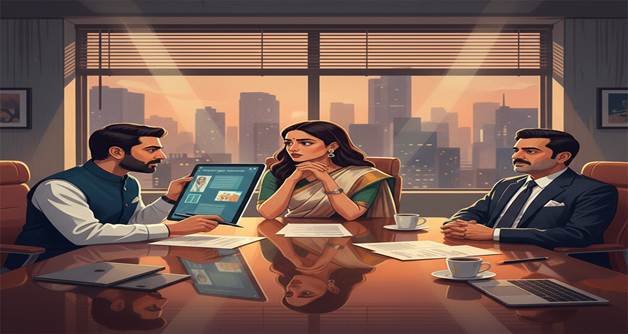
Types of Conflicts

  1. Creative Conflicts
    • Often, directors, writers, and actors may have different visions for a scene or a character.
    • Example: An actor may want to change lines, but the director prefers the original script.
  2. Financial Conflicts
    • Disputes over payments, profit-sharing, or budget overruns.
    • Example: A producer failing to pay technicians or actors on time.
  3. Legal Conflicts
    • Issues related to contracts, copyrights, or credits.
    • Example: Disagreements over who should be credited for a script or story.
  4. Personal Conflicts
    • Ego clashes, favoritism, or misunderstandings between team members.

Methods of Conflict Resolution

  1. Negotiation
    • Direct communication between parties to reach a compromise.
    • Example: The actor and director sit together and discuss their creative differences to find a middle ground.
  2. Mediation
    • A neutral third party, like a senior producer or industry association, helps resolve the issue.
    • Example: The Producers Guild of India mediates between a director and a production house.
  3. Legal Action
    • If negotiations fail, parties may go to court.
    • Example: Filing a case for breach of contract or copyright violations.
  4. Industry Bodies
    • Associations like Cine and TV Artistes’ Association (CINTAA), Indian Motion Picture Producers’ Association (IMPPA), and Screenwriters Association (SWA) help resolve disputes professionally.

Case Studies & Examples

1. Credit Dispute in “Queen” (2014)

  • Situation:
    Writer Apurva Asrani claimed that he was not given proper credit for his work on the film Queen.
  • Resolution:
    The dispute was brought to the Screenwriters Association (SWA). After discussions and intervention, the credits were renegotiated. Both parties issued statements, and the issue was resolved without further legal action.

2. Payment Conflicts in the TV Industry

  • Example:
    In many TV serials, technicians and junior artists have protested due to delayed payments. In 2017, workers in Mumbai went on strike demanding timely payments from production houses. IMPPA and the Federation of Western India Cine Employees (FWICE) intervened and ensured producers cleared dues, allowing shootings to continue smoothly.

3. Creative Differences in “Sholay”

  • Example:
    During the classic film Sholay, there were disagreements between director Ramesh Sippy and actors about the portrayal of certain scenes. Through open discussions and compromise, they resolved their differences, resulting in one of India’s most successful films.

Importance of Conflict Resolution

  • Maintains Harmony: Hmaintainining a positive working environment.
  • Ensures Timely Completion: Prevents delays in shooting and release.
  • Protects Reputations: Avoids negative publicity and legal battles.
  • Boosts Creativity: Resolving issues allows artists to focus on their craft.

Conclusion

Conflicts are natural in a creative industry like filmmaking. Effective conflict resolution—whether through negotiation, mediation, or industry intervention—keeps films running smoothly and relationships strong. Learning to handle conflicts professionally is a key skill for anyone in the film industry.

I. LOGLINE, PREMISE, AND SYNOPSIS

1. Logline

A logline is a one- or two-sentence summary of a film that tells what the story is about, who the main character is, and what challenge or conflict they face. It’s the first thing producers or studios read to decide if they’re interested in a film.

Structure of a Logline:

  • Main character
  • Goal or desire
  • Obstacle or conflict

Example (Indian Film):

  • 3 Idiots (2009):
    • Logline: “Three engineering students challenge the traditional education system while searching for their missing friend, learning about life, friendship, and the pursuit of happiness.”

Purpose:
A logline grabs attention and provides a quick sense of the film’s core idea.

2. Premise

The premise is a short paragraph—usually 2–4 sentences—that expands on the logline. It sets up the general situation of the film, the world, and what’s at stake.

Structure of a Premise:

  • Introduces the main character and setting
  • Describes the inciting incident (what starts the story)
  • Mentions the central conflict

Example (Indian Film):

  • Queen (2014):
    • Premise: “Rani, a sheltered young woman from Delhi, is left alone after her fiancé calls off their wedding. Heartbroken but determined, she decides to go on her planned honeymoon alone. Through her solo travels in Europe, she discovers her identity, independence, and joy.”

3. Synopsis

A synopsis is a short summary—usually one page—that describes the story’s main events from beginning to end. It includes the setup, key plot points, climax, and resolution. The synopsis helps readers or producers understand the film’s full arc.

Structure of a Synopsis:

  • Introduction to the protagonist and their world
  • The inciting incident
  • The major obstacles and developments
  • The climax
  • The resolution

Example (Indian Film):

  • Dangal (2016):
    • Synopsis:
      “Mahavir Singh Phogat, a former wrestler, dreams of winning gold for India. After giving up wrestling for family, he hopes for a son to carry on his legacy. Instead, he has four daughters. When he realizes his daughters, Geeta and Babita, have wrestling talent, he trains them despite social pressure. The girls face tough challenges but work hard, ultimately breaking stereotypes and winning India’s first gold medal in women’s wrestling at the Commonwealth Games.”

Case Study: ‘Gully Boy’ (2019)

  • Logline: “A street rapper from Mumbai overcomes obstacles to pursue his dream and express himself through music.”
  • Premise: “Murad, a young man from the slums of Mumbai, discovers the world of rap and hip-hop. Despite poverty and family struggles, he finds his voice and pursues his passion for music, challenging societal norms and inspiring others.”
  • Synopsis:
    “Murad is a college student in Mumbai’s slums with dreams of a better life. Inspired by local rappers, he starts writing and performing his songs. Despite family opposition and cultural barriers, established rapper MC Sher recognizes Murad’s talent. Together, they navigate music competitions and the challenges of a conservative society. Murad’s journey is one of self-discovery, culminating in him winning a major rap battle and finding hope for a new future.”

II. TREATMENT AND CHARACTER BREAKDOWNS

1. Treatment

A treatment is a detailed summary of the film—about 5 to 20 pages—written in prose form. It tells the story from beginning to end, including main events, emotional beats, and visual ideas. It’s like a short story version of the screenplay, without dialogue.

Features of a Treatment:

  • Written in present tense
  • Focuses on major plot points
  • Describes the tone and style
  • Introduces key characters
  • May include some key dialogues (only if necessary)

Purpose:
A treatment helps producers, investors, and collaborators understand the film’s flow and emotional journey before the script is written.

Example (Indian Film):

Lagaan (2001): Treatment Excerpt:

“In 1893, in the drought-stricken village of Champaner, young Bhuvan bravely challenges the British rulers to a cricket match to avoid paying high taxes (lagaan). He gathers a team of villagers, who know nothing about cricket, and trains them despite the challenges. As Bhuvan and his team fight prejudice, fear, and their limitations, they develop unity and hope. The final match is a nail-biter, and the villagers’ victory brings relief and pride to the community.”

Case Study: ‘Barfi!’ (2012)

Treatment Sample: “Set in Darjeeling in the 1970s, Barfi, a deaf-and-mute boy, uses his wit and charm to spread happiness. His life intertwines with Shruti, a woman struggling between love and societal expectations, and Jhilmil, an autistic girl searching for belonging. Barfi’s adventures, his innocent love, and his struggles with the law form a heartwarming story about acceptance, compassion, and the joy of living differently.”

2. Character Breakdowns

A character breakdown is a brief description of each main character’s personality, background, motivations, and relationships. It helps actors, casting directors, and crew understand who the characters are on a deeper level.
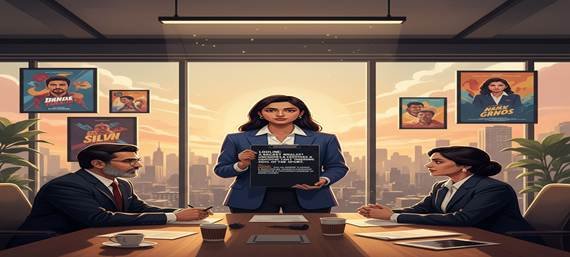
Parts of a Character Breakdown:

  • Name and age
  • Physical appearance
  • Key personality traits
  • Background and goals
  • Main conflicts

Example (Indian Film):

  • Chak De! India (2007):
    • Kabir Khan:
      • Age: 35
      • Background: Former captain of the Indian men’s hockey team, accused of betrayal.
      • Traits: Determined, disciplined, passionate, carrying guilt.
      • Goal: To redeem himself by coaching the Indian women’s hockey team to victory.
      • Conflict: Faces prejudice, internal team conflicts, and his reputation.
    • Vidya Sharma:
      • Age: 27
      • Background: Senior player and goalkeeper, married.
      • Traits: Responsible, calm, natural leader.
      • Goal: To balance family life with hockey and lead her team to success.
      • Conflict: Struggles with societal expectations and team unity.

Case Study: ‘Taare Zameen Par’ (2007)

  • Ishaan Awasthi:
    • Age: 8
    • Traits: Creative, imaginative, and struggles academically due to dyslexia.
    • Conflict: He is misunderstood by teachers and family and feels isolated.
    • Goal: Wants to express himself and be understood.
  • Ram Shankar Nikumbh:
    • Age: 30s
    • Traits: Caring, innovative, passionate art teacher.
    • Goal: Help Ishaan and other children discover their strengths.
    • Conflict: Fights against rigid school systems and parents’ misconceptions.

III. VISUAL STYLE: MOOD BOARDS, LOOKBOOK, AND REFERENCES

Filmmaking is a visual medium. Before shooting starts, directors and cinematographers create visual aids to communicate the film’s look and feel. The three main tools are mood boards, lookbooks, and references.
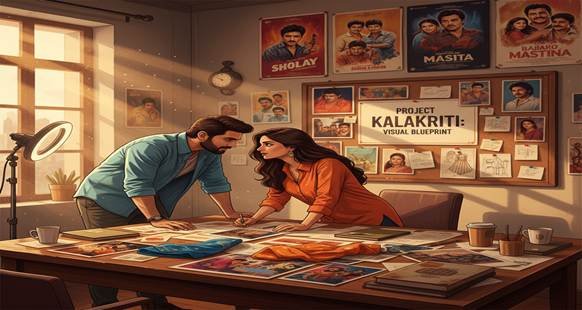
1. Mood Boards

A mood board is a collage of images, colors, fabrics, locations, and textures that set the visual mood of the film. It helps everyone understand the emotional tone and aesthetic the director wants.

Purpose:

  • Establish the film’s atmosphere (e.g., cheerful, dark, realistic)
  • Guide decisions on costumes, sets, lighting, and color palette

Indian Example:

  • Dev.D (2009):
    • The mood board for Dev.D included neon lights, grungy street scenes, and vibrant colors to create a modern, edgy look. This influenced the film’s unique visual style, setting it apart from earlier adaptations of “Devdas.”

Case Study: ‘Dil Se…’ (1998)

  • Director Mani Ratnam and cinematographer Santosh Sivan used mood boards with images of Indian landscapes, rain, and vibrant colors to capture the film’s themes of passion and longing. The rain, deep reds, and sweeping vistas became central to the film’s mood.

2. Lookbook

A lookbook is a document or digital presentation containing photos, film stills, artwork, and notes that further define the visual style. It’s more detailed than a mood board and often includes references to other films, paintings, or photography.

Features of a Lookbook:

  • Organized by scenes, locations, or characters
  • Shows lighting, framing, costumes, and color schemes
  • Used to pitch the film to producers or crew

Indian Example:

  • Zindagi Na Milegi Dobara (2011):
    • The lookbook included images from road movies, Spanish landscapes, and fashion magazines. It communicated the film’s free-spirited, stylish, and lively visual approach.

Case Study: ‘The Lunchbox’ (2013)

  • Ritesh Batra’s lookbook included photos of Mumbai’s dabbawalas (lunchbox carriers), crowded trains, and cozy kitchens. This helped the team visualize the intimate, everyday world of the film and maintain a consistent, realistic style throughout.

3. References

References are specific films, artworks, photographs, or even music videos that a director uses to inspire the visual language of their film. They can be from Indian or international cinema.

Purpose:

  • Provide a clear model for technical teams (camera, set design, costumes)
  • Convey the director’s vision to new team members

Indian Example:

  • Gangs of Wasseypur (2012):
    • Director Anurag Kashyap referenced classic Bollywood crime sagas and international films like “The Godfather” for the gritty, realistic style. He also used photographs of small-town India to capture the authentic setting.

Case Study: ‘Raazi’ (2018)

  • Meghna Gulzar used photographs from 1970s India, period films, and real-life espionage tales as visual references. This helped recreate the historical setting with accuracy, from costumes to locations.

Bringing It All Together: The Process in Indian Film Projects

How These Tools Work Together

  1. Start with the logline, premise, and synopsis to define the story and attract interest.
  2. Expand into a treatment to map out the full narrative, emotional arcs, and key moments.
  3. Create character breakdowns to guide casting and performance choices.
  4. Develop mood boards and lookbooks to visualize the world of the film.
  5. Use references to give the team a tangible sense of what to aim for.

Integrated Example: ‘Piku’ (2015)

  • Logline: “A young woman’s road trip with her aging, eccentric father leads to unexpected discoveries about family and life.”
  • Premise: “Piku, a modern architect in Delhi, struggles to balance her career and her father’s demanding health issues. When they take a road trip to Kolkata, their journey is filled with arguments, laughter, and realizations about love and responsibility.”
  • Synopsis:
    “Piku is devoted to her eccentric, hypochondriac father, Bhashkor. When he insists on traveling to their ancestral home in Kolkata, Piku reluctantly agrees. Their taxi company owner, Rana, joins them, filling the journey with comic and touching moments. Through the trip, Piku confronts her frustrations and learns to appreciate her father’s quirks, strengthening their bond. The film ends with a sense of closure and renewed understanding.”
  • Treatment:
    The treatment details each stage of the road trip, Piku’s interactions with her father, and the growing friendship with Rana. It describes the humorous yet realistic depiction of family life and the subtle emotional changes in Piku.
  • Character Breakdown:
    • Piku: Independent, intelligent, and caring but often impatient.
    • Bhashkor Banerjee: Elderly, stubborn, witty, and obsessed with his health.
    • Rana: Calm, practical, and becomes the peacemaker between Piku and her father.
  • Mood Board & Lookbook

The mood board featured images of Delhi’s modern apartments, Kolkata’s heritage homes, Indian highways, and the rainy season to set a cozy but realistic tone. The lookbook included costume ideas (simple cotton sarees, casual wear), natural lighting, and intimate close-ups to capture the film’s understated style.

  • References:
    Director Shoojit Sircar referred to classic Bengali family dramas and slice-of-life films to guide Piku’s warm, relatable visual style.

Conclusion

In the Indian film industry, tools like the logline, premise, and synopsis help filmmakers clarify and pitch their stories. The treatment and character breakdowns provide detailed roadmaps for writing, casting, and directing. Visual style tools—mood boards, lookbooks, and references—ensure that everyone on the team shares the same vision for how the film should feel and look.

By using these tools, filmmakers can communicate their ideas clearly, build strong teams, and create films that connect with audiences both emotionally and visually. Indian cinema, with its wide variety of genres and stories, relies on these techniques to bring unique and memorable films to life.

IV. TARGET AUDIENCE AND PLATFORM SUITABILITY

What is Target Audience?

The target audience is the specific group of people a film is made for. Understanding the target audience helps filmmakers make choices about story, casting, language, and marketing. Factors include:

  • Age group (children, teenagers, adults, seniors)
  • Gender
  • Geography (urban, rural, international)
  • Language
  • Socio-economic background
  • Interests (romance lovers, action fans, comedy seekers)

Why Is Target Audience Important?

  • Helps create stories that connect with viewers
  • Guides decisions about music, visuals, and actors
  • Influences how and where to release the film

What is Platform Suitability?

Platform suitability means choosing the right place to show the film so the target audience can easily access it. Platforms include:

  • Theatrical release (cinema halls)
  • Television
  • Streaming platforms (OTT) like Netflix, Amazon Prime, Hotstar
  • YouTube and social media
  • Film festivals

Matching the film’s type and content to the right platform is key for success.

Indian Examples

1. Theatrical Release

  • Film: Baahubali: The Beginning (2015)
  • Target Audience: Mass audience, all ages, pan-India (Hindi, Tamil, Telugu)
  • Platform Suitability: The film’s grand visuals and epic scale made it ideal for theaters, where audiences could enjoy the experience on big screens.

2. OTT Release

  • Film: Guilty (2020, Netflix)
  • Target Audience: Urban youth, 18–35 years, interested in contemporary issues and thrillers
  • Platform Suitability: Digital release on Netflix reached young adults who prefer streaming content, especially during the COVID-19 lockdown.

3. Children’s Film

  • Film: Chhota Bheem: Kung Fu Dhamaka (2019)
  • Target Audience: Children aged 4–12
  • Platform Suitability: Released in theaters for families but later moved to TV and digital, where kids could rewatch easily.

4. Niche Indie Film

  • Film: Court (2014)
  • Target Audience: Art-house film lovers, festival audiences, critics
  • Platform Suitability: Limited theatrical release and film festivals, then OTT for a global niche audience.

Case Study: Shubh Mangal Zyada Saavdhan (2020)

  • Film Theme: Gay romance, LGBTQ+ rights
  • Target Audience: Urban youth, LGBTQ+ community, socially aware viewers
  • Platform Suitability: Released in theaters, then quickly moved to digital platforms (Amazon Prime). The film’s bold theme was more accepted among younger, urban digital audiences than traditional rural viewers.

V. BUDGET ESTIMATE AND PRODUCTION TIMELINE

What is a budget estimate?

A budget estimate is a detailed prediction of how much money will be needed to make a film. It covers every step from pre-production to marketing.
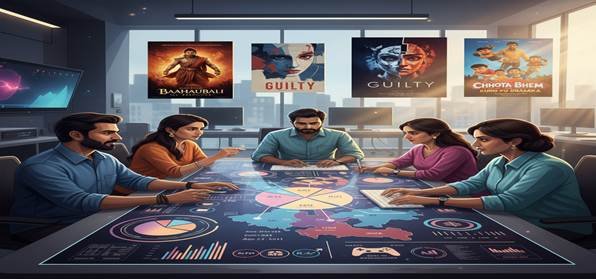
Main Budget Components

  1. Development
    • Scriptwriting, research, pre-visualization
  2. Pre-Production
    • Casting, location scouting, set design, rehearsals
  3. Production
    • Shooting (cameras, crew, actors, set, costumes)
    • Equipment rental
    • Food and accommodation
  4. Post-Production
    • Editing, sound, music, VFX
  5. Marketing and Distribution
    • Trailers, posters, social media, festival fees
  6. Contingency
    • Extra funds for unexpected costs (usually 5–10% of the budget)

Example: Budget Breakdown (Hypothetical Bollywood Film)

  • Development: ₹10 lakh
  • Pre-Production: ₹30 lakh
  • Production: ₹1.5 crore
  • Post-Production: ₹40 lakh
  • Marketing & Distribution: ₹50 lakh
  • Contingency: ₹15 lakh

Total Budget: ₹2.95 crore

Budget varies greatly. Small indie films might be made for <₹1 crore, while big blockbusters like Baahubali or Pathaan can cross ₹200–300 crore.

What is a production timeline?

A production timeline is a schedule detailing when each part of the film will be completed. It ensures the film is finished on time and within budget.

Typical Timeline Phases

1. Development: 1–6 months

Writing a script, preparing a pitch

2. Pre-Production: 2–4 months

Casting, location scouting, planning

3. Production: 1–3 months

Actual shooting

4. Post-Production: 3–6 months

Editing, sound, music, VFX

5. Marketing & Release: 1–2 months

Promotions, press, release

Example Timeline (Mid-Budget Film)

  • Jan–Mar: Scriptwriting, financing
  • Apr–May: Casting, pre-production
  • Jun–Jul: Shooting (40 days)
  • Aug–Oct: Editing, sound, VFX
  • Nov: Marketing, trailer launch
  • Dec: Theatrical release

Case Study: Article 15 (2019)

  • Budget: Around ₹30 crore
  • Production Timeline:
    • Development: 2 months (script and research)
    • Pre-production: 1.5 months (casting, scouting in Uttar Pradesh)
    • Production: 30 days of shooting
    • Post-production: 2 months
    • Marketing: 1 month
    • Release: Six months after production started

The tight schedule and controlled budget helped the film earn profits quickly and win critical acclaim.

VI. DISTRIBUTION AND MARKETING STRATEGY

What is distribution?

Distribution is the process of getting a finished film to the audience. It involves choosing where and how the film will be shown—cinemas, TV, OTT platforms, or international markets.

Types of Distribution

  1. Theatrical: Releasing in cinema halls for box office revenue.
  2. Digital/OTT: Releasing on platforms like Netflix, Amazon Prime, and Hotstar.
  3. TV Broadcast: Film shown on national or local television.
  4. Film Festivals: Showcase at festivals for awards and recognition.
  5. International Distribution: Releasing in other countries.

What is marketing?

Marketing is promoting a film to create interest, awareness, and excitement so that people want to watch it.
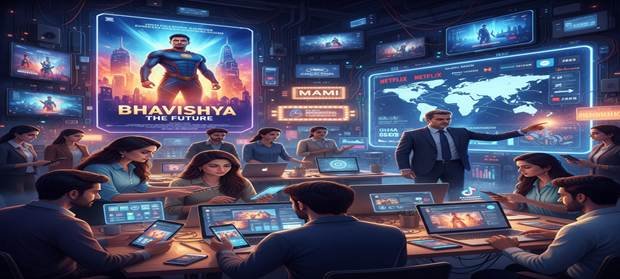
Common Marketing Strategies

  • Trailers and teasers
  • Social media campaigns
  • Posters and billboards
  • Celebrity interviews and appearances
  • Music launches
  • Contests and partnerships
  • Tie-ins with brands

Indian Examples and Strategies

1. Big-Budget Blockbuster: RRR (2022)

  • Distribution:
    Released in multiple Indian languages (Telugu, Tamil, Hindi, Kannada, and Malayalam) across more than 10,000 screens worldwide.
  • Marketing:
    • Teasers and trailers released months before launch
    • Social media campaigns targeting fans in different Indian states
    • Pre-release events with star cast
    • Tie-ups with brands for merchandise and food chains
  • Result:
    Massive box office success, global recognition, and viral social media trends

2. Indie Film: The Lunchbox (2013)

  • Distribution:
    Premiered at Cannes Film Festival, then released in select Indian cinemas and globally through festivals and limited theatrical runs.
  • Marketing:
    • Positive word-of-mouth from critics
    • Social media buzz
    • International festival awards used in promotions
  • Result:
    Became an international success, sold to 30+ countries, and found a wider audience through Netflix.

3. Direct-to-OTT: Shershaah (2021, Amazon Prime Video)

  • Distribution:
    Skipped theaters due to COVID-19, released directly on Amazon Prime Video.
  • Marketing:
    • Social media challenges (“#YehDilMaangeMore” campaign)
    • Digital posters, trailers
    • Virtual interviews and fan interactions
  • Result:
    Became one of the most-watched Indian films on OTT, with positive audience reviews

4. Regional Film with Pan-India Strategy: KGF: Chapter 2 (2022)

  • Distribution:
    Released in Kannada, dubbed into Hindi, Tamil, Telugu, and Malayalam
    • Simultaneous release across India
  • Marketing:
    • Multi-language trailers
    • Collaborations with influencers in different states
    • Advance bookings and special fan screenings
  • Result:
    Broke box office records in multiple states, became a pan-India hit

Case Study: Andhadhun (2018)

  • Distribution:
    Modest release in India, but later released in China, where it became a surprise blockbuster, earning more than its Indian box office total.
  • Marketing:
    • Clever teasers and trailers playing up the film’s mystery
    • Word-of-mouth from celebrities and critics
    • Social media discussions about the film’s twist ending
  • Result:
    Cult status in India, international box office hit

How to Choose the Right Strategy

Factors Influencing Distribution and Marketing

  1. Genre and Audience: Mass entertainers go for wide theatrical releases; niche or experimental films target OTT or festivals.
  2. Star Power: Films with big stars get bigger releases and more marketing.
  3. Budget: A higher budget allows for extensive marketing and global distribution.
  4. Current Trends: During the pandemic, many films opted for direct OTT releases.
  5. International Appeal: Stories with universal themes get festival runs and international releases.

Combining All Elements—A Sample Plan

Example: “Dreams of Mumbai” (Hypothetical New-Age Drama)

  • Target Audience: Urban youth (18–35), English/ Hindi speakers, streaming-savvy, interested in realistic stories
  • Platform Suitability: Planned for digital-first release on Netflix and limited festival circuit.

Budget Estimate:

  • Development: ₹8 lakh
  • Pre-Production: ₹20 lakh
  • Production: ₹60 lakh
  • Post-Production: ₹20 lakh
  • Marketing: ₹15 lakh
  • Contingency: ₹5 lakh
  • Total: ₹1.28 crore

Production Timeline:

  • Feb–Mar: Script, funding
  • Apr: Casting, locations
  • May–Jun: Shooting (30 days)
  • Jul–Aug: Editing, sound, VFX
  • Sep: Marketing, festival submissions
  • Oct: Digital release

Distribution and Marketing Strategy:

  • Submit to Mumbai, Goa, and international festivals (Toronto, Berlin)
  • Release teaser and BTS (behind-the-scenes) content on Instagram, Twitter, and YouTube
  • Collaborate with youth influencers and bloggers
  • Music launch on Spotify and social media
  • Partner with NGOs to discuss urban youth issues as part of the campaign
  • Post-release: Q&A sessions with cast and director on Instagram Live

Conclusion

Target audience and platform suitability help filmmakers decide who the film is for and where it should be released. Budget estimates and production timelines keep the project on track and prevent overspending. Distribution and marketing strategies ensure the film reaches the right viewers and creates excitement.

Indian cinema, from big blockbusters to indie gems, uses these tools in different combinations to achieve success. By carefully planning every step—from understanding the audience to promoting the film—filmmakers increase their chances of connecting with viewers and making a mark in the industry.
MODULE-VI

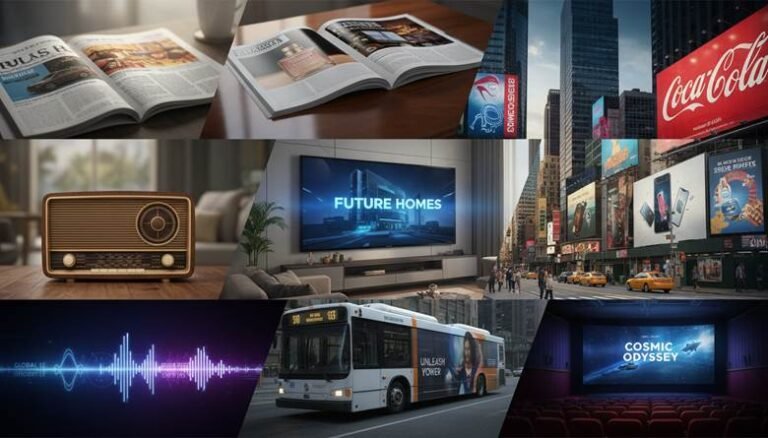
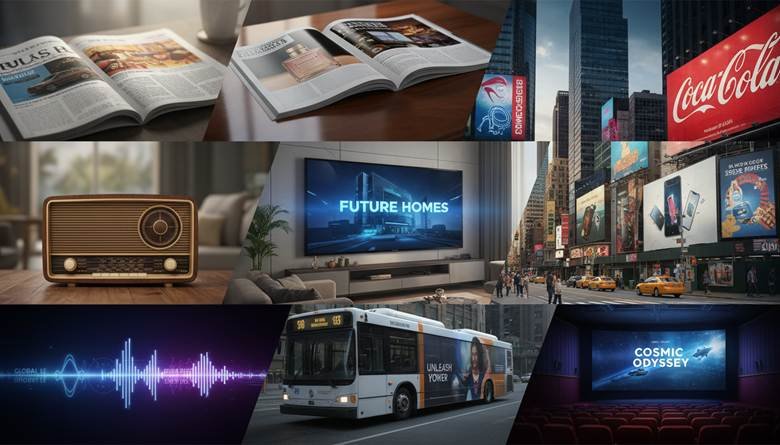
Selecting a suitable media option (advantages and disadvantages)

A. Newspaper

B. Magazine

C. Television (National, Regional, and Local)

D. Radio

E. Outdoor and out-of-home

F. Transit

G. Cinema Advertising

Selecting a suitable media option

How to Select a Suitable Media Option for Advertising

1. Identify Target Audience: Understand demographics, interests, and media habits. For example, if your product targets urban youth, digital and social media or FM radio (like Radio Mirchi) may be more effective. For rural audiences, radio or regional newspapers like Dainik Jagran work well.

2. Define Objectives: Clarify the campaign goal—awareness, sales, or engagement. For a new product launch aiming for mass awareness, national TV channels (e.g., Star Plus) or popular newspapers (The Times of India) provide broad reach. For detailed product information, magazines allow in-depth ads.

3. Budget Consideration: Evaluate costs versus expected returns. Television and cinema offer high impact but are expensive, suited for large brands (e.g., Coca-Cola TV ads during IPL). Local businesses might prefer cost-effective options like bus or transit ads.

4. Message Type: Decide if your message needs visuals, sound, or both. Visual products (like fashion) benefit from glossy magazines (Vogue India) or billboards. Audio-focused messages work on radio.

5. Geographic Targeting: Select media that best covers your target location. Regional TV channels, local newspapers, or city outdoor hoardings can target specific cities or states.

6. Media Consumption Trends: Consider changing habits. If your audience shifts to digital, explore online ads or streaming platforms.

Example: A fitness brand launching a new protein bar for urban millennials could use Instagram and YouTube ads (digital), ads in health magazines (print), and posters in gyms (OOH). In contrast, an agricultural product for farmers might choose regional radio, rural newspapers, and local bus ads.

Conclusion: Selecting the right media involves matching your audience, message, objectives, and budget to the strengths of each medium, ensuring maximum impact for your advertising campaign.

A. NEWSPAPER ADVERTISING

Advantages

1. Broad Reach and Accessibility:

Newspapers are one of the most widely circulated media forms, particularly in countries like India, where both national and regional newspapers thrive in multiple languages. This makes them ideal for reaching a vast and diverse audience. For example, publications like The Times of India and Dainik Bhaskar have millions of readers daily.

2. Local and Regional Targeting:

With different editions and supplements, newspapers allow advertisers to focus on specific cities or regions. This is especially valuable for brands seeking to promote products or services relevant to a particular area.

3. Short Lead Time:

Advertisements can be placed quickly, even a day or two before publication, making newspapers suitable for time-sensitive promotions, sales, or events.

4. Credibility and Trust:

Newspapers are often regarded as reliable sources of news and information, lending credibility to the ads placed within them.

5. Variety of Formats:

From small classified ads to large display ads (full page or half page), advertisers have flexibility regarding size, positioning, and frequency.

Disadvantages

1. Short Lifespan:

Newspapers are typically read within a day, after which they are discarded. This limits the duration of ad exposure.

2. Limited Visual Appeal:

Due to print limitations, especially in black-and-white sections, newspapers can’t match the visual impact of other media like TV or glossy magazines.

3. Declining Readership Among Youth:

With the rise of digital and social media, younger audiences increasingly consume news online, reducing the effectiveness of print newspapers for certain demographics.

4. High Clutter:

Newspapers often contain many ads, especially on weekends or festival days, making it easy for individual advertisements to become lost among others.

5. Limited Engagement:

Newspaper ads are passive; readers can easily skip over them unless they are particularly eye-catching or relevant.

Example

In India, brands like Reliance Jio and Amazon frequently use front-page newspaper ads to announce new launches or sales. For instance, the Jio launch in 2016 was accompanied by a series of full-front-page ads in major newspapers, helping create massive awareness and buzz across the country.

Case Study

Amul’s Topical Ads:

Amul, a leading dairy brand in India, has long used newspaper advertising to deliver witty, topical ads reflecting current events. These ads promote products and engage readers by connecting with trending news, enhancing brand recall and affinity.

B. MAGAZINE ADVERTISING

Advantages

1. Niche Targeting:

Magazines cater to specific interests or demographics (e.g., technology, health, fashion, and business). Advertisers can choose titles that closely align with their target audience, ensuring efficient use of their budget. For example, Femina targets women, while Digit reaches tech enthusiasts.

2. High-Quality Visuals and Production:

Magazines are produced on high-quality paper with professional layouts, allowing for vibrant, full-color ads that capture attention and enhance brand image.

3. Longer Shelf Life:

Unlike newspapers, magazines are often kept for weeks or months and may be read multiple times, increasing the frequency of ad exposure.

4. Prestige and Authority:

Advertising in respected magazines can add prestige to a brand, as readers often perceive such publications as authorities in their respective domains.

5. Engagement:

Magazine readers typically spend more time with each issue, are more engaged, and are less likely to skip over advertising content, especially if it is creative and relevant.

Disadvantages

1. Longer Lead Time:

Because magazines usually work on monthly or biweekly cycles, advertisers must plan content well in advance, making them less flexible for last-minute promotions.

2. Higher Costs:

Premium placements in glossy magazines can be expensive, especially for full-page or inside-cover ads.

3. Limited Reach:

Compared to newspapers or television, magazines generally have a smaller circulation, limiting their reach to a more selective audience.

4. Possible Ad Clutter:

Popular magazines can have many ads packed into each issue, potentially diluting the effect of a single advertisement.

5. Limited Frequency:

Most magazines are not published daily, reducing the frequency with which readers see any given ad compared to daily newspapers or television.

Example

Luxury brands like Rolex and Louis Vuitton frequently advertise in high-end magazines such as Vogue India or GQ India to reach affluent, style-conscious readers. Similarly, Maruti Suzuki advertises new car models in auto magazines like Autocar India to target automobile enthusiasts.

Case Study

L’Oréal in Fashion Magazines:

L’Oréal India launched a campaign for its new hair color products across leading fashion magazines like Femina and Elle. The campaign featured celebrity endorsements and glossy visuals, aligning the brand with fashion and beauty trends. The result was an increase in brand perception as being modern and stylish and a noticeable uptick in product inquiries and sales among urban women.

Comparative Insights

While both newspapers and magazines are traditional print media, their usage depends largely on campaign objectives, target audience, and budget:

  • Newspaper advertising excels at providing broad, immediate reach, especially for time-sensitive or region-specific campaigns. Its credibility and accessibility make it a preferred medium for major announcements and retail offers. However, its impact is often short-lived, and it struggles to engage younger, digital-savvy audiences.
  • Magazine advertising is best for building an aspirational brand image among targeted interest groups. Its high-quality visuals and longer shelf life allow for more profound engagement with the audience, making it ideal for luxury, lifestyle, and niche products. The trade-off is higher cost and less flexibility.

Integrated campaigns often use a combination of both to maximize reach (via newspapers) and engagement (via magazines), as seen in product launches or festival promotions by FMCG and lifestyle brands in India.

Conclusion

Selecting between newspaper and magazine advertising requires a clear understanding of the product, audience, and campaign goals. Newspapers offer immediacy and mass coverage, making them suitable for broad-based or urgent campaigns. Magazines provide focused, high-quality engagement, ideal for brands seeking lasting impact among specific interest groups. Successful media planners skillfully balance these options to deliver optimal results for their clients or brands.

C. TELEVISION ADVERTISING

Advantages

  1. Massive Reach: Television provides access to a vast and diverse audience, making it ideal for mass-market products. National channels like Star Plus or Sony reach tens of millions across India.
  2. High Impact with Audio-Visual Appeal: Combining sight, sound, and motion allows for emotionally compelling storytelling and memorable brand messages. Jingles, visuals, and celebrity endorsements have high recall.
  3. Targeted Advertising: Regional and local channels enable segmentation based on language, geography, and culture (e.g., advertising in Sun TV for Tamil-speaking audiences).
  4. Brand Credibility and Prestige: TV advertising is considered authoritative, often elevating brand perception, especially for new launches.
  5. Suitable for Demonstrations: Advertisers can effectively explain or demonstrate complex products, such as home appliances or beauty products.
  6. Time Slot Flexibility: Ads can be run during prime time, non-prime, or specific program slots to match target audience habits.
  7. Event-Based Marketing: Live broadcasts (e.g., cricket matches, award shows) attract huge, engaged audiences, ideal for launches.
  8. High Frequency and Repetition: Campaigns can run repeatedly, increasing the likelihood of message retention.
  9. Influences Purchase Decisions: TV ads often drive impulse buying due to persuasive visuals and repeated messaging.
  10. Measurability: Modern TV metrics (e.g., BARC ratings in India) help advertisers evaluate campaign effectiveness.

Disadvantages

  1. High Costs: Production and airtime, especially during prime slots or major events, are expensive—often unaffordable for small businesses.
  2. Ad Clutter: Viewers are bombarded with many ads per break, diluting individual brand impact and causing “ad fatigue.”
  3. Limited Targeting Precision: While regional targeting exists, TV is less precise than digital platforms, leading to potential wastage.
  4. Short Shelf Life: TV ads are fleeting; if a viewer misses the broadcast, they lose the opportunity unless the ads are repeated frequently.
  5. Ad Avoidance: With remote controls, DVRs, and OTT platforms, viewers can skip ads, reducing effectiveness.
  6. Long Lead Times: Producing high-quality TV commercials and booking slots requires significant time and planning.
  7. Regulatory Restrictions: There are strict guidelines for certain product categories (e.g., alcohol, tobacco) and content censorship.
  8. Limited Interactivity: TV is a “one-way” medium; viewers cannot interact with the ad in real time.
  9. Measurement Challenges: Despite improvements, tracking exact ROI and attribution is more challenging than with digital media.
  10. Regional Barriers: Language and cultural differences can limit the effectiveness of national campaigns if not localized.

Examples

  • Coca-Cola’s “Share a Coke” Campaign: Ran across national TV channels during IPL, with regionally tailored messages for local markets.
  • Surf Excel’s “Daag Acche Hain” (Stains are Beneficial Campaign: Aired in multiple Indian languages on both regional and national channels, boosting market share across the country.

Case Study

Cadbury Dairy Milk’s “Kuch Meetha Ho Jaaye”

Cadbury ran a series of emotionally charged TV ads during festive seasons (e.g., Diwali) on national and regional channels. The ads were tailored to different states (using local actors and languages). Sales increased significantly during campaign periods, and Cadbury cemented its association with Indian festivals.

D. Radio Advertising

Advantages

  1. Cost-Effectiveness: Production and airtime costs are much lower than television, making radio accessible for small and medium businesses.
  2. Local and Regional Targeting: Stations cater to specific cities or regions, enabling precise geographic targeting (e.g., Radio Mirchi Delhi vs. Radio Mirchi Pune).
  3. High Frequency: Ads can be aired several times a day, increasing the likelihood of listener recall.
  4. Immediacy and Flexibility: Radio allows quick changes to ad copy or schedule, suitable for time-sensitive promotions.
  5. Mobile Listenership: Radio is consumed in cars, workplaces, and on mobile phones, reaching people on the move.
  6. Personal Touch: Radio jockeys (RJs) and live reads can make ads feel conversational and trustworthy.
  7. Less Ad Avoidance: Listeners are less likely to skip ads, especially during commutes or routine activities.
  8. Niche Audience Programming: Station design shows for specific demographics (youth, professionals, homemakers), allowing targeted messages.
  9. Integration with Promotions: Radio can drive engagement through contests, call-ins, and listener participation.
  10. Reinforcement of Local Events: Ideal for promoting local sales, events, or community initiatives.

Disadvantages

  1. No Visual Element: Radio relies solely on audio, limiting the ability to demonstrate products or show branding.
  2. Ephemeral Messaging: Ads are transient; if a listener misses it, there’s no way to “replay” unless repeated.
  3. Limited National Reach: Most stations are local or regional; national campaigns require multiple station buys.
  4. Background Medium: Listeners may treat radio as background noise and not devote full attention to ads.
  5. Audience Measurement Issues: Radio audience metrics are less robust than TV or digital, making campaign evaluation difficult.
  6. Clutter and Repetition: High ad frequency can cause listener fatigue and reduce ad effectiveness.
  7. Limited Content Control: Ads may be placed next to competing or inappropriate content, affecting brand image.
  8. Time Constraints: Most ads are brief (15–30 seconds), limiting message complexity.
  9. Language Barriers: In multilingual societies, a single station may not cover all language groups.
  10. Declining Listenership Among Youth: Music streaming and podcasts are reducing traditional radio’s appeal for younger audiences.

Examples

  • Big Bazaar’s “Wednesday Bazaar” Offers: Local radio stations in Mumbai and Delhi promoted mid-week sales, driving significant store traffic.
  • Swiggy and Zomato: Food delivery brands use radio to advertise special deals during lunch and evening commute hours in metro cities.

Case Study

Red FM’s “Bajaate Raho” Social Campaigns

Red FM initiated campaigns like “Malishka Ko Matt Suno” (on Mumbai’s monsoon pothole issues) using RJ Malishka’s satirical songs. The campaign generated massive listener engagement, media coverage, and even policy response from local authorities, demonstrating radio’s power for local activism and brand building.

Comparative Insights

Television is unmatched for mass reach and visual storytelling, making it essential for large brands, new product launches, and brand-building exercises. However, high costs, ad avoidance, and measurement issues are notable downsides. Regional and local TV allow for cultural and linguistic targeting but require careful content adaptation.

Radio excels in local targeting, cost-effectiveness, and frequency, making it ideal for city-level promotions, small businesses, and event-based marketing. Its limitations in visuals and its shrinking youth audience require creative audio strategies and integration with other media.

Best Practices: Many Indian brands use both TV and radio to complement each other—TV for awareness and image, radio for reminders and local call-to-action.

Conclusion

Choosing between television and radio depends on budget, campaign goals, target audience, and message complexity. TV offers unmatched reach and engagement for mass campaigns, while radio provides affordability, frequency, and local relevance. Effective media planning often involves a strategic blend of both, maximizing the unique strengths of each platform.

Selecting a Suitable Media Option for Brand or Product Advertising

D. Radio Advertising

1. Introduction

Radio advertising is a form of audio marketing that reaches audiences through broadcast radio stations. It has been an enduring medium in India, particularly due to its accessibility and wide reach, covering both urban and rural populations. Brands and advertisers use radio to deliver product information, promotions, and brand messages in a cost-effective way. The format includes spot ads, sponsored shows, jingles, and live mentions.

2. Advantages of Radio Advertising

  1. Wide Geographic Reach: Radio signals penetrate remote and rural areas where other media options may not reach, making it ideal for pan-India campaigns.
  2. Cost-Effective: Producing and airing radio ads is generally less expensive than television or print advertising.
  3. High Frequency and Repetition: Radio allows advertisers to repeat their message several times a day, increasing recall among listeners.
  4. Targeted Advertising: With multiple stations catering to specific age groups, languages, and interests, brands can choose stations that best fit their target audience.
  5. Quick Production and Flexibility: Radio ads can be produced and modified quickly, allowing advertisers to respond to market changes or promotions with ease.
  6. Personal and Localized Appeal: Radio connects with listeners on a personal level and can be tailored for local dialects or cultures, making messages more relatable.
  7. Theater of the Mind: The audio-only format encourages listeners to imagine and visualize, leading to more profound engagement.
  8. On-the-Go Medium: People listen to radio while commuting, working, or doing household chores—making it a mobile and flexible medium.
  9. Less Ad Clutter: Compared to digital platforms, radio has fewer advertisements per hour, making each ad more noticeable.
  10. Credibility and Trust: Established radio personalities and stations can lend credibility to brand messages through endorsements or sponsorships.

3. Disadvantages of Radio Advertising

  1. No Visual Element: Inability to show products or demonstrate features makes it challenging for visual brands.
  2. Short Attention Span: Listeners may tune out or not pay full attention, especially if ads are not creative or engaging.
  3. Limited Data and Tracking: Measuring the effectiveness and reach of radio ads is less precise compared to digital media.
  4. Brief Exposure Time: Radio ads are short and can be missed easily if the listener is distracted or switches stations.
  5. Background Medium: Many people use radio as background noise, reducing the impact of messages.
  6. Language and Literacy Barriers: Multilingual markets require producing ads in several languages, increasing complexity.
  7. Limited Creative Possibilities: Restricted to audio, lacking visual or interactive elements.
  8. Frequency Required: Repetitive airing is needed for message retention, increasing overall costs.
  9. Zapping and Switching: Listeners can easily change stations during ad breaks.
  10. Competition from Streaming: Growth of music streaming and podcasts threatens the audience base of traditional radio.

E. Outdoor and Out-of-Home (OOH) Advertising

1. Introduction

Outdoor and out-of-home advertising refers to any advertising that reaches consumers when they are outside their homes. This includes billboards, hoardings, bus shelters, kiosks, and digital screens placed in public locations. In India, OOH remains a powerful tool for mass visibility, especially in metros and high-traffic areas.

2. Advantages of Outdoor and OOH Advertising

  1. High Visibility: Billboards and hoardings are hard to miss, especially when placed in strategic, high-traffic locations.
  2. Continuous Exposure: OOH ads are seen 24 hours a day, 7 days a week, ensuring repeated brand impressions.
  3. Geographic Flexibility: Brands can target specific areas, neighborhoods, or cities based on their marketing needs.
  4. Large Creative Canvas: The size of billboards and digital screens allows for impactful, eye-catching creative work.
  5. Broad Audience Reach: OOH reaches commuters, pedestrians, and travelers, covering multiple demographics.
  6. Boosts Brand Recall: Constant exposure to the same ad reinforces the brand message and aids recall.
  7. Cost-Effective on CPM: A high number of impressions relative to cost makes it efficient for mass awareness.
  8. Complement to Other Media: OOH amplifies and supports TV, radio, and digital campaigns by reinforcing the message.
  9. Difficulty to Ignore: OOH ads are placed in unavoidable locations, making them hard to bypass or skip.
  10. Supports Local Businesses: Ideal for promoting localized offers, events, or store openings.

3. Disadvantages of Outdoor and OOH Advertising

  1. Limited Message Length: Short viewing time means messages must be concise, limiting information conveyed.
  2. Vulnerable to Weather and Vandalism: Exposure to elements and public spaces can damage ads or reduce their visibility.
  3. Difficult Audience Measurement: Tracking actual views and conversions is challenging compared to digital media.
  4. High Initial Investment: Premium locations require significant upfront costs for design, production, and space rental.
  5. Zoning Laws and Permits: Legal restrictions in some areas restrict placement and size of OOH ads.
  6. Potential for Visual Pollution: Too many ads can clutter the urban landscape, reducing effectiveness and causing public backlash.
  7. Non-Targeted: OOH offers broad exposure but limited ability to reach specific niches or segments.
  8. Short Attention Span: Consumers often spend only a few seconds glancing at an ad while passing by.
  9. Creative Limitations: Static formats limit storytelling and product demonstration.
  10. Ad Wear-Out: Prolonged exposure to the same ad can cause audiences to ignore it over time.

F. Transit Advertising

1. Introduction

Transit advertising uses public transportation vehicles and related infrastructure to display advertisements. This includes ads on buses, trains, autos, metros, and in or around stations. In India, with its vast and busy public transport network, transit advertising offers brands a way to reach a captive, moving audience.

2. Advantages of Transit Advertising

  1. Captive Audience: Commuters are often unable to avoid ads while waiting for or riding on public transportation.
  2. Extensive Geographic Coverage: Ads move across different routes and locations, increasing reach.
  3. High Frequency: Daily commuters see the same ads repeatedly, boosting recall.
  4. Cost-Effective for Urban Reach: Lower cost compared to TV or print for large urban populations.
  5. Mass Appeal: Reaches a wide demographic, including students, workers, and families.
  6. Creative Flexibility: Ads can be placed inside or outside vehicles, at stations, on digital screens, etc.
  7. Enhances Brand Visibility: Moving ads attract attention from motorists, pedestrians, and other commuters.
  8. Inescapable Medium: Ads cannot be skipped, paused, or blocked.
  9. Ideal for Local Promotions: Great for promoting events, stores, or services in specific areas.
  10. Good for Repetitive Exposure: Regular commuters encounter the same ads on their daily routes.

3. Disadvantages of Transit Advertising

  1. Limited Viewing Time: Fast-moving vehicles mean ads are often seen only briefly.
  2. Space Constraints: Physical limitations restrict the amount of information or detail in the ad.
  3. Vandalism and Wear: Ads can be damaged, defaced, or obscured by dust and weather.
  4. Dependent on Transit Patterns: Effectiveness varies with route popularity and passenger volume.
  5. Risk of Overexposure: Daily commuters may become blind to recurring ads.
  6. Difficult Targeting: Limited ability to reach highly specific audience segments.
  7. Measurement Challenges: Tracking actual engagement or conversions is difficult.
  8. Weather Impact: Rain, smog, or darkness can reduce visibility of outdoor transit ads.
  9. Regulatory Restrictions: Some cities or transit authorities limit the types and formats of ads allowed.
  10. Temporary Nature: Ads are tied to the schedule and service of the transit vehicle, limiting campaign duration.

G. Cinema Advertising

1. Introduction

Cinema advertising involves showcasing commercials, product placements, or promotional content on the big screen before, during, or after film screenings in theaters. In India, where movie-going is a popular social activity, cinema advertising reaches audiences in a unique, immersive setting.

2. Advantages of Cinema Advertising

  1. Captive Audience: Viewers are in a fixed, darkened environment, making ad avoidance nearly impossible.
  2. Attention and Engagement: The scale of the big screen, coupled with surround sound, ensures high impact and attention.
  3. High Production Quality: Brands can leverage high-quality visuals and sound to create memorable ads.
  4. Targeted Local Reach: Theatres can be selected based on locality, allowing geo-targeting of ads.
  5. Longer Message Duration: Cinema allows for longer commercials, enabling storytelling and detailed product information.
  6. Prestige Factor: Cinema ads are often associated with premium brands and big launches, enhancing brand image.
  7. High Recall Value: The immersive experience leads to better brand and message retention.
  8. Engaged Demographics: Audiences are relaxed and receptive, and cinema often attracts youth, families, and urban consumers.
  9. Supplementary Opportunities: Brands can conduct on-ground activations, distribute samples, or sponsor events in the cinema lobby.
  10. Less Clutter: Fewer ads compared to TV or digital; each ad gets more attention.

3. Disadvantages of Cinema Advertising

  1. Limited Reach: Only those who attend cinemas see the ads; not ideal for products needing mass exposure.
  2. High Production Costs: Quality standards for cinema require high investment in ad creation.
  3. Fixed Schedules: Ads are played at set times before movies, limiting exposure to specific time slots.
  4. Audience Fluctuations: Cinema attendance can vary seasonally or with the popularity of films.
  5. No Immediate Response: Cinema does not allow for direct interaction or immediate action from the audience.
  6. Difficult to Measure ROI: Tracking the effectiveness and conversion rate of cinema ads is challenging.
  7. Ad Skipping (Arriving Late): Some viewers deliberately arrive after the ads to avoid them.
  8. Limited Frequency: Audiences may only visit the cinema occasionally, reducing repeated exposure.
  9. Inflexible Once Booked: Once an ad is scheduled, changes are difficult or impossible.
  10. Not Suitable for Urgent Messages: Long lead times for booking and production make it less suitable for timely promotions.

Dr. Souvik Das

There was a time when a film star’s voice was as familiar to us as their face. In the 1990s you could switch on the television on a random Sunday afternoon and find an actor sprawled on a couch, talking without a filter about a flop, a fight with a director or a rumored romance. Interviews were not events. They were routine. Today that routine has all but vanished, and the silence is worth examining.

Walk into any multiplex during a big release and you will still see the ritual of promotion in full swing — the matching outfits, the choreographed banter on a talk show, the reel dropped at midnight with a caption written by three different publicists before it went out. But once the film opens, the star retreats. No chat show couch. No candid sit-down with a film critic. No unscripted moment where a mask slips and a real person peeks through. The paparazzi, once a near-permanent fixture outside a star’s gate, now sometimes go days without a single sighting worth posting.

The industry built its own filter

Part of the answer lies in how publicity itself has changed. A generation ago a film’s box office fortune depended heavily on earned media — newspaper profiles, magazine covers and long television interviews that ran uncut. Studios and stars needed journalists because journalists were the bridge to the audience. That bridge has been replaced by a highway the stars own outright. An actor with twenty million Instagram followers does not need a reporter to carry their message. They can post it themselves, on their own schedule, in their own words, edited exactly as they wish.

This is control dressed up as connection. A produced reel feels intimate because it is shot in a bedroom or a car. It is not. It has been approved by a manager and often a brand team before it reaches a phone screen. Compare that to the old Rajeev Masand or Simi Garewal specials, where an actor sat across from someone who would push back, ask the uncomfortable question and leave the awkward pause in the edit. That discomfort used to be the whole point.

Fear has replaced curiosity

There is also a simpler, sadder explanation. Stars are scared of us now. One clumsy sentence in an interview can be clipped, stripped of context and turned into a trending topic within hours. A joke that would have vanished into a magazine’s back pages in 1996 now lives forever as a screenshot. Publicists have responded by shrinking the surface area of exposure. Fewer live conversations mean fewer chances for a stray comment to become a controversy that a brand deal cannot survive.

Privacy concerns have followed the same logic. Stars who once treated paparazzi as a mild nuisance now view them as a security risk in an age of stalking and swatting, and many have simply stopped stepping out for the cameras unless there is a specific reason to be seen. Being photographed used to be proof of relevance. Now it can just as easily be proof of vulnerability.

What we have lost in the trade

None of this is illegal or even unreasonable from a star’s point of view. But something real has been traded away. The unpredictability of a live interview used to remind audiences that these were people, not brands, capable of stumbling and correcting themselves in real time. The parasocial relationship built by a well-produced reel is smoother and safer, but it is also thinner. We know less about who these actors actually are even as we see more of their carefully arranged faces than ever before.

The next time a star does sit down for a proper conversation and lets a question actually land, notice how rare that has become. It used to be Tuesday afternoon television. Now it is an occasion.

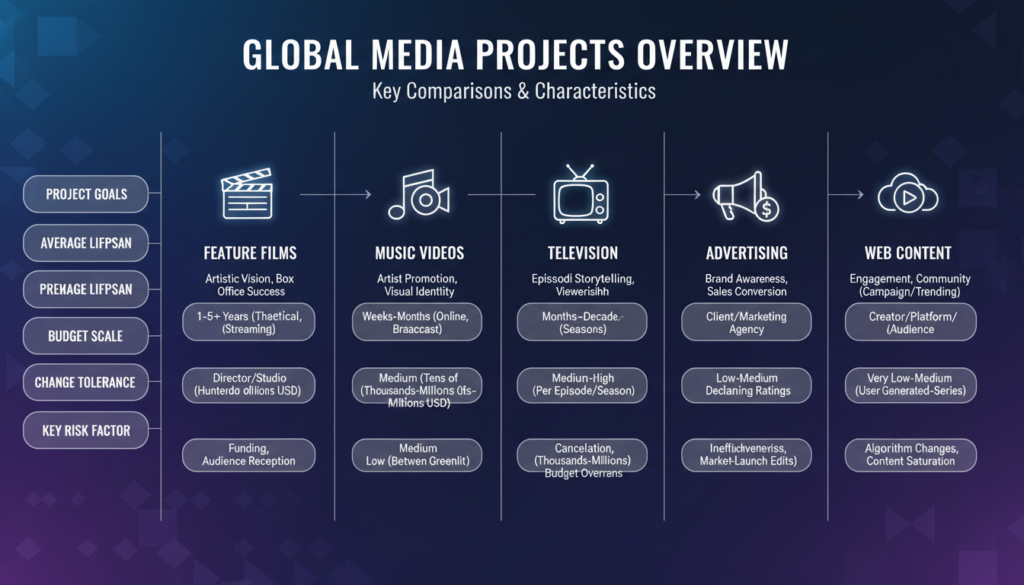
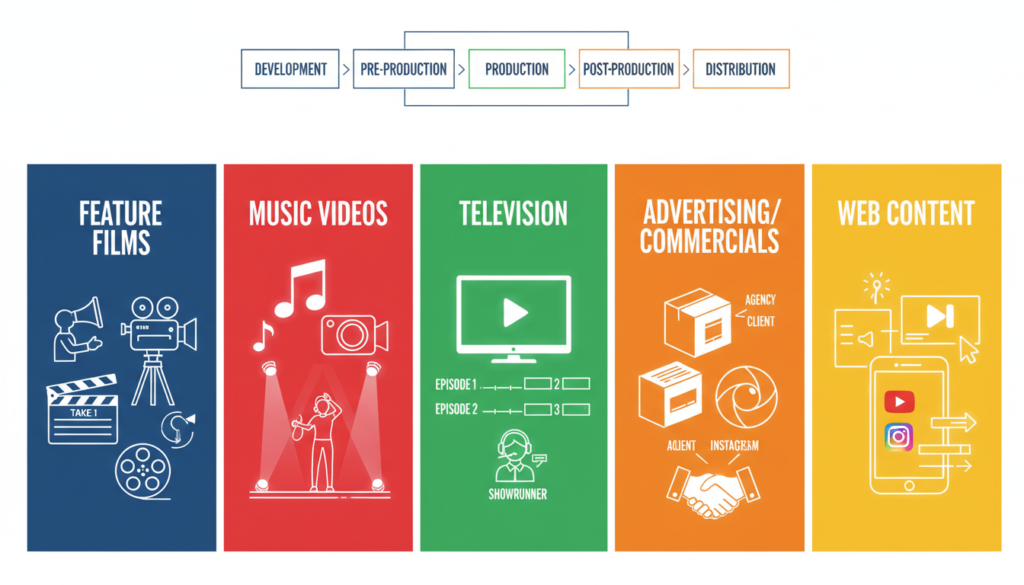
Media projects are unique, temporary endeavors designed to produce creative content across diverse platforms. While they all share the fundamental media pipeline—Development, Pre-Production, Production, Post-Production, and Distribution—the operational scale, financial models, risk factors, and stakeholder dynamics change drastically depending on the specific medium.
The below topics provides an exhaustive, industry-standard breakdown of the five primary types of media projects: Feature Films, Music Videos, Television, Advertising/Commercials, and Web Content.

1. Feature Film Projects

Feature film projects represent the pinnacle of narrative-driven media management. They are long-form projects (typically over 80 minutes) requiring deep capital investment, large cross-functional crews, and long timelines spanning from 1 to 5+ years.

A. Operational & Management Frameworks

Film production is typically split into two distinct execution styles, each dictated by its funding source and structural risk:

  • Studio System (Mainstream/Commercial): Heavily capitalized, centralized management. Decisions are governed by studio executives, greenlight committees, and risk-mitigation metrics. The project prioritizes marketability, star power, and massive intellectual property (IP) leverage.
  • Independent (Indie) System: Fragmented, creative-driven management. Funding is pieced together via pre-sales, equity investors, grants, and co-production markets. The project manager (Producer) operates with high financial instability but greater creative autonomy.

B. Unique Production Constraints

  • The Script Baseline: The entire scope is locked to a literary asset (the screenplay). Every department bases its budget and timeline on this single document.
  • Labor & Guild Unions: Strict regulatory compliance is required when working with bodies like SAG-AFTRA, DGA, WGA globally, or FWICE (Federation of Western India Cine Employees) in Mumbai. These rules strictly dictate shifts, overtime, turnaround times, and working conditions.
  • Logistical Complexity: Managing hundreds of crew members, specialized equipment rentals (lenses, cranes, camera rigs), multi-location permits, and complex talent schedules simultaneously.

C. Case Study: Tumbbad (2018) – Indie Project Management & Scope Creep

  • Context: Directed by Rahi Anil Barve and Anand Gandhi, Tumbbad is a critically acclaimed Indian historical horror-fantasy film.
  • The Challenge: The project suffered from severe timeline extensions and scope expansion. The filmmakers insisted on shooting only during the monsoon season over multiple years to capture a specific atmospheric aesthetic. This choice drastically disrupted traditional scheduling and ballooned costs.
  • Management Resolution: The film took nearly six years to complete. The production team had to constantly shift from execution back to financing phases. To survive the prolonged timeline, they re-architected the post-production workflow, utilizing heavy VFX to patch continuity issues caused by the multi-year shoot. The project survived due to a highly adaptive hybrid management approach where equity partners continuously re-evaluated and extended the project’s financial runway based on early footage quality.

2. Music Video Production

Music videos are short-form media projects (typically 3 to 5 minutes) designed to visually complement or market an audio track. They are characterized by rapid turnarounds, abstract or stylized storytelling, and hyper-focused creative concepts.

A. Operational & Management Frameworks

Unlike films, music videos operate with minimal hierarchy. The core triad consists of the Record Label/Artist, the Director, and the Producer.

  • The Pitch System: Labels issue a brief along with the audio track to multiple directors. Directors pitch visual treatments. The selected treatment locks the project scope.
  • The Single-Deliverable Focus: Success is heavily tied to visual panache, trend-setting styling, and pacing. Narrative continuity is frequently sacrificed for artistic pacing or choreography.

B. Unique Production Constraints

  • Hyper-Compressed Timelines: Pre-production often lasts less than two weeks, shooting takes 1 to 3 days, and post-production is wrapped in a matter of days.
  • Fixed, Inflexible Budgets: Record labels rarely approve budget extensions. The production manager must maximize every dollar on screen, relying heavily on cost-effective VFX, stylized lighting, and clever stage design.
  • Artist Availability: The schedule is entirely dependent on the music artist’s tour, promotional, or personal schedule, creating zero margin for shooting delays.

C. Case Study: This Is America – Childish Gambino (2018)

  • Context: Directed by Hiro Murai, this project became a global cultural phenomenon, amassing hundreds of millions of views within days of release.
  • The Strategy: The project used a highly precise, continuous long-take camera movement strategy. This choice demanded intensive, millisecond-perfect choreography from dancers, background actors, and camera operators alike.
  • Management Execution: With a highly restricted shoot schedule, the production team prioritized extensive rehearsals over physical set construction. The entire warehouse space was treated as a live theater stage. The project manager used strict time-blocking: half a day for blocking rehearsals without cameras, followed by a highly calculated number of full takes. By managing the project through choreographic precision rather than heavy post-production edits, they delivered a highly viral asset on budget and on schedule.

3. Television Projects (Broadcast vs. OTT Streaming)

Television projects are long-form, episodic media endeavors. They are fundamentally built for scale, continuous delivery, and long-term viewer engagement.

A. Operational & Management Frameworks

The management structure differs significantly between legacy traditional networks and modern Over-The-Top (OTT) streaming platforms:

Traditional TV (Linear) ➔ High Volume, Rigid Schedules, Ad-Driven, Episodic Budgets
OTT Streaming (Digital)  ➔ High Production Value, Binge-Release Model, Subscriber-Driven, Seasonal Budgets
  • Traditional Broadcast TV: Features high-volume output (often 100+ episodes a year in Indian linear TV). It utilizes a pipeline where writing, shooting, and editing happen simultaneously. The Showrunner or Executive Producer holds complete structural authority.
  • OTT Web Series Streaming (Netflix, Prime Video, SonyLIV): Operates much closer to mini-feature films. Entire seasons (8–10 episodes) are greenlit, mapped out, shot, and post-produced as a single, massive project block before any episodes drop.

B. Unique Production Constraints

  • The Assembly Line Pipeline: In broadcast TV, while Episode 5 is airing, Episode 8 is being shot, and Episode 12 is being written. A single delay in this chain collapses the network broadcast window, leading to severe financial penalties.
  • Scale and Longevity Management: Managing asset tracking, cast contracts across multiple years, and maintaining narrative/visual consistency across different episodic directors.

C. Case Study: Scam 1992: The Harshad Mehta Story (2020)

  • Context: Produced by Applause Entertainment and directed by Hansal Mehta, this 10-episode SonyLIV series became a landmark moment in Indian streaming history.
  • The Challenge: Capturing a sprawling biographical financial drama across multiple decades (1970s to 1990s) with a script featuring over 550 speaking parts and dozens of real-world Mumbai locations—all while maintaining a highly cost-effective budget layout.
  • Management Resolution: The production team utilized a meticulous cross-boarding schedule. Instead of shooting chronologically by episode, they shot entirely by location. All scenes across all 10 episodes taking place in the “Bombay Stock Exchange” or specific corporate offices were filmed in concentrated, back-to-back blocks. This surgical scheduling optimization significantly reduced location moving costs, minimized setup times, and allowed the team to deliver premium, cinematic-grade television content under tight budget constraints.

4. Advertising & Commercial Campaigns

Advertising projects are hyper-short-form media assets (typically 10 to 60 seconds) designed explicitly to drive brand awareness, consumer engagement, or direct sales conversions.

A. Operational & Management Frameworks

This sector features the most complex stakeholder dynamic in media production, operating through a strict three-tier hierarchy:

[The Brand / Client] ➔ [The Advertising Agency] ➔ [The Production House]
  • The Brand (Client): Sets the core business objectives, brand guidelines, and funding.
  • The Agency: Concept creators, copywriters, and account managers who interface directly with the client.
  • The Production House: The team hired by the agency to physically execute the commercial, led by an ad filmmaker and executive producer.

B. Unique Production Constraints

  • Zero Tolerance for Error: Every single frame is evaluated. A single stray product placement, an off-brand color grade, or an incorrect logo font will result in a total project rejection.
  • Extreme Financial Density: Commercials have the highest cost-per-minute ratio in the media world. A 30-second ad can easily command a budget equivalent to a short indie feature film.
  • Complex Legal Clearances: Strict regulations regarding claims made on screen, copyright licensing for music, and celebrity endorsement contracts with precise usage windows.

C. Case Study: Fevicol Elephant Commercial (Historical/Modern Campaigns)

  • Context: Fevicol (Pidilite Industries), working alongside its longtime agency Ogilvy & Mather, has created some of India’s most iconic television commercials.
  • The Strategy: Transitioning abstract brand promises (“ultimate adhesive strength”) into highly localized, universally understood visual humor.
  • Management Execution: For campaigns featuring massive village setups, real animals (elephants), and dozens of local performers, the production management team had to prioritize live-action safety and precise art direction. Since the humor relied entirely on physical props remaining completely unbreakable, the art department had to work hand-in-hand with safety coordinators. Every prop was custom-reinforced, and schedules were built around animal welfare guidelines, ensuring the client’s creative intent was perfectly captured without risking unpredictable delays on a highly expensive set.

5. Web Content & Digital-First Media

Web content encompasses a vast ecosystem of digital-native video assets, including YouTube series, corporate brand videos, social-first vertical reels, and short-form documentaries.

A. Operational & Management Frameworks

This medium is agile, low-overhead, and directly data-responsive. Management structures are flat, often combining multiple creative roles into single positions (e.g., Preditors—Producer/Director/Editor).

  • The Data Feedback Loop: Project metrics are evaluated in real-time post-release via retention graphs, click-through rates (CTR), and audience engagement data.
  • The Multi-Format Pipeline: Content is rarely shot for a single screen size. Capturing widescreen footage that can easily be reframed into 9:16 vertical video assets is a core strategic goal from day one of pre-production.

B. Unique Production Constraints

  • Hyper-Velocity Production: Content needs to be produced weekly or even daily to feed platform algorithms. Traditional pre-production phases are boiled down into a few hours.
  • Algorithm and Platform Compliance: Content must strictly adapt to shifting technical guidelines across platforms like YouTube, Instagram, and TikTok (e.g., capturing viewer attention within the first 3 seconds, specific encoding profiles, and copyright-safe background music).
  • Low Budgets, High Volume: Teams must remain lean, utilizing accessible gear like high-end mirrorless cameras, mobile lighting kits, and cloud-based editing workflows.

C. Case Study: The Viral Fever (TVF) – Pioneering Web Series Architecture

  • Context: Founded by Arunabh Kumar, TVF single-handedly revolutionized Indian web content with early hits like Permanent Roommates and Pitchers.
  • The Strategy: Identifying a massive, unserved demographic: Indian youth tired of traditional melodramatic television soap operas, and delivering high-quality storytelling directly to YouTube for free.
  • Management Execution: Operating initially on minimal budgets, TVF’s production managers mastered the art of lean, guerrilla-style filmmaking. They utilized real apartments instead of studio sets, leveraged organic social media cross-promotion rather than traditional paid advertising, and cast breakthrough theater talent. They established a repeatable, modular production template that allowed them to scale from simple sketch comedy into a powerhouse production house delivering premium long-form streaming shows to major platforms like Netflix and Amazon Prime Video.

6. Structural Comparison Matrix

To synthesize these notes for project management analysis, this table maps the critical operational variations across all five media project types:

MetricFeature FilmMusic VideoTelevision (OTT/Linear)Advertising (Commercials)Web Content (Digital-First)
Primary Project GoalArtistic expression & Box office/Streaming ROIMusic track marketing & Artist brandingAudience retention & Long-term ad/sub revenueBrand conversion & Consumer actionAlgorithmic growth & Direct engagement
Average Project Lifespan1 to 5 Years2 to 4 Weeks6 Months to Multiple Years4 to 12 Weeks3 Days to 3 Weeks
Budget ScaleHigh to Massive ($1M – $200M+)Low to Moderate ($5K – $500K)High Overall ($500K – $10M+ per season)Very High per min ($50K – $2M+ per spot)Minimal to Low ($1K – $50K per asset)
Primary Decision MakerDirector / Studio HeadRecord Label Executive / ArtistShowrunner / Network ExecutiveBrand Manager / Agency Creative DirectorCreator / Channel Producer
Change ToleranceModerate (Controlled through pick-ups)High (Embraces abstract/improvisational shifts)Low (Locked to dense production schedules)Zero (Bound to strict brand compliance)Extremely High (Pivots fast based on real-time data)
Key Risk FactorBox office failure or Distribution deadlocksTrack underperformance or Creative misalignmentScript exhaustion or Star talent departuresClient rejection or Negative public backlashImmediate algorithmic burial or Loss of relevance

Summary for Project Managers

Successfully managing a media project requires identifying its classification early on. A film producer must master long-term endurance, asset retention, and risk management. An advertising producer needs strict attention to detail, polished presentation skills, and thick skin to handle corporate feedback. A web content producer must remain lightning-fast, lean, and deeply attuned to digital distribution tools. Matching your management style to the unique creative constraints of your specific medium is the ultimate key to project success.

In the fast-evolving landscape of Bollywood filmmaking and marketing, execution simulation has emerged as a valuable strategy for ensuring the smooth rollout of large-scale promotional campaigns and production processes. Execution simulation involves the detailed planning and rehearsal of campaign activities, release sequences, or even scene setups before their actual implementation. This proactive approach allows filmmakers and marketing teams to identify potential challenges, fine-tune logistics, and optimize coordination among various stakeholders.

For example, before launching a nationwide trailer release or orchestrating a multi-city promotional tour, Bollywood teams often conduct simulation exercises to predict audience response, manage technical requirements, and streamline event execution. Films like “Pathaan” and “Jawan” have benefited from such simulations, where pre-launch rehearsals and mock campaigns helped the teams deliver high-impact, seamless experiences for both audiences and partners. By embracing execution simulation, Bollywood ensures that creative vision is translated into successful on-ground and digital initiatives, minimizing risks and maximizing engagement.

Execution Simulation: Mock Social Media Rollouts, Press Releases, and Influencer Briefs

Execution simulation is the process of rehearsing or staging promotional activities before they go live, ensuring flawless execution and maximum impact. In the Indian film industry, this practice is increasingly used for social media campaigns, press releases, and influencer collaborations to anticipate challenges, refine messaging, and optimize timing.


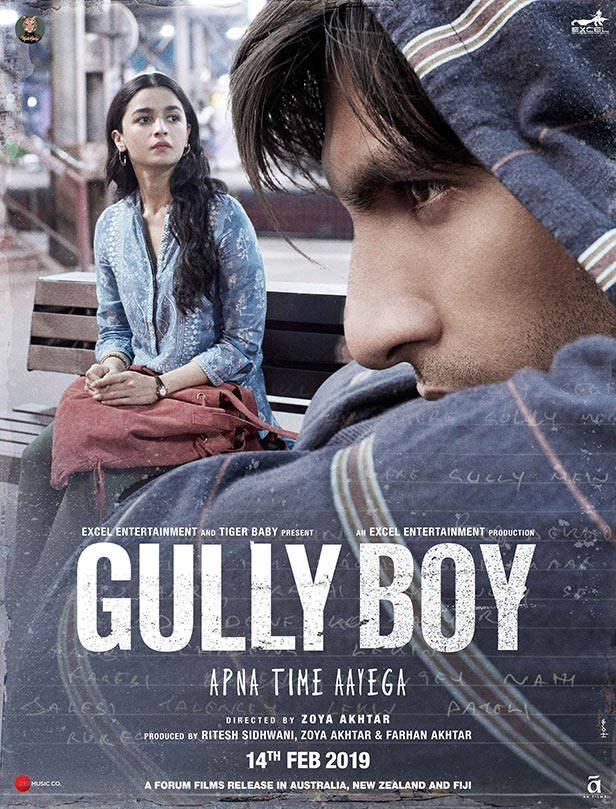
Case Study: “Gully Boy” (2019)

1. Mock Social Media Rollouts:
Before launching the first “Gully Boy” trailer and music singles, the marketing team conducted internal simulations. They tested various posting times, visual creatives, and hashtag strategies across platforms like Instagram, Twitter, and Facebook to predict engagement patterns and identify the most impactful launch sequence. This allowed them to schedule posts for maximum reach, coordinate trending hashtags, and prepare for high-volume fan interaction.

2. Press Release Dry Runs:
Drafts of press releases announcing event dates, cast interviews, and music launches were circulated among internal teams and select media partners for feedback. By simulating the press release distribution, they ensured messaging consistency and readiness to handle press queries, minimizing the risk of miscommunication.

3. Influencer Briefs:
The team developed detailed influencer briefs and ran simulations wherein influencers, including hip-hop artists and youth icons, were guided on messaging, hashtags, and timing. This rehearsal helped synchronize influencer posts with key campaign milestones, amplifying the film’s digital presence on launch days.

Outcome:
The coordinated effort resulted in “Gully Boy” trending nationwide on social media, widespread media coverage, and organic influencer engagement, contributing to the film’s strong box office opening and cultural impact.


Other Examples

  • “Pathaan” (2023):
    Before the official trailer drop, Yash Raj Films’ digital team conducted mock rollouts to test server loads, hashtag virality, and emergency protocols for handling negative comments or leaks.
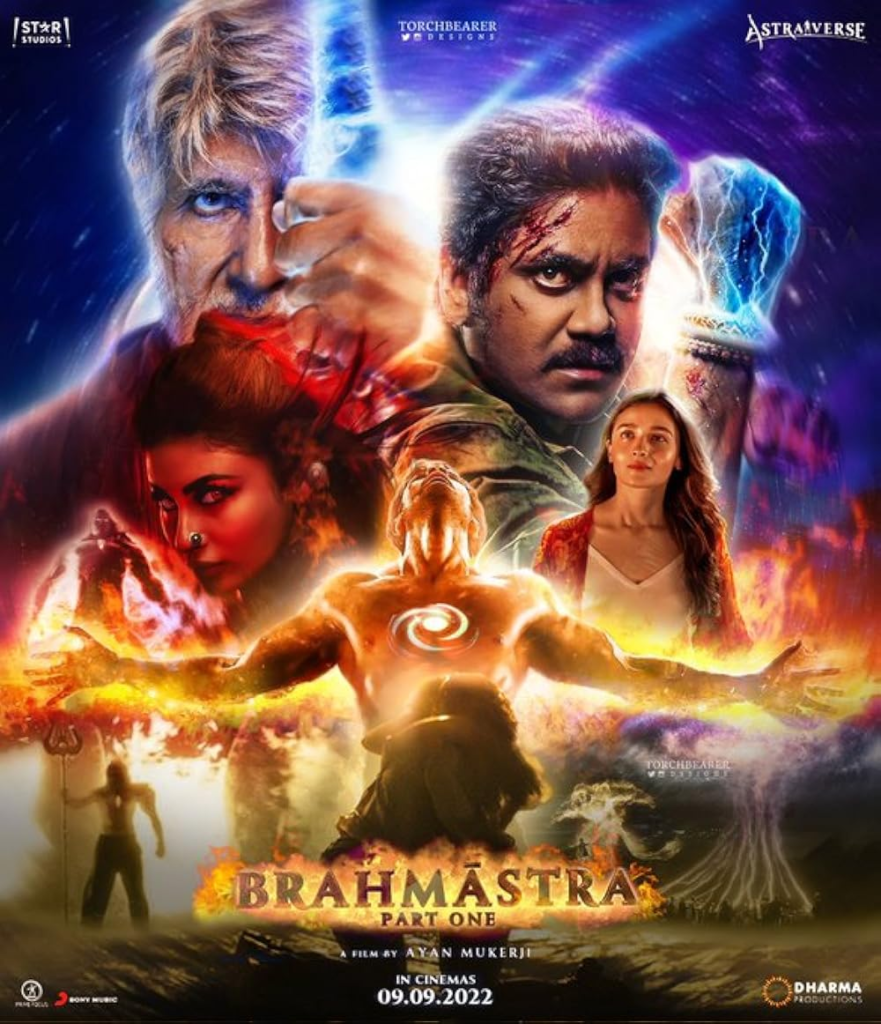
  • “Brahmāstra” (2022):
    Simulated influencer campaigns ensured that prominent content creators and Bollywood stars posted coordinated messages, maximizing reach and creating a sense of event around each new asset release.

Conclusion:
Execution simulation of social media campaigns, press releases, and influencer briefs enables Indian film teams to anticipate challenges, streamline communication, and create well-coordinated promotional blitzes. These rehearsals are increasingly vital for ensuring that marketing efforts land effectively in a competitive, high-stakes environment like Bollywood.

Execution Simulation in Tollywood: Examples and Case Study

Execution simulation refers to the practice of rehearsing promotional strategies—like social media campaigns, press releases, and influencer collaborations—before their public launch. This helps ensure flawless implementation, consistent messaging, and maximum audience impact. Tollywood, known for its innovative marketing, has effectively used these techniques for several big-ticket releases.


Case Study: “RRR” (2022)

1. Mock Social Media Rollouts:
For “RRR,” the team conducted internal simulations of teaser and trailer launches. They experimented with different posting schedules, hashtag strategies, and content formats across platforms, including Twitter, Instagram, and Facebook. The aim was to determine optimal post timings and hashtags (#RRRMovie, #RRRTrailer) that would trend and maximize fan engagement both in India and internationally. Simulations also included rehearsing rapid responses to anticipated fan queries or viral moments.

2. Press Release Simulations:
The PR team drafted and internally reviewed press releases announcing cast appearances, release date changes, and milestone achievements (such as record-breaking pre-release business). Mock distributions were performed to key media contacts to ensure clarity and consistency and to prepare for possible media questions or crisis situations (e.g., pandemic-induced delays).

3. Influencer Brief Simulations:
Tollywood stars like Ram Charan and Jr. NTR, as well as South Indian influencers and content creators, received detailed briefs about when and how to post about “RRR.” The marketing team ran mock influencer campaigns, synchronizing posts with key milestones such as teaser drops and music launches. Influencers rehearsed sharing reaction videos, challenges, and countdowns, ensuring uniform messaging and timing.

Outcome:
These simulations helped “RRR” dominate social media trends during every promotional event. The trailer and song launches set YouTube records, and influencer campaigns contributed to massive digital conversations, making “RRR” a pan-India and global box office phenomenon.


Other Tollywood Examples

  • “Baahubali 2” (2017):
    The marketing team orchestrated mock rollouts for major reveals, tested server loads for the official website, and coordinated influencer posts supporting #WKKB (Why Kattappa Killed Baahubali), ensuring that every release was a digital event.
  • “Pushpa: The Rise” (2021):
    Influencer simulations were conducted for the viral “Srivalli” step challenge, preparing content creators ahead of the song launch so that dance covers and reaction videos could flood social media immediately upon release.

Conclusion:
Execution simulation—through mock social media rollouts, rehearsed press releases, and coordinated influencer briefs—has become a best practice in Tollywood. These strategies help teams anticipate challenges, synchronize large-scale campaigns, and amplify their film’s reach, contributing directly to the massive success of modern Telugu cinema across India and worldwide.

Execution Simulation in Mollywood: Mock Social Media Rollouts, Press Releases, and Influencer Briefs

Execution simulation involves rehearsing key promotional activities—such as social media campaigns, press releases, and influencer partnerships—before they are made public. This proactive approach helps Mollywood filmmakers ensure their promotional messaging is well-coordinated, impactful, and free from potential pitfalls, maximizing the effectiveness of each campaign.


Case Study: “Drishyam 2” (2021)

1. Mock Social Media Rollouts:
For “Drishyam 2,” the digital marketing team conducted internal simulations of teaser and trailer launches. They tested various post timings on platforms like Facebook, Twitter, and Instagram to identify the best slots for maximum engagement. Hashtag usage (#Drishyam2, #GeorgeKuttyReturns) and creative formats were also trialed to see which versions resonated best during the test runs.

2. Press Release Simulations:
Drafts of press releases announcing the film’s direct release on Amazon Prime Video, as well as key cast interviews and milestone achievements, were circulated internally and among trusted media partners. This allowed the team to ensure clarity, messaging consistency, and preparedness for potential media queries—especially given the film’s unique direct-to-digital launch strategy during the pandemic.

3. Influencer Brief Simulations:
The team prepared influencer briefs in advance for Malayalam film reviewers, popular YouTubers, and Instagram creators. These briefs included suggested posting times, hashtags, and talking points. Influencers took part in mock campaigns, aligning their posts with the film’s official content schedule to guarantee a coordinated digital push when the film launched.

Outcome:
The execution simulation enabled a smooth, high-impact promotional rollout. “Drishyam 2” quickly trended on social media, with positive buzz amplified by influencers and timely press coverage. The seamless, well-orchestrated campaign contributed to the film’s rapid success on digital platforms and strong word-of-mouth both in Kerala and among the global Malayali audience.


Other Mollywood Examples

  • “Minnal Murali” (2021):
    The superhero film’s team rehearsed Twitter and Instagram campaigns, including coordinated influencer challenges and memes, ahead of the Netflix release. Press release simulations helped manage international media outreach, given the film’s global appeal.
  • “Kurup” (2021):
    Influencer and social media simulations ensured that the film’s period look and teaser releases were amplified across Malayalam and other South Indian online communities, with pre-prepared responses for anticipated fan questions and viral moments.

Conclusion:
Execution simulation of promotional activities—including mock social media rollouts, press release rehearsals, and influencer briefings—has become an important success factor in Mollywood. These careful preparations help Malayalam films deliver impactful, synchronized campaigns that maximize audience engagement and contribute to box office and streaming success.

Content Calendar & Asset Creation

A. Trailer drops, festival tie-ins, influencer outreach

B. Regional language adaptations and subtitling

In today’s highly competitive Indian film industry, a well-structured marketing strategy is vital to generate buzz and ensure audience engagement. Two critical components of this strategy are the development of a content calendar and the systematic creation of promotional assets. A content calendar helps filmmakers and marketing teams plan, schedule, and organize the release of various content pieces—such as trailers, posters, songs, behind-the-scenes videos, and social media updates—across different platforms. Meanwhile, asset creation focuses on producing high-quality promotional materials that resonate with the film’s target audience and sustain excitement throughout the campaign.

For example, during the lead-up to the release of the film “RRR,” the marketing team meticulously planned a content calendar that included teaser releases, character posters, music launches, interactive social media activities, and cast interviews. Each asset was strategically timed and tailored to different audience segments, ensuring maximum visibility and continuous engagement before the film’s release.

A. Trailer drops, festival tie-ins, influencer outreach

Introduction

In the evolving landscape of Bollywood marketing, innovative promotional strategies play a crucial role in building anticipation and expanding a film’s reach. Among these, trailer drops, festival tie-ins, and influencer outreach have emerged as powerful tools. A well-timed trailer drop can generate instant buzz and set the tone for a film’s release. Festival tie-ins leverage the festive spirit and heightened media attention, aligning film promotions with cultural events to tap into a wider audience. Influencer outreach, through collaborations with digital creators and celebrities, helps films engage directly with fans on social media, enhancing visibility and relatability. When executed strategically, these elements can significantly amplify a film’s pre-release momentum.


Case Study: “Brahmāstra: Part One – Shiva” (2022)

Trailer Drops:
The trailer for “Brahmāstra” was released with immense fanfare, accompanied by countdowns and teaser campaigns on social media. The event was live-streamed across platforms, engaging millions of fans and creating widespread anticipation.

Festival Tie-ins:
The film’s marketing team aligned several promotions with major Indian festivals, such as Diwali and Raksha Bandhan. Special teasers and exclusive content were unveiled during these periods, capitalizing on increased family and community gatherings to maximize reach.

Influencer Outreach:
Influencers and popular Bollywood personalities were invited to early screenings and promotional events. Their positive reviews, reactions, and social media posts contributed to organic buzz. The cast also actively participated in social media challenges, further boosting online engagement.

Result:
This integrated approach helped “Brahmāstra” achieve massive pre-release visibility, resulting in strong opening weekend box office numbers and sustained audience interest.

B. Regional language adaptations and subtitling

India’s linguistic and cultural diversity presents both unique challenges and significant opportunities for the Bollywood film industry. To reach audiences beyond the Hindi-speaking belt, Bollywood increasingly relies on regional language adaptations and subtitling. By dubbing films into various Indian languages—such as Tamil, Telugu, Bengali, and Malayalam—or providing accurate subtitles, filmmakers can expand their reach to millions of viewers across different states. These adaptations not only enhance accessibility and inclusivity but also boost box office collections and viewer engagement nationwide. As audiences grow more receptive to content in their own languages, regional adaptations and effective subtitling have become vital strategies for Bollywood films seeking pan-India appeal and greater cultural resonance.

Importance of Indian Regional Language Adaptations and Subtitling of Bollywood Films

India is home to a multitude of languages and dialects, making linguistic inclusivity essential for any film aiming for nationwide success. Adapting Bollywood films into regional languages through dubbing or providing subtitles serves several important purposes:

  • Wider Reach: Language adaptations allow films to reach audiences beyond the Hindi-speaking regions, opening up new markets and increasing box office potential.
  • Cultural Inclusivity: Regional adaptations and subtitles make content accessible to diverse audiences, respecting linguistic and cultural differences.
  • Enhanced Viewer Engagement: Audiences are more likely to connect with and enjoy films in their native language, resulting in positive word-of-mouth and repeat viewership.
  • Pan-India Appeal: Dubbing and subtitling help Bollywood films transcend regional barriers, contributing to the trend of pan-Indian blockbusters.
  • Global Accessibility: Subtitles, especially in English and other international languages, enable Indian films to reach global audiences, including non-resident Indians and foreign viewers.

Case Study: “Dangal” (2016)

Overview:
“Dangal,” starring Aamir Khan, is a Bollywood sports drama based on the real-life story of wrestler Mahavir Singh Phogat and his daughters.

Regional Language Adaptations:
The film was dubbed and released in multiple Indian languages, including Tamil and Telugu, alongside its original Hindi version.

Subtitling:
“Dangal” was also released with English subtitles, making it accessible to non-Hindi speakers in India and abroad.

Impact:

  • The film’s regional versions performed exceptionally well in South Indian states, significantly boosting overall box office collections.
  • Subtitling enabled broader accessibility, contributing to the film’s international success, especially in non-Hindi-speaking countries like China, where it became a massive hit.
  • The inclusive language strategy helped “Dangal” become one of the highest-grossing Indian films of all time.

Other Examples

  • “Baahubali” (originally Telugu): Its Hindi-dubbed version became a blockbuster in North India, while the film was simultaneously released in Tamil and Malayalam.
  • “Pathaan” (2023): Released with dubbed versions in Tamil and Telugu, along with subtitles for digital platforms, maximizing pan-Indian and global reach.

Conclusion:
Indian regional language adaptations and subtitling are not just technical necessities; they are strategic tools that empower Bollywood films to connect with diverse audiences, enhance commercial success, and build a truly national—and international—fanbase.

In the dynamic and diverse landscape of Indian cinema, strategic planning is essential for a film’s success. One of the foundational steps in this process is defining the target audience, selecting the right platforms for release and promotion, and setting an effective budget. These elements guide every stage of a film’s journey—from production and marketing to distribution and box office performance. With the rapid evolution of viewing habits, the rise of digital platforms, and the unique preferences of audiences across regions and languages, understanding how to identify and address the right audience, choose suitable platforms, and allocate budgets wisely has become more crucial than ever for Indian filmmakers.

Film Campaign Planning

1. Defining Target Audience

“Target audience” refers to the specific group of people you want your film to appeal to, based on demographics, psychographics, and viewing behavior.

Steps:

  • Demographics: Age, gender, location, language, income, education.
  • Psychographics: Interests, hobbies, values, lifestyle (e.g., urban millennials, families, rural youth).
  • Behavioral: Film genre preferences, past box office data, social media activity.

Case Study: “Gully Boy” (2019)

  • Target Audience: Urban youth, hip-hop fans, millennials, people interested in social issues.
  • Approach: Used street rap and relatable content to appeal to young, urban audiences. Marketing targeted college festivals, music platforms, and social media.

Case Study: “Baahubali” Series

  • Target Audience: Pan-Indian, multi-lingual, family audience, action/fantasy fans.
  • Approach: Released in multiple languages, extensive merchandising, and broad-based promotional activities.

2. Selecting Platforms

Platforms refer to the media and channels used for film release and promotion: theatrical, digital, television, social media, etc.

Steps:

  • Theatrical: Multiplexes, single screens (important in Tier 2 & 3 cities).
  • OTT Platforms: Netflix, Amazon Prime, Disney+ Hotstar, and regional OTTs like Zee5 and Sun NXT.
  • Television: Satellite rights for mass reach.
  • Social Media: Instagram, Facebook, Twitter, and YouTube for trailers, promos, and engagement.
  • Other: Music streaming (for soundtracks), influencer collaborations, cinema apps.

Case Study: “Ludo” (2020)

  • Platform: Directly released on Netflix during the pandemic.
  • Reason: Reached a pan-Indian and global audience at a time when theaters were closed.

Case Study: “KGF: Chapter 2” (2022)

  • Platform: Theatrical first, followed by OTT and TV.
  • Reason: Leveraged massive pre-release hype for box office, followed by OTT rights sale for extended revenue.

3. Budgeting

A budget involves the allocation of resources for production, marketing, and distribution.

Steps:

  • Production Budget: Cast, crew, equipment, sets, locations, post-production.
  • Marketing Budget: Trailers, digital marketing, print media, PR events, influencer tie-ups.
  • Distribution Budget: Release in theaters, OTT, shipping prints, and censorship costs.

Case Study: “Stree” (2018)

  • Production Budget: ~₹20 crore (mid-budget).
  • Marketing Spend: Focused on digital media and quirky viral campaigns to appeal to youth, keeping costs low.
  • Result: Grossed over ₹180 crore, high ROI due to disciplined budgeting.

Case Study: “Pathaan” (2023)

  • Production Budget: One of the highest in Bollywood.
  • Marketing: Massive pre-release promotions, global reach.
  • Result: High risk, high reward; huge box office returns.

Summary Table

FilmTarget AudiencePlatforms UsedBudget Approach
Gully BoyUrban youth, music loversTheatrical, Social, OTTMid-budget, digital focus
BaahubaliPan-India, familiesTheatrical, OTT, TVHigh-budget, broad marketing
LudoUrban, multiplex audienceOTT (Netflix)Direct-to-digital, moderate
StreetYouth, horror-comedy fansTheatrical, DigitalLow-budget, viral campaigns
PathaanMass, global audienceTheatrical, OTT, TVHigh-budget, global promos

Tips:

  • Use audience analytics tools (Google Trends, social media insights).
  • Be realistic and flexible with budgets.
  • Match platforms to audience habits (e.g., youth = social media + OTT, families = TV + cinema).

Film campaign planning is the strategic process of organizing and executing promotional activities to generate awareness, excitement, and audience engagement for a film before and after its release. The planning typically involves setting clear objectives, identifying target audiences, choosing the right communication channels, developing creative content, scheduling promotional events, and continuously monitoring and optimizing the campaign based on analytics.


Key Steps in Film Campaign Planning

  1. Objective Setting: Define what the campaign aims to achieve (e.g., high box office, brand partnerships, franchise building).
  2. Audience Identification: Determine the primary and secondary target audiences.
  3. Content Creation: Develop posters, trailers, teasers, interviews, and interactive content.
  4. Channel Selection: Choose platforms—TV, radio, print, outdoor, and especially digital (social media, YouTube, OTT ads).
  5. Event Planning: Organize launch events, press conferences, and fan interactions.
  6. Analytics & Optimization: Track performance metrics (reach, engagement, sentiment) and adjust the campaign accordingly.

Indian Movie Example: “Gully Boy” (2019)

Campaign Overview:

  • Objective: Build hype for a youth-centric film inspired by Mumbai’s rap culture, aiming for both critical acclaim and youth engagement.
  • Target Audience: Urban youth, hip-hop fans, and Bollywood moviegoers.

Campaign Strategies:

  • Trailer & Song Launch:
    • The song “Apna Time Aayega” dropped on YouTube and music platforms, instantly going viral.
  • Social Media Engagement:
    • Ranveer Singh and Alia Bhatt engaged fans on Instagram, sharing rap challenges and behind-the-scenes videos.
    • Interactive hashtags like #GullyBoyChallenge encouraged user-generated content and rap entries.
  • Collaborations:
    • We collaborated with Indian rappers and influencers who shared original music and remixes.
  • Street Events:
    • The events included live rap battles and flash mobs in major cities.
  • Analytics:
    • We utilized YouTube Studio and Meta Insights for monitoring engagement and optimizing content, with a particular focus on cities and demographics demonstrating the highest level of interest.

Outcome:

  • The result was a significant increase in online buzz and viral trends.
  • The film had a strong box office opening and achieved critical success.
  • The movie significantly increased the mainstream popularity of hip-hop culture in India.

In summary:
Film campaign planning is a structured and data-driven approach to promoting a movie. Using “Gully Boy” as an example, we see how a well-planned campaign—leveraging digital, grassroots, and influencer marketing—can generate excitement and drive a film’s commercial and cultural success.

Campaign Planning: Case Study of “Baahubali 2: The Conclusion” (2017)

Film Overview:
“Baahubali 2: The Conclusion” is an epic action film and one of the most successful Indian movies, released in multiple languages nationwide.


1. Objective Setting

  • Primary Goal: Maximize nationwide box office revenue and create a pan-India phenomenon.
  • Secondary Goals: Boost merchandise sales, expand franchise potential, and enhance digital footprint.

2. Target Audience

  • Demographics: All age groups, across urban and rural India, including non-Telugu-speaking regions.
  • Geographic Focus: National (Telugu, Hindi, Tamil, Malayalam, and Kannada markets) and the Indian diaspora abroad.

3. Campaign Strategies

A. Pre-Release Buzz

  • Teaser & Trailer Launch:
    • The teaser and trailer were released on YouTube and social media, garnering millions of views within a matter of hours.
    • There were exclusive trailer launch events held in multiple cities.
  • Social Media Campaigns:
    • “#WKKB” (Why Kattappa Killed Baahubali) trended on Twitter, creating curiosity and viral discussions.
    • Official pages posted behind-the-scenes content, character posters, countdowns, and interactive quizzes.
  • Influencer Collaborations:
    • Regional and national celebrities promoted the film.
    • Popular social media accounts amplified memes and fan theories.

B. Partnerships & Merchandising

  • Brand Tie-ups:
    • Amul, Ola, and apparel brands formed partnerships for co-branded promotions.
    • Merchandising included toys, apparel, and comic books.
  • In-Theatre & Outdoor Promotions:
    • Life-size statues, billboards, and mall installations recreated iconic scenes for audience engagement.

C. Regional Customization

  • We customized trailers and posters to cater to various regional markets.
  • We conducted interviews and made TV show appearances in multiple languages.

D. Analytics & Optimization

  • We utilized YouTube Studio and Meta Insights to track engagement and make necessary adjustments to our ad spending.
  • Google Analytics tracked official website traffic and ticket sales conversions.

4. Evaluation & Results

  • Reach:
    Trailers and songs collectively reached hundreds of millions across platforms before release.
  • Engagement:
    Social media posts received record-breaking likes, comments, and shares.
    “#Baahubali2” trended consistently pre- and post-release.
  • Box Office:
    The film set new records, becoming the highest-grossing Indian film at the time.
  • Franchise Growth:
    The massive campaign success paved the way for spin-offs, animated series, and a dedicated fan community.

Conclusion

“Baahubali 2: The Conclusion” exemplifies how strategic campaign planning—including viral content, regional customization, cross-platform promotion, and data-driven optimization—can turn a film release into a national event and commercial milestone.

Analytics & Optimization

  • Tools: Google Analytics, YouTube Studio, Meta Insights
  • Metrics: reach, engagement, sentiment, virality

A. Tools: Google Analytics, YouTube Studio, Meta Insights

Analytics and optimization have become indispensable for Indian film marketers seeking to maximize their reach, engagement, and box office returns. By leveraging powerful digital tools, filmmakers can monitor audience behavior, fine-tune promotional strategies, and measure campaign effectiveness in real time.


Key Tools & Their Uses

1. Google Analytics
Google Analytics tracks user activity on official movie websites, including page visits, user demographics, traffic sources, and conversion actions (e.g., trailer views, ticket sales).

2. YouTube Studio
Analyzes performance metrics for video content such as trailers, songs, and behind-the-scenes footage, including views, watch time, audience retention, and engagement (likes, comments, shares).

3. Meta Insights (Facebook & Instagram Insights)
Monitors how film promotions perform on social media: reach, engagement, follower growth, audience demographics, and sentiment analysis of comments and shares.


Case Study: “Baahubali 2: The Conclusion” (2017)

Background:
“Baahubali 2” was one of the most anticipated Indian films, and its digital marketing campaign was both innovative and data-driven.

Use of Analytics Tools:

  • YouTube Studio:
    • The official trailer amassed over 100 million views within a week.
    • Marketers used analytics to determine peak engagement times, optimizing the release of subsequent promotional videos.
    • Audience retention rates helped refine the length and format of future teasers.
  • Meta Insights:
    • Facebook and Instagram campaigns were monitored for reach and engagement.
    • Posts featuring character posters and short video clips were boosted after analytics showed higher interaction rates compared to static images.
    • Real-time sentiment analysis allowed the team to quickly address negative comments and misinformation.
  • Google Analytics:
    • The film’s website tracked spikes in traffic during trailer and song releases.
    • Data revealed which regions showed the most interest, guiding targeted ad spending and regional promotions.
    • Conversion tracking measured how many website visitors went on to book tickets through affiliated platforms.

Optimization Results:

  • Dynamic Ad Spend:
    Budgets were shifted to regions and platforms showing the highest engagement, maximizing ROI.
  • Content Refinement:
    Types of posts and videos were adapted based on analytics feedback, focusing more on content that generated organic shares and positive sentiment.
  • Box Office Impact:
    The data-driven approach contributed to massive pre-release hype, resulting in record-breaking opening collections.

Other Examples

  • “Gully Boy” (2019):
    I utilized YouTube Studio to track the viral reach of the “Apna Time Aayega” music video, thereby optimizing subsequent releases for similar audience demographics and interests.
  • “Pathaan” (2023):
    Using Meta Insights, we monitored public sentiment during controversies and tailored our PR messaging accordingly, which helped us overcome boycott calls and ensured a successful release.

Conclusion

By integrating tools like Google Analytics, YouTube Studio, and Meta Insights into their marketing strategies, Indian filmmakers are able to:

  • Monitor real-time audience behavior and sentiment.
  • Optimize content and ad spending,
  • Maximize engagement and box office outcomes.

Analytics and optimization are now at the core of every major film campaign in India, turning data into a key driver of cinematic success.

B. Metrics: reach, engagement, sentiment, virality

Analytics & Optimization: Key Metrics in Indian Film Marketing

Modern Indian film marketing relies on digital analytics to measure and optimize campaign effectiveness. The most important metrics include:

  • Reach: Number of unique users who see the promotional content.
  • Engagement: Interactions such as likes, shares, comments, and clicks.
  • Sentiment: Audience attitudes reflected in comments and posts—positive, negative, or neutral.
  • Virality: The speed and extent to which content is organically shared and spreads across platforms.

Case Study 1: Old Movie Example—”Chennai Express” (2013)

Campaign Overview:

  • The marketing team used early social media platforms (Facebook, Twitter, and YouTube) to maximize the film’s online visibility.

Key Metrics:

  • Reach: The trailer and song videos cumulatively reached millions of viewers in the months leading up to release.
  • Engagement: Shah Rukh Khan and Deepika Padukone’s direct engagement with fans via live chats, behind-the-scenes videos, and contests led to high interaction rates.
  • Sentiment: Social listening tools monitored fan reactions; overwhelmingly positive sentiment led to even more aggressive digital pushes.
  • Virality: The “Lungi Dance” song went viral, being widely shared and adapted, significantly boosting the film’s hype.

Optimization:
When the team noticed higher engagement on regional pages, they increased content in local languages, which further expanded the film’s reach and contributed to its blockbuster status.


Case Study 2: New Movie Example—”Pathaan” (2023)

Campaign Overview:

  • “Pathaan” leveraged Instagram, YouTube, and Facebook for digital-first promotions, tracking metrics through advanced analytics tools.

Key Metrics:

  • Reach: The trailer reached over 50 million views within 24 hours on YouTube alone.
  • Engagement: High levels of likes, shares, and comments on teasers and song releases, especially on Instagram and YouTube.
  • Sentiment: When the film faced boycott trends, sentiment analysis showed a split in audience opinion. The marketing team quickly increased positive PR and influencer support to balance sentiment.
  • Virality: The “Besharam Rang” song and action sequences became viral trends, spawning memes and reels on social media.

Optimization:
By tracking which songs, dialogues, and scenes generated the most buzz and positive sentiment, the team doubled down on similar content and real-time fan engagement, helping the film overcome controversy and break box office records.


Conclusion

  • Analytics & optimization using metrics like reach, engagement, sentiment, and virality help Indian filmmakers and marketers understand what resonates with audiences.
  • By closely monitoring these metrics and adapting strategies in real time—as seen with both “Chennai Express” and “Pathaan”—film promotions achieve greater impact, broader reach, and higher box office success.

The Indian film industry, particularly Bollywood, faces frequent crises from scandals, box-office flops, and external disruptions like pandemics. Crisis management in this sector involves swift PR strategies, narrative control, and reputation rebuilding to sustain its glamour image.

Crisis management refers to the strategies and actions taken by film producers, studios, and PR teams to handle negative situations such as controversies, organized backlash, review bombing, or boycott trends that threaten a film’s reputation and commercial success.

Common Crisis Scenarios:

  • Controversies: Content offending religious, cultural, or political groups (e.g., “Padmaavat,” “PK”).
  • Review Bombing: Deliberate negative online ratings/reviews, often organized on platforms like IMDb or Google.
  • Boycott Trends: Social media movements calling for boycotts over actors’ statements, film content, or affiliations (#BoycottBollywood).

Crisis Management Strategies:

  1. Proactive Monitoring:
    Use analytics and social listening tools to detect early signs of backlash across social media and review platforms.
  2. Transparent Communication:
    Address the controversy openly through press releases, interviews, or social media statements. Clarify artistic intent or offer apologies if justified.
  3. Engagement with Stakeholders:
    Initiate dialogue with offended groups, community leaders, or critics to defuse tension (as seen with “Padmaavat”).
  4. Content Adjustments:
    Make necessary edits or changes when required by censors or after constructive feedback (e.g., costume changes in “Pathaan”).
  5. Influencer and Fan Support:
    Mobilize celebrities, influencers, and loyal fan bases to share positive messages and counter negative narratives.
  6. Legal Action:
    Pursue legal recourse against misinformation, threats, or unlawful bans if needed.

Crisis management in the Indian film industry, focusing on handling controversies, review bombing, and boycott trends, with relevant examples and case studies:


Crisis Management in Indian Cinema

Crisis management in the Indian film industry involves actively monitoring, addressing, and mitigating negative publicity, controversies, or organized backlash—such as review bombing and boycott trends—to protect a film’s reputation and financial prospects.


Old Example: Padmaavat (2018)

  • Controversy: “Padmaavat” faced major protests and calls for bans due to alleged historical inaccuracies and perceived insults to Rajput sentiments.
  • Crisis Management: The filmmakers engaged in dialogue with community leaders, made edits as requested by the censor board, and issued public clarifications. The cast and crew used social media to appeal for peace and explain the film’s intent.
  • Result: Despite the controversy, the film managed a successful release and became a box-office hit, showing the effectiveness of transparent communication and strategic crisis response.

Recent Example: Laal Singh Chaddha (2022)

  • Controversy: The film faced online boycott trends and review bombing, largely due to old statements by lead actor Aamir Khan.
  • Crisis Management: The makers and star addressed concerns publicly, clarified intentions, and appealed for fair viewing. We closely monitored social media sentiment and engaged influencers to promote positive narratives.
  • Result: Despite these efforts, the film’s box office was affected, highlighting that while crisis management can mitigate impact, deep-seated boycott trends remain challenging to overcome in the digital age.

Another Recent Example: Pathaan (2023)

  • Controversy: “Pathaan” faced boycott calls and social media outrage over costumes and song content.
  • Crisis Management: The team swiftly edited controversial scenes, engaged with media to clarify the context, and launched a positive PR campaign emphasizing the film’s entertainment value.
  • Result: The film broke box office records, demonstrating that proactive management, quick content adjustments, and positive engagement can defuse crises.

Conclusion

Indian filmmakers now use a combination of

  • Active listening (through analytics and sentiment tracking),
  • Transparent communication (clarifying intentions and apologizing if needed),
  • Strategic engagement (with fans, media, and influencers) to manage and sometimes overcome controversies, review bombing, and boycott trends.

Effective crisis management can preserve a film’s reputation and sometimes even turn controversy into greater curiosity and box office success.

INSTAGRAM