Souvik Das

Dr Souvik Das is a veteran journalist, creative writer, director and an academician. With a decade long work in film journalism he dabbles also into geo politics, finance, and political reporting

Dr. Souvik Das

There was a time when a film star’s voice was as familiar to us as their face. In the 1990s you could switch on the television on a random Sunday afternoon and find an actor sprawled on a couch, talking without a filter about a flop, a fight with a director or a rumored romance. Interviews were not events. They were routine. Today that routine has all but vanished, and the silence is worth examining.

Walk into any multiplex during a big release and you will still see the ritual of promotion in full swing — the matching outfits, the choreographed banter on a talk show, the reel dropped at midnight with a caption written by three different publicists before it went out. But once the film opens, the star retreats. No chat show couch. No candid sit-down with a film critic. No unscripted moment where a mask slips and a real person peeks through. The paparazzi, once a near-permanent fixture outside a star’s gate, now sometimes go days without a single sighting worth posting.

The industry built its own filter

Part of the answer lies in how publicity itself has changed. A generation ago a film’s box office fortune depended heavily on earned media — newspaper profiles, magazine covers and long television interviews that ran uncut. Studios and stars needed journalists because journalists were the bridge to the audience. That bridge has been replaced by a highway the stars own outright. An actor with twenty million Instagram followers does not need a reporter to carry their message. They can post it themselves, on their own schedule, in their own words, edited exactly as they wish.

This is control dressed up as connection. A produced reel feels intimate because it is shot in a bedroom or a car. It is not. It has been approved by a manager and often a brand team before it reaches a phone screen. Compare that to the old Rajeev Masand or Simi Garewal specials, where an actor sat across from someone who would push back, ask the uncomfortable question and leave the awkward pause in the edit. That discomfort used to be the whole point.

Fear has replaced curiosity

There is also a simpler, sadder explanation. Stars are scared of us now. One clumsy sentence in an interview can be clipped, stripped of context and turned into a trending topic within hours. A joke that would have vanished into a magazine’s back pages in 1996 now lives forever as a screenshot. Publicists have responded by shrinking the surface area of exposure. Fewer live conversations mean fewer chances for a stray comment to become a controversy that a brand deal cannot survive.

Privacy concerns have followed the same logic. Stars who once treated paparazzi as a mild nuisance now view them as a security risk in an age of stalking and swatting, and many have simply stopped stepping out for the cameras unless there is a specific reason to be seen. Being photographed used to be proof of relevance. Now it can just as easily be proof of vulnerability.

What we have lost in the trade

None of this is illegal or even unreasonable from a star’s point of view. But something real has been traded away. The unpredictability of a live interview used to remind audiences that these were people, not brands, capable of stumbling and correcting themselves in real time. The parasocial relationship built by a well-produced reel is smoother and safer, but it is also thinner. We know less about who these actors actually are even as we see more of their carefully arranged faces than ever before.

The next time a star does sit down for a proper conversation and lets a question actually land, notice how rare that has become. It used to be Tuesday afternoon television. Now it is an occasion.
By Souvik Das

Let’s get one thing straight — what we are witnessing is not an LPG emergency. It’s a stress test. And India is not failing it.Every time there’s geopolitical turbulence, a section of political voices rushes to amplify fear. The current narrative around an alleged LPG crisis is one such example. Yes, supply chains are under pressure. Yes, global tensions are real. But calling it an “emergency” is not just exaggerated — it’s misleading.

India isn’t reacting. India is executing.

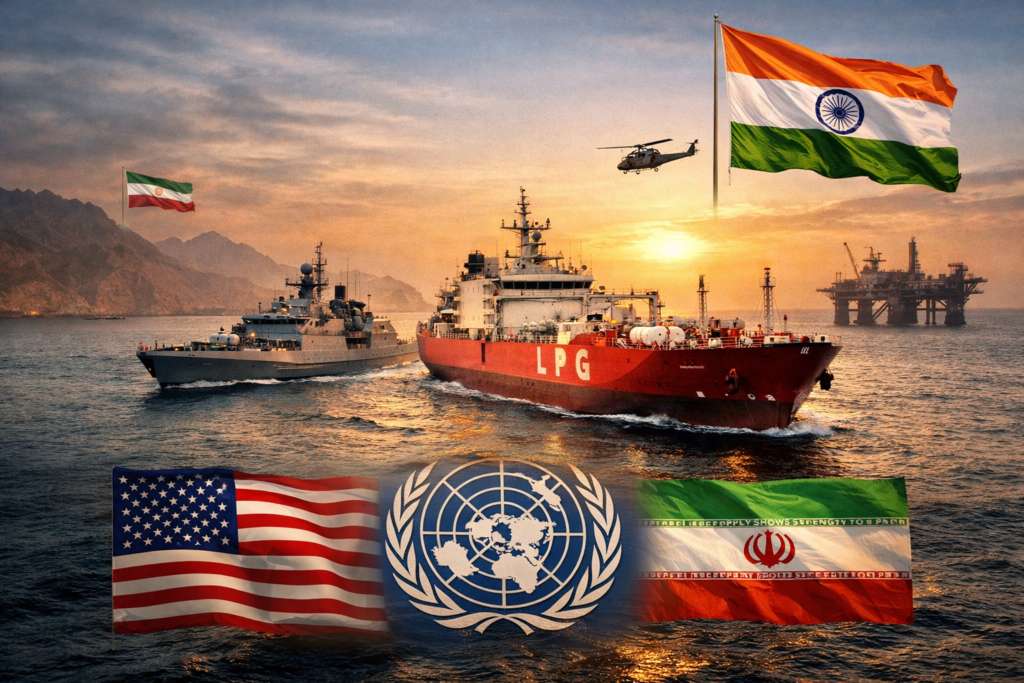
At the heart of this issue lies the strategically critical Strait of Hormuz — a chokepoint through which a significant portion of the world’s energy supply passes. With rising tensions involving Iran and Western powers, concerns over LPG shipments are understandable. But here’s what the panic narrative conveniently ignores: India is already ahead of the curve.

The government is in active diplomatic engagement with Iran to ensure safe passage for LPG tankers. This isn’t speculation — it’s policy in motion. Some vessels, including the naval-backed Shivalik, have already successfully crossed the Hormuz corridor. That’s not disruption. That’s controlled navigation through risk.

This is where India’s foreign policy muscle becomes visible.

Unlike reactionary states, India has maintained a balanced and pragmatic approach in international relations. It engages with all sides without becoming a pawn to any. Whether it is maintaining ties with Iran, managing strategic relations with the United States, or navigating tensions in West Asia — India is not choosing sides blindly. It is choosing stability.

And stability is power.

Let’s zoom out. This is not just India’s problem. The ripple effects of prolonged geopolitical conflicts are being felt globally. Energy markets are tightening. Freight costs are rising. Insurance premiums for maritime routes are increasing. Countries across continents are recalibrating their supply chains.

This is what a prolonged conflict looks like.

The ongoing standoff — shaped in part by the assertive posture of Donald Trump and the uncompromising stance of Iran’s newly elevated supreme leadership — is not de-escalating anytime soon. Both sides are signaling strength, not retreat. And when egos dominate diplomacy, the world pays the price.

But here’s the difference: strong nations prepare for impact. Weak narratives amplify fear.

India has diversified its energy basket, built strategic reserves, and strengthened naval capabilities to secure maritime routes. It is not dependent on a single corridor or a single partner. That’s not luck — that’s long-term planning.

Meanwhile, institutions that are supposed to maintain global peace are failing to deliver. The United Nations, once seen as the guardian of international stability, increasingly appears ineffective in preventing or resolving such prolonged conflicts. Statements are issued, meetings are held — but outcomes remain absent.

In a world where global watchdogs are losing bite, national strength matters more than ever.

So, let’s cut through the noise.

There is pressure — yes.
There is uncertainty — absolutely.
But there is no collapse.

India is not scrambling. It is negotiating, securing, and moving forward. The successful passage of LPG shipments through volatile waters is proof of capability, not crisis.

This moment doesn’t expose India’s weakness. It highlights its preparedness. Because in geopolitics, the real story isn’t who shouts the loudest — it’s who delivers under pressure. And right now, India is doing exactly that.

INSTAGRAM