WELL-BEING AND LIFE SATISFACTION
- Understanding the importance of physical, mental, and emotional well-being
- Stress management and self-care strategies
- Digital detox and healthy use of technology
- Promoting a healthy work-life balance
- Goal setting and basic career planning
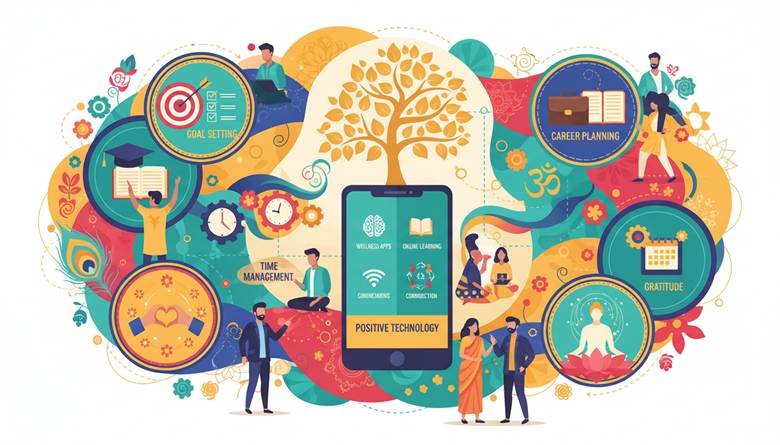
- Time management techniques, cultivating gratitude, mindfulness, and introduction to positive technology (happiness, purpose, well-being)
WELL-BEING AND LIFE SATISFACTION
Introduction
Well-being refers to an individual’s overall health, happiness, and sense of fulfillment, while life satisfaction is the subjective evaluation of one’s life as a whole. In the Indian context, these concepts are deeply linked to social, economic, and cultural factors.
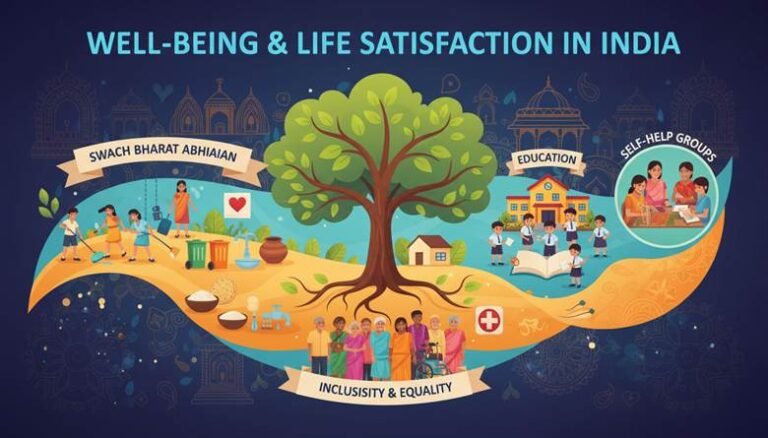
For instance, access to basic needs—such as food, clean water, shelter, and healthcare—remains a challenge for many. The Indian government’s Swachh Bharat Abhiyan (Clean India Mission) is a notable initiative aimed at improving public health and well-being by promoting sanitation and eliminating open defecation. A study by UNICEF (2019) found that improved sanitation led to better health outcomes and higher life satisfaction, especially among women and children in rural areas.
Education is another key factor. The Right to Education Act (RTE), 2009, guarantees free and compulsory education for children aged 6–14. Increased access to education has empowered many, improving their well-being and future prospects. For example, in Kerala, high literacy rates have contributed to better health indicators and higher reported life satisfaction compared to other states.
Additionally, the Self-Help Group (SHG) movement in states like Andhra Pradesh and Tamil Nadu has empowered women economically and socially. Studies show women involved in SHGs report greater self-esteem, financial independence, and life satisfaction.
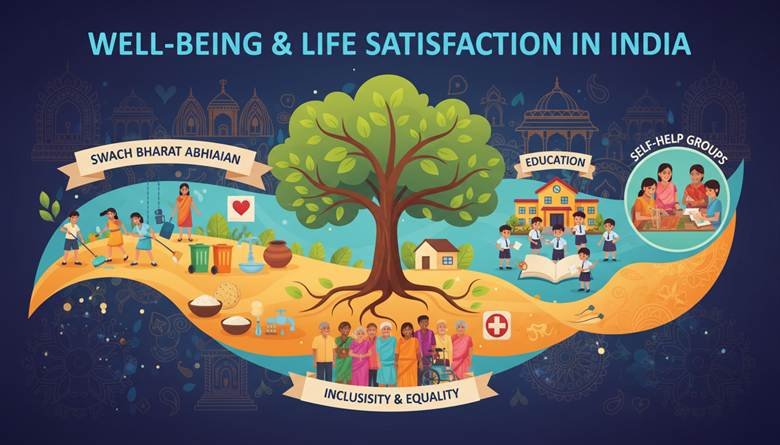
However, challenges remain for marginalized groups, such as Scheduled Castes and Tribes, who may still face barriers to education, healthcare, and employment. Addressing these disparities is key to achieving overall well-being and life satisfaction across India.
In summary, Indian case studies show that policies promoting health, education, and empowerment directly improve well-being and life satisfaction, but more inclusive efforts are needed.
I. UNDERSTANDING THE IMPORTANCE OF PHYSICAL, MENTAL, AND EMOTIONAL WELL-BEING
Introduction
Human well-being is a multidimensional concept encompassing physical, mental, and emotional health. These elements are deeply interconnected, influencing each other and shaping an individual’s overall quality of life. Physical well-being provides the foundation, mental well-being determines how we interpret and respond to life, and emotional well-being colors our experiences and relationships. In the Indian context, these aspects are influenced by cultural, social, and economic factors, making their understanding crucial for personal growth and societal development.
A. Physical Well-being
Definition and Scope
Physical well-being refers to the optimal functioning of the body, enabling individuals to perform daily activities efficiently and without undue fatigue. It involves a balanced diet, regular exercise, sufficient sleep, and access to healthcare.
Importance
- Disease Prevention: Good physical health reduces the risk of chronic illnesses such as diabetes, cardiovascular diseases, and obesity.
- Productivity: Healthy individuals are more productive at work and in academics.
- Longevity: Regular physical activity and preventive healthcare contribute to a longer, healthier life.
Indian Example
The Fit India Movement (2019), initiated by the Government of India, aims to encourage physical activity among citizens. The campaign includes marathons, yoga camps, and fitness challenges in schools and workplaces. In rural Tamil Nadu, a community health initiative introduced daily morning walks and nutrition education, leading to decreased obesity rates and improved community health.
Case Study: Kudumbashree, Kerala
Kudumbashree, a poverty eradication and women empowerment program, introduced collective physical activities such as yoga and walking groups. The initiative not only improved physical health but also fostered social bonds and increased emotional resilience among participants, especially women.
B. Mental Well-being
Definition and Scope
Mental well-being is the state wherein an individual can realize their potential, cope with normal stresses, work productively, and contribute to society. It is not merely the absence of mental disorders but the presence of positive characteristics such as resilience, optimism, and cognitive clarity.
Importance
- Decision Making: Good mental health enables rational thinking and effective decision-making.
- Academic and Professional Success: Mental well-being is linked to better performance and satisfaction.
- Resilience: Mentally healthy individuals can better cope with adversity and stress.
Indian Example
The National Mental Health Programme (NMHP) was launched in 1982 to make mental health services accessible and affordable. During the COVID-19 pandemic, the Indian government and NGOs offered tele-counseling services to address increased anxiety and depression.
Case Study: Tata Institute of Social Sciences (TISS) Helpline
TISS Mumbai operated a mental health helpline during the pandemic, receiving thousands of calls from people struggling with isolation, fear, and uncertainty. The service provided psychological first aid, practical coping strategies, and referrals to mental health professionals, demonstrating the significance of accessible mental health support.
C. Emotional Well-being
Definition and Scope
Emotional well-being is the ability to understand, express, and manage one’s emotions constructively. It includes self-awareness, emotional regulation, empathy, and maintaining healthy relationships.
Importance
- Relationship Building: Emotional intelligence fosters better interpersonal relationships.
- Conflict Resolution: Individuals with high emotional well-being handle conflicts with composure.
- Life Satisfaction: Emotional health is closely linked to overall happiness and satisfaction.
Indian Example
Schools under the Central Board of Secondary Education (CBSE) have implemented Life Skills Education, teaching modules on self-awareness, empathy, and emotional regulation.
Case Study: Delhi’s Happiness Curriculum
Launched in 2018, the Happiness Curriculum for Delhi government schools focuses on mindfulness, gratitude, and compassion. Regular classroom activities include meditation, storytelling, and group discussions. Evaluation reports suggest students exhibit improved emotional regulation, reduced aggression, and enhanced peer relationships.
II. Stress Management and Self-care Strategies
Introduction
Modern life is characterized by numerous stressors, ranging from academic and work pressures to interpersonal conflicts and digital overload. Chronic stress can harm physical and mental health, making stress management and self-care essential skills for overall well-being.
A. Understanding Stress
Definition
Stress is a physiological and psychological response to perceived challenges or threats. While short-term (acute) stress can enhance performance, long-term (chronic) stress leads to burnout, illness, and diminished life satisfaction.
Symptoms
- Physical: Headaches, fatigue, sleep disturbances, digestive issues.
- Emotional: Anxiety, irritability, mood swings.
- Cognitive: Difficulty concentrating, memory lapses.
- Behavioral: Social withdrawal, unhealthy eating, substance misuse.
Indian Context
A 2022 Indian Council of Medical Research (ICMR) study found that 74% of urban Indians reported moderate to high stress levels, primarily due to work, academic competition, and financial insecurity.
B. STRESS MANAGEMENT STRATEGIES
1. Time Management
Techniques:
- Prioritization: Identifying urgent and important tasks using tools like the Eisenhower Matrix.
- Scheduling: Utilizing planners, digital calendars, and reminders.
- Breaks: Incorporating short breaks (Pomodoro Technique) to maintain productivity.
Example: Indian students preparing for entrance exams (e.g., JEE, NEET) often face immense pressure. Coaching centers in Kota, Rajasthan, now offer workshops on time management and stress reduction, resulting in improved exam performance and reduced burnout.
2. Mindfulness and Meditation
Benefits:
- Reduces anxiety and promotes relaxation.
- Enhances focus and emotional regulation.
Example: The Art of Living Foundation in Bengaluru offers structured meditation and breathing programs, such as Sudarshan Kriya, shown to lower stress and improve mental clarity.
Case Study: Infosys, a leading Indian IT company, introduced mindfulness sessions and meditation rooms at its campuses. Employees who participated reported lower stress levels and increased job satisfaction.
3. Physical Activity
Benefits:
- Releases endorphins, natural mood enhancers.
- Reduces symptoms of depression and anxiety.
Example: Yoga and aerobics classes are popular stress-busters in Indian metropolitan cities. During lockdowns, virtual fitness classes saw a surge in participation.
4. Seeking Social Support
Benefits:
- Sharing concerns with friends or family provides emotional relief.
- Support groups offer a sense of belonging and perspective.
Example: In Mumbai, support groups for caregivers of mental health patients provide emotional support, coping strategies, and resource sharing.
5. Professional Help
When to Seek:
- Persistent or overwhelming stress.
- Symptoms interfering with daily functioning.
Example: Employee Assistance Programs (EAPs), increasingly common in Indian corporates, offer free counseling and mental health services.
C. Self-care Strategies
Self-care is the practice of taking action to preserve or improve one’s health. It is not a luxury but a necessity for preventing burnout and maintaining well-being.
1. Physical Self-Care
- Nutrition: Eating balanced meals rich in fruits, vegetables, and proteins.
- Exercise: Engaging in at least 30 minutes of physical activity daily.
- Sleep: Maintaining a consistent sleep schedule with 7-8 hours of rest.
Example: The “Eat Right India” campaign by FSSAI promotes healthy eating habits through educational programs, labeling requirements, and public messaging.
2. Emotional Self-Care
- Journaling: Writing about emotions to process and understand them.
- Creativity: Engaging in art, music, or dance as outlets for expression.
- Gratitude Practice: Listing things one is grateful for to foster positivity.
Example: The Mind Clan, a mental health organization in Mumbai, runs workshops on self-compassion and emotional expression, particularly for marginalized youth.
3. Mental Self-Care
- Learning: Pursuing hobbies, reading, or acquiring new skills.
- Goal Setting: Setting and reviewing personal, academic, or professional goals.
Example: During COVID-19 lockdowns, many Indians took up online courses in language learning, cooking, and technology to stay mentally engaged.
4. Social Self-care
- Maintaining Relationships: Regularly connecting with friends and family.
- Community Involvement: Participating in clubs, societies, or volunteer groups.
Example: Self-help groups (SHGs) in rural India offer economic and emotional support to members, empowering women and promoting social well-being.
III. DIGITAL DETOX AND HEALTHY USE OF TECHNOLOGY
Introduction
While technology improves convenience and connectivity, overuse can damage physical and mental health. A digital detox is a period of intentional disengagement from digital devices to restore balance.
A. Impact of Excessive Technology Use
1. Physical Effects
- Eye Strain: Prolonged screen time leads to digital eye strain, headaches, and blurred vision.
- Sleep Disturbances: Exposure to screens before bed disrupts circadian rhythms and reduces sleep quality.
- Sedentary Lifestyle: Excessive device use correlates with reduced physical activity and obesity.
Example: A 2021 survey by AIIMS found that 58% of Indian teenagers reported eye discomfort, and 32% experienced sleep problems due to extended screen time during online classes.
2. Mental and Emotional Effects
- Reduced Attention Span: Constant notifications fragment focus and reduce productivity.
- Anxiety and Depression: Social media use has been linked to increased anxiety, depression, and loneliness, especially among youth.
- Social Comparison: Exposure to curated lives online can lead to low self-esteem and dissatisfaction.
Example: During the COVID-19 pandemic, the Indian Psychiatric Society reported a 20% increase in cases of anxiety and depression, partly attributed to digital overload.
3. Cyberbullying and Online Harassment
- Risks: Increased screen time exposes users, especially children and teenagers, to cyberbullying and online abuse.
- Impact: Victims may experience anxiety, depression, and social withdrawal.
Case Study: A study in Delhi schools found that 21% of students experienced online bullying during the shift to digital classrooms.
B. Digital Detox Strategies
1. Scheduled Breaks
- Device-free Times: Designate hours (e.g., during meals, before bed) where all screens are avoided.
- Digital Sabbaths: Take one day a week to disconnect from technology.
Example: In Mumbai, some schools observe “No Gadget Days” to encourage students and staff to engage in physical activities and face-to-face interactions.
2. Mindful Consumption
- Curate Feeds: Unfollow accounts or pages that induce stress or negativity.
- Limit Notifications: Disable non-essential notifications to reduce distractions.
Example: Apps like Forest and Digital Wellbeing (by Google) help users monitor and limit their device usage.
3. Offline Engagement
- Outdoor Activities: Spending time in nature, walking, or playing sports.
- Hobbies and Socialization: Pursue offline hobbies and participate in community events.
Example: Urban gardening and book clubs gained popularity in Indian cities during the pandemic as alternatives to screen-based activities.
4. Healthy Use of Technology
- Set Purposeful Use: Use technology intentionally for learning, communication, or entertainment, rather than passive scrolling.
- Tech Tools for Well-being: Use meditation apps, educational platforms, or health trackers purposefully.
Case Study: Bengaluru IT Company
A major IT firm in Bengaluru introduced “Tech-Free Thursdays,” encouraging employees to avoid unnecessary emails and meetings and instead focus on creative tasks, learning, or wellness activities. The initiative led to higher employee satisfaction and reduced digital fatigue.
IV. PROMOTING A HEALTHY WORK-LIFE BALANCE
Introduction
Work-life balance is the ability to allocate time and energy effectively between professional responsibilities and personal life. Achieving this balance is vital for physical health, mental well-being, and sustained productivity.
A. Importance of Work-Life Balance
1. Prevents Burnout
Long working hours without adequate rest lead to physical and emotional exhaustion, known as burnout.
Example: The World Health Organization (WHO) recognized burnout as an occupational phenomenon in 2019, urging organizations to implement preventive measures.
2. Enhances Productivity
Employees with balanced lives are more motivated, creative, and efficient.
3. Supports Personal Relationships
Quality time with family and friends strengthens support systems and emotional well-being.
4. Promotes Health
Balanced routines allow time for exercise, hobbies, and self-care, reducing the risk of illness.
B. Challenges in India
- Long Working Hours: Sectors like IT and finance often demand extended hours.
- Remote Work: COVID-19 blurred boundaries between work and home, increasing stress and reducing downtime.
- Cultural Factors: Societal expectations to excel can pressure individuals to prioritize work or academics over personal life.
C. Strategies for Achieving Work-Life Balance
1. Setting Boundaries
- Defined Work Hours: Start and end work at fixed times.
- Physical Boundaries: Create a dedicated workspace at home to distinguish work from personal life.
Example: Many Indian firms introduced “Right to Disconnect” policies, discouraging after-hours emails and calls to respect employees’ personal time.
2. Prioritizing Tasks
- Delegation: Assign tasks to others when possible.
- Refusal: Learn to say no to non-essential commitments.
3. Taking Breaks
- Short Breaks: Step away from work regularly to refresh the mind.
- Vacation Time: Use allotted leave for vacations or mental health days.
4. Flexible Work Arrangements
- Remote Work: Allows employees to manage personal and professional responsibilities more efficiently.
- Flexible Hours: Enables employees to work during their most productive periods.
Example: Tata Consultancy Services (TCS) and Infosys have adopted hybrid work models, allowing employees to split time between office and home.
5. Organizational Support
- Wellness Programs: Yoga sessions, counseling services, and fitness reimbursements.
- Employee Assistance Programs: Offer counseling, legal, and financial advice.
Case Study: Wipro Wellness at Work
Wipro’s “Wellness at Work” initiative provides meditation rooms, gyms, and family support services. Employees report improved morale, reduced stress, and better work-life integration.
6. Government Policies
- Maternity and Paternity Leave: Indian law mandates up to 26 weeks of paid maternity leave.
- Support for Working Parents: Daycare facilities and flexible hours for parents.
D. Role of Individuals
- Self-awareness: Recognize signs of imbalance (fatigue, irritability, declining productivity).
- Personal Boundaries: Communicate limits to employers and family.
- Prioritize Self-care: Schedule regular activities for relaxation and joy.
Example: A 2020 survey by LinkedIn found that Indian professionals who prioritized self-care and leisure reported higher job satisfaction and lower stress.
Conclusion
Physical, mental, and emotional well-being are fundamental to a fulfilling and productive life. Effective stress management and self-care strategies build resilience and prevent burnout. In a digital world, healthy technology use and periodic digital detox are essential for holistic health. Finally, work-life balance is the cornerstone of sustained productivity and satisfaction.
Indian examples and case studies highlight the transformative power of integrated approaches—individual action, organizational support, and government policies. As society becomes more complex and demanding, prioritizing well-being is critical, not only for individual flourishing but also for the progress of families, organizations, and the nation as a whole.
V. GOAL SETTING AND BASIC CAREER PLANNING
Introduction
Goal setting and career planning are essential skills for personal and professional development. They empower individuals to direct their lives, make informed choices, and realize their potential. In today’s rapidly changing world, particularly in a country like India with a large youth population, structured goal setting and career planning are more important than ever.
A. Understanding Goal Setting
Goal setting is the process of identifying specific, measurable, achievable, relevant, and time-bound (SMART) objectives to work toward. Setting clear goals provides motivation, direction, and a sense of purpose.
1. The Importance of Goal Setting
- Clarity and Focus: Goals help individuals prioritize their activities and allocate resources effectively.
- Motivation: Working toward a goal fuels persistence and effort, especially during challenges.
- Measurement of Progress: Goals enable individuals to measure progress, celebrate achievements, and make necessary adjustments.
- Enhanced Self-Confidence: Achieving goals boosts confidence and reinforces positive beliefs about one’s abilities.
2. Types of Goals
- Short-term Goals: Achievable in days or months (e.g., completing a course, improving a skill).
- Long-term Goals: Achievable over years (e.g., obtaining a degree, building a career).
- Personal Goals: Related to health, relationships, or self-development.
- Professional Goals: Related to education, employment, or entrepreneurship.
Example: Indian Student Preparing for Engineering Entrance
A Class 12 student in India sets a goal to secure admission to the Indian Institute of Technology (IIT). This involves breaking down the long-term goal into short-term targets: mastering physics, chemistry, and mathematics, taking mock tests, and applying for coaching. The SMART framework helps the student stay on track, measure progress, and adjust strategies.
B. Basic Career Planning
Career planning is an ongoing process of self-assessment, exploration, and decision-making leading to the identification and pursuit of a suitable career path. It is a lifelong process, requiring adaptability in response to changing interests and opportunities.
1. Steps in Career Planning
1. Self-assessment:
- Identifying interests, values, skills, personality traits, and strengths.
- Tools: Self-reflection, psychometric tests, feedback from teachers/mentors.
2. Exploring Career Options:
- Researching industries, professions, and job roles.
- Attending career fairs, counseling sessions, or internships.
3. Setting Career Goals:
- Defining clear short- and long-term objectives.
- Example: A student interested in healthcare sets a goal to become a doctor and identifies the need for an MBBS degree, followed by specialization.
4. Developing an Action Plan:
- Mapping out steps required: acquiring qualifications, gaining experience, and building a professional network.
5. Implementation and Review:
- Executing the plan, monitoring progress, and making adjustments as interests or circumstances change.
Example: Career Planning in Rural India
A young woman from rural Maharashtra, inspired by a local health worker, decides to pursue a career in nursing. She assesses her strengths in biology and compassion for others, researches local nursing programs, and applies for scholarships. With family support and mentorship, she completes her training and secures employment at a district hospital, becoming a role model for other girls.
C. Case Study: Dr. A.P.J. Abdul Kalam
Dr. A.P.J. Abdul Kalam, former President of India, is a classic example of successful goal setting and career planning. Born into a modest family in Rameswaram, Tamil Nadu, Kalam set clear goals early in life—to become an aeronautical engineer and contribute to India’s technological advancement.
- Goal Setting: He identified the need for higher education and pursued degrees in physics and aerospace engineering.
- Overcoming Obstacles: Despite initial setbacks (rejection from the Air Force), he adapted his career plan and joined the Defence Research and Development Organisation (DRDO) and later, the Indian Space Research Organisation (ISRO).
- Continuous Learning: Kalam continued to set new goals, developing India’s first indigenous satellite launch vehicle (SLV-III) and later, guiding the country’s nuclear program.
- Mentorship and Leadership: Throughout his career, he mentored thousands of students, advocating the importance of goal setting and perseverance.
Kalam’s life illustrates that setting clear goals, planning systematically, and remaining adaptable are critical to achieving professional success and making societal contributions.
VI. TIME MANAGEMENT TECHNIQUES, CULTIVATING GRATITUDE, MINDFULNESS, AND INTRODUCTION TO POSITIVE TECHNOLOGY (HAPPINESS, PURPOSE, WELL-BEING)
Introduction
Achieving goals and building a fulfilling career requires more than technical skills. Effective time management, positive mindset practices such as gratitude and mindfulness, and the healthy use of technology are essential tools for personal growth and well-being.
A. Time Management Techniques
Time is a finite resource; managing it effectively is crucial for success in academics, careers, and life. Good time management reduces stress, enhances productivity, and creates space for self-care and leisure.
1. Popular Time Management Techniques
a) The Eisenhower Matrix
- Prioritizes tasks based on urgency and importance.
- Quadrant I: Urgent & Important (do immediately)
- Quadrant II: Important, Not Urgent (schedule)
- Quadrant III: Urgent, Not Important (delegate)
- Quadrant IV: Neither Urgent nor Important (eliminate)
b) The Pomodoro Technique
- Work in 25-minute focused intervals (“Pomodoros”) followed by a 5-minute break.
- After four Pomodoros, take a longer break (15-30 minutes).
- Enhances focus, reduces mental fatigue.
c) Time Blocking
- Allocate specific blocks of time to activities (study, meetings, exercise).
- Helps maintain discipline and prevents multitasking.
d) To-Do Lists and Planners
- Write down daily or weekly tasks and check off completed items.
- Digital tools: Google Calendar, Notion, Trello.
Example: Engineering Student Using Pomodoro
Riya, an engineering student in Pune, struggled to focus on her coursework. She adopted the Pomodoro Technique using a timer app. By working in short bursts with regular breaks, her productivity improved, and she felt less overwhelmed by the syllabus.
B. Cultivating Gratitude
Gratitude is the practice of recognizing and appreciating the positive aspects of life. It is a powerful tool for improving emotional well-being and fostering resilience.
1. Benefits of Gratitude
- Positive Emotions: Regular gratitude practice increases happiness and optimism.
- Stress Reduction: Shifts focus from problems to blessings, reducing anxiety.
- Better Relationships: Expressing gratitude strengthens bonds with others.
- Physical Health: Studies link gratitude to lower blood pressure and better sleep.
2. Methods for Practicing Gratitude
- Gratitude Journaling: Write three things you are grateful for each day.
- Expressing Thanks: Verbally or in writing, thank people who have helped you.
- Gratitude Meditation: Reflect on the good in your life during meditation.
Example: Gratitude Practice in Indian Education
Several Indian schools have introduced “Gratitude Circles” during morning assemblies, where students share things they are thankful for. This simple practice has been shown to reduce bullying, increase empathy, and foster a positive school climate.
C. Mindfulness
Mindfulness is the practice of being fully present and engaged in the current moment, without judgment. It is rooted in ancient Indian traditions but is widely practiced globally for stress reduction and well-being.
1. Benefits of Mindfulness
- Improved Focus: Enhances concentration and reduces mind-wandering.
- Emotional Regulation: Lowers reactivity to stressors and negative emotions.
- Physical Health: Reduces symptoms of anxiety, depression, and chronic pain.
- Enhanced Creativity: Frees the mind from habitual patterns, allowing new ideas to emerge.
2. Mindfulness Practices
- Breath Awareness: Focus on the sensation of breath entering and leaving the body.
- Body Scan: Mentally scan the body for tension or discomfort.
- Mindful Walking: Pay attention to each step and movement.
- Guided Meditation: Use audio or video instructions for structured mindfulness sessions.
Example: Mindfulness in Indian Corporates
Infosys, a leading IT company, introduced mindfulness workshops for employees. Participants reported reduced stress and increased focus, leading to higher productivity and job satisfaction.
Case Study: Delhi’s Happiness Curriculum
Delhi government schools implemented the “Happiness Curriculum,” integrating mindfulness, gratitude, and emotional intelligence into daily activities. Students engage in guided meditations and group sharing, leading to improvements in emotional regulation and academic performance.
D. Introduction to Positive Technology (Happiness, Purpose, Well-being)
Positive technology refers to the intentional use of digital tools and platforms to enhance happiness, foster purpose, and support well-being. While technology can sometimes contribute to stress and distraction, when used thoughtfully, it can be a force for good.
1. Ways Technology Can Promote Well-being
- Access to Mental Health Resources: Online counseling, wellness apps (e.g., Headspace, Calm), and support groups.
- Learning and Skill Development: MOOCs, language learning apps, and career guidance platforms.
- Social Connection: Video calls and messaging apps connect families and friends across distances.
- Digital Journaling and Gratitude Apps: Tools like “Gratitude” and “Day One” encourage daily reflection and positivity.
- Fitness and Health Tracking: Apps that monitor exercise, nutrition, and sleep patterns.
Example: Mental Health Apps in India
Apps such as “YourDOST” and “Wysa” provide anonymous counseling and mental wellness resources to millions of Indians, making support accessible beyond metropolitan areas.
Case Study: Positive Technology for Rural Women
The Self-Employed Women’s Association (SEWA) in Gujarat uses mobile technology to deliver health, financial, and literacy information to rural women. Access to digital resources has enabled women to improve their skills, manage small businesses, and connect with support networks—leading to increased confidence, purpose, and well-being.
2. The Role of Purpose in Technology Use
Using technology with intention—whether to learn, create, or connect—amplifies its positive impact.
- Digital Learning: Platforms like National Digital Library and SWAYAM provide free online courses, democratizing education.
- Social Change: Social media campaigns (e.g., #SelfieWithDaughter) have raised awareness on gender equality and education.
- Community Building: WhatsApp groups, online forums, and local Facebook communities foster connection and collective action.
3. Balancing Technology Use
To harness the benefits while minimizing harms:
- Set Boundaries: Limit screen time, especially before bed.
- Prioritize Positive Content: Follow educational, inspirational, or skill-building accounts.
- Be Mindful: Practice digital detox regularly to recharge.
Conclusion
Goal setting and career planning lay the foundation for personal and professional growth, helping individuals navigate life’s complexities with clarity and confidence. Coupled with time management, gratitude, and mindfulness, these skills foster resilience, purpose, and well-being. Positive technology, when used intentionally, can extend the reach of support, learning, and social connection.
Indian and global examples, from rural women using mobile apps to students practicing gratitude and mindfulness, illustrate the transformative power of these strategies. As the world becomes increasingly fast-paced and digital, blending ancient wisdom with modern tools is key to building happy, purposeful, and successful lives.