

ADVANTAGES & SCOPE OF MARKETING
Introduction
Marketing stands at the heart of every successful business venture. It raises awareness, stimulates demand, builds brands, and forges deep connections between companies and customers. The role of marketing has evolved far beyond simple selling—today, it’s about understanding customer needs, creating value, and contributing to economic and societal progress. In this note, we’ll explore the advantages and scope of marketing, illustrated with real-world examples and a detailed case study.
I. Advantages of Marketing
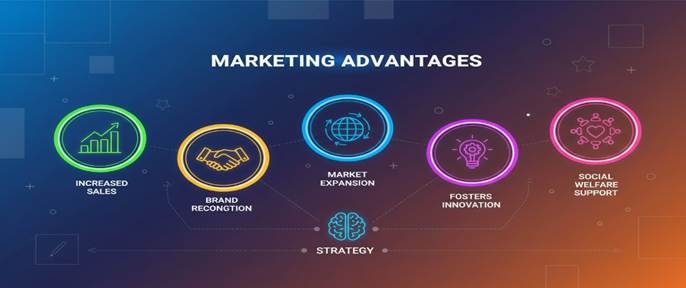
1. Increases Sales and Revenue
Effective marketing generates awareness, attracts customers, and stimulates demand, directly boosting sales and revenue.
Example: When Apple launches a new iPhone, its marketing campaigns—built on anticipation, sleek visuals, and customer testimonials—drive millions to stores and online platforms, resulting in record-breaking sales.
2. Builds Brand Recognition and Loyalty
Marketing helps create a unique brand identity, making products or services memorable and trustworthy. It also fosters loyalty by staying top-of-mind for customers.
Example: Amul’s witty “Amul Girl” ads and topical billboards have made it a household name in India for decades, earning trust across generations.
3. Facilitates Market Expansion
Thorough marketing research identifies new markets and customer segments, enabling businesses to expand beyond their initial footprint.
Example: Ola Cabs, after dominating Indian metros, used targeted digital marketing to expand into international cities like London and Sydney.
4. Encourages Innovation
Understanding changing customer needs and emerging trends through marketing insights drives companies to innovate and diversify their offerings.
Example: Patanjali launched herbal and ayurvedic products in response to a surge in demand for natural goods, disrupting the Indian FMCG market.
5. Improves Standard of Living
Marketing introduces new products and services that enrich lives, making them more convenient, enjoyable, or healthy.
Example: Reliance Jio’s affordable data plans made high-speed internet accessible to millions, enabling education, entertainment, and entrepreneurship even in rural India.
6. Supports Economic Growth
Marketing creates direct and indirect jobs, encourages entrepreneurship, and stimulates business activity, contributing to national and global economic growth.
Example: The Indian advertising industry not only provides employment to creatives and media professionals but also boosts demand in manufacturing, packaging, and logistics.
7. Promotes Social Welfare
Social marketing campaigns can influence positive behaviors, raise awareness of critical issues, and encourage public participation in social welfare
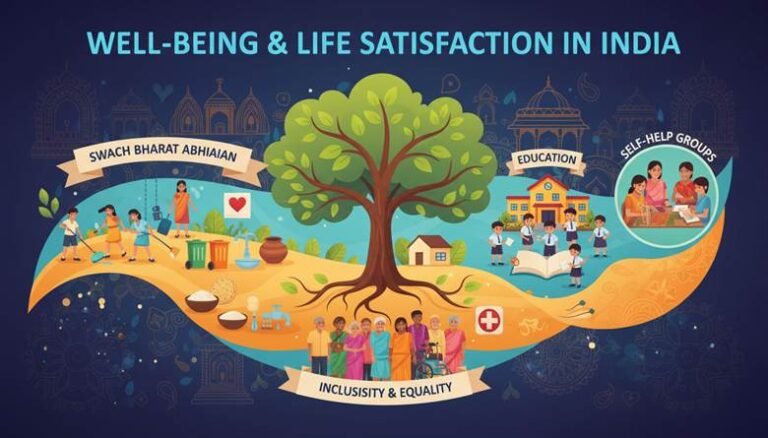
Example: The Swachh Bharat Abhiyan campaign used mass media, celebrity endorsements, and digital content to promote cleanliness and hygiene across India.
II. Scope of Marketing
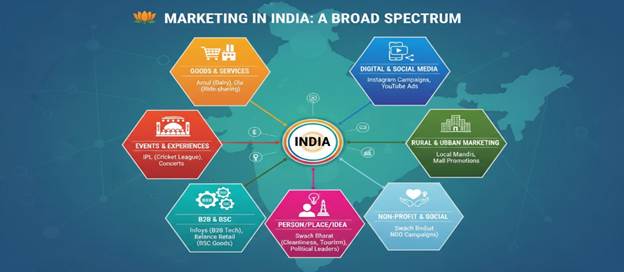
Marketing today covers a vast and dynamic spectrum, touching every aspect of business and society.
1. Goods and Services Marketing
Covers both tangible products (FMCG, electronics, automobiles) and intangible services (banking, insurance, healthcare, hospitality).
Example: Zomato markets not just its food delivery service but also helps restaurants gain visibility through targeted promotions.
2. Digital and Social Media Marketing
Embraces SEO, content marketing, influencer partnerships, mobile apps, and online advertising.
Example: Netflix uses data-driven marketing and personalized recommendations to attract and retain subscribers worldwide.
3. Event and Experience Marketing
This type of marketing centers on promoting events, sports, festivals, and unique customer experiences.
Example: The Indian Premier League (IPL) is marketed as a cricket carnival, drawing sponsors, advertisers, and fans from across the globe.
4. Person, Place, and Idea Marketing
Includes promotion of people (celebrity branding), places (tourism), and ideas (social campaigns).
Example: “Incredible India” promotes India as a diverse and welcoming tourist destination to global travelers.
5. Nonprofit and Social Marketing
Nonprofit and social marketing is used by NGOs and governments to promote social causes and influence positive behavior change.
Example: Pulse polio campaigns leverage marketing to achieve universal immunization against polio in India.
6. Rural and International Marketing
Adapts strategies to rural populations or foreign markets, accounting for cultural and economic differences.
Example: Hindustan Unilever’s “Shakti Amma” program empowers rural women to become direct sales agents, expanding reach into remote villages.
7. B2B and B2C Marketing
Business-to-Business (B2B) marketing targets organizations, while Business-to-Consumer (B2C) marketing targets end-users.
Example: Tata Steel markets construction materials to infrastructure companies (B2B) and steel cookware to households (B2C).
Case Study: Amul—Iconic Success through Marketing
Background
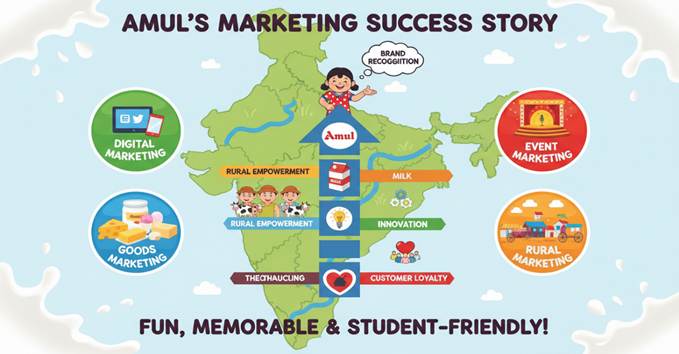
Founded in 1946, Amul is India’s largest dairy cooperative. Its marketing journey offers a masterclass in building a successful business while uplifting rural society.
Advantages Demonstrated by Amul
- Brand Recognition: The Amul Girl, with her clever, topical humor, is instantly recognizable and has become a part of Indian pop culture.
- Market Expansion: Amul operates throughout India and exports globally, thanks to its vast distribution network and adaptive marketing.
- Innovation: Introduced new products (Amul Kool, Amul Ice Cream, flavored milk) based on evolving consumer tastes and nutrition trends.
- Social Welfare and Economic Growth: The cooperative structure ensures millions of rural dairy farmers receive fair prices, empowering women and stimulating rural economies.
- Customer Loyalty and Trust: Reputation for quality and consistency has made Amul a default choice for many Indian households.
Scope Demonstrated by Amul
- Goods and Services: Offers a diverse product portfolio, from milk and butter to chocolates, paneer, and ice creams.
- Digital Marketing: Maintains an active presence on social media, engaging young consumers and leveraging topical trends.
- Event and Sponsorship Marketing: Partners with sports, cultural, and educational events to connect with audiences nationwide.
- Rural and Urban Marketing: Distributes products to metropolitan supermarkets and the smallest village shops alike.
- Social and Cooperative Marketing: Promotes the values of community development, empowerment, and ethical business.
Amul’s Marketing Features in Action
- Customer Orientation: Amul consistently adapts to changing consumer preferences, introducing products like lactose-free milk and low-fat ice cream.
- Integrated Approach: Its iconic ads are unified across print, billboards, and digital media, ensuring consistent messaging.
- Continuous Innovation: Launches seasonal products (like festive sweets) and new flavors to stay relevant.
- Relationship Building: Maintains deep ties with farmers, distributors, retailers, and consumers, focusing on long-term engagement.
Conclusion
Marketing’s advantages extend well beyond boosting sales—they include brand building, fostering innovation, enabling market expansion, and supporting economic and social progress. The scope of marketing is vast and ever-expanding, embracing goods, services, digital platforms, rural and global strategies, and even ideas and causes.
About the Author