

A. BRANDING – PACKING AND PACKAGING – ROLE AND IMPORTANCE
1. Branding
Meaning of Branding
Branding is the process of creating a unique identity for a product, service, or company through names, symbols, designs, and consistent messaging. It defines how consumers perceive and remember a product or company.
Role and Importance of Branding
- Differentiation: Branding distinguishes a product from its competitors. In a crowded marketplace, strong branding helps customers instantly recognize products.
- Trust and Loyalty: A reliable brand builds trust; loyal customers are more likely to repurchase and recommend the brand.
- Perceived Value: Branded products often command higher prices because customers associate them with quality and reliability.
- Emotional Connection: Branding can evoke emotions, making customers feel attached and involved with a brand.
- Simplifies Choices: With countless options, customers often choose familiar brands, reducing their decision-making effort.
- Facilitates Promotion: A strong brand makes advertising more effective and memorable.
Indian Brand Example: Tata
- Tata is a symbol of trust, quality, and integrity in India. Whether it’s Tata Salt, Tata Motors, or Tata Tea, the brand’s reputation encourages customers to prefer its products over others.
Case Study: Parle-G
- Parle-G biscuits are a staple in Indian households and are recognized by their iconic yellow-and-white packaging featuring a child’s face.
- The brand’s consistent quality, affordable pricing, and emotional advertising (“G for Genius”) have made Parle-G the world’s largest-selling biscuit.
- During the COVID-19 lockdown, Parle-G saw record sales as people turned to trusted brands in uncertain times.
2. Packing and Packaging
Meaning
- Packing refers to the physical wrapping or container that holds and protects the product during handling, storage, and transport.
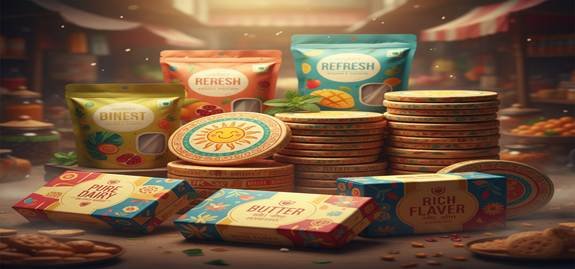
- Packaging involves the design, aesthetics, and information provided on the product container or wrapper. It acts as the product’s “silent salesman” on the shelf.
Role and Importance
a) Protection
- Packaging shields products from physical damage, contamination, spoilage, and tampering.
- For food items, packaging is critical for maintaining freshness and hygiene.
b) Attraction & Promotion
- Attractive packaging grabs attention and can influence purchase decisions, especially for impulse buys.
- Creative and colorful designs make products stand out in retail stores.
c) Communication
- Packaging provides essential information: ingredients, usage instructions, expiry dates, price, and legal disclaimers.
- It can also showcase the brand’s story or values, building a deeper connection with customers.
d) Convenience
- Good packaging makes products easier to handle, carry, store, and use.
- Features like resealable packs, easy-pour spouts, or portion packs add value.
e) Legal Compliance
- Packaging must meet safety and regulatory requirements (e.g., food safety standards, proper labeling).
Indian Brand Example: Amul Butter
- Amul Butter is instantly recognized by its blue and yellow foil and the beloved Amul Girl mascot.
- The packaging keeps the butter fresh and ensures hygiene, while the cartoon strips featured on the pack entertain and reinforce Amul’s witty, relatable image.
- Amul’s consistency in packaging has made the brand iconic over decades.
Case Study: Paper Boat (Hector Beverages)
- Paper Boat drinks, inspired by traditional Indian recipes (like Aam Panna, Jaljeera), use soft, pouch-style packaging.
- The design evokes nostalgia and storytelling, reminding people of their childhood and cultural roots.
- Convenient, spill-proof, and visually appealing, Paper Boat’s packaging differentiates it from conventional plastic bottles and cartons in the beverage market.
- The brand’s unique packaging has played a significant role in its rapid growth and popularity.
Why Branding, Packing, and Packaging Matter—A Summary
Branding
- Helps products stand out in a crowded market.
- Encourages repeated purchases and builds long-term customer relationships.
- Allows companies to charge premium prices.
- Makes promotion and advertising more effective.
Packing and Packaging
- Essential for product safety, freshness, and convenience.
- Is a critical marketing tool—attracts buyers and communicates key information.
- Reinforces branding through consistent colors, logos, and design.
- Can reflect the brand’s personality and values (e.g., sustainability, nostalgia).
More Indian Examples
- Dabur Chyawanprash: The red jar with a yellow cap is instantly recognizable. The packaging communicates health, tradition, and trust.
- Maggie Noodles: The bright yellow packet is symbolic of quick, tasty, and comfort food for millions of Indians.
- Boroline: The green tube with a metallic finish and elephant logo is iconic, symbolizing trust and effectiveness in Indian homes for decades.
Conclusion
Branding, packing, and packaging are not just business functions—they shape how customers perceive, choose, and remain loyal to products and companies. Indian brands like Tata, Parle-G, Amul, and Paper Boat have shown that combining strong branding with attractive, functional packaging creates lasting success in India’s dynamic marketplace.
B. PRICING – OBJECTIVES- FACTORS INFLUENCING PRICING POLICY AND PRICING STRATEGY
1. Pricing Objectives
Pricing objectives are the goals that guide how a company sets the prices for its products or services. These objectives shape overall business direction and depend on the company’s mission, market conditions, and competitive landscape. Common objectives include:
- Profit Maximization: Setting prices to achieve the highest possible profit.
- Example: Apple’s iPhones in India are priced high to maximize profit per unit.
- Sales Maximization: Pricing aimed at increasing sales volume rather than profit per unit.
- Example: Jio’s initial strategy of low-cost telecom plans to quickly gain millions of users.
- Market Share Leadership: Keeping prices low to grab a larger portion of the market.
- Example: Ola and Uber’s competitive pricing in Indian cities to increase their user base.
- Survival: Sometimes, companies set very low prices just to keep operating, especially in tough times.
- Example: During market slowdowns, many small retailers offer heavy discounts to attract customers.
- Product Quality Leadership: Higher prices set to reflect superior quality and create a premium brand image.
- Example: FabIndia’s premium pricing for handcrafted garments and home décor.
2. Factors Influencing Pricing Policy
Pricing is never random; several internal and external factors influence how a company sets its prices:
A. Internal Factors
- Cost of Production: Includes raw materials, labor, and overheads. Prices must cover these costs and allow for profit.
- Example: Amul’s pricing for milk and butter factors in procurement, processing, and distribution costs.
- Business Objectives: Whether the focus is profit, sales growth, market entry, or brand building.
- Example: Patanjali’s affordable pricing aligns with its goal of making wellness products accessible to common people.
- Company Image and Brand Positioning: Premium brands can charge more.
- Example: Taj Hotels charges higher prices than budget hotel chains due to its luxury positioning.
- Product Life Cycle Stage: New products might be priced low to attract customers (introduction), while mature products may have stable or declining prices.
B. External Factors
- Demand: High demand can allow for higher prices.
- Example: Mangoes are priced higher in the peak season due to high demand.
- Competition: Prices set in response to rival products.
- Example: FMCG companies like HUL and ITC often match each other’s prices on soaps or biscuits.
- Consumer Perception: The perceived value of the product matters.
- Example: Consumers may pay more for organic or eco-friendly products from brands like Organic India.
- Government Regulations: Price controls, taxes, and subsidies can affect pricing.
- Example: The Indian government sets price caps on essential medicines.
- Economic Conditions: Inflation or recession can impact how much people are willing to pay.
3. Pricing Strategies
Companies adopt different pricing strategies based on their objectives, market position, and competition:
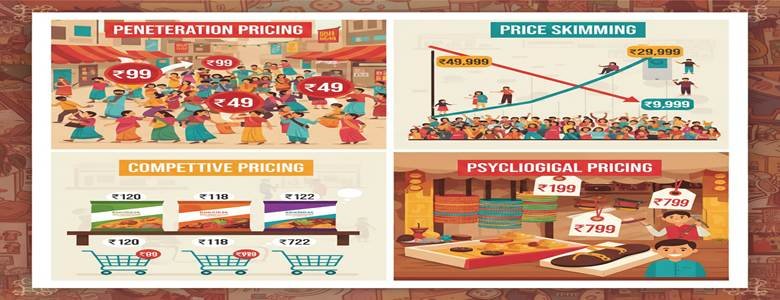
A. Penetration Pricing
- Definition: Setting a low price to enter the market quickly and attract customers.
- Indian Example: When Reliance Jio launched, it offered free and very cheap data plans, which helped it disrupt the telecom sector and gain a huge subscriber base.
- Result: Forced competitors like Airtel and Vodafone to lower prices, benefiting consumers.
B. Price Skimming
- Definition: Setting a high initial price for a new or unique product, then lowering it over time.
- Indian Example: Samsung and Apple often use this for new smartphone launches. Early adopters pay a premium, and the price drops as the product matures and competition increases.
C. Competitive Pricing
- Definition: Pricing products in line with or slightly below competitors.
- Indian Example: FMCG brands like HUL (Lifebuoy, Dove) and ITC (Vivel, Fiama) keep their product prices close to each other to stay competitive in the market.
D. Psychological Pricing
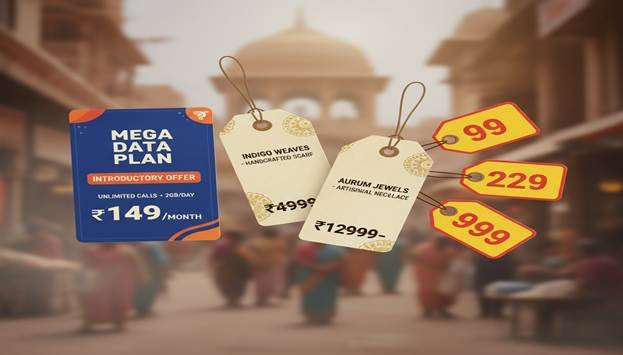
- Definition: Setting prices that seem lower (like ₹99 instead of ₹100) to make customers feel they’re getting a better deal.
- Indian Example: Most retail shops and e-commerce websites in India use psychological pricing (₹499, ₹999) to make prices look attractive.
E. Value-Based Pricing
- Definition: Setting prices based on the perceived value to the customer, rather than just cost.
- Indian Example: FabIndia and Forest Essentials price their products higher because customers perceive them as high-quality, natural, and exclusive.
Case Study: Patanjali Ayurved
Patanjali entered the Indian market with herbal and Ayurvedic products at prices significantly lower than established brands. Its pricing strategy was rooted in:
- Penetration Pricing: Low prices made its products accessible to rural and urban consumers alike.
- Value Proposition: Promoted health, natural ingredients, and “Made in India” appeal.
- Result: Patanjali quickly gained market share, forcing giants like HUL and Colgate to introduce natural and Ayurvedic variants at competitive prices.
Conclusion
Pricing decisions are crucial for business success. Indian companies use a mix of objectives and strategies, influenced by costs, market demand, competition, and consumer expectations. Brands like Jio, Amul, Patanjali, and FabIndia show how effective pricing can capture market share, build brand value, and ensure long-term growth in India’s dynamic market.
C. PHYSICAL DISTRIBUTION – MEANING – FACTOR AFFECTING CHANNEL SELECTION -TYPES OF MARKETING CHANNELS
1. Meaning of Physical Distribution
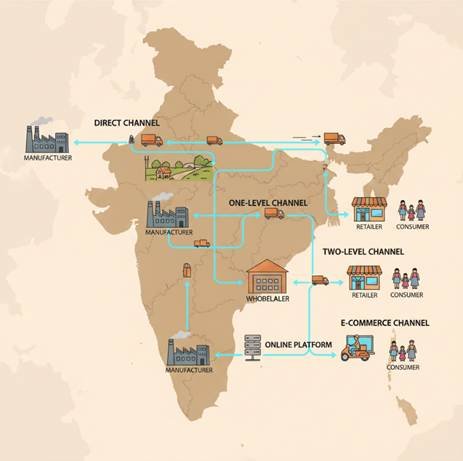
Physical distribution is the process of delivering finished products from manufacturers to consumers efficiently and cost-effectively. It involves all activities required to move goods—including transportation, warehousing, inventory management, and order processing—so that customers receive the right product, at the right place, at the right time.
Key Components:
- Transportation: Physically moving goods via road, rail, air, or water.
- Warehousing: Safely storing products until they are needed in the market.
- Inventory Management: Ensuring enough stock is available without overstocking.
- Order Processing: Efficiently handling and fulfilling customer orders.
- Logistics: Planning, implementing, and controlling the flow of products.
2. Factors Affecting Channel Selection
Choosing the right distribution channel is crucial for a company’s success. The selection depends on several internal and external factors:
A. Product Characteristics
- Nature of Product: Perishable items (like milk) need quick and direct channels; durable goods (like electronics) can use longer channels.
- Example: Amul uses a direct, cold-chain network for dairy products to maintain freshness.
B. Market Characteristics
- Customer Location: Widely spread customers need more intermediaries.
- Example: FMCG brands like HUL reach rural and urban India through an extensive distribution network.
- Market Size: Larger markets tend to need multi-level channels.
C. Company Characteristics
- Financial Strength: Large companies can afford their own logistics and retail chains.
- Example: Reliance Retail manages its own stores and supply chain.
- Managerial Expertise: Companies with experienced managers may handle their own distribution.
D. Channel Characteristics
- Availability of Intermediaries: If capable wholesalers and retailers are available, companies may use them to reach markets.
- Cost and Margins: Channels that are cost-effective and provide better margins are preferred.
E. Competitive Factors
- Companies may choose channels similar to their competitors to remain competitive.
- Example: Most soft drink brands in India use a two-level channel because their competitors do the same.
F. Environmental Factors
- Legal Requirements: Laws and regulations may mandate certain distribution practices.
- Infrastructure: Good roads, railways, and technology make wider distribution possible.
3. Types of Marketing Channels
Marketing channels are the paths through which products flow from manufacturer to consumer. The main types are:
A. Direct Channel (Zero-Level Channel)
- Manufacturer → Consumer
- No intermediaries; goods are sold directly.
- Indian Example: Amul parlors sell dairy products directly to customers; FabIndia’s company-owned stores.
B. Indirect Channels (With Intermediaries)
1. One-Level Channel
- Manufacturer → Retailer → Consumer
- Suitable for expensive or specialty goods.
- Indian Example: Bata shoes are sold from company-owned showrooms directly to customers.
2. Two-Level Channel
- Manufacturer → Wholesaler → Retailer → Consumer
- Common for fast-moving consumer goods (FMCG), where products need to reach a wide market.
- Indian Example: Parle-G biscuits are manufactured by Parle, supplied to wholesalers, then to thousands of kirana stores for sale to consumers.
3. Three-Level Channel
- Manufacturer → Agent → Wholesaler → Retailer → Consumer
- Used for imported goods or products needing wider reach or specialized handling.
- Indian Example: Imported luxury cosmetics or international electronics brands often use this channel.
C. Modern Channels (Omnichannel & E-commerce)
- E-commerce: Manufacturers use platforms like Amazon, Flipkart, and Myntra to sell directly to consumers all over India.
- Omnichannel: Brands integrate online and offline channels to provide a seamless shopping experience.
- Indian Example: Reliance Digital sells products in stores and through its own e-commerce website.
4. Indian Case Studies
A. Amul’s Physical Distribution Model
- Amul is India’s largest dairy brand and a great example of efficient physical distribution.
- Structure:
- Milk is collected from millions of rural farmers and sent to village societies.
- Then, it moves to district unions and state-level federations.
- After processing, products are distributed to retailers and Amul parlors in cities and towns.
- Key Point: Amul’s cold chain ensures that milk and dairy products remain fresh, even in remote areas. This distribution strength has helped Amul dominate the Indian dairy market.
B. Flipkart’s E-commerce Logistics
- Flipkart, a leading online marketplace, has built a robust logistics arm (Ekart).
- Features:
- Uses warehouses, fulfillment centers, and last-mile delivery agents.
- Ensures quick delivery to urban and remote pin codes across India.
- Impact: Efficient logistics and multiple channel options (website, app, third-party sellers) help Flipkart deliver millions of products quickly, even during sales events.
C. Patanjali’s Hybrid Channels
- Patanjali Ayurved uses both traditional and modern channels:
- Products reach customers through small retailers, large modern trade outlets, and Patanjali-branded mega stores.
- The hybrid approach ensures mass reach and brand visibility.
5. Conclusion
Physical distribution is a backbone of marketing success. By choosing the right channels, Indian brands like Amul, Flipkart, and Patanjali ensure their products are available where and when customers need them. The right mix of direct, indirect, and modern channels helps companies reach diverse markets, manage costs, and build a loyal customer base across India’s vast landscape.
C. PROMOTION – MEANING AND SIGNIFICANCE OF PROMOTION. PROMOTION TOOLS (BRIEF)
1. Meaning of Promotion
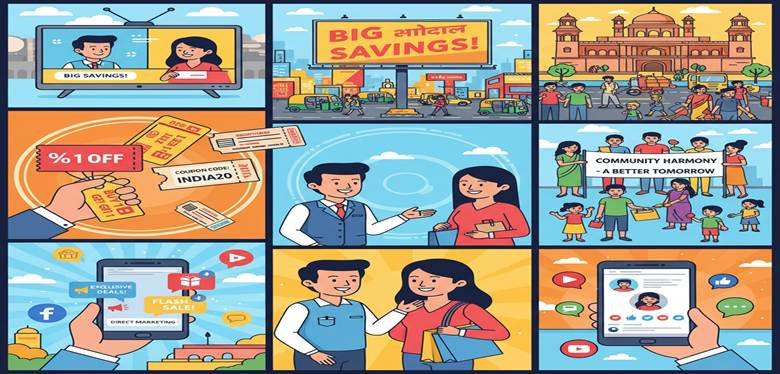
Promotion in marketing refers to all activities a company undertakes to communicate the features and benefits of its products or services to target customers, with the objective of influencing their purchase decisions. It is about informing, persuading, and reminding customers through different channels and techniques. Promotion is a vital component of the marketing mix and is essential for both new and established products.
2. Significance of Promotion
Promotion is much more than just advertising. It plays several critical roles in a business’s success:
A. Creates Awareness
- Introduction of a new product or brand requires customers to know about its existence.
- Example: When Apple launches a new iPhone in India, massive advertising campaigns create buzz and awareness.
B. Persuades Consumers
- Promotion emphasizes product benefits, unique selling points (USPs), and value, encouraging customers to choose one brand over another.
- Example: Surf Excel’s “Daag Acche Hain” campaign persuades parents that stains are a sign of learning, making the brand emotionally appealing.
C. Educates Customers
- Promotion informs customers about product usage, safety, features, and advantages.
- Example: Dettol’s campaigns educate about handwashing and hygiene, especially during the COVID-19 pandemic.
D. Boosts Sales
- Well-designed promotions increase short-term and long-term sales by encouraging more people to buy.
- Example: Flipkart’s “Big Billion Days” sales see huge surges in orders due to aggressive promotion and discounts.
E. Builds Brand Image and Loyalty
- Consistent, creative promotion helps build a strong brand personality and long-term loyalty.
- Example: Amul’s witty, topical ads have built an iconic, trustworthy image over decades.
F. Counters Competition
- In markets with many brands, promotion maintains visibility and defends market share.
- Example: Pepsi and Coca-Cola’s constant promotional rivalry in India keeps both brands in the public eye.
G. Supports Other Marketing Efforts
- Promotion aids distribution and pricing strategies by increasing product demand and helping justify price points.
3. Promotion Tools (The Promotion Mix)
Promotion is not just about TV ads. Marketers use a “promotion mix,” which includes several tools to reach and influence customers:
A. Advertising
- Definition: Paid, non-personal communication through mass media (TV, radio, print, online, outdoor).
- Role: Builds widespread awareness quickly and shapes brand perception.
- Indian Example: Amul’s billboard ads, Vodafone’s ZooZoo TV commercials, and Asian Paints’ memorable jingles.
- Case Study: Fevicol’s (Pidilite) humorous, creative ads (“Fevicol ka jod hai, tootega nahi”) have turned the brand into a household name, making “Fevicol” synonymous with strong adhesive.
B. Sales Promotion
- Definition: Short-term incentives to encourage immediate purchase (discounts, coupons, contests, free samples, buy-one-get-one offers).
- Role: Drives quick sales and attracts new customers.
- Indian Example: Big Bazaar’s “Wednesday Bazaar” with special discounts; Maggi offering free sachets with larger packs.
- Case Study: During Diwali, Titan offers festive discounts and gift packs, boosting sales and attracting festive shoppers.
C. Personal Selling
- Definition: Face-to-face interaction between sales representatives and potential buyers to explain, demonstrate, and persuade.
- Role: Best for high-value or complex products requiring explanation.
- Indian Example: Car sales at Maruti Suzuki showrooms; LIC insurance agents personally explaining policies to customers.
- Case Study: HDFC Bank’s representatives visit offices and homes to explain new financial products, building relationships and trust.
D. Public Relations (PR)
- Definition: Managing and cultivating a positive image and goodwill through media, events, and community activities.
- Role: Builds trust, credibility, and a favorable public image.
- Indian Example: Tata Group’s CSR activities and community projects; Infosys Foundation’s educational and healthcare initiatives.
- Case Study: When Amul extended support to dairy farmers during crises, positive media coverage strengthened its reputation as a socially responsible brand.
E. Direct Marketing
- Definition: Direct communication with individual customers through emails, SMS, catalogs, telemarketing, or personalized online ads.
- Role: Delivers tailored offers and information, and enables immediate response.
- Indian Example: Amazon and Myntra send personalized app notifications and email offers based on browsing and purchase history.
- Case Study: MakeMyTrip uses SMS and push notifications to alert users about flash sales and limited-time offers, increasing bookings.
F. Digital and Social Media Marketing
- Definition: Using online platforms (Facebook, Instagram, Twitter, YouTube, Google Ads) to engage, inform, and influence consumers.
- Role: Enables interactive, real-time communication and viral brand messages.
- Indian Example: Zomato’s witty tweets, Swiggy’s Instagram campaigns, and Flipkart’s influencer partnerships.
- Case Study: The “Share a Coke” campaign in India used social media and personalized bottles to generate massive online buzz and customer engagement.
4. Summary Table: Promotion Tools and Indian Examples
| Promotion Tool | Example Brand | Description/Case Study |
| Advertising | Amul, Fevicol | Iconic, creative, and memorable mass media ads |
| Sales Promotion | Big Bazaar, Titan | Discounts, contests, festive offers |
| Personal Selling | Maruti Suzuki, LIC | Car showrooms, insurance agents, bank representatives |
| Public Relations | Tata, Amul | CSR, positive media coverage |
| Direct Marketing | Amazon, MakeMyTrip | App notifications, SMS, email offers |
| Digital Marketing | Zomato, Flipkart | Social media, influencer, and viral online campaigns |
5. Conclusion
Promotion is the lifeblood of modern marketing. It does not just sell products; it builds relationships, shapes perceptions, and drives business growth. Successful Indian brands like Amul, Fevicol, Tata, and Flipkart use a mix of advertising, sales promotion, PR, and digital marketing to engage customers, stand out from competition, and ensure long-term loyalty and success.
About the Author