

Introduction
An advertising agency is an autonomous business organization focused on advertising work which commences the work of planning, making and performing advertising promotion for its clients. In current time agency payments are based on their inputs, if they succeed or failed in performance in the end it may effect to increase their profit. For many marketers, reducing agency fees is a main target when it comes to meeting budget saving goals. In this dynamic situation agencies need to open a new compensation methods that support their goals with those of their clients. Earlier media agencies paid a fixed commission on the media they purchased on behalf of their clients.
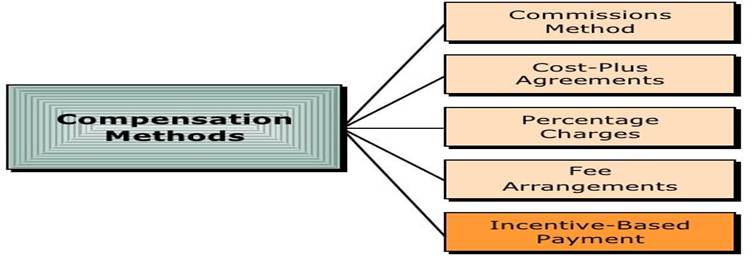
Advertising agency compensation may change strongly in current time as advertisers put stress on agencies to lower commissions and link compensation to performance following advertising campaigns. The reasons are very clear, given the need to attain balance in-market fallouts and stabilize or cultivate working media levels while reaching the preferred savings target. Advertising agencies don’t sell products; they sell ideas, with the knowledge and planning to achieve them. There are various ways the advertising agencies get compensated for their work and services. Agencies may be compensated in a variety of ways, including:
1. Commission method
In the earlier years, as the advertising business advanced, newspaper owners paid a commission of 15% to advertising agents who credited advertisement space in their newspapers and publications. After a few years or a decade, the individual agents will convert themselves into advertising agencies with the capability to advance extensive ad campaigns according to clients’ needs.
Nowadays, the agency is paid for the services it offers to the advertiser by way of the commission. Most companies that still pay commission use some form of paced procedure or descending scale, and the amount of media commission reserved by the agency or rebated to the client is determined by negotiation.
2. Cost-Plus Agreement
markupAccording to George E Belch in his book Advertising and Promotion, “Under a cost-plus system, the client agrees to pay the agency a fee based on the costs of its work plus some agreed-on profit margin (Often a percentage of total costs).This system requires that the agency keep detailed records of the costs it incurs in working on the client’s account. Direct costs (personnel time and out-of-pocket expenses) plus an allocation for overhead and a mark-up for profits determine the amount the agency bills.” This system requires the agency to maintain complete records of costs incurred while working on a client’s account.
3. Incentive-based payments
advertising agency compensation methodResearch from the Harvard Business Review has shown that when it comes to sales teams, incentive-based compensation produces more effective results than unconditional bonuses. In most of the cases of either a small or large budget, more incentive should be used; and for a moderate budget, less incentive should be used. This type of Advertising Agency Compensation Methods is becoming more predominant as marketers attempt to make their agencies more responsible and reduce costs.
Compensation,According to George E. Belch, Incentive-Based Compensation many clients these days are demanding more accountability from their agencies and tying agency compensation to performance through some type of incentive-based system. While there are many variations, the basic idea is that the agency’s ultimate compensation level will depend on how well it meets predetermined performance goals. These goals often include objective measures such as sales or market share as well as more subjective measures such as evaluations of the quality of the agency’s creative work. Companies using incentive-based systems determine agency compensation through media commissions, fees, bonuses, or some combination of these methods.
4. Fees arrangements
Under the fee structure, the customer and the ad agency discuss a uniform amount to be rewarded to the agency for all their effort. The agency guesses the price of servicing to the customer, who either agrees or converts for a reduced amount. Discussions continue till a promise is touched.
There are two primary types of fee arrangement systems. In the traditional or fixed fee process, the agency charges a plain monthly fee for all of its services and credits to the customer and any media contracts earned. The agency and customer approve the particular work to be done and the amount the agency will remunerate for it.
5. Percentage charges
An agency works on a profit margin of 01% to 10%, or it may depend on negotiation and how the agency is run and structured. So that means if an agency has 10,000,000 Rs. (1 Crore Rs.) in account, the agency will end up with anywhere between 100,000 Rs. (1 Lakh) and 1,000,000 Rs. (10 Lakhs). in its pocket as profit.
The rest of the money will be spent on buying commercial advertising space (print media, broadcast, internet, etc.) and paying the agency for marketing advice (expert, professional, skilled, etc.) and creative and production costs (talent, knowledge, capability, etc.).
It may sound like the agency will be making money on that too, but that money remunerated to the agency from the client will be used to pay staff and operating expenses. The profit is what is left over when all the money has been spent to pay salaries and other expenses.
About the Author