

Introduction
In the ever-evolving landscape of media and journalism, two influential theories offer useful information about the relationship between media and its audiences: agenda setting and uses and gratifications. These theories shed light on how media influences public opinion and how individuals actively engage with media to fulfill their needs and desires. In this section, we will take up the concepts of agenda setting and uses and gratifications, exploring their implications and providing prominent recent examples that demonstrate their significance in the realm of journalism.
Understanding the theories of agenda setting and uses and gratifications is crucial for journalism students. These theories illuminate the ways in which media shapes public discourse and how individuals actively engage with media to satisfy their personal needs. By comprehending these dynamics, aspiring journalists can enhance their understanding of audience preferences, refine their storytelling techniques, and contribute to a media landscape that informs and empowers the public.
Agenda Setting: Shaping Public Discourse
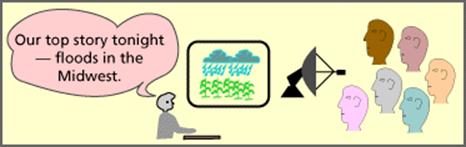
The theory of agenda-setting says that the media can change how important and relevant issues are in people’s minds. The media, through their selection and emphasis on certain topics, determine which issues gain prominence and public attention. This theory posits that the media’s agenda influences the public’s agenda, shaping their perception of what is significant and worthy of discussion.
Prominent Recent Examples of Agenda Setting:
1. Climate Change: Over the past decade, media outlets worldwide have given increasing attention to the time-sensitive issue of climate change. Through extensive coverage of scientific reports, extreme weather events, and activist movements like Fridays for Future, the media has significantly influenced public awareness and policy discussions surrounding climate change. This agenda-setting role has propelled climate change to the forefront of public consciousness and political agendas.
2. Social Justice Movements: In recent years, media coverage of social justice movements, such as the Black Lives Matter movement and the #MeToo movement, has played a vital role in driving public discourse and pushing for societal change. By giving voice to marginalized communities and shedding light on systemic injustices, the media has brought these issues to the forefront, shaping public perceptions and policy debates.
About the Author