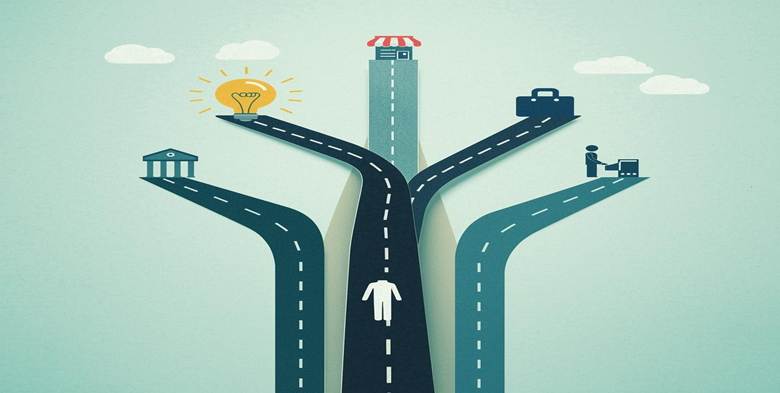


Entrepreneurship routes refer to the various pathways individuals can take to start and grow a business. Each route offers distinct opportunities, challenges, and strategic considerations, allowing entrepreneurs to choose the path that best aligns with their goals, resources, and interests.
Common routes include starting a business from scratch with a novel idea, acquiring an existing business, entering into franchising agreements, engaging in social entrepreneurship to address societal challenges, and practicing intrapreneurship by innovating within established organizations. Understanding these different approaches helps aspiring entrepreneurs identify the most suitable avenue for launching and scaling their ventures, considering factors like industry trends, market needs, and available support systems.
Business Plans and Ideation
Business Ideation is the process of generating creative ideas for a new business, often by identifying problems and designing solutions that can be scaled. This stage involves brainstorming, market research, and evaluating the feasibility of ideas.
Business Plans are structured documents outlining the business idea, target market, competition, marketing and sales strategies, operational plans, and financial projections. A well-crafted business plan helps in securing funding and guiding the growth of the business.
Entrepreneurship Routes
- Starting from Scratch:
Building an entirely new business based on an original idea.
Example: Ola Cabs was built from scratch to solve urban mobility issues in India. - Franchising:
Purchasing the right to operate under an established brand and business model.
Example: McDonald’s and Domino’s franchises in India. - Acquisition:
Buying an existing business and scaling or transforming it.
Example: Zomato’s acquisition of Uber Eats India. - Social Entrepreneurship:
Establishing ventures that address social or environmental challenges.
Example: SELCO India, which provides sustainable energy solutions to underserved communities. - Intrapreneurship:
Innovating within an existing large organization.
Example: Tata Group’s launch of Tata Neu as a super-app was driven by an internal team.
Relevant and Time-Specific Case Studies
- Zepto (2023–2024):
- Route: Starting from scratch (Quick-commerce)
- Idea: 10-minute grocery delivery targeting urban millennials.
- Outcome: Rapid expansion, significant funding, and setting benchmarks for speed and efficiency in Indian e-commerce.
- Nykaa (2021 IPO):
- Route: Starting from scratch (E-commerce)
- Idea: Focused on beauty and personal care products, leveraging digital marketing and logistics.
- Outcome: Successful IPO, strong brand recall, and a dominant position in online beauty retail.
- PharmEasy (2022):
- Route: Acquisition
- Idea: Started as an online pharmacy, later acquired Medlife to expand its customer base and logistics network.
- Outcome: Became a leading digital healthcare platform, raised significant capital, and expanded offerings.
- Araku Coffee:
- Route: Social Entrepreneurship
- Idea: Empowering tribal farmers through sustainable coffee production and global distribution.
- Outcome: International recognition for both quality coffee and a sustainable, equitable business model.
Summary Table
| Route | Example Business | Idea Description | Recent Outcome |
| Start from Scratch | Zepto, Nykaa | Quick delivery, online beauty retail | Rapid growth, IPO (Nykaa) |
| Franchising | Domino’s India | Food service expansion | Market leader in pizza delivery |
| Acquisition | PharmEasy | Digital pharmacy, Medlife acquisition | Leading health platform |
| Social Entrepreneurship | Araku Coffee | Sustainable coffee, tribal upliftment | International acclaim |
| Intrapreneurship | Tata Neu | Super-app within Tata Group | Digital ecosystem expansion |
About the Author