

Rural Modern Media: Selecting Media Mix
Selecting the right media mix means choosing a combination of communication channels that best reach and influence rural audiences. The choice depends on factors like literacy levels, media penetration, product type, and campaign objectives.
1. Radio
Advantages: High penetration, low cost, local language, and ideal for areas with low literacy.
Example:
Case Study: All India Radio’s “Krishi Darshan”—A government program that broadcasts agricultural advice, weather updates, and product information to farmers across rural India.
Brand Example: Fertilizer companies sponsoring farming tips and product ads on local radio stations.
2. Television
Advantages: Visual and audio impact, mass reach, and can demonstrate product use.
Example:
Case Study: Hindustan Unilever’s “Kyunki Saas Bhi Kabhi Bahu Thi”—HUL placed product ads and social messages in popular rural TV serials to reach women homemakers.
Brand Example: FMCG brands advertising during rural-centric shows on Doordarshan’s DD Kisan or DD National.
3. Print Media
Advantages: Targeted reach through regional newspapers and magazines; effective for literate populations.
Example:
Case Study: Godrej Agrovet regularly publishes agricultural tips and new product launches in local vernacular newspapers.
Brand Example: Seed and fertilizer companies use leaflets and pamphlets distributed at mandis and village gatherings.
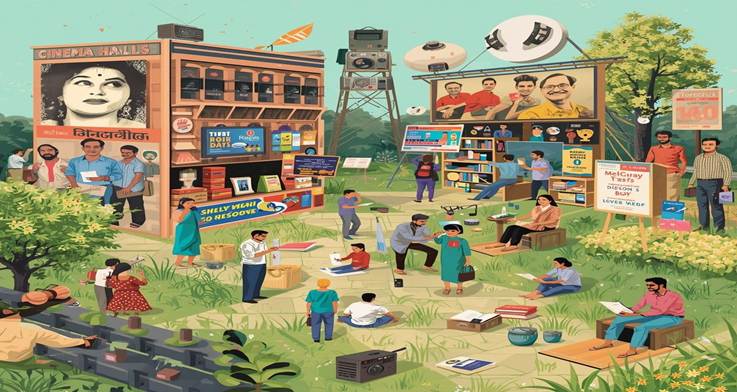
4. Cinema Halls
Advantages: Gatherings at rural movie theaters allow for community viewing of advertisements and short films.
Example:
Case Study: Coca-Cola aired short, localized commercials before films in rural cinema halls, increasing brand recall.
Brand Example: Tractor and auto companies show demo videos at village cinemas before or during intervals.
5. Outdoor Media
Advantages: High visibility through hoardings, wall paintings, bus shelters, and banners in strategic rural locations.
Example:
Case Study: Vim Bar and Wheel Detergent (HUL) use wall paintings and outdoor banners at village entry points and markets.
Brand Example: Mobile phone companies place branded kiosks and signage at bus stands and haat markets.
6. Point of Purchase (POP) Displays
Advantages: Directly influence purchase decisions at retail outlets using product displays, posters, and shelf talkers.
Example:
Case Study: Colgate uses POP displays in rural kirana stores, featuring educational material about oral hygiene.
Brand Example: Sachet holders and branded shelves for shampoo and detergent in rural shops.
7. Music Records & Audio Cassettes
Advantages: Folk songs and jingles in local dialects played at village events or through mobile vans.
Example:
Case Study: ICICI Prudential created folk songs about insurance, distributed as free cassettes at haats and fairs.
Brand Example: The health ministry releases health-awareness songs on CDs for play at rural events.
8. Study Classes
Advantages: Educational sessions organized in villages to teach skills, often sponsored by brands or NGOs.
Example:
Case Study: Tata Swach conducted water purification workshops in rural schools, demonstrating product use.
Brand Example: Agricultural companies organize “Krishi Pathshalas” (study classes) to educate farmers on new products and farming methods.
About the Author