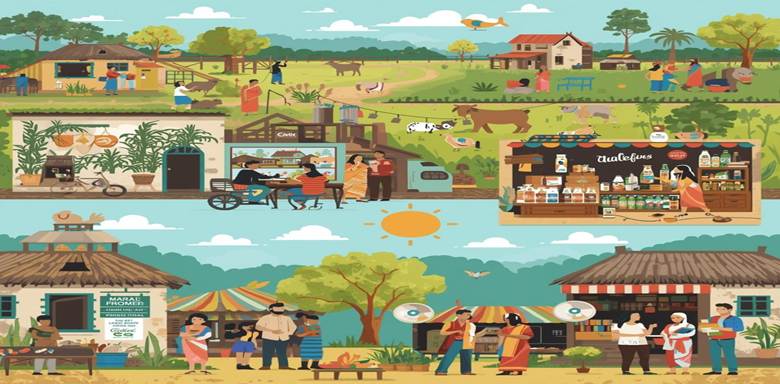


Rural Advertising
- Meaning and definition of advertising.
- Objectives of Advertising.
- Characteristics of Advertising.
- Effects of advertising on society.
Meaning and Definition of Advertising
Meaning:
Advertising is a paid form of non-personal communication that promotes products, services, ideas, or brands to a target audience through various media channels. In rural advertising, these efforts are specifically directed at rural populations, using channels and messages tailored to rural lifestyles and consumption patterns.
Definition:
“Advertising is any paid form of non-personal presentation and promotion of ideas, goods, or services by an identified sponsor.” — American Marketing Association
Objectives of Advertising
- Create Awareness: Inform rural consumers about the existence, features, and benefits of products or services.
- Persuade Consumers: Influence attitudes and encourage rural audiences to try or prefer a particular brand.
- Build Brand Image: Establish a positive perception and trust for the brand in the minds of rural consumers.
- Increase Sales: Stimulate demand and boost product sales in rural markets.
- Educate the Public: Share useful information, such as how to use a product or understand its benefits.
- Support Sales Force: Facilitate the work of salespeople by creating interest and demand in advance.
Characteristics of Advertising
- Paid Communication: Advertising requires payment for media space or time.
- Non-personal: It addresses a large audience, not individuals directly.
- Identified Sponsor: The source of the message (company/brand) is always clear.
- Mass Communication: Reaches a wide audience through mass media (radio, TV, print, digital, etc.).
- Persuasive: Aims to motivate, convince, or influence people’s choices.
- Standardized Message: The same message is delivered to all audiences within a campaign.
Effects of Advertising on Society
Positive Effects:
- Informs and Educates: Spreads awareness about products, health, sanitation, government schemes, etc.
- Promotes Economic Growth: Encourages consumption, boosts demand, and supports rural business development.
- Creates Employment: Generates jobs in media, distribution, and related sectors.
- Social Change: Can address issues like hygiene, literacy, and social taboos through awareness campaigns.
Negative Effects:
- Materialism: May foster unnecessary desires and unrealistic aspirations.
- Misleading Information: Sometimes exaggerates or misrepresents facts, leading to consumer confusion.
- Cultural Erosion: Urban-centric messages may dilute traditional values and customs.
- Wasteful Consumption: Promotes buying beyond needs, resulting in wastage.
In summary:
Advertising is an essential tool for reaching and influencing rural audiences. When done responsibly, it can drive development and positive change, but it must be mindful of rural sensitivities and ethical standards to avoid negative societal impacts.
About the Author