


A. Shocking Advertising
Introduction
Shock advertisements can be shocking and offensive for various reasons, and violations of social, religious, and political norms can occur in many different ways. The use of shocking content in advertising appeals has been widely adopted. It is effective and possibly leads to increased brand awareness and an increase in sales volume.
Shock advertising is defined as the use of intentional, offensive, controversial, and attention-grabbing advertising to sell a particular product or idea. Resulting from this definition, there are seven types of shock appeals that marketers can use to shock the audience.
- Disgusting images that include images containing blood, killing, body parts, cavities, disease, parasites, death, or bodily harm.
- The images may also contain sexual references, such as masturbation, nudity, or sexual acts.
- Vulgarity/obscenity refers to the use of swear words, rude gestures, or racial captions.
- Vulgarity applies to pictures/acts that are distasteful, lack sophistication, and are crude, for example, farting or nose picking.
- Indecency, also known as indecency, refers to a breach of social decency and etiquette.
- Moral offensiveness occurs when images depict innocent people or animals being harmed, showcase uncalled-for violence or sex, involve individuals who provoke violence (such as Mussolini, Hitler, or Mao Tse-tung), display unfair behavior, or feature children in uncomfortable situations.
- Religious restrictions occur when marketers inappropriately use religious or spiritual symbols or individuals.
Impact of Shock on the audience
Advertisers, psychiatrists, and social scientists have long debated the effectiveness of shock advertising. Some scientists argue that shocking ads evoke stronger feelings among the consumers. One finding suggests “shocking content in an advertisement significantly increases attention, benefits memory, and positively influences behavior. Moreover, consumers are more likely to remember shocking advertising content over advertising content that is not shocking. But if a consumer finds a certain kind of advertising content threatening or disturbing, the message will be filtered out. An example of this is a heavy smoker who could be filtering out a picture of a cancer-sick lung since the content could be perceived as disturbing and uncomfortable.
Advertisements that exploit negative emotions to induce shock do not elicit positive emotions in the audience. Therefore, using shock advertising may evoke negative feelings whenever customers see the brand logo or company name, leading to discomfort alongside brand recall.
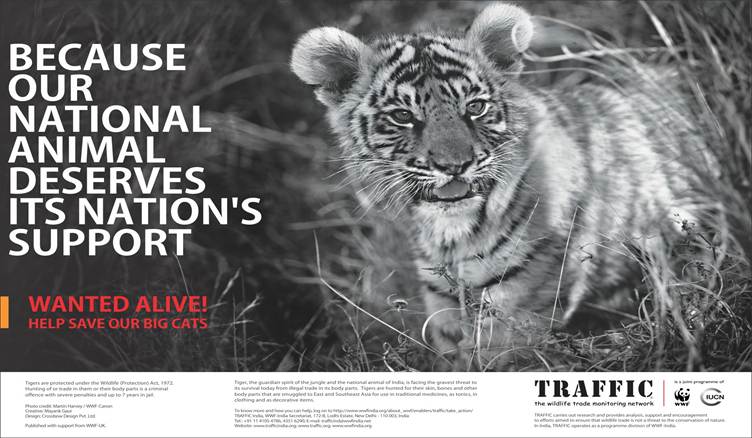
In case of a cause or an issue, using shock advertising can work by getting the attention the cause deserves and getting people interested in contributing or working for it. It can sensitize people to other cultures and ways of life. Causes like child abuse, domestic violence, lung cancer, AIDS, and animal rights (PETA) have used shock advertising very effectively in the international context. This implies that consumers will filter out advertising content they deem threatening or disturbing.
Shocking advertisements in India


BF. Controversial Advertising
Introduction
In their natural state, people don’t think many deep thoughts and keep themselves occupied with immediate tasks and mildly pleasant ideas that keep them safe from fear or worry whenever they can.
Advertising has long been recognized—and criticized—as an efficient way to persuade us to spend our money. But sometimes the “Mad Men” have chosen to take a risk, go beyond the “soft sell,” and seek to challenge the way we think.
They have flirted with race, religion, sexual orientation, and more to make people question their belief systems—and boost their brand at the same time. As any idea that is calculated to wound the feelings and arouse anger, disgust, or outrage in the mind of a reasonable person can be viewed as offensive, it’s not hard to see why one man’s controversial idea is another man’s offensive idea. As practically everyone thinks he/she is a reasonable person, it’s not straightforward to cross that fuzzy line.
The controversial advertisements can be shocking and offensive for a variety of reasons, and violations of social, religious, and political norms can occur in many different ways. They can include a disregard for tradition, law, or practice (e.g., lewd or tasteless sexual references or obscenity), defiance of the social or moral code (e.g., vulgarity, brutality, nudity, feces, or profanity), or the display of images or words that are horrifying, terrifying, or repulsive (e.g., gruesome or revolting scenes or violence).
Some advertisements may be considered shocking, controversial, or offensive not because of the way that the advertisements communicate their messages but because the products themselves are “unmentionables” not to be openly presented or discussed in the public sphere. Examples of these “unmentionables” may include cigarettes, feminine hygiene products, or contraceptives.
However, there are several products, services, or messages that could be deemed shocking or offensive to the public. For example, advertisements for weight loss programs, sexual- or gender-related products, clinics that provide AIDS and STD testing, funeral services, groups that advocate for less gun control, and casinos, which naturally support and promote gambling, could all be considered controversial and offensive advertising because of the products or messages that the advertisements are selling. Shocking advertising content may also entail improper or indecent language, like French Connection’s “fcuk” campaign. There are some controversial advertisements in India, as follows.
1. This Footwear Ad
Milind Soman and Madhu Sapre posed naked for this brand with nothing but shoes and a python on them. Social activists as well as animal rights activists caused a huge furor over this advertisement.
2. This denim print ad

To drive the concept of second skin home, a popular denim brand shot a print ad that featured three hot models clad in their jeans and skin-colored innerwear. At first glance, it seemed as if the models were topless. Furthermore, to promote this brand, Akshay Kumar asked Twinkle Khanna to unbutton his jeans when he walked the ramp at Lakme Fashion Week 2010.
3. Jewelry print ad:

Lastly, the ad was forced to be pulled down after receiving heavy criticism on social media for featuring a dark-skinned kid who is struggling to hold a parasol on top of Aishwarya Rai’s head. There have been accusations of the ad being racist in nature and promoting child labor.
4. Levis

In 2008, Kangana Ranaut in the Levi’s ‘Stuck On You’ campaign stopped people in their tracks. The fashionista appears atop a shirtless model in one of the photos.
5. Fair & Handsome Cream

Bollywood’s King Khan came under fire for endorsing a skin-lightening cream product a couple of years ago. The advertisement led to an online campaign titled Dark and Beautiful, which urged not only the star but also the brand to stop promoting and encouraging fairness creams. A lot of people backed the campaign’s cause, including Aamir Khan, who said that he would never promote such products. But King Khan kept mum on the whole controversy and still promotes the brand.
6. Candy Ad

A candy commercial got Big B in hot water when he was shown pelting stones at a mango tree. According to the Advertising Standards Council of India, children could imitate his actions, leading to dangerous consequences. The advertisement was later taken down.
Impact of controversial advertisement on society
When one thinks of advertising, one normally thinks of advertising that coerces or persuades one to try a product. But there is another form of advertising, used less often but used amazingly well in certain campaigns where immediate attention and discussion are needed, namely controversial advertising.
Defined traditionally as advertising that “deliberately, rather than inadvertently, startles and offends its audience by violating norms for social values and personal ideals.” Controversial advertising generally uses disturbing and graphic imagery and slogans that disturb in order to draw immediate attention to the issue at hand.
Causes or issues that require public opinion mobilization primarily employ controversial advertising. It can be used effectively to cut clutter, create buzz, and get a social service message across. In fact, public service campaigns and social issues use controversial advertising to the greatest effect. Causes like child abuse, domestic violence, lung cancer, AIDS, and animal rights (PETA) have used controversial advertising very effectively in the international context.
Some brands, like United Colors of Benetton, have also used controversial advertising to communicate social messages, thus associating the brand with a social image rather than keeping it purely a fashion brand. The advertising for this brand has been consistently provocative, with a newborn baby, a dying AIDS patient, and such images being used in its campaigns. The visuals often have no relevance to the product and are considered by some to be graphic, gory, and tasteless. In fact, Benetton is seen as the company that pioneered the concept of controversial advertising in the late 1980s.
Some controversial advertising might not use gory visuals but might use language or metaphors that are not acceptable culturally and which might be controversial. For instance, the fashion brand French Connection got its moment of fame when it abbreviated French Connection, UK, and got a word, FCUK, which it used.
The controversial advertising has been much discussed among media watchers and with those who study the psychology behind advertising. According to scientists, controversial ads bring out stronger feelings among consumers, with the ad getting more attention, remaining in the memory, and influencing behavior as well. Incidentally and not surprisingly, advertising that is controversial tends to be recalled better than regular advertising.
Shock advertising is a double-edged sword. It can generate interest in the brand, or it can generate extremely passionate and negative feelings towards the brand, which could impact the brand negatively. Benetton, for instance, used religious taboos (a picture of a priest and nun kissing), cultural taboos (the visual of a Black woman feeding a white baby), a death row inmate’s thoughts, and an AIDS patient on his deathbed. These images are ones that force the viewer to confront and deal with their inherent biases and prejudices and can result in negative feelings for the brand.
On the flip side, the advertising has resulted in positive feedback for the brand for talking about difficult issues and taking a stand on social and environmental issues. To quote Oliviero Toscani, the photographer for some of the most controversial ads Benetton produced, about the ad of the man dying from AIDS, his attempt was “to use the forum of poster advertising to make people aware of this [AIDS] tragedy at a time when no one dared to show AIDS patients.” At that point, when no one was talking about AIDS, this ad was considered radical.
Another brand that has courted international controversy is the Calvin Klein jeans ads, which had young models in very soft porn poses, with some models as young as 15. In India, the Tuff Shoes campaign, which showed models Milind Soman and Madhu Sapre with a snake wrapped around them, courted an obscenity case and controversy but definitely got attention. However, most advertising in India does tend to play it safe.
Shock advertising is used to effect in campaigns like anti-tobacco and smoking campaigns, where visuals of diseased lungs or of cancerous tumors are used to put people off smoking. Visuals of smokers’ faces and lips being hooked through with fishhooks were used to show that they were hooked on smoking. Other campaigns for Child Abuse Awareness, for instance, show disturbing visuals of an assaulted child to encourage awareness about this issue.
The Breast Cancer Fund internationally ran a poster campaign that showed women in lingerie in poses like lingerie ads, but with mastectomy scars in place of their breasts. Many publications refused to run these ads, but they were a shocking reminder to women to check their breasts regularly. For a brand, shock advertising is a little dangerous because of the potential negative fallout. But for a cause or an issue, using shock advertising can work by getting the attention the cause deserves and getting people interested in contributing or working for it or modifying their behavior accordingly.
The positive impact of shock advertising, when it deals with social and cultural taboos, is that it can sensitize people to other cultures and ways of life.
A negative fallout of shock advertising is that continuous exposure to it desensitizes us, and it becomes a blind spot. To remain relevant, shock advertising should constantly innovate, be topical, and be something that touches a core belief or value in a way that shakes up the viewer.
About the Author