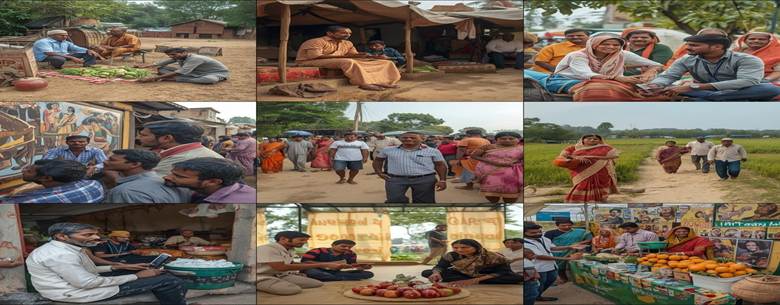


Introduction
Rural marketing strategies in India focus on the 4As framework—Availability, Affordability, Acceptability, and Awareness—to address challenges like low literacy, scattered populations, and limited infrastructure while tapping into a market where per capita spending rose 9.2% in 2026. These approaches are vital for FMCG, agriculture, and services, aligning with rural consumer behaviors like value-seeking and seasonal buying.
1. Product Adaptation
Strategy: Modify products to suit rural needs, preferences, and income levels.
Example: Hindustan Unilever (HUL) launched shampoo in ₹1 sachets, making it affordable and accessible for rural consumers who could not buy large bottles.
2. Pricing Strategies
Strategy: Implement low or value-based pricing to match the lower purchasing power of rural consumers.
Example: Godrej No.1 Soap offers smaller-sized bars at lower price points, targeting budget-conscious rural buyers.
3. Distribution Innovations
Strategy: Develop last-mile distribution networks to ensure product availability in remote areas.
Example: ITC e-Choupal uses internet kiosks in villages to connect farmers directly with suppliers, streamlining distribution and information flow.
Project Shakti (HUL): Empowers rural women as direct-to-home sales agents, expanding reach and creating employment.
4. Communication and Promotion
Strategy: Use local languages, folk media, and culturally relevant messages for effective communication.
Example: Lifebuoy Soap (HUL) uses street plays (nukkad nataks), puppet shows, and wall paintings to promote hand hygiene in villages.
5. Leveraging Rural Haats and Melas
Strategy: Participate in weekly markets and village fairs to showcase and demonstrate products.
Example: Britannia Industries sets up stalls at melas (fairs) to offer product samples and attract new rural customers.
6. Partnership with Local Influencers
Strategy: Collaborate with teachers, panchayat leaders, and self-help groups to build trust and influence.
Example: Tata Swach Water Purifier partners with local NGOs and panchayats for demonstrations and awareness campaigns.
7. After-Sales Service and Support
Strategy: Offer reliable after-sales service to build trust and encourage adoption of durable goods.
Example: Mahindra Tractors provides on-site servicing and regular follow-ups, ensuring customer loyalty and word-of-mouth promotion.
8. Agricultural Extension Activities
Strategy: Organize educational workshops and “Krishi Melas” (agri-fairs) to introduce new products and technologies.
Example: Monsanto conducts farmer field schools to educate rural farmers about new seeds and farming techniques.
Conclusion:
Successful rural marketing strategies are those that adapt to local needs, build trust, ensure accessibility, and communicate effectively using both traditional and modern means. Brands that understand and address rural realities can build strong, lasting market positions.
About the Author