What is the marketing or product mix?


Marketing mix
- Meaning – Elements of Marketing Mix
- Product-product mix – product line lifecycle – product planning – New product development – failure of new product – levels of product
Principles of Marketing: Detailed Notes with Indian Examples
1. Marketing Mix: Meaning & Elements
Meaning of Marketing Mix
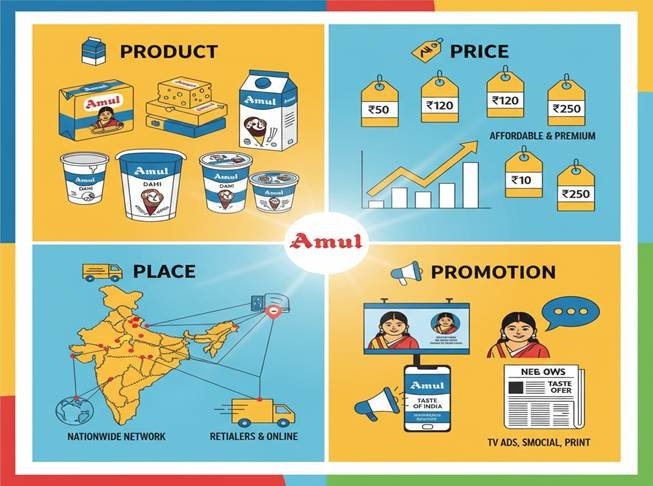
The marketing mix refers to the set of actions or tactics that a company uses to promote its brand or product in the market. It is often called the 4Ps of Marketing: Product, Price, Place, and Promotion.
- The concept was first introduced by Neil Borden in the 1950s and later simplified by E. Jerome McCarthy into the 4Ps.
- The marketing mix helps businesses make strategic decisions to meet customer needs, enhance satisfaction, and achieve business goals.
Elements of Marketing Mix (The 4Ps)
1. Product
- The goods or services offered to satisfy customer needs and wants.
- Includes product design, features, quality, brand name, packaging, and after-sales service.
2. Price
- The amount customers pay to buy the product.
- Pricing strategies can include discounts, offers, credit terms, and payment methods.
3. Place
- Distribution channels used to deliver the product to customers.
- Involves location, logistics, inventory management, and coverage.
4. Promotion
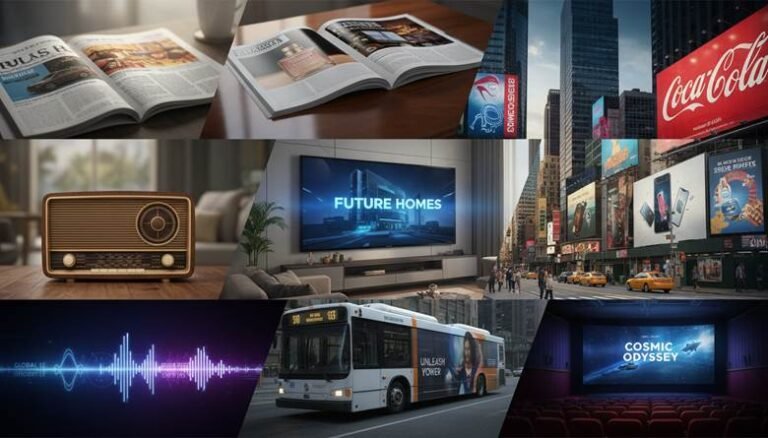
- Activities to communicate the product’s value and persuade customers.
- Includes advertising, sales promotion, public relations, and personal selling.
Extended Marketing Mix (7Ps)
For services, three more Ps are added:
- People (employees, customer service),
- Process (how service is delivered),
- Physical Evidence (tangible cues like ambiance, brochures).
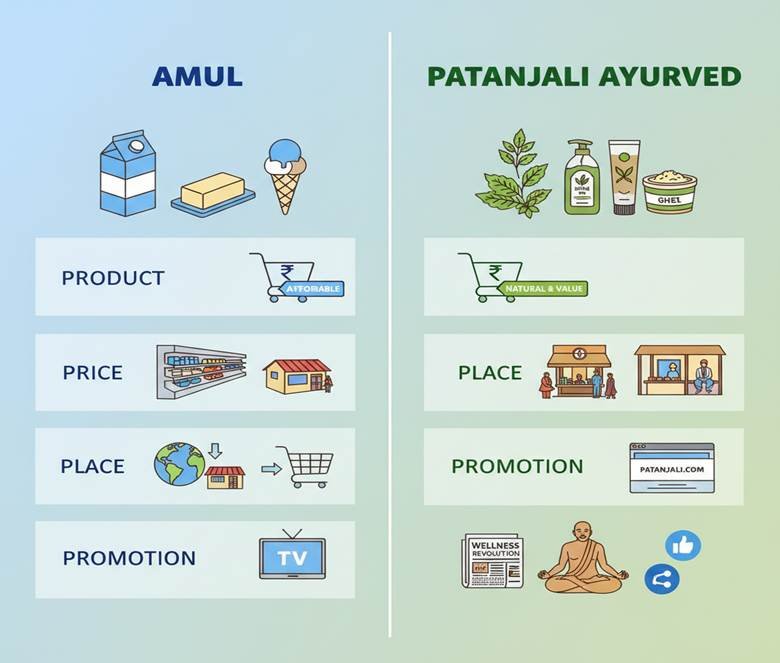
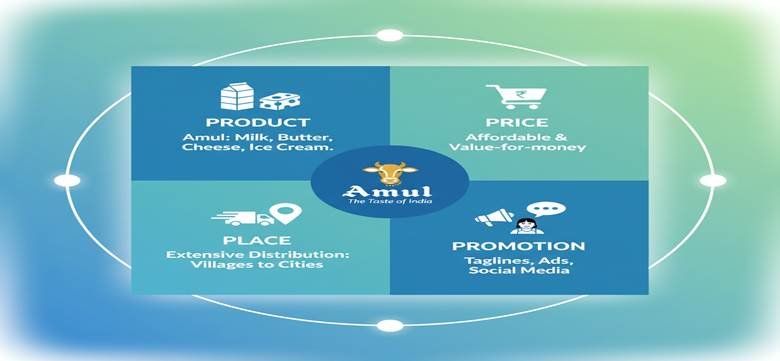
Indian Brand Example: Amul
- Product: Amul offers a wide range of dairy products like milk, butter, cheese, ice cream, and chocolates.
- Price: Competitive pricing to make products affordable for all segments.
- Place: Extensive distribution with over 10,000 distributors and 1 million retailers across India.
- Promotion: Famous for its creative and catchy advertisements, especially the Amul Girl campaign.
Case Study: Patanjali Ayurved
- Product: Natural and Ayurvedic products (FMCG – Fast-Moving Consumer Goods).
- Price: Affordable pricing with value-for-money proposition.
- Place: Wide presence in urban and rural India through retail stores and distributors.
- Promotion: Strong use of television ads, endorsements by Baba Ramdev, and word-of-mouth.
2. Product Mix, Product Line, and Product Lifecycle
a) Product Mix
Product Mix (also called Product Assortment) refers to the complete set of products that a company offers to its customers. It includes:
- Width: Number of different product lines.
- Length: Total number of products within those lines.
- Depth: Variations within each product (size, flavor, etc.).
- Consistency: How closely related product lines are.
Indian Example: ITC Limited
- Width: FMCG, Hotels, Paperboards, Packaging, Agri-business.
- Length: Under FMCG, products like Aashirvaad (atta), Sunfeast (biscuits), Bingo! (snacks), Yippee! (noodles).
- Depth: Sunfeast biscuits come in different flavors and pack sizes.
- Consistency: Most products are related to consumer needs and daily use.
b) Product Line & Lifecycle
Product Line
A product line is a group of related products marketed by the same company. These products serve similar needs and are usually sold to the same customer group.
- Example: Hindustan Unilever’s “Lifebuoy” product line includes soap, hand wash, sanitizers, and body wash.
Product Life Cycle (PLC)
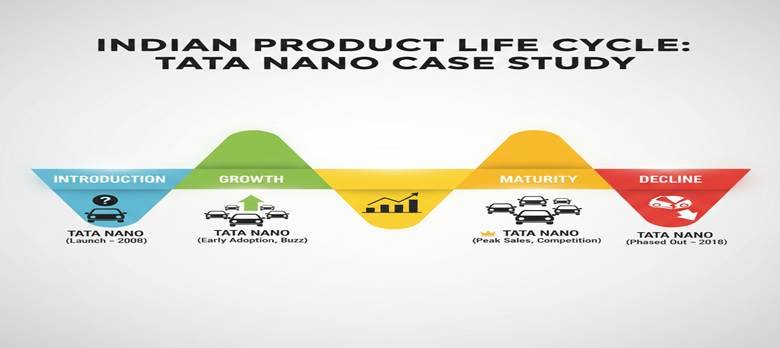
The product life cycle is the progression of a product through four stages:
- Introduction: Product is launched, sales grow slowly, heavy promotion.
- Example: Launch of Tata Nano (small car).
- Growth: Sales increase rapidly, profits rise, competitors enter.
- Example: Patanjali herbal products during their popularity surge.
- Maturity: Sales peak, market becomes saturated, competition is high.
- Example: Parle-G biscuits, widely accepted and stable sales.
- Decline: Sales decrease, profit drops, may be discontinued.
- Example: VCRs and cassette players.
c) Product Planning
Product planning involves deciding what products to offer, how to improve them, and when to withdraw them from the market.
Key components:
- Identifying customer needs.
- Developing new products.
- Modifying existing products.
- Phasing out outdated products.
Indian Case: Maruti Suzuki
- Started with the Maruti 800 to meet the need for affordable cars.
- Introduced new models like Alto, Swift, and Baleno, regularly updating features and design.
- Discontinued models that lost relevance (e.g., Maruti 800, Omni).
d) New Product Development (NPD)
New Product Development is the process of bringing a new product to the market. It consists of several steps:
Steps in NPD:
- Idea Generation: Brainstorming from customers, employees, competitors.
- Idea Screening: Filtering out unfeasible ideas.
- Concept Development & Testing: Creating product concepts and testing with target customers.
- Business Analysis: Assessing market potential, cost, and profit.
- Product Development: Creating prototypes and initial models.
- Test Marketing: Selling the product in a limited market.
- Commercialization: Full-scale launch.
Indian Example: Dabur Real Juice
- Dabur identified the need for healthy, preservative-free juices.
- Developed and tested fruit juice products.
- Launched “Real” fruit juices, now a market leader.
e) Failure of New Products
Not all new products succeed. Common reasons for failure include:
- Poor market research.
- Lack of customer need.
- Ineffective promotion.
- Poor timing or pricing.
- Technical or quality problems.
Indian Case Study: Tata Nano
- Marketed as the world’s cheapest car.
- Failed due to perceived low quality, poor marketing, and a mismatch with aspirational needs of Indian consumers.
- Production was eventually halted.
f) Levels of Product
According to Philip Kotler, a product has three levels:
- Core Product: The basic benefit/solution the customer seeks.
- Actual Product: The physical product with features, design, brand, and packaging.
- Augmented Product: Additional services and benefits (warranty, after-sales service, delivery).
Indian Example: Reliance Jio SIM
- Core Product: Connectivity and communication.
- Actual Product: Jio SIM card with 4G services, brand image, and packaging.
- Augmented Product: Free unlimited data, customer support, exclusive apps.
3. Summary Table: Indian Case Studies
| Concept | Indian Brand | Example & Explanation |
| Product Mix | ITC Limited | Multiple FMCG brands, hotels, agribusiness |
| Product Line | HUL Lifebuoy | Soaps, hand wash, sanitizers, body wash under one brand |
| Product Lifecycle | Parle-G | Maturity stage: stable sales, broad acceptance |
| Product Planning | Maruti Suzuki | Regularly launching, updating, discontinuing models |
| New Product Development | Dabur Real Juice | Identified market for healthy juices, developed & launched product |
| Product Failure | Tata Nano | Failed due to wrong positioning and poor perception |
| Levels of Product | Reliance Jio | Core (connectivity), Actual (SIM), Augmented (free data, services) |
4. Conclusion
Understanding the marketing mix and its elements, especially the product aspects, is essential for success in modern business. Indian brands like Amul, ITC, Maruti Suzuki, Dabur, and Reliance Jio demonstrate how thoughtful product planning, development, and positioning can lead to market leadership—or, if mismanaged, lead to product failure.
About the Author