

A. Social (CSR) Advertising
Introduction
Social marketing was “born” as a discipline in the 1970s, when Philip Kotler and Gerald Zaltman realized that the same marketing principles that were being used to sell products to consumers could be used to “sell” ideas, attitudes, and behaviors. Kotler and Andresen define social marketing as “differing from other areas of marketing only with respect to the objectives of the marketer and his or her organization. Social marketing seeks to influence social behaviors not to benefit the marketer, but to benefit the target audience and the general society.” Social marketing is an approach used to develop activities aimed at changing or maintaining people’s behavior for the benefit of individuals and society as a whole.
So what, exactly, is social marketing? In the Social Marketing Report, it’s defined as “the application of commercial marketing techniques to social problems.” It means to take the same principles used in selling goods—such as shoes, television shows, or pizza—to convince people to change their behavior.
What does that mean? Well, instead of selling hamburgers, you’re selling a life without heart attacks. Instead of convincing teenagers to buy blue jeans, you’re convincing them to buy the advantages of postponing pregnancy.
If you are selling blue jeans, you’re still trying to influence behavior—you’re convincing people they need to wear your jeans, either for comfort or for style or for value. So then, what is the difference between social marketing and commercial marketing?
Definition
Before we focus on social marketing, we should clarify the nature of marketing as both an academic discipline and a management practice.
The definition offered by Kotler, Roberto, and Lee (2002, p. 5) is a useful one:
“The use of marketing principles and techniques to influence a target audience to voluntarily accept, reject, modify, or abandon a behavior for the benefit of individuals, groups, or society as a whole.”
Social marketing relies on voluntary compliance rather than legal, economic, or coercive forms of influence.
Kotler et al. (2002) argue that social marketing is often used to influence an audience to change their behavior for the sake of one or more of the following:
- Improving health—health issues
- Preventing injuries—safety issues
- Protecting the environment – environmental issues
- Contributing to the community involves issues of community-building.
Lazer and Kelley (1973, p. ix) define social marketing as follows:
“Social marketing is concerned with the application of marketing knowledge, concepts, and techniques to enhance social as well as economic ends. It is also concerned with analysis of the social consequences of marketing policies, decisions, and activities.”
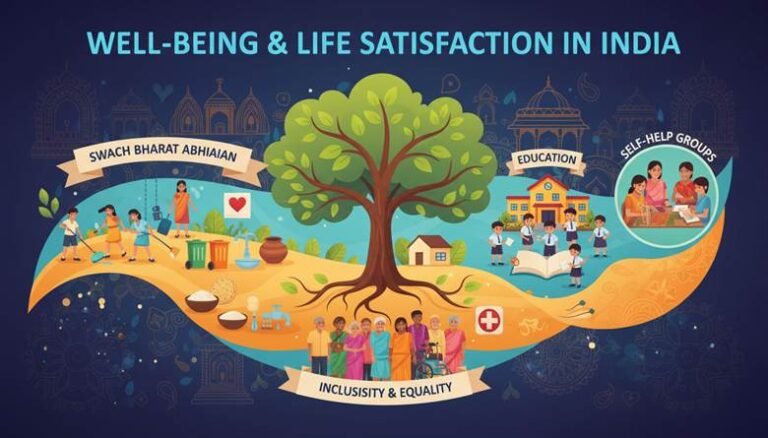
Corporate Social Responsibility (CSR) is a continuing commitment by businesses to integrate social and environmental concerns into their business operations. Changes in the global environment increasingly challenge businesses around the world to look beyond financial performance and to integrate social and environmental concerns into their strategic management.
India traditionally viewed CSR as a philanthropic activity prior to the Companies Act 2013. And in keeping with the Indian tradition, it was believed that every company has a moral responsibility to play an active role in discharging its social obligations, subject to its financial health. In the early 90s, Mahatma Gandhi introduced the concept of trusteeship, helping socio-economic growth. Family values, traditions, culture, and religion influenced CSR.
On 29th August 2013, the Companies Act of 2013 replaced the Companies Act of 1956. The New Act has introduced far-reaching changes that affect company formation, administration, and governance, and it incorporates an additional section, i.e., Section 135—a clause on Corporate Social Responsibility obligations (“CSR”) for companies listed in India. The clause covers the essential prerequisites pertaining to the execution, fund allotment, and reporting for successful project implementation.
India became the first country to legislate the need to undertake CSR activities and mandatorily report CSR initiatives under the new Companies Act 2013. This is the beginning of a new era for CSR in India.
Companies to implement their CSR in PROJECT MODE are:
Suggested Areas of Activities for (As per Schedule VII)
- Eradicating hunger, poverty and malnutrition; promoting health care including preventive health care and sanitation, including contribution to the Swachh Bharat Kosh set-up by the Central Government for the promotion of sanitation; and making available safe drinking water;
- Promoting education, including special education and employment-enhancing vocation skills especially among children, women, the elderly, and the differently abled and livelihood enhancement projects;
- Promoting gender equality, empowering women, setting up homes and hostels for women and orphans; setting up old age homes, day care centers, and such other facilities for senior citizens, and taking measures for reducing inequalities faced by socially and economically backward groups;
- Ensuring environmental sustainability, ecological balance, protection of flora and fauna, animal welfare, agroforestry, conservation of natural resources, and maintaining the quality of soil, air, and water, including contributions to the Clean Ganga Fund set up by the Central Government for the rejuvenation of the Ganga River;
- Protection of national heritage, art and culture, including restoration of buildings and sites of historical importance and works of art; setting up public libraries; promotion and development of traditional art and handicrafts;
- Measures for the benefit of armed forces veterans, war widows and their dependents;
- Training to promote rural sports, nationally recognized sports, Paralympic sports and olympic sports;
- Contribution to the Prime Minister’s National Relief Fund or any other fund set up by the Central Government for the socio-economic development, relief, and welfare of the Scheduled Castes, Scheduled Tribes, other backward classes, minorities, and women;
- The Central Govt. approves and provides contributions or funds to technology incubators located within academic institutions.
- Rural development projects
- Slum area development.
CSR Advertising in India
The tagline “jaago re” from TATA Tea is considerably encouraging to the public, as it conveys a positive message to “awaken” the people of India towards their real aims and duties.
Coca-Cola Mehman Nawaaji
Coca-Cola is taking ‘mehman nawaazi’ to a new level with #CokeNawaazi, where vada pav is being served with Coke, paranthas are being had with Coke, and 4’s and 6’s are being celebrated with shots of Coke.


P & G (Padegha, India; Badegha, India)
Shiksha is now in its 7th year and is back with an even stronger commitment—to take its current impact of 150,000 children to the 200,000 mark. On May 7, 2011, Shiksha held an event in Delhi. Shiksha ambassadors Anupam Kher and Dr. Kiran Bedi, as well as recent Shiksha supporter Jacqueline Fernandes, unveiled the plan of the Shiksha-RTI School in Purkhas, Haryana. This school is one of the 20+ schools that Shiksha is building in 2010-11 alone.

B. Advocacy Advertising
Introduction
Advocacy advertisements are communications intended to bring awareness to a certain problem. It is a kind of advertisement that is used in order to influence the public on political or social matters. Moreover, it is also concerned with the propagation of ideas and the explanation of controversial social issues that are deemed important in public policy terms.
Advocacy advertising is commonly regarded as a subdivision of corporate or institutional advertising. Contrasting commercial advertising, advocacy advertising is considered to be undertaken in the interest of a group or the public and naturally does not promote a product or service. Funding for advocacy advertising can be provided by nonprofit organizations, corporations, or private advocacy groups.
Advocacy advertising in India
Indian brands are taking advantage of the new call of social selling, employer branding, social hiring, personal branding, social PR, etc., which are the key principles of brand advocacy. Nowadays every brand begins changing their colors. Literally. Well, we are referring to the sudden switch to saffron, white, and green (India’s flag colors) in their marketing communication to celebrate Independence Day. But beyond these surface-level changes, there are a few brands that go the extra mile and design a campaign to aptly represent the spirit of independence and what it means for India.
Incorporating the brand message into the advertisement adds a unique touch. Undoubtedly, these campaigns continue to resonate with Indian consumers even after their discontinuation. So here’s a look at a few such memorable campaigns that evoke a strong sense of patriotism in every Indian.
Bajaj (‘Buland bharat ki buland tasveer – Hamara Bajaj’)

In this ad, Bajaj encapsulates the aspirations and spirit of a pre-liberalization India through its flagship scooter brand, Chetak. A simple middle-class family riding the scooter, a Parsi man wiping it clean, and yet another family worshipping the scooter before the first ride—each of these instances resonated well with the Indian consumer and positioned it as the perfect family two-wheeler. In fact, the sense of belonging this ad created was so strong that even today, the words ‘Buland bharat ki buland tasveer – Hamara Bajaj’ immediately make the Indian consumer nostalgic.
Paytm

Theme: Freedom is realizing that you have a choice.
Year of release: 2016
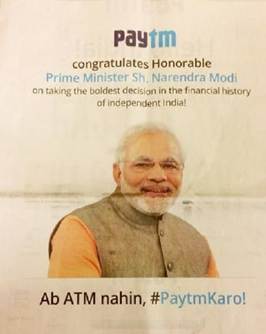
Hope and the possibility of a corruption-free India are the messages that mobile payments and the e-commerce platform Paytm convey through this ad film. It narrates three instances where it seems like there would be an exchange of money as a bribe but, in a pleasant twist, shows an exchange of emotions instead. “Jab cash nahi hoga, toh corruption kaise hoga?” The last frame of the ad urges people to work towards India’s freedom from corruption by encouraging them to use less cash and more digital payments.
Note: Interestingly, three months later, the government of India announced the demonetization of high-value currency, with one of the objectives being a cash-free economy.
About the Author