Surrogate Advertising
Introduction
Surrogate advertising relates to advertising by duplicating the brand image of a product to promote another product of the same brand, the advertising for which is otherwise banned. In such advertisements, though the companies directly advertise a different product, they intend to advertise indirectly a banned product such as liquor or tobacco. Consumers associate such advertisements with the corresponding banned product. The products are thus indirectly advertised. This type of advertising uses a product of a fairly close category, such as club soda or mineral water in the case of alcohol, or products of a completely different category (for example, music CDs or playing cards) to hammer the brand name into the heads of consumers.
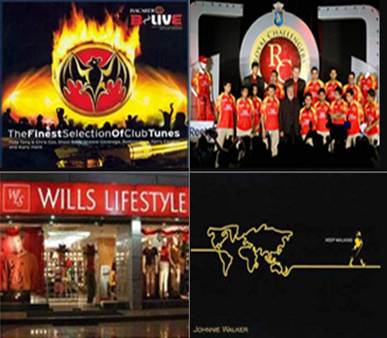
The banned product (alcohol or cigarettes) may not be projected directly to consumers but rather masked under another product under the same brand name, so that whenever there is mention of that brand, people start associating it with its main product (the alcohol or cigarette). In India there is a large number of companies doing surrogate advertising, from Bacardi Blast music CDs and Bagpiper Club Soda to Officer’s Choice playing cards.
India is not first when it comes to banning controversial adverts or adverts showcasing alcoholic drinks, cigarettes, or other tobacco products. Surrogate advertising first started in Britain, where housewives started protesting against the liquor company and forced them to promote fruit juice and soda under the same brand. This has led to a steady inflow of surrogate advertising in India.
Who oversees ‘surrogate ads’ in India for alcohol?
Activists seek government action against those who advertise liquor brands
Mineral water, sodas, music, and sports franchises are among the common avenues taken by alcohol manufacturers to advertise their brands. So what is new in this?
Nothing. But what is befuddling those in power as well as the moral police is how “”surrogate advertising’ can be monitored in the absence of overarching legislation.
At the Centre, the buck is passed on between ministries and sometimes to respective states. This is even as consumer activists urge the government to frame central legislation, even if effective implementation will rest with the state governments. In fact, the self-regulating Advertising Standards Council of India (ASCI) already has a code for brand extensions.
“Surrogate advertising is not allowed as per law, but we have been urging the government to start taking legal action against liquor brands that violate these providers and are habitual offenders,” said Bejon Misra, founder of the Consumer Online Foundation.
Regulation of such advertising appeared to fall under the jurisdiction of at least five ministries—Consumer Affairs, Health, Information & Broadcasting (I&B), IT, and Social Justice and Empowerment. “There are ambiguous court rulings on the matter where alcohol manufacturers state that the logo is the identity of the brand and using it on products other than alcohol is a legitimate business activity. So it’s mainly down to legal interpretation and in time will need to be settled by courts to establish a stated position,” a senior government official told Business Line.
He added any concerted effort to clamp down on the practice would have to be led by the Health Ministry, which took the lead in curbing cigarette/tobacco advertising.
Another official pointed out that Section 2(r) of the Consumer Protection Act, 1986, outlined ‘unfair trade practices’ for sales maximization of a good or service and provided legal recourse for consumers if suppliers were found to have engaged in misleading advertisements.
“Though it does not explicitly mention surrogate advertising, sellers could be prosecuted depending on how a case is presented. That said, if mineral water advertised by an alcohol company meets requisite standards, it’s a murky area,” he said, adding new legislation might not serve any purpose and could lead to inter-sectoral conflicts.
Direct advertising of alcoholic beverages is banned in India, but private channels have often permitted surrogate advertising.
“We need to have a comprehensive Central Law that regulates various aspects of alcohol consumption and promotion,” said Monika Arora, Health Promotion & Associate Professor, Public Health Foundation of India.
Source: https://www.thehindubusinessline.com
Surrogate advertising products in India



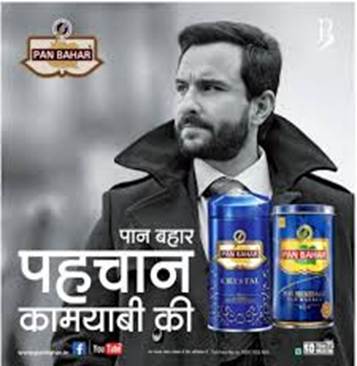
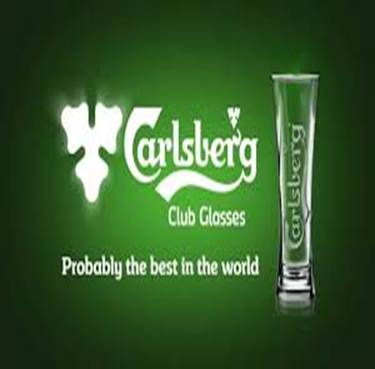
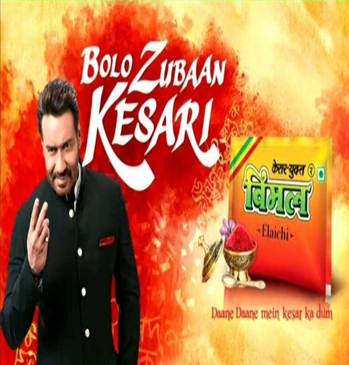
The impact of surrogate advertising
Brand experts define it as the leveraging of existing brand equity, while agencies call it an exercise to create awareness and brand recall of products on the negative list. The government, on the other hand, comes down heavily on the intriguing concept of surrogate advertising. The anti-tobacco lobby is going strong worldwide, and the list of negative products in every country is on the rise.
“Surrogate advertising is a reflection of the hypocritical society that we live in. Some products are good enough to be sold but not good enough to be advertised. A marketer has to sell his product and will find means to promote it. I don’t blame him.”
Says Santosh Desai, Executive Vice President, McCann Erickson, “There seems to be an inherent double standard in the government’s policy. If something is unrecognizably bad and cannot be advertised, then why sell it at all and earn tax revenue on it as well? I feel that the case of the government allowing liquor companies to operate but not advertise is like a baby who is given birth to but is thereafter not looked after.”
Meenakshi Madhvani, CEO of Carat, a company that manages brands such as Bacardi and UDV, concurs. “If selling liquor is a legal business, then why is advertising liquor not?” she questions. “This is a case of the government having its cake and eating it too. If liquor brings in so much revenue to the government, why should it not be advertised?” she adds.
Although the withdrawal of surrogate liquor advertisements would cause a decline in the revenues for television channels, the drop would not be as substantial. Says Madhvani, “As a whole, the spending on liquor as a category is not as much. Therefore the impact on ad revenues would not be very marked.’
But the views of Zia Mody, Advocate, and member of ASCI differ. “Liquor companies have found an indirect way of getting over the ban on advertising through surrogate advertising. The government may allow certain vices, but that does not mean that it would be forced to encourage them as well. Advertising liquor would be encouraging it.”
Bharat Kapadia, Associate Publisher and Partner, Chitralekha Group, and member of ASCI, opines, “Liquor companies try to find loopholes to advertise their brands. Via this surrogate advertising, consumers can be misguided, which is why the I&B ministry needs to take care of such advertising.”
Raj Nayak, Executive VP, Star Network, also touches upon the same. “Although we would follow the government’s final take on this, the distinction between surrogate advertising and a real brand extension is what is called for.”
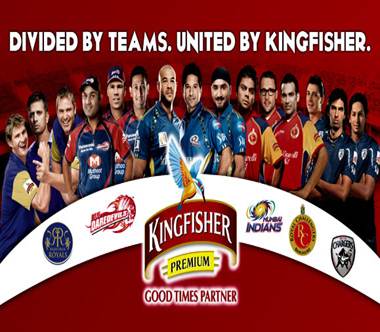
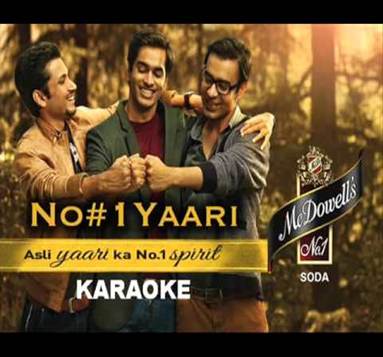
Amongst liquor majors that have been advertising their line extensions are Bacardi International and Radico Khaitan. While Bacardi has been advertising its Bacardi Blast Summer Party Music Album,” Radico Khaitan has started marketing apple juice under the 8 PM brand. While the McDowell Mera No. 1 ad campaign is used to sell their soda, United Breweries is selling its mineral water under the “Kingfisher” brand.
About the Author