Generic advertising provides a unique window through which to observe advertising effects on market performance, because changes in the dispersion of consumers’ valuations systematically redistribute rents among firms according to observable characteristics of producer size.
According to the American Marketing Association, AMA Dictionary. “Generic advertising is an approach to preparing advertising messages that concentrates on the customer benefits that apply to all brands in a product category, rather than benefits that are unique to specific brands.”
According to advertising wearout, defined as the declining effectiveness of a commercial or campaign associated with increased exposure, it is examined from a generic advertising perspective.
Generic advertising campaigns of the type typically undertaken by agricultural commodity groups differ from branded advertising in that the former seek to increase aggregate demand for a product category (e.g., beef, milk, wool) rather than the market share of a particular brand within a category. For example, most commodities in the United States have check-off programs assessing producers for generic advertising and promotion, a public good for producers. Examples of the more popular programs include “Got Milk?” and “Beef, It’s What’s for Dinner,” etc.
Generic advertising is a type of marketing designed to promote a general product rather than a specific brand name. Such campaigns have been produced for everything from fresh milk to gemstones. This type of advertising does not mention particular brand names but attempts to build consumer support for the product in general.
Does the industry need generic advertising today?
Generic Advertising of Rhein Maas
Since 1 July 2018, Veiling Rhein-Maas has collected a levy for generic promotion from the auction customers, which is passed on to the two above-mentioned initiatives. Below, you can find all relevant information about the possibilities that ‘Flower Council of Holland’ and ‘Blumen—1000 Gute Gründe’ offer to the customers of the auction as well as the next upcoming events, presentations, and campaigns.
Flower Council of Holland
The ‘Flower Council of Holland’ takes care of the consumer-oriented promotion of flowers and plants in various European countries. Funnyhowflowersdothat.co.uk and thejoyofplants.co.uk are showing the customer that flowers make us happy and that everything is a little bit less stressed and more comfortable in the company of plants. You can also find both brands on Facebook, Twitter, Pinterest, and Instagram.
In addition, the ‘Flower Council of Holland’ regularly launches campaigns such as ‘Houseplant of the Month,’ ‘Garden Plant of the Month,’ and the ‘Flower Agenda,’ where different flowers and plants are placed in the spotlight every month. The ‘Flower Council of Holland’ also provides you with photographic material (image bank), texts, posters, and graphics free of charge. Use these promotional materials to boost your sales! The initiative has also issued a calendar for 2019, which includes all the important days in the flower industry from several European countries.
Voluntary generic advertising in India
The ‘voluntary’ prefix says that only those companies that wish to pay towards the campaign do so. Such advertising is perhaps most prominent in the promotion of agricultural produce, with campaigns promoting milk, chicken, eggs, and other foodstuffs.
Public service advertisements and statements serve as promotional sources, addressing issues of general concern for citizens. The earliest public service announcements (in the form of moving pictures) were made before and during the Second World War years in both the UK and the US.
In the UK, amateur actor Richard Massingham set up Public Relationship Films Ltd in 1938 as a specialist agency for producing short educational films for the public. In the films, he typically played a bumbling character who was slightly more stupid than average and often explained the message of the film through demonstrating the risks if it was ignored. The films taught road safety, swimming, disease prevention, and crossing the street. During the war, he was commissioned by the Ministry of Information to produce films for the war effort.
Massingham began to produce longer films, for both private companies and the government, after the war. In the US, the Ad Council (initially called the War Advertising Council) was set up in 1941, when America entered World War II. After the war, PSAs were used to educate the public on a broader range of important issues.
We possibly heard, saw, or read PSAs directed at raising awareness about issues such as the dangers of smoking, the threat posed by drug use, the importance of education, and the need for safety when traveling in vehicles. PSAs can be seen on television, heard on the radio, and read in magazines and newspapers. In modern times, media need to donate some amount of airtime or print space for messages in the public interest. With free airtime, the cost of producing PSAs can be kept low while still achieving a big impact for the public good. If we want to create awareness, provide information, influence behaviors, or stress the importance of an issue, PSAs are a beneficial way to reach a large audience at a minimum cost.
Advantages of PSA’s
PSAs are generally inexpensive.
If the airtime is donated or space is free in print media, then only the cost of production is required. By maintaining a small budget, we can keep the costs for PSAs reasonable.
Most public and private stations will allow you to include a telephone number for more information in your PSA.
PSAs tend to be very effective at encouraging the audience to take action; for example, wearing a helmet while riding a bike, using a seat belt when driving a car, and not smoking in public places.
PSA’s can raise awareness on certain issues like smoking, drinking, drugs, etc.
Limitations of PSA’s
Because PSA’s depend on donated time or small budgets, we are unable to get them to run on all the media platforms.
The rivalry among nonprofit groups for free airtime is intense.
Due to the nature of donations, stations often do not track or report when your PSAs have been played.
PSAs do require somewhat more work on our part, and they tend to be ineffective at influencing policy.
Public service advertisements images in India
Case study: Bell Bajao
This US- and India-based human rights organization launched its ‘Bell Bajao!/Ring the Bell’ campaign in 2008 to call on men and boys across India to take a stand against domestic violence (DV) by performing a simple bystander intervention—ringing the doorbell when they witnessed DV taking place. The campaign’s integrated cultural, organizing, and media strategy sought to make the issue part of mainstream conversation; increase knowledge about and change community attitudes towards DV and towards HIV-positive women; and alter individual behavior. By the end of 2010, with the support of the United Nations Trust Fund to End Violence Against Women’s PSAs on television, radio, and print, their online multimedia campaign, educational materials, and traveling video van, over 130 million people had been reached.
The Bell Bajao PSAs depict men and boys who hear males shouting, women crying, and objects falling—indicating incidence of domestic violence. They find an excuse to interrupt the violence by ringing the doorbell and asking the abuser, who appears in the doorway, for a small, unrelated, and unnecessary service. It is clear to the audience that the bell-ringer is just doing it as an ‘excuse’ to intervene, to halt the violence. See PSA: “software engineer.” Mobile video vans broadcasting the campaign PSAs allowed youth advocates to engage directly with individuals and encourage community involvement and participation through games, puppetry, street theater, and quizzes.
Classified advertising is a form of advertising that is particularly common in newspapers, online, and in other periodicals that may be sold or distributed free of charge. Classified advertisements are much cheaper than larger display advertisements used by businesses, although display advertising is more widespread.
If you are looking for an affordable and direct way for small- to medium-sized businesses and individuals to connect with their prospects, classified ads are the perfect solution. Here are the primary benefits of using this platform:
Simple format that gets straight to the point
Reaches your target audience by focusing on the right demographic
Allows potential customers to search for you, instead of the other way around
Provides prospects with multiple ways to contact you
They are significantly more affordable than other print media formats, without compromising effectiveness
Newspaper classifieds
Advertisements in a newspaper are typically short, as they are charged for by the line or word, and are one newspaper column wide. Publications printing news or other information often have sections of classified advertisements; there are also publications that contain only advertisements. The advertisements are grouped into categories or classes such as “for sale—telephones,” “wanted—kitchen appliances,” and “services—plumbing,” hence the term “classified.” Classified ads generally fall into two types: individuals advertising sales of their personal goods and advertisements by local businesses.
Some businesses use classified ads to hire new employees. One issue with newspaper classified advertising is that it doesn’t allow images, even though display ads, which do, can be found in the classified section. If your goal is to save money and reach a specific audience, classified advertisements in newspapers tend to be the most effective. Here’s what you need to know about local newspaper advertising and the types of ads that work well in the classifieds.
1. Business
Many small- and medium-sized businesses prefer classified ads to any other platforms. Some business classified ads include business proposals, offers, sales promotions, and ads seeking business partners.
2. Property
By property ads here, we do not mean real estate projects but advertisements for the sale, purchase, and rental of individual homes, flats, or apartments. Brokers, landlords, and individual property owners constitute 100% of the classified property advertisers across all Indian newspapers.
3. Education
A lot of educational advertisements can also be found under the classified ad section. It is mostly used by coaching centers, which have a small budget and thus prefer to introduce or promote their coaching classes.
4. Personal
This is the last kind of classified advertisement and includes personal messages such as birthday wishes, messages about personal achievements, season’s greetings, and other similar messages. These are placed by individuals in a personal capacity.
5. Matrimonial
All prospective grooms and brides advertise in a newspaper in the matrimonial category. The ad can be a text ad or an image of the prospective bride or groom. In most cases, parents and relatives publish matrimonial ads to reach out to a larger community.
6. Recruitment
Recruitment ads are very popular in display advertising, and they are also very common in classified ads. Advertisements under “situations vacant” and “situations wanted” are a great place for small- and medium-sized businesses to attract job applicants and for job applicants to describe their skills and qualifications in hopes of an employment opportunity.
7. Obituary
Obituary advertisements are generally released in the Classified Display format, which enables advertisers to include images of the deceased and messages of their choice at a much lesser price than display ads. Remembrances, funeral invitations, and even condolence messages are conveyed through classified text or classified display advertisements as per the budget of the advertiser.
8. Announcements
Announcement classifieds include personal statements such as a name or address change, legal notifications, lost and found, and notices of marriage. These ads are often placed by individual advertisers and are intended for personal or government references.
9. Public notices and Tenders
This is another type of public announcement. Public notices and tender ads are where the public is notified about changes to any local rules, contract requirements, common regulations, laws, or anything associated with the government. These ads often have a lot of information to fit into a simple line ad, which is why many people choose to publish them under the display classified format.
B. Corporate advertising
Introduction
Advertising designed to win an audience over to a specific point of view is called corporate advertising. Corporate advertising can be national, regional, or local, aimed at any type of audience, and delivered via any type of media. Corporate advertising is the advertising done for an entire institution/company/organization and not for individual brands or products.

Corporate advertising is comprised of the advertising campaigns that a company runs to signal its position in the marketplace. Instead of focusing on one product or product class, the advertisement talks about the company generally, addressing broad issues such as strategic initiatives, financial strength, or corporate philosophy.
According to the book “Corporate Communication,” by Paul A. Argenti, corporate advertising can be defined as “paid use of media that seeks to benefit the image of the corporation as a whole rather than its products or services alone.” Product advertising, in contrast, brands only the product itself. A major difference between corporate and product advertising is who is paying for it. Product advertising will be charged to the marketing department, whereas corporate advertising is paid by the corporate communication department or the CEO’s office.
1. Image Advertising
A common method corporations use and people used to. It gives a visual treat of the brand rather than service promotion or product promotion. Several types of themes fall under this advertising sector.
An advertising company always uses themes like “family-friendly,” “the lowest cost ever in the market,” “very sophisticated and classy,” and “very luxurious” to attract the customers. Image advertising is one of the methods that distinguish your brand and product from your competitors.
2. Advocacy Advertising
If you are working with firms that need to convey the messages to society, then you would go for this kind of advertisement. If you are working with the company that helps people get their medical and insurance, they definitely want you to do an ad based on saying, “Don’t drink and drive.”
According to Professor Robert Shayon of the University of Pennsylvania’s Annenberg School of Communications, corporations have taken to advocacy advertising because they feel they are not getting a fair shake from what they believe to be a generally hostile press and because they are convinced that the business world can make significant contributions to public debate on issues of great importance—energy, nuclear power, conservation, environment, taxation, and free enterprise, among others.
It achieves two objectives flawlessly. It helps the brand image of the company by making it contribute to society and a better place to live. NGOs, hospitals, and research establishments do generate this type of advocacy advertising.

3. Cause-Related
People used to get cause-related advertising confused with advocacy advertising. Both works are done in the same way, but advocacy methods are often taken for long-term benefit.


The cause-related advertising method acts as a quick reaction to current events or trending topics. When disaster hits any particular region and corporations want to raise funds to help the victims, they may choose the cause-related.
4. Financial Advertisements
Investment advertising is another type of marketing that is designed to attract investors. It focuses on the financial strength of the company and the benefits of owning the company’s securities. These ads typically appear in financial publications and other media sources that target the financial industry.
The producer doesn’t care where consumers buy its product. The aim of the retail advertiser differs from that of the national advertiser. The retailer’s advertisements encourage support by consumers and build store trustworthiness among them. The retailer is primarily focused on promoting their store rather than any specific brand. The general move towards retail advertising is “buying at our store.” The retailer is unconcerned with the sale of any definite brand, unlike the national advertiser.
The retailer must contend in one of the most reasonable arenas of business and move enormous volumes of products. Moreover, retail advertising must convey the store’s image in order to primarily attract specific types of consumers. To attain these objectives, retailers often communicate price information, service and return policies, and the range of products available.
The local retailers, like supermarkets, department stores, etc., have a wide range of products that they wish to render to their potential target market. Now audio-visual media is very helpful for advertising, and the local retailers prefer it for their product assortments. However, they prefer local channels primarily due to cost considerations. The advertising options and media preferences of these retailers ultimately depend on whether they are re-advertising national brands or originally advertising local brands.
The intention of these retailers to advertise these product brands is to let the potential market know about the accessibility and special promotional offers. Newspapers are an excellent medium in terms of cost and complicated space. The brand image has already established itself, so the quality of the advertisement holds no significance here. Moreover, the local advertisers get striking rates from the newspaper.
Original advertisers at the local level have the same purpose as that of the national brand advertisers, but the local retailers have a possibility in three areas regarding their choices:
1. Product versus service selling
2. Extent of product mix
3. Number and geographic distribution of customers
For example, in Kolkata, a supplement on glossy pages comes with every Friday issue of The Telegraph in Salt Lake City. This supplement features all the advertisements of retailers in and around Salt Lake. Direct mail can also be used in cases where the products have a wider mix. Handbills are also used at times for announcements and special promotions. But for both direct mail and handbills, the number of customer prospects should be large enough.
Another significant area of retailers is their store likeness. Though many consider the product advertisement media as primary for retailers and store likeness promotion media as secondary, there are many retailers who depend on the faithfulness of their customers towards their brand name and their footfall. Many retailers argue that getting the customer into the shop is the most complicated job.
Store likeness advertising has the following objectives:
1. Brand remembrance
2. Brand positioning
3. Brand Purchase objective
In India, retailing has caught up in a big way. Today one finds the presence of huge retail stores like Crossroads, Shoppers Stop, and Big Bazaar, etc., that are doing well. It has a bright future and looks all set to grow. Currently, it is an urban phenomenon found in metropolises such as Mumbai, Delhi, and Bangalore. However, this trend is expanding into smaller towns, which represent the market of the future.
We outline the main purposes of retail advertising below.
1. Selling the business: To sell the business, attract customers to the location and, in the case of a shop, enhance what is known as ‘store traffic,’ i.e., try to enhance the number of people passing in the course of the shop. Expecting them to enter could lead them to purchase items they might not have otherwise.
2. Selling special or own-branded goods: Certain retail distributors are selected to serve as dealers for specific brands. An example is that some supermarket retailers sell their own branded goods, which manufacturers pack in the name of the supermarket (for example, D-Mart sells PREMIA). Some enormous department stores have a special brand name for all their products; consistently, they will be cheaper, and they compete with national brands.
Competition between national and own brands is strong, and there is always a risk that the national brands will be delisted in favor of a store’s own branded products. Own-branded products are frequently made to the retailer’s own terms or recipes and are not simply replicas of existing national brands. All the retail outlets are able to use advertising to encourage the sale of their stock.
3. Clearance Sale: To clear the stock of the shop, such as by promoting seasonal products, special offers could be made. Examples are the sale of assured products during winter or the summer sale of air conditioners during winter and water heaters during summer.
Typically, the retailer operates in a geographically limited market. This approach approach allows him to focus his advertising communication on the likes, preferences, and buying habits of the targeted audience. The retailer advertises for an impetuous, relatively quicker response to most of this local advertising, while the national advertiser’s prime attention is in establishing long-run favorable attitudes and building brand equity.
The principal media for retail advertising are:
1. Local weekly newspapers.
2. Local daily newspapers, of which most are ‘evening’
3. Public transport outside posters and inside cards.
4. Direct mail to regular customers.
5. Local commercial television
6. Independent local radio
7. Window bills and point-of-sale displays within the shop and in-store displays
8. Catalogues.
Retail advertising is categorized by four main aspects:
1. Creating an representation
2. Establishing its position
3. Unique kind of goods offered
4. Reasonable price offers
Although telephone ordering and the use of credit accounts and credit cards are rising features, the object of the advertising is to convince people to visit the shop so that they not only buy the desired items but also pay attention to the large assortments of brands and various products, and some cross-selling happens through the well-prepared efforts of the store salespeople.
Industrial advertising, also known as business-to-business advertising, is the appearance of advertising for other businesses. This can include advertising for parts or raw materials used in production, as well as equipment utilized in their mechanized processes.
In a very broad sense, industrial advertising must convey a more purposeful message within one or more relatively narrow sales channels. Its goals may comprise the creation of favorable company and brand awareness and the production of sales leads through inquiry funnelling (sales alteration) steps. Tightening the definition of advertising, industrial marketers expand company- or product-centric ads that are communicated in the course of space in industry print publications or websites.
Other industrial marketing communications options include public relations, direct marketing brochures and company websites, trade shows, and social media.
Advertising typically consumes the majority of an industrial marketing budget because it is a “shotgun” move toward message targeting. The cost of individual advertising reflects a definite percentage of exhausted circulation and advertising distribution—even within specific markets. This is much more so in print media advertising than in search engine advertising, which displays advertisements only to those with a single interest in an advertiser’s keywords.
The approach to endorsement may vary from company to company. The advertisements are used to increase awareness among the target customers about the products. Companies distribute the same information through various channels to enhance their reach.
For example, if there is a small enterprise that bottles mineral water, it will subcontract its packaging, bottles, caps, etc., to other companies. Therefore, it is vital for these companies to have information on those who are providing the packaging services.
Function of Industrial Advertising
Every product, whether a customer product or an industrial one, satisfies a need, solves a problem, or offers a benefit. Thus, industrial advertising must offer the buyers the information that satisfies the need or communicates the indescribable benefits.
Therefore, every industrial promoter must start by identifying the customer’s need gap or the benefit they expect to convey in their message. The choice of headlines, copy, and other elements can significantly affect the impact of advertising. The headlines have to be attractive, and the copy must enclose the information required.
Fundamentals such as advertising size, colors, and pictures are significant in industrial advertising,, too. A minor rearrangement of mechanical basics within the advertising can achieve better attention-getting power. Unlike consumer advertising, fancy language and touching appeals are to be constrained, and the message must be reserved for the specifics. Product details, product pictures, or application pictures tend to attract attention.
Advertising messages can be grouped as shown below in industrial advertising:
1. Testimonials: This feature is highly convincing and agreeable, as it is an expert source endorsing the product. This testimonial could come from a celebrity or a well-known personality in the industry, discussing the product’s benefits based on their experience. In industrial marketing, well-known existing customers provide testimonials.
2. User Experiences: Case histories of users and the benefits they got by purchasing from the supplier are also used to depict the inferences. When a user shares their experiences, the reliability factor increases.
3. Straight Description: A straight description is a straightforward advertisement that highlights the product’s quality and the benefits the user can expect. Industrial advertising most frequently uses this advertisement, which is rich in facts and figures.
4. Short Stories: Though hardly ever used, it can be successful when the company wants to build a case and engage the customer so as to obtain the benefits of using the product.
5. Negative Ads: Emotional appeals are unusual in industrial advertising, but some negative advertising highlights the negative effects of failing to use the company’s products or services.
6. Comparative ads: Some influential advertising has moved into the category of comparative advertising, which seeks to create superiority of one brand through specific comparison of one or more attributes with one or more brands in the product class. For example, JK Tyre claims to be the No. 1 tire manufacturing firm and gives a comparison of the market share details with others in the industry like MRF, Ceat, Apollo, and others. ABP claims to be the NO. 1 news channel (Aapko rakhe Agge) and compares itself with Aaj Tak, Zee News, and others.
7. Social responsibility advertising: Some advertisers use this technique as a standard to bring into focus the activities that they carry out for the well-being of the society and environment. The goal is to bring about a good company image in the minds of the consumer and the general public. These are called social responsibility advertisements. An example of this is Hindalco Aluminum, which has adopted villages and provided them with water, hygiene, schools, and other amenities.
8. Quality initiative: In industrial companies, quality standards like TQM, the ISO 9000 series, and SEI CMM of the software industry play a significant role, and such advertisements shape a major portion of the visibility of the company.
The advent of digital media and the rise of social platforms have significantly transformed the dynamics of agenda setting, usage, and gratification. Today, individuals have unprecedented access to a vast array of media sources and platforms, enabling them to curate their news consumption experiences. Social media platforms, in particular, have become powerful tools for both agenda setting and gratification fulfillment. Users can actively engage with content, participate in discussions, and share information, shaping the broader public agenda and finding gratification in the process.
Journalists, too, have adapted to this changing landscape by utilizing social media platforms to disseminate their work, engage with audiences, and gather insights into public preferences and concerns. By harnessing the power of social media, journalists can effectively set agendas by amplifying important stories, encouraging dialogue, and meeting the diverse preferences of their audience.
Understanding the theories of agenda setting and uses and gratifications offers useful perspectives on the dynamics of media influence and audience engagement. Aspiring journalists must grasp the role of media in shaping public discourse and the active role audiences play in seeking and consuming media content. By utilizing these theories, journalists can navigate the evolving media landscape, effectively engage with their audiences, and contribute to a media ecosystem that informs, entertains, and empowers the public. By understanding how agenda setting and gratification fulfillment work together, journalists can write stories that are important to their readers and meet their needs and wants. This creates a meaningful and mutually beneficial relationship between the media and society.
Case study
The global coverage of the George Floyd protests in
Introduction
The theory of media framing provides valuable insights into how news organizations shape public perception by emphasizing certain aspects of an event while downplaying or excluding others. The global coverage of the George Floyd protests in 2020 serves as a pertinent example that highlights the significant role of media framing in shaping public opinion and mobilizing social movements. This incident demonstrated the power of media in influencing public discourse, policy changes, and societal transformation.
1. Background
In May 2020, the tragic killing of George Floyd, an African American man, by a white police officer in Minneapolis, Minnesota, sparked outrage and protests across the United States and the world. The media played a crucial role in disseminating information, amplifying the voices of protesters, and catalyzing a movement for racial justice and police reform.
2. Media Framing
Media framing involves selecting and emphasizing specific aspects of an issue or event to shape public perception and understanding. During the George Floyd protests, media framing played a pivotal role in influencing public opinion, mobilizing support, and catalyzing political and social changes. Two prominent frames emerged during the coverage: the “Protest” frame and the “Riot” frame.
3. Protest Frame
Many media outlets, particularly those sympathetic to the cause, framed the events as peaceful protests against police brutality and racial injustice. This framing highlighted the demands for justice, systemic change, and equality. News stories often featured peaceful demonstrations, poignant speeches, and interviews with activists, emphasizing the legitimacy of the movement and the urgent need for reform.
4. Riot Frame
Conversely, some media outlets, especially those seeking sensationalism or prioritizing law and order narratives, framed the protests as riots and instances of civil unrest. This framing focused on violence, property destruction, and clashes with law enforcement. News stories highlighted looting, fires, and confrontations, which reinforced negative stereotypes and detracted from the underlying message of the protests.
5. Effects of Media Framing
Media framing during the George Floyd protests had several notable effects:
Shaping Public Opinion: The framing choices made by media organizations influenced public opinion and perception of the protests. Those exposed to the “Protest” frame were more likely to support the demands for justice and reform, while those exposed to the “Riot” frame might have had a more negative view of the movement.
Mobilizing Social Movements: Media coverage played a vital role in mobilizing widespread support for the protests. The “Protest” frame, particularly when shared on social media, facilitated the dissemination of messages, images, and videos that resonated with individuals across the globe. This led to increased participation, solidarity, and the amplification of the movement’s goals.
Policy Changes: The extensive media coverage and public response to the protests prompted significant policy changes. The calls for police reform, defunding, and racial justice gained momentum and led to tangible actions at the local, state, and national levels. The media framing contributed to the visibility and urgency of these demands, pushing policymakers to address systemic issues.
Journalistic Implications: From a journalistic standpoint, the coverage of the George Floyd protests highlights several important considerations:
Responsibility and Accuracy: Journalists have to be responsible when they choose how to frame a story, making sure that it is accurate, fair, and gives a full picture of what happened. The selection of frames should align with the principles of truth, objectivity, and the pursuit of justice.
Media Ethics: Ethical considerations should guide journalists when reporting on sensitive and polarizing issues. Sensationalism and bias can hinder the quest for truth and understanding. Journalists should strive for balanced reporting, offering multiple perspectives and giving voice to marginalized communities.
Media Literacy: The incident demonstrates the value of media literacy among the general public and especially among students. Media literacy empowers individuals to critically analyze news coverage, identify biases, and understand the impact of media framing on public perception. By fostering media literacy skills, journalists can contribute to a more informed and discerning society.
The way the media covered the George Floyd protests shows how important framing is in shaping public opinion, getting people to join social movements, and making changes to policies. Media organizations’ use of the Protest and Riot frames significantly influenced the public’s perception of the protests. This incident serves as a reminder of the responsibility journalists have to report on sensitive issues in a fair and accurate way. It also shows how important it is for people to be media literate so they can understand media stories. By understanding and critically analyzing media framing, students can become informed citizens who actively engage with the media and contribute to a more inclusive and just society.
In the ever-evolving landscape of media and journalism, two influential theories offer useful information about the relationship between media and its audiences: agenda setting and uses and gratifications. These theories shed light on how media influences public opinion and how individuals actively engage with media to fulfill their needs and desires. In this section, we will take up the concepts of agenda setting and uses and gratifications, exploring their implications and providing prominent recent examples that demonstrate their significance in the realm of journalism.
Understanding the theories of agenda setting and uses and gratifications is crucial for journalism students. These theories illuminate the ways in which media shapes public discourse and how individuals actively engage with media to satisfy their personal needs. By comprehending these dynamics, aspiring journalists can enhance their understanding of audience preferences, refine their storytelling techniques, and contribute to a media landscape that informs and empowers the public.
Agenda Setting: Shaping Public Discourse
The theory of agenda-setting says that the media can change how important and relevant issues are in people’s minds. The media, through their selection and emphasis on certain topics, determine which issues gain prominence and public attention. This theory posits that the media’s agenda influences the public’s agenda, shaping their perception of what is significant and worthy of discussion.
Prominent Recent Examples of Agenda Setting:
1. Climate Change: Over the past decade, media outlets worldwide have given increasing attention to the time-sensitive issue of climate change. Through extensive coverage of scientific reports, extreme weather events, and activist movements like Fridays for Future, the media has significantly influenced public awareness and policy discussions surrounding climate change. This agenda-setting role has propelled climate change to the forefront of public consciousness and political agendas.
2. Social Justice Movements: In recent years, media coverage of social justice movements, such as the Black Lives Matter movement and the #MeToo movement, has played a vital role in driving public discourse and pushing for societal change. By giving voice to marginalized communities and shedding light on systemic injustices, the media has brought these issues to the forefront, shaping public perceptions and policy debates.
Noam Chomsky, a distinguished linguist, philosopher, and political activist, revolutionized the field of media studies with his groundbreaking theory of “Manufacturing Consent” and the Propaganda Model. Chomsky’s critical analysis challenged the traditional understanding of media as a neutral watchdog, highlighting the pervasive influence of corporate and political elites in shaping public opinion. In this section, we will cover Chomsky’s theory and explore prominent recent examples that illustrate its relevance in today’s media landscape.
From a journalism standpoint, Noam Chomsky’s theory of “Manufacturing Consent” provides an essential lens through which we can critically examine the functioning of the media in a democratic society. Chomsky argues that the media, far from being an independent entity serving as a restriction on power, often plays a role in reinforcing existing power structures. Understanding this theory empowers journalists to navigate the complexities of media production, challenge dominant narratives, and fulfill their crucial role as watchdogs of democracy.
A. Manufacturing Consent: Unveiling the Propaganda Model
Noam Chomsky and Edward S. Herman’s seminal work, “Manufacturing Consent,” exposes the mechanisms by which media, often unwittingly, serve the interests of powerful entities. The Propaganda Model, developed by Chomsky and Herman, outlines five filters that shape media content: ownership, advertising, sourcing, flak, and ideology.
1. Ownership: The concentration of media ownership in the hands of a few corporations results in a narrowing of perspectives and a potential bias toward elite interests. Media outlets owned by conglomerates may prioritize profitability and cater to the agendas of their corporate owners.
2. Advertising: The reliance on advertising revenue creates a symbiotic relationship between media outlets and corporations. This relationship can influence media content, as outlets may avoid or downplay stories that could harm their advertisers’ interests.
3. Sourcing: Journalists often rely on official sources, such as government officials and corporate spokespersons, which can result in a narrow range of perspectives and limit critical analysis. Alternative or dissenting voices may be marginalized or excluded from media coverage.
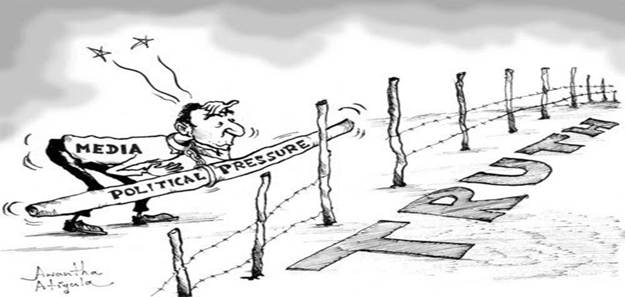
4. Flak: Powerful entities can exert pressure and create a culture of intimidation that discourages critical journalism. Organizations and individuals who challenge established narratives may face backlash, including smear campaigns, lawsuits, or threats to funding and access.
5. Ideology: Dominant ideologies and narratives shape media content, framing debates within certain boundaries and excluding alternative perspectives. Chomsky argues that the media often serves to reinforce existing power structures and perpetuate societal norms.
B. Recent Examples: Unmasking the Manufacturing Consent
Prominent recent examples showcase the continued relevance of Chomsky’s theory in the contemporary media landscape:
1. Coverage of War and Conflict: Media coverage of international conflicts often reflects the perspectives of political elites or military establishments, shaping public opinion and justifying interventionist policies. Alternative narratives or voices challenging the prevailing consensus may be marginalized or ignored.
2. Corporate Influence on Climate Change Reporting: In discussions surrounding climate change, media outlets owned by fossil fuel companies have been accused of downplaying or undermining scientific consensus to protect their economic interests. This bias in reporting can hinder public understanding and delay effective action.
3. Election Campaigns and Political Coverage: Media outlets influenced by corporate interests can shape electoral debates and favor candidates aligned with the economic elites. The influence of money in politics, coupled with biased media coverage, can undermine the democratic process.
C. Watchdogs of democracy
From a journalism standpoint, Noam Chomsky’s theory of “Manufacturing Consent” provides an essential lens through which we can critically examine the functioning of the media in a democratic society. Chomsky argues that the media, far from being an independent entity serving as a check on power, often plays a role in reinforcing existing power structures. Understanding this theory empowers journalists to navigate the complexities of media production, challenge dominant narratives, and fulfill their crucial role as watchdogs of democracy.
1. Coverage of Social Movements: Media coverage of social movements can be influenced by the interests of political and economic elites. Mainstream media outlets may marginalize or misrepresent grassroots movements, failing to provide nuanced and comprehensive coverage. This can perpetuate stereotypes and hinder the public’s understanding of important social issues.
2. Digital Media and Filter Bubbles: The rise of digital media platforms and personalized algorithms has exacerbated the issue of filter bubbles, where individuals are exposed only to information that aligns with their existing beliefs. This reinforcement of ideological perspectives limits the diversity of viewpoints and can contribute to polarization within society.
By critically engaging with Noam Chomsky’s theory of “Manufacturing Consent” and the Propaganda Model, journalists can identify and challenge the structural biases and influences that impact media content. This knowledge helps them work toward media independence, look for different points of view, and hold those in power accountable. Embracing a critical approach to media production and consumption is essential for upholding the principles of journalism and ensuring a well-informed and democratic society.
Noam Chomsky’s theory of “Manufacturing Consent” and the Propaganda Model offer invaluable insights into the complex relationship between media, power, and public opinion. By unpacking the filters that shape media content, including ownership, advertising, sourcing, flak, and ideology, Chomsky encourages us to critically analyze the media’s role in society. Recent examples from war coverage to climate change reporting and social movements illustrate the ongoing relevance of this theory. For journalism students, understanding and grappling with these ideas is essential for cultivating a responsible and independent media that serves the public interest, challenges power structures, and upholds the principles of democracy.
Paul Lazarsfeld, an influential American sociologist, made key contributions to the field of communication research, particularly through his work on the two-step flow of information. Lazarsfeld’s theory contested the conventional belief in direct media influence on individuals and presented a more sophisticated comprehension of information dissemination within social networks. Let’s read about Lazarsfeld’s research and explore some recent examples that illustrate the relevance of the two-step flow of information in contemporary society.
Lazarsfeld’s two-step flow of information theory posits that individuals are not directly influenced by media but rather by opinion leaders who receive and interpret media messages before disseminating them to their peers.
Recent examples highlight the continued relevance of Lazarsfeld’s two-step flow of information theory. Social media platforms have become a prominent channel for information dissemination, and the role of influencers in shaping public opinion has received considerable scrutiny. Influencers, who often possess substantial online followings and expertise in specific fields, act as modern-day opinion leaders. They curate and interpret information from various sources, offering their perspectives and influencing the opinions of their followers.
For example, during the COVID-19 pandemic, the role of influencers in disseminating health information and shaping public behavior became particularly evident. Many influencers used their platforms to promote public health guidelines, debunk misinformation, and share personal experiences related to the virus. Their ability to communicate with authenticity and connect with their audience contributed to the adoption of safety measures, such as wearing masks and practicing social distancing.
Another example that illustrates the two-step flow of information theory is the rise of podcasting. Podcast hosts, often considered opinion leaders within specific domains, interview experts and discuss various topics in depth. Listeners engage with these podcasts and develop a sense of trust in the hosts’ perspectives and expertise. The information shared on podcasts can then be disseminated further through offline conversations, creating a ripple effect of influence within social networks.
However, it is important to note that the two-step flow of information theory does not negate the role of media entirely. Rather, it highlights the mediating influence of opinion leaders in the process of information dissemination. Media, such as news outlets and online publications, still play a crucial role in shaping the initial narratives and information that opinion leaders consume and subsequently transmit.
In conclusion, Paul Lazarsfeld’s research on the two-step flow of information offers helpful knowledge about the complex dynamics of information dissemination and opinion formation. Recent examples, such as the influence of social media influencers during the pandemic and the impact of podcast hosts on public discourse, illustrate the continued relevance of this theory in contemporary society. Understanding the role of opinion leaders and social networks in shaping public opinion enables us to navigate a confusing information landscape and recognize the importance of interpersonal communication in influencing our attitudes and behaviors.
Jurgen Habermas, a renowned German philosopher and sociologist, introduced the concept of the public sphere, which has become a crucial framework for understanding the role of communication and discourse in democratic societies. Habermas’s theory highlights the importance of a vibrant public sphere for the functioning of democracy and the formation of public opinion. Let’s start with the idea of the public sphere and explore some recent examples that illustrate its significance in contemporary society.
Habermas defined the public sphere as a realm of social life where individuals come together as equals to discuss matters of common concern and engage in rational, inclusive deliberation. According to him, the public sphere serves as a counterbalance to state power and economic interests, providing a space for citizens to form opinions, debate ideas, and hold those in power accountable. Habermas emphasized that a healthy public sphere requires open access, free expression, and inclusive participation.
Prominent recent examples showcase the relevance of the public sphere in contemporary society. Social media platforms have emerged as virtual public spheres, enabling people from diverse backgrounds to engage in discussions and share their perspectives.
For example, movements like the Arab Spring and the Black Lives Matter movement have utilized social media to mobilize public opinion, raise awareness, and demand social and political change. These online platforms have facilitated the exchange of ideas and the formation of public discourse on a global scale.
Furthermore, the #MeToo movement serves as another compelling example of the public sphere in action. The movement originated on social media, with individuals sharing their experiences of sexual harassment and assault. Through this collective sharing and engagement, the movement gained momentum, sparking a widespread public conversation about gender inequality, power dynamics, and accountability. The public sphere provided a space for survivors to share their stories, connect with others, and challenge the prevailing social norms.
However, it is important to acknowledge the challenges that the public sphere faces in the digital age. The proliferation of misinformation, echo chambers, and online harassment poses significant threats to the quality and inclusivity of public discourse. Algorithms on social media platforms can prioritize sensationalism and polarization, hindering the formation of reasoned and constructive debates. These challenges indicate that people require critical engagement and media literacy to navigate the complexities of the digital public sphere.
In conclusion, Jurgen Habermas’s idea of the public sphere gives us useful information about how democracy works and how communication affects public opinion. Recent examples such as social media movements and online activism demonstrate the effectiveness of the public sphere in mobilizing collective action, amplifying marginalized voices, and challenging existing power structures.
However, it is essential to address the challenges posed by the digital age to ensure an inclusive and informed public sphere that fosters democratic deliberation and facilitates the exchange of diverse ideas. By actively participating in the public sphere and promoting open and inclusive dialogue, individuals can contribute to the vitality of democracy and the pursuit of social progress.