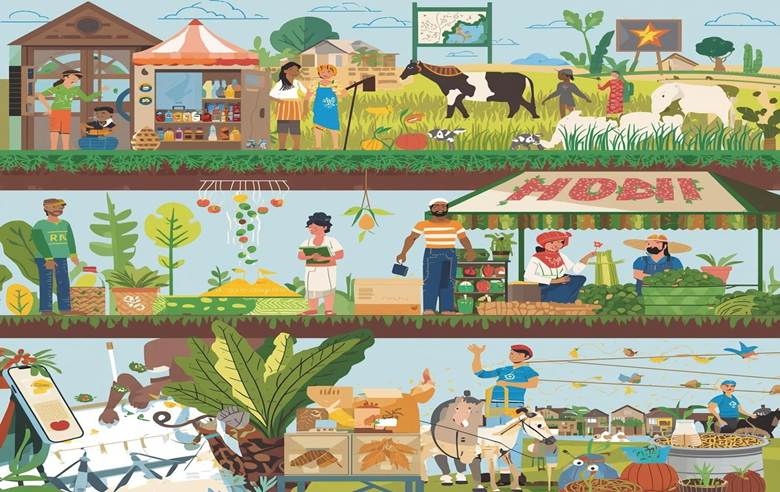


Rural marketing in India presents a unique set of challenges due to factors such as low purchasing power, scattered populations, poor infrastructure, and diverse cultural practices. Traditional marketing approaches often fall short in these environments, making it essential for companies to rethink their strategies.
To overcome these barriers, businesses are embracing innovative measures tailored to rural realities. These include offering affordable product sizes, leveraging local influencers, using mobile vans for distribution, adopting non-traditional media like folk performances, and introducing flexible payment options. Such innovations not only address the practical difficulties of rural markets but also help in building trust and long-term relationships with rural consumers. As a result, companies are able to expand their reach and make a meaningful impact in India’s vast and dynamic rural landscape.
Here’s a detailed explanation of the challenges in rural marketing in India, along with innovative measures adopted by companies, supported by real examples and case studies:
Challenges in Rural Marketing
- Low Purchasing Power
- Rural consumers often have limited disposable income, restricting their ability to buy premium or large-pack products.
- Geographical Dispersion
- Villages are scattered over large areas, making distribution and logistics expensive and complex.
- Poor Infrastructure
- Inadequate roads, storage, and electricity affect product delivery, preservation, and reach.
- Low Literacy and Awareness
- Lower literacy rates often hinder the effectiveness of printed advertisements and instructions, leading to limited awareness about branded products.
- Cultural Diversity and Heterogeneity
- Vast differences in language, customs, and traditions require highly localized marketing approaches.
- Limited Media Reach
- Rural consumers may have less access to television, newspapers, and digital platforms, making media campaigns less effective.
- Seasonal Demand
- Agricultural cycles and harvest periods often influence purchasing power, resulting in fluctuations in demand.
Innovative Measures in Rural Marketing
1. Small Pack Sizes and Affordable Pricing
- Example:
HUL popularized single-use sachets of shampoos and detergents, making them affordable even for low-income villagers. - Case Study:
Clinic Plus shampoo sachets sold at ₹1–₹2 price points revolutionized personal care adoption in rural India.
2. Last-Mile Reach through Hub-and-Spoke Models
- Example:
ITC’s e-Choupal initiative set up internet kiosks in villages, managed by local farmers (sanchalaks), creating a distribution and information network. - Case Study:
Farmers accessed real-time market prices and weather updates and could order agricultural inputs directly, bypassing middlemen and improving both incomes and company reach.
3. Mobile Vans and Haats
- Example:
Colgate and Godrej used mobile vans to reach remote villages, offering live demos and product samples. - Case Study:
Godrej Consumer Products ran Project Shakti, empowering rural women as distributors (“Shakti Ammas”), extending the company’s distribution, and providing livelihood.
4. Non-Traditional Media and Communication
- Example:
Lifebuoy and Dettol used wall paintings, puppetry, street plays (“nukkad natak”), and local radio to spread hygiene messages. - Case Study:
Hindustan Unilever’s “Khushiyon Ki Doli” and “Kan Khajura Tesan” (an on-demand free mobile radio channel) reached millions with health and product messages in areas where other media were absent.
5. Local Partnerships and Opinion Leaders
- Example:
Colgate partnered with schoolteachers and healthcare workers, using them as influencers for oral hygiene programs. - Case Study:
Colgate’s “Bright Smiles, Bright Futures” campaign educated millions of schoolchildren in villages, increasing both dental awareness and product adoption.
6. Flexible Payment and Microcredit
- Example:
Mahindra Finance and Tata Motors offered tractors and vehicles to farmers with flexible loan and installment schemes. - Case Study:
This approach helped boost sales of durable goods by matching rural cash flows (often seasonal) and improving affordability.
7. Customized Products
- Example:
Godrej’s “ChotuKool” refrigerator, designed for areas with erratic electricity, is portable, affordable, and tailored to rural needs. - Case Study:
ChotuKool’s success in rural Maharashtra and Tamil Nadu demonstrated how product innovation can tap into unserved markets.
Summary Table
| Challenge | Innovative Measure | Example/Case Study |
| Low income | Sachet pricing, micro-packs | Clinic Plus, HUL |
| Distribution hurdles | e-Choupal kiosks, Shakti Ammas | ITC, Godrej Project Shakti |
| Low literacy | Folk media, mobile radio | Lifebuoy, HUL “Kan Khajura Tesan” |
| Infrastructure gaps | Mobile vans, local partnerships | Colgate, Godrej |
| Seasonal incomes | Flexible loans, microcredit | Mahindra Finance, Tata Motors |
| Product fit | Rural-specific innovation | Godrej ChotuKool |
In summary:
Rural marketing in India faces significant obstacles, but companies are overcoming them through pricing innovations, customized products, creative communication, last-mile distribution, and partnerships with local influencers. These approaches not only drive business growth but also foster rural development and empowerment.
About the Author