

A. Contracts and Negotiations
Introduction
Contracts are the backbone of business and legal relationships in India, governed primarily by the Indian Contract Act, 1872. A contract is a legally enforceable agreement between two or more parties that creates mutual obligations. Negotiation is the process through which parties discuss, modify, and finalize the terms of a contract to ensure that the agreement is fair, clear, and mutually beneficial.
In India, contracts can range from simple purchase agreements to complex joint ventures, mergers, or licensing deals. Negotiations are critical because they determine the rights, duties, and remedies of each party, reduce the risk of disputes, and foster trust.

Key Features of Contracts in India
- Offer and Acceptance: A valid contract requires a clear offer by one party and its unconditional acceptance by the other.
- Consideration: There must be something of value exchanged.
- Capacity: Parties must be competent (e.g., of legal age, of sound mind).
- Legality: The agreement must be for a lawful purpose.
Examples and Case Studies
1. Reliance Jio and Facebook (2020):
- Context: Facebook acquired a 9.99% stake in Jio Platforms.
- Negotiation: Intense negotiations were held around price, governance rights, and digital collaboration.
- Outcome: A landmark deal that set new standards for tech investments in India, with all terms documented in a detailed share subscription agreement and strategic partnership contract.
2. Vendor Agreement in IT Sector:
- Example: Infosys contracts with global clients for software services.
- Negotiation Points: Scope of work, payment terms, intellectual property rights, service-level agreements (SLAs), and dispute resolution mechanisms.
- Impact: Well-negotiated contracts protect both client and service provider, ensuring project success and legal compliance.
3. Real Estate Lease Agreement Dispute:
- Case: Delhi High Court’s ruling in DLF v. MCD (2012).
- Issue: Disagreement over lease terms and maintenance obligations.
- Learning: Highlighted the importance of detailed negotiations and clear terms to avoid litigation.
Summary:
In India, effective contracts and skilled negotiations are essential for business stability and growth. Notable deals (like Reliance-Facebook) and everyday vendor agreements demonstrate how thorough negotiation and clear documentation safeguard interests and reduce risks.
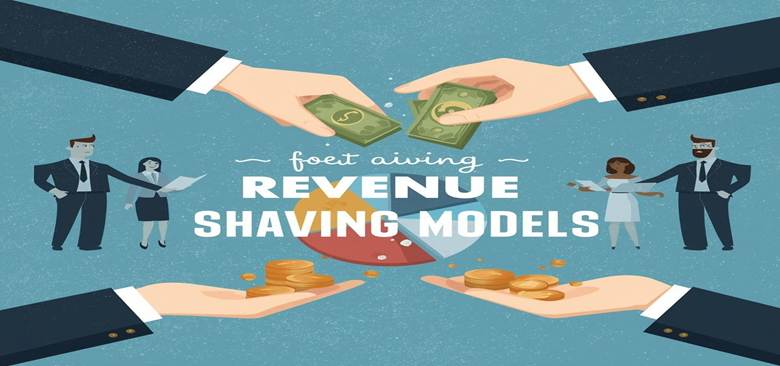
B. Revenue sharing model
Revenue Sharing Model in Contracts and Negotiations
A revenue sharing model is an agreement where two or more parties agree to divide the income generated from a business activity in a specified proportion. This model is widely used in sectors like technology, media, entertainment, franchising, e-commerce, and sports. Revenue sharing aligns incentives, reduces upfront costs for partners, and spreads risk.
Key Features
- Percentage Split: Revenue is often split based on a pre-decided ratio (e.g., 70:30 or 50:50).
- Scope: Applies to gross or net revenues, and the contract specifies what counts as “revenue.”
- Duration: The agreement can be for a fixed term or tied to the lifespan of the venture/product.
- Audit Rights: Parties may have rights to inspect books to ensure correct sharing.
Recent Examples and Case Studies
1. OTT Platforms and Film Producers
Example: Netflix & Dharma Productions (2022–2023)
- Context: Dharma Productions licensed several films to Netflix India.
- Revenue Sharing: Instead of a simple one-time fee, Dharma and Netflix agreed on a model where streaming revenue (from subscriptions/viewership) is shared in a set ratio, incentivizing both to promote the films.
- Outcome: Both parties benefit—producers gain recurring revenue, and Netflix shares risk and reward.
2. E-commerce Marketplace Sellers
Example: Amazon India and Small Retailers
- Context: Sellers on Amazon India agree to a revenue sharing model, where Amazon takes a commission (ranging from 5% to 25%) on each sale.
- Negotiation Points: Commission percentage, payment timelines, promotional costs, and handling of returns.
- Case: During the 2023 festive sales, Amazon introduced special revenue-sharing incentives for local artisans under its “Local Shops on Amazon” program, increasing their share for a limited period to boost participation.
3. IPL (Indian Premier League) – Broadcasting Rights
Case Study: BCCI & Broadcasters (2023–2027)
- Context: The BCCI sold IPL media rights to Viacom18 and Star India in a multi-billion dollar deal.
- Revenue Sharing: Broadcasters and BCCI share advertising and subscription revenue based on detailed contractual terms.
- Impact: This model ensures the BCCI gains from the league’s growing popularity, while broadcasters are incentivized to maximize viewership and ad sales.
4. Music Streaming Platforms
Example: Gaana/Saavn & Independent Artists
- Context: Indian music streaming platforms share revenue with artists/labels based on streams.
- Model: A percentage of subscription/ad revenue is distributed to rights holders, negotiated individually or via collective rights organizations.
Summary Table
| Sector | Parties Involved | Revenue Sharing Model | Recent Example/Case Study |
| OTT & Film | Producer & Streamer | Percentage of streaming revenue | Netflix & Dharma Productions |
| E-commerce | Marketplace & Seller | Commission per sale | Amazon India & Local Retailers |
| Sports Broadcasting | League & Broadcaster | Share of ad/subscription revenue | IPL Media Rights (BCCI & Viacom18) |
| Music Streaming | Platform & Artists/Labels | Pro-rata share of platform revenue | Gaana/Saavn & Indie Artists |
In summary:
Revenue sharing models are now central to many Indian business contracts and negotiations, ensuring risk and reward are balanced between parties. These models are increasingly favored due to their flexibility and ability to incentivize long-term collaboration.
B. Minimum guarantee model
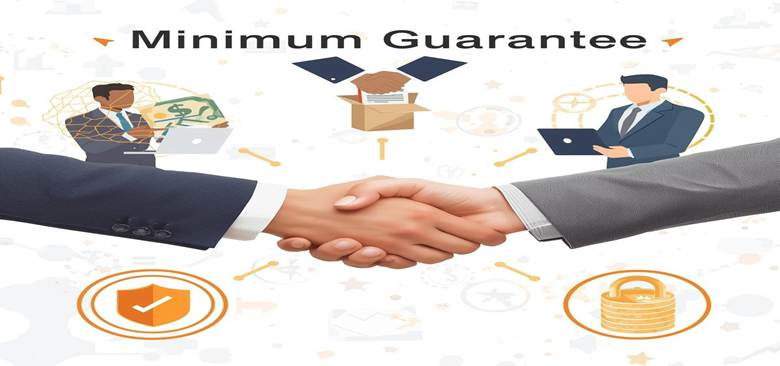
The minimum guarantee model is a contractual arrangement where one party (usually a distributor, platform, or licensee) commits to paying the other (often a content creator, producer, or rights holder) a fixed minimum amount, regardless of actual revenue or performance. If revenues exceed the MG, additional profits may be shared according to agreed terms. This model is common in entertainment, publishing, and licensing industries.
How It Works
- Upfront Payment: The licensee/distributor pays a non-refundable minimum guarantee to the producer/content owner.
- Recoupment: The licensee recovers this amount from future earnings (sales, subscriptions, box office, etc.).
- Additional Revenue: If earnings surpass the MG, surplus is split based on a negotiated revenue-sharing ratio.
- Risk: The licensee bears the risk if actual revenues are less than the MG.
Examples and Case Studies
1. Indian Film Distribution
Example:
A Bollywood producer sells theatrical rights for a new film to a regional distributor for a minimum guarantee of ₹20 crore.
- The distributor pays ₹20 crore upfront.
- If box office collections in that region exceed ₹20 crore (after costs), the surplus is shared as per contract (e.g., 50:50 split).
- If collections fall short, the distributor absorbs the loss.
Case Study:
Baahubali: The Beginning (2015)
- The Telugu film’s Hindi theatrical rights were sold to Karan Johar’s Dharma Productions with a substantial MG.
- Dharma paid a high upfront MG, banking on the film’s pan-India appeal.
- As the film became a blockbuster, revenues far exceeded the MG, benefiting both parties.
2. OTT Platform Acquisitions
Example:
Amazon Prime Video acquires exclusive streaming rights to a highly anticipated Tamil movie for an MG of ₹30 crore.
- The producer receives this amount regardless of the film’s streaming performance.
- If the film drives massive new subscribers, the platform can realize greater long-term value, but bears risk if viewership is low.
Case Study:
Soorarai Pottru (2020)
- Amazon Prime Video reportedly paid a significant MG to acquire worldwide streaming rights, providing financial security to the producers during the pandemic when theatrical releases were uncertain.
3. Music Licensing
Example:
A music label sells digital rights for a new album to a streaming service for an MG of ₹5 crore.
- The streaming service must pay this sum, regardless of the album’s performance on the platform.
- Additional royalties may be paid if streams surpass a certain threshold.
Summary Table
| Sector | Parties Involved | MG Application | Example/Case Study |
| Film Distribution | Producer & Distributor | Upfront minimum for theatrical rights | Baahubali, Bollywood deals |
| OTT Acquisition | Producer & OTT Platform | Upfront MG for digital rights | Soorarai Pottru, Amazon Prime |
| Music Licensing | Label & Streaming Service | MG for album/track rights | Major Indian label deals |
In summary:
The minimum guarantee model provides financial assurance to content creators and shifts risk to distributors or platforms. It is widely used in Indian entertainment, with successful examples in film and digital content. Thorough negotiation of MG terms and revenue-sharing ratios is crucial to balance risk and reward for both parties.
C. Share in profits model
Share in Profits Model in Contracts and Negotiations
The share in profits model is an agreement where two or more parties agree to split the actual profits generated from a business activity, project, or intellectual property, according to a pre-agreed ratio. Unlike minimum guarantee or revenue sharing, this model focuses on profits (net of costs/expenses), so all parties are invested in both generating income and controlling costs.
How It Works
- Profit Calculation: Net profit is calculated after deducting all expenses (production, marketing, distribution, taxes, etc.) from total revenue.
- Profit Split: The remaining profit is distributed among stakeholders as per the contract (e.g., 60:40, 50:50 splits).
- Alignment of Interests: Both sides are incentivized to maximize profitability, not just gross revenue.
Recent Indian Examples and Case Studies
1. Bollywood Co-production Agreements
Example:
Pathaan (2023) – Produced by Yash Raj Films, several distributors and exhibitors entered into profit-sharing agreements rather than flat-fee deals. After deducting costs, profits from box office collections were shared between the producer and key distribution partners, which incentivized both to invest in marketing and maximize earnings.
2. Actor-Producer Partnerships
Example:
In recent years, top actors like Akshay Kumar and Shah Rukh Khan have taken a share in profits instead of a fixed upfront fee for certain films. For instance, Akshay Kumar, for Mission Mangal (2019), reportedly opted for a lower upfront fee in exchange for a larger share of profits, aligning his compensation with the movie’s success.
3. OTT Originals (Web Series and Films)
Case Study:
Sacred Games (Netflix India) – The production house, Phantom Films, negotiated a profit-sharing arrangement with Netflix, where profits from international syndication and merchandise were shared, not just the initial licensing fee. This encouraged the production team to maintain high quality and cross-promotional efforts.
4. Franchise and Sports Leagues
Example:
Indian Premier League (IPL) franchises share profits with team owners, sponsors, and players through bonus pools, especially based on team performance and seasonal profits, ensuring all stakeholders benefit from the league’s commercial success.
5. Manufacturing: Tata Motors & Component Suppliers
Context:
Tata Motors, in some strategic partnerships for new vehicle launches, uses profit-sharing agreements with key component manufacturers, especially for electric vehicles.
How it Works:
Instead of a fixed payment, suppliers receive a percentage of net profits from vehicle sales. This incentivizes suppliers to maintain quality and innovation, as their earnings grow with the success of the vehicle line.
6.. Pharmaceuticals: Dr. Reddy’s Laboratories & International Licensing Partners
Context:
Dr. Reddy’s Labs has entered into profit-sharing arrangements with overseas pharma companies for co-developed or out-licensed drugs.
Details:
After deducting manufacturing and marketing costs, profits from drug sales in target markets are split between Dr. Reddy’s and the partner company, ensuring both share rewards and risks.
7. E-Commerce: Flipkart & Private Label Brands
Context:
Flipkart collaborates with private label brands on a profit-sharing basis for exclusive product launches.
Mechanism:
Instead of buying inventory outright, Flipkart agrees to share profits (after costs) from sales of the product line, encouraging both parties to invest in marketing, quality, and supply chain efficiency.
8. Media & Entertainment: Zee Music & Independent Artists
Context:
Zee Music often enters profit-sharing contracts with independent artists for digital releases.
How it Works:
After deducting promotion and distribution costs, remaining profits from streams and digital sales are split between the label and the artist, allowing both to benefit from a song’s popularity.
Summary Table
| Sector | Parties Involved | Share in Profits Model | Example/Case Study |
| Film Production | Producers & Distributors | Profits post-expenses split among stakeholders | Pathaan, Mission Mangal |
| Talent Contracts | Producers & Actors | Actor receives % of net profits | Akshay Kumar, Shah Rukh Khan |
| OTT Originals | Producers & Platforms | Profit share from syndication/merchandising | Sacred Games/Netflix |
| Sports/Franchises | League, Franchise, Players | Profits shared as bonuses or dividends | IPL teams |
In summary: The share in profits model is increasingly popular in Indian films, OTT, and sports, fostering collaboration, aligning incentives, and maximizing value for all parties involved. Thorough negotiation and transparent accounting are crucial
About the Author