Scouting for business opportunities refers to the process of actively searching for and identifying new avenues for growth, expansion, or innovation within a market or industry. This involves monitoring market trends, analyzing consumer needs, studying competitors, and looking for gaps or emerging demands that a business can address.
Key Steps in Scouting for Business Opportunities:
Market Research: Analyzing industry trends, customer preferences, and competitor activities.
Networking: Attending industry events and seminars and connecting with potential partners or customers.
SWOT Analysis: Evaluating strengths, weaknesses, opportunities, and threats.
Identifying Customer Pain Points: Listening to customers’ unmet needs or problems.
Investigating New Technologies: Proactively seeking innovations that can generate value.
Global Scanning: Observing successful business models in other regions or countries.
Example:
Example 1: Food Delivery Apps
Situation: In the early 2010s, entrepreneurs observed busy urban lifestyles and the increasing use of smartphones. They identified a gap—people wanted convenient, quick access to restaurant food without leaving home.
Opportunity Scouting: By analyzing customer pain points and mobile technology trends, companies like Uber (Uber Eats) and DoorDash launched food delivery platforms.
Result: Rapid growth in the online food delivery industry, transforming restaurant and consumer habits.
Example 2: Netflix’s Shift to Streaming
Situation: Netflix began as a DVD rental service. By scouting for new opportunities, they recognized the shift toward high-speed internet and digital content consumption.
Opportunity Scouting: Netflix invested in streaming technology and original content before most competitors.
Result: Netflix transformed itself into a global streaming giant, setting a new industry standard.
Summary Table
Step
Example
Market Research
Noticing mobile usage trends
Identifying Pain Points
People want convenient food
Leveraging Technology
Launching food delivery apps
Adapting Business Model
Netflix moves from DVD to streaming
In summary: Scouting for business opportunities means being alert to changes, needs, and trends, then acting to create or grow a business by filling those gaps—often leading to innovation and market leadership.
Conflict resolution in media management involves addressing disputes in newsrooms, production teams, or editorial processes through structured strategies like mediation and clear communication. These approaches maintain productivity amid high-stakes environments involving deadlines, biases, and creative differences.
Definition: Conflict resolution in media management involves addressing and managing disputes among teams, departments, or external stakeholders within media organizations (such as newsrooms, advertising agencies, or broadcast companies) to ensure smooth operations, uphold ethical standards, and maintain credibility.
Mediation: A third party helps both sides communicate and reach agreement.
Negotiation: a direct discussion aiming for compromise.
Collaboration: Joint problem-solving to satisfy all parties.
Arbitration: A binding decision by an external party.
Open Communication: Regular meetings, feedback sessions.
Case Studies
Case Study 1: Editorial Disagreement at The New York Times
Situation: In 2020, The New York Times faced internal conflict after publishing an opinion piece by a controversial political figure. Many staff members believed the article violated journalistic standards.
Conflict Resolution:
Town Hall Meetings: Management held open forums for staff to voice concerns.
Policy Review: The editorial process was re-examined, and guidelines were updated.
Outcome: Enhanced transparency, revised publishing protocols, and greater staff involvement in decision-making.
Case Study 2: BBC and Pay Disparity
Situation: In 2017, the BBC faced backlash after salary disclosures showed a gender pay gap among its presenters.
Conflict Resolution:
Negotiation: Management engaged in negotiations with affected staff and unions.
Mediation: An independent review was conducted.
Outcome: Pay adjustments were made, and new policies for pay transparency were introduced.
Case Study 3: Conflict Between Creative and Commercial Teams in Advertising Agency
Situation: A creative team wanted to push a bold, experimental campaign, while the commercial team was concerned about client risk and revenue impact.
Conflict Resolution:
Collaboration: Joint workshops were organized for both sides to understand each other’s priorities.
Compromise: The final campaign blended creative innovation with commercial safety.
Outcome: Improved interdepartmental communication and a successful campaign that satisfied both teams and the client.
Conclusion: Effective conflict resolution in media management preserves organizational reputation, boosts staff morale, and leads to more ethical and creative outcomes. Open communication, negotiation, and collaboration are key strategies, as shown by the above case studies.
B. Negotiations and Bargaining
Introduction
Negotiations and Bargaining in Media Management
Definition
Negotiations and bargaining in media management involve discussions between various stakeholders—such as management, creative teams, external partners, unions, and clients—to reach agreements on issues like contracts, content rights, project terms, salaries, and working conditions.
Examples of Negotiation Topics
Contract negotiations with artists, journalists, or freelancers
License agreements for content distribution
Advertising rates and sponsorship deals
Labor agreements with unions (wages, benefits, working hours)
Resolving disputes over editorial decisions
Case Study: SAG-AFTRA and Hollywood Studios (2023 Actors’ Strike)
Background
In 2023, SAG-AFTRA (Screen Actors Guild–American Federation of Television and Radio Artists) entered negotiations with the Alliance of Motion Picture and Television Producers (AMPTP), representing major Hollywood studios and streaming services.
Issues Negotiated
Compensation increases for actors, especially in streaming media
Use of artificial intelligence and actors’ digital likenesses
Improved health and pension benefits
Residual payments for streaming platform content
Negotiation Process
Initial Bargaining: Both parties presented their demands and offers.
Stalemate: Disagreements, especially over AI use and streaming residuals, led to a strike.
Mediation: Federal mediators assisted in bridging gaps.
Concessions: Studios agreed to better pay structures and more transparency regarding streaming metrics; actors received protections against unauthorized AI use.
Outcome
After months of bargaining and public pressure, a new agreement was reached that:
Increased minimum pay for actors
Guaranteed residuals for streaming content
Established guidelines for AI use in performances
Impact
Set industry standards for future negotiations regarding technology and compensation
Demonstrated the power of collective bargaining in media management
Highlighted the importance of negotiation skills in resolving complex, multi-party disputes
Conclusion: Negotiations and bargaining are essential in media management for ensuring fair agreements, adapting to industry changes (like AI and streaming), and maintaining healthy working relationships between all parties. The SAG-AFTRA case is a prime illustration of how negotiation shapes the media landscape.
1. Role Play Exercise in Media Management Negotiation
Objective: The purpose of this exercise is to hone negotiation and conflict resolution skills within the context of the media business.
Scenario Example: Situation: A television network’s programming manager is negotiating with an independent production company to acquire the rights to a new drama series.
Roles:
Programming Manager: Wants to buy the series at a lower cost and get exclusive airing rights.
Production Company Representative: Wants higher payment and freedom to later sell international rights.
Role Play Steps:
Preparation: Both parties prepare their goals and identify what they are willing to compromise on.
Negotiation Meeting:
The programming manager opens with a budget-friendly offer and requests exclusivity.
The production company counters with a higher price and limited exclusivity.
Bargaining:
Both parties discuss and make concessions (e.g., agree on a moderate price, the network gets a 1-year exclusive window, and the production company retains international rights).
Agreement:
Terms are documented and signed.
Learning Outcome: Participants understand negotiation techniques, the importance of preparation, and value creation in media deals.
2. Research Methodology for Media Business Planning
Definition: Research methodology in media business planning means systematically gathering and analyzing data to guide decisions about launching new media products, channels, or content.
Steps:
Problem Identification:
Example: Should the company launch a new digital news platform?
Research Design:
Decide on primary (surveys, focus groups with target audiences) and secondary (industry reports) research.
Data Collection:
Conduct surveys to learn about the content preferences of the audience.
We conduct interviews with advertisers to gather information about their digital ad spending.
Analyze competitors’ digital strategies.
Data Analysis:
Interpret survey results and identify trends in digital media consumption.
Reporting & Planning:
Present findings to management with recommendations for platform features, content types, and marketing strategies.
Case Study Example:
Case: A media company is considering launching a podcast network.
Research Conducted:
The company conducted a survey to gauge the interest of existing radio listeners and podcast users.
Analyzed successful podcast genres and advertising rates.
Studied competitors’ podcast strategies.
Outcome:
The research revealed a strong interest in news and true crime podcasts among the target audience.
The company decided to launch its first three podcasts in those genres, supported by digital marketing.
Conclusion: Role-play exercises help develop negotiation skills vital in media business deals, while a strong research methodology ensures informed, strategic decisions for new media initiatives.
1. Role Play Exercise in Media Business Planning
Purpose: Role-play exercises simulate real-world business scenarios, helping media professionals practice negotiation, conflict resolution, and decision-making skills.
Example Scenario:
Negotiating Content Licensing
Situation: A streaming platform wants to license a hit TV show from a production studio.
Roles:
Streaming Platform Executive: Wants exclusive rights at the lowest possible cost.
Production Studio Executive: Wants maximum revenue and the freedom to license elsewhere.
Role Play Steps:
Preparation: Both parties list their objectives and limits.
Negotiation:
The streaming executive offers a lower price for two-year exclusivity.
The studio argues for a higher rate and only 1-year exclusivity.
Both parties present market research to back up their positions.
Bargaining:
The streaming platform agrees to increase the price if it gets first rights to new episodes.
The studio agrees to 1.5 years of exclusivity for a higher fee and a share of viewer data.
Agreement: The contract is signed with the agreed terms.
Learning Outcome: Participants practice compromise, persuasion, and data-driven negotiation—skills crucial in the media industry.
Case Study:
Netflix and Shonda Rhimes (2017) Netflix negotiated an exclusive content deal with TV producer Shonda Rhimes. The negotiation involved exclusivity, creative control, and compensation. Both sides used data on audience reach and creative impact to reach a high-profile, mutually beneficial agreement.
2. Research Methodology for Media Business Planning
Purpose: Research methodology guides systematic information gathering and analysis, supporting strategic business decisions in the media sector.
Steps & Example:
Define the Problem: Should our media company launch a new podcast series for young adults?
Design the Research:
Primary: Surveys and focus groups with the target audience.
Secondary: Analyze podcast consumption trends and competitor offerings.
Data Collection:
Survey 500 young adults about listening habits and content preferences.
Review industry reports on top-performing podcast genres.
Data Analysis:
Identify that true crime and pop culture are most popular.
Note that competitors lack interactive content for young adults.
Reporting & Planning:
Recommend launching an interactive true crime podcast series with social media tie-ins.
Case Study:
BBC Sounds Launch (2018) Before launching its digital audio platform BBC Sounds, the BBC:
The BBC conducted audience research through surveys, app usage data, and focus groups.
Younger audiences preferred podcasts and personalized recommendations.
These insights were utilized in the design of BBC Sounds, which included curated playlists and podcast discovery features, resulting in successful audience engagement and growth.
Conclusion:
Role-play exercises in media business planning help teams prepare for real negotiations and decision-making.
Research methodology ensures business plans are data-driven, reducing risk and increasing success—demonstrated by companies like Netflix and the BBC.
The ₹2000 figure often refers to ongoing government subsidies for low-value UPI person-to-merchant (P2M) transactions under ₹2000, aimed at small merchants with zero MDR and incentives like 0.15% per transaction. Budget 2026 allocated ₹2000 crore for these subsidies, but they do not cap user limits.
No new UPI rule imposes a ₹2000 transaction limit as of February 2026. Standard UPI limits remain at ₹1 lakh per day and per transaction for most users, set by NPCI and individual banks.
Possible Misconceptions
The ₹2000 figure often refers to ongoing government subsidies for low-value UPI person-to-merchant (P2M) transactions under ₹2000, aimed at small merchants with zero MDR and incentives like 0.15% per transaction. Budget 2026 allocated ₹2000 crore for these subsidies, but they do not cap user limits.
Merchants do not pay Merchant Discount Rate (MDR) on standard UPI person-to-merchant (P2M) transactions from bank accounts, keeping them free. However, they may incur platform fees from payment gateways and interchange fees for specific cases like PPI wallets or credit cards.
Standard Charges
UPI P2M payments from bank accounts have 0% MDR due to government policy since 2020. Small merchants get a 0.15% incentive (not a charge) for transactions up to ₹2000, funded by the government.
When Merchants Pay
PPI/Wallets: Interchange fees up to 1.1% on transactions over ₹2000 (e.g., 0.5% fuel, 0.9% supermarkets); small merchants often exempt.
RuPay Credit Card UPI: 1.1-2% MDR plus platform fees.
Payment Gateways: Separate processing fees (e.g., 2% cap) for security and settlements, regardless of MDR.
Payment Type
MDR/Interchange
Applies To
Bank Account UPI
0%
All merchants
PPI > ₹2000
0.5-1.1%
Medium/large merchants
Credit Card UPI
1.1-2%
All
Key Updates (2026)
Government extended subsidies for low-value UPI via ₹1500-2000 crore schemes, ensuring zero MDR for small merchants. Merchants must comply with KYC/QR rules but face no new broad fees on basic UPI.
Differences between small medium and large merchant MDR categories
No new universal MDR categories differentiate small, medium, and large merchants for standard UPI P2M bank transactions in 2026—they remain 0% across all sizes due to government policy.
MDR Applies Only to Specific UPI Types
Categories matter mainly for PPI (wallets) and credit card UPI, where small merchants often get exemptions or lower interchange fees on low-value transactions.
Small merchants (typically annual turnover < ₹20 lakh) qualify for zero MDR or subsidies on transactions ≤ ₹2000 via government schemes.
Medium/large merchants (higher turnover) pay 0.5-1.1% interchange on PPI > ₹2000 or 1.1-2% on RuPay credit UPI.
Category Differences
Merchant Size
Turnover Threshold
UPI Bank MDR
PPI/Credit MDR
Caps/Benefits
Small
< ₹20 lakh/year
0%
Often 0% or subsidized ≤ ₹2000
Incentives up to 0.15% payout
Medium/Large
> ₹20 lakh/year
0%
0.5-2% on high-value/PPI
No subsidies; platform fees apply
Legacy RBI card payment caps (pre-UPI focus) set 0.4% MDR for small vs. 0.9% for others, but UPI overrides this with zero MDR policy. Small merchants benefit most from 2026 subsidies (₹2000 crore allocation).
Can small merchants pass MDR charges to customers
No, small merchants cannot legally pass on MDR charges directly to customers for UPI or card payments in India.
RBI Prohibition
The Reserve Bank of India (RBI) mandates that merchants absorb MDR costs without surcharging customers, especially for small businesses (turnover ≤ ₹20 lakh/year). Violations allow customers to file complaints via RBI’s portal under “MDR levied by merchant.”
Exceptions and Practices
Convenience Fees: Online platforms/gateways may add small fees (e.g., ₹10 + GST on gateway charges), but not direct MDR on the full amount.
Indirect Passing: Some merchants hike MRPs or request separate UPI payments for fees, but this risks RBI action.
UPI Specific: Zero MDR policy for bank UPI P2M reinforces no customer charges; applies uniformly.
Scenario
Allowed?
Example
Direct MDR Surcharge
No
“Pay 2% extra for UPI”
Convenience Fee (Gateway)
Limited
₹10 on ₹1000 purchase
Price Increase
Yes, but indirect
Higher MRP for all
Small merchants benefit from subsidies (e.g., 0.15% incentive on ≤ ₹2000 UPI), reducing their burden further.
Recent news highlights appointments of Brihanmumbai Municipal Corporation (BMC) members to key statutory committees following the mayor’s induction.
Key Appointments
On February 16, 2026, Mumbai Mayor Ritu Tawde announced members for major committees including the Standing Committee (26 members, BJP securing 10), Improvements Committee, Education Committee, and BEST Committee, totaling 90 corporators.
Notable appointees include BJP’s Ganesh Khankar (group leader), Prabhakar Shinde, Rakhee Jadhav; Shiv Sena (UBT)’s Shraddha Jadhav; and Congress’s Ashraf Azmi.
Election Timeline
Nominations occurred ahead of a February 16 house meeting, with chairpersons for Standing and Education Committees to be elected on February 20, and Improvements and BEST on February 23.
The Brihanmumbai Municipal Corporation (BMC) election occurred in early 2026 after a delay since 2022, covering 227 wards with voting on January 15 and results on January 16. BJP-led Maha Yuti secured a majority, with BJP winning 89 seats, leading to Ritu Tawde’s unopposed election as Mayor around February 10.
Key dates from the State Election Commission schedule:
Event
Date
Notification issued
December 15, 2025
Nominations filed
Dec 23–30, 2025
Scrutiny of nominations
Dec 31, 2025
Withdrawal deadline
Jan 2, 2026
Final candidate list & symbols
Jan 3, 2026
Polling day (7:30am–5:30pm)
Jan 15, 2026
Vote counting & results
Jan 16, 2026
Post-Election Committee Process
After corporator elections and mayor induction, statutory committees were reconstituted. Member nominations were announced February 16 ahead of a house meeting, proportional to party strength (BJP dominant with 10/26 Standing Committee seats).
Chairperson elections followed: Standing and Education Committees on February 20; Improvements and BEST Committees on February 23.
Candidate selection for committees drew from elected corporators across parties, including BJP’s Prabhakar Shinde (potential chair), Ganesh Khankar; Shiv Sena (UBT)’s Shraddha Jadhav; Congress’s Ashraf Azmi.
Recent news highlights appointments of Brihanmumbai Municipal Corporation (BMC) members to key statutory committees following the mayor’s induction.
Key Appointments
On February 16, 2026, Mumbai Mayor Ritu Tawde announced members for major committees including the Standing Committee (26 members, BJP securing 10), Improvements Committee, Education Committee, and BEST Committee, totaling 90 corporators.
Notable appointees include BJP’s Ganesh Khankar (group leader), Prabhakar Shinde, Rakhee Jadhav; Shiv Sena (UBT)’s Shraddha Jadhav; and Congress’s Ashraf Azmi.
Election Timeline
Nominations occurred ahead of a February 16 house meeting, with chairpersons for Standing and Education Committees to be elected on February 20, and Improvements and BEST on February 23.
BJP holds the largest share based on party strength.
Committee Breakdown
The Standing Committee (26 members, BJP with 10), Improvements Committee (26), Education Committee (26, including 4 non-corporators), and BEST Committee (16-17 members) saw 90 corporators appointed total on February 16, 2026.
Key figures include BJP’s Ganesh Khankar (group leader), Rakhee Jadhav, Prabhakar Shinde; Shiv Sena (UBT)’s Shraddha Jadhav and Kishori Pednekar (opposition leader); Congress’s Ashraf Azmi.
Relatives of leaders like Makarand Narvekar also secured spots.
Upcoming Elections
Chairperson elections for Standing and Education Committees are set for February 20, 2026; Improvements and BEST on February 23.
BMC Election Timeline (2026)
The Brihanmumbai Municipal Corporation (BMC) election occurred in early 2026 after a delay since 2022, covering 227 wards with voting on January 15 and results on January 16. BJP-led Maha Yuti secured a majority, with BJP winning 89 seats, leading to Ritu Tawde’s unopposed election as Mayor around February 10.
Key dates from the State Election Commission schedule:
Event
Date
Notification issued
December 15, 2025
Nominations filed
Dec 23–30, 2025
Scrutiny of nominations
Dec 31, 2025
Withdrawal deadline
Jan 2, 2026
Final candidate list & symbols
Jan 3, 2026
Polling day (7:30am–5:30pm)
Jan 15, 2026
Vote counting & results
Jan 16, 2026
Post-Election Committee Process
After corporator elections and mayor induction, statutory committees were reconstituted. Member nominations were announced February 16 ahead of a house meeting, proportional to party strength (BJP dominant with 10/26 Standing Committee seats).
Chairperson elections followed: Standing and Education Committees on February 20; Improvements and BEST Committees on February 23.
Candidate selection for committees drew from elected corporators across parties, including BJP’s Prabhakar Shinde (potential chair), Ganesh Khankar; Shiv Sena (UBT)’s Shraddha Jadhav; Congress’s Ashraf Azmi.
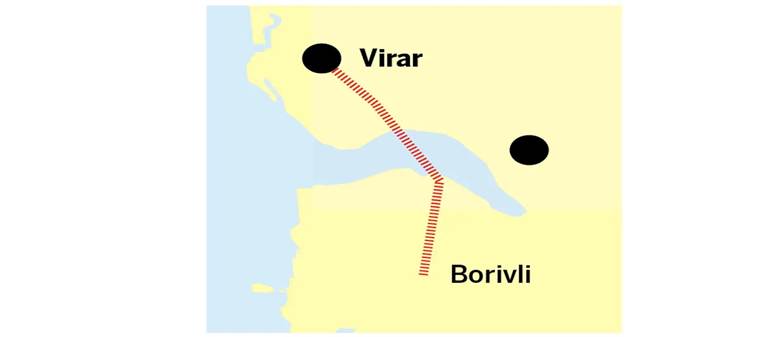
On the Western Railway in Mumbai, one of the railway infrastructure projects that has been progressing for the longest amount of time has now reached a significant stage. It has been confirmed by the Commissioner of Railway Safety (CRS) that the sixth railway line that connects Kandivali and Borivali has been finished and put into operation. By obtaining this license, Western Railway is able to move closer to introducing more local train services on the Churchgate-Borivali and Churchgate-Virar routes, which are both extremely busy. On one of the city’s most congested routes, officials from the railway industry have stated that this new development will assist in alleviating congestion and improving timeliness.
Borivali to Virar. Current stations, including Dahisar, Bhayandar, Naigaon, and Virar, will relocate the positions of their slow line platforms to make room for the new lines in this 26-kilometer segment. The platforms of Dahisar will travel to the north, while those of Bhayander will move to the west, and Virar will move a little bit to the south.
Two new lines will be constructed on the western side of the existing major lines over the full distance from Borivali to Virar. The construction comprises three primary bridges, 16 secondary bridges, one road underpass, and two significant bridges, specifically Bridge No. 73 and 75 spanning the Vasai Creek (Bhayandar Khadi). Construction of the foundations for Bridge 73 has commenced, and an ancient bridge in proximity to Bhayandar is undergoing dismantling.
Areas such as Dahisar to Mira Road have experienced considerable advancement in the clearing of forest land and earthworks owing to prompt approvals. Segments such as Borivali to Dahisar, Mira Road to Bhayandar, and Nalasopara to Virar possess existing minimizing the necessity for additional land acquisition and costly excavation. New stabling lines will be constructed between Naigaon and Vasai to offset repurposed lines in other areas.
Work depending on location
Panju Island: Due to the absence of direct road access to Panju Island, special preparations are being made to carry construction machinery and materials to the island. These arrangements include the use of a dedicated ferry.
Borivali Station: No major renovations are planned for Borivali Station. For the duration of the project, the two new lines will remain in the western portion of the existing corridor. The project will begin at Platforms No. 3 and 5 at Borivali. Since the majority of the property between Borivali and Dahisar is railway land with traction sub-stations, quarters, and stabling (train parking) lines, there has not been a lot of land acquisition done between the two areas. The new lines will travel in the direction of Dahisar over the Sudhir Phadke flyover, which is located right in front of the Borivali station.
Dahisar Station: At Dahisar station, the two new lines will travel in the western direction, close to Platform No. 1 that is already in place. The two new slow line platforms will be consolidated and shifted a little bit to the north because there is not enough space at the station where they are currently located. From the Metro 2A bridge all the way up to the Mira Road station, the construction work has progressed to a more advanced stage. is due to the fact that the forest land that is necessary for the project has already been obtained, and work has begun on the ground. Additionally, three stabling lines that are being relocated from Borivali will be installed along this section of road that connects Dahisar and Mira Road.
Mira Road Station: Existing Platform No. 1 will be replaced by new platforms that will be located to the west of Mira Road.
Bhayandar Station: The platform that is now utilized for ending and originating trains at Bhayandar will be relocated to the western side of the station. Existing Platform No. 1 will be left in its current configuration, and Platform No. 2, which is now being utilized for terminating trains, will be transformed into the new slow platform for Churchgate-bound trains. The subsequent Virar fast platform will be Platform No. 3, which holds the distinction of being the terminal platform. At some point in the future, the slow Platform No. 4 will be transformed into the Churchgate fast platform.
Naigaon station: New platforms are going to be introduced in the western region, according to Naigaon. Between Naigaon and Vasai, there will also be twenty stabling lines that are going to be constructed.
Vasai Station: Major renovations are going to be carried out at Vasai. Following the relocation of the existing structures, 1 that is now in place will be moved to the west by about 8 meters. That it serves as a terminal platform will continue to be its primary function. The new platforms will be constructed at the north end of the west side of the present Platform No. Platform No. 2-3, which is already in existence, will be utilized for the fast line corridor.
Nallasopara Station: A new residential platform located to the west of the existing Platform No. 1 is known as Nallasopara. An island platform will be created out of the currently existent Platform No. 1.
Virar Station: Two more platforms are going to be constructed at the south end of the station, which will result in the station’s expansion even further.
Here are the essential details about the project:
The station will have interconnected platforms with a new, bigger, and updated station deck to improve passenger flow.
A proposed elevated autorickshaw deck, similar to the SATIS (Station Area Traffic Improvement Scheme) project, will segregate commuter and vehicular traffic while allowing cars to pass through.
A new “Home Platform 5A” (5-6 meters wide) is being built on the northwest side, while current platforms 3A and 4A are being expanded to accommodate 15-car suburban trains.
Platform 3A will be expanded to 10 meters and equipped with a double-discharge facility to accommodate high commuter volumes.
Upgrades for 15-car locals on the Dahanu corridor are planned to be completed by early 2026 (March 2026 target).
Due to construction, some Virar services have been curtailed, with certain Dadar-Virar trains ending at Vasai Road.
The project, which is about 47% complete as of February 2026, intends to minimize the terrible overcrowding and disruption that passengers face during peak hours, particularly by separating suburban and long-distance.
मुंबई में पश्चिमी रेलवे पर, सबसे लंबे समय से चल रही रेलवे अवसंरचना परियोजनाओं में से एक अब एक महत्वपूर्ण चरण में पहुंच गई है। रेलवे सुरक्षा आयुक्त (सीआरएस) ने पुष्टि की है कि कांदिवली और बोरीवली को जोड़ने वाली छठी रेलवे लाइन पूरी हो चुकी है और इसे चालू कर दिया गया है। इस लाइसेंस को प्राप्त करके, पश्चिमी रेलवे चर्चगेट-बोरीवली और चर्चगेट-विरार मार्गों पर अधिक स्थानीय ट्रेन सेवाओं को शुरू करने के करीब जाने में सक्षम है, जो दोनों बेहद व्यस्त हैं। शहर के सबसे भीड़भाड़ वाले मार्गों में से एक पर, रेलवे उद्योग के अधिकारियों ने कहा है कि यह नया विकास भीड़ को कम करने और समयबद्धता में सुधार करने में मदद करेगा।
अब जब बोरीवली 5वीं और 6वीं लाइनें समाप्त हो गई हैं, तो रेलमार्गों ने जिगसॉ पहेली के अगले हिस्से को खत्म करने पर अपना ध्यान केंद्रित किया है, जो बोरीवली से विरार तक फैली रेलवे विस्तार परियोजना है। दहिसर, भायंदर, नायगांव और विरार सहित कई वर्तमान स्टेशन, इस 26 किलोमीटर के खंड में नई लाइनों के लिए जगह बनाने के लिए अपने धीमी लाइन प्लेटफार्मों की स्थिति को स्थानांतरित करेंगे। दहिसर के चबूतरे उत्तर की ओर बढ़ेंगे, जबकि भायंदर के चबूतरे पश्चिम की ओर बढ़ेंगे, और विरार थोड़ा दक्षिण की ओर बढ़ेंगे।
बोरीवली से विरार तक की पूरी दूरी पर मौजूदा प्रमुख लाइनों के पश्चिमी हिस्से में दो नई लाइनों का निर्माण किया जाएगा। निर्माण में तीन प्राथमिक पुल, 16 द्वितीयक पुल, एक सड़क अंडरपास और दो महत्वपूर्ण पुल, विशेष रूप से पुल नं. 73 और 75 वसई खाड़ी (भायंदर खादी) में फैले हुए हैं। पुल नं के लिए नींव का निर्माण। 73 शुरू हो गया है, और भायंदर के निकट एक प्राचीन पुल को तोड़ने का काम चल रहा है।
दहिसर से मीरा रोड जैसे क्षेत्रों ने त्वरित अनुमोदन के कारण वन भूमि और मिट्टी के कार्यों की सफाई में काफी प्रगति का अनुभव किया है। बोरीवली से दहिसर, मीरा रोड से भायंदर और नालासोपारा से विरार जैसे खंडों में मौजूदा रेलवे संपत्ति या स्थापित लाइनें हैं जिनका पुनः उपयोग किया जाएगा, इसलिए अतिरिक्त भूमि अधिग्रहण और महंगी खुदाई की आवश्यकता कम हो जाएगी। अन्य क्षेत्रों में पुनर्निर्मित लाइनों को ऑफसेट करने के लिए नायगांव और वसई के बीच नई स्टेब्लिंग लाइनों का निर्माण किया जाएगा।
स्थान के आधार पर काम
1. पंजू द्वीपः पंजू द्वीप तक सीधी सड़क नहीं होने के कारण, द्वीप तक निर्माण मशीनरी और सामग्री ले जाने के लिए विशेष तैयारी की जा रही है। इन व्यवस्थाओं में एक समर्पित नौका का उपयोग शामिल है।
2. बोरीवली स्टेशनः बोरीवली स्टेशन के लिए किसी बड़े नवीनीकरण की योजना नहीं है। परियोजना की अवधि के लिए, दो नई लाइनें मौजूदा गलियारे के पश्चिमी भाग में रहेंगी। यह परियोजना प्लेटफॉर्म नं. 3 और 5 बोरीवली में। चूंकि बोरीवली और दहिसर के बीच की अधिकांश संपत्ति कर्षण उप-स्टेशनों, क्वार्टरों और स्टेब्लिंग (ट्रेन पार्किंग) लाइनों के साथ रेलवे की भूमि है, इसलिए दोनों क्षेत्रों के बीच बहुत अधिक भूमि अधिग्रहण नहीं किया गया है। नई लाइनें बोरीवली स्टेशन के ठीक सामने स्थित सुधीर फड़के फ्लाईओवर के ऊपर दहिसर की दिशा में चलेंगी।
3. दहिसर स्टेशनः दहिसर स्टेशन पर दो नई लाइनें पश्चिम दिशा में प्लेटफॉर्म नं. 1 जो पहले से ही जगह पर है। दो नए स्लो लाइन प्लेटफार्मों को समेकित किया जाएगा और थोड़ा सा उत्तर की ओर स्थानांतरित किया जाएगा क्योंकि जिस स्टेशन पर वे वर्तमान में स्थित हैं, वहां पर्याप्त जगह नहीं है। मेट्रो 2ए पुल से लेकर मीरा रोड स्टेशन तक, निर्माण कार्य अधिक उन्नत चरण में आगे बढ़ गया है। यह इस तथ्य के कारण है कि परियोजना के लिए आवश्यक वन भूमि पहले ही प्राप्त कर ली गई है, और जमीन पर काम शुरू हो गया है। इसके अतिरिक्त, बोरीवली से स्थानांतरित की जा रही तीन स्टैब्लिंग लाइनें दहिसर और मीरा रोड को जोड़ने वाली सड़क के इस खंड के साथ स्थापित की जाएंगी।
4. मीरा रोड स्टेशनः मौजूदा प्लेटफार्म नं. 1 को नए प्लेटफार्मों द्वारा प्रतिस्थापित किया जाएगा जो मीरा रोड के पश्चिम में स्थित होंगे।
5. भायंदर स्टेशनः भायंदर में ट्रेनों को समाप्त करने और शुरू करने के लिए अब जिस प्लेटफॉर्म का उपयोग किया जाता है, उसे स्टेशन के पश्चिमी हिस्से में स्थानांतरित कर दिया जाएगा। मौजूदा प्लेटफार्म नं. 1 को इसके वर्तमान विन्यास में छोड़ दिया जाएगा, और प्लेटफार्म नं। 2, जिसका उपयोग अब ट्रेनों को समाप्त करने के लिए किया जा रहा है, को चर्चगेट जाने वाली ट्रेनों के लिए नए स्लो प्लेटफॉर्म में बदल दिया जाएगा। इसके बाद का विरार फास्ट प्लेटफॉर्म प्लेटफॉर्म नं. 3, जो अंतिम मंच होने का गौरव रखता है। भविष्य में किसी बिंदु पर, चर्चगेट धीमा प्लेटफॉर्म नं। 4 को चर्चगेट फास्ट प्लेटफॉर्म में बदल दिया जाएगा।
6. नायगांव स्टेशनः नायगांव के अनुसार पश्चिमी क्षेत्र में नए प्लेटफार्म शुरू होने जा रहे हैं। नायगांव और वसई के बीच, बीस स्टेब्लिंग लाइनें भी होंगी जिनका निर्माण किया जा रहा है।
7. वसई स्टेशनः वसई में बड़े पैमाने पर नवीनीकरण होने जा रहे हैं। मौजूदा संरचनाओं के स्थानांतरण के बाद, प्लेटफॉर्म नं। 1 जो अब जगह पर है, उसे लगभग 8 मीटर पश्चिम की ओर ले जाया जाएगा। यह कि यह एक अंतिम मंच के रूप में कार्य करता है, इसका प्राथमिक कार्य बना रहेगा। उस स्थान पर दो नई लाइनें स्थापित करने की योजना है जो पहले पुराने प्लेटफार्मों द्वारा कब्जा कर लिया गया था। नए प्लेटफार्मों का निर्माण वर्तमान प्लेटफार्म नं. 2, और वे धीमी गलियारे द्वारा उपयोग किया जाएगा। प्लेटफार्म नं. 2-3, जो पहले से मौजूद है, का उपयोग फास्ट लाइन कॉरिडोर के लिए किया जाएगा।
8. नालासोपारा स्टेशनः मौजूदा प्लेटफार्म नं. 1 को नालासोपारा के नाम से जाना जाता है। वर्तमान में मौजूद प्लेटफॉर्म नं. 1.
9. विरार स्टेशनः स्टेशन के दक्षिण छोर पर दो और प्लेटफार्मों का निर्माण होने जा रहा है, जिसके परिणामस्वरूप स्टेशन का और भी विस्तार होगा।
परियोजना के बारे में आवश्यक विवरण यहां दिए गए हैंः
1. स्टेशन में यात्रियों के प्रवाह में सुधार के लिए एक नए, बड़े और अद्यतन स्टेशन डेक के साथ आपस में जुड़े प्लेटफार्म होंगे।
2. एसएटीआईएस (स्टेशन एरिया ट्रैफिक इम्प्रूवमेंट स्कीम) परियोजना के समान एक प्रस्तावित एलिवेटेड ऑटोरिक्शा डेक, कारों को गुजरने की अनुमति देते हुए यात्रियों और वाहनों के यातायात को अलग करेगा।
3. उत्तर-पश्चिम की ओर एक नया “होम प्लेटफॉर्म 5ए” (5-6 मीटर चौड़ा) बनाया जा रहा है, जबकि वर्तमान प्लेटफॉर्म 3ए और 4ए का विस्तार 15 डिब्बों वाली उपनगरीय ट्रेनों को समायोजित करने के लिए किया जा रहा है।
4. प्लेटफॉर्म 3ए को 10 मीटर तक विस्तारित किया जाएगा और उच्च यात्रियों की संख्या को समायोजित करने के लिए डबल-डिस्चार्ज सुविधा से सुसज्जित किया जाएगा।
5. दहानु गलियारे पर 15 गाड़ियों वाले स्थानीय लोगों के लिए उन्नयन 2026 की शुरुआत (मार्च 2026 का लक्ष्य) तक पूरा करने की योजना है
6. निर्माण के कारण, कुछ विरार सेवाओं को कम कर दिया गया है, कुछ दादर-विरार ट्रेनें वसई रोड पर समाप्त होती हैं।
परियोजना, जो फरवरी 2026 तक लगभग 47% पूरी हो चुकी है, का उद्देश्य भीड़भाड़ और व्यवधान को कम करना है जो यात्रियों को व्यस्त समय के दौरान सामना करना पड़ता है, विशेष रूप से उपनगरीय और लंबी दूरी को अलग करके।
By offering additional value beyond the product’s inherent value at its normal price, sales promotion provides a direct incentive for action. These temporary incentives are generally accessible at a time and place where the buying decision is made. Sales promotion includes several communication activities that attempt to provide added value or incentives to consumers, wholesalers, retailers, or other organizational customers to stimulate immediate sales.
Definition
The American Marketing Association (AMA), in its Web-based “Dictionary of Marketing Terms,” defines sales promotion as “media and non-media marketing pressure applied for a predetermined, limited period of time to stimulate trial, increase consumer demand, or improve product availability.”
A. THE SCOPE AND ROLE OF SALES PROMOTION
Direct influence: It gives direct encouragement to the consumers to take instant action.
Better incentive: It provides a stronger incentive for consumers to make a purchase. Here we can say that it acts as a demand creator.
Flexible in nature: It can be used at any stage of an existing product or a new product promotion.
Increase sales: Sales promotions can take the form of discounts, percentage-off deals, rebates, and other methods to increase instant sales volume.
Clear extra bulk: Companies also use sales promotions to clear out excess bulk at the end of a season.
Cross-Selling: Sales promotions also support upselling, where you encourage a customer to buy a more expensive item, and cross-selling, where you sell an associated product to the customer.
Brand switching: Sales promotions inspire consumers to buy a more diverse brand than the one they accepted earlier.
Target audience: Sales promotion can be targeted on specific groups, especially selected retailers and their customers.
Create goodwill: Many sales promotion schemes directly or indirectly increase the goodwill of a firm in the market.
B. REASONS FOR THE INCREASE IN SALES PROMOTION
The growing power of retailers: Nowadays, the power shift in the marketplace is from producers to retailers. Retailers are providing ease of purchasing in retail stores through an advent of technology with optical checkout scanners, consolidation of grocery items in one place, and the evolution of modern barcode private labels for each product with efficient customer service.
Brand spread and new creation: A most important aspect of several firms’ marketing policies over the past decade has been the advancement of new products. Even retailers and middlemen are demanding more rewards from manufacturers.
Reinforced reward: Sales promotions encouraged consumers to buy in packs with discounts and vouchers, and once they used them, they tried to return for the same offers again.
Cost-effective: Usually traditional methods of advertising, like newspaper, radio, television, etc., have high costs of media advertising; due to this, marketers are trying to find out more cost-effective forms of sales promotion.
Create goodwill: Many sales promotion schemes directly or indirectly increase the goodwill of a firm in the market.
Attract more buyers: Sales promotion encourages impulse buying and attracts buyers by repeating a visit of first-time buyers.
Declining brand loyalty: Consumers are more focused on price, value, and convenience at the time of purchasing and less interested in brand loyalty. Loyal customers are those who are ready to buy a specific brand in spite of high cost without any promotional offer. However, the continuous growth of retail marketing with e-marketing makes consumers more focused on the same specific brand, seeing discounts and offers. For example, many retailers, stores, and e-marketing websites provide discount offers on MRP or fixed prices.
Short-term focus: Sales promotion is made up of short-term incentives to encourage purchase or sales of a product or service.
Immediate buying: Advertising gives a reason to buy a product or service, but sales promotion offers an immediate buying reason for a product or service through an eye-catching offer with limited times.
Fragmentation of the consumer markets: As the consumers become more fragmented due to this, they focus more on other tailoring methods to reach consumers, not relying on traditional media. Now marketers or advertisers are more into regional and local marketing techniques to reach consumers directly in their place of locality.
Increased accountability: Modern markets are more competitive; due to this, many companies are demanding real-time data or value for their promotions. Generally, advertising methods like television, radio, etc., are not in a position to provide actual reach and conversion numbers to the company. However, sales promotions are easier and more accurate than those from advertising because they tailor to local markets that vary minutely.
Consumer acceptance: A competition strengthens and promotion multiplies; consumers have learned to earn the rewards of being smart purchasers.
C. OBJECTIVE OF TRADE-ORIENTED SALES PROMOTION
Sales promotion is a mixture of marketing activities and promotional substances to strengthen the efforts of the sales force or encourage intermediaries to stock and sell particular brand products in their store. It also encourages them to motivate or influence customers to purchase the offering within a specified or limited time period.
It encourages the retailers to carry new items and more inventories.
It encourages retailers to buy into the future.
It encourages retailers to advertise the product and give it more shelf space.
It encourages the sales force to move slow, heartrending products.
It encourages the sales force to discover and succeed with new prospects.
It encourages setting up more store display promotions.
D. TECHNIQUES OF TRADE-ORIENTED SALES PROMOTION
Point Of Purchase Displays: This comprises providing free point of purchase (POP) display units to the retailers to increase their sales.
Dealer load or display: A dealer loader is a reward that is given to retailers to buy a minimum amount or to install an in-store display.
Push Money: Extra commission for salespeople and distribution partners to increase sales volume.
Trade allowances: Discounts given to distribution partners such as retailers to encourage them to stock up on your product.
Trade Deals: These are special concessions provided to the merchants to encourage them to promote a specific product and increase its sales for a limited time.
Trade Shows: Trade shows are a great sales promotion strategy where the business promotes its product to thousands of traders at the trade show.
E. OBJECTIVES OF CONSUMER-ORIENTED SALES PROMOTION
Sales promotions aim to accomplish various objectives. Consumer promotions may be used to increase short-term sales or to help build long-term market share. Objectives of consumer-oriented sales promotions are:
It encourages consumers to try a new product.
It encourages the continuous purchase of a settled product.
It pulls consumers away from competitors’ brands or products.
It holds and rewards loyal customers.
It motivates consumers to purchase large volumes.
It helps to create a habit of purchasing on a regular basis.
It creates positive feelings toward a particular brand or product, which is ultimately connected with their incentives, such as discounts and offers.
F. TECHNIQUES OF CONSUMER-ORIENTED SALES PROMOTION
Samples: Samples are one of the most important tools of sales promotion. Samples are defined as offers to consumers of a small amount of a product for trial.
Free Gifts: Offering a free gift is a simple strategy that gets people in the door. The offer is usually combined with a specific purchase.
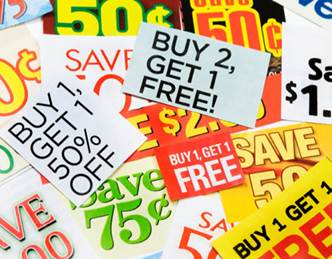
Discounts/Discount Coupons: Discount coupons are a great method of increasing sales for the short term. People go for discount coupons, as they let them buy the products they couldn’t afford otherwise.
Exchange Schemes: Exchange schemes attract many customers, as they get some value even for their old product.
Free Shipping for Online Sales: Free shipping makes shopping more eye-catching. When consumers don’t need to worry about the added cost of shipping, the convenience of shopping while staying home becomes attractive.
Finance Schemes: Finance schemes like no-cost EMI, low-interest EMI, etc. make it easier for customers to purchase expensive products.
Bonus-pack deal: It means that a customer can get more products for the original price.
Bulk Purchase Deals: Bulk purchase promotions give consumers a deal for buying more of a product. Grocery stores are famous for discounting products that you buy in higher quantities.
Cash refund offer: Cash refund offers are rebates allowed based on the price of the product.
Contests: Contests are the promotion events that give consumers the chance to win something such as cash, trips, or goods.
Loyalty reward program: It means that customers collect points or credits when they buy specific brand products or services.
Advantages of sales promotion
Disadvantages of sales promotion
Short life: Sales promotion activities are temporary and short-lived.
Create confusion: Regular customers may have some doubts about quality considerations due to excessive sales promotion.
Inadequate sell: There is a feeling in the minds of the customers that sales promotional activity tools are used to sell inadequate or low-quality products.
Expensive: It is expensive and leads to a rise in the price of products.
Reflects crisis: If a firm uses sales promotion tools frequently, it may give the impression that the number of consumers is very low or a firm is unable to manage its sales.
Separating Customers: With certain types of sales promotions and discounts, it can be difficult to control the nature and timing of purchasing.
Price compassion: Sales promotion can persuade users to expect a lower price in the future and potentially damage ‘quality.’
The pitch: request for proposals, speculative pitches, pitch process
References, image and reputation, public relations
A. THE PITCH
Introduction
A pitch is a demonstration of concepts that an advertising agency offers to create a media plan or advertising message. Winning new commercial pitches is a strategic measurement of success for any ad agency. In the advertising world, obtaining new business is not always a normal process. For agencies, pitching new business is regularly a drain on resources and confidence. Presenting advertisements to a new person or arrival is not an easy task. Probably few strangers may know about the company, but it is not necessary; most of us have heard about your advertising agency.
An ad agency pitch should present the agency’s marketing strategy in a creative way and express how their marketing efforts will achieve the client’s goals and bring the brand’s message. Generally, the authentic content of the pitches may differ by customer and location. Agencies should know the things before preparing for an advertising pitch. Some of the best pitches are mentioned below
Make the introduction: Begin a pitch meeting by acknowledging the client for meeting with you, then present your team members, specifically if you’re a new agency and you haven’t worked with them in the past. After the introduction, deliver a short summary of your marketing campaign’s objectives.
Including the individuals who will work on the pitch: The meeting room will be filled with the project’s actual workers. Before the client makes such a request, because most of them do, it’s advisable to take the initiative. These actions will show transparency and form more trust in the pitching agency.
Drafting the brief: It is often said that the best pitch will be only as good as the brief. Indeed, the most important presentation in the whole process is often the client’s briefing. Time spent here will always be rewarded later by a more efficient and effective process and outcome. The exact same brief should be given to all agencies in the pitch, even if one or a number are already familiar with the brand and project.
Use a timeline to show how your company has grown: Honesty is where your agency tells its story, introduces its teams, highlights the brands you have worked with, and possibly includes a reel or a few featured case studies.
Provide a real story of the brand and company: Usually, a real story doesn’t just sell the product to the audience, but it also builds the product from in to reality among the audience and consumers.
Knowing the variance between advertising and new business: The first motive for demonstration damage by most agencies is the unclear new business with the skills they must have to do good marketing communications. There is a big variance, and the absence of understanding may affect the firms” further growth.
Prepare and rehearse: Remember all elements of the client’s creative brief. The more knowledgeable you are, the better your chances of getting engaged. Recognize the client’s goals and possible customers, and then practice the pitch. If the agency works hard during presentation time, you’ll deliver a better pitch.
Leave an amusing, long-lasting impression: In the competition world, it isn’t the only one pitching a specific possible client. Here, ad agencies need to find out long-lasting ways to set distance from others, which can be challenging. However, you can search for ways to leave a long-lasting impression for when your presentation is ended.
Give a budget figure: In advance of calling a pitch, be very strong on your communications goals to allow you to instruct the agency on its role, possibility, opportunity, and budget.
Identify clients and their necessities: It is very essential to identify clients well. Acquaint yourself with their company culture, values, and the general style and direction of similar projects they have hired in the past.
Remember that it’s related: it’s easy for agencies, hungry for accounts or eager to work with a hot-shot client, to think they have little say in pitching matters. CEO Brian Martin says that often companies enter the pitch process as if it is a beauty pageant looking to take home the crown. But that’s missing the point. “Winning the pitch is merely the beginning of a (hopefully) long relationship,” says Martin. “That relationship is going to have significant ramifications on your firm’s future. Therefore, avoid approaching the pitch with the intention of overcoming every obstacle the client presents. Consider approaching the meeting as though you are evaluating them for a potential partnership. Be thoughtful and ask beneficial questions. But most of all, be ready to walk away if the answers you receive in the process aren’t what you want to hear. A partnership is only beneficial if expectations on both sides are in alignment.”
“You are hiring each other,” says Co’s Rosemarie Ryan. “It’s important that both parties are honest with each other about their hopes, dreams, and worst fears. More critically, it’s important that they are honest with themselves about whether that’s something they can live with.”
Set realistic expectations: One of the best ways to build a strong relationship with a client is to gain a reputation as an agency that not only delivers results but is willing to go above and beyond. Setting realistic expectations gives you the chance to impress the client and position yourself as a partner. This aspect is especially important when working on behalf of a client. Both parties need to take part in this process to make sure that each knows what’s expected of the other. Agencies may have exclusive methods, but a good degree of transparency is essential. These services create trust and set realistic expectations for clients.
World Federation of Advertisers (WFA)/The European Association of Communication Agencies
WFA/EACA guidelines on client-agency relations and best practices in the pitch process. Here are the 20 key principles that should guide the organization and execution of a competitive pitch. They will be discussed in detail in the below document:
Before the pitchProcess
1. Always try to make the relationship work before resorting to a pitch 2. Make a priority of dealing fairly with the incumbent agency 3. If at all possible, avoid a full creative pitch, which can be costly and time-consuming for both parties.
Getting started
4. Form a cohesive multi-discipline decision-making team 5. Use additional consultation if there is no internal pitching experience 6. Before calling a pitch, be very clear on your communications objectives, to enable you to specify the agency’s role, scope and budget 7. Establish a firm and realistic timetable 8. Be clear about policy on communicating with the press and internally
Briefing andselection
9. Write a clear, concise and well-thought-out brief 10. Ensure that the criteria for evaluation/decision-making at each stage of the process is clear and agreed by all parties in advance, to take you from consideration list, to long list, to short list 11. Be disciplined about RFI’s (Request For Information) and RFPs (Request For Proposal), if used
Managing thepitch process
12. Be open about the issue of pitch fees and expenses; always respect national rules & agreements 13. Use “chemistry” meetings to get to know agencies 14. Creative pitches: use “tissue meetings”—if there is time—to help the creative development process
Making thedecision
15. Be formal about scoring and evaluating the pitches 16. Conduct pro forma contract discussions to manage expectations, and avoid embarrassment after the pitches 17. Offer the losing agencies a debrief
Post-pitch
18. Manage the pitches sensitively, and treat documents with respect and absolute confidentiality 19. Be scrupulous on intellectual property issues. 20. Manage the transition and hand-over process with care
B. References, image and reputation, public relations
Introduction
A good advertising agency must have specific knowledge and must have a customer-oriented approach. A knowledgeable and experienced agency is the key for attaining goals. The interpersonal chemistry between the company and the ad agency should be in the right direction. Moreover, in the case of the company, they should know their objectives very clearly before selecting an advertising agency.
Advertising agencies, with their enormous familiarity and technical knowledge of the industry, create miracles for the promotional events of any commercial. Moreover, in the case of the company, they should know their objectives very clearly before selecting an advertising agency.
Before deciding to hire an ad agency for your advertising efforts, you must conduct thorough research on the agency’s background. A few pointers are needed to be taken by the company before selecting an advertising agency.
Compatibility: The choice of an advertising agency depends on its compatibility. The company calls many agencies and selects the best agency on account of their team, recognition, experience, talents, and others. The company scrutinizes agencies on how they handle the available opportunities in the market.
Focused team: The focused agency team focuses more on business, and they are gladly accessible for daily needs that are occurring from time to time.
Resourceful ability: If the client needs it, does the agency have the resource in-house? What tools does the agency have access to? Businesses should estimate the total number of professionals in advertising agencies. It can be calculated on the basis of quality, specialized staff, effective leadership, and so on.
Agency locality: Determining the agency’s locality is essential for healthier communication and relations. The nearer the closeness to the agency, the better the suitability, control, and involvement with its activities. However, sometimes location doesn’t matter much because clients/businesses may close contact with email, FedEx, and mobile phones, which helps to keep in touch 24/7 from anywhere.
Client relationships: Relationships miscarry when client hopes are not encountered and disappointment is unnoticed.
Involvement: An agency must show full respect for the client and allow it to take part in the activities, give its feedback, and work on the process from time to time. Moreover, monthly or sometimes weekly reports and expenditures should be shown by the advertiser on an alternate basis. These activities have shown full involvement with their respective clients.
Detailed acknowledgement: In the selection process, if a business needs to play safe, then it needs to select an agency that is previously well recognized and well known for delivering good services to their clients. To learn what an agency can do for you, talk to their current and past clients.
Creativity: Creativity is the leading component of advertising. The creativity of an advertising agency is responsible for developing and designing the campaign for the client across various mediums. Their main job is to come up with the creative ideas that create a demand for the customer’s product within their target audience.
Precise perceptions: Don’t just appoint an agency based on its past. Employ its future or its image. Look at what it considers to be the most significant consumer trends.
1. References of advertising agency
Introduction
Running an agency is challenging. According to Kerri Molitor, “It’s a well-known fact that acquiring new clients costs more than growing business opportunities with repeat clients. Getting clients is a big question for anyone thinking of starting a service-oriented business. As an advertising agency, getting new clients is easy. Instead of sitting back and hoping some will show up, you need to be proactive, get out there, and get the clients you need.
1. Find clients through your place of work
Countless small companies have been started by working professionals who progressed from being workforces of a firm to being servicers or found a praiseworthy client and ran away with them to form their own companies.
2. Let your clients do the work for you (referral).
Letting your clients do the work for you means referrals are remarkable because these front-runners are managed at little or no cost, meaning the agency can allocate more of the marketing budget to diverse projects. Referrals are a fantastic way to get clients.
3. Let’s work with influencers (opinion leaders).
Find industry-connected influencers and offer your services to them for free in exchange for sharing you with their audience. Influencer marketing is the perfect way to quickly gain more attention from clients. For example, on social media, one post from an influencer can reach a much larger audience.
4. Lean on their followers
The influencers come with their followers, so it is important to build your own network of followers. The more you can depend on interested and promised followers, the easier it is to get clients for your business.
5. Find clients through family and friends.
If organizations are blessed with family and supportive friends that are always on their side and ready to help if they can. Be sure to tell them exactly what those ideal clients you are looking for for your businesses are.
6. Advertise for clients
Advertising for clients is one of the oldest methods to get clients for businesses. However, it mostly works very well for small-scale industries and businesses.
7. Acquire clients through social media platforms.
The social media platforms give an edge to new relationships in the digital world. The best uses of social media platforms are useful to gain more clients for related groups and businesses.
2. IMAGE AND REPUTATION
Introduction
How do advertising agencies gain image and reputation for them? The ultimate objective of all agencies is to obtain more clients, which brings them success and reputation. It is also one of the best ways to bring your customer numbers up, which is to keep the numbers from going down. The central idea of creating strategic business investments is to get a return on investment. That’s why the primary aim should be to lower retention rates of clients. It is just as significant to keep existing customers as it is to acquire new ones, but it takes time and funds required for both.
Effectively expecting customer erosion and proactively avoiding it represents a huge added potential revenue cause for most dealings. Whether a first-time buyer or a faithful customer of many years, each customer will finally stop his or her association with the business. This occurrence of declining customers is also called customer attrition, customer erosion, customer churn, customer turnover, customer cancellation, customer defection, and customer termination.
Many studies show that when it comes to retaining versus acquiring customers, customer-gaining budgets far exceed those related to customer holding. There are key benefits that come with putting in the effort to make your customer service truly great. The key benefits are given below, which helps to avoid client/customer turnover.
1. Rejoice important milestones
Establishing milestones to support customers during key periods of their client lifecycle (i.e., introductory stage, establishment stage, mature stage, promotion stage, annual success, and critical churn stages) is important to consolidate customer relationships. Customers who are part of the company need to be appreciated from time to time with incentives, handwritten notes, and gifts.
2. Upselling
Upselling is the method of appealing to a present customer at a vast level. Upselling achieves three important things: first, it deepens relationships; second, it increases the meaning that the client gets; and third, it raises the customer’s client lifetime value.
3. Connect Frequently
On an associated note, you should start making appointments and speaking with your clients on a regular basis. This is also a decent time to bring up any possible queries or concerns with clients.
4. Offer high-class customer facilities
As such, it’s essential to get customer service right. A better customer facility equals better customer involvement. In turn, that will make your existing customers more likely to become faithful long-term clients.
5. Create value
This is an excellent way to continue providing value to your clients even after you’ve completed the task they hired you for. Show them that you care about their happiness and success by supporting them in any way you can.
6. Strategy time
Follow-up is crucial to building relationships with clients and making sure that they know you really have an assigned interest in their approval. Client retention can be a time-consuming process, but businesses want to know that they’re in good hands, and giving them a reliable source of information helps them to trust your services and abilities.
7. Preventive services
In these services let your clients classify future expenses, problems, or occasions before they happen. This helps to create trust, where customers should know that you’re above them in your commercial.
8. Build Key Performance Indicators (KPIs)
One of the most noticeable ways to advance your buyer retention rate is to improve customer service. How you make progress can be an irresistible issue, but a countless mode to start is by setting up KPIs around customer service.
9. Damage of trust
Clients want to work with people they can trust. If your clients can’t trust you, then your clients will leave you. There must always be total uniformity between what you say and do and what your customer experiences.
10. Mutuality
Mutuality is the social concept that makes the world go round and keeps customers coming back. The statement is simple: go above and beyond for customers and get rewarded with repeat business.
11. Collective work
Innumerable studies have made one thing clear: when it rises, then create an efficient support system and need to keep everyone in the joint circle. It also comprises speaking to colleagues respectfully and pleasingly
12. Stay in touch
Remember, the best clients are your current ones. Don’t take them for granted. Keep on top of their tasks.
13. Other customer retention strategies include
There are other customer retention strategies, including: Blogs, customer relationship management Systems, devotional plans, magical moments, overcoming buyer’s regret, personal touches, payments and hand-outs, questionnaires and surveys, systematic reviews, social media uses, and so on.
3. PUBLIC RELATIONS
A. Meaning of Public Relations
Public relations (PR) is the practice of deliberately managing the spread of information between an individual or an organization (such as a business, government agency, or a non-profit organization) and the public. Public relations may include an organization or individual gaining exposure to their audiences using topics of public interest and news items that do not require direct payment.
This differentiates it from advertising as a form of marketing communications. Public relations is the idea of creating coverage for clients for free, rather than marketing or advertising. But now, advertising is also a part of greater PR activities. An example of good public relations would be generating an article featuring a client, rather than paying for the client to be advertised next to the article.
The aim of public relations is to inform the public, prospective customers, investors, partners, employees, and other stakeholders and ultimately persuade them to maintain a positive or favorable view about the organization, its leadership, products, or political decisions. Public relations professionals typically work for PR and marketing firms, businesses and companies, government and public officials as PIOs, nongovernmental organizations, and nonprofit organizations. Jobs central to public relations include account coordinator, account executive, account supervisor, and media relations manager. Public relations specialists establish and maintain relationships with an organization’s target audience, the media, relevant trade media, and other opinion leaders.
Common responsibilities include designing communications campaigns, writing news releases and other content for news, working with the press, arranging interviews for company spokespeople, writing speeches for company leaders, acting as an organisation’s spokesperson, preparing clients for press conferences, media interviews and speeches, writing website and social media content, managing company reputation (crisis management), managing internal communications, and marketing activities like brand awareness and event management Success in the field of public relations requires a deep understanding of the interests and concerns of each of the company’s many stakeholders.
The public relations professional must know how to effectively address those concerns using the most powerful tool of the public relations trade, which is publicity.
B. DEFINITIONS
Ivy Lee, the man who turned around the Rockefeller name and image, and his friend, Edward Louis Bernays, established the first definition of public relations in the early 1900s as follows: “a management function, which tabulates public attitudes, defines the policies, procedures, and interests of an organization… followed by executing a program of action to earn public understanding and acceptance.” However, when Lee was later asked about his role in a hearing with the United Transit Commission, he said, “I have never been able to find a satisfactory phrase to describe what I do.” In 1948, historian Eric Goldman noted that the definition of public relations in Webster’s would be “disputed by both practitioners and critics in the field.”
According to Bernays, the public relations counsel is the agent working with both modern media of communications and group formations of society in order to provide ideas to the public’s consciousness. Furthermore, he is also concerned with ideologies and courses of action as well as material goods and services and public utilities and industrial associations and large trade groups for which it secures popular support.
C. Scope of public relations
It is founding the connection between the organization and the public or government.
It is an art or science of increasing mutual understanding and goodwill.
It helps to investigate the public insight, awareness, and attitude and classify the government’s or private institutions’ policy with public interest.
It executes programs and policies of government and private institutions among the general public.
It develops relationships, understanding, and goodwill through the public relations activities.
D. Objective of public relations
1. Media relations
Media relations works with many media for the purpose of informing the public of an organization’s mission, policies, and practices in a positive, reliable, and credible manner. The press coverage is the most extensively used public relations activity that helps to reach a large group of customers. Public relations uses several media relations tools, such as press kits, audio recordings, video recordings, website press rooms, matte releases, newsletters, corporate social responsibility, etc., to manage the flow of information between the organization and its public.
2. Crisis Management
Apart from traditional public relations, there is also crisis management, which works to ease negative press, something that’s essential for prosperous individuals in today’s social climate. Crisis management contains planning for emergency situations. Organizations have a need for fast response plans and precise information delivered to the news media, which those public relations agencies specializing in crisis or risk management often provide and implement in the case of a crisis.
3. Employee Relations
Keeping your employees informed is a necessity for organizations. They are the main representatives of any business and will be the ones who spread word of mouth or inform your customers about your products and services. For any organization, employees are the most important internal public. And therefore, corporate public relations people create several employee communication programs, including internet postings, newsletters, bulletin boards, etc.
There are some other public relations programs focusing on employees, including training them as company public relations representatives, explaining benefits programs to them, offering them educational, volunteer, and citizenship opportunities, and staging special events such as picnics or open houses for them. Other programs can improve performance and increase employee pride and motivation. In this method, the main objective is to achieve a working environment that encourages participation among employees and managers.
4. Community Relations
The community relations are a sub-function that is responsible for forming and continuing relationships with an organization’s communities. Community commitment work to develop a company’s relationship with the local (and not-so-local) community. Companies trust in nurturing good rapport with the community.
A positive affiliation with the consumers has various benefits. Company benefits in times of crisis, bad publicity, or problems arising due to product failure or misconduct. Companies are involved in various community service programs. It donates for charitable trusts and helps in building of schools, parks, etc.
5. Public affairs
Public affairs, also known as lobbying, is all to keep government in confidence. Lobbyists usually have capability with the industry for which they are engaged to communicate and maintain relationships with legislators, press secretaries, and other governmental officials. They regularly deliver learning documents, policy analysis, and research to those in government on behalf of clients.
6. Corporate and social responsibility (CSR)
CSR is a widely implemented model for managing a company’s interactions with customers, clients, and sales prospects. This area of PR can hugely affect an organization’s business practices. There is PR that advances the company’s reputation for ethics, environmental responsibility, and community and charity work.
Strategically donating funds or services and a corporate social responsibility effort are part of the public relations department’s efforts. The overall goals are to find, attract, and win new clients; nurture and retain those the company already has; attract former clients to return; and reduce the costs of marketing and client service. This area of PR can hugely affect an organization’s business practices.
7. Social media relations
This role involves managing the brand’s campaign and vision on social media mediums. Their role is highly analytical as they must determine the correct mediums to place emphasis on and the right kind of content to create engagement. Many companies use social media campaigns as a form of marketing, but social media also has huge PR potential.
E. Significance of public relations in advertising and businesses
Introduction
Advertising and public relations are two very different industries, even though they’re commonly confused for one another. To understand the differences, consider ten different situations and how you might approach them differently through advertising or public relations.
1. Paid Space or Free Coverage
Advertising: The company pays for the ad space or airtime and knows exactly when the ad will air or be published.
Public relations: Your job is to get free publicity for the company. From news conferences to press releases, you’re focused on getting free media exposure for the company and its products or services.
2. Creative Control vs. No Control
Advertising: Because you’re paying for space, you have control over what goes into that ad and how it looks or sounds.
Public relations: You have no control over how the news media presents your information—if they decide to use your information at all. The news media is not obligated to cover your event or publish your press release just because you want them to do so.
3. Shelf Life
Advertising: Because you pay for space or airtime, you can run your ads over and over for as long as your budget allows. An ad generally has a longer shelf life than a single press release.
Public relations: You submit a press release about a new product, a newsworthy event, a news conference, or a trend story only once, and the PR exposure you receive is circulated only once. A journalist won’t publish the same information three or four times.
4. Wise Consumers
Advertising: Consumers know when they’re reading an advertisement that someone is trying to sell them something.
Public relations: When someone reads a news article written about your product or views coverage of your event on TV, they’re seeing something you didn’t pay for with ad dollars. The public views it differently than it would a paid advertisement because your information has third-party endorsement—it’s viewed by the news media to be of some value.
5. Creativity or a Nose for News
Advertising: You get to exercise your creativity in creating new ad campaigns and materials.
Public relations: In public relations, you have to have a nose for news and be able to generate buzz through various news outlets. You also exercise your creativity, but you do so by coming up with ideas and producing written materials the news media finds intriguing.
6. In-House or Out on the Town
Advertising: If you’re working at an ad agency, your main contacts are your co-workers and the agency’s clients. If you buy and plan ad space on behalf of the client, then you’ll also interact with media salespeople.
Public relations: You interact with the news media and develop relationships with editors, news directors, and reporters. You’re in constant touch with your contacts at print publications, broadcast media, and digital outlets.
7. Target Audience or Hooked Editor
Advertising: You’re looking for your target audience and advertising accordingly. You wouldn’t advertise a women’s health product in a men’s sports magazine.
Public relations: You must have an angle and hook to get editors or news directors to use your information for inclusion in an article or to cover your event. It has to be relevant and of the moment.
8. Limited or Unlimited Contact
Advertising: Some industry pros have contact with the clients. Others, like copywriters or graphic designers, may never meet with a client.
Public relations: In public relations, you are visible to the media. Also, PR pros aren’t always called on for the good news. If there was an accident at your company or impending litigation, you may have to give a statement or on-camera interview to journalists because you are the spokesperson for the company.
9. Special Events
Advertising: If your company sponsors an event, you wouldn’t want to take out an ad giving yourself a pat on the back for being such a great company. This is where your PR department steps in.
Public relations: If you’re sponsoring an event, you can send out a press release, and the news media might pick it up and give you positive press exposure.
10. Writing Style
Advertising: Buy this product! Act now! Call today! These are all things you can say in an advertisement. You want to use those action words to motivate people to buy your product.
Public relations: You’re strictly writing in a no-nonsense news format—who, what, where, when, and why. Any blatant commercial messages in your communications will be edited out by the media—or their presence may dissuade them from wanting to deal with it.
F. Advantages and disadvantages of public relations
Advantages of public relations
Trustworthy/Credibility: Consumers today are more careful when spending. That’s why having trustworthiness is very crucial to being a successful business. Consumers are more likely to believe messages that come from public relations rather than paid-for advertising messages. It is one of the more effective forms of promotion and a medium of convincing.
Cost-effective: The cost of public relations is very low. The cost to carry out the PR activity always occurs, but you can control the expense if you compare it to the other ways of advertising.
Reach: With PR, it’s much easier to aim and fire at that target market you are hoping to reach. Media sources can place the information that is right up the consumer’s alley and give them the essential information they need.
Build a positive image: PR is not just to endorse a product. PR takes the entire business and puts it in a positive light. This helps create a positive image of brand and company
Lead Generation: The media settlement that you obtain from PR is long-lasting. You’ll likely have early information on leads, and then as time wears on, you’ll notice that there is still the possibility of lead generation from just one good piece of media attention. These inquiries may give the firm some quality sales leads.
Disadvantages of public relations
Special skills needed: PR is a very difficult discipline to understand and conduct successfully. A strategy supported by the professional knowledge of the media will be needed if you want to get into the media, where you can get high responses to your promotions.
Evaluation: It may be difficult to evaluate the impact of the message, since the customers are not obliged to respond to it.
Response rate: The customer may make untimely buying arising from the picture created by the firm. While PR messages can break through the clutter of commercials, the receiver may not make the connection to the source.
The message may not be clearly understood: while public relations uses many of the same channels as advertising, such as newspapers, magazines, radio, TV, and the Internet, it differs significantly from advertising in that marketers do not have direct control over whether a message is delivered and where it is placed for delivery.
Higher cost: It is costly in terms of time and finance involved because sometimes it takes a year to build a positive image.
Long-term effect: Effects may take a long time before they are actually realized.
An advertising agency is an autonomous business organization focused on advertising work which commences the work of planning, making and performing advertising promotion for its clients. In current time agency payments are based on their inputs, if they succeed or failed in performance in the end it may effect to increase their profit. For many marketers, reducing agency fees is a main target when it comes to meeting budget saving goals. In this dynamic situation agencies need to open a new compensation methods that support their goals with those of their clients. Earlier media agencies paid a fixed commission on the media they purchased on behalf of their clients.
Advertising agency compensation may change strongly in current time as advertisers put stress on agencies to lower commissions and link compensation to performance following advertising campaigns. The reasons are very clear, given the need to attain balance in-market fallouts and stabilize or cultivate working media levels while reaching the preferred savings target. Advertising agencies don’t sell products; they sell ideas, with the knowledge and planning to achieve them. There are various ways the advertising agencies get compensated for their work and services. Agencies may be compensated in a variety of ways, including:
1. Commission method
In the earlier years, as the advertising business advanced, newspaper owners paid a commission of 15% to advertising agents who credited advertisement space in their newspapers and publications. After a few years or a decade, the individual agents will convert themselves into advertising agencies with the capability to advance extensive ad campaigns according to clients’ needs.
Nowadays, the agency is paid for the services it offers to the advertiser by way of the commission. Most companies that still pay commission use some form of paced procedure or descending scale, and the amount of media commission reserved by the agency or rebated to the client is determined by negotiation.
2. Cost-Plus Agreement
markupAccording to George E Belch in his book Advertising and Promotion, “Under a cost-plus system, the client agrees to pay the agency a fee based on the costs of its work plus some agreed-on profit margin (Often a percentage of total costs).This system requires that the agency keep detailed records of the costs it incurs in working on the client’s account. Direct costs (personnel time and out-of-pocket expenses) plus an allocation for overhead and a mark-up for profits determine the amount the agency bills.” This system requires the agency to maintain complete records of costs incurred while working on a client’s account.
3. Incentive-based payments
advertising agency compensation methodResearch from the Harvard Business Review has shown that when it comes to sales teams, incentive-based compensation produces more effective results than unconditional bonuses. In most of the cases of either a small or large budget, more incentive should be used; and for a moderate budget, less incentive should be used. This type of Advertising Agency Compensation Methods is becoming more predominant as marketers attempt to make their agencies more responsible and reduce costs.
Compensation,According to George E. Belch, Incentive-Based Compensation many clients these days are demanding more accountability from their agencies and tying agency compensation to performance through some type of incentive-based system. While there are many variations, the basic idea is that the agency’s ultimate compensation level will depend on how well it meets predetermined performance goals. These goals often include objective measures such as sales or market share as well as more subjective measures such as evaluations of the quality of the agency’s creative work. Companies using incentive-based systems determine agency compensation through media commissions, fees, bonuses, or some combination of these methods.
4. Fees arrangements
Under the fee structure, the customer and the ad agency discuss a uniform amount to be rewarded to the agency for all their effort. The agency guesses the price of servicing to the customer, who either agrees or converts for a reduced amount. Discussions continue till a promise is touched.
There are two primary types of fee arrangement systems. In the traditional or fixed fee process, the agency charges a plain monthly fee for all of its services and credits to the customer and any media contracts earned. The agency and customer approve the particular work to be done and the amount the agency will remunerate for it.
5. Percentage charges
An agency works on a profit margin of 01% to 10%, or it may depend on negotiation and how the agency is run and structured. So that means if an agency has 10,000,000 Rs. (1 Crore Rs.) in account, the agency will end up with anywhere between 100,000 Rs. (1 Lakh) and 1,000,000 Rs. (10 Lakhs). in its pocket as profit.
The rest of the money will be spent on buying commercial advertising space (print media, broadcast, internet, etc.) and paying the agency for marketing advice (expert, professional, skilled, etc.) and creative and production costs (talent, knowledge, capability, etc.).
It may sound like the agency will be making money on that too, but that money remunerated to the agency from the client will be used to pay staff and operating expenses. The profit is what is left over when all the money has been spent to pay salaries and other expenses.
AIDA (Attention or Awareness, Interest, desire, and Action)
Introduction
The AIDA marketing model is a marketing, advertising, and sales approach methodology designed to provide insight into the customer’s mind and represent the steps needed to cultivate leads and generate sales. The AIDA model is widely used in marketing and advertising to describe the steps or stages that occur from the time when a consumer first becomes aware of a product or brand through to when the consumer trials a product or makes a purchase decision.
Businessman Elias St. Elmo Lewis introduced the AIDA model in the late 19th century. As an acronym, AIDA breaks down into the steps required for successful marketing: Attention, Interest, Desire (or, in some variations, Decision), and Action. Modern marketing relies heavily on the AIDA marketing model, believing that omitting one step almost guarantees an unsuccessful outcome. Currently, many modified alternative models are in use. During the past 100 years, the model has undergone many refinements and extensions, such that today there are many variants in circulation.
Definition
AIDA is a model of communication that is designed to capture the process that firms go through to reach prospective buyers to sell their products and services. It is an acronym for Attention, Interest, Desire, and Action that demonstrates the successive stages buyers pass through in a linear hierarchy (Belch, 2008). Following the original conception, a further factor of ‘S’ was added to recognize the importance of customer ‘satisfaction’ as the ultimate aim of products/services, forming the acronym AIDAS (Kotler and Armstrong, 2011). The AIDA model has served many marketers as an enduring process for creating everything from sales letters to TV ads.
The method of AIDA
Attention: Attention is usually grabbed by the use of image, colour, layout, typography, size, celebrity, model, etc.
Interest: Once attention is grabbed, it’s necessary to create interest in the viewer’s mind so that they will read more about the brand being advertised. By the use of an attractive subhead, interest can be invoked
Desire: The element of desire is usually created by the use of body copy where you write in detail about the necessity of buying the brand, thereby explaining the features of the brand, facts and figures
Action: Towards the end, the contact information of the brand will be given where they expect the viewers to take action immediately. It can be in the form of a shop address, toll-free numbers, or a website address.
B. COMMUNICATION OBJECTIVES
Introduction
The wide-ranging field of agencies and companies needs continuous contact with stakeholders, customers, media professionals, or their own staff and personnel. The communication objectives are varied, and it joins with other areas of a company, like advertising, marketing, public relations, and others. In principle, communication is a basic requirement for both small and big agencies and organizations. That is why communication is the major factor that ensures better relations among the clients, employees, stakeholders, and others.
Communication is demarcated as activities; it includes both internal and external communication in an organization. In internal communication, it may include personal, face-to-face communication and intercom office communication by phone, fax, email, memos, and feedback. It is used for ordering, discussion, or passing information to all levels of employees within the organization. In external communication, it includes communication with customers, buyers, vendors, stakeholders, investors, distributors, competitors, governmental departments, etc. Reports are prepared for coordination, negotiation, dealings, cooperation discussions, and others, which pave the way for smooth functioning of the organization.
An uprising or changing setup in the business scene has forced the businesses to change and familiarize themselves with the current business setting. In this situation communication plays an essential role in producing value to the organization. It includes the principles, values, beliefs, words, philosophy, and visuals that are used by agencies to communicate both internally and externally. It is a significant measure of agencies to create a positive image of the organization among the investors, stakeholders, distributors, employees, consumers, and others.
Objectives of communication
It provides an intellect to order and control the organization.
It aims to share inspirational information and messages with the subordinate staff.
It is generally used to educate and update on the current or future changes occurring in market trends.
It is an effective internal and external communication tool for agencies to achieve successful brand positioning for their clients.
It helps to create consistency in the message, which is important to retain the brand image and reputation.
It is a key driver that influences the decision-making process of consumers.
It is a strategy that leads to achieving the client’s purposes and commitment in an efficient manner.
It creates a real-time value for client products through effective advertisements and promotions.
Except for the above-mentioned objectives of communication, many other things are required, like managing staff, smooth functioning of internal and external processes, direction and forecasting, and others that are needed at all levels of agencies and organizations.
C. DAGMAR: An approach to setting objectives
Introduction
The DAGMAR model was entitled ‘Defining Advertising Goals for Measured Advertising Results.’ The model was developed by Russell Colley in 1961 for setting advertising objectives and measuring advertising results.
Russell Colley prepared a report for the Association of National Advertisers in the year 1961. In this report Colley developed a model for setting advertising objectives and measuring the results of advertising campaigns.
The DAGMAR model is based on the communication objective of advertising. According to this model, it advocates a marketing campaign that guides the consumer through four phases; it includes awareness, comprehension, conviction, and action.
Awareness: In the first stage, making the consumer aware of the existence of the brand or company.
Comprehension: In the second stage, making the consumer understand the product and its uses.
Conviction: In the third stage, it persuades the consumer to buy the product.
Action: In the last fourth stage, getting the consumer to actually purchase the product.
All the above-mentioned stages make it very clear that the first-stage task of the advertisement is to gain awareness of the brand presence in the market. The second stage is to make consumer understand and learn about the brand; that is, the consumer will learn about product features, methods of uses of product, place of availability, etc.
The third stage is to convince the consumer to buy the product. In this stage, the prospective buyer will be made to feel that the advertiser’s brand is better than the competitor’s brand through highlighting the best features of the product. In the last stage, consumers come to a final selection and are made to actually buy the products. Thus, according to the DAGMAR model, the target audience passes through all four stages while making the final decision to buy particular brand products.
An approach to setting objectives
Advertising objectives should be clear, precise, measurable, and specific. These objectives must be communicated to the creative specialists who develop the advertising message, and media objectives help define other important questions, such as the who, where, and when of the target audience in the context of an overall plan and budget. It will help to direct advertising activities towards attainment of advertising objectives. Objectives should be measurable. It will help in evaluating the advertising effectiveness. Let’s discuss the media objectives and creative objectives in detail.
1. Media objectives
Media objectives define the who, where, and when of the target audience in the context of an overall marketing plan and budget. However, it is important to note that media objectives don’t state which media will be used, because how advertisers reach the audience is part of setting a media strategy. Elements of media objectives includes
Who: Target audience objectives
Where: Geographic objectives
When: Scheduling, timing, frequency, and reach objectives.
The creative objectives deal with the form and content of the advertising. It defines the key elements of objectives; it may include the following:
What do you want to say? (For example: a message to communicate to a consumer or trying to convince)
How do you say it? (For example: Emotional, fearful, exciting tone, etc. in advertising)
What does the advertising look like? (For example: informative, entertaining, knowledgeable, funny, etc.)
The creative objective might agree that the advertising will support present features of the brand personality, transform traditional perceptions of the brand, or instill new brand characteristics.