Preparing for media production involves thorough planning and organization to ensure a smooth and efficient workflow during the actual production phase. Here’s a step-by-step guide to help you prepare effectively:
1. Define the Project Scope and Objectives
Clarify the purpose, target audience, and key message of the media production.
This phase builds the blueprint: finalize the script, secure funding, cast actors, scout locations, storyboard shots, create budgets/schedules, and hire key crew (e.g., DP, production designer). It minimizes overruns by locking logistics.
Case Study: “Paranormal Activity” (2007): Oren Peli self-financed $15,000 for script polish, single-location home setup, and handheld camera tests; pre-vis focused on minimalism (no VFX), enabling a 40-day micro-budget shoot that grossed $193M.
Key Activities:
Scriptwriting and Development: Creating and finalizing the screenplay or script.
Budgeting and Financing: Estimating costs and securing funds from producers, investors, studios, or distributors.
Casting: Selecting actors and key crew members.
Location Scouting: Finding and securing shooting locations.
Scheduling: Planning the shooting timeline.
Set Design & Costume Planning: Designing sets, costumes, and props.
Legal and Administrative Work: Securing permits, contracts, and insurance.
Business Aspects:
Pitching the project to investors is a common task.
Contracts and negotiations with talent and crew.
The project often entails significant upfront costs, with no revenue yet being generated.
2. Production
Principal photography captures footage under tight control: set builds, lighting/camera rigs, actor direction, sound capture, and daily wraps with dailies reviews. Line producers handle contingencies like weather or actor no-shows.
Case Study: “Avengers: Endgame” (2019): A 6-month Atlanta shoot with 3,000+ VFX shots planned; daily coordination of 100+ actors (e.g., Hemsworth, Downey Jr.), massive sets (e.g., Avengers HQ), and NDAs cost $356M total, with production eating 60% via helicopter rigs and pyrotechnics.
Key Activities:
Principal Photography: Actual filming of scenes.
Direction and Cinematography: Directors and cinematographers oversee creative execution.
Sound Recording: Capturing dialogues and ambient sounds.
On-Set Management: Coordinating logistics, managing schedules, and solving issues.
Business Aspects:
Here, we spend a significant portion of the budget on equipment, personnel, and locations.
Efficient management is essential to control costs and avoid overruns.
Production insurance is critical to mitigate risks.
3. Post-Production
Assemble raw footage into a final cut: editing (rough to fine), sound design (Foley/ADR), VFX compositing, color grading, music scoring, and mastering for distribution (DCP/streaming). Test screenings refine pacing.
Case Study: “Mad Max: Fury Road” (2015) 8-month post on $150M budget transformed 500 hours of desert footage; editor Margaret Sixel cut 2,800+ shots into 120-min action frenzy, adding 2,000+ VFX (e.g., flame-throwing trucks) and sound by Mark Mangini, yielding 10 Oscars and $380M at the box office
Key Activities:
Editing: Cutting and assembling footage into the final film.
Visual Effects (VFX): Adding digital effects and animations.
Sound Design and Mixing: Enhancing audio, adding music and sound effects.
Color Grading: Adjusting color for artistic consistency.
Finalizing Prints/Formats: Preparing the film for distribution (theatrical, digital, TV).
Business Aspects:
Post-production costs include editing suites, VFX studios, and sound engineers.
Marketing and promotional materials (trailers, posters) are often developed here.
Final product readiness for distribution and sales.
Summary Table: Film Business Stages
Stage
Main Activities
Key Business Focus
Typical Costs
Pre-Production
Script, casting, budgeting, planning
Financing, contracts, scheduling
10-20% of total budget
Production
Filming, directing, sound recording
Managing budget, logistics, personnel
50-70% of total budget
Post-Production
Editing, VFX, sound, color grading
Finalizing product, marketing prep
20-30% of total budget
Additional Business Considerations:
Revenue Streams: Theatrical release, digital streaming, TV rights, merchandising, and international sales.
Distribution: Deals with distributors for releasing the film in various markets.
Marketing: Critical to generate audience interest and maximize box office or viewership.
Legal & Copyright: Managing intellectual property rights, licensing, and royalties.
The film business is capital-intensive and high-risk but can be highly rewarding with successful projects. Effective management across all stages is crucial for profitability.
Production management is a structured way to turn inputs (like raw materials, labor, and machinery) into outputs (like finished products) in the most efficient way possible. It usually has three steps: planning, execution, and control.
Media production management follows an iterative process, adapting project management principles to creative workflows, typically structured into five interconnected stages—development, pre-production, production, post-production, and distribution—to deliver content like films, videos, or campaigns on time, within budget, and aligned with audience intent.
Development Stage: Ideas are conceptualized, researched, and refined into a viable project brief, including audience analysis, narrative outlines, genre conventions, and initial feasibility studies. Example: For a corporate ad, evaluate competitor videos, draft a 30-second story arc, and test mood boards for client buy-in.
Pre-Production Stage: Detailed planning occurs: script finalization, storyboarding, budgeting, scheduling (e.g., Gantt charts), casting/crew assembly, location scouting/permits, and equipment procurement. This phase locks resources to avoid costly changes. Example: Assemble a 10-person team, secure a studio for 5 days, and allocate Rs 5 lakh for a regional film promo.
Production Stage: Principal content capture happens: set up lighting/audio/camera, direct talent, record footage/B-roll, and manage daily logistics like call sheets and catering. Real-time adjustments handle issues like weather. Example: Shoot 20 scenes in a village over 3 days under PMGSY roads for authentic rural visuals.
Post-Production Stage: Raw assets are edited into final form: rough/fine cuts, sound design (Foley/ADR), VFX/color grading, music scoring, and approvals. Tools like Premiere Pro track revisions. Example: Trim 50 hours of footage to 2 minutes and add Telugu voiceover and subtitles for Tollywood distribution.
Distribution and Evaluation Stage: Final masters (e.g., DCP for theaters) are delivered, promoted via social media/trailers, and performance analyzed (views, engagement). Feedback loops inform future projects. Example: Launch on YouTube/LinkedIn, tracking 1M views and adjusting for sequels.
A media production manager oversees the logistical, budgetary, and operational aspects of creating video, audio, digital, or multimedia content, bridging creative teams (directors, editors, and writers) with technical and administrative needs to deliver projects on time, within budget, and to quality standards.
Core Responsibilities
Media production managers are in charge of planning the pre-production phase (setting project goals, timelines, and resource allocation), the production phase (scheduling shoots and managing crews and logistics like equipment and locations), and the post-production phase (overseeing editing and final delivery). They manage budgets (tracking expenses, negotiating vendor contracts), ensure compliance (copyright, safety, union rules), and coordinate teams (hiring freelancers, supervising videographers/editors).
Example: For a corporate training video, they assemble a 5-person crew, book studio time for 3 days, secure props/actors, monitor a 1,000,000 budget, and adjust for weather delays on a location shoot.
Daily Tasks with Examples
Project Coordination: Review briefs, create schedules. Example: Prioritize a client promo video over internal training by shifting editor hours.
Budget/Procurement: Approve invoices, source gear. Example: Negotiate with rental houses to cut lighting kit costs by 20% for a multi-day event.
Team Leadership: Brief crews, resolve issues. Example: Direct on-set adjustments during a live stream to fix audio glitches mid-broadcast.
Quality Control: Review cuts and ensure brand alignment. Example: Flag script revisions pre-shoot to avoid costly reshoots.
Reporting: Update stakeholders on KPIs like on-time delivery (95% target) or cost variance.
Required Skills and Qualifications
Technical: Proficiency in AV equipment, editing software (Premiere, Final Cut), and production tools (scheduling apps like StudioBinder).
Leadership: Team motivation and conflict resolution in high-pressure shoots.
Education/Experience: Bachelor’s in film/media/communications; 3-7 years in production roles (assistant PM to PM); certifications in project management (PMP) or safety helpful.
It encompasses defining project scope (e.g., a 30-second ad or feature film), assembling cross-functional teams (creatives, technicians, clients), managing timelines via tools like Gantt charts or Asana, budgeting for assets (e.g., shoots, editing), and mitigating risks like scope creep or talent delays. Phases mirror film production: pre-production (planning/storyboarding), production (content capture), and post-production (editing/delivery), with agile methods common for iterative digital work.
Key Differences from General PM
Media projects emphasize creative approvals, stakeholder feedback loops (e.g., client revisions), and deliverables like final cuts or live streams, often using software such as StudioBinder, Celtx, or Monday.com for asset tracking and real-time collaboration.
Importance in Media Business
Effective management cuts costs by 20-30% through efficient resource allocation, ensures brand alignment, and speeds time-to-market, as seen in campaigns where poor planning leads to missed viral windows.
The corporation known as Huawei TechnologiesCo., Ltd. is based in China. These days, Huawei is becoming a highly well-known firm all over the world as a result of the high technological quality of its goods and the innovations it has introduced. The Chinese corporation in question is the most prominent provider of information and communications technology infrastructure as well as intelligent gadgets on a global scale. Huawei achieves this by providing integrated solutions across four essential sectors: cloud services, smart devices, information technology, and telecommunications networks.
Huawei is dedicated to bringing digital technology to every individual, household, and business to create a world that is completely connected and intelligent. The purpose of our proposal is to investigate the international strategies that Huawei has been using to achieve its success. What distinguishes this corporation from its rivals? Could you elucidate why clients or customers choose Huawei over other organizations known for their technological capabilities? And what are some ways in which they might enhance their business to increase the number of customers they serve, as well as to expand their reach into new areas and make their products more competitive?
<A comprehensive study examines how Huawei Technologies made strategic decisions about when and how to enter an established market facing intense competition.</A> In addition to this, the study investigates the significant aspects of their business model, which include the precise pricing strategy, market segmentation, and the moment at which they entered the market.
1. Company profile
Huawei is a privately held firm that has more than 180,000 workers and conducts business in more than 170 countries across the globe. Huawei is a significant global provider of information and communication technology infrastructure as well as smart devices. They offer cloud services, smart devices, infrastructure for telecommunicatitos, and information technology. Their goal is to fulfill their commitment to providing digital technology to every individual, household, and bustoder to create a world that is fully linked and intelligent. They have a vision and objective to bring digital to every person, home, and organization in order to create a world that is fully linked and intelligent, and at the moment, they are concentrating on information and communication technology (ICT) and intelligent gadgets. According to Interbrand International, a renowned worldwide brand consultancy, Huawei experienced a growth of 21% in 201 in the rankings compared to the previous year, and the company’s brand value increased by 14%, which is approximately this year. Huawei moved up several places in the rankings from the previous year, and the company’s brand worth increased by 14%, which is equivalent to an estimated 7.6 billion US dollars.
A number of nations, including Silicon Valley and Dallas in the United States of America, Stockholm in Sweden, Moscow in Russia, Bangalore in India, and Beijing, Shanghai, Nanjing, Shenzhen, Hangzhou, and Guangzhou in China, are home to Huawei’s research and development facilities on a global scale.
2. Background
Huawei Technologies is the foremost global provider of telecommunications technologies and the second-largest privately held firm in China, with a vision “to enrich life through communication.” Huawei has established itself as one of the most active, rapidly expanding, and inventive global technology firms today. Their tactics have enabled the company to attain a status as one of the most significant and esteemed firms globally, behind Apple and Samsung. Moreover, their communication channels and logistics have also contributed to Huawei’s development and facilitated its expansion into new areas.
Huawei is a worldwide telecommunications solutions supplier primarily centered on customer requirements and innovation. With its distinctive comprehensive provision of equipment in telecom networks, global services, and devices, it has garnered a global reputation in wireline, wireless, and IP technologies, serving roughly one-third of the world’s population.
However, nations skeptical of Huawei’s transparency deficiencies voiced security apprehensions that hindered its globalization initiatives. ansion endeavors. However, Huawei’s globalization initiatives were hindered by security apprehensions voiced by nations dubious of its transparency deficiencies. The United States has strongly opposed Huawei’s expansion efforts within its borders. For Huawei to attain the status of a genuinely global enterprise, it was imperative to cultivate its market presence in the United States. This case study will examine Huawei’s expansion. Huawei has developed different entry modes based on the impact of US security concerns on its global development.
3. Entry mode to different markets
Different entry modes have been developed by Huawei, depending on the geographical distance between countries, different markets, and different products. Huawei is constantly thinking about the needs of their customers and what they can do to satisfy those needs and make them possible to obtain , Huawei has established a all people around the world. As a result, Huawei is also competing in terms of price. Among these unique approaches are the following:
In the Russian market, a joint venture. The market selection strategy employed by Huawei focuses on expanding into markets that have a limited telecommunications infrastructure but have significant potential for growth.
Export entry mode in countries such as south America, Asia and Africa, Huawei use the export method as an input mode, due to factors of great influence on both sides, these factors such as geographical distance and local market conditions, within this point is important to highlight that in countries such as Colombia, Huawei just offer smartphones and tablet, they have not exporting laptops and some others products they use to offer, the price also plays an important role within countries like Colombia, Ecuador and some others, because the products are high quality ones and consider as luxury and they are not as expensive as some others brand, so Huawei have gained lot of market within this countries.
There is a different entry mode for North America. Huawei had to face some challenges in order to penetrate this market, so they decided to use the same strategy to get into the American market as the one they use in Western Europe. this method include franchising, co-research, co-production (OEM) and co-sales (helping each other to sell products in each of their own markets). the table below reflects these alliances
Additionally, Huawei utilizes a variety of entrance techniques in a flexible manner for a variety of products, particularly those that do not offer any advantages. For example, in the field of 2G mobile networks, Huawei used to collaborate with established companies. In addition, the company employs the methods of joint ventures, franchising, or co-research for the products that they feel to be advantageous. These products have a technological advantage but do not have any commercial resources. Furthermore, Huawei’s astute strategy of brand collaborations throughout its development has been a crucial contributor to the company’s emergence from a regional player to a worldwide leader.
4. Promotional channels
According to Huawei, its services and products are currently being utilized in close to one hundred and forty nations all over the world. Additionally, the company provides its services to the five leading telecom sector operators in the global market.
76,000 of the company’s 170,000 employees are employed in the research and development department, which is responsible for ensuring that the company’s operations are carried out in an effective manner. China, Canada, the United States of America, Pakistan, Germany, Sweden, Colombia, Turkey, Russia, and other countries are among the countries that Huawei has established 21 research and development institutions in.
From the beginning, Huawei’s distribution channels have consistently been exceedingly efficient. It has a strong belief in the development of joint ventures with local authorities, and as part of this connection, it offers dividends to local authorities in exchange for their use of Huawei goods.
Due to the fact that Huawei believes in building an appropriate route of distribution that comprises distributors, a sales networking team, enterprises, and consumers, the brand Huawei does not currently deal directly with customers. At this point in time, it is of utmost significance for the corporation to produce a certain quantity of products on a specific day at a specific location. Location, market coverage, mobile phones, and the online market are all examples of what “place” refers to. It possesses two channels that are quite important. In the first place, there is a seller’s channel that establishes an office in the target market for the purpose of direct product sales. In the second place, there is a joint venture that is used to construct additional brand channels.
5. R&D Management System
The groundwork for all other advancements at Huawei is provided by their innovative management. To quickly seize fleeting market opportunities, the organization has implemented R&D management methods and fortified the support of its common platforms. A technology sharing system comprising multiple levels such as system design, platform, modules, and components has been built by Huawei with CBB, a hardware and software sharing module.
In addition to streamlining their processes and organizational framework to avoid technology leaks, Huawei advocates for standardized, component-based, and platform-specific management in their R&D. Huawei manages the time-to-market of goods, speeds up their response time to market demands, and organizes development progress at multiple levels using an asynchronous new product development process. Final product delivery is often possible within four days after contract signing. As a major competency, Huawei integrates breakthroughs in numerous sectors, which allows it to achieve the top in its field.
6. Market Share of Huawei
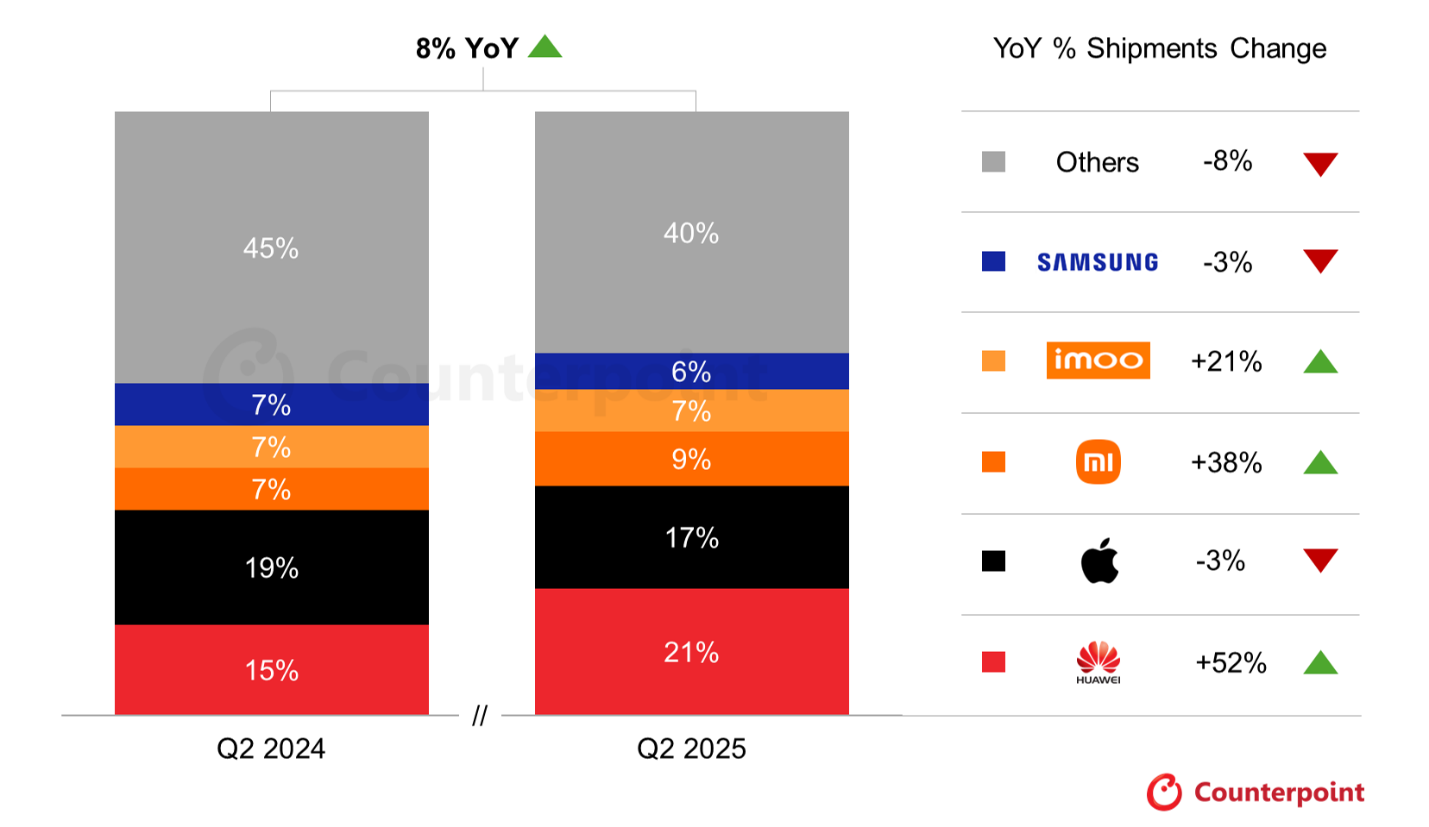
Global Smartwatch Shipments Market Share, Q2 2024 vs Q2 2025
Apple will take the top spot in worldwide shipment leadership for the first time. With more than three-quarters of its shipments centered in China and the bulk of its portfolio priced between $100 and $400, Huawei continues to provide a compelling range of smartwatches that appeal to a wide spectrum of consumers. Beyond that, Huawei has been gradually increasing its presence in other regions such as Europe, the Middle East, and Asia Pacific in order to broaden its worldwide customer base. Its growing smartphone user base in China, combined with its integrated ecosystem strategy, fueled this expansion.”
At the same time, Apple’s worldwide smartwatch shipments fell for the seventh consecutive quarter, resulting in the brand losing its position at the top of the global market. Nevertheless, it maintained its position at the forefront of the advanced smartwatch market, supported by the robustness of its iOS ecosystem and enduring user loyalty.
Xiaomi and Imoo experienced significant growth in their shipments during the quarter, each effectively targeting unique market segments among the top five players. Xiaomi dominated the basic smartwatch market, propelled by its focus on value and extensive geographic presence. Meanwhile, Imoo maintained its stronghold in the kids’ smartwatch market, utilizing its unique features and solid brand reputation among both young users and their parents. Samsung, a significant contender in the global market, experienced a 3% year-over-year decrease in shipments. The recent declines for both Apple and Samsung were largely influenced by consumers delaying purchases in expectation of new-generation devices anticipated to debut in Q3 2025.
7. Huawei Core Values:
Customers Come First: Huawei exists to meet the needs of its customers, whose wants and needs drive our growth. Our buyers always get long-term value from us because we listen to their needs and wants. Because we can only be successful if our customers are successful, we judge our work by how much worth we bring to them.
Dedication: Customers value and trust us because we work hard at what we do. It includes everything we do to make our services better and give our users more value. We appreciate what our employees do and reward them properly.
Always Getting Better: We need to keep getting better so that we can be better partners for our customers, make our business better, and grow as people. To get better, we have to constantly listen and learn during this process.
Be open and take the lead: Because we care about what our customers want, we are always looking for new ways to make things better for them. We think that business success is the best way to judge the worth of any new technology, product, solution, or method.
Being honest: Honesty is the most important thing we have. We are honest and keep our promises because we want to earn the trust and respect of our customers.
Working together: We can only do well if we work together. By working together closely through good and bad times, we set the stage for successful cross-cultural teamwork, streamlined departmental cooperation, and processes that work well.
8. Human resources
Ren Zhengfei is the principal shareholder of Huawei, possessing a 1.4% stake. The remaining 98.6% is owned by Huawei personnel. By the conclusion of 2014, out of 170,000 employees, 80,000 possessed an equity interest in the company, with no external stakeholders present. Interviews with over 100 Huawei executives indicate that the majority endorse the employee shareholding arrangement, fostering a collective ownership mentality of “fighting the fight together.”
9. Finance
Based on the exchange rate at the end of that reporting period, Huawei’s revenue for the first half of 2018 was 325.7 billion yuan, or approximately $49 billion. Based on year-end exchange rates, the Chinese company recorded $92.5 billion in revenue for the entire year of 2017. Strong success in a number of industries, particularly the consumer sector, which has been steadily increasing, has been the main driver of the expansion thus far. By market share, Huawei has surpassed Apple to become the second-largest smartphone manufacturer in the world.
10. Challenges and competition analysis
Despite Huawei’s remarkable success over the past three decades, it faces distinct business obstacles. In the rapidly evolving digital and technology sector, it remains crucial for Huawei to prioritize innovation within its strategy.
Despite maintaining an innovative trajectory, Huawei confronts numerous challenges stemming from intense competition within the industry and the historical failures of comparable enterprises. History demonstrates that monopolistic dominance is ephemeral; structural dynamics in every sector have evolved and will persist in changing, as exemplified by BlackBerry’s decline from its former prominence. The foremost error of successful organizations is complacency. For Huawei, merely advancing research and development is inadequate. Nokia allocated tenfold resources to R&D compared to Apple over an extended duration, erroneously focusing on items that catered to its primary market segment while neglecting the limited consumer interest in prospective touch-screen technology. Likewise, Huawei must consistently endeavor to fulfill and anticipate future consumer demands rather than merely addressing present ones. Moreover, a current benefit of Huawei is its status as a wholly employee-owned private enterprise, which will undoubtedly draw interest from investors seeking to capitalize on its remarkable growth.
A significant challenge Huawei encountered in its transition from a Chinese technological firm to a global entity was its brand image in the United States, where the most formidable obstacle in Huawei’s global strategy was the disparagement campaign orchestrated by the U.S. government. Intelligence officials have advised American companies against engaging in business with Huawei owing to probable Chinese state influence and security apprehensions. Furthermore, this company has been actively seeking an opportunity to expand into North America, which constitutes approximately 20% of global telecommunications expenditure. Since a 2007 article revealed CEO Ren Zhengfei’s military history, Huawei has been designated as a political target. Prior to establishing Huawei in 1987, Ren served as a civil engineering director for the Chinese military. Huawei presently supplies telecommunications equipment to prominent Internet service providers, who then transmit data for nearly all government entities. The U.S. intelligence committee advised that American telecommunications companies refrain from engaging in business with Huawei due to probable Chinese governmental influence and security risks.
In response, Huawei has initiated a strategic outreach to analysts, journalists, and lawmakers to alleviate doubts. Huawei additionally revealed the constituents of its Board of Directors. The aforementioned B2B problems partially elucidate why the smartphone is poised to be pivotal for Huawei’s expansion in America. Huawei cannot concede defeat or entirely relinquish the U.S. market, as it constitutes approximately 20% of worldwide telecommunications expenditure. Although it need not dominate the U.S. market, it must gain acceptance as it expands as a smartphone brand. If Huawei executes this effectively, it may serve as a substantial demonstration of corporate citizenship and secure the brand a position among other prominent Asian technology companies in the United States, including Samsung, Lenovo, and LG. Going forward, Huawei should disclose further financial and corporate information to enhance openness.
Huawei has initiated a deliberate effort to enhance international and diverse experience within its managerial ranks, encompassing both the board and various senior and mid-management positions. This strategy has facilitated the company’s transition towards a brand-oriented global leadership. Additionally, Huawei has begun recruiting prominent Western executives to diversify its senior management team. This plan must be executed comprehensively to ensure that different, global perspectives and experiences are deeply integrated into the organization’s structure. A genuinely international senior management team is crucial for Huawei’s success in outside markets.
11. Conclusion
The conclusion is that a significant portion of Huawei’s success can be attributed to the implementation of an appropriate and well-chosen strategy to penetrate new markets and develop their business around the globe. The strategic decision that the company made, as well as their policies and practices, served to analyze and identify the advantages that the company will have if they use different entry modes to penetrate specific markets with a large portfolio of their products. These factors contributed to the rapid growth of the company, which ultimately resulted in the company becoming one of the most important and recognized brands in the technological sector all over the world.
The partnership that Huawei has formed with the LEICA camera company and the utilization of their technology to enhance the camera capabilities of Huawei’s smartphones to compete with products like the iPhone and Samsung Galaxy are noteworthy aspects that should be highlighted. This partnership has added value to Huawei’s smartphones, which is a result of the company’s desire to innovate at a rapid pace. In order to fine-tune each of those components, make design decisions, and develop the entire photography experience of Huawei phones, Leica and Huawei have a team of engineers who are dedicated to working together.
However, the most important factors that contributed to the company’s success in overcoming these challenges were the constant analysis of the environment and the well-understood and known industry and sector. This caused the company to improve their practices and find a solution to their situation. Despite the fact that the company has presented moments of difficulty and challenges, one of the most relevant ones will be the American case.
A survey or investigation that measures the people’s opinions on a certain issue or range of topics is known as a scientific, nonpartisan public opinion poll. Trained interviewers randomly select interview subjects from the population under study. Interviewers offer responses and produce interpretations based on the outcomes. Every member of the population being investigated should have an equal chance of participating in a random sample. Otherwise, the outcomes can be skewed and not accurately reflect the population. In order to draw generalizations about a given community under study, representative samples are chosen.
2. Why are opinion polls significant?
Polls show us what percentage of a population holds a particular opinion. They don’t offer any justification for respondents’ beliefs or suggestions for how to influence them. Scholars and social scientists worked on this. Simply said, polls are a measurement technique that reveals what a population believes and feels about a particular issue.
Because it allows the people an opportunity to speak for themselves rather than allowing only outspoken media stars to speak on behalf of all, this project can be helpful in promoting understanding between different cultures. Opinion polling provides a voice to those who often lack access to the media.
3. Opinion polling for the 2019 Indian general election
Despite their repeated inaccuracies, exit polls have gained popularity in India over the past two decades. They have grown to be an essential component of the media’s coverage of elections and are regarded as a key instrument for forecasting election results. India restricts the use of exit polls to prevent the spread of inaccurate or misleading information that could influence the election’s outcome.
An exit poll, as you may probably conclude from the name, is a survey of voters conducted immediately after they leave the polling place. What purpose does an exit poll serve if the actual results will be available in just a few hours?
You’ve probably seen them proclaim the predicted winner if you’ve ever watched a tight election on television. This data was probably derived in part from an exit poll. Although we could consider the information provided by exit polls to be factual, it is actually just a preliminary analysis of surveys conducted among voters as they left the polls.
1. Meaning
Exit polls are conducted during elections, providing a snapshot of how voters have cast their ballots. As voters exit polling booths, they are approached by surveyors who ask them about their voting choices. Exit polls are valuable for journalists as they help predict election outcomes before official results are announced. Journalists can use exit poll data to analyze voting patterns, assess voter behavior, and offer early warnings regarding the public’s preferences.
2. The Purpose of Exit Polls
Exit polls ask respondents how they voted soon after casting their ballots, giving a “snapshot of the electorate” and measuring public opinion. Exit polls differ from opinion surveys in that they track real-time responses from voters after the election rather than forecasting votes or opinions.
Exit polls are advantageous because they give the general public a head start on learning who the winner is and how various demographics voted. Exit polls can influence future political campaigns, policies, and laws much like other public opinion measurements.
3. Exit polls: Obstacles
Exit polling has various difficulties. We must emphasize that exit polls don’t always accurately predict an election’s winner. Early projections are frequently wrong since the data fluctuates throughout Election Day. The accuracy of exit poll data rises as the day goes on and more data is collected. We cannot know if an exit poll correctly predicted the winners until after the election. Exit polls’ value as a forecasting tool is further hampered by mail-in ballots and other issues.
C. Surveys
Introduction
Surveys are an effective tool for gathering public opinion on a wide range of topics. Journalists often conduct surveys to obtain insights into public perceptions, attitudes, and preferences. Surveys can be administered through various channels, including face-to-face interviews, telephone interviews, or online questionnaires. Journalists carefully design survey questions to ensure unbiased and accurate responses, enabling them to report on the prevailing opinions of the public.
1. Survey and election polling
Election polling is the act of using surveys or polls during an election year to concentrate on subjects that are important to voters, examine voter turnout, learn what voters believe about the candidates, and determine who they will support on Election Day.
Election polls are done with targeted questions to identify public opinion about the government and opposition parties, the performance of the elected candidate, or to predict the outcomes of the just-ended elections, even while elections are not at the forefront. In fact, many political candidates use polls to learn about the most important issues in their constituency, the shortcomings of their campaigns, and the attitudes of voters.
2. Using an election survey.
Although there is a significant distinction between a poll and a survey, political parties and candidates employ both during an election cycle for various purposes. However, polling places in America have remained largely unchanged for years, despite advancements in technology. The switch from telephone interviews to online polls is the only discernible difference.
Political parties and candidates for office produce polls for various purposes. Election polls can be conducted to determine the most important topics in a particular constituency, to measure public opinion about various candidates, to forecast election results, to spot weaknesses in the current campaign, and even to plan the election campaign.
Polls also help to understand the candidates and their plans for the jobs they hope to take on if elected. Voters should consider this information since it will be useful in understanding the candidate, their background, and their future goals. Voters can better understand their preferences by using this data when casting ballots.
D. Social media
The emergence of social media platforms has transformed the assessment of public opinion in India. Platforms such as Facebook, Twitter, and Instagram provide a space for individuals to express their thoughts, concerns, and viewpoints publicly. Journalists monitor social media conversations, analyze trending hashtags (#), and engage with users to gain a pulse on public sentiment. Social media platforms also facilitate real-time discussions, allowing journalists to gather instant feedback on various topics.
Gauging public opinion in India is vital for journalists to maintain journalistic integrity and provide balanced reporting. Journalists must exercise caution while interpreting opinion poll data, as sample sizes and methodology can impact the accuracy of results. Additionally, it is crucial to consider the diversity and heterogeneity of India’s population, as opinions may vary across different regions, cultures, and demographics. Journalists must strive to present a comprehensive representation of public opinion, taking into account the nuances and complexities of India’s diverse society.
Gauging public opinion in India is an essential aspect of journalism. Opinion polls, exit polls, surveys, and the influence of social media are all valuable tools that journalists employ to understand and reflect the voice of the public. By leveraging these methods, journalists can provide insightful and objective coverage, giving readers a more profound understanding of the prevailing sentiments and viewpoints within Indian society. Understanding public opinion empowers journalists to fulfill their responsibility of informing the public and facilitating informed discussions on critical issues.
B. MEDIA THEORIES
Introduction
In today’s fast-paced digital age, media has become an omnipresent force shaping our lives and influencing our thoughts. From traditional newspapers to social media platforms, from television networks to podcast streams, the media plays a pivotal role in disseminating information, shaping public opinion, and driving societal change. As aspiring journalists, it is crucial for us to comprehend the complex relationship between ideas and perspectives that underpin media production, distribution, and consumption. That is where media theories step in, providing us with invaluable frameworks to deal with the complexity of this ever-evolving landscape.
Media theories are intellectual frameworks that examine the complex relationship between media and society, shedding light on how messages are constructed, interpreted, and experienced. By examining the fundamental principles and dynamics that govern media systems, these theories help us navigate the dynamic realm of journalism with a more profound understanding of its impact on society.
From the perspective of journalism, media theories serve as a compass, guiding us through the turbulent seas of information dissemination. Journalists bear the immense responsibility of delivering news with accuracy, fairness, and integrity. Media theories provide us with a critical lens to scrutinize the processes involved in the production, packaging, and consumption of news.
One of these ideas is the agenda-setting theory, which says that the media can change how important certain topics are to the public. By determining what stories to cover and how to present them, journalists can shape the public agenda, influencing what issues are discussed and debated. Understanding this theory allows journalists to recognize their pivotal role in shaping public discourse and empowers them to wield their influence responsibly.
As journalism students, we embark on a journey to explore various media theories, each offering unique insights into the intricacies of communication, media influence, and the societal implications that ensue. By reviewing these theories, we sharpen our critical thinking skills, enabling us to dissect media narratives, recognize biases, and engage with media content in a discerning manner.
In this textbook, we will embark on an enlightening exploration of several prominent media theories, unraveling their significance in the context of journalism and media studies. We will examine theories such as the cultivation theory, social construction of reality, uses and gratifications theory, and many more, equipping ourselves with the tools to analyze media in all its forms.
As we explore the depths of media theories, let us embrace the intellectual journey that lies ahead. Together, we will decipher the complex interconnections between media and society, unlocking the mechanisms that shape our understanding of the world. By embracing these theories, we not only become more adept journalists but also empowered citizens capable of critically engaging with the media landscape that surrounds us.
So, fasten your seatbelts and embark on this enlightening expedition into the realm of media theories. Prepare to challenge your assumptions, broaden your perspectives, and uncover the hidden mechanisms that shape the media landscape. Welcome to the captivating world of media theories—a voyage that will forever change the way you perceive the media and its profound influence on society.
Public opinion refers to the collective thoughts, beliefs, and attitudes held by individuals within a society. It acts as a driving force behind policy decisions, electoral outcomes, and public discourse. In India, a country with a rich democratic tradition, public opinion has an important effect on the political landscape. It serves as a referendum on the government’s actions, holding leaders accountable to the wishes of the people.
2. Determinants of Public Opinion
Understanding the factors that influence public opinion is crucial to grasping the nuances of the Indian context. Several determinants shape public opinion in India, including socio-economic factors, cultural and religious beliefs, educational background, regional identities, and media influence. These factors, combined with historical events and political affiliations, shape the diverse perspectives found within Indian society.
3. Role of Media in Shaping Public Opinion
Journalism is often described as the fourth pillar of democracy, and it plays a significant role in shaping public opinion. In India, the media has evolved as a powerful tool for disseminating information and influencing public sentiment. However, with the rise of digital platforms and social media, journalism faces new challenges and responsibilities. Journalists must maintain journalistic integrity, providing unbiased, fact-based reporting to foster an informed public opinion. They must guard against sensationalism and fake news, which can distort public sentiment and erode the credibility of the media.
4. Impact of Public Opinion on Governance
Public opinion has a direct impact on the governance of India. It acts as a feedback mechanism, allowing citizens to voice their concerns and preferences. Governments often gauge public opinion to understand the needs of the people and shape their policies accordingly. Public sentiment also influences electoral outcomes, as political parties strive to align their agendas with the aspirations of the public. Elected representatives, aware of the power of public opinion, are more likely to address public grievances and work towards the welfare of the nation.
Public opinion in India is a dynamic and ever-evolving concept, shaped by a multitude of factors. Understanding its significance, determinants, and impact on governance is crucial for aspiring journalists. The media, as the custodian of public opinion, has a responsibility to report objectively and foster an informed citizenry. By comprehending the intricacies of public opinion, journalists can contribute to the healthy functioning of Indian democracy, ensuring that the voices and concerns of the public are accurately represented.
I. ITS FUNCTIONS IN SOCIETY
Introduction
Public opinion serves as the lifeblood of a thriving democracy, and in India, a nation of immense diversity and democratic values, it plays a vital role in shaping the socio-political landscape. This engaging section aims to explore in detail the various functions of public opinion in India. From providing a check on governmental actions to fostering informed decision-making, public opinion acts as a catalyst for positive change. Additionally, we will delve into one abstract from the perspective of journalism, highlighting the role of media in reflecting and amplifying public opinion.
1. Public Opinion as a Check on Governance
Public opinion acts as a crucial mechanism for holding the government accountable and ensuring transparent governance. In India, citizens express their views through various channels, including public demonstrations, social media platforms, surveys, and electoral processes. The government, recognizing the significance of public sentiment, considers public opinion when formulating policies, making legislative decisions, and implementing reforms. By providing feedback and critique, the public contributes to the continuous improvement of the nation’s governance.
2. Public Opinion as a Catalyst for Social Change
Public opinion plays a transformative role in India’s social fabric. It acts as a catalyst for change, driving societal progress by influencing public discourse on issues such as gender equality, caste discrimination, religious tolerance, and environmental conservation. Public opinion mobilizes collective action, inspiring citizens to participate in social movements, advocacy campaigns, and community initiatives. Through their collective voices, the public puts pressure on policymakers to address social injustices and enact positive reforms.
3. Public Opinion as a Tool for Policy Formation
Public opinion is invaluable in shaping policy decisions. Governments rely on public sentiment to identify the needs, desires, and concerns of the population. By conducting surveys, opinion polls, and public consultations, policymakers gain insights into the priorities and preferences of the citizens they represent. Public opinion guides the formulation and implementation of policies that align with the aspirations of the people. It ensures that policies are responsive to the changing dynamics and evolving needs of Indian society.
4. Role of Media in Reflecting and Amplifying Public Opinion
Journalism acts as a conduit between public opinion and the larger society. In India, the media plays a crucial role in reflecting and amplifying the voices of the people. Journalists act as facilitators, reporting on public sentiment and providing platforms for public discourse. They cover diverse perspectives, enabling the public to make informed decisions. Journalists have a responsibility to report objectively, ensuring that public opinion is accurately represented. By doing so, they empower the citizenry and strengthen the democratic fabric of the nation.
The functions of public opinion in India are multifaceted and integral to the functioning of a robust democracy. It serves as a check on governance, propels social change, shapes policy decisions, and is amplified by the media. Aspiring journalists must recognize the power and significance of public opinion in their reporting. By accurately reflecting and analyzing public sentiment, journalists contribute to an informed citizenry, facilitating a vibrant democracy where the voices of the people are heard and valued.
A. METHOD OF LADDERING SERVES AS A GUIDE TO CREATIVITY
Introduction
Laddering is a technique to find out what people value. The method of laddering as a guide to creativity is a technique that is particularly advantageous in drawing goals and essential values, and therefore, perhaps helpful during early stages of creativity. The creative advertisements are more effective in motivating people to buy products than advertising that simply lists product benefits and features.
According to Stephan Vogel, Ogilvy and Mather Germany’s chief creative officer, “Nothing is more memorable, longer lasting, works with less media spending, and builds a fan community…faster.” However, categorizing product benefits comprises finding out what the consumer really needs and wants, not just listing various product features.
Laddering of creative techniques
Laddering is a method for creating a framework that serves as a starting point for initiating creative work. It is primarily a method that involves addressing both general and specific ideas related to creativity. The idea ladders provide a foundation for creative work, beginning with specific ideas. There are five laddering creative techniques, which are as follows:
1. Problem definition
The first technique is problem definition, which includes problem analysis and all other features associated with clearly defining the problem.
2. Idea generation
Idea generation involves the divergent processes of generating ideas.
3. Idea selection
Idea selection is a convergent process that involves distilling numerous ideas into practical solutions.
4. Idea implementation
In the idea implementation step, the marketers or researchers turn the refined ideas into reality.
5. Processes
In this step, marketers or researchers identify the structures and methods that examine the entire process of creativity from start to finish.
Case study
Laddering creative techniques (Regular Beer versus Craft Beer)
Regular beer is generally mass-manufactured and is usually a pale yellow that is delightful when ice-cold and in large volumes. However, craft beer centers more on flavors and habitually has higher alcohol content than regular beer.
Regular bear
Craft Beer
Laddering techniques involve comparing specific ideas to general ideas.
The specific ideas
The craft beer centers more on flavors and habitually has higher alcohol content than regular beer. It is a complex mix of ingredients and processes that leads to the winning position in the world of craft beer.
The craft beer industry has evolved over years through small innovations in key aspects of the brewing process. The craft beer society aspires for its members to resemble the finest of their beers, possessing not only hidden depths but also an amber quality.
The general ideas
The general ideas come from the derived themes, like points of departure, which can be further developed in a potential text. For example, craft beer brings a revolution to the beverage industry with its breakdown into many types and flavors that make up a successful drink.
B. ADVERTISING FORMULATION
Introduction
Advertising formulation is the process of defining a campaign’s goals and objectives. It allows formulators to create a guide. It studies the market and uses those figures to regulate what campaign methods will be best at reaching consumers and enticing them to seek the business service.
Advertising formulation is defining what you want to achieve in terms of promotion. It could be as easy as telling potential customers what you sell and how it helps them. The general objective of an advertising campaign is to inform people about the product, convince buyers, and make it available to customers. The steps of advertising formulation are as follows:
1. Research
Conducting market research for the product under advertisement is the first step. One needs to find out the product demand, competitors, and others.
2. To know the target audience
In the first step, we need to know who is profitable enough to buy the product and who the targeted audience should be.
3. Setting the budget
In this step, establish the budget by considering all elements such as presentation, media, and other necessary formalities that contribute to the advertising process and identify areas that require funding.
4. Determining the theme of advertising
The campaign’s theme must be based on the brand’s advertising colors, size, shape, graphics, music, and jingle.
5. Selecting suitable media channels
The selection of appropriate media should focus on those that will effectively reach the target customers.
6. Media scheduling
The scheduling of media channels suitably helps to reach target consumers at the right time or in the right place.
7. Executing the campaign
At the end the campaign has to execute, and then the feedback should be taken.
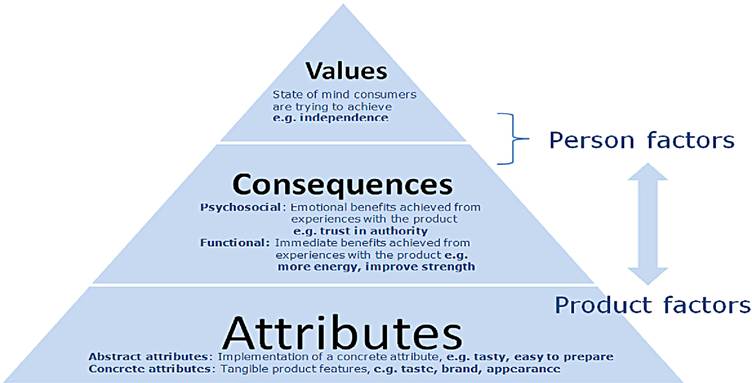
A means-end chain is well-defined as comprising an interconnected set of cognitive components that permits an individual to select objects or activities that enable him to achieve his desired end states. Thus, the means-end chain permits focusing on the basic aims consumers have in life while not losing sight of how these aims influence choices in specific situations.
The process of categorization is proposed as the mechanism by which consumers organize thinking about specific product alternatives so as to create selections of products that will be instrumental in helping them achieve their values. If this connection can be made, the bases consumers have for creating sets of similar products will be understood more systematically.
Elements of Means-End Theory
1. Attributes
Attributes are the basic characteristics of the product, such as physical or technological.For example: A person who buys a tablet device because it offers the same capabilities as his laptop.
2. Benefits and consequences:
Benefits and consequences Consider how useful the products are.
For example, a person who travels a lot for his job. He buys a tablet because it is easier to carry around than his heavy laptop. The benefit is that he no longer has to carry the heavier laptop.
3. Values
Values consider your customers’ ego.
Ego is the amount of pride that is associated with using branded products (like Apple brand).
For example, when a person buys Apple Company’s tablet because it is new and sensational, and carrying it from one place to another makes him/her feel like he/she is a part of a high-class club.
A company is most effective and prosperous when they are able to use all three components of the means-end methodology in their marketing. This means that a company should consider features, benefits and consequences, and values when introducing a new product or transforming an old one.