Journalism serves as a watchdog, holding politicians and political parties accountable for their actions. Media outlets investigate and report on the policies, statements, and activities of political parties and personalities, ensuring transparency and informing the public. For example, when a political leader makes controversial remarks, the media plays a crucial role in exposing and analyzing their impact, fostering public discourse and shaping public opinion.
The Mughal emperor was referred to by the Uttar Pradesh Chief Minister, who was speaking at a rally in Sambhal district, as “Babur ki aulad (Babur’s descendant).” The comment on the Samajawadi Party candidate while making light of the 72-hour suspension the Election Commission had placed on him for making a communally insensitive remark.
The ‘Chowkidar chor hai’ comment by Rahul Gandhi to Narendra Modi had boiled up the situation.
2. Election Coverage and Political Campaigns
During election seasons, the media plays a significant role in providing information and analysis to voters. Journalists cover political campaigns, organizing debates and interviews to help citizens make informed decisions. For instance, televised debates between political leaders allow the public to compare their ideologies, plans, and credibility, assisting voters in understanding different perspectives and making educated choices.
3. Agenda Setting and Framing
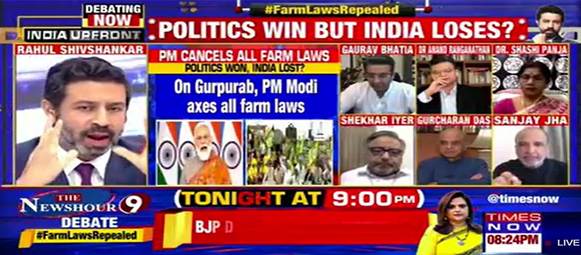
Media outlets play a pivotal role in agenda setting, determining which political issues receive extensive coverage. By emphasizing certain topics or controversies, the media can influence public perception and shape political discourse. For example, by focusing on issues like unemployment, farmers’ protests, or healthcare, the media can shape the public’s understanding of the political landscape and the priorities of political parties.
4. Political Bias
Journalists must strive to maintain objectivity and balance in their reporting. However, biases can unintentionally seep into news coverage, affecting how political parties and personalities are portrayed. It is crucial for journalists to remain vigilant and ensure fair representation of different viewpoints. For instance, some media outlets have been accused of favoring or targeting specific political parties, which can influence public opinion and undermine the democratic process.
5. Influence on Public Opinion
Media coverage of political parties and personalities can significantly impact public opinion. Journalists have the power to shape the narrative surrounding political figures, influencing how they are perceived by the public. For instance, positive or negative coverage can impact a political party’s popularity and electoral success. The media’s responsibility lies in providing accurate, balanced, and unbiased coverage, allowing citizens to form their own opinions based on reliable information.
There are some noticeable examples given below:
1. 2014 Indian General Elections
The media extensively covered the electoral campaigns of various political parties, including the Bharatiya Janata Party (BJP) and the Indian National Congress (INC). The media played a crucial role in highlighting key issues and facilitating discussions that influenced public opinion and voting patterns.
2. Prime Minister Narendra Modi
The media’s coverage of Prime Minister Narendra Modi has been extensive and diverse. While some media outlets have praised his policies and initiatives, others have scrutinized his governance. This wide-ranging coverage has influenced public opinion about his leadership and the Bharatiya Janata Party (BJP).
3. Regional Political Parties
Media coverage of regional political parties, such as the Aam Aadmi Party (AAP) in Delhi or the All India Trinamool Congress (TMC) in West Bengal, has influenced their popularity and electoral success. The media’s portrayal of their leaders and policies has shaped public opinion and affected voter behavior.
As aspiring journalists, understanding the media’s role in covering political parties and personalities in India is essential. The media acts as a watchdog, provides election coverage, shapes public opinion, and influences the political discourse. However, it is imperative for journalists to maintain objectivity, avoid biased reporting, and ensure fair representation of different political parties and personalities. By adhering to ethical journalism practices, journalists can contribute to a well-informed electorate and a healthy democracy.
It is important to recognize that the media’s role in covering political parties and personalities is not without challenges and controversies. Media organizations face pressure from various stakeholders, including political parties, advertisers, and even the audience, which can sometimes compromise the integrity of their coverage. Journalists must remain vigilant, uphold journalistic principles, and prioritize the public interest above all else.
In conclusion, the media plays a significant role in the coverage of political parties and personalities in India. Through their watchdog function, election coverage, agenda setting, and influence on public opinion, journalists shape the political landscape and facilitate democratic participation. It is crucial for aspiring journalists to understand these dynamics and commit themselves to ethical and responsible journalism, ensuring that the media remains a powerful force for informed decision-making and a robust democracy.
Media acts as a primary source of information for the public, offering news and analysis on political events and policies. Through accurate and unbiased reporting, journalists inform citizens about political developments, enabling them to form opinions. By presenting multiple perspectives, the media encourages critical thinking and fosters a well-informed electorate.
2. Agenda Setting
Media outlets are empowered to shape public discourse by determining the topics and issues that receive extensive coverage. This process, known as agenda setting, influences the public’s perception of what is important. By selectively highlighting certain issues, the media can generate public interest and bring political matters into the spotlight, influencing policy debates.
3. Framing
Framing refers to the presentation and contextualization of news stories. Journalists employ different frames to shape the way the audience interprets political events and policies. The media’s framing choices can influence public opinion by emphasizing specific aspects or angles, thereby influencing how people perceive and understand political issues.
4. Political Bias
Journalism, like any human effort, is liable to biases. Biases can arise from various factors, such as personal beliefs, organizational interests, or societal pressures. When media outlets exhibit biases in their reporting, it can sway public opinion and contribute to the polarization of political discourse. It is essential for journalists to strive for objectivity and balance in their reporting to ensure a fair representation of political viewpoints.
5. Role as a Watchdog
One of the core functions of the media is to serve as a watchdog over government activities and policies. Through investigative journalism and holding those in power accountable, the media plays a crucial role in exposing corruption, malfeasance, and policy failures. By highlighting these issues, the media can influence public opinion and put pressure on policymakers to take corrective actions.
6. Media Effects on Policy Making
Media can have a direct impact on policymaking by shaping public sentiment and influencing policymakers. When politicians perceive a groundswell of public opinion on a particular issue, they are more likely to respond and take action. Media coverage and public opinion polls can influence policy priorities, agenda setting, and the decision-making process, driving lawmakers to address pressing concerns.
In an era dominated by media, understanding its role in influencing political opinions and policymaking is paramount for aspiring journalists. Through the power of information, agenda setting, framing, and serving as a watchdog, the media exerts significant influence on public discourse and policy decisions. As journalists, it is our responsibility to approach our work with integrity, strive for objectivity, and ensure that the information we provide fosters a well-informed citizenry capable of making educated decisions about their political future.
The Advertising Standards Council of India (ASCI), established in 1985, has adopted a Code for Self-Regulation in Advertising. It is a commitment to honest advertising and to fair competition in the marketplace. It stands for the protection of the legitimate interests of consumers and all concerned with advertising—advertisers, media, advertising agencies, and others who help in the creation or placement of advertisements.
The ASCI is a voluntary, self-regulatory council established in 1985 to promote responsible advertising and to enhance public confidence in advertisements. Complaints against misleading advertisements can be filed with this body. Adverts that contravene the provisions of the following acts of the government or various state governments are not acceptable:
The ASCI’s Code for Self-Regulation 1985 (the ASCI Code);
The Code for Commercial Advertising on Doordarshan and All India Radio;
The Drugs and Magic Remedies Act 1954;
The Emblems and Names Act 1950;
The Indecent Representation of Women Act 1986;
The Trademarks Act 1999;
The Consumer Protection Act 1986;
The Cable Television Network Amendment Act 2011;
The Drugs and Cosmetics Act 1940;
The Prize Competitions Act 1955;
The Press Council Act 1978;
The Cable Television Network Rules 1994;
The Indian Medical Council (Professional Conduct, Etiquette and Ethics) Regulations 2002;
The Bar Council of India Rules are formulated under the Advocates Act 1961;
The Cigarettes and other Tobacco Products Act 2003; and
The Food Safety and Standards Act 2006.
Advertising Agencies Association of India (AAAI)
Introduction
The Advertising Agencies Association of India (AAAI) is the official, national organization of advertising agencies, formed to promote their interests so that they continue to make an essential and ever-increasing contribution to the nation by working towards the following objectives:
To benefit Indian consumers and to protect their interests by helping ensure that advertising is honest and in good taste.
To benefit Indian advertisers by promoting their sales, increasing productivity, and enhancing profitability to stimulate business and industrial activity.
To benefit media by establishing sound business practices between advertisers and advertising agencies and each of the various media owners.
To benefit the nation by harnessing advertising for the good of the country, its institutions, and its citizens to cooperate with the government in promoting its social objectives and in the task of nation-building.
To question advertising that is wasteful and extravagant to make it possible for the small entrepreneur to grow through advertising and to compete with the biggest to encourage market and media research to serve society by meeting its social responsibilities.
We aim to stimulate young individuals’ interest in the communication industry, support educational and training initiatives, and disseminate beneficial information to our members. Non-members are also provided this service for a fee.
To establish a common platform in building and sustaining the prestige of the advertising profession and to serve as a spokesman against unwarranted attacks or restrictions on advertising.
To establish a forum where representatives of advertisers, advertising agencies, media owners, and the government can meet on mutual ground and examine problems of mutual concern.
To offer effective cooperation and liaison with government officials and bodies for the purpose of broadening their understanding of the role of advertisers, advertising, and advertising agencies.
To work together with government agencies to talk about issues like taxes, radio and TV advertising, laws, political campaign advertising, and regulations on ads for pharmaceuticals, tobacco, or alcohol, as well as other similar sensitive topics.
The AAAI today is truly representative, with a huge number of small, medium, and large-sized agencies as its members, who together account for almost 80% of the advertising business placed in the country. It is thus recognized at all forums—advertisers, media owners and associations, and even the government—as the spokesperson for the advertising industry.
Comparative advertising is one of the latest techniques to grab consumers’ attention. Comparative advertising, otherwise known as advertising war, is a process where a particular company compares its product with a competitor to show why its product is superior. Comparative advertisement sometimes helps consumers to choose the better product, but sometimes it could mislead the consumers and create confusion.
Comparative advertising is terrifying for marketers. Of course everyone wants to showcase their brand as superior to their competitor, but often it’s found that’s not true. ASCI (Advertising Standard Council of India) is an independent body to bring advertising discipline amongst advertisers and is very active and prompt with their actions.
Comparative advertising may also lead to defamation and compensation cases. And if wrong claims are made, then a single lawsuit can eat years of brand profits or change the existence of the company that makes false claims. Comparative advertising displays a comparison of two different brands on numbered variants like price and quality by referring to the alternative brand by name, visual illustrations, or other distinctive attributes. Advertisers employ this technique to increase their visibility in the market and to promote their product.
Legal provision (ASCI)
Comparative advertising is legal to the extent that it does not hamper the reputation of the competitor’s mark and is in accordance with the honest practices in industrial matters. A person while advertising his goods can compare the advantages of his goods over the goods of his competitor, but he cannot say that his competitor’s goods are bad, as this may lead to disparagement of the goods of his competitor. A person cannot use any false or misleading statement while promoting his goods.
The Advertising Standards Council of India has specified certain norms or guidelines that should be kept in mind while promoting their goods through ads in its Code of Conduct, 1985. The guidelines state as follows:
Honest representation;
Must not be offensive in any way to the general public;
Ads must not in any way hamper competition.
Ads must not be used for the promotion of products hazardous or harmful to society or to individuals, particularly minors, to a degree unacceptable to society at large.
Cases Study
A few points of caution are also given by the High Courts in the same regard in order to raise awareness among the producers of their rights and limitations, allowing them to prevent all kinds of legal liabilities.
The Delhi High Court in Reckitt & Coleman of India v. Kiwi T.T.K.1 explained the concept of disparagement in regard to comparative advertising, stating that “a manufacturer is entitled to make a statement that his goods are the best and also make some statements for puffing of his goods, and the same will not give a cause of action to the other traders or manufacturers of similar goods to institute proceedings, as there is no disparagement or defamation or disparagement of the goods of the manufacturer in so doing. However, a manufacturer is not entitled to say that his competitor’s goods are bad so as to puff and promote his goods and concluded that comparative advertising cannot be permitted, which discredits or denigrates the trademark or trade name of the competitor.
There is no specific legislative mechanism regulating comparative advertising in India; therefore, the precedents set by various courts are followed while adjudging such matters. Though the courts rule in favor of the liberty to advertise, they do not hesitate in granting injunctions and imposing damages against infringers.
Ad wars: India’s most notable brand battles
Amul Vs HUL (2017)
Amul found itself strapped in legal trouble when Hindustan Unilever Limited (HUL) sued them for disparagement. At the root of the dispute were two advertisements comparing Amul’s “ice creams” to other “frozen desserts”—claiming that the former uses “real milk” while the latter does not.
Complan Vs Horlicks (2017)
The Defendant (HEINZ INDIA PRIVATE LIMITED), on 11th November 2017, published an advertisement for its “COMPLAN” branded health food drink in the newspaper “The Telegraph” (in its Kolkata and Patna editions). The advertisement compared one cup of COMPLAN with two cups of a competing brand, “HORLICKS,” with a disclaimer at the bottom of the page that read, “One cup of Complan (33 g) provides 5.94 g of protein, while two cups of Horlicks (27*2=54 g) give 5.94 g of protein based on the recommended pack dosage….” The Defendant also used a tagline that states, “From Now On, Only Complan.” The Plaintiff (HORLICKS LIMITED) claimed that the Defendant’s advertisement was intentionally and deliberately disparaging its health food drink product, HORLICKS.
Reckitt Benckiser Vs HUL (2013)
Reckitt Benckiser launches Dettol Kitchen and follows it up with a TV ad comparing the cleaning product with HUL’s Vim. HUL appealed to the Calcutta High Court for a stay order, saying the ads were untrue, but it was denied.
It then hit back with ads on front pages of mainline dailies claiming Lifebuoy works better than Dettol antiseptic liquid—HUL’s ad says it has been ‘issued in public interest.’
Hyundai Vs Maruti Suzuki (2012)
Traditional Japanese and Korean rivalry came to the fore again when Korea’s Hyundai Motor went ballistic with its marketing campaign ‘Trendsetter vs. Follower’ on claims of a much-superior small car, the EON, over the newly launched Alto 800 from Maruti Suzuki.
Micromax Vs Samsung (2012)
Micromax took a not-so-subtle dig at Samsung, with its latest ad campaign styled as a ‘sequel’ to Samsung’s Galaxy Y TVCs. The films brought out the product features through dialogue delivered by spunky kids, ending with the same question: “Aapke paas nahi hai, Uncle?”
Micromax responded with a series of films that pick up where the Samsung ads end; the last few words spoken in the Samsung ads are the first words in the Micromax ads. The plot, theme, script, and appearance of the ads have been crafted to look similar to the Samsung ads, so much so that at first glance, one assumes it is a sequel to the Samsung campaign.
2012: The Times of India Vs The Hindu (2012)
TOI launched ‘the Wake Up!’ campaign last year, featuring Chennai readers being put to sleep by a newspaper full of boring news. In an attempt to hit back hard, The Hindu told its readers to ‘Stay Ahead of the Times’ by reading news that was relevant to current affairs instead of Bollywood and celebrity gossip. Television commercials as well as print ads kept the battle between the two publications going.
2012: Micromax Vs Apple (2012)
Micromax took a jab at iPhone with the tagline “i (can afford this)” for its A 70 smartphone, priced at Rs 8,000. When Apple launched the iPhone 4S, Micromax went a step further, releasing new ads for the A75 model that used the tagline “i (can afford this) Phone 4S(ure).”
Ford India’s ‘Swap the drive’ campaign (2011)
Ford India’s ‘Swap the Drive’ campaign in 2011 challenged multiple players. Through this campaign, Ford engaged directly with owners of nine competing car brands, who were given the opportunity to swap their vehicles with models for a week-long test drive. The company then created ads that showed these consumers’ comparisons of their own vehicles vs. Ford’s, prominently featuring the names of rival brands such as Maruti Swift, Maruti Dzire, and Toyota Fortuner.
Hindustan Unilever Vs P&G (2010)
In HUL’s Rin commercial, a pack of Tide Natural, the brand owned by rival Procter & Gamble, was prominently displayed with a voiceover, “Tide se kahin behtar safedi de Rin.”
And HUL’s Clinic All Clear Shampoo spoofed P&G’s Head & Shoulders when it showed Bollywood actress Bipasha Basu searching for a girl with zero dandruff. One girl who does have dandruff mentions the name of her shampoo, making a muted reference to Head & Shoulders.
Nestle Vs Cadbury (2009)
Nestle launched a spoof on a Cadbury ad with the tagline “Khao bina tareekh dekhe,” directly challenging Cadbury, which had advertised its brand with the tagline “Meetha hai khana aaj pehli tareekh hai.”
Complan vs Horlicks (2008)
In September 2008, GSK’s Horlicks showed Horlicks as a better and cheaper option than Complan in terms of nutritional value and market price.
Limitations for comparative advertising
Comparative advertising shall be permitted when the following conditions are met:
It should not be misleading.
There is a comparison between the goods and services, which are for the same needs and the same purpose.
It compares those goods and services where there are relevant features, which may include price.
It does not create any confusion in the market between the advertiser and a competitor or between the advertiser’s trademarks, trade names, other distinguishing marks, goods, or services and those of a competitor.
In the reputation of trademarks of a competitor, there is no unfair advantage.
Shock advertisements can be shocking and offensive for various reasons, and violations of social, religious, and political norms can occur in many different ways. The use of shocking content in advertising appeals has been widely adopted. It is effective and possibly leads to increased brand awareness and an increase in sales volume.
Shock advertising is defined as the use of intentional, offensive, controversial, and attention-grabbing advertising to sell a particular product or idea. Resulting from this definition, there are seven types of shock appeals that marketers can use to shock the audience.
Disgusting images that include images containing blood, killing, body parts, cavities, disease, parasites, death, or bodily harm.
The images may also contain sexual references, such as masturbation, nudity, or sexual acts.
Vulgarity/obscenity refers to the use of swear words, rude gestures, or racial captions.
Vulgarity applies to pictures/acts that are distasteful, lack sophistication, and are crude, for example, farting or nose picking.
Indecency, also known as indecency, refers to a breach of social decency and etiquette.
Moral offensiveness occurs when images depict innocent people or animals being harmed, showcase uncalled-for violence or sex, involve individuals who provoke violence (such as Mussolini, Hitler, or Mao Tse-tung), display unfair behavior, or feature children in uncomfortable situations.
Religious restrictions occur when marketers inappropriately use religious or spiritual symbols or individuals.
Impact of Shock on the audience
Advertisers, psychiatrists, and social scientists have long debated the effectiveness of shock advertising. Some scientists argue that shocking ads evoke stronger feelings among the consumers. One finding suggests “shocking content in an advertisement significantly increases attention, benefits memory, and positively influences behavior. Moreover, consumers are more likely to remember shocking advertising content over advertising content that is not shocking. But if a consumer finds a certain kind of advertising content threatening or disturbing, the message will be filtered out. An example of this is a heavy smoker who could be filtering out a picture of a cancer-sick lung since the content could be perceived as disturbing and uncomfortable.
Advertisements that exploit negative emotions to induce shock do not elicit positive emotions in the audience. Therefore, using shock advertising may evoke negative feelings whenever customers see the brand logo or company name, leading to discomfort alongside brand recall.
In case of a cause or an issue, using shock advertising can work by getting the attention the cause deserves and getting people interested in contributing or working for it. It can sensitize people to other cultures and ways of life. Causes like child abuse, domestic violence, lung cancer, AIDS, and animal rights (PETA) have used shock advertising very effectively in the international context. This implies that consumers will filter out advertising content they deem threatening or disturbing.
Shocking advertisements in India
BF. Controversial Advertising
Introduction
In their natural state, people don’t think many deep thoughts and keep themselves occupied with immediate tasks and mildly pleasant ideas that keep them safe from fear or worry whenever they can.
Advertising has long been recognized—and criticized—as an efficient way to persuade us to spend our money. But sometimes the “Mad Men” have chosen to take a risk, go beyond the “soft sell,” and seek to challenge the way we think.
They have flirted with race, religion, sexual orientation, and more to make people question their belief systems—and boost their brand at the same time. As any idea that is calculated to wound the feelings and arouse anger, disgust, or outrage in the mind of a reasonable person can be viewed as offensive, it’s not hard to see why one man’s controversial idea is another man’s offensive idea. As practically everyone thinks he/she is a reasonable person, it’s not straightforward to cross that fuzzy line.
The controversial advertisements can be shocking and offensive for a variety of reasons, and violations of social, religious, and political norms can occur in many different ways. They can include a disregard for tradition, law, or practice (e.g., lewd or tasteless sexual references or obscenity), defiance of the social or moral code (e.g., vulgarity, brutality, nudity, feces, or profanity), or the display of images or words that are horrifying, terrifying, or repulsive (e.g., gruesome or revolting scenes or violence).
Some advertisements may be considered shocking, controversial, or offensive not because of the way that the advertisements communicate their messages but because the products themselves are “unmentionables” not to be openly presented or discussed in the public sphere. Examples of these “unmentionables” may include cigarettes, feminine hygiene products, or contraceptives.
However, there are several products, services, or messages that could be deemed shocking or offensive to the public. For example, advertisements for weight loss programs, sexual- or gender-related products, clinics that provide AIDS and STD testing, funeral services, groups that advocate for less gun control, and casinos, which naturally support and promote gambling, could all be considered controversial and offensive advertising because of the products or messages that the advertisements are selling. Shocking advertising content may also entail improper or indecent language, like French Connection’s “fcuk” campaign. There are some controversial advertisements in India, as follows.
1. This Footwear Ad
Milind Soman and Madhu Sapre posed naked for this brand with nothing but shoes and a python on them. Social activists as well as animal rights activists caused a huge furor over this advertisement.
2. This denim print ad
To drive the concept of second skin home, a popular denim brand shot a print ad that featured three hot models clad in their jeans and skin-colored innerwear. At first glance, it seemed as if the models were topless. Furthermore, to promote this brand, Akshay Kumar asked Twinkle Khanna to unbutton his jeans when he walked the ramp at Lakme Fashion Week 2010.
3. Jewelry print ad:
Lastly, the ad was forced to be pulled down after receiving heavy criticism on social media for featuring a dark-skinned kid who is struggling to hold a parasol on top of Aishwarya Rai’s head. There have been accusations of the ad being racist in nature and promoting child labor.
4. Levis
In 2008, Kangana Ranaut in the Levi’s ‘Stuck On You’ campaign stopped people in their tracks. The fashionista appears atop a shirtless model in one of the photos.
5. Fair & Handsome Cream
Bollywood’s King Khan came under fire for endorsing a skin-lightening cream product a couple of years ago. The advertisement led to an online campaign titled Dark and Beautiful, which urged not only the star but also the brand to stop promoting and encouraging fairness creams. A lot of people backed the campaign’s cause, including Aamir Khan, who said that he would never promote such products. But King Khan kept mum on the whole controversy and still promotes the brand.
6. Candy Ad
A candy commercial got Big B in hot water when he was shown pelting stones at a mango tree. According to the Advertising Standards Council of India, children could imitate his actions, leading to dangerous consequences. The advertisement was later taken down.
Impact of controversial advertisement on society
When one thinks of advertising, one normally thinks of advertising that coerces or persuades one to try a product. But there is another form of advertising, used less often but used amazingly well in certain campaigns where immediate attention and discussion are needed, namely controversial advertising.
Defined traditionally as advertising that “deliberately, rather than inadvertently, startles and offends its audience by violating norms for social values and personal ideals.” Controversial advertising generally uses disturbing and graphic imagery and slogans that disturb in order to draw immediate attention to the issue at hand.
Causes or issues that require public opinion mobilization primarily employ controversial advertising. It can be used effectively to cut clutter, create buzz, and get a social service message across. In fact, public service campaigns and social issues use controversial advertising to the greatest effect. Causes like child abuse, domestic violence, lung cancer, AIDS, and animal rights (PETA) have used controversial advertising very effectively in the international context.
Some brands, like United Colors of Benetton, have also used controversial advertising to communicate social messages, thus associating the brand with a social image rather than keeping it purely a fashion brand. The advertising for this brand has been consistently provocative, with a newborn baby, a dying AIDS patient, and such images being used in its campaigns. The visuals often have no relevance to the product and are considered by some to be graphic, gory, and tasteless. In fact, Benetton is seen as the company that pioneered the concept of controversial advertising in the late 1980s.
Some controversial advertising might not use gory visuals but might use language or metaphors that are not acceptable culturally and which might be controversial. For instance, the fashion brand French Connection got its moment of fame when it abbreviated French Connection, UK, and got a word, FCUK, which it used.
The controversial advertising has been much discussed among media watchers and with those who study the psychology behind advertising. According to scientists, controversial ads bring out stronger feelings among consumers, with the ad getting more attention, remaining in the memory, and influencing behavior as well. Incidentally and not surprisingly, advertising that is controversial tends to be recalled better than regular advertising.
Shock advertising is a double-edged sword. It can generate interest in the brand, or it can generate extremely passionate and negative feelings towards the brand, which could impact the brand negatively. Benetton, for instance, used religious taboos (a picture of a priest and nun kissing), cultural taboos (the visual of a Black woman feeding a white baby), a death row inmate’s thoughts, and an AIDS patient on his deathbed. These images are ones that force the viewer to confront and deal with their inherent biases and prejudices and can result in negative feelings for the brand.
On the flip side, the advertising has resulted in positive feedback for the brand for talking about difficult issues and taking a stand on social and environmental issues. To quote Oliviero Toscani, the photographer for some of the most controversial ads Benetton produced, about the ad of the man dying from AIDS, his attempt was “to use the forum of poster advertising to make people aware of this [AIDS] tragedy at a time when no one dared to show AIDS patients.” At that point, when no one was talking about AIDS, this ad was considered radical.
Another brand that has courted international controversy is the Calvin Klein jeans ads, which had young models in very soft porn poses, with some models as young as 15. In India, the Tuff Shoes campaign, which showed models Milind Soman and Madhu Sapre with a snake wrapped around them, courted an obscenity case and controversy but definitely got attention. However, most advertising in India does tend to play it safe.
Shock advertising is used to effect in campaigns like anti-tobacco and smoking campaigns, where visuals of diseased lungs or of cancerous tumors are used to put people off smoking. Visuals of smokers’ faces and lips being hooked through with fishhooks were used to show that they were hooked on smoking. Other campaigns for Child Abuse Awareness, for instance, show disturbing visuals of an assaulted child to encourage awareness about this issue.
The Breast Cancer Fund internationally ran a poster campaign that showed women in lingerie in poses like lingerie ads, but with mastectomy scars in place of their breasts. Many publications refused to run these ads, but they were a shocking reminder to women to check their breasts regularly. For a brand, shock advertising is a little dangerous because of the potential negative fallout. But for a cause or an issue, using shock advertising can work by getting the attention the cause deserves and getting people interested in contributing or working for it or modifying their behavior accordingly.
The positive impact of shock advertising, when it deals with social and cultural taboos, is that it can sensitize people to other cultures and ways of life.
A negative fallout of shock advertising is that continuous exposure to it desensitizes us, and it becomes a blind spot. To remain relevant, shock advertising should constantly innovate, be topical, and be something that touches a core belief or value in a way that shakes up the viewer.
Surrogate advertising relates to advertising by duplicating the brand image of a product to promote another product of the same brand, the advertising for which is otherwise banned. In such advertisements, though the companies directly advertise a different product, they intend to advertise indirectly a banned product such as liquor or tobacco. Consumers associate such advertisements with the corresponding banned product. The products are thus indirectly advertised. This type of advertising uses a product of a fairly close category, such as club soda or mineral water in the case of alcohol, or products of a completely different category (for example, music CDs or playing cards) to hammer the brand name into the heads of consumers.
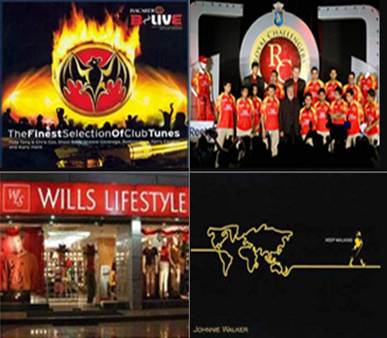
The banned product (alcohol or cigarettes) may not be projected directly to consumers but rather masked under another product under the same brand name, so that whenever there is mention of that brand, people start associating it with its main product (the alcohol or cigarette). In India there is a large number of companies doing surrogate advertising, from Bacardi Blast music CDs and Bagpiper Club Soda to Officer’s Choice playing cards.
India is not first when it comes to banning controversial adverts or adverts showcasing alcoholic drinks, cigarettes, or other tobacco products. Surrogate advertising first started in Britain, where housewives started protesting against the liquor company and forced them to promote fruit juice and soda under the same brand. This has led to a steady inflow of surrogate advertising in India.
Who oversees ‘surrogate ads’ in India for alcohol?
Activists seek government action against those who advertise liquor brands
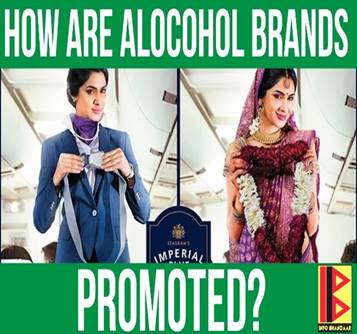
Mineral water, sodas, music, and sports franchises are among the common avenues taken by alcohol manufacturers to advertise their brands. So what is new in this?
Nothing. But what is befuddling those in power as well as the moral police is how “”surrogate advertising’ can be monitored in the absence of overarching legislation.
At the Centre, the buck is passed on between ministries and sometimes to respective states. This is even as consumer activists urge the government to frame central legislation, even if effective implementation will rest with the state governments. In fact, the self-regulating Advertising Standards Council of India (ASCI) already has a code for brand extensions.
“Surrogate advertising is not allowed as per law, but we have been urging the government to start taking legal action against liquor brands that violate these providers and are habitual offenders,” said Bejon Misra, founder of the Consumer Online Foundation.
Regulation of such advertising appeared to fall under the jurisdiction of at least five ministries—Consumer Affairs, Health, Information & Broadcasting (I&B), IT, and Social Justice and Empowerment. “There are ambiguous court rulings on the matter where alcohol manufacturers state that the logo is the identity of the brand and using it on products other than alcohol is a legitimate business activity. So it’s mainly down to legal interpretation and in time will need to be settled by courts to establish a stated position,” a senior government official told Business Line.
He added any concerted effort to clamp down on the practice would have to be led by the Health Ministry, which took the lead in curbing cigarette/tobacco advertising.
Another official pointed out that Section 2(r) of the Consumer Protection Act, 1986, outlined ‘unfair trade practices’ for sales maximization of a good or service and provided legal recourse for consumers if suppliers were found to have engaged in misleading advertisements.
“Though it does not explicitly mention surrogate advertising, sellers could be prosecuted depending on how a case is presented. That said, if mineral water advertised by an alcohol company meets requisite standards, it’s a murky area,” he said, adding new legislation might not serve any purpose and could lead to inter-sectoral conflicts.
Direct advertising of alcoholic beverages is banned in India, but private channels have often permitted surrogate advertising.
“We need to have a comprehensive Central Law that regulates various aspects of alcohol consumption and promotion,” said Monika Arora, Health Promotion & Associate Professor, Public Health Foundation of India.
Brand experts define it as the leveraging of existing brand equity, while agencies call it an exercise to create awareness and brand recall of products on the negative list. The government, on the other hand, comes down heavily on the intriguing concept of surrogate advertising. The anti-tobacco lobby is going strong worldwide, and the list of negative products in every country is on the rise.
“Surrogate advertising is a reflection of the hypocritical society that we live in. Some products are good enough to be sold but not good enough to be advertised. A marketer has to sell his product and will find means to promote it. I don’t blame him.”
Says Santosh Desai, Executive Vice President, McCann Erickson, “There seems to be an inherent double standard in the government’s policy. If something is unrecognizably bad and cannot be advertised, then why sell it at all and earn tax revenue on it as well? I feel that the case of the government allowing liquor companies to operate but not advertise is like a baby who is given birth to but is thereafter not looked after.”
Meenakshi Madhvani, CEO of Carat, a company that manages brands such as Bacardi and UDV, concurs. “If selling liquor is a legal business, then why is advertising liquor not?” she questions. “This is a case of the government having its cake and eating it too. If liquor brings in so much revenue to the government, why should it not be advertised?” she adds.
Although the withdrawal of surrogate liquor advertisements would cause a decline in the revenues for television channels, the drop would not be as substantial. Says Madhvani, “As a whole, the spending on liquor as a category is not as much. Therefore the impact on ad revenues would not be very marked.’
But the views of Zia Mody, Advocate, and member of ASCI differ. “Liquor companies have found an indirect way of getting over the ban on advertising through surrogate advertising. The government may allow certain vices, but that does not mean that it would be forced to encourage them as well. Advertising liquor would be encouraging it.”
Bharat Kapadia, Associate Publisher and Partner, Chitralekha Group, and member of ASCI, opines, “Liquor companies try to find loopholes to advertise their brands. Via this surrogate advertising, consumers can be misguided, which is why the I&B ministry needs to take care of such advertising.”
Raj Nayak, Executive VP, Star Network, also touches upon the same. “Although we would follow the government’s final take on this, the distinction between surrogate advertising and a real brand extension is what is called for.”
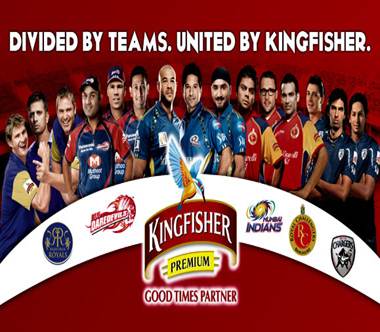
Amongst liquor majors that have been advertising their line extensions are Bacardi International and Radico Khaitan. While Bacardi has been advertising its Bacardi Blast Summer Party Music Album,” Radico Khaitan has started marketing apple juice under the 8 PM brand. While the McDowell Mera No. 1 ad campaign is used to sell their soda, United Breweries is selling its mineral water under the “Kingfisher” brand.
According to Richard Nordquist, a weasel word is a modifying word that undermines or contradicts the meaning of the word, phrase, or clause it accompanies, such as “genuine replica.” This term is also referred to as weaselism.
More broadly, “weasel word” may refer to any word that’s used with the intention to mislead or misinform. The term was coined by author Stewart Chaplin in 1900 and popularized by Theodore Roosevelt in a speech in 1916. The weasel claim is the most popularly used advertising trick. The words are phrases used in advertising (or press releases) that convey an impression of meaning without actually saying it.
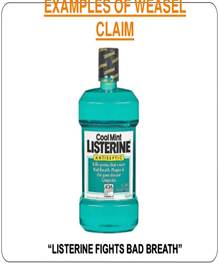
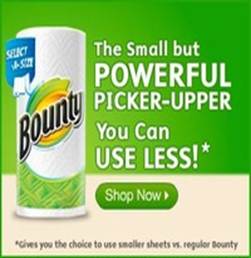
It involves using “weasel words,” or words that are meant to trick the audience into thinking the product is better than it really is. Words such as “virtually,” “fights,” and “helps” are all weasel words. The weasel claim uses weasel words to take what could be a solid claim and make it worthless by weakening any bold assertion with words such as “helps,” “probably,” “refreshes,” “fights,” “strengthens,” “virtually,” “like,” “almost,” and so on. Example:
Steakies taste almost as delicious as they sound.
Head & Clean helps stop dandruff completely.
Persil makes your dishes virtually spotless.
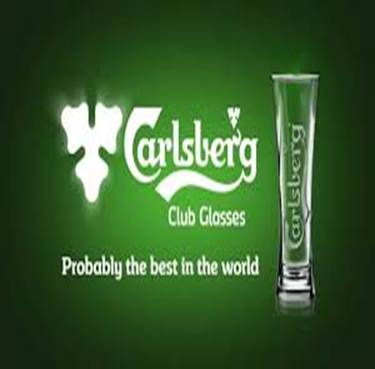
Probably the best beer in the world.
We could make you look like a real celebrity.
Weasel advertisements in India
Uses of weasel advertising
We use weasel words to instill an idea in readers’ minds that surpasses the actual claim. Working from vague, indeterminate facts (or no facts at all), you can generate perceptions that may be completely at odds with reality without making a definite, absolute, or concrete claim that could be open to challenge.
Help to: In conjunction with ‘can’ (see below), ‘help to’ positions your product or service as part of the solution to a problem without taking sole credit. For example, Crunchaflakes can help to reduce weight as part of a calorie-controlled diet.
Can and could: Use ‘can’ and ‘could’ for indefinite claims that you want to sound definite. For example, while traditional fan heaters have an average lifetime of 10–15 years, the Room Heater 32 can keep on pumping out heat for decades.
Hundreds and thousands: Look again at the example above. What period does ‘decades’ actually denote? Dunno, but it sounds like ages—just as words like ‘dozens,’ ‘hundreds,’ and ‘thousands’ sound like big quantities.
Fractions: Closely related is the word ‘fraction,’ as in ‘now available at a fraction of the original price.’ 99/100ths is a fraction, but your audience will think of the ones they learned at school, like 1/2, 1/3, and 1/4, which will make them think you’re offering a huge discount.
Relative improvement: Whiter teeth. Improved search engine rankings. Increased sales. Shinier hair. Whatever it is you’re offering to do, make it relative and unquantified, not absolute and specific. That way, even the tiniest improvement fulfills the promise.
Up to: ‘Up to’ or ‘as much as’ are used when you want to quote a numerical or statistical claim but can only substantiate it within a certain range.
‘As much as’ and ‘as little as: For a rhetorical twist, use ‘as much as’ or ‘as little as’ to imply that the figure you’re quoting is particularly high or low. For example: The iPhone is now available for as little as £35 per month.
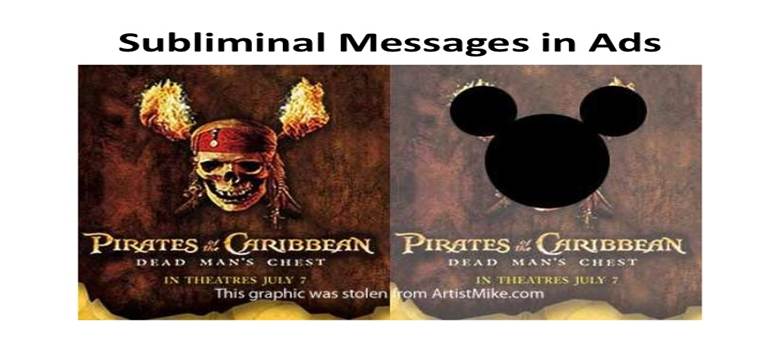
A subliminal message is a signal or message embedded in another object, designed to pass below the normal limits of perception. These messages are indiscernible by the conscious mind but allegedly affect the subconscious or deeper mind. Subliminal techniques have occasionally been used in advertising and propaganda; the purpose, effectiveness, and frequency of such techniques are debated.
Can words flashed quickly on a screen make you want to purchase a product? Can a hidden image persuade you to spend your hard-earned cash on something you don’t need? This topic will explore the questions surrounding subliminal advertising.
History of Subliminal Advertising
In the 1950s, a researcher named James Vicary coined the term to describe what he claimed he found in his Popcorn Experiment. He argued that sales of concessions had increased based on the split-second flashing of visual stimuli, suggesting people make these purchases. Vicary later retracted his claim, but the thought was an intriguing one for the public. Can we be made to take actions based on information received below our conscious awareness? People asked themselves, “How frightening is that?”
Years later, when a 1973 ad for a board game named Husker Du included the flashing of the words ‘Get It,’ the ad was removed from the air. The incident led to the Federal Trade Commission’s official stance against the ads. The Commission saw these ads as deceptive and banned the practice of using subliminal ads, even though there wasn’t definitive research to prove the effects. Even now, the question of whether we are affected by subliminal marketing is up for debate.
Definition
According to Business Dictionary, “Promotional messages the recipient is not aware of, such as those played at very low volume or flashed on a screen for less than a second. Its effectiveness is not supported by scientific evidence, and its use is considered a deceptive business practice in some jurisdictions.”
Subliminal advertising advocates would say that if you’d seen those words flashed at you for a fraction of a second, you’d be more likely to do as they say. The claim is that our brain has picked up the message even if we haven’t.
As you read those exclamations now, you probably wondered what they were doing at the beginning of your lesson. But what if you hadn’t perceived them at all, if they’d flashed on your screen as visual stimuli, and you couldn’t even remember you’d seen them? Stimuli such as images may activate our brain even if we don’t fully perceive what is happening.
The argument goes that you’d feel more compelled to consume the tasty treats as a result of these subliminal visual stimuli. And the weird part is, you wouldn’t even know why you were craving them because the messages were below the threshold of your perception.
Advertising can manipulate our emotions, with or without making the process hidden. To balance out the tremendous power of advertising, a person can aim to consider and question how the company is trying to position the product and then weigh whether he really needs what is being sold. This is a big part of why subliminal advertising is considered deceptive. When something is below our level of perception, we miss out on the opportunity to consider the message being communicated to us.
Subliminal Messages
A subliminal message is an affirmation or message, either auditory or visual, presented below the normal limits of human auditory or visual perception.
For example, the subliminal signal might be inaudible to the conscious mind because it is below the conscious threshold of hearing (but audible to the unconscious or deeper mind) or might be an image transmitted briefly and unperceived consciously and yet perceived unconsciously.
While this definition assumes a difference between conscious and unconscious—this might be misleading in the understanding and use; it may be more true to suggest that the subliminal message (sound or image) is perceived by deeper parts of what is a single integrated mind.
How do subliminal messages work?
It is suspected and usually tested in psychological studies that subliminal messages gain their potential ability to influence from the fact that they may be able to circumvent the conscious awareness and its critical functions.
For example, if you were listening to a subliminal session for weight loss and you were able to hear the affirmation “I am slim and trim,” your conscious mind would say to itself, “What a load of crap; I am fat and hate my body.” The idea is that since you are unable to criticize the affirmation when you cannot consciously hear it, it is accepted by the subconscious mind without comment or rebuttal.
This route to influence or persuasion would be akin to auto-suggestion or hypnosis wherein the subject is encouraged to be (or induced to be) relaxed so that suggestions are directed to deeper parts of the mind; some observers have argued that the unconscious mind is incapable of critical refusal of hypnotic or subliminal suggestions.
Research findings so far do not support the conclusion that subliminal suggestions are peculiarly powerful. Although this might be because most of the studies into subliminal suggestions or influence involve a one-off subliminal stimulus, and then behavior is measured to test any influence. Usually, if at all, the response of subjects is small and weak.
Subliminal Perceptions in Marketing
An organization’s marketing is effective when it delivers a message that sticks in consumers’ minds and influences them to buy. Consumers experience subliminal perception from marketing messages that influence them without their conscious knowledge. Subliminal influence on consumer buying behavior has been studied and debated for decades. Many marketers include subliminal words and images in advertising, while others don’t make it a priority.
1. Subliminal Marketing
Subliminal messages influence consumers only under certain conditions. “Subliminal” means “below the threshold,” so subliminal messages are aimed at consumers’ subconscious minds. Many marketers include subliminal references to sex, power, happiness, hunger, or wealth in their print, online, and television ads or in brand logos.
For example, one print ad for Coca-Cola featured frost that some argued was subtly shaped in the image of a naked woman on the top of a can. Presumably, that image would shift the perception of the drink and make it more attractive to the target market. In another example, the Amazon logo features a smiley face that connects the letters A and Z in Amazon as if to suggest that consumers can find anything from A to Z and always be happy doing business with Amazon.
2. Creating Preferences
Subliminal marketing can influence consumers to prefer your product if they don’t already have a strong preference for a competing product.
For example, in a 2011 study published in the “Journal of Consumer Psychology,” researchers tested whether a subliminal message of an iced-tea brand could influence viewers’ choices when they were given the option to drink iced tea or bottled water at the end of an experiment. The data determined that only thirsty viewers were influenced, and only those who either didn’t prefer iced tea or didn’t prefer either choice were influenced to choose the iced tea because of the subliminal message.
3. Motivation Necessary
Consumers have to have heard of the brand in a subliminal message and be motivated to do what the subliminal message suggests in order to be influenced by subliminal perception. For example, if you don’t own a dog, watching a subliminal message to “Buy Brand-X dog food” flashed quickly at intervals throughout a movie won’t influence you to buy dog food.
The subliminal message may influence you, however, to choose Brand X over Brand Y if you already plan to buy dog food after watching the movie. At the same time, the subliminal message about Brand-X will likely have no influence on a dog food-buying consumer if the consumer strongly prefers Brand-Y or has never heard of Brand-X before.
4. Subliminal Exposed
While implanting subliminal messages in marketing can help sway some undecided consumers, many marketers don’t see the need. Compelling marketing that moves conscious thoughts and emotions does more to keep consumers coming back to a brand they already like. Additionally, any subliminal impact of ads and logos on consumers’ minds is diminished when the supposed subliminal messages or images are exposed.
For example, when you’re told that the frost on a cola can in an ad is shaped like a woman, the subliminal image no longer serves its purpose. Once your subliminal trick is revealed, the words or images become just another part of the overt marketing message consumers will consciously think about regarding your brand.
According to the Legal Dictionary, puffery is a form of advertising in which a product or service is praised as being superior to all others like it, without any evidence to back up the claim. This is done for the sole purpose of attracting buyers that might not otherwise give the product or service any attention.
Puffery can normally be found in advertising or promotional materials about a specific product or service, though it is often employed by politicians and other people attempting to gain favor. Puffery is legal, so long as it does not escalate to what would be considered misrepresentation. For example, undeserved or exaggerated praise; publicity consisting of such praise and others.
What is puffery?
Puffery is a statement or claim that is promotional in nature. It’s usually subjective and not to be taken seriously. Advertisers try to persuade people to buy a product or service through various methods. A company may deliver an entertaining message about its product, compare the product to a similar item, list facts about the product, or make vague claims about the product that cannot be proved or disproved. This last method is known as “puffery”; the advertiser “puffs up” the product to seem like more than it is.
Puffery is not illegal and is a common method used in advertising. Examples of these include claiming that one’s product is the “best in the world” or something completely unbelievable, like a product claiming to make you feel like you’re in space. For example:
Duracell
We all know that a toy rabbit powered by a Duracell battery will not keep going and going and going. Even if puffery’s only function is to entertain, that would be sufficient reason not to discourage it.
Fevicol (“Fevicol ka mazboot jod hai Tootega nahi!” by Fevicol)
The impact of puffery advertisement on the audience is as follows:
Consumers tend to buy the product on the basis of puffed-up ads but at times end up being dissatisfied. The product does not live up to their expectations.
At times, puffery has a negative impact on the consumers, where instead of being brand loyal, they end up being brand averse.
Some other examples of ‘puffery’ in advertising:
“Red Bull Gives You Wings”
“Feels like you’re sleeping on a cloud.”
“It’s a meal fit for a king.”
“It’ll blow your mind.”
“World’s best coffee.”
The above slogans are all ‘puffery’; we don’t know what it’s like to sleep on a cloud. Who knows what a meal fit for a king is? “Blow your mind” is obviously not to be taken literally, and there is no way of substantiating if you’re serving the world’s best coffee.
Puffery enables an advertiser to grab consumers by their collars and say, “Hey, have I got a great product for you!” If firms are discouraged from placing in their ads all but the driest factual claims, consumers will be forced to spend more of their time and resources discovering which products are available.
One consequence will be diminished product innovation. Because consumers are more familiar with established products than with new products, puffery is pivotal to the marketing of new products. Fewer resources will be devoted to product innovation if firms encounter greater legal risks in bringing new products to consumers’ attention. Established products experience less intense competition as fewer products enter the market. Product quality declines.
Social marketing was “born” as a discipline in the 1970s, when Philip Kotler and Gerald Zaltman realized that the same marketing principles that were being used to sell products to consumers could be used to “sell” ideas, attitudes, and behaviors. Kotler and Andresen define social marketing as “differing from other areas of marketing only with respect to the objectives of the marketer and his or her organization. Social marketing seeks to influence social behaviors not to benefit the marketer, but to benefit the target audience and the general society.” Social marketing is an approach used to develop activities aimed at changing or maintaining people’s behavior for the benefit of individuals and society as a whole.
So what, exactly, is social marketing? In the Social Marketing Report, it’s defined as “the application of commercial marketing techniques to social problems.” It means to take the same principles used in selling goods—such as shoes, television shows, or pizza—to convince people to change their behavior.
What does that mean? Well, instead of selling hamburgers, you’re selling a life without heart attacks. Instead of convincing teenagers to buy blue jeans, you’re convincing them to buy the advantages of postponing pregnancy.
If you are selling blue jeans, you’re still trying to influence behavior—you’re convincing people they need to wear your jeans, either for comfort or for style or for value. So then, what is the difference between social marketing and commercial marketing?
Definition
Before we focus on social marketing, we should clarify the nature of marketing as both an academic discipline and a management practice.
The definition offered by Kotler, Roberto, and Lee (2002, p. 5) is a useful one:
“The use of marketing principles and techniques to influence a target audience to voluntarily accept, reject, modify, or abandon a behavior for the benefit of individuals, groups, or society as a whole.”
Social marketing relies on voluntary compliance rather than legal, economic, or coercive forms of influence.
Kotler et al. (2002) argue that social marketing is often used to influence an audience to change their behavior for the sake of one or more of the following:
Improving health—health issues
Preventing injuries—safety issues
Protecting the environment – environmental issues
Contributing to the community involves issues of community-building.
Lazer and Kelley (1973, p. ix) define social marketing as follows:
“Social marketing is concerned with the application of marketing knowledge, concepts, and techniques to enhance social as well as economic ends. It is also concerned with analysis of the social consequences of marketing policies, decisions, and activities.”
Corporate Social Responsibility (CSR) is a continuing commitment by businesses to integrate social and environmental concerns into their business operations. Changes in the global environment increasingly challenge businesses around the world to look beyond financial performance and to integrate social and environmental concerns into their strategic management.
India traditionally viewed CSR as a philanthropic activity prior to the Companies Act 2013. And in keeping with the Indian tradition, it was believed that every company has a moral responsibility to play an active role in discharging its social obligations, subject to its financial health. In the early 90s, Mahatma Gandhi introduced the concept of trusteeship, helping socio-economic growth. Family values, traditions, culture, and religion influenced CSR.
On 29th August 2013, the Companies Act of 2013 replaced the Companies Act of 1956. The New Act has introduced far-reaching changes that affect company formation, administration, and governance, and it incorporates an additional section, i.e., Section 135—a clause on Corporate Social Responsibility obligations (“CSR”) for companies listed in India. The clause covers the essential prerequisites pertaining to the execution, fund allotment, and reporting for successful project implementation.
India became the first country to legislate the need to undertake CSR activities and mandatorily report CSR initiatives under the new Companies Act 2013. This is the beginning of a new era for CSR in India.
Companies to implement their CSR in PROJECT MODE are:
Suggested Areas of Activities for (As per Schedule VII)
Eradicating hunger, poverty and malnutrition; promoting health care including preventive health care and sanitation, including contribution to the Swachh Bharat Kosh set-up by the Central Government for the promotion of sanitation; and making available safe drinking water;
Promoting education, including special education and employment-enhancing vocation skills especially among children, women, the elderly, and the differently abled and livelihood enhancement projects;
Promoting gender equality, empowering women, setting up homes and hostels for women and orphans; setting up old age homes, day care centers, and such other facilities for senior citizens, and taking measures for reducing inequalities faced by socially and economically backward groups;
Ensuring environmental sustainability, ecological balance, protection of flora and fauna, animal welfare, agroforestry, conservation of natural resources, and maintaining the quality of soil, air, and water, including contributions to the Clean Ganga Fund set up by the Central Government for the rejuvenation of the Ganga River;
Protection of national heritage, art and culture, including restoration of buildings and sites of historical importance and works of art; setting up public libraries; promotion and development of traditional art and handicrafts;
Measures for the benefit of armed forces veterans, war widows and their dependents;
Training to promote rural sports, nationally recognized sports, Paralympic sports and olympic sports;
Contribution to the Prime Minister’s National Relief Fund or any other fund set up by the Central Government for the socio-economic development, relief, and welfare of the Scheduled Castes, Scheduled Tribes, other backward classes, minorities, and women;
The Central Govt. approves and provides contributions or funds to technology incubators located within academic institutions.
The tagline “jaago re” from TATA Tea is considerably encouraging to the public, as it conveys a positive message to “awaken” the people of India towards their real aims and duties.
Coca-Cola Mehman Nawaaji
Coca-Cola is taking ‘mehman nawaazi’ to a new level with #CokeNawaazi, where vada pav is being served with Coke, paranthas are being had with Coke, and 4’s and 6’s are being celebrated with shots of Coke.
P & G (Padegha, India; Badegha, India)
Shiksha is now in its 7th year and is back with an even stronger commitment—to take its current impact of 150,000 children to the 200,000 mark. On May 7, 2011, Shiksha held an event in Delhi. Shiksha ambassadors Anupam Kher and Dr. Kiran Bedi, as well as recent Shiksha supporter Jacqueline Fernandes, unveiled the plan of the Shiksha-RTI School in Purkhas, Haryana. This school is one of the 20+ schools that Shiksha is building in 2010-11 alone.
B. Advocacy Advertising
Introduction
Advocacy advertisements are communications intended to bring awareness to a certain problem. It is a kind of advertisement that is used in order to influence the public on political or social matters. Moreover, it is also concerned with the propagation of ideas and the explanation of controversial social issues that are deemed important in public policy terms.
Advocacy advertising is commonly regarded as a subdivision of corporate or institutional advertising. Contrasting commercial advertising, advocacy advertising is considered to be undertaken in the interest of a group or the public and naturally does not promote a product or service. Funding for advocacy advertising can be provided by nonprofit organizations, corporations, or private advocacy groups.
Advocacy advertising in India
Indian brands are taking advantage of the new call of social selling, employer branding, social hiring, personal branding, social PR, etc., which are the key principles of brand advocacy. Nowadays every brand begins changing their colors. Literally. Well, we are referring to the sudden switch to saffron, white, and green (India’s flag colors) in their marketing communication to celebrate Independence Day. But beyond these surface-level changes, there are a few brands that go the extra mile and design a campaign to aptly represent the spirit of independence and what it means for India.
Incorporating the brand message into the advertisement adds a unique touch. Undoubtedly, these campaigns continue to resonate with Indian consumers even after their discontinuation. So here’s a look at a few such memorable campaigns that evoke a strong sense of patriotism in every Indian.
Bajaj (‘Buland bharat ki buland tasveer – Hamara Bajaj’)
In this ad, Bajaj encapsulates the aspirations and spirit of a pre-liberalization India through its flagship scooter brand, Chetak. A simple middle-class family riding the scooter, a Parsi man wiping it clean, and yet another family worshipping the scooter before the first ride—each of these instances resonated well with the Indian consumer and positioned it as the perfect family two-wheeler. In fact, the sense of belonging this ad created was so strong that even today, the words ‘Buland bharat ki buland tasveer – Hamara Bajaj’ immediately make the Indian consumer nostalgic.
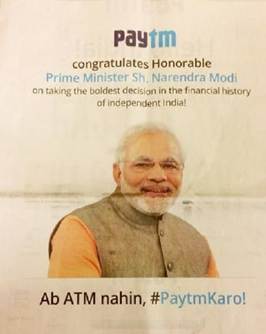
Paytm
Theme: Freedom is realizing that you have a choice.
Year of release: 2016
Hope and the possibility of a corruption-free India are the messages that mobile payments and the e-commerce platform Paytm convey through this ad film. It narrates three instances where it seems like there would be an exchange of money as a bribe but, in a pleasant twist, shows an exchange of emotions instead. “Jab cash nahi hoga, toh corruption kaise hoga?” The last frame of the ad urges people to work towards India’s freedom from corruption by encouraging them to use less cash and more digital payments.
Note: Interestingly, three months later, the government of India announced the demonetization of high-value currency, with one of the objectives being a cash-free economy.