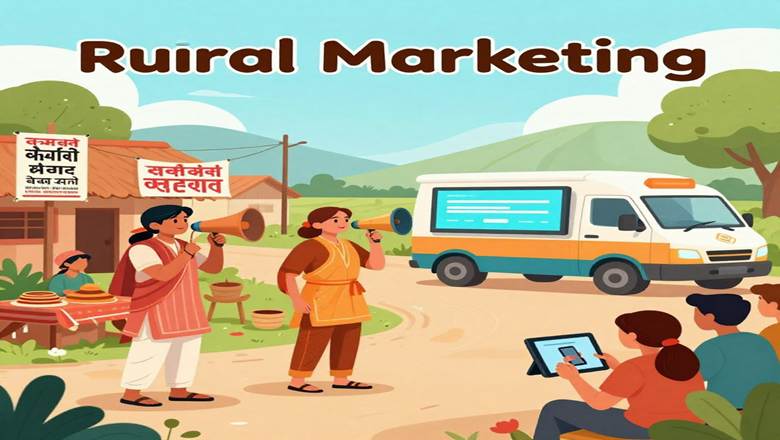
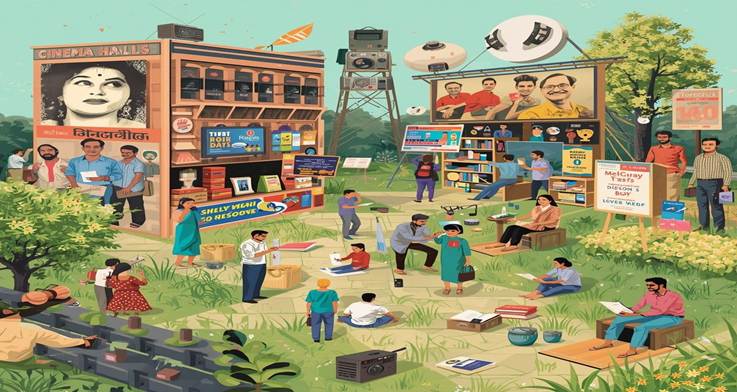
Effective use of conventional and non-conventional media in rural marketing leverages accessible, low-cost channels to reach low-literacy audiences, blending trusted traditional formats with innovative local tactics for high engagement. These complement message designs by prioritizing visuals, audio, and community touchpoints over digital-heavy approaches in infrastructure-limited areas.
A. Conventional media
Conventional media refers to traditional mass communication channels such as radio, television, newspapers, magazines, cinema, and outdoor advertising.
Effective Uses:
1. Radio
Why Effective? Wide rural reach, language localization, and low literacy barrier.
Example/Case Study:
Krishi Darshan (All India Radio): Broadcasts agricultural advice and product promotions, reaching millions of rural farmers.
HUL’s “Kyunki Saas Bhi Kabhi Bahu Thi” product placements: promoted household brands to rural women through popular serials on Doordarshan.
3. Print Media
Why Effective? Local newspapers and magazines in vernacular languages.
Example/Case Study:
Seed and fertilizer companies regularly advertise in regional dailies, providing information on new products and usage tips.
4. Cinema Halls
Why Effective? Cinema halls serve as a community gathering space, providing a captive audience.
Example/Case Study:
Coca-Cola ran localized ads and product videos before movies in rural cinema halls, increasing brand recall.
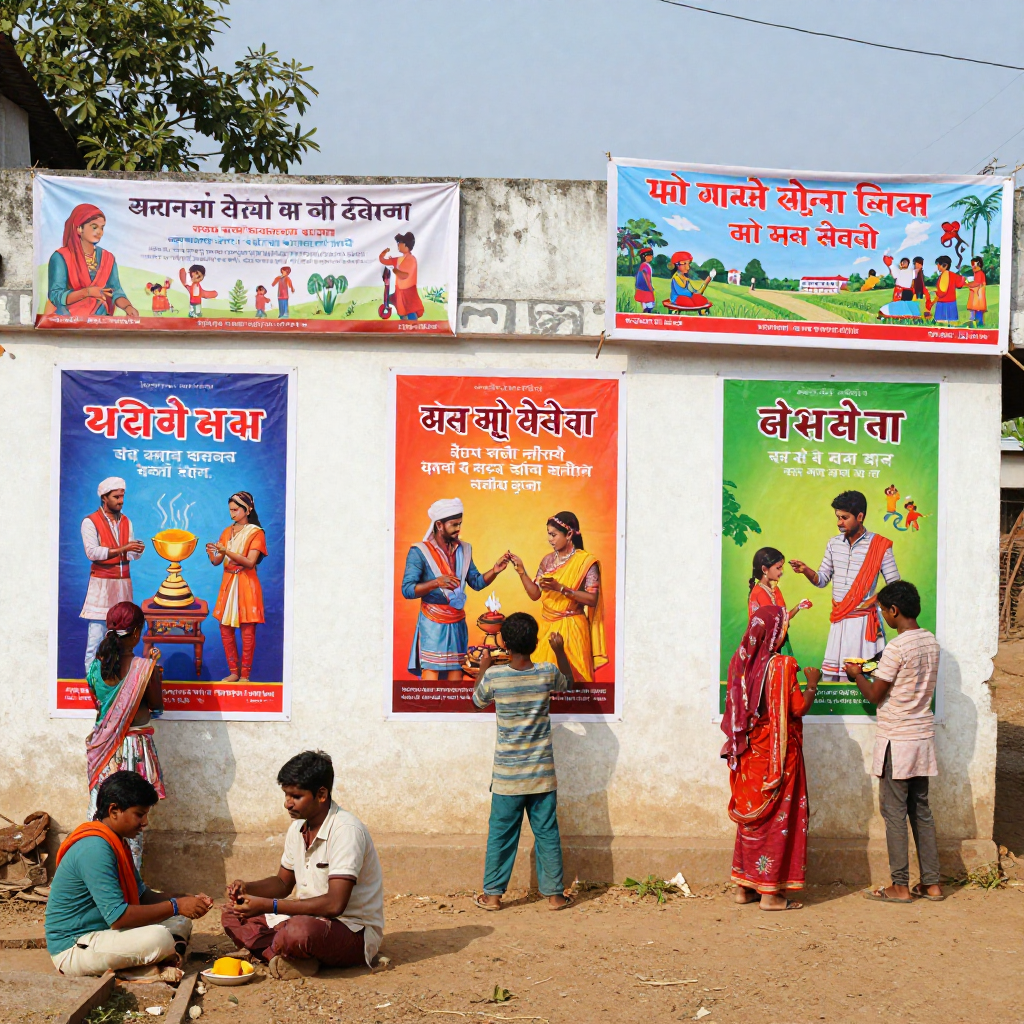
5. Outdoor Media (Wall Paintings, Posters, Hoardings)
Why Effective? The effectiveness of outdoor media lies in its high visibility in public spaces.
Example/Case Study:
Wheel Detergent (HUL): Used wall paintings and murals in villages to reinforce brand messages where other media had limited reach.
B. Non-Conventional Media in Rural Marketing
Non-conventional media includes innovative, direct, and interactive channels that are not part of the traditional mass media mix. These are often more participative and tailored for rural contexts.
Effective Uses:
6. Folk Media (Puppetry, Dance-Drama, Street Plays)
Why Effective? High emotional appeal, cultural relevance, and active participation.
Example/Case Study:
Lifebuoy soap (HUL): Used puppet shows and nukkad nataks to demonstrate the importance of handwashing, making the message memorable and engaging.
7. Mobile Vans and Roads hows
Why Effective? The campaign involved physical presence in remote villages, live demos, and sampling.
Example/Case Study:
Colgate-Palmolive’s Rural Van Campaign: Vans toured villages, offered free dental check-ups, distributed toothpaste samples, and educated people on oral hygiene.
8. Haats and Melas (Weekly Markets and Fairs)
Why Effective? They are effective due to their high footfall, interactive engagement, and product demonstrations.
Example/Case Study:
Britannia Industries: Set up stalls at melas to offer free biscuit samples, increasing awareness and trials in rural markets.
9. House-to-House Demonstrations
Why Effective? Direct, personal, and builds trust—especially for products like health, hygiene, and home care.
Example/Case Study:
Godrej Hair Dye: Trained promoters visited homes to demonstrate product use, addressing doubts and building confidence among rural women.
10. Partnerships with Local Influencers and Institutions
Why Effective? This approach effectively leverages the trust and networks within the community.
Example/Case Study:
Tata Swach Water Purifier: Collaborated with self-help groups and NGOs for local demonstrations, resulting in higher adoption.
Conclusion:
A blend of conventional media (radio, TV, print, outdoor) and non-conventional media (folk media, mobile vans, haats/melas, house demos, local partnerships), tailored to the realities of the rural audience, ensures effective communication and deeper market penetration. Successful brands use these approaches strategically, often combining them for maximum impact.
Designing the message and determining communication objectives in rural marketing involves tailoring content to low-literacy, community-oriented audiences while aligning with clear goals like awareness or trial. This process builds on understanding rural consumers’ value-driven traits and leverages simple, culturally resonant formats for maximum impact.
Designing the Message
Designing the message involves crafting the content and style of communication so that it resonates with the target audience and achieves the intended effect.
Key Steps:
Identify the Target Audience: Understand their needs, values, language, literacy level, and cultural background.
Define the Key Message: Decide what core idea or benefit you want to communicate (e.g., product advantages, solution to a problem).
Select the Message Appeal: Choose an emotional, rational, moral, or social appeal based on what motivates the audience (e.g., health, savings, family welfare).
Structure the Message:
Beginning: Attract attention (e.g., a question or striking fact).
Middle: Explain the benefits or story.
End: Call to action (what should the consumer do next?).
Language and Format:
Use simple, local language, and suitable formats (e.g., stories, slogans, jingles, visuals).
Test and Refine: Pre-test the message with a small sample of the target group and refine based on feedback.
Determining Communication Objectives
Communication objectives define what the organization wants to achieve with its message. These should be clear, measurable, and aligned with overall marketing goals.
Common Communication Objectives:
1. Awareness: Make the audience aware of the product, service, or issue.
Example: “Increase awareness of our new fertilizer among 60% of farmers in the region.”
2. Knowledge: Ensure the audience understands how the product works or its benefits.
Example: “Educate rural mothers on the nutritional value of fortified flour.”
3. Attitude Change: Influence opinions or beliefs about the product or cause.
Example: “Change the perception that branded seeds are expensive and show their long-term value.”
4. Behavior Change: Motivate the audience to take action, such as trying, buying, or adopting a new habit.
Example: “Increase trial purchase of our soap by 20% in the next six months.”
5. Reinforcement: Strengthen positive attitudes or behaviors among existing customers.
Example: “Encourage repeat purchase through loyalty programs.”
Example: Rural Health Campaign
6. Objective: Increase handwashing with soap among rural schoolchildren.
Message Design:
Key Message: “Handwashing with soap keeps you healthy and strong.”
Appeal: Emotional (care for family), Rational (prevention of illness).
Format: Storytelling via folk song and wall painting.
Language: Local dialect, simple words.
Result: Improved hygiene practices and product uptake.
In summary:
Designing the message means tailoring content to the audience’s needs and context, while communication objectives clarify what the message should achieve—such as awareness, knowledge, or action. Both are essential for effective rural marketing communications.
Copywriting and creative advertising for rural consumers emphasize simplicity, local relevance, and visual storytelling to overcome low literacy and build trust in community-driven markets. These tactics use vernacular languages, folk elements, and demos to drive word-of-mouth, aligning with rural traits like value-seeking and peer influence discussed earlier.
Copywriting for Rural Consumers
Key Principles:
Use Local Language: Write in the regional dialect to make the message easily comprehensible.
Simplicity: Use short, simple sentences without jargon.
Relatable Content: Incorporate local culture, daily life, and values into the messaging.
Storytelling: Frame the message as a story or folk tale that resonates with rural life.
Call to Action: Clearly state what the consumer should do (buy, try, ask, etc.).
Example 1: Copywriting for a New Cooking Oil
English:
“Pure oil for a healthy family. Choose Shakti Oil—your trusted choice for tasty and safe cooking!”
Hindi (local adaptation):
“स्वस्थ परिवार के लिए शुद्ध तेल। स्वाद और सुरक्षा के लिए भरोसेमंद शक्ति तेल चुनें!”
Creative Approach:
Add a folk song jingle about mothers cooking delicious meals with Shakti Oil.
Use images of joyful rural families at the dinner table.
Example 2: Copywriting for Seeds
Slogan:
“Behtar Beej, Zyada Fasal!”
(“Better Seeds, Bigger Harvest!”)
Creative Content:
A story of two farmers: one uses the brand’s seeds and enjoys a bumper harvest; the other struggles.
End with a visual of the successful farmer sharing his secret at the village market.
Creative Advertisement Techniques for Rural Markets
1. Folk Media Integration
Example:
Lifebuoy Soap used puppet shows (Kathputli) to teach the importance of handwashing, with the puppet characters representing rural villagers.
2. Wall Paintings and Murals
Example:
Wheel Detergent (HUL) painted brightly colored murals on rural homes and shops with simple slogans:
“मैले कपड़े नहीं, सिर्फ व्हील!”
(“No more dirty clothes, only Wheel!”)
3. Rural Radio Jingles
Example:
Tractor Brand Radio Jingle:
“मजबूत ट्रैक्टर, हर खेत का साथी!”
(“Strong tractor, every field’s companion!”)
Sung in the local language with folk tunes.
4. Village Drama (Nukkad Natak)
Example:
For a health Drink is a street play about children becoming stronger and performing better in school after drinking the new health beverage, ending with the tagline chanted by the actors.
Conclusion:
Effective copywriting and creative advertising for rural consumers must blend simple, local language with culturally relevant stories and visuals. Brands that use these strategies foster connection, trust, and action among rural audiences.
Understanding the advertising industry begins with a grasp of how the agencies work. Advertising agencies have a number of key departments that service their clients. An advertising agency must have an appropriate internal organizational structure to keep functioning properly with a smooth workflow. Advertising firms are unique businesses that use creativity and business hand in hand.
One of the best ways to understand how the advertising world functions is to understand how an advertising agency works. In advertising agencies there are many different types of advertising agencies. The departments work together to accomplish the agency’s goals. There are a lot of departments that can exist in an agency. Some work on acquiring and maintaining clients, while others write and develop the promotional materials and advertisements. Some departments also manage various support functions in advertising firms, such as keeping track of bills, payments, and office expenses. Whatever department you work for in an advertising agency, expect to collaborate with other fellow employees in a team environment.
Account handling department
Account handling department Client management, project management, and deadlines—all of these things and a few more are handled by the account service department. The person who works in the area of contact and communication between the agency and the client is known as the account executive. In a large agency he could be part of a larger group, which is known as the account service group. It would include specialists in different fields, such as media, art and copy, research and production, and so on.
The account department works with clients to utilize their target markets. They are working to guarantee that a client’s money is being used as efficiently as possible and to make sure that the clients are satisfied. They also manage the other departments working on a project. Usually, it’s their purpose to manage a client and their happiness with their services.
Production department
As name implies, it is concerned with the production of the advertising material. Mostly in large advertising agencies, such as full-service agencies, they may hold an in-house production department to handle the execution of the client’s campaign. The production team’s main responsibility is the campaign’s logistics.
The productions department are the ones who are responsible for tasks such as setting schedules, talking to printers, photo shoots, and hiring directors for videos and commercials. They work very carefully with the media-buying team to make sure a campaign idea is successfully performed. Moreover, in the case of smaller agencies, the job of the production unit may be subcontracted to an external agency or combined with the media buying team’s role.
Art department
The art department of the advertising agency uses the power of creativity to make this department more attractive and agreeable. An art director heads the art department, aided by a team of artists, layout men, and visualizers. It improves visuals and layouts, billboards, and calendars for advertisements. The art department is concerned with the overall look and feel of the advertisement, from choosing the headline, text, size, and type of the font to the pictures, visuals, logo, and the photographic treatment of the commercials with originality and extraordinary talent. It is important that the art and creative departments are closely joined. The art department and the creative department work together, guided by the vice-president of creative services, and devise the final copy of the advertisement. Some ad agencies outsource their artwork to freelance artists.
Copy Department
The main responsibility of a copy department of an advertising agency is to make a striking copy of an ad. The copy director heads this department and guides the functioning of it. The major responsibility of this department is to create a striking ad copy. The ad copy is very important and is called the soul of the advertising because it carries the advertising message to its consumers without any deviation.
The copy team comprises copywriters and supervisors who use their creative skills while making an advertising copy. The copy department is mostly the largest department of an advertising agency, which consists of dedicated, qualified, and experienced team members.
Public Relations Firms
Many large companies use both advertising agencies and public relations (PR) firms. PR agencies are best for organizations looking to improve the public’s awareness of the brand or their public image. Public relations firms develop and implement programs to manage an organization’s. For example, publicity, image, affairs with consumers, and other relevant publics, including employers, suppliers, stockholders, government, labor, and the general public.
Human resource department
You need new people, people with specific talents and skills? These guys have got your back. They are also there to resolve any collaboration problems within the team. Like in any other organization, the HR department monitors the hiring and firing of employees, sick leaves, and the overall well-being of the office. They also ensure that all processes carried out by the company are in line with state and national regulations. The human resources department generally consists of HR managers who report to the head of HR.
Media Department
The media department is in control of spacing where and when commercials will show up and purchasing space or time in daily papers, magazines, radio, TV, computerized media, and outside media, for example, blurb locales and bulletins. In a small agency, one individual may consolidate the arranging and purchasing parts. In large agency organizations have a media office controlled by a media chief who supervises the work of a group of organizers and purchasers. The media group may combine experts in print, telecast, or computerized media.
Finance department
Finance sits at the most strategic level in an organization. It’s incredibly important for Finance to understand the strategic nature of the work your marketing team does. They determine how much money a department receives and whether the investment will grow or shrink and at what rate. They have a responsibility to manage that money effectively.
Financial departments analyze large financial overviews in spreadsheet format, often utilizing P&L reports, balance sheets, and cash flow overviews. All monetary transactions of the advertising agency go through this department. The finance division is responsible for handling staff payments, vendor costs, day-to-day expenses, employee benefits, and any other cost that may be borne by the advertising agency. A finance manager and finance executives/accountants generally head the department.
Creative department
The creative department of an advertising agency is responsible for developing and designing the campaign for the client across various mediums. Their job is to come up with ideas that create a demand for the customer’s product within their target audience.
Client department
Also called “account executives,” they act as the link between the agency and the client. He suggests exactly what the client wants to his ad agency. He is the person who carries the client brief and is also responsible for the approvals.
Research department
In fact, the research department functions before and after a commercial is made for pre-testing and post-testing of media, respectively. Consumer insights and brand usages are also tested at times, according to the client in many instances.
An advertising agency, frequently stated as a creative agency or an ad agency, is a business dedicated to creating, planning, and handling advertising and sometimes other forms of promotion and marketing for its clients. Private and public sector businesses use advertising agencies when they need help spreading the word about their products and services. Such agencies vary in size and regularly concentrate on specific types of advertising tasks. Typical ad agency clients include businesses and corporations, nonprofit organizations, and private agencies.
Normally speaking, most advertising agencies generate visuals and supervise media buying and advertising campaign planning. They also deliver consultation services and implement branding plans. Agencies may be hired to produce television advertisements, radio advertisements, online advertising, out-of-home advertising, mobile marketing, and AR advertising as part of an advertising campaign.
Role & functions of advertising
Raise awareness about offerings.
Encourage the trial of a new product & service.
Encourage trade channels.
Create insight & assurance.
Purpose of advertising agency
Advice & guidance on marketing.
Advice & guidance on advertising and media strategy.
Organize & develop print, outdoor, and electronic advertisements.
Bring out surety of various substances such as display material & other display material.
Support in sales promotion & other communication tasks.
I. Types of advertising agency
1. Full Service
These are the medium- or large-sized agencies capable of directing complete advertising campaigns. They plan, create, and produce the advertisement. They are also executing marketing research for the company. A full-service advertising agency offers a complete range of services that address both the traditional and digital marketing aspects of a business. Full-service ad agencies are made up of a team of experts, and they’re a one-stop shop of services:
These include sales promotion, personal selling, packing, design, and publicity along with advertising. Thus, these agencies are able to handle all the various related activities of advertisement from beginning to end.
A full-service ad agency is suitable if your business needs a full-fledged marketing plan. They’ll be able to deliver results through a TV ad as well as a social media campaign. Because their marketing activities are so comprehensive, you’ll also want an internal hire who can devote a lot of their time to working with this agency.
2. Creative boutique
A smaller-sized firm, particularly in creative ad services. ‘A creative boutique is an advertising agency which is significantly smaller than a full-service agency and offers a particular set of services to its clients.’ Unlike large full-scale agencies, creative boutiques do not have multiple worldwide locations with huge payrolls. They generally tend to be local agencies, with a unique work ethic and management style as compared to some of the larger advertising agencies.
Mostly the big brands should really consider using boutique agencies for reasons. Creative boutiques are usually founded by members of the creative departments of full-service agencies who leave the firm and take with them clients who want to retain their creative talent.
The client may seek an external creative agency for two reasons:
Because he wants an additional creative effort
Maybe because its own employees of the in-house agency or the agency that he has appointed do not have enough skills in this regard.
Advantages of creative boutiques
There are some advantages of creative boutiques.
Creative boutiques are generally much cheaper than full agencies.
Very creative and innovative ads.
No other function is performed other than creating actual ads.
Small-sized agencies with their own copywriters, directors, and creative people.
It is effective when supervised on bigger projects.
In both bigger agencies and creative boutiques, the size of the core team creating the campaign is the same.
It frequently teams up with external agencies to create fully formed creative strategies for their clients.
Due to greater flexibility and personalized interaction, boutiques are very useful and creative when dealing with smaller campaigns.
Few creative boutiques in India:
RMG David
Vyas Gianetti Creatives
Chlorophyll
3. Media buying agency
Media buyers negotiate and purchase audience-targeted time and advertising space to convey a marketing message.
A media buy is the purchase of advertising from a media company such as a television station, newspaper, magazine, blog, or website. It also entails the negotiation for price and placement of ads, as well as research into the best new venues for ad placement.
There are three integral aspects of the media buying process:
a. Networking
Media buyers must be able to grow and cultivate relationships with important channel owners. Airtime is not unlimited, and in order to get the optimal spaces, it is important to know the right people.
b. Investigation
Find the latest, greatest, and most appropriate locations for distribution. Keeping up on the media trends is an important task when it comes to media buying. The development of the communications business must be understood; purchasers must be on top of new platforms and their target markets and be able to translate that into beneficial client recommendations.
c. Negotiation
Media buyers should not only be able to negotiate fair prices for the media slots. But also find deals or extras to profit clients.
Media Buying agencies are
Mindshare
Initiative Media (LOWE)
Zenith Media (Bates, Saatchi & Saatchi)
Optimedia (Publicis)
Starcom (Leo Burnett)
Fulcrum (HTA) Normal 0 MicrosoftInternetExplorer4
4. In-house agency
The choice to produce your own advertising program or hire an outside agency will depend on many things, and every organization has its own needs. Some firms undertake all of their marketing themselves (in-house) without involvement from external parties and advertising agencies.
Advantages of an In-House Agency
Dedicated, focused team. An in-house marketing team will give you 100 percent focus on your business, and they are readily available for day-to-day needs that may come your way.
Stronger brand knowledge. Your employees are the people who know your business best. That means an in-house marketing team will have hands-on experience with your employees, customers, industry, and culture. That can translate into marketing and messaging that better represents your brand.
Better access to resources. Because your employees are on-site, they have better access to the people and processes within your business. As a result, your marketing team can complete tasks much quicker. It’s far easier for an on-site marketing team to share photos, videos, and updates to social media because they have real-time access to what’s going on at the company.
Keep relationships in-house. A marketer’s job is often to build relationships—with influencers, the media, clients, prospects, etc. It can be extremely beneficial for your marketing team to develop and own these relationships.
Conflict of Interest—Lower risk of conflict of interest or confidentiality breaches, as in-house creative teams only work for the firm.
Disadvantages of In-House Agencies
Expensive. Hiring full-time employees can be expensive. And, not just the salary, but also the overhead costs that go along with it. For instance, you current trends. Not to mention, it’s rare you can find all of the marketing skills you need in just one person.
Skills gaps. Depending on your budget, you might not be able to hire people to fill all the marketing skills you need. It can be difficult to find a few key people who can fill all of your designated roles—writing, editing, design, social media, SEO, advertising, etc. That may mean you’re still hiring contractors, freelancers, or agencies to fill the roles your team can’t handle.
Channel vision. on your business and industry. Additionally, they can often find themselves behind on marketing trends. Both of these issues could make your marketing stiff or stale.
Longer Turnaround—It may take in-house teams longer to produce campaigns than advertising agencies due to lack of experience or resources.
Media Buying agencies are
Mindshare
Initiative Media (LOWE)
Zenith Media (Bates, Saatchi & Saatchi)
Optimedia (Publicis)
Starcom (Leo Burnett)
Fulcrum (HTA) Normal 0 MicrosoftInternetExplorer4
In-house agencies in India are:
Levers – Lintas (previously)
Videocon – Confidence
Reliance – Mudra (when Mudra started out)
5. Specialized agency
A specialized agency deals its services within a specific industry, such as real estate, financial, medical, and education, or a particular function. Specialized agencies therefore focus on specific areas only. It offers only one or selected services out of the total range of services. Those agencies do not have specialization in all services or are not supported by other specialized subsidiaries. The firms ready to get only a part of the whole range of services may go in for specialized agencies. For instance, creative boutiques and media buying agencies.
These agencies get their charges in any form of
Commission: A fixed rate of commission.
Fees: In addition to commission, it may insist on payment of fees.
Percentage charges: The agency charges some percentages of charges as markup when the agency buys some services from outsiders.
Incentives-based system: The fees here are based on how well the agency performs in achieving the predetermined goals.
Other advertising agency
a. Traditional Ad Agency
Traditional ad agencies mostly work with traditional forms of media, such as newspapers, television commercials, radio, and print.
b. Public Relations Firms
Many large companies use both advertising agencies and public relations (PR) firms. PR agencies are best for organizations looking to improve the public’s awareness of the brand or their public image. Public relations firms develop and implement programs to manage an organization. For example, publicity, image, affairs with consumers, and other relevant publics, including employers, suppliers, stockholders, government, labor, and the general public.
c. Branding Ad Agency
A branding agency is best if you are considering or planning an organizational rebrand or are interested in seeing how your current brand is perceived in the market.
d. Interactive agencies
Interactive agencies are a little unique from others because of the services that they offer. They offer services such as web development and web design, internet advertising-commerce consulting, and search engine marketing.
e. Social Media Agencies
Social media agencies form a subdivision of new media agencies. They concentrate on using social media such as Facebook, Twitter, and blogs to communicate with consumers and business customers.
f. Sales Promotion Agencies
These agencies focused on the provision of sales promotions such as contests, games, sweepstakes, and refund and rebate offers.
g. Direct Marketing Agencies
The fastest growing area in IMC is direct marketing, where companies communicate with their customers through telemarketing, direct mail, and other forms of direct-response advertising.
Understanding rural consumers involves recognizing their value-driven mindset, community influences, and adaptations to limited infrastructure, which differ markedly from urban patterns. Effective language and content prioritize simplicity, visuals, and local relevance to build trust and drive adoption in low-literacy settings.
Rural Consumer Traits
Rural consumers in India, numbering over 900 million, exhibit cautious spending tied to seasonal incomes, prioritizing affordability and durability over luxury. They rely heavily on family, peers, and opinion leaders for decisions, with cultural traditions shaping preferences like bulk buys at haats. Younger demographics with rising smartphone access (425M+ users) blend traditional caution with digital curiosity.
Language Strategies
Use regional dialects, short phrases, and metaphors rooted in local folklore to overcome literacy gaps—e.g., Hindi/Marathi jingles on the radio outperform English ads. Avoid jargon; opt for repetitive, rhythmic messaging like folk songs for FMCGs, ensuring 80% recall via audio-visual cues.
Content Creation Tips
Focus on visual demos (e.g., soap hygiene skits) and storytelling with relatable rural heroes, minimizing text for wall paintings or vans. Tailor via STP: psychographic segments (aspirational farmers) respond to “desi strength” narratives, as in Colgate’s “strong teeth for hard work.” Blend digital vernacular videos with traditional media for 37% higher engagement, per cases like HUL Shakti.
A. Understanding Rural Consumers
Characteristics of Rural Consumers:
Diverse and Traditional: Rural consumers have varied cultural backgrounds and often hold traditional values.
Price-sensitive: Generally, lower purchasing power leads to a strong preference for affordable products.
Trust in Word-of-Mouth: Recommendations from local influencers or community members are highly valued.
Limited Exposure: Many have limited access to mainstream media and modern marketing channels.
Preference for Simplicity: They favor straightforward, easy-to-understand information and packaging.
Effective Use of Language and Content
Key Principles:
Local Language Usage: Communicate in regional dialects and languages to ensure clarity and build trust.
Simple Messaging: Use easy, relatable words and avoid complex jargon.
Cultural Relevance: Incorporate local customs, festivals, and traditions in content.
Visual & Oral Communication: Use images, symbols, folk stories, and audio messages for greater impact.
Storytelling: Craft messages as stories or examples that resonate with daily rural life.
Case Study: Lifebuoy’s Handwashing Campaign
Background:
Hindustan Unilever Limited (HUL) wanted to promote handwashing with soap in rural India to improve hygiene and health.
Approach:
Local Language: Lifebuoy’s campaign used local dialects and folk songs to communicate the importance of handwashing.
Cultural Touch: Messaging was woven into popular local events and festivals, making content relatable.
Simple Messaging: Slogans like “Tandurusti ki raksha, Lifebuoy hai sath sa” (“For protection of health, Lifebuoy is with you”) were easy to remember.
Visual Demonstrations: Street plays (nukkad nataks), puppet shows, and wall paintings visually demonstrated effective handwashing.
Results:
Greater awareness about hygiene and increased soap usage in rural areas.
Lifebuoy became a trusted brand, with improved sales and brand loyalty.
Other Examples
Coca-Cola: Its rural campaigns used localized ads in regional languages with simple, emotion-driven stories, leading to higher rural acceptance.
Tata Tea’s “Jaago Re” Campaign: Used local issues and regional dialects to encourage rural voters, making the campaign relatable and impactful.
Rural marketing strategies in India focus on the 4As framework—Availability, Affordability, Acceptability, and Awareness—to address challenges like low literacy, scattered populations, and limited infrastructure while tapping into a market where per capita spending rose 9.2% in 2026. These approaches are vital for FMCG, agriculture, and services, aligning with rural consumer behaviors like value-seeking and seasonal buying.
1. Product Adaptation
Strategy: Modify products to suit rural needs, preferences, and income levels.
Example: Hindustan Unilever (HUL) launched shampoo in ₹1 sachets, making it affordable and accessible for rural consumers who could not buy large bottles.
2. Pricing Strategies
Strategy: Implement low or value-based pricing to match the lower purchasing power of rural consumers.
Strategy: Develop last-mile distribution networks to ensure product availability in remote areas.
Example: ITC e-Choupal uses internet kiosks in villages to connect farmers directly with suppliers, streamlining distribution and information flow.
Project Shakti (HUL): Empowers rural women as direct-to-home sales agents, expanding reach and creating employment.
4. Communication and Promotion
Strategy: Use local languages, folk media, and culturally relevant messages for effective communication.
Example: Lifebuoy Soap (HUL) uses street plays (nukkad nataks), puppet shows, and wall paintings to promote hand hygiene in villages.
5. Leveraging Rural Haats and Melas
Strategy: Participate in weekly markets and village fairs to showcase and demonstrate products.
Example: Britannia Industries sets up stalls at melas (fairs) to offer product samples and attract new rural customers.
6. Partnership with Local Influencers
Strategy: Collaborate with teachers, panchayat leaders, and self-help groups to build trust and influence.
Example: Tata Swach Water Purifier partners with local NGOs and panchayats for demonstrations and awareness campaigns.
7. After-Sales Service and Support
Strategy: Offer reliable after-sales service to build trust and encourage adoption of durable goods.
Example: Mahindra Tractors provides on-site servicing and regular follow-ups, ensuring customer loyalty and word-of-mouth promotion.
8. Agricultural Extension Activities
Strategy: Organize educational workshops and “Krishi Melas” (agri-fairs) to introduce new products and technologies.
Example: Monsanto conducts farmer field schools to educate rural farmers about new seeds and farming techniques.
Conclusion:
Successful rural marketing strategies are those that adapt to local needs, build trust, ensure accessibility, and communicate effectively using both traditional and modern means. Brands that understand and address rural realities can build strong, lasting market positions.
Selecting the right media mix means choosing a combination of communication channels that best reach and influence rural audiences. The choice depends on factors like literacy levels, media penetration, product type, and campaign objectives.
1. Radio
Advantages: High penetration, low cost, local language, and ideal for areas with low literacy.
Example:
Case Study: All India Radio’s “Krishi Darshan”—A government program that broadcasts agricultural advice, weather updates, and product information to farmers across rural India.
Brand Example: Fertilizer companies sponsoring farming tips and product ads on local radio stations.
2. Television
Advantages: Visual and audio impact, mass reach, and can demonstrate product use.
Example:
Case Study: Hindustan Unilever’s “Kyunki Saas Bhi Kabhi Bahu Thi”—HUL placed product ads and social messages in popular rural TV serials to reach women homemakers.
Brand Example: FMCG brands advertising during rural-centric shows on Doordarshan’s DD Kisan or DD National.
3. Print Media
Advantages: Targeted reach through regional newspapers and magazines; effective for literate populations.
Example:
Case Study: Godrej Agrovet regularly publishes agricultural tips and new product launches in local vernacular newspapers.
Brand Example: Seed and fertilizer companies use leaflets and pamphlets distributed at mandis and village gatherings.
4. Cinema Halls
Advantages: Gatherings at rural movie theaters allow for community viewing of advertisements and short films.
Example:
Case Study: Coca-Cola aired short, localized commercials before films in rural cinema halls, increasing brand recall.
Brand Example: Tractor and auto companies show demo videos at village cinemas before or during intervals.
5. Outdoor Media
Advantages: High visibility through hoardings, wall paintings, bus shelters, and banners in strategic rural locations.
Example:
Case Study: Vim Bar and Wheel Detergent (HUL) use wall paintings and outdoor banners at village entry points and markets.
Brand Example: Mobile phone companies place branded kiosks and signage at bus stands and haat markets.
6. Point of Purchase (POP) Displays
Advantages: Directly influence purchase decisions at retail outlets using product displays, posters, and shelf talkers.
Example:
Case Study: Colgate uses POP displays in rural kirana stores, featuring educational material about oral hygiene.
Brand Example: Sachet holders and branded shelves for shampoo and detergent in rural shops.
7. Music Records & Audio Cassettes
Advantages: Folk songs and jingles in local dialects played at village events or through mobile vans.
Example:
Case Study: ICICI Prudential created folk songs about insurance, distributed as free cassettes at haats and fairs.
Brand Example: The health ministry releases health-awareness songs on CDs for play at rural events.
8. Study Classes
Advantages: Educational sessions organized in villages to teach skills, often sponsored by brands or NGOs.
Example:
Case Study: Tata Swach conducted water purification workshops in rural schools, demonstrating product use.
Brand Example: Agricultural companies organize “Krishi Pathshalas” (study classes) to educate farmers on new products and farming methods.
A marketing plan is a tactical roadmap that companies use to complete, establish, shape, and track their marketing strategy in a particular time. It includes distinct marketing strategies for the several marketing players throughout the company, but all of them work in the direction of the same business goals.
The sole purpose of the marketing plan of the client is to develop the plans and approaches in an organized pattern. This will help to keep the marketing plan on track and help to measure the success of the company campaigns. However, depending on the client’s plan, it may change from company to company. In simple language, a marketing plan describes how a business will achieve particular goals, objectives, and their mission.
A marketing plan covers several marketing strategies. It is the structure from which all of the clients’ marketing approaches are shaped and helps clients to unite each strategy back to more marketing business goals and operations.
A. THE MARKETING BRIEF
The first step in any successful project is drawing up a brief plan with a clear objective. That’s why clients and marketers love creative briefs. Start with outlining a specific goal or the problem the client wants to solve by hiring the advertising agency. State it explicitly to prevent any misunderstandings.
By presenting it at the beginning of the brief, it allows the client to understand what they must do right away and helps them focus on finding a solution. Agencies must also provide detailed background information about the company, services, and products.
Whether an agency is producing a brand identity, public relations content, and brand campaigning, or anything else in between, and whether agencies are working alongside another stakeholder or staff is outsourced, taking the time to establish a marketing brief will result in a better-managed project and a better end result for the client. The idea of a marketing brief sounds simple, but it can be hard to wrap a bunch of details in a few points. The following points will guide and explain what information must be included in the marketing briefing.
1. Goals and objectives
In this first step, you need to outline exactly what you want to achieve with the campaign or project. In other words, increase awareness, trying to gain more attraction to highlight any potential risks associated with the project.
2. Brand background
The brand and its background are meant to set the tone of the marketing brief. It allows and helps the team and client that you understand their mission and project motivations. Set the scene with one or two sentences that give background on the brand and what led to the development of the project.
3. Target audience
In every marketing brief outline, find a section with the target market and information about the audience. This is one of the most important sections because it will explain exactly who you are trying to reach. Here, in this stage, try to be more specific or try to be better for your client or audience. It includes few important questions like
Who is your customer?
What are they interested in?
What age/culture/sex/income group are they?
What are they interested in?
4. Communication strategy
The communication strategy basically explains how you are going to get the client’s message to their customers. It could be any medium: print media, broadcast media, internet media, or social media marketing campaigns. This will all depend on the type of work your agency does.
5. Deliverable
In this stage, list out what finished products are expected to be included in the campaign. This may include logos, design, advertisements, landing pages, social media viral posts, and others.
6. Competition positioning
It deals with the competition and what they are doing. Identify the main competitors. How does a client project take advantage of the company’s strengths in the marketplace?
7. Project timeline
No matter how big the project is, you need to outline the timeframe for work expected. Here, agencies need to break down every step as much as possible. Set the target for when the campaign will launch and end.
8. Set the budget
Remember to outline the budget for the campaign. Start the project with a range and then map out expenses once the full execution plan is decided on.
9. Measurability
How are you going to measure the effectiveness of the campaign or expenses? Here, the agency needs to evaluate and measure the advertising campaign or budget for their client.
B. MARKETING AUDIT
A marketing audit is a plan precisely considered to help to adapt marketing efforts in the direction of what the target audience needs and wants. It is a designed survey of an organization’s marketing effort. It looks at the way marketing is well planned and managed. It asks what has been done and what else should be done. In simple words we can say, “What has worked?” And what has failed?
A marketing audit is an organized inspection of each part of the firm’s current marketing action and successes. It helps to regulate how well and cost-effectively each element helps the firm to come across its overall goals and objectives. It objectively analyzes the marketing functions of a business by looking in particular at the below points.
Efficiency: It mainly helps to analyze how the marketing team is structured and their activities.
Effectiveness: It is measured by the results of marketing activity and by looking at how the budget has been spent in relation to the original objectives.
Quality: In this analysis, the quality of each work and activity is reviewed by calculating it against external opinions or estimations from clients and other stakeholders.
Importance features of marketing audit
It gives access to managers to be directly involved in making the marketing judgments.
It is logical and organized in case of an unstructured and random investigation.
It was carried out timely and periodically.
It is wide-ranging and broad in focus, wrapping the entire marketing environment of the enterprise.
What are the key elements that may be covered in a marketing audit?
The SWOT analysis (Strengths, Weaknesses, Opportunities and Threats)
Competitor landscape analysis
Customer and prospect research
Overview of external market factors covering the PESTLE analysis (Political, Economic, Social, Technological, Legal and Environmental)
Review of current internal marketing activities assessing their impact and results in the past.
C. MARKETING OBJECTIVES
Introduction
Marketing is all about goals and objectives. Without them, organizations have no way of knowing whether or not their work is valuable and meaningful. It is a set out of what a business wants to achieve from its marketing activities. They need to be consistent with the overall aims and objectives of the business.
Marketing objectives are the approaches set to manage the overall development of the organizations. When it comes to a particular product, a company’s marketing objectives may include increasing product awareness, reducing consumer resistance, and providing information. They also provide an important focus for the marketing team. Provided the marketing objectives are relevant and achievable, there are some important business benefits from setting them and monitoring progress against them. It may include:
Set significances for marketing resources and effort.
Certify well-designed, consistent activities with corporate objectives.
Make available incentives for the marketing team and measuring of success or failures.
Provide a focus for marketing effort and decision-making.
Types of marketing objectives
Profitability objective: A profitability objective is a marketing objective that controls the amount of probable income based on the promotional objectives.
Construct demand: It works for creating the demand for services and products among the customers.
Ensure effectiveness: It controls the amount of estimated revenue grounded on the marketing success and strategies.
Customer happiness: The main purpose of a company is to satisfy the needs, wants, and desires of customers.
Construct time and place utility: It makes sure that the product or service is available to the consumer whenever and wherever they need it.
Increase sales volume: It is a demanding progression of increasing the sale of a product or service to create revenue.
Increase product quality: Marketing pledges customer reviews and feedback to implement them for product development.
Creating organizational goodwill: It describes the product and the company’s positive image in front of the customers.
D. MARKETING PROBLEMS AND OPPORTUNITIES REVIEWS
Introduction
Every marketing strategy is unique, just like every business is unique and has different strategies. With a wider remit than ever before, marketers today face a range of challenges. Nowadays, marketing jobs have more responsibility than ever, which helps marketers to direct a business towards growth in the face of uncertain times. Whatever the situation is, there’s always at least one area that businesses can stand where they improve and grow consistently.
1. Insufficient budget and time
Problem: Insufficient resources mean businesses face common issues like less budget and time to complete the marketing processes.
Opportunity: Here, businesses may try to promote their products and services in local marketing with a smaller budget. Even they can also hire agencies that make it possible on a small budget.
2. Failed to explain the product or service
Problem: A producer may be good at a particular product or service, but it doesn’t mean you are the right person to sell it.
Opportunity: Here, the producer needs an experienced and efficient staff to explain and sell the product or service to the consumer. Experienced staff helps to increase the opportunity of selling products and services in larger volumes.
3. New marketing trends
Problem: As new trends appear on the market, it can be difficult for marketing personnel to keep track of the changes and implement them in their own strategies.
Opportunities: Embracing and accepting new changes would be to their benefit. For example, in modern marketing, social media and internet media carry huge traffic. If a marketer uses these new trends, it helps to reach more of the target audience at the least cost and in the least time.
4. Pricing problem
Problem: The price of the product is crucial to the success of the company and should be supposed as right by consumers. There are number of factors involved in setting price for final product, like competitor product price, profit margin, cost of production, promotional expenses, etc.
Opportunities: The marketers may use different pricing methods to set the price of the product. For example, a well-known brand using a skimming pricing strategy to take all the cream in a short period. In the case of a new brand, they use a penetration strategy to enter into a competitive market.
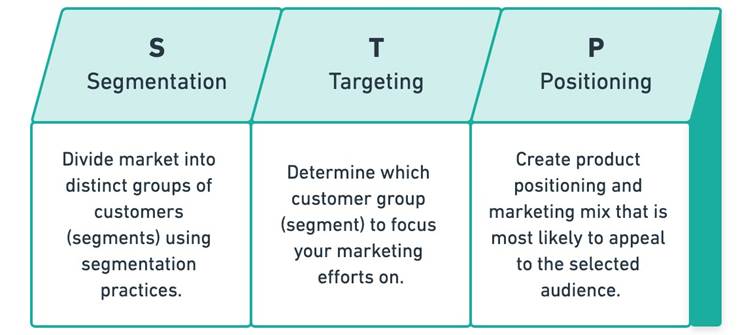
E. STP (Segmentation, Targeting, Positioning)
Introduction
The STP model is a central concept in marketing that is absolutely key to servicing a market successfully. Discovering customers and targeting them is the concept that stands behind the STP modelling. The acronym stands for the following key part of the concept.
1. Segmentation
Common segmentation variables include
Demographic: Age gender, ethnicity, marital status, etc.
Values: Religion, politics, cultural beliefs, etc.
Geography: Country, state, region, climate, etc.
Psychographics: Habits, attitude, lifestyle, customer loyalty, etc.
Behaviours: Likes, dislikes, interests, tastes, etc.
Life stages: Educational status, work status, old stage, etc.
2. Targeting
Targeting refers to defining which, if any, of the segments discovered should be targeted and made the focus of an all-inclusive marketing program. According to Philip Kotler (1984), for market segmentation to be effective, all segments must be:
Accessible: Buyers must be able to reach through appropriate promotional activities and distribution channels.
Measurable: The segment must be easy to identify and measure
Profitable: Each segment must clearly differ from the other segments, which makes different marketing mixes necessary.
Distinct: Each segment must clearly differ from other segments, which makes different marketing mixes necessary.
3. Positioning
The last part of the STP model is positioning, which means to ensure that a brand occupies the right spot in the mind of target consumers. It mainly places the product in the right place, and positioning in marketing means where your products stand in the market. There are three standard ways you can position your product to achieve a competitive advantage.
Experiential positioning: It refers to focusing on those elements of your product or brand that connect emotionally with your customers.
Symbolic positioning: It refers to enhancing the self-image, ego, and belongingness needs of customers. For example, luxury cars, watches, etc., are themselves using symbolic positioning.
Functional positioning: It refers to solving a problem or providing a benefit to customers.
F. EXECUTING THE PLAN
Execution is an easy concept to talk about, but it’s a hard one to apply. The major problem is how to measure and manage a concept. The execution phase is the longest in duration because there are three major steps, as follows:
Sharpen the focus: Focuses deliver the precision to make decisions that support the most significant goals. It results in a noticeably defined pathway to success.
Build competency: Competency incorporates all the necessary skills, processes, systems, and other tools to achieve the client’s goals. It is a talent to promise, obligate, measure, and hit the targets.
Ignite passion: Passion produces a sense of connectedness. It shapes an association between teammates, a connection to our human need for meaningful work, and a connection to each individual’s sense of contribution and value.
G. EVALUATING THE PLAN
Evaluating marketing performance guides future marketing creativities and supports businesses to achieve their aim.
Set goals: When launching a campaign, marketers need to set clear goals for the marketing campaign. It is like a compass that guides the marketer throughout their campaign and helps to measure performance.
Branding: Does your brand image reflect or redefine itself? It is important to bring together the what, who, and why of the campaign and other things under the brand because the brand is the face of the companies’ businesses and manufacturing products.
Market research: Market research tends to always be ignored, but it is one of the most significant factors in re-evaluating marketing campaign research.
Look at the numbers: it means return on investment. In times of evaluating a marketing campaign or strategy, every business wants to look at the end factor—what they gain in numbers. Here, the numbers may include profit amount, sales unit, reaching of consumers, etc.
Marketing progress: Observing marketing progress in the direction of its annual ends.
If an individual or start-up want to build his/her own advertising agency, need a small financial support, powerful business idea, a bit of push and passion. Starting own advertising agency can be a very rewarding and profitable start-up choice. Managing, operating, and controlling our own advertising agency required lots of effort and dedication to set the ground. However, at the same time, to form an advertising agency also required huge research and preparation to avoid future consequences or uncertainties.
Today’s world markets are highly competitive and saturated; here businesses need effective and creative advertising campaigns to help attract customers. In this highly competitive market, advertising agencies are specializing in creating and planning all types of these plans. Let’s start an advertising agency by following steps.
1. Plan your agency business
A clear plan is essential for success, or you need to define definite goals as an entrepreneur. First, you need to consider whether the founder is looking for a full-time foundation or just a spare time from home. If you are looking for or want to be the next big agency in the near future, then you need to set the office in a prime location where businesses function easily.
The business plan and goals will determine how you run your business or agencies, what type of specialized staff you want, who your target market is, and how much budget it requires to start the advertising agency. For example, what type of agency are you looking for, like a full-time agency, specialized agency, creative agency, etc.? There are certain stages required to set up a new agency, which are given below.
2. Process Design and Documentation
This involves getting people on board to document best practices. It includes identifying the key people involved in an agency process. To have the best industry practices, you should check with other similar agencies.
Process design aims to establish what the process produces and inputs and parameters that target success. It indicates how the agency gets the work done and the support to come from people and the technology. So facilitation is important to bring people who matter together. It essentially shows that it won’t be one person’s viewpoint but the whole team’s.
B. VARIOUS STAGES IN SETTING UP A NEW AGENCY
3. Creating and holding necessary funds
There’s no magical number that put to all businesses. The cost to form an agency is varying from agency to agency, so business may need more or less finance depending on the circumstances.
The start-up costs of starting an agency are minimal. Ideally, agencies should have an office for meeting clients, a production house for working, the latest computers for daily work, and expenses included for other works. Few start-ups are well equipped with all necessary funds and backing, in this situation they are more capable to face any situation.
However, if start-ups that are operating with a tight budget can rent an office as per the requirement, outsourcing some business works with the help of other agencies, hiring employees on low wages, or sometimes appointing interns for a limited term and preferring public places to meet with clients.
4. Identify the target audience
Before you start pitching yourself to potential clients, sit down and think about who your ideal client for businesses. In the case of the advertising agencies ideal client most often are corporates for their upcoming and existing product, non-profit organizations for effective social content creation.
Advertising is a dynamic industry, so agencies need to keep all information on the newest trends in the market, buying patterns of consumers, competitors’ strategies and promotional methods, etc. All this information helps advertisers to create a unique plan to make their client successful in the current trend.
The advertising agency played an important role for an industry as a retainer. A retainer means an arrangement where a client pays an agency a consistent amount regularly on the basis of weekly or monthly periods, or it depends on the number of hours each period to work on the client’s promotional activities and regular campaigns.
5. Creating an industry-based knowledge
Industry-based knowledge is a major key factor between the company and advertising agency. Getting ahead of the competition is crucial to advertising agencies here to deliver the best service providers that can get you to where you want to go. The ad agency helps to connect businesses with experienced professionals and introduce them to proven software solutions. The agency performs an extensive analysis and review based on custom-tailored evaluation methodologies uniquely devised for each service or software type.
Advertising agencies understand the key performance indicators of the company. Here we can say that the agency knows the current trends of the market and understands the needs of consumers, which helps to achieve the industry’s goals and objectives through specialized advertisements.
6. Build effective interaction/communication with industries, media and consumers
The quality and commitment of the people working with business will determine the quality of advice, level of service and expertise provided by advertising agency. The roles of communication procedures in advertising agencies are creative processes with industry, media channels, and consumers. At the interaction level, agencies have a passion and commitment for building strong, healthy, vibrant brands, specifically in existing brands. Most prominently, my agency is to create and support an existing brand with effective communication with all working elements.
7. Transparency and dependability with clients
“Transparency” must be one of the most-used words in the advertising industry. There is a tremendous benefit to building trust in a brand, but it takes time and specific strategies. Be accessible to customers and allow them to interact with you. Advertising is an industry that spends over a billion dollars yearly, so make sure the money counts. So here the agency should be honest and transparent about all costs and estimations.
8. Media networking
Media buying is taking a commercial, or newspaper ad, or other sales message and getting it viewed by the future audience. Media buyers negotiate and purchase audience-targeted time and advertising space to convey a marketing message.
A media buy is the purchase of advertising from a media company such as a television station, newspaper, magazine, blog, or website. It also entails the negotiation for price and placement of ads, as well as research into the best new venues for ad placement.
There are three integral aspects of the media buying process:
a. Networking
Media buyers must be able to grow and cultivate relationships with important channel owners. Airtime is not unlimited and in order to get the optimal spaces, it is important to know the right people.
b. Investigation
Find the latest, greatest, and most appropriate locations for distribution. Keeping up on the media trends is an important task when it comes to media buying. The development of the communications business must be understood; purchasers must be on top of new platforms and their target markets and be able to translate that into beneficial client recommendations.
c. Negotiation
Media buyers should not only be able to negotiate fair prices for the media slots. But also find deals or extras to profit clients.
9. Agency compensation
An advertising agency is an autonomous business organization focused on advertising work that commences the work of planning, making, and performing advertising promotion for its clients. In current time agency payments are based on their inputs; if they succeed or fail in performance in the end, it may affect their profit. For many marketers, reducing agency fees is a main target when it comes to meeting budget-saving goals. In this dynamic situation agencies need to open a new compensation method which supports their goals with those of their clients. Earlier, media agencies paid a fixed commission on the media they purchased on behalf of their clients.
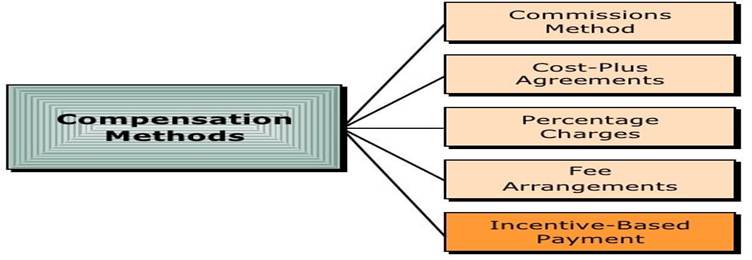
Advertising agency compensation may change strongly in current time as advertisers put stress on agencies to lower commissions and link compensation to performance following advertising campaigns. The reasons are very clear given the need to attain balance in market fallouts and stabilize or cultivate working media levels while reaching the preferred savings target. Advertising agencies don’t sell products; they sell ideas, with the knowledge and planning to achieve them. There are various ways the advertising agencies get compensated for their work and services. Agencies may be compensated in a variety of ways include:
a. Commission method
In the earlier years, as the advertising business advanced, newspaper owners paid a commission of 15% to advertising agents who credited advertisement space in their newspapers and publications. Most of the companies still paying commission use some form of paced procedure or descending scale, and the amount of media commission reserved by the agency or rebated to the client is by negotiation.
b. Cost-Plus Agreement
According to George E.Belch in his book Advertising and Promotion, “Under a cost-plus system, the client agrees to pay the agency a fee based on the costs of its work plus some agreed-on profit margin (often a percentage of total costs). This system needs the agency to keep complete accounts of costs incurred in working on a client’s account.
c. Incentive-based payments
According to George E. Belch, Incentive-Based Compensation, many clients these days are demanding more accountability from their agencies and tying agency compensation to performance through some type of incentive-based system. While there are many variations, the basic idea is that the agency’s ultimate compensation level will depend on how well it meets predetermined performance goals. These goals often include objective measures such as sales or market share as well as more subjective measures such as evaluations of the quality of the agency’s creative work. Companies using incentive-based systems determine agency compensation through media commissions, fees, bonuses, or some combination of these methods.
d. Fees arrangements
Fee Arrangement Under the fee structure, the client and the ad agency negotiate a flat sum to be paid to the agency for all work done. The agency estimates the cost (including out-of-pocket expenses) of servicing the client, who either accepts or negotiates for a lesser amount. Negotiations continue until an agreement is reached. There are two basic types of fee arrangement systems.
e. Percentage charges
An agency works on a profit margin of 01 percent to 10 percent, or it may depend on negotiation and how the agency is run and structured. So that means if an agency has 1,00,00,000 Rs. (1 Crore Rs.) in an account, the agency will end up with anywhere between 1,00,000 Rs. (1 Lakh) to 10,00,000 Rs. (10 Lakhs). in its pocket as profit.
The rest of the money will be spent on buying commercial advertising space (print media, broadcast, internet, etc.) and paying the agency for marketing advice (expert, professional, skilled, etc.) and creative and production costs (talent, knowledge, capability, etc.).
It may sound like the agency will be making money on that, too, but that money paid to the agency from the client will be used to pay staff and operating expenses. The profit is what is left over when all the money has been spent to pay salaries and other expenses.
10. Share information
In most cases, the client has taken on an agency to fill a gap in their business and wants to see value for money. The agency’s most important job is to be the experts’ advice to clients. The best advice helps to achieve their consequences and remain an active performer in the market.
The agency then has an obligation to ask all the queries they need to in order to confirm they have took the brief properly. Consuming an open and informative conversation at the commencement of a project means that the client can go away safe in the information that the agency knows what they’re doing.
11. Work in collaboration
Keep in mind that both parties are invested in what they do and that keeping a strong relationship will require continuous work on both ends. Agencies aren’t possessions; they’re strategic partners. Clients and agencies are experts in their respective fields, and they should treat each other as equals. Trust, honesty, and commitment are vital elements for the achievement of any campaign and relationship. In a collaborative environment of a relationship, each party must have confidence in the other’s capability.
12. Set realistic expectations
One of the best ways to build a strong relationship with a client is to gain a reputation as an agency that not only delivers results but is also willing to go above and beyond. Setting realistic expectations gives you the chance to impress the client and position yourself as a partner. This is especially important when working on behalf of a client.
Both parties need to take part in this process to make sure that each knows what’s expected of the other. Agencies may have exclusive methods, but a good degree of transparency is essential. These services create trust and set realistic expectations.
13. Attempt for nonstop progress
When an agency functions with these principles, performing measured efforts to their clients and determined to not only accomplish but maintain confidence with clients, the phase can be set for achievement with great appraisals, referrals and customer remembering.