Introduction
1. Origins and Causes
The origins of the Syrian conflict can be traced back to the Arab Spring, a wave of pro-democracy uprisings that swept across the Middle East in 2011. Inspired by movements in Tunisia and Egypt, Syrians took to the streets to demand political reforms, social justice, and an end to corruption. The Assad regime’s brutal crackdown on these peaceful protests sparked widespread discontent and armed resistance, triggering the escalation into a full-blown conflict.
2. Key Players
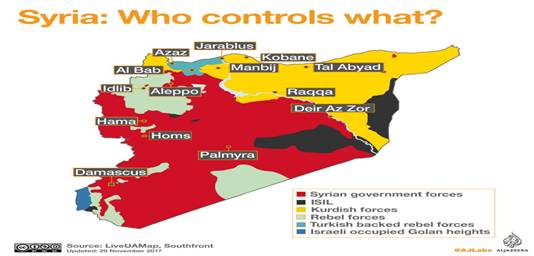
- The Syrian conflict involves a complex web of actors with diverse interests and agendas. The primary parties include:
- Syrian Government: Led by President Bashar al-Assad, the government seeks to maintain its grip on power and preserve the existing political order.
- Opposition Forces: The opposition is a fragmented coalition consisting of various armed groups, rebel factions, and political entities. These groups range from moderate factions to more extremist organizations like Hayat Tahrir al-Sham and the Islamic State (ISIS).
- International Actors: External powers have played a significant role in the Syrian conflict. Russia and Iran have provided military and financial support to the Assad regime, while various Gulf States and Turkey have supported different rebel groups. Additionally, the United States and European countries have supported certain opposition factions and conducted airstrikes against ISIS.
3. Humanitarian Crisis and Displacement
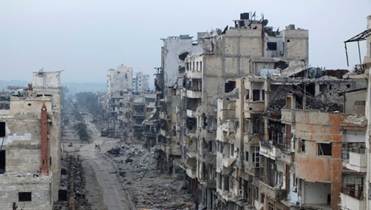
The Syrian conflict has caused immense human suffering, with catastrophic consequences for the civilian population. The violence and indiscriminate attacks by all parties have resulted in the loss of hundreds of thousands of lives. The widespread use of barrel bombs, chemical weapons, sieges, and deliberate targeting of civilian infrastructure has led to extensive displacement, with millions of Syrians seeking refuge both within the country and in neighboring countries.
The humanitarian crisis in Syria has also been exacerbated by severe shortages of food, clean water, medical supplies, and adequate healthcare. The dire situation has given rise to issues such as malnutrition, disease outbreaks, and a generation of children deprived of education and traumatized by the violence.
4. Global Repercussions
The Syrian conflict has had far-reaching implications for regional and international security. It has become a focal point for various geopolitical rivalries, exacerbating tensions between Iran and Saudi Arabia, Russia and the United States, and Turkey and the Kurds.
- The rise of ISIS, which took advantage of the power vacuum and instability in Syria, led to a significant international effort to combat the group. The conflict also witnessed the use of chemical weapons, leading to calls for accountability and renewed debates on the prohibition and enforcement of such weapons.
- Moreover, the influx of Syrian refugees has had profound socio-political and economic effects on neighboring countries and Europe. The mass migration has strained resources, triggered political tensions, and fuelled anti-immigrant sentiments in certain regions.
- The conflict in Syria is a tragic and multi-faceted crisis that has devastated the country and reverberated across the world. Originating from peaceful protests for reform, the conflict has transformed into a complex civil war involving numerous domestic and international actors. The humanitarian consequences have been dire, with extensive loss of life, mass displacement, and a severe strain on basic services.
- As efforts continue to achieve a political resolution to the conflict, addressing the immediate humanitarian needs and ensuring accountability for war crimes are paramount. The Syrian crisis reminds us how important it is to stop these kinds of wars from happening and how important diplomacy, conflict resolution, and working together with other countries are to keep the region peaceful and stable.
- The path to resolving the Syrian conflict remains challenging and requires a comprehensive approach. It entails finding a political solution that addresses the grievances of all parties involved, fostering reconciliation, and facilitating the rebuilding and reconstruction of the war-torn nation. The international community plays a crucial role in supporting diplomatic efforts, providing humanitarian aid, and promoting dialogue among the conflicting parties.
- Furthermore, addressing the root causes of the conflict, such as socio-economic inequalities, political repression, and sectarian tensions, is crucial to preventing future crises. Investing in sustainable development, inclusive governance, and human rights protection can help create the conditions for long-term stability and reconciliation in Syria.
- The conflict in Syria serves as a stark reminder of the devastating consequences of war, the complexities of resolving international conflicts, and the importance of responsible and unbiased media coverage. Journalists have played a crucial role in shedding light on human suffering, raising awareness, and holding those responsible accountable. By understanding the complexities of the Syrian conflict and engaging in informed reporting, journalism students can contribute to fostering greater understanding, empathy, and dialogue among global audiences, ultimately paving the way for a more peaceful and just world.
Role and challenges of media
In the modern era, the media plays a crucial role in shaping public perception and understanding of international conflicts. One such conflict that has received extensive media coverage is the ongoing crisis in Syria. This engaging and student-friendly section aims to delve into the complexities of media coverage in international conflicts, specifically focusing on Syria. Drawing from a journalism perspective, we will explore the challenges faced by journalists, the impact of media narratives, and the ethical considerations involved in reporting on this complex and multifaceted conflict.
1. Understanding the Conflict
To comprehend media coverage of the Syrian conflict, it is essential to grasp the intricate nature of the crisis itself. The conflict in Syria emerged in 2011 as a series of protests against the government of President Bashar al-Assad, which later evolved into a full-scale civil war. The involvement of multiple factions, including government forces, rebel groups, extremist organizations, and international actors, has made it a highly complex and volatile situation.
2. Challenges Faced by Journalists
Journalists reporting on the Syrian conflict encounter a myriad of challenges. Firstly, gaining access to reliable and accurate information can be difficult due to the intensity of the conflict and the presence of multiple conflicting narratives. Journalists often risk their safety and face hazards such as violence, kidnapping, and censorship while operating in the region. Additionally, media organizations face constraints on reporting due to limited resources, language barriers, and political pressures.
3. Impact of Media Narratives
Media narratives play a significant role in shaping public opinion and understanding of the Syrian conflict. Different media outlets may have varying perspectives, biases, and agendas, which can influence the way events are portrayed. This highlights the importance of media literacy and critical thinking, encouraging students to question the sources, credibility, and objectivity of the information they consume.
- From a journalism perspective, reporting on the Syrian conflict requires adherence to ethical standards and responsible journalism practices. Journalists should strive for accuracy, verifying information through multiple sources before reporting. Due to the fluid and evolving nature of the conflict, updates and developments should be shared promptly, while acknowledging the possibility of misinformation and the need for ongoing fact-checking.
- Journalists should also consider the potential impact of their reporting on the conflict’s participants and the wider public. Sensitivity, empathy, and respect for the people affected by the conflict are crucial when crafting narratives. Balancing the need to inform the public with the potential consequences of certain information becoming public is a constant ethical dilemma for journalists.
- Ensuring diverse perspectives and voices are represented in media coverage is essential to provide a comprehensive understanding of the conflict. Journalists should seek out perspectives from different factions, locals, humanitarian organizations, and experts to present a nuanced view of the situation.
4. Reporting Challenges and Opportunities
- Reporting on the Syrian conflict poses several challenges, including physical risks, access to reliable sources, and navigating the complexities of the conflict itself. Journalists often face dangers such as airstrikes, bombings, and hostile checkpoints, making it imperative to prioritize their safety while gathering information.
- Language barriers can also hinder effective reporting, as journalists may need interpreters or translators to communicate with locals and various factions. Moreover, the fluid nature of the conflict requires journalists to be adaptable and resilient, as the situation on the ground can change rapidly.
- Despite these challenges, technological advancements offer opportunities for innovative reporting. Social media platforms, citizen journalism, and user-generated content have become integral sources of information, providing real-time updates and eyewitness accounts. However, journalists must exercise caution when verifying and contextualizing such content to maintain journalistic integrity.
5. Ethical Considerations
- Ethics play a critical role in reporting on the Syrian conflict. Journalists must prioritize the safety and well-being of the people they report on, ensuring that their identities are protected when necessary. This is particularly important when covering sensitive topics such as human rights abuses, refugee stories, and the involvement of minors in the conflict. Respect for cultural norms, privacy, and the potential for retribution are essential ethical considerations.
- Additionally, journalists must be conscious of the potential impact of their reporting on ongoing hostilities. The dissemination of certain information, such as troop movements or sensitive military strategies, could have unintended consequences, endangering lives and undermining peace efforts. Balancing the public’s right to know with the responsibility to avoid harm requires careful judgment and editorial discretion.
- Promoting accurate and unbiased reporting is paramount. Journalists should strive to provide a comprehensive picture of the conflict by seeking multiple perspectives and verifying information through independent sources. Fact-checking and cross-referencing are vital tools to counter misinformation and propaganda that often permeate conflicts.
6. Journalistic Responsibility and Role
- Journalists reporting on the Syrian conflict have a vital role in bringing attention to the humanitarian crisis, human rights violations, and the complexities of the conflict. By providing accurate and comprehensive coverage, they contribute to international awareness, foster dialogue, and hold those responsible accountable for their actions.
- Journalists also play a crucial role in giving voice to the voiceless. Reporting on the experiences and perspectives of affected individuals, including refugees, internally displaced persons, and local communities, helps humanize the conflict and raises awareness of the human cost.
- Journalism students must recognize their responsibility to approach conflict reporting with empathy, sensitivity, and integrity. They should strive to uphold the principles of truth, accuracy, fairness, and impartiality. By understanding the challenges, ethical considerations, and the power of media narratives, they can contribute to meaningful and impactful reporting in the future.
- Media coverage of international conflicts, such as the Syrian crisis, carries immense responsibility. Journalists face significant challenges, including access to reliable information, physical risks, and ethical dilemmas. Understanding the complexities of the conflict and the impact of media narratives is essential for journalism students.
- By maintaining journalistic integrity, seeking diverse perspectives, and adhering to ethical standards, journalists can provide accurate and comprehensive coverage that contributes to a better understanding of the conflict. Responsible reporting not only informs the public but also highlights the human stories and promotes empathy and global awareness.
- As journalism students, embracing the complexities of media coverage in international conflicts like Syria empowers them to become conscientious journalists who navigate the challenges, promote truth, and play a crucial role in shaping public discourse and understanding of complex global issues.
- Media coverage in international conflicts, such as the Syrian crisis, holds immense power to shape public perception, influence policy debates, and impact the lives of those involved. Journalists face numerous challenges when reporting on the Syrian conflict, from accessing reliable information to navigating safety risks.
- Understanding media narratives, critically analyzing information, and promoting ethical journalism practices are vital for students studying journalism to navigate the complexities of reporting on international conflicts like Syria. By being aware of these challenges and ethical considerations, future journalists can strive for accurate, comprehensive, and responsible reporting, contributing to a more informed global audience.