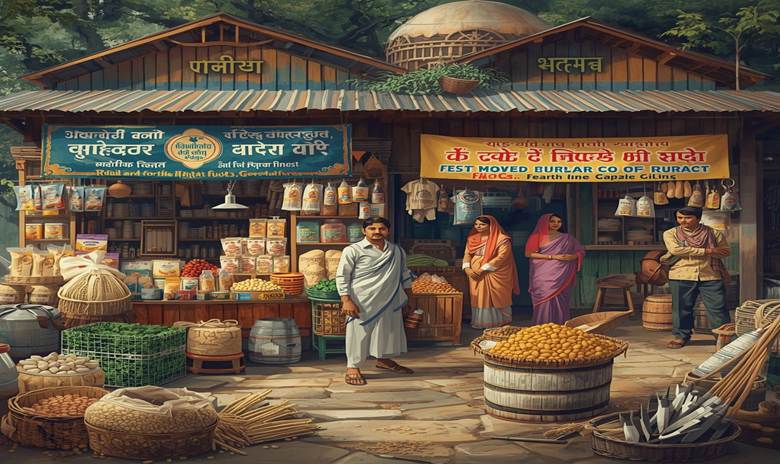
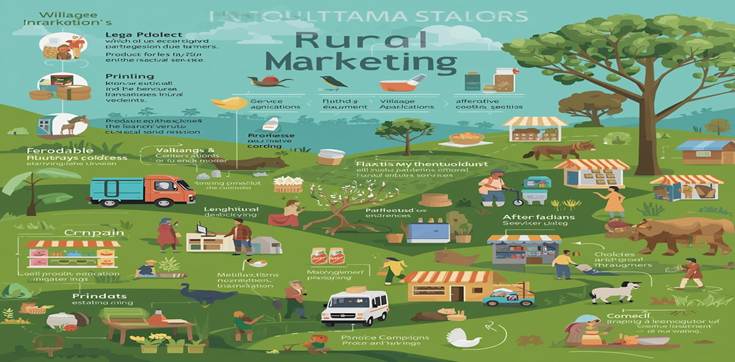
Rural product categories in India include Fast-Moving Consumer Goods (FMCGs), agricultural goods, and agriculture-related services, each adapted for rural consumers through strategies like small packaging, local distribution, and digital tools. These categories leverage the 4As framework—Availability, Affordability, Acceptability, and Awareness—to penetrate villages.
Rural product categories in India—FMCGs, agricultural goods, and services—form the backbone of rural marketing, targeting over 900 million consumers in villages with strategies emphasizing affordability, local adaptation, and last-mile delivery. These categories drive economic activity amid rising rural incomes and infrastructure gains like PMGSY roads and electrification. FMCGs lead due to daily needs, while agri-focused items leverage seasonal demand and government schemes.
FMCG Overview
FMCGs encompass daily essentials like soaps, shampoos, toothpaste, detergents, oils, staples, and beverages, holding 45% of sector revenue from rural areas despite urban dominance. Rural demand surges via small sachets (e.g., ₹2-5 packs) and haats, with growth at 8-10% in 2025, outpacing cities due to diversified incomes. Key players include HUL, Dabur, Colgate, and Nestlé, prioritizing hygiene and processed foods.
Agricultural Goods
These include seeds, fertilizers, pesticides, tools, and machinery tailored for small farmers, who rely on cooperatives and agri-input chains. Marketing stresses durable, low-cost options like mini-tractors or hybrid seeds, distributed via e-Choupals or village outlets to bypass middlemen. Demand ties to monsoons and MSP hikes, boosting staples like rice and edible oils during harvests.
Agriculture Services
Services cover credit (e.g., Kisan Credit Cards), insurance, extension advice, and market linkages via apps or IVR, empowering 60% of agri-dependent households. Initiatives like digital mandis and microfinance enhance access, with rural fintech growing post-Jandhan. They focus on awareness through demos and SHGs, linking to FMCG via farmer prosperity. Here’s a comprehensive overview of rural product categories focusing on FMCGs and agriculture goods & services, with four examples each (two traditional/old and two modern/new). For each segment, you’ll find case studies and their implementation.
1. FMCGs (Fast-Moving Consumer Goods) in Rural Areas
A. Parle-G Biscuits
Case Study & Implementation:
Background: Parle-G has been a staple biscuit in rural India for decades.
Implementation:
The product is sold at a low price and comes in small packaging (“Rs. 2 pack”) to cater to the purchasing power of rural consumers.
The product is widely distributed through rural kirana stores and bicycle delivery networks.
Impact: Became the most sold biscuit in the world, deeply rooted in rural markets.
B. Nirma Washing Powder
Case Study & Implementation:
Background: Nirma revolutionized rural laundry by introducing affordable washing powder.
Implementation:
Aggressive pricing, catchy advertising, and distribution in small towns/villages.
Door-to-door sales and rural retail partnerships.
Impact: Made detergent accessible for rural populations, ousting more expensive brands.
C. Patanjali Ayurved Products
Case Study & Implementation:
Background: Patanjali entered rural markets with herbal and natural FMCGs.
Implementation:
Leveraged Ayurveda’s rural appeal and trust in natural remedies.
The company established rural distributors and forged connections with local wellness centers.
Impact: Rapid rural market penetration, especially for herbal toothpaste, soaps, and food items.
D. Coca-Cola’s “Minute Maid Pulpy Orange”
Case Study & Implementation:
Background: Coca-Cola targeted rural India with affordable fruit-based drinks.
Implementation:
The company implemented small “affordable packs” (e.g., Rs. 10) specifically for rural markets.
Cold chain solutions and local event sponsorships.
Companies modify products for rural needs by introducing small, affordable sachets (Low Unit Packs or LUPs) to enable trials, enhancing durability for tough conditions, and localizing branding for cultural resonance. Examples include CavinKare’s 4 ml Chik shampoo sachets at 50 paise and Coca-Cola’s Rs.5 bottles to compete with local drinks like tea. LG’s Sampoorna TV with Devanagari script displays catered to vernacular language users.
Service Strategies
Services prioritize empowerment and tech-enabled distribution, training locals as agents for door-to-door delivery and using apps for retailer access. HDFC Bank’s “Har Gaon Hamara” campaign deploys IVR toll-free numbers for banking education and loans in villages. Digital tools like ITC’s Unnati App and Virtual DS help stockists reach remote retailers efficiently.
Key Case Studies
Case Study
Description
Impact
HUL Project Shakti
Trains rural women (Shakti Ammas) as micro-entrepreneurs to sell HUL FMCG products door-to-door, customizing small packs for affordability.
Reaches 165,000+ villages, empowers 130,000+ women, and boosts hygiene and brand loyalty.
ITC e-Choupal
Sets up internet kiosks for farmers to access crop prices, buy inputs, and sell produce, extending to FMCG distribution via hubs.
Serves 4 million farmers across 40,000 villages, increases soy planting by 40%, and cuts middlemen costs.
Coca-Cola Rural Push
Launches Rs.5 bottles, pop-up stores at 47,000 haats/melas, and wall paintings for awareness.
Rural penetration rises from 9% to 25%, with sales up 37% by 2003.
1. Product Customization and Innovation
Strategy: Tailor products to meet the unique needs and preferences of rural consumers, often focusing on affordability, durability, and simplicity.
Case Study: Hindustan Unilever Limited (HUL) recognized that rural consumers wanted affordable detergents suited for handwashing in hard water conditions. They introduced “Wheel,” a low-cost detergent in small sachets. This packaging fit the rural buying pattern (small, frequent purchases), and the product was formulated to work with local water conditions. As a result, “Wheel” became a market leader in rural India.
2. Affordable Packaging (Small Packs)
Strategy: Offer products in small, affordable packaging to suit the lower purchasing power and consumption patterns of rural customers.
Case Study: CavinKare pioneered the sale of Chik Shampoo in sachets for just Rs. 1, making it affordable for rural consumers who couldn’t buy large bottles. This revolutionized shampoo sales in rural India, leading to massive market penetration and encouraging other companies to adopt similar strategies.
3. Distribution Innovations
Strategy: Develop unique distribution models to reach remote rural markets where traditional supply chains may not be feasible.
Example: ITC’s “e-Choupal” initiative.
Case Study: ITC set up e-Choupal internet kiosks in villages, enabling farmers to access market prices, weather forecasts, and agricultural information. This not only boosted ITC’s agribusiness but also empowered farmers to make better decisions, increasing loyalty and trust towards ITC’s branded products (e.g., agri-inputs).
4. Community Engagement and Education
Strategy: Build trust by engaging rural communities through education, demonstration, and relationship-building activities.
Example: Nestlé’s “Project Shakti” (with HUL).
Case Study: HUL’s “Project Shakti” trained rural women as entrepreneurs to sell HUL products in their communities. This not only generated local employment and empowered women but also increased product reach and awareness through trusted local figures. Project Shakti now covers thousands of villages in India.
5. Service Extension and After-Sales Support
Strategy: Provide reliable after-sales service and support in rural areas to build long-term customer loyalty.
Example: Mahindra & Mahindra’s outreach for tractors.
Case Study: Mahindra & Mahindra set up a widespread network of service centers and mobile service vans to provide timely after-sales support for its tractors in rural areas. This strategy reduced farmers’ downtime during critical agricultural seasons and built strong brand loyalty, making Mahindra the market leader in rural farm equipment.
6. Bundled Products and Value Packs
Example: Tata Tea’s “Jaago Re” Campaign
Case Study: Tata Tea bundled its tea with awareness campaigns on social issues relevant to rural India, such as voting and education. This approach not only sold the product but also connected emotionally with rural consumers, increasing brand loyalty. By aligning the product with social causes, Tata Tea became a household name in many villages, demonstrating how value-addition and bundling can drive engagement.
7. Credit Facilities and Easy Financing
Example: Hero MotoCorp’s Rural Bike Financing
Case Study: Hero MotoCorp collaborated with local banks and microfinance institutions to offer easy, low-interest loans for rural customers purchasing motorcycles. This strategy overcame the affordability barrier and led to a sharp increase in sales in rural areas. By addressing the financial constraints of rural buyers, Hero MotoCorp strengthened its position as India’s leading motorcycle brand.
Case Study: Coca-Cola used local languages, dialects, and rural celebrities in their ad campaigns, such as “Thanda Matlab Coca-Cola.” The messaging was simple and relatable, resonating with rural audiences and making the brand easily recallable. The company also sponsored local fairs and events to increase visibility, helping Coca-Cola become a popular beverage even in remote villages.
9. Partnerships with Local Retailers
Example: Colgate’s Partnership with Rural Kirana Stores
Case Study: Colgate Palmolive built strong relationships with local kirana (grocery) stores, providing them with promotional materials and product displays. They trained shopkeepers to educate customers about oral hygiene and the benefits of Colgate products. This grassroots approach increased trust and product uptake, making Colgate the preferred toothpaste brand in many rural households.
10. Mobile-Based Services and Digital Outreach
Example: Nokia Life Tools
Case Study: Nokia launched Life Tools, a mobile-based information service offering rural farmers updates on weather, market prices, and agricultural tips via SMS. The service was affordable and didn’t require internet access, making it perfect for rural users. This added value to Nokia’s handsets, increased customer loyalty, and helped Nokia maintain its lead in rural mobile markets until the smartphone revolution.
11. After-Sales Service and Mobile Support
Strategy: Provide reliable after-sales service even in remote rural areas.
Example: Mahindra & Mahindra Tractors
Case Study: Mahindra & Mahindra established a network of service centers and mobile vans to provide quick repairs and maintenance for farm equipment in villages. This support minimized farmer downtime during critical harvest seasons, increased satisfaction and loyalty, and made Mahindra the most trusted tractor brand in rural India.
12. Use of Rural Brand Ambassadors
Example: Emami Fair and Handsome’s Use of Local Influencers
Case Study: Emami collaborated with local village leaders and influencers to promote Fair and Handsome cream in rural areas. By leveraging the trust villagers had in these local figures, Emami increased product credibility and adoption. This strategy helped the brand break into regions where urban celebrity endorsements had little impact, proving the power of localized branding.
13. Seasonal and Festival Offers
Example: Samsung’s Festival Discounts on Home Appliances
Case Study: Samsung launched special discounts and bundled offers on televisions and refrigerators during harvest and festival seasons, when rural incomes are higher. By timing promotions with local festivals, Samsung tapped into periods of higher spending and saw a significant boost in rural sales, demonstrating the value of aligning marketing strategies with rural economic cycles.
14. Experiential Marketing and Product Demonstrations
Example: Syngenta’s Crop Demonstration Camps
Case Study: Syngenta, an agrochemical company, organized field demonstration camps in villages to show the effectiveness of their seeds and crop protection products. Farmers could see results firsthand, ask questions, and receive technical guidance. This hands-on approach built trust, educated farmers, and led to increased adoption of Syngenta’s products across rural regions.
15. Collaborations with Government and NGOs
Example: Lifebuoy’s Handwashing Campaign with Schools
Case Study: Lifebuoy partnered with government schools and NGOs to run hygiene awareness programs in rural areas. Free soap samples were distributed, and children were taught proper handwashing. The campaign educated millions, created positive brand associations for Lifebuoy, and boosted soap sales in rural households as hygiene awareness grew.
16. Mobile Vans and Rural Outreach Programs
Example: Maruti Suzuki’s Mobile Service Vans
Case Study: Maruti Suzuki deployed mobile vans equipped with service staff and spare parts to offer on-the-spot servicing for cars in rural areas. These vans traveled to remote villages, providing convenience for customers who lacked access to service centers. This initiative not only improved customer satisfaction and loyalty but also increased Maruti’s brand presence in India’s vast rural landscape.
Publicis Worldwide India has launched impactful campaigns leveraging local narratives:
Axis Bank “Sirf Aapke Liye” (2023): This integrated effort promoted the ‘open by Axis Bank’ app with five TVCs and ten digital films, repositioning the bank as digital-first. Rolled out during the Cricket World Cup across TV, print, OOH, and social, it emphasized personalized banking.
Pramerica Life Insurance “This is my Climb” (2024): A two-part digital campaign highlighting life’s challenges and insurance support. It used heartfelt stories to position Pramerica as a partner in personal growth, distributed via social media.
HDFC Mutual Fund “Seekh” / Zindagi Ke Liye SIP (2024): An ad film extension teaching SIP investing through relatable life lessons. Aired on TV and digital, it boosted financial literacy with heartwarming narratives on early starts.
ZEE TV “Thank You TV” (2024): Celebrated 65 years of Indian television with films honoring its entertainment legacy, aired across platforms to evoke nostalgia and gratitude.
Achievements
Publicis Worldwide India consistently wins awards for blending cultural insights with tech, contributing to Publicis Groupe’s leadership in creative effectiveness across APAC.
A. Print Advertising Campaign
Here are four globally recognized print advertising campaigns, each with a description, example, and balanced criticism:
1. Absolut Vodka—“Absolut Perfection”
Example: Absolut Vodka’s legendary print campaign featured the distinctive bottle shape with imaginative visuals and simple taglines like “Absolut Perfection.” The campaign ran for over 25 years, using various clever settings (e.g., “Absolut New York” with the bottle as the skyline).
Criticism: While the campaign is hailed as one of the most iconic, some critics argue that its longevity eventually led to creative fatigue. Later ads were considered repetitive, with diminishing impact as the novelty wore off.
2. The Economist – “Lightbulb”
Example: A famous print ad showed a bright red background with a simple illustration of a lightbulb over a reader’s head, accompanied by the tagline: “I never read The Economist. Management trainee. Aged 42.”
Criticism: Lauded for wit and intelligence, the campaign’s elitist tone was also criticized for potentially alienating readers who felt excluded or looked down upon, thus narrowing the target audience.
3. WWF – “Horrifying More, Horrifying Less”
Example: This print campaign featured striking, often disturbing visuals—such as a cityscape made of guns or a landscape of skulls—to highlight environmental destruction and animal extinction.
Criticism: While the shock value was effective in capturing attention, critics contended that the visuals were sometimes too graphic, potentially causing discomfort or desensitization rather than motivating action.
4. Volkswagen—“Think Small”
Example: The classic “Think Small” ad from the 1960s redefined car advertising, using minimalist design and copy to promote the Beetle’s compact size and reliability in an era of big American cars.
Criticism: Though celebrated for changing advertising forever, some argued that the campaign’s humble approach might not have been as effective in markets that associated success with bigger, flashier products.
Summary Table:
Campaign
Example Description
Criticism
Absolut “Absolut Perfection”
Iconic bottle-focused visuals, witty taglines
Became repetitive over time
The Economist “Lightbulb”
Red background, witty elitist copy
Risked alienating broader audience
WWF “Horrifying More/Less”
Shocking environmental visuals
Sometimes too graphic, risked desensitizing viewers
Volkswagen “Think Small”
Minimalist, self-deprecating Beetle ads
Humility may not appeal to markets favoring “bigger” image
B. TVC Advertising Campaign
Here are four globally acclaimed TVC (television commercial) advertising campaigns, with examples and critical analysis for each:
1. Apple – “1984” (by Chiat/Day, 1984)
Example: Aired during the Super Bowl, this iconic ad depicted a dystopian world, introducing the Macintosh computer as a revolutionary product. The commercial only aired nationally once, becoming legendary for its cinematic style and bold message.
Criticism: Despite its groundbreaking creativity, some critics argue the ad’s abstract storytelling was confusing to casual viewers, offering little concrete information about the product itself.
2. Coca-Cola—“Share a Coke.”
Example: This campaign featured TVCs showing people finding bottles with their own or friends’ names, encouraging sharing and personal connection. The ads were joyful and localized for different markets.
Criticism: While highly engaging and successful, some critics pointed out the campaign didn’t address health concerns related to sugary drinks, and the focus on personalization sometimes overshadowed broader brand values.
3. Guinness – “Surfer” (by AMV BBDO, 1999).
Example: The visually stunning TVC depicted surfers waiting for the perfect wave, metaphorically tying the anticipation to waiting for a pint of Guinness. The tagline: “Good things come to those who wait.”
Criticism: Though visually brilliant, some viewers found the metaphor too abstract, making the connection to the product unclear unless watched closely or repeatedly.
Example: This emotionally powerful series of TVCs showed mothers supporting their children’s journeys to becoming Olympic athletes. The ads aired globally during the Olympics, promoting multiple P&G brands.
Criticism: Critics noted that while touching, the campaign sometimes generalized motherhood and traditional gender roles, not reflecting the diversity of modern families and caregivers.
Summary Table:
Campaign
Example Description
Criticism
Apple “1984”
Dystopian Super Bowl ad, cinematic
Abstract, little product detail
Coca-Cola “Share a Coke”
Name bottles, joyful sharing TVCs
Ignores health concerns, focus on personalization only
Guinness “Surfer”
Surfers waiting for the perfect wave
Metaphor too abstract for some viewers
P&G “Thank You, Mom”
Mothers supporting Olympic children
Can reinforce stereotypes, less inclusive of family diversity
C. Outdoor Advertising Campaign
Here are four globally recognized outdoor advertising campaigns, each with an example and constructive criticism:
1. British Airways—“#LookUp” Interactive Billboards
Example: Digital billboards in London’s Piccadilly Circus displayed a child pointing to the sky every time a British Airways flight flew overhead. The billboard showed real-time flight details, creating a magical, interactive experience.
Criticism: While innovative and attention-grabbing, the campaign was limited to a few high-profile locations and depended on advanced technology, making it inaccessible for wider or less tech-savvy audiences. Critics also noted it may not have translated well to regions with less air traffic.
2. Nike – “Run London..”
Example: Nike filled London with bold, motivational outdoor ads encouraging participation in the “Run London” event. Slogans like “You either ran today or you didn’t” appeared on buses, buildings, and park benches, making running feel like a city-wide movement.
Criticism: Although highly motivating for runners, critics argued the campaign didn’t address or include those unable to participate (due to health, age, or other barriers), thus potentially excluding parts of the community.
3. McDonald’s – “Sundial Billboard”
Example: In Chicago, McDonald’s placed a giant billboard shaped like a sundial that cast a shadow on images of menu items corresponding to the time of day—coffee in the morning, burgers at lunch, and ice cream in the afternoon.
Criticism: While clever and artistic, the sundial’s effectiveness depended on clear, sunny weather and the billboard’s exact placement. Cloudy days or incorrect orientation could completely obscure the message, thereby diminishing its impact.
4. The Economist—“Lightbulb Billboard”
Example: A motion-sensor billboard in London featured a giant lightbulb that lit up as people walked underneath, paired with the tagline, “Get a bright idea.”
Criticism: Although memorable, critics noted its limited reach—people needed to physically pass under the billboard to experience the effect. It was celebrated for creativity but questioned for efficiency in wide-scale brand communication.
Summary Table:
Campaign
Example Description
Criticism
British Airways “#LookUp”
Real-time flight-tracking, interactive billboard
Limited locations, high-tech dependency
Nike “Run London”
Motivational slogans citywide
Excluded non-runners, lacked inclusivity
McDonald’s “Sundial Billboard”
Shadow displays menu based on sun/time
Weather/placement-dependent, impact not guaranteed
The Economist “Lightbulb”
Motion-sensor bulb lights up for passersby
Limited reach, experiential, not always scalable
D. Digital Advertising Campaign
Here are four internationally recognized digital advertising campaigns from leading global brands/agencies, with examples and balanced criticism for each:
1. Nike – “Dream Crazy” (2018, Wieden+Kennedy)
Example: This campaign featured Colin Kaepernick and inspired viewers to “Believe in something. Even if it means sacrificing everything.” The digital rollout included viral videos, social media challenges, and influencer amplification.
Criticism: While hailed for boldness and social relevance, the campaign was also polarizing—sparking both passionate support and backlash, including some consumers boycotting Nike. Critics said it risked alienating segments of Nike’s customer base.
2. Dove – “Real Beauty Sketches” (Ogilvy & Mather, 2013)
Example: Dove’s viral video campaign had a forensic artist draw women as they described themselves and again as others described them, highlighting the gap in self-perception. It was heavily promoted across YouTube, Facebook, and Twitter.
Criticism: Despite its viral success and positive messaging, some argued the campaign still emphasized physical appearance. Critics pointed out that it continued to reinforce beauty as central to women’s self-worth.
3. Always – “#LikeAGirl” (Leo Burnett, 2014)
Example: This digital campaign challenged stereotypes by showing how the phrase “like a girl” can be empowering. The video was widely shared on social media and started a global conversation about gender confidence.
Criticism: While praised for empowering messaging, some critics questioned whether the campaign led to substantive social change or was primarily “hashtag activism” that benefited the brand more than the cause.
4. Old Spice—“The Man Your Man Could Smell Like” (Wieden+Kennedy, 2010)
Example: Old Spice’s digital blitz featured humorous, fast-paced videos starring Isaiah Mustafa, with real-time video responses to fans on Twitter and YouTube, creating a viral sensation.
Criticism: Despite its massive reach, some critics felt the campaign’s success was more about entertainment than lasting product loyalty—questioning whether it truly changed Old Spice’s market share or just its buzz.
Summary Table:
Campaign
Example Description
Criticism
Nike “Dream Crazy”
Viral video, social media, Kaepernick
Polarizing, risked alienating some customers
Dove “Real Beauty…”
Viral video, self-esteem message
Still focused on looks as central to self-worth
Always “#LikeAGirl”
Social video, hashtag empowerment
Questioned real-world impact, risked being “hashtag activism”
Old Spice “Man Your Man…”
Humorous viral videos, social engagement
More entertaining than loyalty-building for long-term sales
DDB Mudra Group stands as one of India’s largest integrated marketing communications networks, renowned for blending creativity with emotional storytelling to drive brand success. Originating from Mudra Communications, founded in 1980 by A.G. Krishnamurthy, it evolved into a full-fledged group after acquisition by DDB Worldwide (part of Omnicom) in phases from 2005 to 2011, rebranding as DDB Mudra. Headquartered in Mumbai with offices across major cities, it employs over 1,000 people across specialized units.
Founding and Evolution
Started in a modest 500 sq ft space with 15 professionals, Mudra pioneered integrated services including advertising, media, digital, OOH, experiential, and design consultancy. Under leaders like Madhukar Kamath, it grew into India’s trendsetter, launching MICA (now a top communications institute). Post-merger, DDB Mudra adopted “Unexpected Works” as its mantra, earning accolades like APAC Agency of the Year (2022) and #1 in India for four straight years (2022-2025).
Key Services
The group operates through agencies like DDB Mudra (influence/behavioral change), MudraMax (media/experiential), and specialists in data-driven marketing, youth engagement, and retail design. Capabilities span advertising, OOH, digital, promotions, and strategy for sectors like consumer goods, health, and lifestyle.
Notable Achievements
DDB Mudra has clinched Lions awards five years running (2018-2023), Network of the Year (2023 & 2025), and global metals at Cannes, Spikes Asia, and WARC (e.g., Indeed’s B2B Grand Prix 2023). Clients include top Indian brands, with campaigns shifting culture via emotional, inclusive ideas.
A. Print Advertising Campaign
Here are four notable print advertising campaigns by DDB Mudra, including a brief description, an example, and a balanced criticism for each:
1. Rasna – “I Love You Rasna”
Example: A print campaign from the 1980s shows a cheerful Indian girl with the Rasna drink, with the tagline, “I Love You Rasna.” The visuals were bright, friendly, and targeted at families, quickly making Rasna a household name.
Criticism: While the campaign was highly effective and memorable, some later critics noted that the messaging heavily relied on nostalgia and did not evolve much with changing market preferences. New competitors saw the campaign’s lack of innovation as a missed opportunity to further modernize the brand.
2. Peter England—“The Honest Shirt”
Example: Print ads featured straightforward, clean visuals with crisp shirts and the tagline “The Honest Shirt,” communicating reliability and value.
Criticism: Though the campaign was successful in establishing trust, critics argued that the messaging was a bit too generic and could apply to any basic shirt brand. Some felt it didn’t do enough to distinguish Peter England’s unique style or fashion quotient in a competitive market.
3. LIC – “Zindagi ke saath bhi, zindagi ke baad bhi”
Example: Prints depicted life’s milestones (marriage, parenthood, and retirement) with the slogan “Zindagi ke saath bhi, zindagi ke baad bhi” (“With you in life and after life too”), emphasizing lifelong security.
Criticism: While highly emotional and resonant, critics have pointed out that the campaign sometimes leaned on sentimentality without adequately explaining product features or financial benefits, which could have educated consumers more about insurance options.
4. Volkswagen – “Talking Newspaper” (2010)
Example: A pathbreaking campaign where a chip embedded in the newspaper created an audio ad when the page was opened, accompanied by a print message introducing Volkswagen’s arrival in India.
Criticism: While innovative, the campaign faced backlash for being intrusive, startling readers, and even causing complaints about waste and environmental impact from the electronic chip. Some questioned whether the stunt translated into meaningful long-term brand engagement.
Here are four notable TVC (television commercial) advertising campaigns by DDB Mudra, each with an example and critical insight:
1. Volkswagen – “Das Auto” (2010 India Launch)
Example: The TVC introduced Volkswagen to India, using the German phrase “Das Auto” (The Car) with a minimalistic style, focusing on the brand’s reputation and engineering.
Criticism: While the campaign effectively positioned Volkswagen as a premium, global brand, critics felt it was too subtle and not localized enough for the Indian audience, who may not connect with the foreign language and understated messaging.
2. Reliance Jio—“Jio Digital Life”
Example: TVCs showcased families and youth embracing a new digital era with affordable 4G data, highlighting video calls, music, and internet access as part of daily Indian life.
Criticism: Though the campaign was relatable and aspirational, some critics argued it overpromised network performance, leading to disappointment when users faced actual service issues, thus risking a gap between perception and reality.
Example: The commercials featured typical Indian families excitedly shopping, emphasizing unbeatable savings and variety at Big Bazaar, with the jingle “Isse Sasta Aur Accha Kahin Nahin” (“There’s nothing cheaper or better”).
Criticism: While catchy and memorable, some found the TVCs formulaic and repetitive over time. The depiction of bargain-hunting sometimes reinforced stereotypes rather than elevating the brand’s value proposition.
4. McDonald’s India – “Aap Ke Zamane Mein, Baap Ke Zamane Mein”
Example: This humorous campaign drew comparisons between generations, with young people showing their parents how McDonald’s offers are better than what they had “in their time.”
Criticism: Despite the humor, some critics felt the campaign didn’t sufficiently differentiate McDonald’s from local QSR competitors. The generational comparison, while amusing, risked alienating older viewers who might not appreciate the contrast.
Summary Table:
Campaign
Example Description
Criticism
Volkswagen “Das Auto”
Minimal launch, global positioning
Too subtle, lacked local connection
Reliance Jio “Digital Life”
Digital empowerment, family scenes
Overpromised network performance
Big Bazaar “Isse Sasta…”
Family shopping, savings jingle
Formulaic, reinforced stereotypes
McDonald’s “Aap Ke Zamane Mein”
Generational humor, value comparison
Did not differentiate enough; risked alienation
C. Outdoor Advertising Campaign
Here are four notable outdoor advertising campaigns by DDB Mudra, including campaign examples and critical perspectives:
Example: DDB Mudra placed innovative billboards in metro cities like Mumbai and Delhi during Volkswagen’s India launch. Some billboards featured moving parts or lights that mimicked indicators, brake lights, or the iconic Beetle’s silhouette to highlight the brand’s engineering.
Criticism: While attention-grabbing and aligned with Volkswagen’s innovation, critics felt the messaging was more artistic than informative. The novelty sometimes overshadowed the product features, leaving viewers impressed but not necessarily motivated to buy.
2. Incredible India—“God’s Own Country” outdoor series
Example: Large-format outdoor hoardings with breathtaking visuals—such as Kerala’s backwaters and Rajasthan’s deserts—were used at airports, metro stations, and city centers as part of the “Incredible India” tourism push.
Criticism: Though visually appealing, critics noted that the campaign sometimes relied too heavily on stereotypical imagery. It didn’t always showcase the diversity and lesser-known destinations, possibly missing an opportunity for a more nuanced narrative.
3. BPL Mobile – “Network Coverage”
Example: Billboards displayed a simple, clever visual of network bars growing taller as they passed through the city, paired with the message “Full Signal, Everywhere.”
Criticism: The cleverness of the design was praised, but critics pointed out that the campaign could backfire if users’ actual network experience didn’t match the promise, potentially damaging brand credibility.
Example: Large, playful 3D installations and bus shelter wraps featuring the iconic fries and burgers were placed in high-traffic urban areas to promote the “Happy Price Menu.”
Criticism: While visually impactful, some critics argued that the campaign focused more on brand visibility than on communicating the menu’s value or variety. It risked being considered superficial brand recall rather than driving footfalls or deeper engagement.
Summary Table:
Campaign
Example Description
Criticism
Volkswagen Innovative Billboards
Moving/lit billboards
Artistic, sometimes unclear on product details
Incredible India Outdoor Series
Beautiful scenic hoardings
Overuse of typical imagery, lacked diversity
BPL Mobile Network Coverage
Signal bar visuals on billboards
Risk of over-promising actual network experience
McDonald’s Happy Price Menu
3D fries, bus shelter wraps
Visually strong, less focus on detailed messaging
D. Digital Media Advertising Campaign
Here are four notable digital advertising campaigns by DDB Mudra, with campaign examples and criticism for each:
1. Stay free: #ProjectFreePeriod
Example: Stayfree’s #ProjectFreePeriod was a digital campaign aimed at destigmatizing menstruation among sex workers. The initiative encouraged these women to use their menstrual days to learn new skills and build a better future. The campaign featured powerful videos, digital storytelling, and influencer outreach.
Criticism: While the campaign was lauded for its social impact and creativity, critics pointed out that it ran the risk of being perceived as performative if not followed up with genuine support and long-term impact. Some also felt that the focus on “productivity” during periods could reinforce problematic notions of constant self-improvement.
2. Spotify India—#There’sAPlaylistForThat
Example: DDB Mudra created quirky, relatable social media content and targeted digital ads that tied everyday Indian situations to curated Spotify playlists—like “Songs for Stuck in Traffic” or “Songs for Spicy Food Recovery.”
Criticism: Though the campaign resonated with urban youth, some critics argued that the humor and references were too niche, possibly alienating smaller towns or non-English-speaking audiences. There was also a risk of message fatigue due to repetition.
3. Volkswagen – “Digitally Wired Cars” Launch
Example: To showcase Volkswagen’s connected car features, DDB Mudra produced short digital films and interactive content demonstrating remote vehicle control, diagnostics, and safety features, distributed via YouTube, Instagram, and auto-enthusiast platforms.
Criticism: Although the campaign’s digital content was technically impressive, critics pointed out that it frequently concentrated too much on features and lacked an emotional narrative to deeply engage viewers. The technical language and demos sometimes alienated less tech-savvy customers.
4. McDonald’s India—“Eat Qual”
Example: The “EatQual” digital campaign promoted inclusivity by introducing packaging that made it easier for people with upper limb disabilities to enjoy McDonald’s burgers. The campaign used emotional storytelling on social media, digital films, and influencer partnerships.
Criticism: Though widely praised for advocacy, some critics questioned the scale and follow-through of the initiative, asking whether the change was implemented at all outlets or only for the campaign’s sake. Others felt the impact would be limited if not part of a broader accessibility plan.
Summary Table:
Campaign
Example Description
Criticism
Stayfree #ProjectFreePeriod
Digital films, skill-building initiative
Risk of performative activism; focus on “productivity” debated
Spotify #There’sAPlaylist…
Relatable playlists for life moments
Too urban/English-focused; risk of message fatigue
Volkswagen Digitally Wired
Feature demos, interactive content
Overly technical, lacked emotional engagement
McDonald’s EatQual
Inclusive packaging, digital storytelling
Scale and long-term impact questioned; execution consistency
FCB Ulka, a prominent creative agency under FCB Group India, has produced several landmark advertising campaigns, particularly for The Times of India, blending social commentary with bold visuals. These efforts often challenge norms and drive cultural conversations. Four notable campaigns exemplify their print and integrated prowess.
Times Out & Proud (2019)
FCB Ulka created a dedicated classifieds section in The Times of India for the LGBTQ+ community post-Section 377 decriminalization. Launched on International Day Against Homophobia, it included full-page print ads, digital films, OOH, and influencer activations, winning Gold at One Show APAC.
Sindoor Khela—No Conditions Apply (2017)
This campaign challenged Durga Puja’s exclusionary Sindoor Khela ritual via print ads and films urging “No Conditions Apply” for widows/divorcees. It sparked national debate, ranked #9 on WARC Creative 100, and garnered Cannes shortlists.
Full Page Print Innovation (2018)
Interactive print ads allowed readers to physically manipulate front-page elements to reveal hidden stories, celebrating TOI’s role in journalism. The innovative format blended tradition with engagement across newspapers.
Two Bins Life Wins (2021)
For Tata Trusts, print and OOH urged political parties to nominate 50% women candidates in Bihar elections via selfie campaigns. It boosted women’s representation and earned Cannes Lions nominations.
A.Print Advertising campaign
Here are four notable print advertising campaigns by FCB Ulka, each showcasing distinct creativity and impact:
Amul – “Floating Stories” (2024) This groundbreaking campaign featured photostories of women dairy farmers printed directly on milk using innovative hydrographic techniques. When milk was poured into a water trough, the images floated to life—symbolically bringing their empowering narratives to visibility. It served as both a poetic and powerful tribute to these women, earning widespread acclaim and approximately 1.9 million views on Twitter.
Goafest 2017—”Gods of Advertising” Designed for South Asia’s largest advertising festival, this print campaign depicted advertising legends as classical Greek gods. Rendered in fresco-style artwork and classical fonts, the posters, mailers, and press materials conveyed both grandeur and creativity—setting the tone for the festival.
Times of India—”Out & Proud Classifieds” (2021) As part of a socially impactful print initiative, FCB Ulka created a dedicated classifieds section in the newspaper for the LGBTQ community. This campaign, named “Out & Proud,” offered visibility and dignity to LGBTQ individuals through personal announcements and messages. It earned international recognition with a Bronze Lion at Cannes Lions 2021.
Amul – Iconic “Amul Girl” Campaign (1966 onward) Though predating FCB Ulka’s later work, the enduring “Amul Girl” mascot and the “Utterly Butterly” tagline were conceived by ASP, which later became part of FCB Ulka. This hand-drawn mascot appeared on hoardings, bus panels, and posters, becoming one of India’s most beloved and long-running print ad campaigns.
Summary of FCB Ulka’s standout print campaigns:
Floating Stories—Amul (2024): Milk-printed photostories celebrating women dairy farmers.
Gods of Advertising—Goafest (2017): Mythical-themed print visuals for an ad festival.
Out & Proud Classifieds—Times of India (2021): Inclusive print classifieds for the LGBTQ community.
Amul Girl Campaign—Amul (1966 onward): Iconic mascot and tagline in print advertising.
B. TVC Advertising campaign
Here are four notable TVC (television commercial) advertising campaigns created by FCB Ulka:
1. Sunfeast Dark Fantasy – “How Far Will You Go for a Dark Fantasy?” The campaign features a series of humorous and dramatic commercials that depict people going to extraordinary lengths to enjoy Sunfeast Dark Fantasy biscuits. The campaign leverages the theme of irresistible temptation and indulgence.
2. Tata Motors – Tata Nano “Khushiyon Ki Chaabi” This emotional TVC focused on how the Tata Nano became the “key to happiness” for middle-class Indian families. The commercials portray family moments, aspirations, and the joy of owning a car for the first time, making the Nano a symbol of dreams fulfilled.
3. Horlicks Women’s Plus—“Stories of Strength” A set of TVCs highlighting real-life women who broke stereotypes and achieved extraordinary things, aligning with the product’s focus on bone health and women’s empowerment. The campaign celebrated strength—both physical and emotional—in Indian women.
4. Amul Milk—“Har“Ghar Amul Ghar” A heartwarming TVC campaign showing how Amul milk is an integral part of joyful Indian households. The commercials focus on the everyday joys, family bonds, and health benefits associated with Amul, reinforcing the brand’s trusted image across generations.
C. Outdoor Advertising Campaign
FCB Ulka has executed four notable outdoor advertising campaigns, each showcasing creative innovation and impactful messaging:
Mumbai Traffic Police—“Falling Hoarding” FCB Ulka created a striking public safety campaign for the Mumbai Traffic Police. The outdoor installation featured a large billboard intentionally tilted forward, held up only by a giant seatbelt—visually dramatizing the message that “seatbelts save.” This clever and arresting visual earned recognition at Cannes Lions under the Outdoor Lions category for public awareness.
Tata Motors – 24×7 On-Road Assistance In a print and outdoor campaign for Tata Motors’ roadside assistance service, FCB Ulka used the everyday annoyance of newspaper ink smudging readers’ fingers. The ad showed a completely blackened newspaper page, with the tagline: “Don’t Get Your Hands Dirty.” This metaphor effectively communicated the brand’s clean and reliable assistance service.
Whirlpool—“Ek“Jodi Kapda, Skin Shirt” For Whirlpool, FCB Ulka launched a guerrilla-style outdoor initiative addressing clothing waste. Volunteers wore T-shirts that looked like human skin—designed to shock and provoke thought—encouraging shoppers to donate their used clothes. The campaign included T-shirts placed in apparel stores, each with a QR code leading to a donation site. It was entered in the Guerrilla Marketing category at Cannes.
Draftfcb Ulka Office Creative (OOH Showcase) FCB Ulka’s own office showcased creative outdoor installations, featured in an OOH Creative Showcase by afaqs! in July 2017. While details are limited, this internal campaign highlights the agency’s flair for creative expression and branding even within its workspace.
D. Digital Advertising Campaign
Here are four notable digital media advertising campaigns by FCB Ulka:
1. Horlicks Women’s Plus—“Stories of Strength”
A digital-first campaign celebrating real women who broke stereotypes and excelled in their fields—like India’s first female commando trainer and a female Dhaki (drummer). The campaign featured unscripted, authentic stories across social media and YouTube, emphasizing bone health and women’s empowerment.
2. Times of India—“Out & Proud Classifieds”
To support the LGBTQ+ community, FCB Ulka launched digital classifieds for LGBTQ+ announcements on Times of India’s website and social media. This innovative campaign gave the community a dignified, public platform online, earning international recognition and widespread social sharing.
3. ITC Sunfeast Farmlite – #HealthierYouAwaitsYou
For Children’s Day, FCB Ulka produced a digital film encouraging families to adopt healthier lifestyles. The story highlighted how kids follow their parents’ habits, urging adults to make positive changes. The campaign ran across Facebook, YouTube, and Instagram.
4. Tata Motors—#MadeOfGreat Digital Campaign
The digital activation celebrated everyday heroes and their inspiring journeys, aligning with the brand ambassador of Tata Motors, Lionel Messi. The campaign encouraged users to share their own #MadeOfGreat stories via Facebook, Twitter, and other digital platforms, creating high engagement and buzz online.
IMC is a method for producing an integrated brand involvement for consumers through different channels. In a short period of just over a decade, IMC has evolved around the world and developed the conventional type of business. To fully understand how integrated marketing works, it is beneficial to learn about its history. In the 1990s, many companies are shifting toward IMC, which includes coordinating the various promotional features along with other marketing actions that communicate with a firm’s customers.
According to the American Marketing Association, integrated marketing communication is a concept of marketing communication planning that recognizes the added value of a comprehensive plan that evaluates the strategic roles of a variety of communication disciplines.
Promoters of the IMC notion, such as Don Schultz of Northwestern University, argue for an even broader perspective that considers all sources of brand or company contact that a customer or prospect has with a product or service.
In the commencement, this type of marketing only comprised public relations, advertising, events, and direct marketing. However, as technology evolved, electronic media became a significant part of integrated marketing. Integrated marketing certified businesses to more easily shift their marketing strategy as technological advances. As an outcome, IMC suited a crucial marketing system in current time. Nowadays, integrated marketing integrates all forms of marketing, for example, digital blogging and content marketing, indoor and outdoor marketing, social media and mobile marketing, public relations, events, and others.
Integrated marketing approaches have to be consistent because combining contemporary and traditional marketing guarantees that communications integrate the best of both worlds and reach all significant stakeholders. Communication is most operative when messages are passed without any disturbance and have the best clarity.
B. Role of Integrated marketing Communication
Introduction
Currently, the world is experiencing rapid changes and developments in various fields that affect organizations at different levels of progress. The markets in this segment have experienced intense competition among active organizations as they strive to meet customer needs and satisfaction while gaining reasonable advantages that help them maintain their status in terms of the services they provide.
Due to the significance of marketing communications and its role in raising and decreasing the risks observed by customers and the fact that we cannot judge the service except after buying it, maximum service organizations pay more attention to the quality and size of their marketing communications to attain good communication with their customers. In practice, the communication role is to create, implement, and maintain a unitary message in all aspects of a marketing campaign. Several role have caused IMC to play into a main policy for marketers in India; few of them are given below
The Indian market is now consuming a rural-urban mix form.
Multiplicity buying pattern. (Like agriculture buying, Industrial and consumer buying)
Consumer awareness is quick and swift
Indian consumers are becoming increasingly interested in new technology.
Indian consumers exhibit a diverse range of demographic, geographic, psychographic, and other traits.
Diversity in economic situations
Media advertising is shifting to multiple forms of communication that focus on target media.
The market is evolving from being dominated by manufacturers to becoming retailer-dominated and controlled by consumers, along with other changes.
Technology is getting updated quickly.
There are enormous options available to grow with the market.
C. Tools of Integrated marketing communication
Introduction
Nowadays marketers have more options than ever regarding how and where to promote or advertise products and services. If companies are ethically planning, communicating, and following industry guidelines, they will most likely earn the trust of their customers and target audience. Marketing communication tools are used to promote a company’s products and services. The significant tools of Integrated Marketing Communications are as follows:
1. Advertising
This tool can get your messages to a large number of consumers professionally through such ways as radio, TV, magazines, newspapers, the Internet, billboards, and other mobile technological communication devices. An ad has a very significant role that increases the visibility of your products on a huge scale.
2. Social Media
Social media (such as Facebook or Facebook pages, Instagram, YouTube, TikTok, app-based product marketing, etc.) is a tool/medium to support your business. Coupons, contests, samples, premiums, demonstrations, displays, or incentives are some ways to use this tool.
3. Sales Promotions
Sales promotions are an additional effective communication marketing tool. For consumers, sales promotions usually comprise discounts, coupons, and contests. “Buy one, get one free,” “Offer for a limited period,” “Festive seasonal offers,” etc. are well-known techniques of sales promotion.
4. Public Relations
Public relations is a significant technique that establishes a friendly relationship between a company or organization and the public. This integrated marketing communications tool originates through public appearances, news/press releases, or event sponsorships to build trust and goodwill by presenting the product, company, or person in a positive light.
5. Personal Selling
Personal selling is another universal communication marketing tool. Personal selling contains all person-to-person contact with customers with the purpose of presenting the product to the customer, convincing him or her of the product’s value, and closing the sale. Unlike advertising, personal selling involves direct contact between the buyer and seller.
6. Direct Marketing
Direct marketing is the technique of selling products and goods directly to customers through different mediums. This tool is applied for email, mail, and catalogues to encourage direct responses to radio and TV to reach targeted audiences to increase sales and test new products and alternate marketing tactics.
7. Events and Experiences
These are company-sponsored activities and programs designed to create brand-related contacts with customers. Sponsorships increase the visibility of the company.
D. Communication process of IMC
Introduction
Definition: Communication is a two-way process wherein the message in the form of ideas, thoughts, feelings, and opinions is transmitted between two or more persons with the intent of creating a shared understanding.
The sender, or the communicator, is the person who initiates the conversation and has conceptualized the idea that he intends to convey it to others.
2. Encoding
The sender begins with the encoding process wherein he uses certain words or non-verbal methods such as symbols, signs, body gestures, etc., to translate the information into a message. The sender’s knowledge, skills, perception, background, competencies, etc., have a great impact on the success of the message.
3. Message
Once the encoding is finished, the sender receives the message that he intends to convey. The message can be written, oral, symbolic, or non-verbal, such as body gestures, silence, sighs, sounds, etc., or any other signal that triggers the response of a receiver.
4. Communication Channel
The sender chooses the medium through which he wants to convey his message to the recipient. It must be selected carefully to make the message effective and correctly interpreted by the recipient. The choice of medium relies on the interpersonal relationships between the sender and the receiver, as well as the urgency of the message. Oral, virtual, written, sound, gesture, etc. are some of the commonly used communication mediums.
5. Receiver
The receiver is the person for whom the message is intended or targeted. He endeavors to understand it as effectively as possible, ensuring the achievement of the communication objective. The degree to which the receiver decodes the message depends on his knowledge of the subject matter, experience, trust, and relationship with the sender.
6. Decoding
Here, the receiver interprets the sender’s message and tries to understand it in the best possible manner. Effective communication occurs only if the receiver understands the message in exactly the same way as it was intended by the sender.
7. Feedback
Feedback is the last step that confirms the receiver got the message and understood it as the sender intended. It increases the effectiveness of the communication, as it permits the sender to know the efficacy of his message. The receiver’s response can be verbal or non-verbal.
E. The IMC Planning Process
Introduction
Traditional media approaches to influence consumers have transformed with the Internet and social media adding complication to the marketing mix. Traditional media, the Internet, and social media offer chances to influence consumers in many ways. Philip Kotler, one of the legendary figures in marketing, provides a great quote that sums up integrated marketing communications. “Integrated marketing communication is a way of looking at the whole marketing process from the viewpoint of the customers.”
According to Belch G. & M. Belch, they suggest that the IMC process consists of six steps outlined below:
1. Contextual or Situational Analysis
The first stage of the IMC planning process is to conduct a situational/contextual analysis. This can involve a SWOT analysis (strengths, weaknesses, opportunities, and threats) and an external and internal environmental analysis.
2. Target Markets
You need to decide who your target markets are and map them on a demographic and psychographic level. Then you need to decide what the benefits are to the consumer and why they would use the product.
3. Communication Objectives
The third step of the IMC planning process is to decide what the communication objectives are. These are objectives that your company wants to communicate to the public and their target audience. Some examples of these are
Develop brand awareness
Change customer beliefs
Enhance brand image
Increase sales
Reinforce purchase decisions
4. Budget
The types of budgets that companies have can vary. These can be a percentage of sales, competitive partially, a percentage of profit, or a budget depending on objectives and tasks and how much the company can afford.
5. Marketing Mix Strategy
The marketing mix is selected in line with the communication objectives and in liaison with the budget selected.
6. Evaluating the program.
The final step of the IMC planning process is evaluating the program. This can be done by certain social media metrics, by analyzing online traffic with the use of Google Analytics, and by sales and social media tools that allow you to track engagement with certain items.
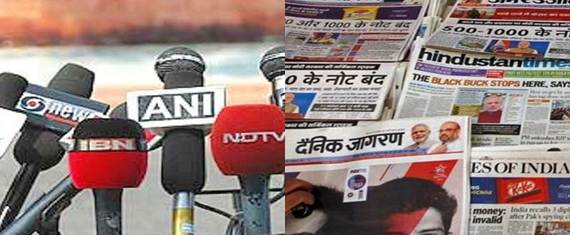
A robust and independent media is essential for a thriving democracy. In India, the media, being the fourth pillar of Indian democracy, acts as a crucial bridge between the government and its citizens, providing information, analysis, and scrutiny of government policies. By holding the government accountable, the media serves as a watchdog, facilitating transparency and fostering informed public debates.
2. The Power of Agenda Setting
Media coverage has the power to set the agenda for public discussions on government policies. Journalists and news organizations decide which policies receive prominence and how they are framed, influencing public perception and understanding. The media’s selection of policy issues, angles, and narratives shapes the public’s priorities, making agenda setting a significant responsibility for journalists.
3. Objective Reporting vs. Advocacy Journalism
Journalists face the challenge of maintaining objectivity while reporting on government policies. Striking the right balance between objective reporting and advocacy journalism can be complex. While journalists should present factual information and diverse perspectives, they must also critically analyze policies, evaluate their impact, and hold the government accountable for its actions.
4. Challenges of Access and Information Flow
Journalists often face challenges in accessing accurate and timely information about government policies. Government agencies may selectively disseminate information, hindering journalists’ ability to provide comprehensive coverage. Obtaining access to key decision-makers, relevant documents, and data can be a daunting task, requiring persistence, source-building, and investigative skills.
5. Media Biases and Ideological Influences
Media biases and ideological influences can impact the coverage of government policies. Journalists and news organizations may hold inherent biases that influence their reporting, framing, and interpretation of policies. These elements can result in either a favorable or critical portrayal of government initiatives, potentially shaping public opinion in the process.
6. Balancing Complexity and Simplification
Government policies often involve intricate details and technical jargon that may be challenging for the general public to comprehend. Journalists face the task of simplifying complex policy matters without oversimplifying or distorting the information. For communication to work and for people to understand, it’s important to achieve the right balance between accuracy and accessibility.
The media’s coverage of government policies in India carries immense significance in a democratic society. Journalists play a critical role in informing citizens, analyzing policies, and holding the government accountable. By understanding the dynamics of media coverage, the challenges faced by journalists, and the ethical responsibilities they carry, media students can equip themselves to become informed, fair, and responsible journalists who contribute to a vibrant and well-informed democracy.
Foreign Policy
Introduction
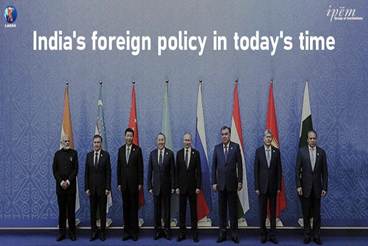
Indian foreign policy holds serious implications for the country’s global standing, international relations, and national interests. The role of media in covering foreign policy is crucial, as it shapes public perception, offers perspectives about diplomatic endeavors, and fosters informed discussions on global affairs. This section examines the dynamic use of media in covering Indian foreign policy, exploring key aspects, challenges, and recent prominent examples from a journalistic standpoint.
Covering Indian foreign policy requires journalists to navigate complex international relations, balance diplomatic sensitivities, and provide accurate analysis. Journalists play a vital role in informing the public about India’s engagement with the world, the country’s positions on global issues, and the impact of foreign policy decisions. By upholding journalistic ethics, critically analyzing policies, and seeking diverse perspectives, journalists contribute to informed public debates on India’s role in the international arena.
1. Shaping Public Perception
Media coverage plays a significant role in shaping public perception of India’s foreign policy and its global engagements. Journalists have the responsibility to present accurate and comprehensive coverage that elucidates the government’s positions, diplomatic strategies, and international commitments. By providing balanced and contextualized reporting, media outlets influence public understanding of India’s role in the world.
2. Analyzing Diplomatic Strategies
Journalists covering foreign policy must analyze and interpret the diplomatic strategies employed by India. This involves examining bilateral and multilateral engagements, analyzing key speeches and statements by political leaders, and evaluating the objectives and outcomes of diplomatic efforts. By providing insightful analysis, journalists contribute to a deeper understanding of India’s diplomatic endeavors.
3. Diverse Perspectives and Expert Opinions
Media coverage of Indian foreign policy should incorporate diverse perspectives and seek insights from experts in international relations, diplomacy, and regional studies. Journalists should engage with analysts, diplomats, and scholars to provide nuanced perspectives and foster informed discussions. These diverse viewpoints enhance the depth and quality of media coverage, offering readers a more comprehensive understanding of complex global issues
4. Balancing National Interests and Global Responsibilities
Coverage of Indian foreign policy necessitates balancing national interests with global responsibilities. Journalists should critically analyze how India’s foreign policy decisions impact national security, economic growth, and regional stability. They should also explore how India navigates its international commitments, such as sustainable development goals, human rights, and global cooperation, while safeguarding its own interests.
Prominent Recent Examples
Recent examples of media coverage of Indian foreign policy include the India-China border tensions, India’s participation in international climate change negotiations, and India’s diplomatic engagements in the Indo-Pacific region. Journalists played a crucial role in reporting on these developments, providing analysis, expert opinions, and real-time updates. Accurate and timely reporting on these matters contributed to informed public discussions and a better understanding of India’s foreign policy priorities.
1. Communication and Public Diplomacy
Media coverage plays a significant role in communicating India’s foreign policy positions to both domestic and international audiences. Journalists act as intermediaries, conveying diplomatic messages, explaining policy decisions, and projecting India’s image on the global stage. Through responsible reporting and accurate representation, journalists contribute to effective public diplomacy, promoting India’s interests and values worldwide.
2. Contextualizing Geopolitical Dynamics
Media coverage of Indian foreign policy should place it within the broader geopolitical context. Journalists should analyze the evolving global landscape, major international trends, and regional dynamics to provide a comprehensive understanding of India’s foreign policy decisions. This contextualization enables readers to grasp the strategic considerations, alliances, and interests that shape India’s engagements with other nations.
3. Diplomatic Disputes and Conflict Resolution
Foreign policy coverage often involves reporting on diplomatic disputes and efforts towards conflict resolution. Journalists play a crucial role in examining the root causes, historical context, and potential solutions to such conflicts. By providing in-depth analysis, interviewing experts, and reporting on peace-building initiatives, media coverage contributes to public awareness and encourages dialogue and understanding.
4. Tracking International Agreements and Treaties
Media coverage should closely monitor India’s participation in international agreements, treaties, and forums. Journalists should analyze the implications of such engagements on national interests, economic cooperation, and global governance. By reporting on India’s commitments and outcomes of international negotiations, media coverage enhances public understanding of India’s role in shaping the global agenda.
5. Evaluating Public Diplomacy Initiatives
Indian foreign policy often includes public diplomacy initiatives aimed at promoting the nation’s image, culture, and values abroad. Journalists should evaluate the effectiveness and impact of these initiatives in shaping international perceptions of India. By critically examining the outcomes and public responses to public diplomacy efforts, media coverage contributes to a broader understanding of India’s soft power and its influence in the global arena.
Conclusion
Media coverage of Indian foreign policy holds immense significance in informing, shaping, and fostering public understanding of India’s global engagements. Journalists, armed with journalistic integrity, critical analysis skills, and a commitment to unbiased reporting, play a pivotal role in providing accurate, insightful, and balanced coverage. By comprehensively covering foreign policy, media students can contribute to informed public discourse, promote transparency, and actively participate in shaping India’s role in the global arena.
Case study on Iran Nuclear Deal
Introduction
Media is key to determining public opinion, influencing political discourse, and ultimately impacting the formation of national and foreign policies. The negotiation and implementation of the Iran Nuclear Deal is a recent example of how important the media is in making policy. This complex and highly debated agreement between Iran and world powers was heavily influenced by media coverage, which shaped public perception, influenced political decision-making, and ultimately impacted the policy outcome.
Background
The Iran Nuclear Deal, officially known as the Joint Comprehensive Plan of Action (JCPOA), was an agreement signed in 2015 between Iran and the P5+1 group of countries (United States, United Kingdom, France, Germany, Russia, and China) along with the European Union. The aim of the deal was to curb Iran’s nuclear program in exchange for the lifting of economic sanctions.
Role of Media in Policy Formation
Throughout the negotiation and implementation process of the Iran Nuclear Deal, media coverage played a pivotal role in shaping the direction and outcome of the policy. Several key aspects highlight the influence of media:
1. Shaping Public Opinion
Media coverage significantly influenced public opinion regarding the Iran Nuclear Deal. Different media outlets presented varying perspectives, ranging from support for diplomacy and engagement to skepticism and criticism. News articles, opinion pieces, and televised debates provided information and analysis that shaped public perception of the agreement, impacting public support or opposition.
2. Framing the Narrative
Media framing played a critical role in shaping the narrative surrounding the Iran nuclear deal. Journalists and media organizations framed the deal based on their ideological and geopolitical perspectives. Some portrayed the agreement as a historic diplomatic achievement, emphasizing its potential to prevent Iran from obtaining nuclear weapons. Others framed it as a flawed and dangerous compromise, highlighting potential risks and loopholes.
3. Influencing Political Decision-Making
Media coverage influenced political decision-making processes surrounding the Iran Nuclear Deal. Political leaders and policymakers closely monitor public opinion as they make policy choices. The media’s portrayal of the deal and its perceived public reception influenced the positions taken by political leaders, impacting their support, opposition, or willingness to negotiate.
4. Shaping International Relations
Media coverage of the Iran Nuclear Deal had a significant impact on international relations. The portrayal of the agreement in global media influenced how other countries, including key stakeholders in the deal, perceived and responded to it. Media coverage helped shape the international community’s view of the agreement, influencing its implementation and potential future diplomatic engagements.
5. Ethical Considerations
Ethical considerations for journalists reporting on policies with significant international implications like the Iran Nuclear Deal include:
6. Accuracy and Fairness
Journalists have a responsibility to provide accurate and fair reporting, presenting multiple perspectives and avoiding undue bias. Reporting should be based on verified information and expert analysis to ensure an informed public discourse.
7. Contextual Understanding
Journalists should strive to provide context and background information to enhance public understanding of complex policy issues. This includes explaining the historical, geopolitical, and strategic factors that shape policy decisions and their potential consequences.
8. Transparency and Accountability
Journalists should hold political leaders and policymakers accountable for their actions and decisions. This involves investigating and reporting on potential motives, interests, and consequences of policy choices, promoting transparency and accountability in policy-making processes.
Conclusion
The Iran Nuclear Deal serves as a recent example highlighting the significant role of media in the formation of national and foreign policies. Media coverage influenced public opinion, framed the narrative, influenced political decision-making, and shaped international relations.
Ethical considerations, such as accuracy, fairness, contextual understanding, and accountability, play a crucial role in ensuring responsible journalism in the coverage of policies with far-reaching implications. Understanding the media’s influence in policy formation is vital for individuals to engage in informed and critical discussions and for policymakers to consider the broader impact of media narratives.
It is important for journalists to approach policy-related coverage with integrity, avoiding sensationalism and providing accurate, balanced, and nuanced reporting. In doing so, they can help foster a well-informed public discourse and contribute to the democratic process.
Additionally, media consumers must develop media literacy skills to critically evaluate news coverage, recognize bias, and seek multiple perspectives. By engaging with diverse sources of information and maintaining a discerning approach, individuals can form their own well-rounded opinions and actively participate in shaping national and foreign policies.
Ultimately, the example of the Iran Nuclear Deal illustrates how media coverage can significantly influence the formation of policies with global implications. Recognizing and understanding the power of media in shaping public opinion and political decision-making is essential for both journalists and citizens. By promoting responsible journalism and media literacy, we can strive for a more transparent, informed, and inclusive policy-making process that addresses the complex challenges of our interconnected world.
A robust and independent media is essential for a thriving democracy. In India, the media, being the fourth pillar of Indian democracy, acts as a crucial bridge between the government and its citizens, providing information, analysis, and scrutiny of government policies. By holding the government accountable, the media serves as a watchdog, facilitating transparency and fostering informed public debates.
2. The Power of Agenda Setting
Media coverage has the power to set the agenda for public discussions on government policies. Journalists and news organizations decide which policies receive prominence and how they are framed, influencing public perception and understanding. The media’s selection of policy issues, angles, and narratives shapes the public’s priorities, making agenda setting a significant responsibility for journalists.
3. Objective Reporting vs. Advocacy Journalism
Journalists face the challenge of maintaining objectivity while reporting on government policies. Striking the right balance between objective reporting and advocacy journalism can be complex. While journalists should present factual information and diverse perspectives, they must also critically analyze policies, evaluate their impact, and hold the government accountable for its actions.
4. Challenges of Access and Information Flow
Journalists often face challenges in accessing accurate and timely information about government policies. Government agencies may selectively disseminate information, hindering journalists’ ability to provide comprehensive coverage. Obtaining access to key decision-makers, relevant documents, and data can be a daunting task, requiring persistence, source-building, and investigative skills.
5. Media Biases and Ideological Influences
Media biases and ideological influences can impact the coverage of government policies. Journalists and news organizations may hold inherent biases that influence their reporting, framing, and interpretation of policies. These elements can result in either a favorable or critical portrayal of government initiatives, potentially shaping public opinion in the process.
6. Balancing Complexity and Simplification
Government policies often involve intricate details and technical jargon that may be challenging for the general public to comprehend. Journalists face the task of simplifying complex policy matters without oversimplifying or distorting the information. For communication to work and for people to understand, it’s important to find the right balance between accuracy and accessibility.
The media’s coverage of government policies in India carries immense significance in a democratic society. Journalists play a critical role in informing citizens, analyzing policies, and holding the government accountable. By understanding the dynamics of media coverage, the challenges faced by journalists, and the ethical responsibilities they carry, media students can equip themselves to become informed, fair, and responsible journalists who contribute to a vibrant and well-informed democracy.
Defence Policy
Introduction
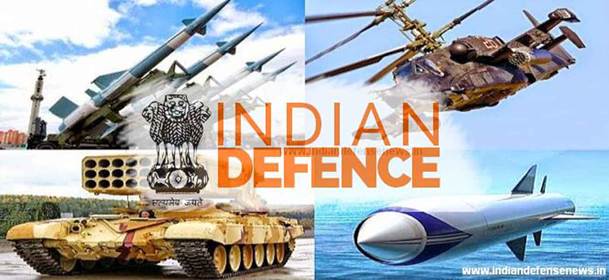
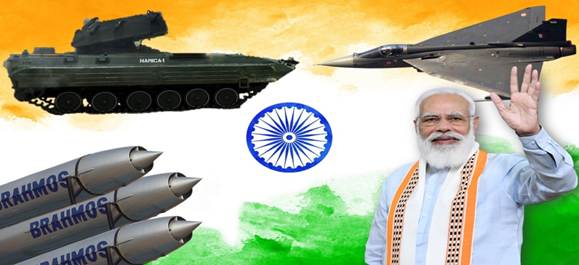
The realm of Indian defense policy is crucial for national security and has far-reaching implications for the country’s geopolitical standing. The role of media in covering defense policy is of paramount importance, as it is instrumental in determining public perception, fostering transparency, and promoting informed debates. This section examines the complex role of media in covering Indian defense policy, highlighting key aspects, challenges, and recent prominent examples from a journalistic standpoint.
Journalists must delicately balance national security considerations with the public’s right to know when reporting on defense policy. Journalists play a critical role in providing accurate, timely, and comprehensive coverage of defense policies, armed forces, and national security challenges. By upholding journalistic principles of objectivity, verification, and accountability, journalists can contribute to an informed public discourse and ensure responsible reporting on defense matters.
1. Navigating National Security and Transparency
Coverage of Indian defense policy poses a unique challenge for media outlets due to the sensitive nature of national security. Journalists must delicately balance the need for transparency with the need to protect sensitive information that could jeopardize national interests. Striking a balance between the public’s right to know and the imperative of protecting classified information is a crucial responsibility for journalists covering defense policy.
2. Geopolitical Context and Strategic Implications
Media coverage of Indian defense policy should place it within the broader geopolitical context. Journalists must analyze the strategic implications of defense policies, taking into account regional dynamics, alliances, and emerging global trends. This contextualization enhances public understanding of the country’s defense posture and its implications for national security.
3. Expert Insights and Analysis
Coverage of defense policy necessitates seeking expert opinions and analysis from military strategists, defense analysts, and security experts. Journalists should engage with these experts to provide nuanced perspectives, offer historical context, and assess the efficacy of defense policies. Expert insights contribute to a more comprehensive understanding of defense matters and help bridge the gap between technical jargon and public comprehension.
4. Safeguarding National Interest
Media coverage of defense policy requires journalists to exercise caution and responsibility in protecting the national interest. Sensationalism or speculative reporting on sensitive defense matters can have adverse consequences, impacting national security and compromising the effectiveness of military operations. Ethical considerations and fact-checking are key to guaranteeing accurate and responsible reporting.
5. Prominent Recent Examples
Recent developments such as the acquisition of advanced defense equipment, border tensions, and military modernization efforts have garnered significant media attention. Journalists play a pivotal role in covering these events, providing analysis, expert opinions, and real-time updates to the public. Accurate and unbiased reporting on such incidents contributes to informed public discussions and helps foster trust in the media’s role as an informant during critical moments.
6. Defence Procurement and Accountability
Media coverage should scrutinize defense procurement processes, including contracts, acquisitions, and offsets. Journalists should investigate potential irregularities, conflicts of interest, and the transparency of procurement practices. Holding the government and defense establishments accountable ensures efficient utilization of public funds and enhances the overall efficacy of defense policy implementation.
7. Balancing National Security and Public Interest
Journalists covering defense policy must strike a delicate balance between national security imperatives and the public’s right to be informed. While ensuring the protection of sensitive information, journalists have a responsibility to keep the public informed about defense matters that directly impact their safety, national resources, and strategic interests. This delicate balancing act requires meticulous verification, responsible reporting, and adherence to ethical standards.
8. Bridging the Civil-Military Gap
Coverage of Indian defense policy can contribute to bridging the civil-military gap by facilitating a deeper understanding of the armed forces among the general public. Journalists should try to show the military’s roles, problems, and contributions in a way that makes people appreciate, respect, and empathize with them. Media coverage can create a sense of unity and national pride by making the experiences of armed forces personnel more relatable and showing how dedicated they are.
9. Embedding Journalists in Defence Operations
In some cases, journalists may be embedded with defense forces during operations to get firsthand accounts and insights. This practice allows journalists to report on defense operations with accuracy, authenticity, and a more profound understanding of the complexities involved. Embedding also enables journalists to showcase the professionalism and sacrifices of the armed forces while adhering to agreed-upon operational security guidelines.
10. Advocating for Transparency and Accountability
Media coverage should advocate for transparency and accountability in defense policies and decision-making processes. Journalists play an important role in looking into cases of corruption, mismanagement, or inefficiency in the defense establishment. By bringing these kinds of problems to light, media coverage can help create a culture of openness, responsible government, and constant improvement in the defense sector.
Media coverage of Indian defense policy serves as a critical pillar of democracy by providing citizens with vital information about national security, military operations, and defense strategies. Journalists, as responsible and ethical conduits of information, play a pivotal role in ensuring accurate, balanced, and comprehensive reporting. By adhering to journalistic principles and addressing the unique challenges of covering defense policy, media students can contribute to informed public discourse, transparency, and accountability in matters of national security.
A robust and independent media is essential for a thriving democracy. In India, the media, being the fourth pillar of Indian democracy, acts as a crucial bridge between the government and its citizens, providing information, analysis, and scrutiny of government policies. By holding the government accountable, the media serves as a watchdog, facilitating transparency and fostering informed public debates.
2. The Power of Agenda Setting
Media coverage has the power to set the agenda for public discussions on government policies. Journalists and news organizations decide which policies receive prominence and how they are framed, influencing public perception and understanding. The media’s selection of policy issues, angles, and narratives shapes the public’s priorities, making agenda setting a significant responsibility for journalists.
3. Objective Reporting vs. Advocacy Journalism
Journalists face the challenge of maintaining objectivity while reporting on government policies. Striking the right balance between objective reporting and advocacy journalism can be complex. While journalists should present factual information and diverse perspectives, they must also critically analyze policies, evaluate their impact, and hold the government accountable for its actions.
4. Challenges of Access and Information Flow
Journalists often face challenges in accessing accurate and timely information about government policies. Government agencies may selectively disseminate information, hindering journalists’ ability to provide comprehensive coverage. Obtaining access to key decision-makers, relevant documents, and data can be a daunting task, requiring persistence, source-building, and investigative skills.
5. Media Biases and Ideological Influences
Media biases and ideological influences can impact the coverage of government policies. Journalists and news organizations may hold inherent biases that influence their reporting, framing, and interpretation of policies. These elements can result in either a favorable or critical portrayal of government initiatives, potentially shaping public opinion in the process.
6. Balancing Complexity and Simplification
Government policies often involve intricate details and technical jargon that may be challenging for the general public to comprehend. Journalists face the task of simplifying complex policy matters without oversimplifying or distorting the information. For communication to work and for people to understand, it’s important to find the right balance between accuracy and accessibility.
The media’s coverage of government policies in India carries immense significance in a democratic society. Journalists play a critical role in informing citizens, analyzing policies, and holding the government accountable. By understanding the dynamics of media coverage, the challenges faced by journalists, and the ethical responsibilities they carry, media students can equip themselves to become informed, fair, and responsible journalists who contribute to a vibrant and well-informed democracy.
A. ECONOMIC POLICY
Introduction
The Indian economy is a dynamic and complex landscape, where government policies hold significant implications for millions of citizens. The role of media in covering economic policy is crucial, as it shapes public perception, influences investor sentiment, and provides valuable insights to stakeholders. This section delves into the nuanced use of media in the coverage of Indian economic policy, analyzing key aspects, challenges, and recent prominent examples from a journalistic standpoint.
Journalists covering economic policy face the challenge of simplifying complex economic concepts while maintaining accuracy and depth. Reporting on economic policies demands a careful balance between technical details and their impact on people’s lives. Journalists play a critical role in providing unbiased analysis, examining the consequences of policies, and facilitating informed public discussions. Their ability to uncover crucial information, critically evaluate economic decisions, and present diverse viewpoints is instrumental in shaping the public’s understanding and fostering an environment of accountability.
1. Setting the Narrative: Media’s Agenda-Setting Power
Media outlets possess the power to shape the narrative around economic policies. Through careful selection of stories, framing, and emphasis on specific aspects, they influence public perception and the priorities of economic debates. Journalists, as agenda-setters, hold a responsibility to prioritize issues of national importance, provide nuanced perspectives, and avoid sensationalism while covering economic policy.
2. Interplay between Politics and Economics
The coverage of economic policy often intersects with political considerations. Media coverage tends to focus on the political implications of economic decisions, highlighting winners and losers, and scrutinizing the government’s approach. Journalists must navigate this complex terrain, offering objective analysis while avoiding partisan biases and maintaining the necessary independence to critique policies irrespective of political affiliations.
3. The Role of Experts and Analysts
Media coverage of economic policy frequently incorporates expert opinions and analysis. Journalists rely on economists, financial experts, and policy analysts to provide insights and interpret the potential impacts of policies. Engaging a diverse range of experts allows for a comprehensive evaluation of economic policies and fosters a more informed public discourse.
4. Balancing Complexity and Accessibility
Economic policies are often intricate, involving technical jargon and complex concepts. Journalists face the challenge of presenting these policies in a manner that is accessible to a broad audience without oversimplifying or diluting the core issues. Skillful storytelling, clear explanations, and relatable examples help bridge the gap, ensuring that the complexities of economic policy are understood by the public.
5. Recent Prominent Examples
Recent economic policy developments in India have garnered significant media attention. Examples include the introduction of the Goods and Services Tax (GST), demonetization, and various reforms such as the Insolvency and Bankruptcy Code (IBC). Media coverage of these policies highlighted their potential impact on businesses, employment, and overall economic growth. Journalists played a critical role in analyzing the consequences, soliciting expert opinions, and scrutinizing the government’s approach.
6. Sensitizing Socioeconomic Impact
Media coverage of economic policy should strive to shed light on the socioeconomic impact of government decisions. Journalists have a responsibility to go beyond abstract economic indicators and explore the real-world consequences of policies on different sections of society. By highlighting stories of individuals and communities affected by economic policies, media coverage can bring forth the human dimension and foster empathy among the public.
7. Diverse Perspectives and Stakeholder Engagement
Media coverage should aim to incorporate diverse perspectives and engage with various stakeholders affected by economic policies. This includes seeking input from businesses, labor unions, think tanks, and grassroots organizations to provide a holistic view of the impacts and potential alternatives. By representing a range of voices, journalists can contribute to a more inclusive and well-rounded analysis of economic policies.
8. Monitoring and Accountability
Media plays a crucial role in monitoring the implementation and effectiveness of economic policies over time. Journalists should follow up on policy outcomes, track progress, and assess whether the intended objectives are being achieved. By holding the government accountable for its economic decisions, media coverage acts as a vital check and balance, ensuring transparency and responsible governance.
9. Data Journalism and Fact-Checking
Economic policy discussions heavily rely on data and statistics. Journalists equipped with data journalism skills can effectively analyze and present complex economic information to the public. Fact-checking economic claims and scrutinizing government data adds credibility to media coverage and safeguards against the spread of misinformation or propaganda.
10. Economic Policy as a Public Interest Issue
Media coverage of economic policy should frame it as a matter of public interest rather than a purely technical or academic subject. Journalists can highlight the links between economic policies and broader societal issues such as poverty, inequality, employment, and environmental sustainability. By contextualizing economic policy within the larger socioeconomic context, media coverage can foster public engagement and promote an informed public dialogue.
The media’s coverage of Indian economic policy plays a pivotal role in informing, engaging, and empowering citizens. Journalists, armed with journalistic integrity, analytical skills, and a commitment to responsible reporting, have the ability to shape public understanding, influence policy debates, and hold the government accountable. By comprehensively covering economic policies, aspiring journalists can contribute to a more informed citizenry, promote transparency, and actively participate in shaping India’s economic future.
In the vibrant political landscape of India, election campaigns play a crucial role in shaping public opinion. The Bharatiya Janata Party (BJP), one of India’s major political parties, has effectively utilized the media to amplify its messages and connect with voters. This section will provide an in-depth analysis of the BJP’s use of media in its election campaigns, exploring key strategies employed, their impact, and the broader implications for journalism.
1. Harnessing Mass Media
The BJP has leveraged traditional mass media channels, such as television, radio, and print, to disseminate its campaign messages. Through carefully crafted advertisements, interviews, and editorials, the party reaches a wide audience, maximizing its visibility and influence. Mass media platforms allow the BJP to target diverse segments of society and create a narrative that resonates with the electorate.
2. Digital Dominance
The BJP has embraced the digital era, recognizing the potential of social media and online platforms in reaching and mobilizing voters. The party’s extensive social media presence, including active accounts on platforms like Facebook, Twitter, and Instagram, enables direct communication with supporters and facilitates the rapid dissemination of party propaganda. This digital dominance has allowed the BJP to engage with tech-savvy audiences and counter rival narratives.
3. Narrative Building
BJP election campaigns are characterized by their ability to craft persuasive narratives. The party strategically positions itself as a champion of nationalism, development, and cultural preservation. By utilizing media platforms, the BJP has effectively propagated its ideologies and policy initiatives, often presenting them as the solutions to the nation’s challenges. This narrative building creates an emotional connection with voters and reinforces the party’s image.
4. Media Management
The BJP has adeptly managed media relations, nurturing favorable relationships with select media outlets. Through exclusive interviews, press conferences, and well-placed opinion pieces, the party ensures its messages are amplified by sympathetic journalists and media houses. By establishing a symbiotic relationship, the BJP maintains a positive media narrative while keeping detractors at bay.
5. Balancing Political Communication
The BJP employs a delicate balance between centralized political communication and decentralized messaging. The party’s leadership, including icons like the prime minister, sets the overarching agenda and narrative. However, regional and local leaders are empowered to tailor their messages to specific constituencies, ensuring a personalized approach that resonates with diverse voter groups.
6. Controversies and Media Scrutiny
Media coverage of the BJP’s election campaigns is not without controversy. Critics accuse some media outlets of biased reporting, favoring the party and providing uncritical coverage. On the other hand, the BJP often faces intense media scrutiny, particularly regarding sensitive issues such as religious tensions or policy decisions. These dynamics reflect the delicate balance between media objectivity and partisan biases.
7. Amplification through Public Events
In addition to mass media and digital platforms, the BJP leverages large-scale public events as a powerful tool for media coverage. Rallies, roadshows, and public addresses featuring key party leaders generate immense media attention. These events create a sense of momentum and enthusiasm around the party, projecting an image of widespread support and energizing the party’s cadre.
8. Branding and Symbolism
The BJP excels in crafting a strong brand identity and employing symbolic messaging in its election campaigns. The party’s distinctive logo, slogans, and symbols, such as the lotus flower, effectively create a visual association with the BJP’s values and ideology. This branding strategy enhances recognition and recall among voters, further reinforced through media coverage and advertisements.
9. Strategic Messaging
The BJP carefully tailors its messaging to appeal to different segments of society. By understanding the diverse demographics and regional dynamics of India, the party delivers targeted messages that resonate with specific voter groups. The media plays a crucial role in amplifying these messages, ensuring they reach the intended audiences and generate the desired impact.
10. Responding to Media Landscape Changes
The BJP has displayed an ability to adapt to evolving media trends. As the consumption patterns shift towards digital platforms, the party has embraced technologies such as live streaming, podcasts, and interactive content to engage with a younger and tech-savvy audience. This adaptability allows the BJP to remain at the forefront of media innovation and maintain relevance in an ever-changing media landscape.
The BJP’s use of media in its election campaigns highlights the party’s astute understanding of the evolving media landscape and its potential to shape public opinion. Through a multifaceted media strategy that encompasses mass media, digital platforms, narrative building, and media management, the BJP has successfully connected with voters, disseminated its political agenda, and consolidated its support base. This case study emphasizes the importance of journalistic scrutiny, media ethics, and the responsibility of journalists to provide fair and unbiased coverage of political campaigns.
The BJP’s adept use of media in its election campaigns has contributed significantly to the party’s electoral success and political influence in India. Through a multi-pronged approach encompassing mass media, digital platforms, public events, branding, and strategic messaging, the BJP has effectively shaped public opinion, mobilized voters, and projected a powerful political image. This case study serves as a reminder of the dynamic interplay between politics and media, highlighting the importance of media literacy, ethical journalism, and critical analysis in navigating the complexities of political campaigns.
For aspiring journalists, understanding the BJP’s media strategies provides invaluable insights into the evolving role of media in democratic processes. It underscores the need for journalistic integrity, responsible reporting, and the constant evaluation of media’s impact on the political landscape. By studying and analyzing the BJP’s media tactics, journalism students can learn more about the media’s influence on electoral politics and develop the skills necessary to navigate this dynamic relationship.
For example:
These examples highlight the BJP’s effective use of media to shape public opinion, mobilize supporters, and maintain a strong political presence. They underscore the significant influence that media platforms and coverage can have on election outcomes and the subsequent implications for democratic processes.
Extensive Media Coverage: The BJP’s election campaigns receive extensive media coverage across various platforms, including television, radio, print, and digital media. This broad coverage ensures that the party’s messages and campaign events reach a wide audience, increasing visibility and generating public discourse.
Strategic Messaging and Sound Bites: The BJP effectively utilizes strategic messaging to convey its agenda and policies. The party crafts concise and impactful sound bites that resonate with the electorate and are easily picked up by the media. These carefully crafted messages, often backed by slogans and catchphrases, help shape public opinion and maintain a consistent narrative.
Media Management: The BJP maintains strong relationships with select media outlets, ensuring favorable coverage and amplification of its messages. Party leaders regularly engage with journalists, granting interviews and participating in press conferences, providing exclusive news stories and access. This media management strategy helps the BJP maintain a positive media image and control the narrative surrounding its campaigns.
Social Media Dominance: The BJP has embraced social media as a powerful tool in its election campaigns. The party effectively utilizes platforms such as Twitter, Facebook, and YouTube to disseminate its messages, engage with supporters, and counter rival narratives. With a robust social media presence, the BJP reaches a vast online audience, including tech-savvy youth, shaping political discourse and mobilizing support.
Influencer Endorsements: In recent years, the BJP has leveraged the influence of social media influencers and celebrities to garner support. Prominent individuals with large followings on platforms like Instagram and YouTube are often seen endorsing the party’s campaigns, policies, and leaders. These endorsements attract attention, generate buzz, and sway public opinion through the power of celebrity influence.
Narrative Building and Branding: The BJP is adept at building a strong narrative and branding itself effectively. The party projects a clear and consistent image, emphasizing themes such as nationalism, cultural preservation, and economic development. The media plays a crucial role in amplifying this narrative, which resonates with the party’s supporters and creates a sense of identity among its base.
Visual Spectacles and Public Events: The BJP organizes large-scale public events, rallies, and road shows that capture media attention and create visual spectacles. These events, often featuring prominent party leaders, are meticulously planned to generate enthusiasm, demonstrate strength, and project a powerful image of public support. Media coverage of these events contributes to the party’s visibility and reinforces its messaging.