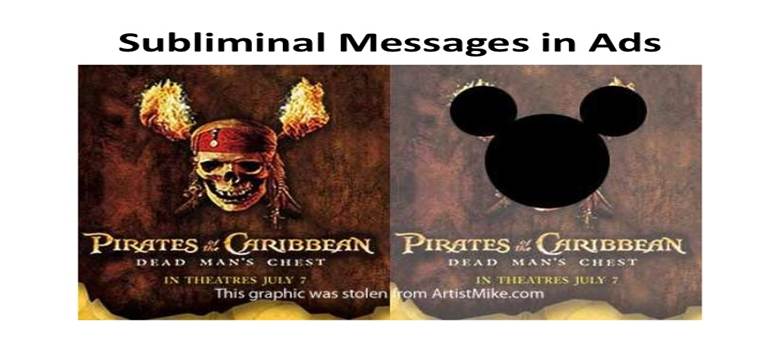
A subliminal message is a signal or message embedded in another object, designed to pass below the normal limits of perception. These messages are indiscernible by the conscious mind but allegedly affect the subconscious or deeper mind. Subliminal techniques have occasionally been used in advertising and propaganda; the purpose, effectiveness, and frequency of such techniques are debated.
Can words flashed quickly on a screen make you want to purchase a product? Can a hidden image persuade you to spend your hard-earned cash on something you don’t need? This topic will explore the questions surrounding subliminal advertising.
History of Subliminal Advertising
In the 1950s, a researcher named James Vicary coined the term to describe what he claimed he found in his Popcorn Experiment. He argued that sales of concessions had increased based on the split-second flashing of visual stimuli, suggesting people make these purchases. Vicary later retracted his claim, but the thought was an intriguing one for the public. Can we be made to take actions based on information received below our conscious awareness? People asked themselves, “How frightening is that?”
Years later, when a 1973 ad for a board game named Husker Du included the flashing of the words ‘Get It,’ the ad was removed from the air. The incident led to the Federal Trade Commission’s official stance against the ads. The Commission saw these ads as deceptive and banned the practice of using subliminal ads, even though there wasn’t definitive research to prove the effects. Even now, the question of whether we are affected by subliminal marketing is up for debate.
Definition
According to Business Dictionary, “Promotional messages the recipient is not aware of, such as those played at very low volume or flashed on a screen for less than a second. Its effectiveness is not supported by scientific evidence, and its use is considered a deceptive business practice in some jurisdictions.”
Subliminal advertising advocates would say that if you’d seen those words flashed at you for a fraction of a second, you’d be more likely to do as they say. The claim is that our brain has picked up the message even if we haven’t.
As you read those exclamations now, you probably wondered what they were doing at the beginning of your lesson. But what if you hadn’t perceived them at all, if they’d flashed on your screen as visual stimuli, and you couldn’t even remember you’d seen them? Stimuli such as images may activate our brain even if we don’t fully perceive what is happening.
The argument goes that you’d feel more compelled to consume the tasty treats as a result of these subliminal visual stimuli. And the weird part is, you wouldn’t even know why you were craving them because the messages were below the threshold of your perception.
Advertising can manipulate our emotions, with or without making the process hidden. To balance out the tremendous power of advertising, a person can aim to consider and question how the company is trying to position the product and then weigh whether he really needs what is being sold. This is a big part of why subliminal advertising is considered deceptive. When something is below our level of perception, we miss out on the opportunity to consider the message being communicated to us.
Subliminal Messages
A subliminal message is an affirmation or message, either auditory or visual, presented below the normal limits of human auditory or visual perception.
For example, the subliminal signal might be inaudible to the conscious mind because it is below the conscious threshold of hearing (but audible to the unconscious or deeper mind) or might be an image transmitted briefly and unperceived consciously and yet perceived unconsciously.
While this definition assumes a difference between conscious and unconscious—this might be misleading in the understanding and use; it may be more true to suggest that the subliminal message (sound or image) is perceived by deeper parts of what is a single integrated mind.
How do subliminal messages work?
It is suspected and usually tested in psychological studies that subliminal messages gain their potential ability to influence from the fact that they may be able to circumvent the conscious awareness and its critical functions.
For example, if you were listening to a subliminal session for weight loss and you were able to hear the affirmation “I am slim and trim,” your conscious mind would say to itself, “What a load of crap; I am fat and hate my body.” The idea is that since you are unable to criticize the affirmation when you cannot consciously hear it, it is accepted by the subconscious mind without comment or rebuttal.
This route to influence or persuasion would be akin to auto-suggestion or hypnosis wherein the subject is encouraged to be (or induced to be) relaxed so that suggestions are directed to deeper parts of the mind; some observers have argued that the unconscious mind is incapable of critical refusal of hypnotic or subliminal suggestions.
Research findings so far do not support the conclusion that subliminal suggestions are peculiarly powerful. Although this might be because most of the studies into subliminal suggestions or influence involve a one-off subliminal stimulus, and then behavior is measured to test any influence. Usually, if at all, the response of subjects is small and weak.
Subliminal Perceptions in Marketing
An organization’s marketing is effective when it delivers a message that sticks in consumers’ minds and influences them to buy. Consumers experience subliminal perception from marketing messages that influence them without their conscious knowledge. Subliminal influence on consumer buying behavior has been studied and debated for decades. Many marketers include subliminal words and images in advertising, while others don’t make it a priority.
1. Subliminal Marketing
Subliminal messages influence consumers only under certain conditions. “Subliminal” means “below the threshold,” so subliminal messages are aimed at consumers’ subconscious minds. Many marketers include subliminal references to sex, power, happiness, hunger, or wealth in their print, online, and television ads or in brand logos.
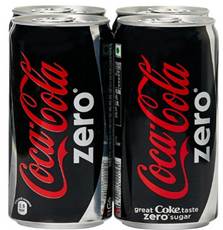
For example, one print ad for Coca-Cola featured frost that some argued was subtly shaped in the image of a naked woman on the top of a can. Presumably, that image would shift the perception of the drink and make it more attractive to the target market. In another example, the Amazon logo features a smiley face that connects the letters A and Z in Amazon as if to suggest that consumers can find anything from A to Z and always be happy doing business with Amazon.
2. Creating Preferences
Subliminal marketing can influence consumers to prefer your product if they don’t already have a strong preference for a competing product.
For example, in a 2011 study published in the “Journal of Consumer Psychology,” researchers tested whether a subliminal message of an iced-tea brand could influence viewers’ choices when they were given the option to drink iced tea or bottled water at the end of an experiment. The data determined that only thirsty viewers were influenced, and only those who either didn’t prefer iced tea or didn’t prefer either choice were influenced to choose the iced tea because of the subliminal message.
3. Motivation Necessary
Consumers have to have heard of the brand in a subliminal message and be motivated to do what the subliminal message suggests in order to be influenced by subliminal perception. For example, if you don’t own a dog, watching a subliminal message to “Buy Brand-X dog food” flashed quickly at intervals throughout a movie won’t influence you to buy dog food.
The subliminal message may influence you, however, to choose Brand X over Brand Y if you already plan to buy dog food after watching the movie. At the same time, the subliminal message about Brand-X will likely have no influence on a dog food-buying consumer if the consumer strongly prefers Brand-Y or has never heard of Brand-X before.
4. Subliminal Exposed
While implanting subliminal messages in marketing can help sway some undecided consumers, many marketers don’t see the need. Compelling marketing that moves conscious thoughts and emotions does more to keep consumers coming back to a brand they already like. Additionally, any subliminal impact of ads and logos on consumers’ minds is diminished when the supposed subliminal messages or images are exposed.
For example, when you’re told that the frost on a cola can in an ad is shaped like a woman, the subliminal image no longer serves its purpose. Once your subliminal trick is revealed, the words or images become just another part of the overt marketing message consumers will consciously think about regarding your brand.
According to the Legal Dictionary, puffery is a form of advertising in which a product or service is praised as being superior to all others like it, without any evidence to back up the claim. This is done for the sole purpose of attracting buyers that might not otherwise give the product or service any attention.
Puffery can normally be found in advertising or promotional materials about a specific product or service, though it is often employed by politicians and other people attempting to gain favor. Puffery is legal, so long as it does not escalate to what would be considered misrepresentation. For example, undeserved or exaggerated praise; publicity consisting of such praise and others.
What is puffery?
Puffery is a statement or claim that is promotional in nature. It’s usually subjective and not to be taken seriously. Advertisers try to persuade people to buy a product or service through various methods. A company may deliver an entertaining message about its product, compare the product to a similar item, list facts about the product, or make vague claims about the product that cannot be proved or disproved. This last method is known as “puffery”; the advertiser “puffs up” the product to seem like more than it is.
Puffery is not illegal and is a common method used in advertising. Examples of these include claiming that one’s product is the “best in the world” or something completely unbelievable, like a product claiming to make you feel like you’re in space. For example:
Duracell
We all know that a toy rabbit powered by a Duracell battery will not keep going and going and going. Even if puffery’s only function is to entertain, that would be sufficient reason not to discourage it.
Fevicol (“Fevicol ka mazboot jod hai Tootega nahi!” by Fevicol)
The impact of puffery advertisement on the audience is as follows:
Consumers tend to buy the product on the basis of puffed-up ads but at times end up being dissatisfied. The product does not live up to their expectations.
At times, puffery has a negative impact on the consumers, where instead of being brand loyal, they end up being brand averse.
Some other examples of ‘puffery’ in advertising:
“Red Bull Gives You Wings”
“Feels like you’re sleeping on a cloud.”
“It’s a meal fit for a king.”
“It’ll blow your mind.”
“World’s best coffee.”
The above slogans are all ‘puffery’; we don’t know what it’s like to sleep on a cloud. Who knows what a meal fit for a king is? “Blow your mind” is obviously not to be taken literally, and there is no way of substantiating if you’re serving the world’s best coffee.
Puffery enables an advertiser to grab consumers by their collars and say, “Hey, have I got a great product for you!” If firms are discouraged from placing in their ads all but the driest factual claims, consumers will be forced to spend more of their time and resources discovering which products are available.
One consequence will be diminished product innovation. Because consumers are more familiar with established products than with new products, puffery is pivotal to the marketing of new products. Fewer resources will be devoted to product innovation if firms encounter greater legal risks in bringing new products to consumers’ attention. Established products experience less intense competition as fewer products enter the market. Product quality declines.
Social marketing was “born” as a discipline in the 1970s, when Philip Kotler and Gerald Zaltman realized that the same marketing principles that were being used to sell products to consumers could be used to “sell” ideas, attitudes, and behaviors. Kotler and Andresen define social marketing as “differing from other areas of marketing only with respect to the objectives of the marketer and his or her organization. Social marketing seeks to influence social behaviors not to benefit the marketer, but to benefit the target audience and the general society.” Social marketing is an approach used to develop activities aimed at changing or maintaining people’s behavior for the benefit of individuals and society as a whole.
So what, exactly, is social marketing? In the Social Marketing Report, it’s defined as “the application of commercial marketing techniques to social problems.” It means to take the same principles used in selling goods—such as shoes, television shows, or pizza—to convince people to change their behavior.
What does that mean? Well, instead of selling hamburgers, you’re selling a life without heart attacks. Instead of convincing teenagers to buy blue jeans, you’re convincing them to buy the advantages of postponing pregnancy.
If you are selling blue jeans, you’re still trying to influence behavior—you’re convincing people they need to wear your jeans, either for comfort or for style or for value. So then, what is the difference between social marketing and commercial marketing?
Definition
Before we focus on social marketing, we should clarify the nature of marketing as both an academic discipline and a management practice.
The definition offered by Kotler, Roberto, and Lee (2002, p. 5) is a useful one:
“The use of marketing principles and techniques to influence a target audience to voluntarily accept, reject, modify, or abandon a behavior for the benefit of individuals, groups, or society as a whole.”
Social marketing relies on voluntary compliance rather than legal, economic, or coercive forms of influence.
Kotler et al. (2002) argue that social marketing is often used to influence an audience to change their behavior for the sake of one or more of the following:
Improving health—health issues
Preventing injuries—safety issues
Protecting the environment – environmental issues
Contributing to the community involves issues of community-building.
Lazer and Kelley (1973, p. ix) define social marketing as follows:
“Social marketing is concerned with the application of marketing knowledge, concepts, and techniques to enhance social as well as economic ends. It is also concerned with analysis of the social consequences of marketing policies, decisions, and activities.”
Corporate Social Responsibility (CSR) is a continuing commitment by businesses to integrate social and environmental concerns into their business operations. Changes in the global environment increasingly challenge businesses around the world to look beyond financial performance and to integrate social and environmental concerns into their strategic management.
India traditionally viewed CSR as a philanthropic activity prior to the Companies Act 2013. And in keeping with the Indian tradition, it was believed that every company has a moral responsibility to play an active role in discharging its social obligations, subject to its financial health. In the early 90s, Mahatma Gandhi introduced the concept of trusteeship, helping socio-economic growth. Family values, traditions, culture, and religion influenced CSR.
On 29th August 2013, the Companies Act of 2013 replaced the Companies Act of 1956. The New Act has introduced far-reaching changes that affect company formation, administration, and governance, and it incorporates an additional section, i.e., Section 135—a clause on Corporate Social Responsibility obligations (“CSR”) for companies listed in India. The clause covers the essential prerequisites pertaining to the execution, fund allotment, and reporting for successful project implementation.
India became the first country to legislate the need to undertake CSR activities and mandatorily report CSR initiatives under the new Companies Act 2013. This is the beginning of a new era for CSR in India.
Companies to implement their CSR in PROJECT MODE are:
Suggested Areas of Activities for (As per Schedule VII)
Eradicating hunger, poverty and malnutrition; promoting health care including preventive health care and sanitation, including contribution to the Swachh Bharat Kosh set-up by the Central Government for the promotion of sanitation; and making available safe drinking water;
Promoting education, including special education and employment-enhancing vocation skills especially among children, women, the elderly, and the differently abled and livelihood enhancement projects;
Promoting gender equality, empowering women, setting up homes and hostels for women and orphans; setting up old age homes, day care centers, and such other facilities for senior citizens, and taking measures for reducing inequalities faced by socially and economically backward groups;
Ensuring environmental sustainability, ecological balance, protection of flora and fauna, animal welfare, agroforestry, conservation of natural resources, and maintaining the quality of soil, air, and water, including contributions to the Clean Ganga Fund set up by the Central Government for the rejuvenation of the Ganga River;
Protection of national heritage, art and culture, including restoration of buildings and sites of historical importance and works of art; setting up public libraries; promotion and development of traditional art and handicrafts;
Measures for the benefit of armed forces veterans, war widows and their dependents;
Training to promote rural sports, nationally recognized sports, Paralympic sports and olympic sports;
Contribution to the Prime Minister’s National Relief Fund or any other fund set up by the Central Government for the socio-economic development, relief, and welfare of the Scheduled Castes, Scheduled Tribes, other backward classes, minorities, and women;
The Central Govt. approves and provides contributions or funds to technology incubators located within academic institutions.
The tagline “jaago re” from TATA Tea is considerably encouraging to the public, as it conveys a positive message to “awaken” the people of India towards their real aims and duties.
Coca-Cola Mehman Nawaaji
Coca-Cola is taking ‘mehman nawaazi’ to a new level with #CokeNawaazi, where vada pav is being served with Coke, paranthas are being had with Coke, and 4’s and 6’s are being celebrated with shots of Coke.
P & G (Padegha, India; Badegha, India)
Shiksha is now in its 7th year and is back with an even stronger commitment—to take its current impact of 150,000 children to the 200,000 mark. On May 7, 2011, Shiksha held an event in Delhi. Shiksha ambassadors Anupam Kher and Dr. Kiran Bedi, as well as recent Shiksha supporter Jacqueline Fernandes, unveiled the plan of the Shiksha-RTI School in Purkhas, Haryana. This school is one of the 20+ schools that Shiksha is building in 2010-11 alone.
B. Advocacy Advertising
Introduction
Advocacy advertisements are communications intended to bring awareness to a certain problem. It is a kind of advertisement that is used in order to influence the public on political or social matters. Moreover, it is also concerned with the propagation of ideas and the explanation of controversial social issues that are deemed important in public policy terms.
Advocacy advertising is commonly regarded as a subdivision of corporate or institutional advertising. Contrasting commercial advertising, advocacy advertising is considered to be undertaken in the interest of a group or the public and naturally does not promote a product or service. Funding for advocacy advertising can be provided by nonprofit organizations, corporations, or private advocacy groups.
Advocacy advertising in India
Indian brands are taking advantage of the new call of social selling, employer branding, social hiring, personal branding, social PR, etc., which are the key principles of brand advocacy. Nowadays every brand begins changing their colors. Literally. Well, we are referring to the sudden switch to saffron, white, and green (India’s flag colors) in their marketing communication to celebrate Independence Day. But beyond these surface-level changes, there are a few brands that go the extra mile and design a campaign to aptly represent the spirit of independence and what it means for India.
Incorporating the brand message into the advertisement adds a unique touch. Undoubtedly, these campaigns continue to resonate with Indian consumers even after their discontinuation. So here’s a look at a few such memorable campaigns that evoke a strong sense of patriotism in every Indian.
Bajaj (‘Buland bharat ki buland tasveer – Hamara Bajaj’)
In this ad, Bajaj encapsulates the aspirations and spirit of a pre-liberalization India through its flagship scooter brand, Chetak. A simple middle-class family riding the scooter, a Parsi man wiping it clean, and yet another family worshipping the scooter before the first ride—each of these instances resonated well with the Indian consumer and positioned it as the perfect family two-wheeler. In fact, the sense of belonging this ad created was so strong that even today, the words ‘Buland bharat ki buland tasveer – Hamara Bajaj’ immediately make the Indian consumer nostalgic.
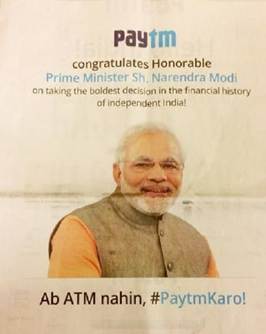
Paytm
Theme: Freedom is realizing that you have a choice.
Year of release: 2016
Hope and the possibility of a corruption-free India are the messages that mobile payments and the e-commerce platform Paytm convey through this ad film. It narrates three instances where it seems like there would be an exchange of money as a bribe but, in a pleasant twist, shows an exchange of emotions instead. “Jab cash nahi hoga, toh corruption kaise hoga?” The last frame of the ad urges people to work towards India’s freedom from corruption by encouraging them to use less cash and more digital payments.
Note: Interestingly, three months later, the government of India announced the demonetization of high-value currency, with one of the objectives being a cash-free economy.
National advertising means advertisements, brochures, catalogues, and similar marketing materials published and distributed to consumers; included in publications intended for consumers; or broadcast through television, the Internet, radio, or other media that are designed and intended to promote the sale of approved products, including point-of-purchase displays for use by retailers and marketing and promotional pieces provided to retailers for use in sales promotions to consumers.
Geographically speaking, national advertising is extended to the territorial limits of the country. The advertiser uses the national media to inform the consumer about the product. The advertiser uses the national, local, or regional language but prefers the national language. It can be available everywhere in the country and easily purchased. For example, Nestlé Kit Kat
Nestle Kit Kat in India
Nestlé Kit Kat was launched in India in 1995 and was well received by consumers owing to both the ‘finger format’ of the chocolate as well as the way its advertising celebrated the ‘consumption ritual.’ Through different creative renditions, the brand has always propagated the ‘BREAK IN ROUTINE’ communication. The new ad concept has really come out very well, based on the concept of animals emoting human emotions, particularly love.
The TVC that hit the screens a few days back has already garnered a huge fan base of over 40,000 viewers on YouTube. Basking in this, the company has even introduced various different format portions of the chocolate in 1-2-3 and 4-finger at convenient price points of Rs.5 and Rs.10, respectively.
Hyundai in India
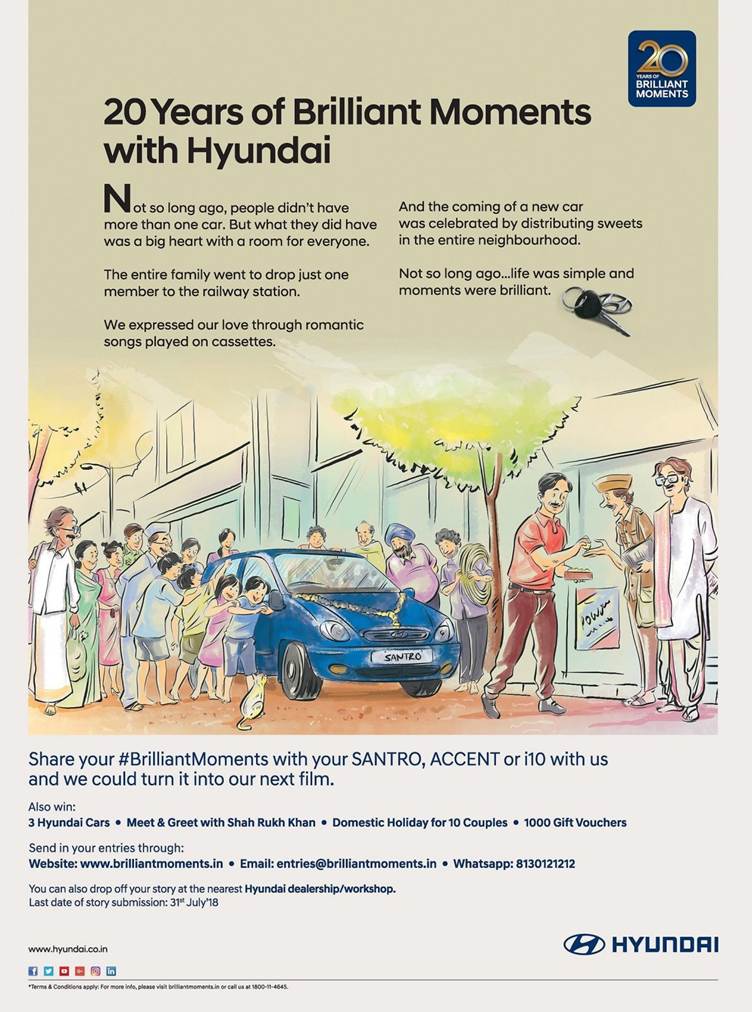
Hyundai, the South Korean automobile manufacturer, has recently marked its 20th anniversary in the Indian market. This cause for celebration paved the way for a beautiful ad, ‘Hyundai brilliant moments,’ that narrated the story of a family’s memories with their Hyundai Accent.
Hyundai Motor India Ltd. (HMIL), the country’s second largest car manufacturer and the largest exporter since inception, launched the innovative Emotional and Recalling Brilliant Moments with Hyundai Campaign to celebrate 20 years of sales and production in the Indian market. To celebrate Hyundai’s legacy and thank over 5.5 million valuable customers, the emotionally connecting Brilliant Moments with Hyundai (BMH) campaign will invoke nostalgic memories to connect with all Hyundai customers. The Brilliant Moments Campaign will provide a unique experience through various experiential marketing, sales, and service initiatives at all Hyundai touchpoints and invite the customers of SANTRO, ACCENT, and i10 to share their brilliant moment stories.
B. Global advertising
Introduction
Only a few generations ago, it took months to ship products to a market in another country, and doing so was such a difficult undertaking that only major trading companies were able to take the risk. Then, developments in transportation technology made it possible for people and products to move much faster, and the first push toward globalization began.
More recently, information technology and particularly the Internet have shrunk the world even further. A business might have partners and employees half a world away, and consumers can get products from those locations in a matter of days.
Global marketing is more than simply selling a product internationally. Rather, it includes the whole process of planning, producing, placing, and promoting a company’s products in a worldwide market. Large businesses often have offices in the foreign countries they market to, but with the expansion of the Internet, even small companies can reach customers throughout the world.
Even if a company chooses not to expand globally, it may well face domestic competition from foreign companies that are. This competition has made it nearly a necessity for most businesses to establish an international presence.
Who employs global marketing?
Global marketing is particularly important for products that have universal demand, such as food and automobiles. Thus, a beverage company is likely to be in more markets than, say, a wooden toy company, but even a wooden toy company may find niche markets in diverse corners of the world.
However, even today most companies are focused on the domestic market (which is the largest economy in the world), with only one percent of U.S. companies invested in exporting. Nevertheless, the value of U.S. exports continues to increase, amounting to some $2.1 trillion in 2011.
Some individual examples of global marketing include:
Coca-Cola started selling internationally back in 1919 and is now present in more than 200 countries. In order to keep a consistent brand, Coke tastes the same in every region (although outside of the United States, the recipe uses sugar instead of high-fructose corn syrup), but the size, shape, and labeling of the bottle are changed to match the norms in each country. While the company formerly used a standardized advertising approach, it has changed to adapt advertising messages to local culture. Additionally, it adjusts its product line-up to fit local tastes, including a number of additional beverage brands.
McDonald’s makes certain that a Big Mac tastes the same in every country, but it also varies items on its menu according to local tastes. Customers in Mexico can order a green chili cheeseburger, customers in Korea get to eat bulgogi burgers, and customers in many Arab countries can enjoy the McArabia, a grilled kofta sandwich on pita bread.
Starbucks also adjusts their menu to fit local tastes. In Hong Kong, for example, they sell Dragon Dumplings. And as a global buyer of coffee, the company has long had a reputation for engaging local cultures according to their needs.
In Japan, Kentucky Fried Chicken has managed to associate their product with Christmas, and every year Japanese line up around the block to get their KFC chicken on that day.
For a non-American example of global marketing, consider Ahava, which started out as a tourist stand on the Dead Sea selling bottles of mud and salt from the renowned body of water. From this inauspicious start, they developed a line of cosmetics, and after partnering with an American company that already has a global distribution network, their cosmetics are being sold in high-end department stores throughout the world.
What kinds of customers does global marketing reach?
Since global marketing involves a variety of different products and opportunities, it’s impossible to identify a single customer profile. A global company must be prepared to develop multiple profiles for each of the different regions it trades in. The United States’ biggest trading partners are Canada, Mexico, China, and the European Union, but international trade by no means ends there.
Depending on the product, customers can be reached nearly anywhere in the world. In order to do so, global companies may rely on local distribution networks, but as they grow in particular markets, they may establish their own networks. Companies attempting to enter new markets tend to start with heavily populated urban centers before moving out to surrounding regions.
Particular attention needs to be paid to the growing international online market, which vastly increases businesses’ access to customers worldwide if they can speak the language. J.P. Morgan, in a report for the Department of Commerce, estimated that only 27 percent of online shoppers speak English. Nonetheless, in Korea, 99 percent of those with Internet access shop online; in Germany and Japan, 97 percent. Thus, companies that wish to break into those markets need to not only create a good product and do what works stateside; they also need to immerse themselves in the language and culture of the international market they wish to break into.
How is a global marketing campaign developed?
When marketing products globally, companies must recognize that a marketing mix that works in the domestic market may not have the same success in another market. Differences in local competition may require a different pricing strategy. Local infrastructure may affect how products are produced and shipped. In some cases, it may be more profitable to produce things locally; in others, it may be cheaper to ship them in from across the globe.
Partnerships with local businesses may be an important step in expanding into one market, while in another market, such partnerships might dilute the brand. The savvy global marketer must consider all these aspects of marketing in addition to the task of communicating cross-culturally.
When promoting a product or brand globally, a company must make decisions regarding trade-offs between standard and local messages. A single message is cheaper to produce and maintains the consistency of the brand, but it may not perform well in some regions due to differences in cultural values or expectations.
A global company must carefully research the various markets and prepare to make adjustments to its product and messaging wherever required. Sometimes this requires changing a name (for example, the Chevy Nova didn’t sell well in Spain, as “no va” in Spanish means “no go”). Sometimes it even involves changing the packaging (in America, Gerber baby food has a cute baby on the label to represent the brand, but in some countries shoppers expect the picture to represent the contents of the jar and were appalled by the image).
Individual marketers working with global campaigns should strive to learn the language of the market they’re assigned to, both for the purpose of managing business relationships with local companies and in order to verify translation efforts. For example, how do you evaluate the work of someone who has translated your company website? Is it a meaningful translation, or is it just full of buzzwords?
Additionally, marketers should personally visit their target markets and spend time in them—even moving to them for a time. Here they can develop local contacts, as well as gain a deeper understanding about how business is conducted in the area. In Japan, for example, it is not enough just to speak Japanese; you must also conduct business the Japanese way. Learn what is valued culturally—and what is offensive.
Developing and respecting local business talent is also critical for global marketing. If you have an office in Hong Kong, for example, you want to make full use of talented Hong Kong Chinese professionals in your marketing, advertising, and distribution. Many companies have lost opportunities and alienated allies by having the attitude that as Americans, they automatically knew better than their foreign partners.
J. International advertising
Introduction
As technology creates leaps in communication, transportation, and financial flows, the world continues to feel smaller and smaller. It is possible for companies and consumers to conduct business in almost any country around the world thanks to advances in international trade. According to the World Trade Organization, the volume of international merchandise trade increased 33 times between 1951 and 2010.
Brands and products that originate in one country are enthusiastically accepted in others. For example, Louis Vuitton handbags, BMWs, and Columbian coffee, all foreign products, are symbols of status and quality in the United States—and many American brands, like Warner Brothers motion pictures, have similar footholds overseas.
However, globalization has created just as many challenges as opportunities for brands that venture overseas. Because consumers have so many more options for similar products, companies must ensure that their products are high in quality and affordability. Additionally, these products cannot be marketed identically across the globe. (See also Global Marketing.) International marketing takes more into consideration than just language—it involves culture, market saturation, and customer behaviors. American and European companies especially have turned their international marketing efforts into something more than just exporting—they have adapted their branding to account for differences in consumers, demographics, and world markets.
Companies who have done this very well include Coca-Cola, who discovered that the word ‘Diet’ carries a negative connotation in Latin America and changed the name of their zero-calorie product to ‘Coke Lite’ for those countries. UPS, known in America for their brown trucks, issued a fleet of a different color after learning that their flagship brown trucks resembled Spanish hearses.
What is international marketing?
International marketing is the application of marketing principles in more than one country, by companies overseas or across national borders. International marketing is based on an extension of a company’s local marketing strategy, with special attention paid to marketing identification, targeting, and decisions internationally (see also Local Marketing).
According to the American Marketing Association (AMA), “International marketing is the multinational process of planning and executing the conception, pricing, promotion, and distribution of ideas, goods, and services to create exchanges that satisfy individual and organizational objectives.”
Who employs international marketing?
Rapid technological advances mean that geographical and cultural communication barriers are disappearing, and even smaller businesses without a physical presence in other countries can market and sell their products internationally (see also Diversity Marketing). This means that almost anyone with the desire can market internationally but will do so with varying levels of success, depending on the thought and research that is put into the international marketing strategy.
Companies selling goods that have customs restrictions, like food and live plants, must contend with a more rigorous regulatory process before marketing their products internationally. While they may have a more difficult time setting up their international export business, they also have the opportunity to expose other countries to native products they couldn’t access otherwise. Other types of companies that often perform well internationally include those involved in export, joint ventures, and direct investment.
Exporting is the practice of shipping goods directly to a foreign country. Prominent companies that do an excellent job of marketing their foreign exports to the United States include Fanta soft drinks, Honda, and retail giant H&M. In fact, H&M paid $3.5 million for a 30-second commercial during the 2012 Super Bowl, a marketing bonanza that has long been dominated by American brands.
Joint venture companies refer to the combined efforts of two or more businesses for their mutual benefit. One of the most famous international joint venture success stories is Sony-Ericsson, a partnership between a Japanese electronics company and a Swedish telecommunications company. Their international marketing strategy, comprised of bright colors and modern shapes, has helped make the joint venture known the world over. (See also Cooperative Marketing.)
A direct investment company places a fixed asset in a foreign country with the aim of manufacturing a product, or part of a product, abroad. Dell computers, for example, is an American company with factories in many other countries that assemble personal computers from parts made all around the world. Dell then markets their computers with an exceptional emphasis on customer needs and customization—unlike other companies that sell pre-manufactured products, Dell computers are custom-assembled after customers place their orders.
What kinds of customers are effectively marketed to with international marketing?
Depending on your brand, any foreign citizen is a potential customer. But how does a marketing team figure out how to tap into an international market? Customers who live in foreign markets have different buying habits, preferences, and priorities than the customers they’re familiar with. By tracking these foreign customers through market research and cultural surveys, marketers can discover the best methods of reaching them.
Trying to market a brand to international customers without researching is just asking for trouble, as companies have proven time and time again. Careful consideration of a culture’s beliefs and prejudices is important in international marketing. For example, the Muslim culture considers dogs to be dirty animals. So, positioning a dog as “man’s best friend” in a Middle Eastern country will surely fall flat.
Huge international Marketing Blunders
Pepsodent tried to market its toothpaste in Southeast Asia by claiming that it “whitens your teeth” before learning that some locals chewed betel nuts to blacken their teeth, a sign of attractiveness in their culture.
The Scandinavian vacuum manufacturer Electrolux didn’t account for a common American colloquialism when marketing their vacuum in the U.S.: “Nothing sucks like an Electrolux.”
The soft drink Fresca was marketed under that name in Mexico … before the company discovered that ‘fresca’ is a slang term for lesbian in parts of Mexico.
Pepsi used the slogan “Come Alive With Pepsi” in Taiwan … or so they thought. The slogan was actually translated as “Pepsi brings your ancestors back from the dead.”
The Coors slogan “Turn It Loose” was translated into Spanish as “Suffer From Diarrhea.”
How is an international marketing plan developed and employed?
It can be difficult for a small or medium-sized corporation to initially build an international marketing plan because they generally don’t have the expertise or budget to launch the campaign. By partnering with another group or hiring marketing experts with knowledge of foreign markets, smaller companies can build their cultural research and implement more successful campaigns. Whether a company chooses to partner with another foreign agency or hire an inside international marketing representative, the most important facet of building a successful international marketing campaign is the research they conduct. Research will inform the company’s marketing mission as they proceed, allowing them to maximize potential in new markets.
Once research is completed and a market is chosen, experts should examine and modify a brand’s marketing strategy so that it fits their target demographics. Hiring representatives from the country will help ensure that all cultural differences are handled appropriately and with sensitivity. For an emerging international brand, establishing partnerships and networking with other companies in the country are essential for success. Partners within a target market help new companies establish themselves in markets where they would otherwise have gone unnoticed.
Finally, it is important to review an international marketing strategy on a quarterly basis. Even if a company sends representatives to travel to the foreign market, it is much more difficult to keep a finger on the pulse of an overseas marketing campaign. This means that results need to be tracked extremely closely, and tweaks should be made regularly to help a product gain the appropriate foothold for success.
Generic advertising provides a unique window through which to observe advertising effects on market performance, because changes in the dispersion of consumers’ valuations systematically redistribute rents among firms according to observable characteristics of producer size.
According to the American Marketing Association, AMA Dictionary. “Generic advertising is an approach to preparing advertising messages that concentrates on the customer benefits that apply to all brands in a product category, rather than benefits that are unique to specific brands.”
According to advertising wearout, defined as the declining effectiveness of a commercial or campaign associated with increased exposure, it is examined from a generic advertising perspective.
Generic advertising campaigns of the type typically undertaken by agricultural commodity groups differ from branded advertising in that the former seek to increase aggregate demand for a product category (e.g., beef, milk, wool) rather than the market share of a particular brand within a category. For example, most commodities in the United States have check-off programs assessing producers for generic advertising and promotion, a public good for producers. Examples of the more popular programs include “Got Milk?” and “Beef, It’s What’s for Dinner,” etc.
Generic advertising is a type of marketing designed to promote a general product rather than a specific brand name. Such campaigns have been produced for everything from fresh milk to gemstones. This type of advertising does not mention particular brand names but attempts to build consumer support for the product in general.
Does the industry need generic advertising today?
Generic Advertising of Rhein Maas
Since 1 July 2018, Veiling Rhein-Maas has collected a levy for generic promotion from the auction customers, which is passed on to the two above-mentioned initiatives. Below, you can find all relevant information about the possibilities that ‘Flower Council of Holland’ and ‘Blumen—1000 Gute Gründe’ offer to the customers of the auction as well as the next upcoming events, presentations, and campaigns.
Flower Council of Holland
The ‘Flower Council of Holland’ takes care of the consumer-oriented promotion of flowers and plants in various European countries. Funnyhowflowersdothat.co.uk and thejoyofplants.co.uk are showing the customer that flowers make us happy and that everything is a little bit less stressed and more comfortable in the company of plants. You can also find both brands on Facebook, Twitter, Pinterest, and Instagram.
In addition, the ‘Flower Council of Holland’ regularly launches campaigns such as ‘Houseplant of the Month,’ ‘Garden Plant of the Month,’ and the ‘Flower Agenda,’ where different flowers and plants are placed in the spotlight every month. The ‘Flower Council of Holland’ also provides you with photographic material (image bank), texts, posters, and graphics free of charge. Use these promotional materials to boost your sales! The initiative has also issued a calendar for 2019, which includes all the important days in the flower industry from several European countries.
Voluntary generic advertising in India
The ‘voluntary’ prefix says that only those companies that wish to pay towards the campaign do so. Such advertising is perhaps most prominent in the promotion of agricultural produce, with campaigns promoting milk, chicken, eggs, and other foodstuffs.
Public service advertisements and statements serve as promotional sources, addressing issues of general concern for citizens. The earliest public service announcements (in the form of moving pictures) were made before and during the Second World War years in both the UK and the US.
In the UK, amateur actor Richard Massingham set up Public Relationship Films Ltd in 1938 as a specialist agency for producing short educational films for the public. In the films, he typically played a bumbling character who was slightly more stupid than average and often explained the message of the film through demonstrating the risks if it was ignored. The films taught road safety, swimming, disease prevention, and crossing the street. During the war, he was commissioned by the Ministry of Information to produce films for the war effort.
Massingham began to produce longer films, for both private companies and the government, after the war. In the US, the Ad Council (initially called the War Advertising Council) was set up in 1941, when America entered World War II. After the war, PSAs were used to educate the public on a broader range of important issues.
We possibly heard, saw, or read PSAs directed at raising awareness about issues such as the dangers of smoking, the threat posed by drug use, the importance of education, and the need for safety when traveling in vehicles. PSAs can be seen on television, heard on the radio, and read in magazines and newspapers. In modern times, media need to donate some amount of airtime or print space for messages in the public interest. With free airtime, the cost of producing PSAs can be kept low while still achieving a big impact for the public good. If we want to create awareness, provide information, influence behaviors, or stress the importance of an issue, PSAs are a beneficial way to reach a large audience at a minimum cost.
Advantages of PSA’s
PSAs are generally inexpensive.
If the airtime is donated or space is free in print media, then only the cost of production is required. By maintaining a small budget, we can keep the costs for PSAs reasonable.
Most public and private stations will allow you to include a telephone number for more information in your PSA.
PSAs tend to be very effective at encouraging the audience to take action; for example, wearing a helmet while riding a bike, using a seat belt when driving a car, and not smoking in public places.
PSA’s can raise awareness on certain issues like smoking, drinking, drugs, etc.
Limitations of PSA’s
Because PSA’s depend on donated time or small budgets, we are unable to get them to run on all the media platforms.
The rivalry among nonprofit groups for free airtime is intense.
Due to the nature of donations, stations often do not track or report when your PSAs have been played.
PSAs do require somewhat more work on our part, and they tend to be ineffective at influencing policy.
Public service advertisements images in India
Case study: Bell Bajao
This US- and India-based human rights organization launched its ‘Bell Bajao!/Ring the Bell’ campaign in 2008 to call on men and boys across India to take a stand against domestic violence (DV) by performing a simple bystander intervention—ringing the doorbell when they witnessed DV taking place. The campaign’s integrated cultural, organizing, and media strategy sought to make the issue part of mainstream conversation; increase knowledge about and change community attitudes towards DV and towards HIV-positive women; and alter individual behavior. By the end of 2010, with the support of the United Nations Trust Fund to End Violence Against Women’s PSAs on television, radio, and print, their online multimedia campaign, educational materials, and traveling video van, over 130 million people had been reached.
The Bell Bajao PSAs depict men and boys who hear males shouting, women crying, and objects falling—indicating incidence of domestic violence. They find an excuse to interrupt the violence by ringing the doorbell and asking the abuser, who appears in the doorway, for a small, unrelated, and unnecessary service. It is clear to the audience that the bell-ringer is just doing it as an ‘excuse’ to intervene, to halt the violence. See PSA: “software engineer.” Mobile video vans broadcasting the campaign PSAs allowed youth advocates to engage directly with individuals and encourage community involvement and participation through games, puppetry, street theater, and quizzes.
Classified advertising is a form of advertising that is particularly common in newspapers, online, and in other periodicals that may be sold or distributed free of charge. Classified advertisements are much cheaper than larger display advertisements used by businesses, although display advertising is more widespread.
If you are looking for an affordable and direct way for small- to medium-sized businesses and individuals to connect with their prospects, classified ads are the perfect solution. Here are the primary benefits of using this platform:
Simple format that gets straight to the point
Reaches your target audience by focusing on the right demographic
Allows potential customers to search for you, instead of the other way around
Provides prospects with multiple ways to contact you
They are significantly more affordable than other print media formats, without compromising effectiveness
Newspaper classifieds
Advertisements in a newspaper are typically short, as they are charged for by the line or word, and are one newspaper column wide. Publications printing news or other information often have sections of classified advertisements; there are also publications that contain only advertisements. The advertisements are grouped into categories or classes such as “for sale—telephones,” “wanted—kitchen appliances,” and “services—plumbing,” hence the term “classified.” Classified ads generally fall into two types: individuals advertising sales of their personal goods and advertisements by local businesses.
Some businesses use classified ads to hire new employees. One issue with newspaper classified advertising is that it doesn’t allow images, even though display ads, which do, can be found in the classified section. If your goal is to save money and reach a specific audience, classified advertisements in newspapers tend to be the most effective. Here’s what you need to know about local newspaper advertising and the types of ads that work well in the classifieds.
1. Business
Many small- and medium-sized businesses prefer classified ads to any other platforms. Some business classified ads include business proposals, offers, sales promotions, and ads seeking business partners.
2. Property
By property ads here, we do not mean real estate projects but advertisements for the sale, purchase, and rental of individual homes, flats, or apartments. Brokers, landlords, and individual property owners constitute 100% of the classified property advertisers across all Indian newspapers.
3. Education
A lot of educational advertisements can also be found under the classified ad section. It is mostly used by coaching centers, which have a small budget and thus prefer to introduce or promote their coaching classes.
4. Personal
This is the last kind of classified advertisement and includes personal messages such as birthday wishes, messages about personal achievements, season’s greetings, and other similar messages. These are placed by individuals in a personal capacity.
5. Matrimonial
All prospective grooms and brides advertise in a newspaper in the matrimonial category. The ad can be a text ad or an image of the prospective bride or groom. In most cases, parents and relatives publish matrimonial ads to reach out to a larger community.
6. Recruitment
Recruitment ads are very popular in display advertising, and they are also very common in classified ads. Advertisements under “situations vacant” and “situations wanted” are a great place for small- and medium-sized businesses to attract job applicants and for job applicants to describe their skills and qualifications in hopes of an employment opportunity.
7. Obituary
Obituary advertisements are generally released in the Classified Display format, which enables advertisers to include images of the deceased and messages of their choice at a much lesser price than display ads. Remembrances, funeral invitations, and even condolence messages are conveyed through classified text or classified display advertisements as per the budget of the advertiser.
8. Announcements
Announcement classifieds include personal statements such as a name or address change, legal notifications, lost and found, and notices of marriage. These ads are often placed by individual advertisers and are intended for personal or government references.
9. Public notices and Tenders
This is another type of public announcement. Public notices and tender ads are where the public is notified about changes to any local rules, contract requirements, common regulations, laws, or anything associated with the government. These ads often have a lot of information to fit into a simple line ad, which is why many people choose to publish them under the display classified format.
B. Corporate advertising
Introduction
Advertising designed to win an audience over to a specific point of view is called corporate advertising. Corporate advertising can be national, regional, or local, aimed at any type of audience, and delivered via any type of media. Corporate advertising is the advertising done for an entire institution/company/organization and not for individual brands or products.
Corporate advertising is comprised of the advertising campaigns that a company runs to signal its position in the marketplace. Instead of focusing on one product or product class, the advertisement talks about the company generally, addressing broad issues such as strategic initiatives, financial strength, or corporate philosophy.
According to the book “Corporate Communication,” by Paul A. Argenti, corporate advertising can be defined as “paid use of media that seeks to benefit the image of the corporation as a whole rather than its products or services alone.” Product advertising, in contrast, brands only the product itself. A major difference between corporate and product advertising is who is paying for it. Product advertising will be charged to the marketing department, whereas corporate advertising is paid by the corporate communication department or the CEO’s office.
1. Image Advertising
A common method corporations use and people used to. It gives a visual treat of the brand rather than service promotion or product promotion. Several types of themes fall under this advertising sector.
An advertising company always uses themes like “family-friendly,” “the lowest cost ever in the market,” “very sophisticated and classy,” and “very luxurious” to attract the customers. Image advertising is one of the methods that distinguish your brand and product from your competitors.
2. Advocacy Advertising
If you are working with firms that need to convey the messages to society, then you would go for this kind of advertisement. If you are working with the company that helps people get their medical and insurance, they definitely want you to do an ad based on saying, “Don’t drink and drive.”
According to Professor Robert Shayon of the University of Pennsylvania’s Annenberg School of Communications, corporations have taken to advocacy advertising because they feel they are not getting a fair shake from what they believe to be a generally hostile press and because they are convinced that the business world can make significant contributions to public debate on issues of great importance—energy, nuclear power, conservation, environment, taxation, and free enterprise, among others.
It achieves two objectives flawlessly. It helps the brand image of the company by making it contribute to society and a better place to live. NGOs, hospitals, and research establishments do generate this type of advocacy advertising.
3. Cause-Related
People used to get cause-related advertising confused with advocacy advertising. Both works are done in the same way, but advocacy methods are often taken for long-term benefit.
The cause-related advertising method acts as a quick reaction to current events or trending topics. When disaster hits any particular region and corporations want to raise funds to help the victims, they may choose the cause-related.
4. Financial Advertisements
Investment advertising is another type of marketing that is designed to attract investors. It focuses on the financial strength of the company and the benefits of owning the company’s securities. These ads typically appear in financial publications and other media sources that target the financial industry.
The producer doesn’t care where consumers buy its product. The aim of the retail advertiser differs from that of the national advertiser. The retailer’s advertisements encourage support by consumers and build store trustworthiness among them. The retailer is primarily focused on promoting their store rather than any specific brand. The general move towards retail advertising is “buying at our store.” The retailer is unconcerned with the sale of any definite brand, unlike the national advertiser.
The retailer must contend in one of the most reasonable arenas of business and move enormous volumes of products. Moreover, retail advertising must convey the store’s image in order to primarily attract specific types of consumers. To attain these objectives, retailers often communicate price information, service and return policies, and the range of products available.
The local retailers, like supermarkets, department stores, etc., have a wide range of products that they wish to render to their potential target market. Now audio-visual media is very helpful for advertising, and the local retailers prefer it for their product assortments. However, they prefer local channels primarily due to cost considerations. The advertising options and media preferences of these retailers ultimately depend on whether they are re-advertising national brands or originally advertising local brands.
The intention of these retailers to advertise these product brands is to let the potential market know about the accessibility and special promotional offers. Newspapers are an excellent medium in terms of cost and complicated space. The brand image has already established itself, so the quality of the advertisement holds no significance here. Moreover, the local advertisers get striking rates from the newspaper.
Original advertisers at the local level have the same purpose as that of the national brand advertisers, but the local retailers have a possibility in three areas regarding their choices:
1. Product versus service selling
2. Extent of product mix
3. Number and geographic distribution of customers
For example, in Kolkata, a supplement on glossy pages comes with every Friday issue of The Telegraph in Salt Lake City. This supplement features all the advertisements of retailers in and around Salt Lake. Direct mail can also be used in cases where the products have a wider mix. Handbills are also used at times for announcements and special promotions. But for both direct mail and handbills, the number of customer prospects should be large enough.
Another significant area of retailers is their store likeness. Though many consider the product advertisement media as primary for retailers and store likeness promotion media as secondary, there are many retailers who depend on the faithfulness of their customers towards their brand name and their footfall. Many retailers argue that getting the customer into the shop is the most complicated job.
Store likeness advertising has the following objectives:
1. Brand remembrance
2. Brand positioning
3. Brand Purchase objective
In India, retailing has caught up in a big way. Today one finds the presence of huge retail stores like Crossroads, Shoppers Stop, and Big Bazaar, etc., that are doing well. It has a bright future and looks all set to grow. Currently, it is an urban phenomenon found in metropolises such as Mumbai, Delhi, and Bangalore. However, this trend is expanding into smaller towns, which represent the market of the future.
We outline the main purposes of retail advertising below.
1. Selling the business: To sell the business, attract customers to the location and, in the case of a shop, enhance what is known as ‘store traffic,’ i.e., try to enhance the number of people passing in the course of the shop. Expecting them to enter could lead them to purchase items they might not have otherwise.
2. Selling special or own-branded goods: Certain retail distributors are selected to serve as dealers for specific brands. An example is that some supermarket retailers sell their own branded goods, which manufacturers pack in the name of the supermarket (for example, D-Mart sells PREMIA). Some enormous department stores have a special brand name for all their products; consistently, they will be cheaper, and they compete with national brands.
Competition between national and own brands is strong, and there is always a risk that the national brands will be delisted in favor of a store’s own branded products. Own-branded products are frequently made to the retailer’s own terms or recipes and are not simply replicas of existing national brands. All the retail outlets are able to use advertising to encourage the sale of their stock.
3. Clearance Sale: To clear the stock of the shop, such as by promoting seasonal products, special offers could be made. Examples are the sale of assured products during winter or the summer sale of air conditioners during winter and water heaters during summer.
Typically, the retailer operates in a geographically limited market. This approach approach allows him to focus his advertising communication on the likes, preferences, and buying habits of the targeted audience. The retailer advertises for an impetuous, relatively quicker response to most of this local advertising, while the national advertiser’s prime attention is in establishing long-run favorable attitudes and building brand equity.
The principal media for retail advertising are:
1. Local weekly newspapers.
2. Local daily newspapers, of which most are ‘evening’
3. Public transport outside posters and inside cards.
4. Direct mail to regular customers.
5. Local commercial television
6. Independent local radio
7. Window bills and point-of-sale displays within the shop and in-store displays
8. Catalogues.
Retail advertising is categorized by four main aspects:
1. Creating an representation
2. Establishing its position
3. Unique kind of goods offered
4. Reasonable price offers
Although telephone ordering and the use of credit accounts and credit cards are rising features, the object of the advertising is to convince people to visit the shop so that they not only buy the desired items but also pay attention to the large assortments of brands and various products, and some cross-selling happens through the well-prepared efforts of the store salespeople.
Industrial advertising, also known as business-to-business advertising, is the appearance of advertising for other businesses. This can include advertising for parts or raw materials used in production, as well as equipment utilized in their mechanized processes.
In a very broad sense, industrial advertising must convey a more purposeful message within one or more relatively narrow sales channels. Its goals may comprise the creation of favorable company and brand awareness and the production of sales leads through inquiry funnelling (sales alteration) steps. Tightening the definition of advertising, industrial marketers expand company- or product-centric ads that are communicated in the course of space in industry print publications or websites.
Other industrial marketing communications options include public relations, direct marketing brochures and company websites, trade shows, and social media.
Advertising typically consumes the majority of an industrial marketing budget because it is a “shotgun” move toward message targeting. The cost of individual advertising reflects a definite percentage of exhausted circulation and advertising distribution—even within specific markets. This is much more so in print media advertising than in search engine advertising, which displays advertisements only to those with a single interest in an advertiser’s keywords.
The approach to endorsement may vary from company to company. The advertisements are used to increase awareness among the target customers about the products. Companies distribute the same information through various channels to enhance their reach.
For example, if there is a small enterprise that bottles mineral water, it will subcontract its packaging, bottles, caps, etc., to other companies. Therefore, it is vital for these companies to have information on those who are providing the packaging services.
Function of Industrial Advertising
Every product, whether a customer product or an industrial one, satisfies a need, solves a problem, or offers a benefit. Thus, industrial advertising must offer the buyers the information that satisfies the need or communicates the indescribable benefits.
Therefore, every industrial promoter must start by identifying the customer’s need gap or the benefit they expect to convey in their message. The choice of headlines, copy, and other elements can significantly affect the impact of advertising. The headlines have to be attractive, and the copy must enclose the information required.
Fundamentals such as advertising size, colors, and pictures are significant in industrial advertising,, too. A minor rearrangement of mechanical basics within the advertising can achieve better attention-getting power. Unlike consumer advertising, fancy language and touching appeals are to be constrained, and the message must be reserved for the specifics. Product details, product pictures, or application pictures tend to attract attention.
Advertising messages can be grouped as shown below in industrial advertising:
1. Testimonials: This feature is highly convincing and agreeable, as it is an expert source endorsing the product. This testimonial could come from a celebrity or a well-known personality in the industry, discussing the product’s benefits based on their experience. In industrial marketing, well-known existing customers provide testimonials.
2. User Experiences: Case histories of users and the benefits they got by purchasing from the supplier are also used to depict the inferences. When a user shares their experiences, the reliability factor increases.
3. Straight Description: A straight description is a straightforward advertisement that highlights the product’s quality and the benefits the user can expect. Industrial advertising most frequently uses this advertisement, which is rich in facts and figures.
4. Short Stories: Though hardly ever used, it can be successful when the company wants to build a case and engage the customer so as to obtain the benefits of using the product.
5. Negative Ads: Emotional appeals are unusual in industrial advertising, but some negative advertising highlights the negative effects of failing to use the company’s products or services.
6. Comparative ads: Some influential advertising has moved into the category of comparative advertising, which seeks to create superiority of one brand through specific comparison of one or more attributes with one or more brands in the product class. For example, JK Tyre claims to be the No. 1 tire manufacturing firm and gives a comparison of the market share details with others in the industry like MRF, Ceat, Apollo, and others. ABP claims to be the NO. 1 news channel (Aapko rakhe Agge) and compares itself with Aaj Tak, Zee News, and others.
7. Social responsibility advertising: Some advertisers use this technique as a standard to bring into focus the activities that they carry out for the well-being of the society and environment. The goal is to bring about a good company image in the minds of the consumer and the general public. These are called social responsibility advertisements. An example of this is Hindalco Aluminum, which has adopted villages and provided them with water, hygiene, schools, and other amenities.
8. Quality initiative: In industrial companies, quality standards like TQM, the ISO 9000 series, and SEI CMM of the software industry play a significant role, and such advertisements shape a major portion of the visibility of the company.
An advertisement is a communication that promotes a product or a facility or gives information to the public. Advertisements may take many forms, such as press advertisements in newspapers or magazines, television and radio advertisements, or signs in shops. Advertisements are mainly made to encourage consumers to buy exact products or services.
Advertising can be directed at the final user of a product or service, in contrast to advertising aimed at businesses and industries. Sometimes customer advertising is directed toward a purchaser of a product or service who will then pass on that product or facility to its ultimate consumer, as in the holder of pet food advertising. Most radio, television, newspaper, and magazine commercials and advertisements are customer advertising.
The consumer is the final user of a product or service. The consumer is not always the customer of a product. In the case of pet food, for example, the pet is officially the consumer because it is the final user, although of course the advertising is aimed at the pet owner.
Consumers are careful to be the users of the final product.
This format is in contrast to industrial advertising, which is particularly directed and marketed toward businesses. The aim of consumer advertising is to introduce, or sometimes re-introduce, products and services to families and private individuals for daily use and expenditure. These can be automobiles for family use, household appliances, home electronic devices, clothes, books, movies, and now just about anything else normally found in an individual or family household.
Advertising is often designed to be strategic and manipulative. By targeting a specific demographic, consumer advertising is able to connect with the common hopes, fears, dreams, and needs of that target group and use that correlation to create product desire. This is often seen through the use of sexuality and provoking images directed at certain genders, language and images pleasing to a specific age variety, highlighted beliefs and values planned to be held in common between manufacturers, businesses, and consumers, and several other methods of consumer advertising.
An effort is made to appeal to a consumer’s sense of self-image and wish to appear confident to other people, despite whether the product actually does what the advertising claims. Though the result may be somewhat misleading advertising, these methods are habitually quite effective.
Consumer advertising refers to advertising on purchaser-generated media. This phrase typically refers to sponsored content on blogs, wikis, social networking websites, and personal websites. This sponsored substance is also known as sponsored posts, paid posts, or sponsored reviews. The substance includes links that point to the home page or precise product pages of the website of the sponsor. Examples include Diet Coke and Mentos videos and Star Wars fan films.
This is advertising. Your mind is being sold to these advertisers. Advertising is the promotion of products or services. This process provides companies with a method to present their products to consumers, thereby maximizing their sales potential. Without advertisement, not a single firm or company can develop in this world of competition.
Like all other aspects, advertising has both positive and negative points. If it has positive features that impact society socially and economically, then it also has negative impacts. Advertising a public interest program positively impacts society, while featuring a sensationalized woman in an advertisement negatively affects societal perceptions.
Advertising can also be used to tell the public about social events like concerts and performances. Charities can use media to advertise about the illnesses and persuade people to offer assistance. Social organizations and NGOs can use the means of advertisement for promoting their campaigns. Looking for help through advertisement during epidemics or natural calamities can help a lot.
So, I can say that advertising has positive as well as negative impacts on society. We should focus more on balancing what is required and what is really not required. Advertisement can create satisfaction but can also simultaneously create unhappiness. Our society and the marketing of products depend so badly on advertisement that even its negative impact on society can’t compensate for the many positive social and economic effects.
Types of Consumer Advertising
A successful advertising campaign will spread the word about your products and services, attract customers, and generate sales. Whether you are trying to persuade new customers to buy an existing product or beginning a new service, there are many options to choose from. The following list is an introduction to an advertising campaign that you could use.
1. Newspaper: Newspaper advertising can expose your business to a wide range of customers. Display advertisements are to be found throughout the paper, while classified schedules are under subject headings in a precise section.
If your products require to be displayed in color, then glossy advertisements in a magazine can be ideal, though they are normally more expensive than newspaper advertisements.
3. Radio: Advertising on the radio is a fantastic way to reach your target audience. If your target market listens to a particular station, then regular advertising can draw new customers.
4. Television: Television has a widespread reach, and advertising this way is perfect if you supply to a large market in a large area. Television advertisements have the advantage of sight, sound, movement, and color to influence a customer to buy from you. They are mostly useful if you need to reveal how your product or service works.
Directories
Directories catalogue businesses by name or category (e.g., Yellow Pages phone directories). Customers who refer to directories have often previously made up their mind to buy; they just need to make a decision about who to buy from.
Outdoor and Transit
There are numerous ways to advertise outside and on the go. Outdoor billboards can be signs by the road or hoardings at sports stadiums. Transit advertising can be posters on buses, taxis, and bicycles. Large billboards can get your message across with a big impact.
Direct Mail
Direct mail means writing to customers directly. The more specific your mailing list or distribution area, the more of your target market you will reach. A direct mail approach is more personal, as you can choose your audience and plan the timing to suit your business.
Online
Other ways to advertise your business online include promoting your products or services on social media sites, blogs, search engines, and other websites that your target audience visits.