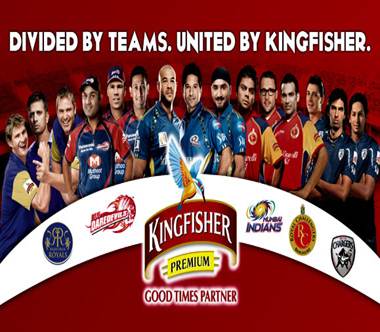
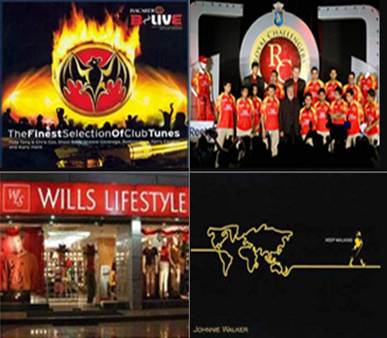
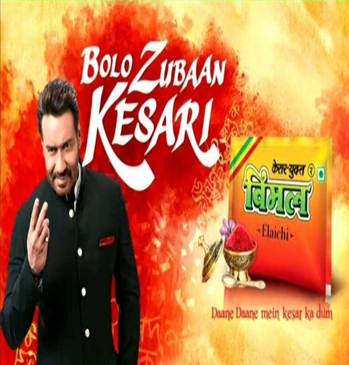
Surrogate advertising relates to advertising by duplicating the brand image of a product to promote another product of the same brand, the advertising for which is otherwise banned. In such advertisements, though the companies directly advertise a different product, they intend to advertise indirectly a banned product such as liquor or tobacco. Consumers associate such advertisements with the corresponding banned product. The products are thus indirectly advertised. This type of advertising uses a product of a fairly close category, such as club soda or mineral water in the case of alcohol, or products of a completely different category (for example, music CDs or playing cards) to hammer the brand name into the heads of consumers.
The banned product (alcohol or cigarettes) may not be projected directly to consumers but rather masked under another product under the same brand name, so that whenever there is mention of that brand, people start associating it with its main product (the alcohol or cigarette). In India there is a large number of companies doing surrogate advertising, from Bacardi Blast music CDs and Bagpiper Club Soda to Officer’s Choice playing cards.
India is not first when it comes to banning controversial adverts or adverts showcasing alcoholic drinks, cigarettes, or other tobacco products. Surrogate advertising first started in Britain, where housewives started protesting against the liquor company and forced them to promote fruit juice and soda under the same brand. This has led to a steady inflow of surrogate advertising in India.
Who oversees ‘surrogate ads’ in India for alcohol?
Activists seek government action against those who advertise liquor brands
Mineral water, sodas, music, and sports franchises are among the common avenues taken by alcohol manufacturers to advertise their brands. So what is new in this?
Nothing. But what is befuddling those in power as well as the moral police is how “”surrogate advertising’ can be monitored in the absence of overarching legislation.
At the Centre, the buck is passed on between ministries and sometimes to respective states. This is even as consumer activists urge the government to frame central legislation, even if effective implementation will rest with the state governments. In fact, the self-regulating Advertising Standards Council of India (ASCI) already has a code for brand extensions.
“Surrogate advertising is not allowed as per law, but we have been urging the government to start taking legal action against liquor brands that violate these providers and are habitual offenders,” said Bejon Misra, founder of the Consumer Online Foundation.
Regulation of such advertising appeared to fall under the jurisdiction of at least five ministries—Consumer Affairs, Health, Information & Broadcasting (I&B), IT, and Social Justice and Empowerment. “There are ambiguous court rulings on the matter where alcohol manufacturers state that the logo is the identity of the brand and using it on products other than alcohol is a legitimate business activity. So it’s mainly down to legal interpretation and in time will need to be settled by courts to establish a stated position,” a senior government official told Business Line.
He added any concerted effort to clamp down on the practice would have to be led by the Health Ministry, which took the lead in curbing cigarette/tobacco advertising.
Another official pointed out that Section 2(r) of the Consumer Protection Act, 1986, outlined ‘unfair trade practices’ for sales maximization of a good or service and provided legal recourse for consumers if suppliers were found to have engaged in misleading advertisements.
“Though it does not explicitly mention surrogate advertising, sellers could be prosecuted depending on how a case is presented. That said, if mineral water advertised by an alcohol company meets requisite standards, it’s a murky area,” he said, adding new legislation might not serve any purpose and could lead to inter-sectoral conflicts.
Direct advertising of alcoholic beverages is banned in India, but private channels have often permitted surrogate advertising.
“We need to have a comprehensive Central Law that regulates various aspects of alcohol consumption and promotion,” said Monika Arora, Health Promotion & Associate Professor, Public Health Foundation of India.
Brand experts define it as the leveraging of existing brand equity, while agencies call it an exercise to create awareness and brand recall of products on the negative list. The government, on the other hand, comes down heavily on the intriguing concept of surrogate advertising. The anti-tobacco lobby is going strong worldwide, and the list of negative products in every country is on the rise.
“Surrogate advertising is a reflection of the hypocritical society that we live in. Some products are good enough to be sold but not good enough to be advertised. A marketer has to sell his product and will find means to promote it. I don’t blame him.”
Says Santosh Desai, Executive Vice President, McCann Erickson, “There seems to be an inherent double standard in the government’s policy. If something is unrecognizably bad and cannot be advertised, then why sell it at all and earn tax revenue on it as well? I feel that the case of the government allowing liquor companies to operate but not advertise is like a baby who is given birth to but is thereafter not looked after.”
Meenakshi Madhvani, CEO of Carat, a company that manages brands such as Bacardi and UDV, concurs. “If selling liquor is a legal business, then why is advertising liquor not?” she questions. “This is a case of the government having its cake and eating it too. If liquor brings in so much revenue to the government, why should it not be advertised?” she adds.
Although the withdrawal of surrogate liquor advertisements would cause a decline in the revenues for television channels, the drop would not be as substantial. Says Madhvani, “As a whole, the spending on liquor as a category is not as much. Therefore the impact on ad revenues would not be very marked.’
But the views of Zia Mody, Advocate, and member of ASCI differ. “Liquor companies have found an indirect way of getting over the ban on advertising through surrogate advertising. The government may allow certain vices, but that does not mean that it would be forced to encourage them as well. Advertising liquor would be encouraging it.”
Bharat Kapadia, Associate Publisher and Partner, Chitralekha Group, and member of ASCI, opines, “Liquor companies try to find loopholes to advertise their brands. Via this surrogate advertising, consumers can be misguided, which is why the I&B ministry needs to take care of such advertising.”
Raj Nayak, Executive VP, Star Network, also touches upon the same. “Although we would follow the government’s final take on this, the distinction between surrogate advertising and a real brand extension is what is called for.”
Amongst liquor majors that have been advertising their line extensions are Bacardi International and Radico Khaitan. While Bacardi has been advertising its Bacardi Blast Summer Party Music Album,” Radico Khaitan has started marketing apple juice under the 8 PM brand. While the McDowell Mera No. 1 ad campaign is used to sell their soda, United Breweries is selling its mineral water under the “Kingfisher” brand.
According to Richard Nordquist, a weasel word is a modifying word that undermines or contradicts the meaning of the word, phrase, or clause it accompanies, such as “genuine replica.” This term is also referred to as weaselism.
More broadly, “weasel word” may refer to any word that’s used with the intention to mislead or misinform. The term was coined by author Stewart Chaplin in 1900 and popularized by Theodore Roosevelt in a speech in 1916. The weasel claim is the most popularly used advertising trick. The words are phrases used in advertising (or press releases) that convey an impression of meaning without actually saying it.
It involves using “weasel words,” or words that are meant to trick the audience into thinking the product is better than it really is. Words such as “virtually,” “fights,” and “helps” are all weasel words. The weasel claim uses weasel words to take what could be a solid claim and make it worthless by weakening any bold assertion with words such as “helps,” “probably,” “refreshes,” “fights,” “strengthens,” “virtually,” “like,” “almost,” and so on. Example:
Steakies taste almost as delicious as they sound.
Head & Clean helps stop dandruff completely.
Persil makes your dishes virtually spotless.
Probably the best beer in the world.
We could make you look like a real celebrity.
Weasel advertisements in India
Uses of weasel advertising
We use weasel words to instill an idea in readers’ minds that surpasses the actual claim. Working from vague, indeterminate facts (or no facts at all), you can generate perceptions that may be completely at odds with reality without making a definite, absolute, or concrete claim that could be open to challenge.
Help to: In conjunction with ‘can’ (see below), ‘help to’ positions your product or service as part of the solution to a problem without taking sole credit. For example, Crunchaflakes can help to reduce weight as part of a calorie-controlled diet.
Can and could: Use ‘can’ and ‘could’ for indefinite claims that you want to sound definite. For example, while traditional fan heaters have an average lifetime of 10–15 years, the Room Heater 32 can keep on pumping out heat for decades.
Hundreds and thousands: Look again at the example above. What period does ‘decades’ actually denote? Dunno, but it sounds like ages—just as words like ‘dozens,’ ‘hundreds,’ and ‘thousands’ sound like big quantities.
Fractions: Closely related is the word ‘fraction,’ as in ‘now available at a fraction of the original price.’ 99/100ths is a fraction, but your audience will think of the ones they learned at school, like 1/2, 1/3, and 1/4, which will make them think you’re offering a huge discount.
Relative improvement: Whiter teeth. Improved search engine rankings. Increased sales. Shinier hair. Whatever it is you’re offering to do, make it relative and unquantified, not absolute and specific. That way, even the tiniest improvement fulfills the promise.
Up to: ‘Up to’ or ‘as much as’ are used when you want to quote a numerical or statistical claim but can only substantiate it within a certain range.
‘As much as’ and ‘as little as: For a rhetorical twist, use ‘as much as’ or ‘as little as’ to imply that the figure you’re quoting is particularly high or low. For example: The iPhone is now available for as little as £35 per month.
Social marketing was “born” as a discipline in the 1970s, when Philip Kotler and Gerald Zaltman realized that the same marketing principles that were being used to sell products to consumers could be used to “sell” ideas, attitudes, and behaviors. Kotler and Andresen define social marketing as “differing from other areas of marketing only with respect to the objectives of the marketer and his or her organization. Social marketing seeks to influence social behaviors not to benefit the marketer, but to benefit the target audience and the general society.” Social marketing is an approach used to develop activities aimed at changing or maintaining people’s behavior for the benefit of individuals and society as a whole.
So what, exactly, is social marketing? In the Social Marketing Report, it’s defined as “the application of commercial marketing techniques to social problems.” It means to take the same principles used in selling goods—such as shoes, television shows, or pizza—to convince people to change their behavior.
What does that mean? Well, instead of selling hamburgers, you’re selling a life without heart attacks. Instead of convincing teenagers to buy blue jeans, you’re convincing them to buy the advantages of postponing pregnancy.
If you are selling blue jeans, you’re still trying to influence behavior—you’re convincing people they need to wear your jeans, either for comfort or for style or for value. So then, what is the difference between social marketing and commercial marketing?
Definition
Before we focus on social marketing, we should clarify the nature of marketing as both an academic discipline and a management practice.
The definition offered by Kotler, Roberto, and Lee (2002, p. 5) is a useful one:
“The use of marketing principles and techniques to influence a target audience to voluntarily accept, reject, modify, or abandon a behavior for the benefit of individuals, groups, or society as a whole.”
Social marketing relies on voluntary compliance rather than legal, economic, or coercive forms of influence.
Kotler et al. (2002) argue that social marketing is often used to influence an audience to change their behavior for the sake of one or more of the following:
Improving health—health issues
Preventing injuries—safety issues
Protecting the environment – environmental issues
Contributing to the community involves issues of community-building.
Lazer and Kelley (1973, p. ix) define social marketing as follows:
“Social marketing is concerned with the application of marketing knowledge, concepts, and techniques to enhance social as well as economic ends. It is also concerned with analysis of the social consequences of marketing policies, decisions, and activities.”
Corporate Social Responsibility (CSR) is a continuing commitment by businesses to integrate social and environmental concerns into their business operations. Changes in the global environment increasingly challenge businesses around the world to look beyond financial performance and to integrate social and environmental concerns into their strategic management.
India traditionally viewed CSR as a philanthropic activity prior to the Companies Act 2013. And in keeping with the Indian tradition, it was believed that every company has a moral responsibility to play an active role in discharging its social obligations, subject to its financial health. In the early 90s, Mahatma Gandhi introduced the concept of trusteeship, helping socio-economic growth. Family values, traditions, culture, and religion influenced CSR.
On 29th August 2013, the Companies Act of 2013 replaced the Companies Act of 1956. The New Act has introduced far-reaching changes that affect company formation, administration, and governance, and it incorporates an additional section, i.e., Section 135—a clause on Corporate Social Responsibility obligations (“CSR”) for companies listed in India. The clause covers the essential prerequisites pertaining to the execution, fund allotment, and reporting for successful project implementation.
India became the first country to legislate the need to undertake CSR activities and mandatorily report CSR initiatives under the new Companies Act 2013. This is the beginning of a new era for CSR in India.
Companies to implement their CSR in PROJECT MODE are:
Suggested Areas of Activities for (As per Schedule VII)
Eradicating hunger, poverty and malnutrition; promoting health care including preventive health care and sanitation, including contribution to the Swachh Bharat Kosh set-up by the Central Government for the promotion of sanitation; and making available safe drinking water;
Promoting education, including special education and employment-enhancing vocation skills especially among children, women, the elderly, and the differently abled and livelihood enhancement projects;
Promoting gender equality, empowering women, setting up homes and hostels for women and orphans; setting up old age homes, day care centers, and such other facilities for senior citizens, and taking measures for reducing inequalities faced by socially and economically backward groups;
Ensuring environmental sustainability, ecological balance, protection of flora and fauna, animal welfare, agroforestry, conservation of natural resources, and maintaining the quality of soil, air, and water, including contributions to the Clean Ganga Fund set up by the Central Government for the rejuvenation of the Ganga River;
Protection of national heritage, art and culture, including restoration of buildings and sites of historical importance and works of art; setting up public libraries; promotion and development of traditional art and handicrafts;
Measures for the benefit of armed forces veterans, war widows and their dependents;
Training to promote rural sports, nationally recognized sports, Paralympic sports and olympic sports;
Contribution to the Prime Minister’s National Relief Fund or any other fund set up by the Central Government for the socio-economic development, relief, and welfare of the Scheduled Castes, Scheduled Tribes, other backward classes, minorities, and women;
The Central Govt. approves and provides contributions or funds to technology incubators located within academic institutions.
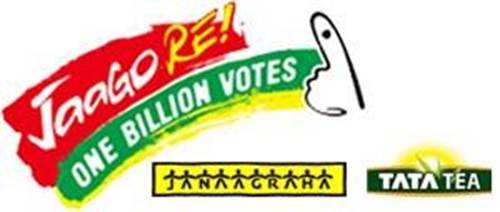
The tagline “jaago re” from TATA Tea is considerably encouraging to the public, as it conveys a positive message to “awaken” the people of India towards their real aims and duties.
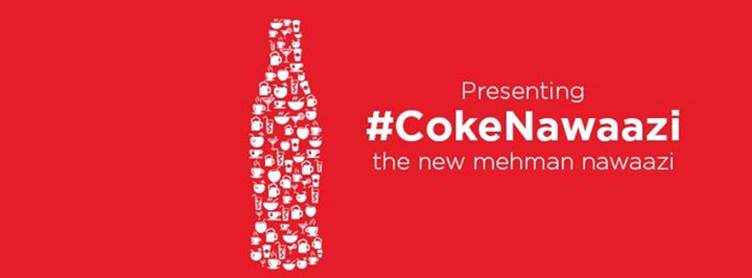
Coca-Cola Mehman Nawaaji
Coca-Cola is taking ‘mehman nawaazi’ to a new level with #CokeNawaazi, where vada pav is being served with Coke, paranthas are being had with Coke, and 4’s and 6’s are being celebrated with shots of Coke.
P & G (Padegha, India; Badegha, India)
Shiksha is now in its 7th year and is back with an even stronger commitment—to take its current impact of 150,000 children to the 200,000 mark. On May 7, 2011, Shiksha held an event in Delhi. Shiksha ambassadors Anupam Kher and Dr. Kiran Bedi, as well as recent Shiksha supporter Jacqueline Fernandes, unveiled the plan of the Shiksha-RTI School in Purkhas, Haryana. This school is one of the 20+ schools that Shiksha is building in 2010-11 alone.
B. Advocacy Advertising
Introduction
Advocacy advertisements are communications intended to bring awareness to a certain problem. It is a kind of advertisement that is used in order to influence the public on political or social matters. Moreover, it is also concerned with the propagation of ideas and the explanation of controversial social issues that are deemed important in public policy terms.
Advocacy advertising is commonly regarded as a subdivision of corporate or institutional advertising. Contrasting commercial advertising, advocacy advertising is considered to be undertaken in the interest of a group or the public and naturally does not promote a product or service. Funding for advocacy advertising can be provided by nonprofit organizations, corporations, or private advocacy groups.
Advocacy advertising in India
Indian brands are taking advantage of the new call of social selling, employer branding, social hiring, personal branding, social PR, etc., which are the key principles of brand advocacy. Nowadays every brand begins changing their colors. Literally. Well, we are referring to the sudden switch to saffron, white, and green (India’s flag colors) in their marketing communication to celebrate Independence Day. But beyond these surface-level changes, there are a few brands that go the extra mile and design a campaign to aptly represent the spirit of independence and what it means for India.
Incorporating the brand message into the advertisement adds a unique touch. Undoubtedly, these campaigns continue to resonate with Indian consumers even after their discontinuation. So here’s a look at a few such memorable campaigns that evoke a strong sense of patriotism in every Indian.
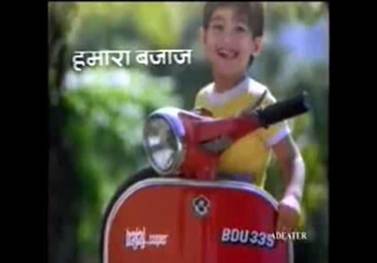
Bajaj (‘Buland bharat ki buland tasveer – Hamara Bajaj’)
In this ad, Bajaj encapsulates the aspirations and spirit of a pre-liberalization India through its flagship scooter brand, Chetak. A simple middle-class family riding the scooter, a Parsi man wiping it clean, and yet another family worshipping the scooter before the first ride—each of these instances resonated well with the Indian consumer and positioned it as the perfect family two-wheeler. In fact, the sense of belonging this ad created was so strong that even today, the words ‘Buland bharat ki buland tasveer – Hamara Bajaj’ immediately make the Indian consumer nostalgic.
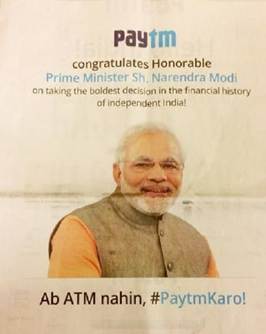
Paytm
Theme: Freedom is realizing that you have a choice.
Year of release: 2016
Hope and the possibility of a corruption-free India are the messages that mobile payments and the e-commerce platform Paytm convey through this ad film. It narrates three instances where it seems like there would be an exchange of money as a bribe but, in a pleasant twist, shows an exchange of emotions instead. “Jab cash nahi hoga, toh corruption kaise hoga?” The last frame of the ad urges people to work towards India’s freedom from corruption by encouraging them to use less cash and more digital payments.
Note: Interestingly, three months later, the government of India announced the demonetization of high-value currency, with one of the objectives being a cash-free economy.
National advertising means advertisements, brochures, catalogues, and similar marketing materials published and distributed to consumers; included in publications intended for consumers; or broadcast through television, the Internet, radio, or other media that are designed and intended to promote the sale of approved products, including point-of-purchase displays for use by retailers and marketing and promotional pieces provided to retailers for use in sales promotions to consumers.
Geographically speaking, national advertising is extended to the territorial limits of the country. The advertiser uses the national media to inform the consumer about the product. The advertiser uses the national, local, or regional language but prefers the national language. It can be available everywhere in the country and easily purchased. For example, Nestlé Kit Kat
Nestle Kit Kat in India
Nestlé Kit Kat was launched in India in 1995 and was well received by consumers owing to both the ‘finger format’ of the chocolate as well as the way its advertising celebrated the ‘consumption ritual.’ Through different creative renditions, the brand has always propagated the ‘BREAK IN ROUTINE’ communication. The new ad concept has really come out very well, based on the concept of animals emoting human emotions, particularly love.
The TVC that hit the screens a few days back has already garnered a huge fan base of over 40,000 viewers on YouTube. Basking in this, the company has even introduced various different format portions of the chocolate in 1-2-3 and 4-finger at convenient price points of Rs.5 and Rs.10, respectively.
Hyundai in India
Hyundai, the South Korean automobile manufacturer, has recently marked its 20th anniversary in the Indian market. This cause for celebration paved the way for a beautiful ad, ‘Hyundai brilliant moments,’ that narrated the story of a family’s memories with their Hyundai Accent.
Hyundai Motor India Ltd. (HMIL), the country’s second largest car manufacturer and the largest exporter since inception, launched the innovative Emotional and Recalling Brilliant Moments with Hyundai Campaign to celebrate 20 years of sales and production in the Indian market. To celebrate Hyundai’s legacy and thank over 5.5 million valuable customers, the emotionally connecting Brilliant Moments with Hyundai (BMH) campaign will invoke nostalgic memories to connect with all Hyundai customers. The Brilliant Moments Campaign will provide a unique experience through various experiential marketing, sales, and service initiatives at all Hyundai touchpoints and invite the customers of SANTRO, ACCENT, and i10 to share their brilliant moment stories.
B. Global advertising
Introduction
Only a few generations ago, it took months to ship products to a market in another country, and doing so was such a difficult undertaking that only major trading companies were able to take the risk. Then, developments in transportation technology made it possible for people and products to move much faster, and the first push toward globalization began.
More recently, information technology and particularly the Internet have shrunk the world even further. A business might have partners and employees half a world away, and consumers can get products from those locations in a matter of days.
Global marketing is more than simply selling a product internationally. Rather, it includes the whole process of planning, producing, placing, and promoting a company’s products in a worldwide market. Large businesses often have offices in the foreign countries they market to, but with the expansion of the Internet, even small companies can reach customers throughout the world.
Even if a company chooses not to expand globally, it may well face domestic competition from foreign companies that are. This competition has made it nearly a necessity for most businesses to establish an international presence.
Who employs global marketing?
Global marketing is particularly important for products that have universal demand, such as food and automobiles. Thus, a beverage company is likely to be in more markets than, say, a wooden toy company, but even a wooden toy company may find niche markets in diverse corners of the world.
However, even today most companies are focused on the domestic market (which is the largest economy in the world), with only one percent of U.S. companies invested in exporting. Nevertheless, the value of U.S. exports continues to increase, amounting to some $2.1 trillion in 2011.
Some individual examples of global marketing include:
Coca-Cola started selling internationally back in 1919 and is now present in more than 200 countries. In order to keep a consistent brand, Coke tastes the same in every region (although outside of the United States, the recipe uses sugar instead of high-fructose corn syrup), but the size, shape, and labeling of the bottle are changed to match the norms in each country. While the company formerly used a standardized advertising approach, it has changed to adapt advertising messages to local culture. Additionally, it adjusts its product line-up to fit local tastes, including a number of additional beverage brands.
McDonald’s makes certain that a Big Mac tastes the same in every country, but it also varies items on its menu according to local tastes. Customers in Mexico can order a green chili cheeseburger, customers in Korea get to eat bulgogi burgers, and customers in many Arab countries can enjoy the McArabia, a grilled kofta sandwich on pita bread.
Starbucks also adjusts their menu to fit local tastes. In Hong Kong, for example, they sell Dragon Dumplings. And as a global buyer of coffee, the company has long had a reputation for engaging local cultures according to their needs.
In Japan, Kentucky Fried Chicken has managed to associate their product with Christmas, and every year Japanese line up around the block to get their KFC chicken on that day.
For a non-American example of global marketing, consider Ahava, which started out as a tourist stand on the Dead Sea selling bottles of mud and salt from the renowned body of water. From this inauspicious start, they developed a line of cosmetics, and after partnering with an American company that already has a global distribution network, their cosmetics are being sold in high-end department stores throughout the world.
What kinds of customers does global marketing reach?
Since global marketing involves a variety of different products and opportunities, it’s impossible to identify a single customer profile. A global company must be prepared to develop multiple profiles for each of the different regions it trades in. The United States’ biggest trading partners are Canada, Mexico, China, and the European Union, but international trade by no means ends there.
Depending on the product, customers can be reached nearly anywhere in the world. In order to do so, global companies may rely on local distribution networks, but as they grow in particular markets, they may establish their own networks. Companies attempting to enter new markets tend to start with heavily populated urban centers before moving out to surrounding regions.
Particular attention needs to be paid to the growing international online market, which vastly increases businesses’ access to customers worldwide if they can speak the language. J.P. Morgan, in a report for the Department of Commerce, estimated that only 27 percent of online shoppers speak English. Nonetheless, in Korea, 99 percent of those with Internet access shop online; in Germany and Japan, 97 percent. Thus, companies that wish to break into those markets need to not only create a good product and do what works stateside; they also need to immerse themselves in the language and culture of the international market they wish to break into.
How is a global marketing campaign developed?
When marketing products globally, companies must recognize that a marketing mix that works in the domestic market may not have the same success in another market. Differences in local competition may require a different pricing strategy. Local infrastructure may affect how products are produced and shipped. In some cases, it may be more profitable to produce things locally; in others, it may be cheaper to ship them in from across the globe.
Partnerships with local businesses may be an important step in expanding into one market, while in another market, such partnerships might dilute the brand. The savvy global marketer must consider all these aspects of marketing in addition to the task of communicating cross-culturally.
When promoting a product or brand globally, a company must make decisions regarding trade-offs between standard and local messages. A single message is cheaper to produce and maintains the consistency of the brand, but it may not perform well in some regions due to differences in cultural values or expectations.
A global company must carefully research the various markets and prepare to make adjustments to its product and messaging wherever required. Sometimes this requires changing a name (for example, the Chevy Nova didn’t sell well in Spain, as “no va” in Spanish means “no go”). Sometimes it even involves changing the packaging (in America, Gerber baby food has a cute baby on the label to represent the brand, but in some countries shoppers expect the picture to represent the contents of the jar and were appalled by the image).
Individual marketers working with global campaigns should strive to learn the language of the market they’re assigned to, both for the purpose of managing business relationships with local companies and in order to verify translation efforts. For example, how do you evaluate the work of someone who has translated your company website? Is it a meaningful translation, or is it just full of buzzwords?
Additionally, marketers should personally visit their target markets and spend time in them—even moving to them for a time. Here they can develop local contacts, as well as gain a deeper understanding about how business is conducted in the area. In Japan, for example, it is not enough just to speak Japanese; you must also conduct business the Japanese way. Learn what is valued culturally—and what is offensive.
Developing and respecting local business talent is also critical for global marketing. If you have an office in Hong Kong, for example, you want to make full use of talented Hong Kong Chinese professionals in your marketing, advertising, and distribution. Many companies have lost opportunities and alienated allies by having the attitude that as Americans, they automatically knew better than their foreign partners.
J. International advertising
Introduction
As technology creates leaps in communication, transportation, and financial flows, the world continues to feel smaller and smaller. It is possible for companies and consumers to conduct business in almost any country around the world thanks to advances in international trade. According to the World Trade Organization, the volume of international merchandise trade increased 33 times between 1951 and 2010.
Brands and products that originate in one country are enthusiastically accepted in others. For example, Louis Vuitton handbags, BMWs, and Columbian coffee, all foreign products, are symbols of status and quality in the United States—and many American brands, like Warner Brothers motion pictures, have similar footholds overseas.
However, globalization has created just as many challenges as opportunities for brands that venture overseas. Because consumers have so many more options for similar products, companies must ensure that their products are high in quality and affordability. Additionally, these products cannot be marketed identically across the globe. (See also Global Marketing.) International marketing takes more into consideration than just language—it involves culture, market saturation, and customer behaviors. American and European companies especially have turned their international marketing efforts into something more than just exporting—they have adapted their branding to account for differences in consumers, demographics, and world markets.
Companies who have done this very well include Coca-Cola, who discovered that the word ‘Diet’ carries a negative connotation in Latin America and changed the name of their zero-calorie product to ‘Coke Lite’ for those countries. UPS, known in America for their brown trucks, issued a fleet of a different color after learning that their flagship brown trucks resembled Spanish hearses.
What is international marketing?
International marketing is the application of marketing principles in more than one country, by companies overseas or across national borders. International marketing is based on an extension of a company’s local marketing strategy, with special attention paid to marketing identification, targeting, and decisions internationally (see also Local Marketing).
According to the American Marketing Association (AMA), “International marketing is the multinational process of planning and executing the conception, pricing, promotion, and distribution of ideas, goods, and services to create exchanges that satisfy individual and organizational objectives.”
Who employs international marketing?
Rapid technological advances mean that geographical and cultural communication barriers are disappearing, and even smaller businesses without a physical presence in other countries can market and sell their products internationally (see also Diversity Marketing). This means that almost anyone with the desire can market internationally but will do so with varying levels of success, depending on the thought and research that is put into the international marketing strategy.
Companies selling goods that have customs restrictions, like food and live plants, must contend with a more rigorous regulatory process before marketing their products internationally. While they may have a more difficult time setting up their international export business, they also have the opportunity to expose other countries to native products they couldn’t access otherwise. Other types of companies that often perform well internationally include those involved in export, joint ventures, and direct investment.
Exporting is the practice of shipping goods directly to a foreign country. Prominent companies that do an excellent job of marketing their foreign exports to the United States include Fanta soft drinks, Honda, and retail giant H&M. In fact, H&M paid $3.5 million for a 30-second commercial during the 2012 Super Bowl, a marketing bonanza that has long been dominated by American brands.
Joint venture companies refer to the combined efforts of two or more businesses for their mutual benefit. One of the most famous international joint venture success stories is Sony-Ericsson, a partnership between a Japanese electronics company and a Swedish telecommunications company. Their international marketing strategy, comprised of bright colors and modern shapes, has helped make the joint venture known the world over. (See also Cooperative Marketing.)
A direct investment company places a fixed asset in a foreign country with the aim of manufacturing a product, or part of a product, abroad. Dell computers, for example, is an American company with factories in many other countries that assemble personal computers from parts made all around the world. Dell then markets their computers with an exceptional emphasis on customer needs and customization—unlike other companies that sell pre-manufactured products, Dell computers are custom-assembled after customers place their orders.
What kinds of customers are effectively marketed to with international marketing?
Depending on your brand, any foreign citizen is a potential customer. But how does a marketing team figure out how to tap into an international market? Customers who live in foreign markets have different buying habits, preferences, and priorities than the customers they’re familiar with. By tracking these foreign customers through market research and cultural surveys, marketers can discover the best methods of reaching them.
Trying to market a brand to international customers without researching is just asking for trouble, as companies have proven time and time again. Careful consideration of a culture’s beliefs and prejudices is important in international marketing. For example, the Muslim culture considers dogs to be dirty animals. So, positioning a dog as “man’s best friend” in a Middle Eastern country will surely fall flat.
Huge international Marketing Blunders
Pepsodent tried to market its toothpaste in Southeast Asia by claiming that it “whitens your teeth” before learning that some locals chewed betel nuts to blacken their teeth, a sign of attractiveness in their culture.
The Scandinavian vacuum manufacturer Electrolux didn’t account for a common American colloquialism when marketing their vacuum in the U.S.: “Nothing sucks like an Electrolux.”
The soft drink Fresca was marketed under that name in Mexico … before the company discovered that ‘fresca’ is a slang term for lesbian in parts of Mexico.
Pepsi used the slogan “Come Alive With Pepsi” in Taiwan … or so they thought. The slogan was actually translated as “Pepsi brings your ancestors back from the dead.”
The Coors slogan “Turn It Loose” was translated into Spanish as “Suffer From Diarrhea.”
How is an international marketing plan developed and employed?
It can be difficult for a small or medium-sized corporation to initially build an international marketing plan because they generally don’t have the expertise or budget to launch the campaign. By partnering with another group or hiring marketing experts with knowledge of foreign markets, smaller companies can build their cultural research and implement more successful campaigns. Whether a company chooses to partner with another foreign agency or hire an inside international marketing representative, the most important facet of building a successful international marketing campaign is the research they conduct. Research will inform the company’s marketing mission as they proceed, allowing them to maximize potential in new markets.
Once research is completed and a market is chosen, experts should examine and modify a brand’s marketing strategy so that it fits their target demographics. Hiring representatives from the country will help ensure that all cultural differences are handled appropriately and with sensitivity. For an emerging international brand, establishing partnerships and networking with other companies in the country are essential for success. Partners within a target market help new companies establish themselves in markets where they would otherwise have gone unnoticed.
Finally, it is important to review an international marketing strategy on a quarterly basis. Even if a company sends representatives to travel to the foreign market, it is much more difficult to keep a finger on the pulse of an overseas marketing campaign. This means that results need to be tracked extremely closely, and tweaks should be made regularly to help a product gain the appropriate foothold for success.
Generic advertising provides a unique window through which to observe advertising effects on market performance, because changes in the dispersion of consumers’ valuations systematically redistribute rents among firms according to observable characteristics of producer size.
According to the American Marketing Association, AMA Dictionary. “Generic advertising is an approach to preparing advertising messages that concentrates on the customer benefits that apply to all brands in a product category, rather than benefits that are unique to specific brands.”
According to advertising wearout, defined as the declining effectiveness of a commercial or campaign associated with increased exposure, it is examined from a generic advertising perspective.
Generic advertising campaigns of the type typically undertaken by agricultural commodity groups differ from branded advertising in that the former seek to increase aggregate demand for a product category (e.g., beef, milk, wool) rather than the market share of a particular brand within a category. For example, most commodities in the United States have check-off programs assessing producers for generic advertising and promotion, a public good for producers. Examples of the more popular programs include “Got Milk?” and “Beef, It’s What’s for Dinner,” etc.
Generic advertising is a type of marketing designed to promote a general product rather than a specific brand name. Such campaigns have been produced for everything from fresh milk to gemstones. This type of advertising does not mention particular brand names but attempts to build consumer support for the product in general.
Does the industry need generic advertising today?
Generic Advertising of Rhein Maas
Since 1 July 2018, Veiling Rhein-Maas has collected a levy for generic promotion from the auction customers, which is passed on to the two above-mentioned initiatives. Below, you can find all relevant information about the possibilities that ‘Flower Council of Holland’ and ‘Blumen—1000 Gute Gründe’ offer to the customers of the auction as well as the next upcoming events, presentations, and campaigns.
Flower Council of Holland
The ‘Flower Council of Holland’ takes care of the consumer-oriented promotion of flowers and plants in various European countries. Funnyhowflowersdothat.co.uk and thejoyofplants.co.uk are showing the customer that flowers make us happy and that everything is a little bit less stressed and more comfortable in the company of plants. You can also find both brands on Facebook, Twitter, Pinterest, and Instagram.
In addition, the ‘Flower Council of Holland’ regularly launches campaigns such as ‘Houseplant of the Month,’ ‘Garden Plant of the Month,’ and the ‘Flower Agenda,’ where different flowers and plants are placed in the spotlight every month. The ‘Flower Council of Holland’ also provides you with photographic material (image bank), texts, posters, and graphics free of charge. Use these promotional materials to boost your sales! The initiative has also issued a calendar for 2019, which includes all the important days in the flower industry from several European countries.
Voluntary generic advertising in India
The ‘voluntary’ prefix says that only those companies that wish to pay towards the campaign do so. Such advertising is perhaps most prominent in the promotion of agricultural produce, with campaigns promoting milk, chicken, eggs, and other foodstuffs.
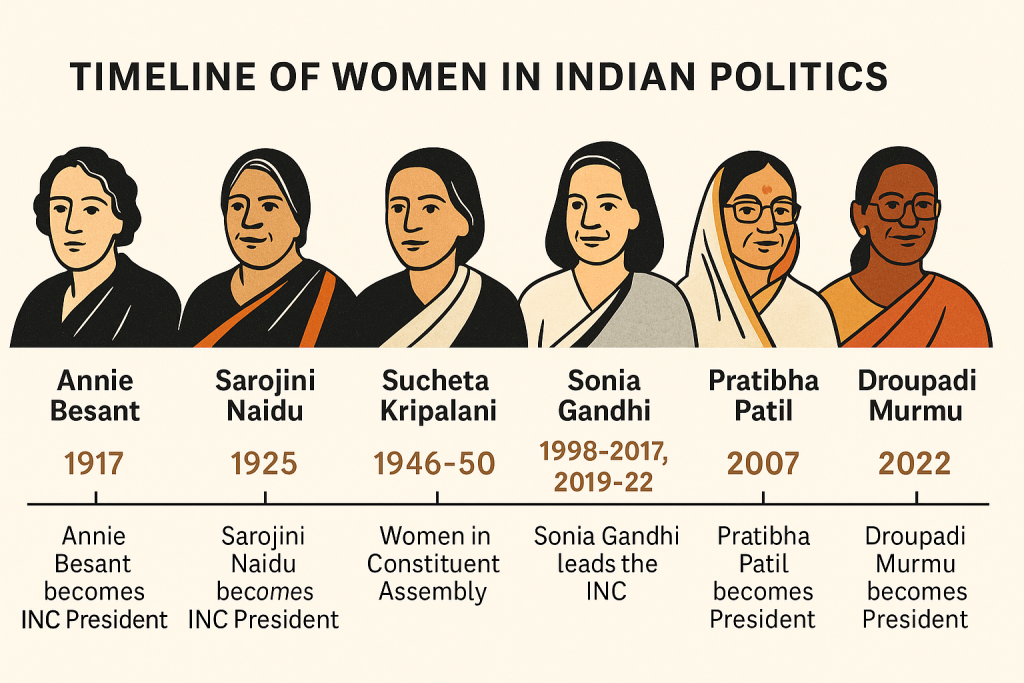
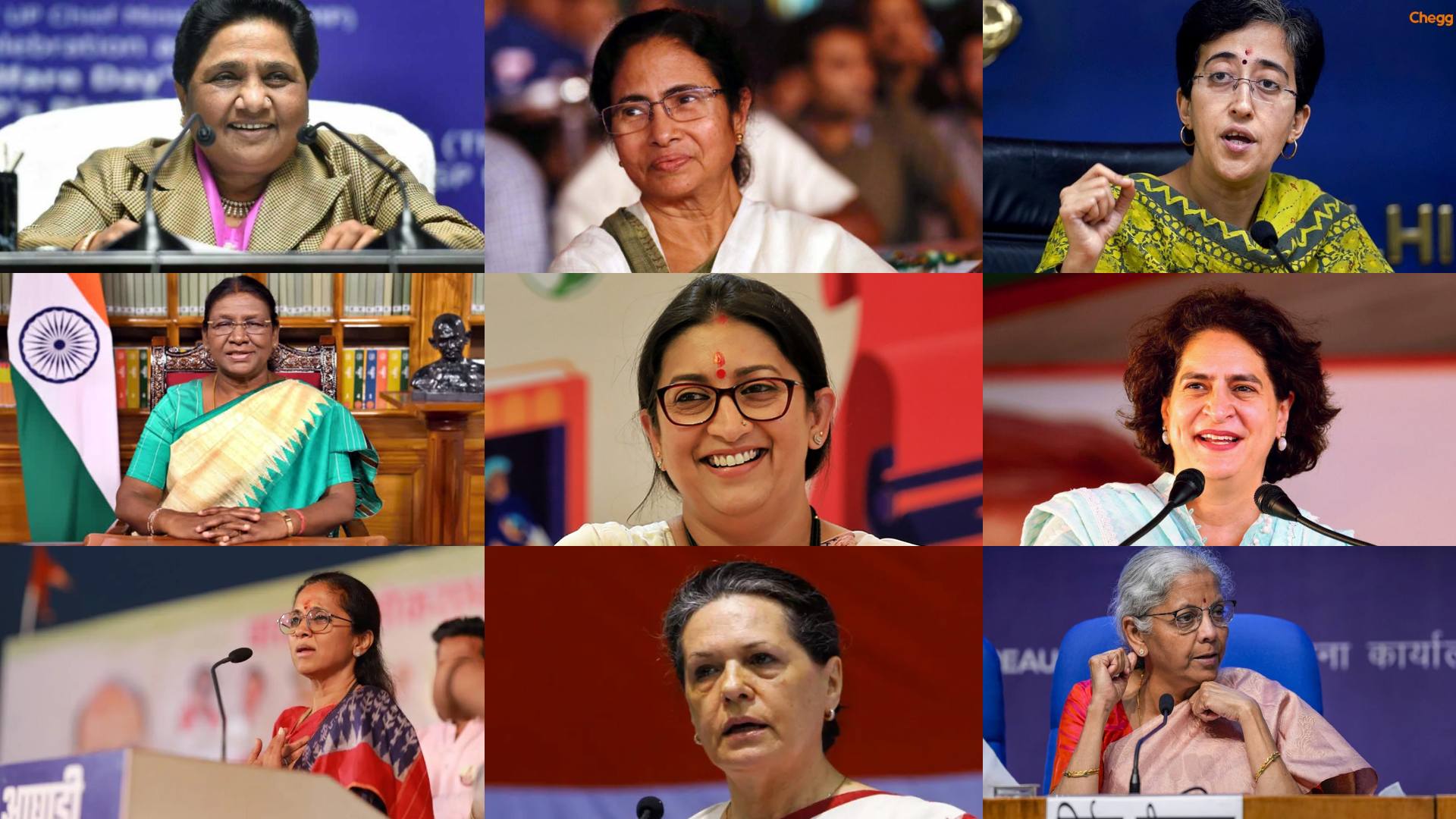
Women are becoming more and more important in Indian politics. They have a big impact on policy, increase democratic involvement, and drive social change, even though there are still problems. Their importance comes from the fact that more and more of them are voting, running for office, being organizers, and becoming leaders at all levels, from local self-government to Parliament.
Role of Women in Indian Politics
Voters and Mobilizers: Women’s voter turnout has seen impressive growth, reaching over 65% in recent national elections. Political parties now actively target “women’s votes,” recognizing their importance in electoral outcomes.
Legislative Representation: Women constitute about 14% of Lok Sabha members and 9% in state assemblies. Although low by global standards, these numbers are increasing steadily.
Leaders and Ministers: Women have held top roles—Prime Minister (Indira Gandhi), Chief Ministers, and union and state cabinet ministers—demonstrating competence in governance, diplomacy, and policy.
Grassroots Leadership: In local self-government, reservation policies (one-third of seats in Panchayats and Urban Local Bodies, with many states having 50% reservations) have resulted in women comprising up to 44% of grassroots representatives, empowering millions across India.
Significance
Deepening Democracy: Women’s presence broadens the perspectives in decision-making, promotes inclusive policies—especially in health, education, and welfare—and strengthens democratic functioning.
Empowerment and Social Change: Women leaders challenge patriarchal norms, drive gender-sensitive reforms, and serve as role models, inspiring new generations to engage in politics and advocacy.
Enhanced Representation: Parliamentary debates and legislation increasingly address issues central to women—such as safety, health, education, and legal rights—because of women’s active representation.
International Commitments: India is a signatory to global conventions (CEDAW, Beijing Declaration) and continues to align domestic policy with global gender equality goals.
Key Developments
Women’s Reservation (106th Amendment, 2023): The Women’s Reservation Act reserves 33% of seats for women in Lok Sabha and State Assemblies, further advancing representation (to be implemented after the next census).
Capacity-building Initiatives: Training, leadership programs, and “pink booths” during elections foster participation and skill development.
Empowerment through SHGs: Over 10 crore women in Self Help Groups are transforming rural economies, gaining economic and political clout.
Challenges
Gender Discrimination & Violence: Social norms, patriarchal attitudes, violence, and resource limitations still hinder women’s full participation in politics.
Underrepresentation: Despite progress, women’s share in higher legislative bodies remains low; effective implementation of reservation policies is needed.
Data at a Glance
Level
Women’s Representation (2024)
Lok Sabha
13.6% (74 MPs)
State Assemblies
9% average
Local Self-Government
44% (Panchayats/ULBs)
Women are thus central to India’s political future—as voters, representatives, leaders, and agents of change—with their role and importance set to increase further with meaningful policy reforms and societal support.
Originally, there were 22 parts; today, there are 25 parts covering topics like the Union and its territory, citizenship, fundamental rights, directive principles, the Union and states, the judiciary, elections, and special provisions for certain regions or groups.
Articles are specific sections within these parts; the total has grown from 395 at inception to 448 today.
Schedules
The schedules are appendices that contain additional details, lists, and guidelines to supplement constitutional provisions.
The original 8 Schedules have expanded to 12, dealing with issues such as the allocation of powers, lists of states and territories, administration of tribal areas, and official languages.
Federal Structure with Unitary Features
India is a federal union with a strong center but with unitary features such as a single constitution, single citizenship, a unified judiciary, and emergency powers.
Powers are divided among the Union, states, and (after amendments) local governments.
Basic Structure Doctrine
Landmark Supreme Court judgments have established that certain core features (the “basic structure”) of the Constitution cannot be amended by Parliament. These include supremacy of the Constitution, democracy, secularism, separation of powers, fundamental rights, rule of law, and more.
Summary Table: Structure of Indian Constitution
Component
Details
Preamble
States aspirational values (justice, liberty, equality, fraternity)
Parts
25 thematic divisions (originally 22)
Articles
448 numbered provisions (originally 395)
Schedules
12 lists/appendices (originally 8)
Federalism
Federal in structure, unitary in spirit
Basic Structure
Key unamendable features per Supreme Court
This detailed framework allows India to accommodate its diversity, balance central authority with local autonomy, and protect foundational democratic values.
B. THE PREAMBLE OF THE INDIAN CONSTITUTION
The Preamble of the Indian Constitution is a brief introductory statement that sets out the guiding values, principles, and objectives of the Constitution. It serves as the “identity card” of the document, summarizing its essence and reflecting the aspirations of the people of India.
Full Text of the Preamble
Decorative page from the original Constitution of India displaying the Preamble, adopted November 26, 1949
WE, THE PEOPLE OF INDIA, having solemnly resolved to constitute India into a SOVEREIGN SOCIALIST SECULAR DEMOCRATIC REPUBLIC and to secure to all its citizens:
JUSTICE, social, economic and political;
LIBERTY of thought, expression, belief, faith and worship;
EQUALITY of status and of opportunity; and to promote among them all
FRATERNITY assuring the dignity of the individual and the unity and integrity of the Nation;
IN OUR CONSTITUENT ASSEMBLY this twenty-sixth day of November, 1949, we HEREBY ADOPT, ENACT, AND GIVE TO OURSELVES THIS CONSTITUTION.
Highlights of the Preamble
Source of authority: The Constitution derives its power from “the people of India.”
Nature of State: Declares India as a sovereign, socialist, secular, democratic republic.
Objectives: Secures justice, liberty, equality, and fraternity for all citizens.
Date of adoption: Adopted by the Constituent Assembly on November 26, 1949.
The Preamble encapsulates the philosophy and vision of the Indian Constitution, guiding its interpretation and implementation.
C. MAIN BODY OF THE INDIAN CONSTITUTION
The main body of the Indian Constitution is detailed, comprehensive, and organized into a system of parts, articles, and schedules. It establishes the structure, powers, and functions of the principal organs of government and lays down the rights and duties of citizens.
Key Features of the Main Body
1. Parts and Articles
The Constitution is divided into 25 parts (originally 22), each covering a major aspect of governance, rights, and administration.
These parts contain a total of 448 articles (originally 395), numbered sequentially, which provide detailed legal provisions.
Notable parts include:
Part I: Union and its Territory
Part II: Citizenship
Part III: Fundamental Rights
Part IV: Directive Principles of State Policy
Part V/VI: Structure and functioning of Union and State governments
Part IX/IXA: Local self-government (Panchayats, Municipalities)
Part XVIII: Emergency Provisions
2. Schedules
12 schedules (originally 8), appended at the end, provide lists, classifications, and additional details to support the main text.
Topics include allocation of powers, lists of states/territories, forms of oaths, and division of legislative subjects.
3. Institutional Structure
The Constitution establishes three primary organs:
Legislature (Parliament: Rajya Sabha and Lok Sabha)
Executive (President, Prime Minister, Council of Ministers, Governors)
Judiciary (Supreme Court, High Courts, Subordinate Courts)
Outlines a parliamentary system, with India being a federal country having strong central (unitary) features.
4. Quasi-Federal System
India’s Constitution grants powers to both the Union and State governments but has significant unitary provisions (single citizenship, integrated judiciary, emergency powers).
5. Basic Structure Doctrine
Certain features—such as the supremacy of the Constitution, secularism, republicanism, federalism, and separation of powers—form an unamendable “basic structure” as recognized by the judiciary.
Parliament, President, Council of Ministers, Judiciary, States
The main body thus provides the backbone of governance, law, and administration in India, ensuring both flexibility and stability.
D. SCHEDULE THE INDIAN CONSTITUTION
Schedules of the Indian Constitution
There are 12 Schedules in the Indian Constitution, each dealing with a specific subject. These schedules serve to clearly organize laws, administrative details, and official policy areas, making implementation efficient and reference straightforward.
Schedule
Subject Matter
First
List of States, Union Territories, and their territories
Second
Emoluments, allowances, and privileges of key officials: President, Governors, Judges, etc.
Third
Forms of oaths and affirmations for union and state ministers, legislators, judges
Fourth
Allocation of seats for States/UTs in Rajya Sabha (Council of States)
Fifth
Provisions regarding administration of Scheduled Areas/Scheduled Tribes
Sixth
Provisions for tribal areas in Assam, Meghalaya, Tripura, Mizoram
Seventh
Division of powers: Union, State, Concurrent legislative lists
Eighth
List of 22 official languages
Ninth
Acts and regulations protected from judicial review (mainly land reforms)
Tenth
Disqualification on grounds of defection (Anti-defection Law)
Eleventh
Powers, authority, and responsibilities of Panchayats (73rd Amendment)
Twelfth
Powers, authority, and responsibilities of Municipalities (74th Amendment)
These schedules help in efficient governance and reduce the complexity of the main constitutional text.
E. BASIC FEATURES OF THE INDIAN CONSTITUTION
The Basic Features of the Indian Constitution, also known as the Basic Structure Doctrine, are fundamental principles that form the core of the Constitution and cannot be altered or destroyed by any constitutional amendment by Parliament. This doctrine was established by the Supreme Court in the landmark Kesavananda Bharati case (1973) to ensure the stability and integrity of the Constitution.
Key Basic Features
Supremacy of the Constitution: The Constitution is the supreme law of the land; all laws and amendments must conform to it.
Democratic Principles: India is a sovereign, democratic, and republican state with free and fair elections reflecting the people’s will.
Fundamental Rights: These rights are inviolable and cannot be diluted by amendments.
Separation of Powers: Distinct division and independence of the Legislature, Executive, and Judiciary to ensure checks and balances.
Judicial Review: The judiciary has the authority to review and strike down unconstitutional laws or amendments.
Federalism: Distribution of powers between the Union and States, maintaining the federal structure.
Secularism: Equal treatment of all religions by the state, with no state religion.
Unity and Integrity: Preservation of national unity and territorial integrity.
Rule of Law: All citizens and authorities are subject to the law, ensuring justice and equality.
Parliamentary System: Governance follows a federal parliamentary democracy.
Welfare State: Commitment to social and economic justice for all citizens.
Free and Fair Elections: Ensuring democratic representation without manipulation or coercion.
Limited Power of Parliament: Parliament cannot amend or abrogate the basic structure or core principles of the Constitution.
Significance
This doctrine protects India’s constitutional vision by preventing arbitrary or authoritarian changes while allowing flexibility for legitimate amendments. It ensures the Constitution’s foundational values remain intact, promoting democracy, individual rights, and governance with accountability.
This doctrine remains a critical safeguard in India’s constitutional jurisprudence, balancing change with continuity.
A survey or investigation that measures the people’s opinions on a certain issue or range of topics is known as a scientific, nonpartisan public opinion poll. Trained interviewers randomly select interview subjects from the population under study. Interviewers offer responses and produce interpretations based on the outcomes. Every member of the population being investigated should have an equal chance of participating in a random sample. Otherwise, the outcomes can be skewed and not accurately reflect the population. In order to draw generalizations about a given community under study, representative samples are chosen.
2. Why are opinion polls significant?
Polls show us what percentage of a population holds a particular opinion. They don’t offer any justification for respondents’ beliefs or suggestions for how to influence them. Scholars and social scientists worked on this. Simply said, polls are a measurement technique that reveals what a population believes and feels about a particular issue.
Because it allows the people an opportunity to speak for themselves rather than allowing only outspoken media stars to speak on behalf of all, this project can be helpful in promoting understanding between different cultures. Opinion polling provides a voice to those who often lack access to the media.
3. Opinion polling for the 2019 Indian general election
Despite their repeated inaccuracies, exit polls have gained popularity in India over the past two decades. They have grown to be an essential component of the media’s coverage of elections and are regarded as a key instrument for forecasting election results. India restricts the use of exit polls to prevent the spread of inaccurate or misleading information that could influence the election’s outcome.
An exit poll, as you may probably conclude from the name, is a survey of voters conducted immediately after they leave the polling place. What purpose does an exit poll serve if the actual results will be available in just a few hours?
You’ve probably seen them proclaim the predicted winner if you’ve ever watched a tight election on television. This data was probably derived in part from an exit poll. Although we could consider the information provided by exit polls to be factual, it is actually just a preliminary analysis of surveys conducted among voters as they left the polls.
1. Meaning
Exit polls are conducted during elections, providing a snapshot of how voters have cast their ballots. As voters exit polling booths, they are approached by surveyors who ask them about their voting choices. Exit polls are valuable for journalists as they help predict election outcomes before official results are announced. Journalists can use exit poll data to analyze voting patterns, assess voter behavior, and offer early warnings regarding the public’s preferences.
2. The Purpose of Exit Polls
Exit polls ask respondents how they voted soon after casting their ballots, giving a “snapshot of the electorate” and measuring public opinion. Exit polls differ from opinion surveys in that they track real-time responses from voters after the election rather than forecasting votes or opinions.
Exit polls are advantageous because they give the general public a head start on learning who the winner is and how various demographics voted. Exit polls can influence future political campaigns, policies, and laws much like other public opinion measurements.
3. Exit polls: Obstacles
Exit polling has various difficulties. We must emphasize that exit polls don’t always accurately predict an election’s winner. Early projections are frequently wrong since the data fluctuates throughout Election Day. The accuracy of exit poll data rises as the day goes on and more data is collected. We cannot know if an exit poll correctly predicted the winners until after the election. Exit polls’ value as a forecasting tool is further hampered by mail-in ballots and other issues.
C. Surveys
Introduction
Surveys are an effective tool for gathering public opinion on a wide range of topics. Journalists often conduct surveys to obtain insights into public perceptions, attitudes, and preferences. Surveys can be administered through various channels, including face-to-face interviews, telephone interviews, or online questionnaires. Journalists carefully design survey questions to ensure unbiased and accurate responses, enabling them to report on the prevailing opinions of the public.
1. Survey and election polling
Election polling is the act of using surveys or polls during an election year to concentrate on subjects that are important to voters, examine voter turnout, learn what voters believe about the candidates, and determine who they will support on Election Day.
Election polls are done with targeted questions to identify public opinion about the government and opposition parties, the performance of the elected candidate, or to predict the outcomes of the just-ended elections, even while elections are not at the forefront. In fact, many political candidates use polls to learn about the most important issues in their constituency, the shortcomings of their campaigns, and the attitudes of voters.
2. Using an election survey.
Although there is a significant distinction between a poll and a survey, political parties and candidates employ both during an election cycle for various purposes. However, polling places in America have remained largely unchanged for years, despite advancements in technology. The switch from telephone interviews to online polls is the only discernible difference.
Political parties and candidates for office produce polls for various purposes. Election polls can be conducted to determine the most important topics in a particular constituency, to measure public opinion about various candidates, to forecast election results, to spot weaknesses in the current campaign, and even to plan the election campaign.
Polls also help to understand the candidates and their plans for the jobs they hope to take on if elected. Voters should consider this information since it will be useful in understanding the candidate, their background, and their future goals. Voters can better understand their preferences by using this data when casting ballots.
D. Social media
The emergence of social media platforms has transformed the assessment of public opinion in India. Platforms such as Facebook, Twitter, and Instagram provide a space for individuals to express their thoughts, concerns, and viewpoints publicly. Journalists monitor social media conversations, analyze trending hashtags (#), and engage with users to gain a pulse on public sentiment. Social media platforms also facilitate real-time discussions, allowing journalists to gather instant feedback on various topics.
Gauging public opinion in India is vital for journalists to maintain journalistic integrity and provide balanced reporting. Journalists must exercise caution while interpreting opinion poll data, as sample sizes and methodology can impact the accuracy of results. Additionally, it is crucial to consider the diversity and heterogeneity of India’s population, as opinions may vary across different regions, cultures, and demographics. Journalists must strive to present a comprehensive representation of public opinion, taking into account the nuances and complexities of India’s diverse society.
Gauging public opinion in India is an essential aspect of journalism. Opinion polls, exit polls, surveys, and the influence of social media are all valuable tools that journalists employ to understand and reflect the voice of the public. By leveraging these methods, journalists can provide insightful and objective coverage, giving readers a more profound understanding of the prevailing sentiments and viewpoints within Indian society. Understanding public opinion empowers journalists to fulfill their responsibility of informing the public and facilitating informed discussions on critical issues.
B. MEDIA THEORIES
Introduction
In today’s fast-paced digital age, media has become an omnipresent force shaping our lives and influencing our thoughts. From traditional newspapers to social media platforms, from television networks to podcast streams, the media plays a pivotal role in disseminating information, shaping public opinion, and driving societal change. As aspiring journalists, it is crucial for us to comprehend the complex relationship between ideas and perspectives that underpin media production, distribution, and consumption. That is where media theories step in, providing us with invaluable frameworks to deal with the complexity of this ever-evolving landscape.
Media theories are intellectual frameworks that examine the complex relationship between media and society, shedding light on how messages are constructed, interpreted, and experienced. By examining the fundamental principles and dynamics that govern media systems, these theories help us navigate the dynamic realm of journalism with a more profound understanding of its impact on society.
From the perspective of journalism, media theories serve as a compass, guiding us through the turbulent seas of information dissemination. Journalists bear the immense responsibility of delivering news with accuracy, fairness, and integrity. Media theories provide us with a critical lens to scrutinize the processes involved in the production, packaging, and consumption of news.
One of these ideas is the agenda-setting theory, which says that the media can change how important certain topics are to the public. By determining what stories to cover and how to present them, journalists can shape the public agenda, influencing what issues are discussed and debated. Understanding this theory allows journalists to recognize their pivotal role in shaping public discourse and empowers them to wield their influence responsibly.
As journalism students, we embark on a journey to explore various media theories, each offering unique insights into the intricacies of communication, media influence, and the societal implications that ensue. By reviewing these theories, we sharpen our critical thinking skills, enabling us to dissect media narratives, recognize biases, and engage with media content in a discerning manner.
In this textbook, we will embark on an enlightening exploration of several prominent media theories, unraveling their significance in the context of journalism and media studies. We will examine theories such as the cultivation theory, social construction of reality, uses and gratifications theory, and many more, equipping ourselves with the tools to analyze media in all its forms.
As we explore the depths of media theories, let us embrace the intellectual journey that lies ahead. Together, we will decipher the complex interconnections between media and society, unlocking the mechanisms that shape our understanding of the world. By embracing these theories, we not only become more adept journalists but also empowered citizens capable of critically engaging with the media landscape that surrounds us.
So, fasten your seatbelts and embark on this enlightening expedition into the realm of media theories. Prepare to challenge your assumptions, broaden your perspectives, and uncover the hidden mechanisms that shape the media landscape. Welcome to the captivating world of media theories—a voyage that will forever change the way you perceive the media and its profound influence on society.
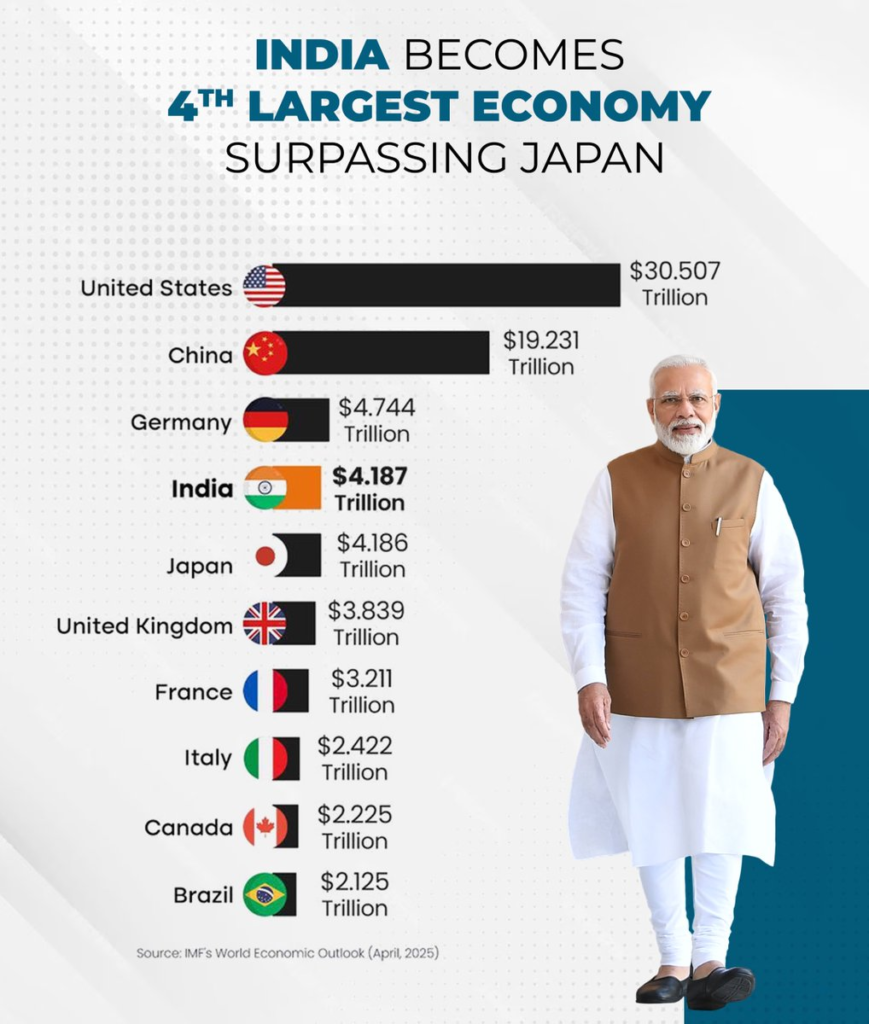
Government data indicates India’s GDP is US$4.18 trillion, with forecasts suggesting it may exceed Germany’s by 2026, notwithstanding global trade obstacles.
India has surpassed Japan to emerge as the fourth-largest economy globally, with a GDP estimated at $4.18 trillion. The increase signifies a decade marked by swift growth, robust domestic demand, and significant reforms, despite ongoing challenges such as low per capita income, pressures for job creation, and uncertainties in global trade that continue to influence India’s economic path.
India is poised to surpass Germany, emerging as the third-largest economy by 2030, supported by robust growth figures.
“India, with a GDP of $4.18 trillion, has eclipsed Japan to emerge as the fourth-largest economy globally and is on track to overtake Germany within the next 2.5 to 3 years, with a projected GDP of $7.3 trillion by 2030,” as stated in the release.
The United States and China represent the foremost economies globally, as determined by their respective gross domestic product (GDP) figures.
New Delhi’s optimistic evaluation persists in the face of economic concerns following Washington’s imposition of substantial tariffs on its acquisitions of Russian oil in August.
India articulated that its sustained growth is indicative of its fortitude in the face of ongoing global trade uncertainties.
What are the driving forces behind India’s growth narrative?
The central government, in its recent announcement, highlighted India’s growth trajectory, noting that the GDP has reached a six-quarter peak during the July-September period of the financial year concluding in 2025-26.
The nation’s development arises from its steadfastness in the face of ongoing global trade ambiguities. The domestic drivers within India, propelled by private consumption, have been pivotal in bolstering the nation’s GDP growth.
The government has also pointed out that inflation staying beneath the lower threshold, a decrease in unemployment, and enhanced export performance are among the key indicators that bolster India’s growth trajectory.
“The financial landscape has remained favorable, characterized by robust credit inflows to the commercial sector, while demand conditions persist with vigor, bolstered by an additional enhancement of urban consumption,” the government stated. The International Monetary Fund’s forecasts for 2026 estimate India’s economy to reach US$4.51 trillion, surpassing Japan’s projected US$4.46 trillion.
The United States holds the position of the world’s largest economy, while China ranks as the second largest.
The upward trajectory of growth has exceeded expectations, with GDP reaching a six-quarter peak in the second quarter of 2025-26, illustrating India’s robustness in the face of ongoing global trade uncertainties, it noted. The expansion was fundamentally supported by domestic drivers, prominently characterized by strong private consumption.
The announcement indicated that global organizations have reflected this optimism and referenced forecasts provided by multiple sources. The World Bank anticipates a growth rate of 6.5% for the year 2026, while Moody’s forecasts that India will continue to be the fastest-growing economy within the G20, projecting growth rates of 6.4% in 2026 and 6.5% in 2027. The International Monetary Fund has elevated its projections to 6.6% for 2025 and 6.2% for 2026, while the Organisation for Economic Cooperation and Development anticipates a growth rate of 6.7% in 2025 and 6.2% in 2026. Furthermore, the S&P forecasts a growth of 6.5% for the current fiscal year and 6.7% for the subsequent year. The Asian Development Bank has revised its 2025 estimate upward to 7.2%, while Fitch has increased its FY26 projection to 7.4%, attributing this adjustment to heightened consumer demand.
“India stands as one of the most rapidly advancing major economies globally and is strategically poised to maintain this trajectory.” The government stated, “With the aspiration of achieving high middle-income status by 2047, the centenary of its independence, the nation is constructing upon robust foundations of economic growth, structural reforms, and social advancement.”
The announcement underscored that inflation persists beneath the lower tolerance threshold, unemployment is on a downward trajectory, and export performance is steadily enhancing. Moreover, the financial landscape has remained favorable, characterized by robust credit inflows to the commercial sector, while demand conditions persist with resilience, bolstered by an additional enhancement in urban consumption.
The upward trajectory of growth has exceeded expectations, with GDP reaching a six-quarter peak in the second quarter of 2025-26, illustrating India’s robustness in the face of ongoing global trade uncertainties, as noted.
The expansion was fundamentally supported by domestic drivers, prominently featuring strong private consumption.
The announcement additionally indicated that global organizations have resonated with this optimism, referencing forecasts articulated by diverse bodies.
The World Bank anticipates a growth rate of 6.5% for the year 2026, while Moody’s forecasts that India will continue to be the fastest-growing economy within the G20, with projected growth rates of 6.4% in 2026 and 6.5% in 2027.
The International Monetary Fund has adjusted its growth projections to 6.6% for the year 2025 and 6.2% for 2026, while the Organisation for Economic Co-operation and Development anticipates a growth rate of 6.7% in 2025 and 6.2% in 2026.
Furthermore, S&P projects a growth rate of 6.5% for the current fiscal year and 6.7% for the subsequent year; the Asian Development Bank has revised its 2025 forecast upward to 7.2%; and Fitch has elevated its FY26 projection to 7.4% in light of heightened consumer demand.
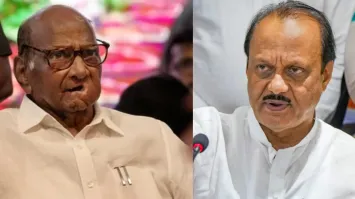
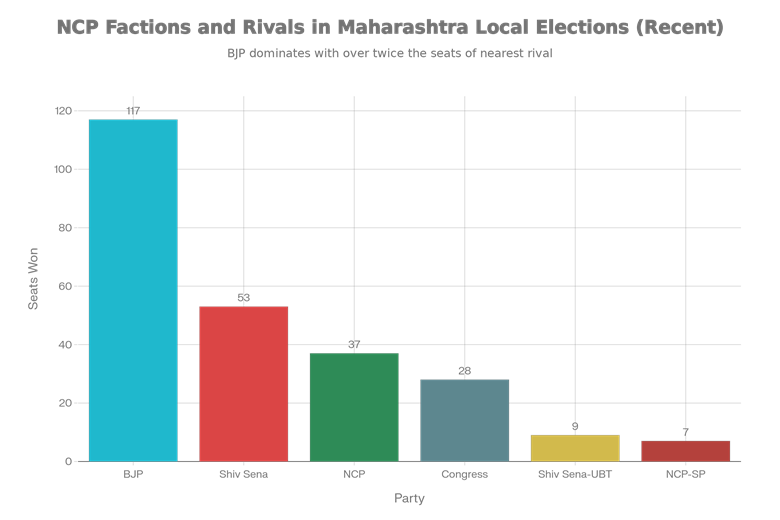
The recent merger has instilled a sense of discomfort among certain leaders of the NCP (SP), as they are reluctant to operate once more under the stewardship of Ajit Pawar, who has forged an alliance with the BJP.
In late December 2025, Ajit Pawar announced an alliance between his NCP faction and Sharad Pawar’s NCP (SP) for the Pimpri-Chinchwad and Pune municipal corporation polls scheduled for January 15, 2026, framing it as a “Pawar parivar” reunion to consolidate votes against BJP dominance. While both factions stressed the tie-up is limited to these local elections with separate symbols and seat-sharing (e.g., NCP contesting 125 seats in Pune, NCP-SP 40), speculation surged about a full merger post-polls, potentially positioning Ajit to lead Maharashtra politics and Supriya Sule for central roles after Sharad Pawar’s retirement. No full merger occurred by year-end, but the move stemmed from worker pressure, shared turf threats from BJP, and avoiding vote splits.
Background: The 2023 NCP Split
In July 2023, the NCP split when Ajit Pawar, along with several leaders, broke away to join the BJP–Shiv Sena alliance, taking oath as Deputy Chief Minister of Maharashtra. The Election Commission later recognized Ajit Pawar’s faction as the official NCP with the “clock” symbol, while Sharad Pawar’s camp became known as NCP (SP) with the “tutari” (trumpet) symbol. This set the stage for two competing entities contesting future elections separately.
Recent Developments: Reunification in Civic Polls
Pimpri-Chinchwad Municipal Corporation (PCMC)
Alliance Announced: On December 29, 2025, Ajit Pawar publicly announced that both factions will contest the upcoming PCMC elections together, stating that “the parivar (family) has come together”.
Symbol Reconciliation: This move symbolizes a reunification of sorts, merging the “clock” and “tutari” symbols for the civic polls.
Strategic Intent: The announcement is framed as a decision in Maharashtra’s interest, aiming for a consolidated front in local governance.
Pune Municipal Corporation (PMC)
Alliance Also in Pune: Following the PCMC alliance, the two factions extended cooperation to Pune civic elections. NCP (SP) will contest 40 seats, while Ajit Pawar’s NCP will field candidates in 125 wards.
Symbol Retention: Each faction will use its own party symbol—clock for Ajit Pawar’s NCP and tutari for Sharad Pawar’s NCP (SP).
Alliance Scope: This cooperation is explicitly limited to PCMC and PMC only; broader reunification remains unconfirmed.
Political Motive: Rohit Pawar emphasized that the alliance reflects the will of local party workers and aims to counter the BJP’s influence.
Election Context
Pimpri-Chinchwad and Pune represent NCP strongholds, where the 2023 split weakened both factions against BJP-Shiv Sena alliances. Ajit Pawar’s group holds more ground but faces anti-incumbency; Sharad’s relies on loyalists amid MVA rifts. Polls test if reunion boosts combined vote share in these urban civic bodies amid Maharashtra’s 29 municipal elections.
PCMC Polls Strategy
In Pimpri-Chinchwad Municipal Corporation (PCMC), the alliance counters BJP’s expansion after NCP’s 2023 vertical split eroded its base. Ajit Pawar declared the “clock” (NCP) and “tutari” (NCP-SP) symbols uniting, with seat talks finalized to prevent three-way fights benefiting rivals. Analysts view this as a low-risk trial: success rebuilds NCP brand pre-2026 broader polls; failure limits damage to local races. Outcomes could foreshadow statewide realignment, echoing past INC-NCP dominance in councils per historical analyses. Some NCP-SP leaders resigned over Ajit-BJP ties, highlighting internal tensions.
Pune: Talks Collapse for PMC
Negotiations Fail: Prior to the eventual alliance, talks between factions for a Pune-only alliance collapsed on December 27, 2025. Sharad Pawar’s faction rejoined the Maha Vikas Aghadi (MVA) due to disagreements over the seat-sharing ratio and symbol usage.
Core Issue: Ajit Pawar insisted that all candidates from Sharad Pawar’s faction contest under the “clock” symbol and rejected their demand for 68 seats—an offer deemed unacceptable as it would dissolve Sharad Pawar’s faction in Pune.