Let’s get one thing straight — what we are witnessing is not an LPG emergency. It’s a stress test. And India is not failing it.Every time there’s geopolitical turbulence, a section of political voices rushes to amplify fear. The current narrative around an alleged LPG crisis is one such example. Yes, supply chains are under pressure. Yes, global tensions are real. But calling it an “emergency” is not just exaggerated — it’s misleading.
India isn’t reacting. India is executing.
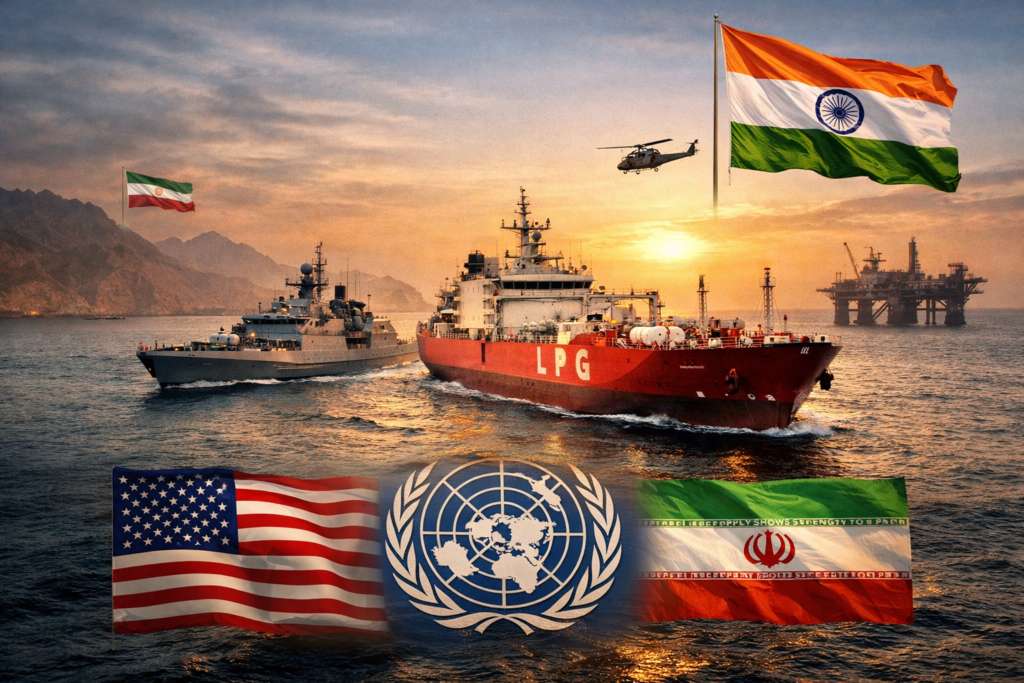
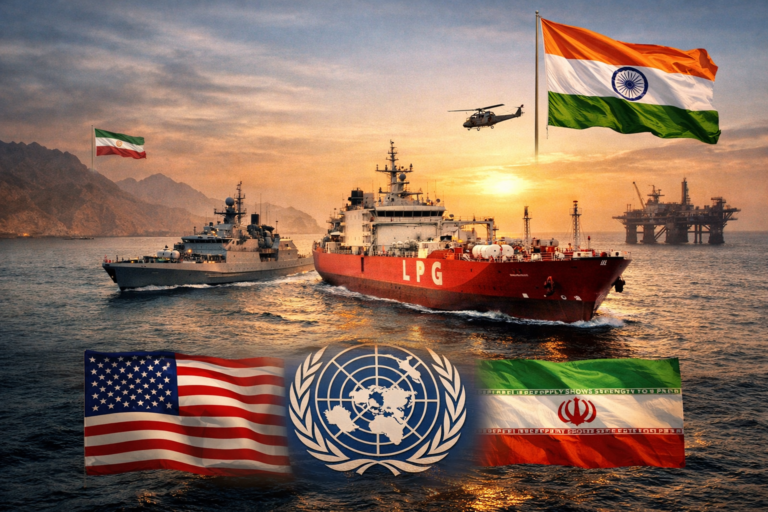
At the heart of this issue lies the strategically critical Strait of Hormuz — a chokepoint through which a significant portion of the world’s energy supply passes. With rising tensions involving Iran and Western powers, concerns over LPG shipments are understandable. But here’s what the panic narrative conveniently ignores: India is already ahead of the curve.
The government is in active diplomatic engagement with Iran to ensure safe passage for LPG tankers. This isn’t speculation — it’s policy in motion. Some vessels, including the naval-backed Shivalik, have already successfully crossed the Hormuz corridor. That’s not disruption. That’s controlled navigation through risk.
This is where India’s foreign policy muscle becomes visible.
Unlike reactionary states, India has maintained a balanced and pragmatic approach in international relations. It engages with all sides without becoming a pawn to any. Whether it is maintaining ties with Iran, managing strategic relations with the United States, or navigating tensions in West Asia — India is not choosing sides blindly. It is choosing stability.
And stability is power.
Let’s zoom out. This is not just India’s problem. The ripple effects of prolonged geopolitical conflicts are being felt globally. Energy markets are tightening. Freight costs are rising. Insurance premiums for maritime routes are increasing. Countries across continents are recalibrating their supply chains.
This is what a prolonged conflict looks like.
The ongoing standoff — shaped in part by the assertive posture of Donald Trump and the uncompromising stance of Iran’s newly elevated supreme leadership — is not de-escalating anytime soon. Both sides are signaling strength, not retreat. And when egos dominate diplomacy, the world pays the price.
But here’s the difference: strong nations prepare for impact. Weak narratives amplify fear.
India has diversified its energy basket, built strategic reserves, and strengthened naval capabilities to secure maritime routes. It is not dependent on a single corridor or a single partner. That’s not luck — that’s long-term planning.
Meanwhile, institutions that are supposed to maintain global peace are failing to deliver. The United Nations, once seen as the guardian of international stability, increasingly appears ineffective in preventing or resolving such prolonged conflicts. Statements are issued, meetings are held — but outcomes remain absent.
In a world where global watchdogs are losing bite, national strength matters more than ever.
So, let’s cut through the noise.
There is pressure — yes. There is uncertainty — absolutely. But there is no collapse.
India is not scrambling. It is negotiating, securing, and moving forward. The successful passage of LPG shipments through volatile waters is proof of capability, not crisis.
This moment doesn’t expose India’s weakness. It highlights its preparedness. Because in geopolitics, the real story isn’t who shouts the loudest — it’s who delivers under pressure. And right now, India is doing exactly that.
वसई-विरार सफाई कर्मचारी हड़ताल क्योंकि उन्हें अभी तक भुगतान नहीं किया गया है, और ठेकेदारों में बदलाव से शहर की सफाई सेवाएं बंद हो जाती हैं। कचरा मजदूर मंगलवार को हड़ताल पर चले गए, जिससे हर दिन चीजों को साफ रखना मुश्किल हो गया है। शहर के कई इलाकों में कूड़े के ढेर लगे हुए हैं।
वसई: वसई में 400 से 500 वी. वी. सी. एम. सी. सफाई कर्मचारियों द्वारा पी. एफ., ग्रेच्युटी और उचित वेतन के लिए हड़ताल की गई क्योंकि उन्हें एक नए श्रमिक ठेकेदार की आदत हो गई थी। सफाई सेवाओं में बाधा आई है क्योंकि श्रमिक मांग कर रहे हैं कि काम पर वापस जाने से पहले उनके अधिकारों का सम्मान किया जाए।
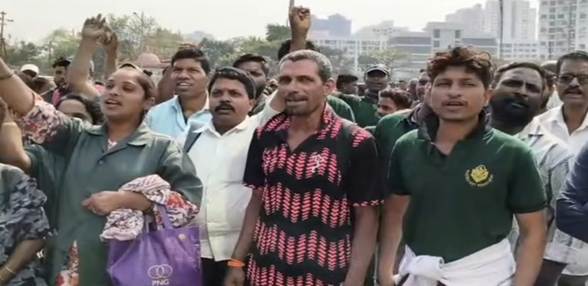
वसई-विरार नगर निगम (वी. वी. सी. एम. सी.) के कई सफाई कर्मचारियों ने अपने लंबे समय से चले आ रहे अनुरोधों को पूरा नहीं करने के विरोध में मंगलवार को वसई में हड़ताल की। विरोध प्रदर्शन में चार सौ से पाँच सौ सफाई कर्मचारी शामिल थे, जिन्होंने कुछ स्थानों पर सफाई बंद कर दी।
वसई विरार नगर निगम (वी. वी. एम. सी.) के सफाई कर्मचारी जो चाहते हैं उसे पाने के लिए मंगलवार को वसई में हड़ताल पर चले गए। तीन सौ से पाँच सौ सफाईकर्मियों ने भाग लिया है। कंपनी द्वारा पुराने के स्थान पर एक नया सौदा किया गया है। लेकिन उन्होंने कहा कि लंबे समय से वहां काम कर रहे श्रमिकों की जरूरतों को पूरा किया जाना चाहिए।
पिछले कुछ वर्षों से वसई विरार नगर निगम ने अनुबंध के आधार पर सफाई का काम करने के लिए हजारों लोगों को काम पर रखा है। वे सड़कों पर झाड़ू लगा रहे हैं, हर दिन कचरा उठा रहे हैं और फेंक रहे हैं, दवाओं का छिड़काव कर रहे हैं और गड्ढों की सफाई कर रहे हैं। लेकिन इन श्रमिकों को मुश्किलों का सामना करना पड़ रहा है क्योंकि नगरपालिका उन्हें सही उपकरण प्रदान नहीं करती है। कई बार अधिकारियों से शिकायत करने के बावजूद कोई कार्रवाई नहीं की जा रही है।
कंपनी ने अब 20 जनवरी को काम पर रखे गए पिछले ठेकेदार का अनुबंध समाप्त कर दिया है। 2025-26 से 2030-31 तक पांच वर्षों के लिए एक नया ठेकेदार नियुक्त किया गया है। इस वजह से नगर निगम ने पहले के ठेकेदारों को अपना काम बंद करने के लिए कहा।
हालांकि, इस आदेश के बाद से, हर दिन शहर की सफाई करने वाले लोगों ने हिंसक आंदोलन शुरू कर दिया है। मजदूर मंगलवार को वसई पश्चिम के साईनाथ नगर इलाके में विरोध करने के लिए इकट्ठा हुए। हमने लंबे समय तक साथ काम किया है। लोगों का कहना है कि नगरपालिका ने अनुबंध बदलकर सफाई कर्मचारियों के साथ अन्याय करने की कोशिश की, क्योंकि हमें अभी तक भविष्य निधि या ग्रेच्युटी जैसे कोई अन्य लाभ नहीं मिले हैं। हमें नए ठेकेदार से कोई समस्या नहीं है, लेकिन हमारे श्रमिकों को जो लाभ मिल रहा है, वह हमें कब मिलेगा? टॉयलेट क्लीनर गीतेश घरत ने पूछा।
हड़ताल के लिए तैयार
विरोध शुरू हुआ क्योंकि नगर निगम ने पुरानी के बजाय एक नई श्रम एजेंसी को काम पर रखने का विकल्प चुना। ठेकेदारों में बदलाव आया है, लेकिन श्रमिकों, जिनमें से कई वर्षों से शहर के साथ हैं, का तर्क है कि पहले उनके अधिकारों और लाभों की रक्षा की जानी चाहिए।
वी. वी. सी. एम. सी. हजारों अस्थायी सफाई कर्मचारियों को सड़कों की सफाई और हर दिन कचरा उठाने जैसे महत्वपूर्ण काम करने के लिए काम पर रखता है। कचरे को उन जगहों पर ले जाना जहाँ इसे फेंका जा सकता है।
कीटनाशकों को लगाना और नालियों की सफाई करना
भले ही वे ये महत्वपूर्ण काम कर रहे हैं, श्रमिकों का कहना है कि उनके पास बुनियादी उपकरण नहीं हैं और उन्हें लंबे समय से समस्याएं हो रही हैं। उनका कहना है कि निगम ने बार-बार उनकी शिकायतों को नजरअंदाज किया है।
नए अनुबंधों को लेकर लड़ाई हुई।
20 जनवरी से, पूर्व ठेकेदार का कार्यकाल समाप्त हो गया, और एक नए को 2025-26 से 2030-31 तक पांच साल के लिए काम पर रखा गया। नतीजतन, निगम ने पूर्व कर्मचारियों को पहले की तरह काम करना बंद करने के लिए कहा।
मजदूर इस आदेश से नाराज थे, और मंगलवार को वे वसई पश्चिम के साईनाथ नगर इलाके में मिले और कहा कि वे क्या सोचते हैं। श्रमिक स्पष्ट करते हैं कि वे नए ठेकेदार के खिलाफ नहीं हैं, बल्कि इस विचार के खिलाफ हैं कि वे समय के साथ अर्जित भत्तों को खो सकते हैं।
कर्मचारियों का बयान
विरोध प्रदर्शन के दौरान सफाई कर्मचारी गीतेश घरत ने श्रमिकों की भलाई के बारे में कई महत्वपूर्ण सवाल पूछे। श्रमिक मांग कर रहे हैं कि उनके भविष्य निधि (पीएफ) और ग्रेच्युटी का भुगतान तुरंत किया जाए, क्योंकि वे कहते हैं कि उन्हें वर्षों से भुगतान नहीं किया गया है। मुख्य मांगों में से एक “समान काम के लिए समान वेतन” है। कुछ लोग उन पूर्व श्रमिकों के बारे में चिंतित थे जो सेवानिवृत्त हो गए थे या अपनी बकाया राशि प्राप्त किए बिना ही उनकी मृत्यु हो गई थी।
विरोध कर रहे श्रमिकों ने कहा, “निगम को नए अनुबंध को अंतिम रूप देने से पहले श्रमिकों को विश्वास में लेना चाहिए था और इन लंबित मुद्दों का समाधान करना चाहिए था।
लोग इस बात से चिंतित हैं कि शहर अब कितना साफ है क्योंकि हड़ताल के कारण दैनिक कचरा संग्रह अभी भी गड़बड़ है। इस बिंदु पर, श्रमिकों ने कहा है कि वे तब तक काम पर वापस नहीं जाएंगे जब तक कि उन्हें उनकी सामाजिक सुरक्षा और अवैतनिक बिलों के बारे में विशिष्ट गारंटी नहीं दी जाती।
ENGLISH TRANSLATION
A strike by city workers makes the city less clean.
Vasai-Virar sanitation workers go on strike because they haven’t been paid yet, and a change in contractors stops city cleaning services. The garbage workers went on strike on Tuesday, which has made it harder to keep things clean every day. There are garbage piles in many parts of the city.
A stop-work strike by 400 to 500 VVCMC sanitation workers in Vasai called for PF, gratuity, and fair pay as they got used to a new labor contractor. Cleaning services have been hampered because workers are demanding that their rights be respected before they can go back to work.
Many sanitation workers from the Vasai-Virar City Municipal Corporation (VVCMC) went on a “stop-work” strike in Vasai on Tuesday to protest not getting their long-standing requests met. Four hundred to five hundred sanitation workers were involved in the protest, which stopped cleaning in some places.
Sanitation workers from Vasai Virar Municipal Corporation (VVMC) went on strike in Vasai on Tuesday to get what they want. Three hundred to five hundred cleaning workers have taken part. A new deal has been made by the company in place of the old one. But he said that the needs of the workers who have been there for a long time should be met.
For the past few years, the Vasai Virar Municipal Corporation has hired thousands of people to do cleaning work on a contract basis. They are sweeping the streets, picking up and throwing away trash every day, spraying medicines, and cleaning out ditches. But these workers are having a hard time because the municipality doesn’t provide them with the right tools. Even though complaining to the officials several times, nothing is being done about it.
The company has now ended the contract of the previous contractor they hired on January 20. A new contractor has been hired for five years, from 2025–26 to 2030–31. Because of this, the city corporation told the earlier contractors to stop their work.
However, since this order, the people who clean the city every day have started a violent movement. The workers got together in the Sainath Nagar area of Vasai West on Tuesday to protest. We’ve worked together for a long time. People say that the municipality tried to be unfair to the safai karamcharis by changing the contract, since we haven’t gotten any other perks like the provident fund or the gratuity yet.
“We don’t have a problem with the new contractor, but when will we get the benefits that our workers are getting?” asked Gitesh Gharat, a toilet cleaner.
Set off for Strike
The protest started because the Municipal Corporation chose to hire a new labor agency instead of the old one. There has been a change in contractors, but the workers, many of whom have been with the city for years, argue that their rights and benefits must be protected first.
The VVCMC hires thousands of temporary sanitation workers to do important jobs like cleaning the streets and picking up trash every day. Taking trash to places where it can be dumped.
Putting down pesticides and cleaning gutters
Even though they are doing these important jobs, workers say they don’t have basic tools and have been having problems for a long time. They say that the Corporation has ignored their complaints over and over again.
There was a fight over new contracts.
With effect from January 20, the former contractor’s term ended, and a new one was hired for five years, from 2025–26 to 2030–31. As a result, the Corporation told the former employees to stop working the way they were.
The workers were angry about this order, and on Tuesday they met in the Sainath Nagar area of Vasai West to say what they thought. The workers make it clear that they are not against the new contractor, but rather the idea that they might lose the perks they have earned over time.
Statement from Workers
During the protest, sanitation worker Gitesh Gharat asked a number of important questions about the workers’ well-being. Workers are asking that their Provident Fund (PF) and Gratuity be paid right away, since they say they haven’t been paid in years. One of the main demands is “Equal Pay for Equal Work.” Some people were worried about former workers who retired or died without getting the money they were owed.
“The Corporation should have taken the workers into confidence and addressed these pending issues before finalizing the new contract,” said the workers who were protesting.
People are worried about how clean the city is now that daily trash collection is still messed up because of the strike. At this point, the workers have said that they won’t go back to work until they are given specific guarantees about their social security and unpaid bills.
भारतीय जनता पार्टी के लिए संगठन पर्व केवल एक प्रक्रिया नहीं, बल्कि लोकतंत्र का उत्सव है। जहाँ अन्य दल परिवार-केंद्रित राजनीति तक सीमित रहे हैं, वहीं भाजपा एकमात्र ऐसी पार्टी है, जो बूथ स्तर से लेकर राष्ट्रीय स्तर तक पारदर्शी, सहभागी और लोकतांत्रिक तरीके से अपने नेतृत्व का चयन करती है।
जनसंघ की स्थापना से लेकर भारतीय जनता पार्टी के गठन और अब तक चुने गए राष्ट्रीय अध्यक्षों की परंपरा इस सच्चाई का जीवंत प्रमाण है कि भाजपा में बड़े पद और बड़ी ज़िम्मेदारियाँ किसी परिवार से नहीं, बल्कि परिश्रम, समर्पण, जनसेवा और देशसेवा के आधार पर तय होती हैं।
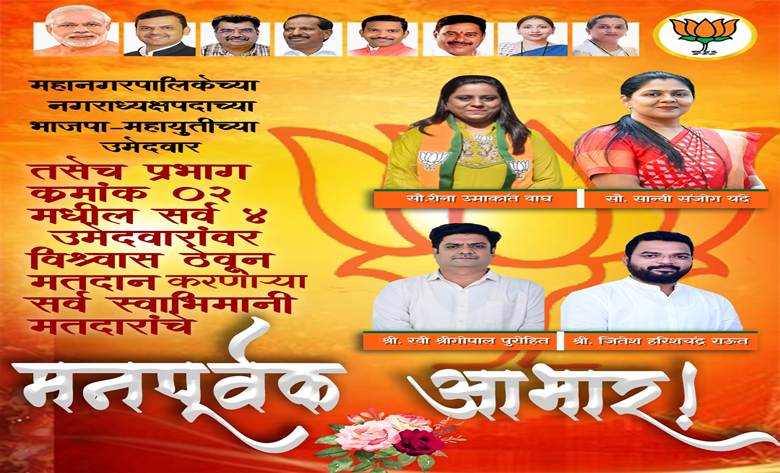
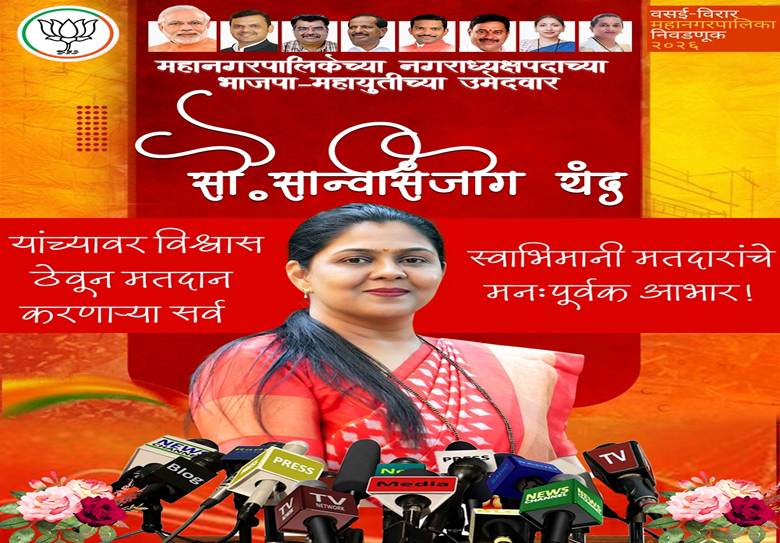
आज हम वार्ड क्रमांक 2 की बात कर रहे हैं, जहां भाजपा ने विरार पश्चिम ग्लोबल सिटी की सभी चार सीटों पर जीत हासिल की है।
आज हम विरार वेस्ट ग्लोबल सिटी के बारे में बात करने जा रहे हैं। ग्लोबल सिटी जहां भाजपा उम्मीदवार ने ग्लोबल सिटी में ऐतिहासिक बदलाव की नींव रखी एक ऐसी जगह जहाँ लोग अपने जीवन में बदलाव लाना चाहते हैं और इसी वजह से यहां की जनता ने भारी परिपक्वता के साथ भाजपा उम्मीदवार को मतदान किया।
ग्लोबल सिटी की आबादी अपने-अपने क्षेत्रों में कई समस्याओं का सामना कर रही है, खासकर यहाँ पानी की समस्या। यहां लोग मानव की मूलभूत आवश्यकताओं का सामना कर रहे हैं। यहां ग्लोबल सिटी की पूरी आबादी पानी के टैंक पर निर्भर है और इससे दैनिक जीवन में कई समस्याएं पैदा होती हैं। उदाहरण के लिए, पानी के टैंक पर निर्भरता प्रत्येक समाज या प्रत्येक व्यक्ति के भरण-पोषण के खर्च को बढ़ा रही है। इस क्षेत्र में खराब पानी की वजह से लोगों को कई बीमारियों का सामना करना पड़ रहा है और यह ग्लोबल सिटी में एक बड़ी समस्या है।
खराब पानी के अलावा, यहाँ के लोगों को और भी कई समस्याओं का सामना करना पड़ रहा है और यही कारण है कि लोग बदलाव के लिए वोट देते हैं। यहां भाजपा उम्मीदवार ग्लोबल सिटी के आम नागरिकों से वादा किया है कि वे निकट भविष्य में इन सभी समस्याओं का समाधान करेंगे और यही कारण है कि लोग भाजपा उम्मीदवार और उनके वादों पर भरोसा जताते हुए भाजपा उम्मीदवार के पक्ष में मतदान किया।
वार्ड क्रमांक 2 में भाजपा उम्मीदवारों ने चारों सीटों पर शानदार जीत हासिल की है, जो उनके प्रति जनता के समर्थन और उनके वादों को दर्शाती है। यहां लोगों ने भाजपा पर भरोसा दिखाया और भाजपा उम्मीदवार के पक्ष में मतदान किया।
पार्टी सदस्यों, सभी बड़े नेताओं और उम्मीदवारों की कड़ी मेहनत के कारण ही बहुजन विकास अघाड़ी पार्टी के सदस्यों के खिलाफ जीत हासिल करने में मदद मिली। यहां भाजपा उम्मीदवार ने काफी मेहनत की और इसी मेहनत की बदौलत उन्हें वार्ड क्रमांक 2 में भारी बहुमत से जीत हासिल हुई। भाजपा उम्मीदवार और पार्टी सदस्यों के अथक प्रयासों के कारण, जिन्होंने भाजपा के समर्थन में जीत दिलाने के लिए दिन-रात संघर्ष किया, यह संभव हो पाया।
विरार वेस्ट ग्लोबल सिटी वार्ड क्रमांक 02 के सभी विजयी उम्मीदवारों को ondemandnewz.com की तरफ से बधाई।
The synergy between OTT platforms and theatrical releases represents a dynamic shift in content distribution and consumption. Rather than existing as mutually exclusive options, these two modes increasingly complement each other. Theatrical releases can serve as high-profile events that build anticipation and buzz, while OTT platforms offer films a longer lifecycle, reaching wider and more diverse audiences.
This synergy enables filmmakers and studios to maximize revenue, enhance audience engagement, and experiment with new release strategies, such as simultaneous or staggered premieres. As consumer preferences evolve, the collaboration between OTT and theatrical channels is reshaping the future of entertainment, offering greater flexibility and accessibility while preserving the unique value of both experiences.
A. NETFLIX, AMAZON PRIME VIDEO, JIOCINEMA, HOTSTAR STRATEGIES
Here’s a refined and structured overview of OTT & theatrical synergy, including strategic approaches by Netflix, Amazon Prime Video, and JioHotstar (successor to JioCinema and Hotstar), along with illustrative case studies and film examples.
1. OTT & Theatrical Synergy: A New Distribution Paradigm OTT platforms and theatrical releases are increasingly viewed not as competing channels, but as complementary tools. Theatrical runs can build cultural impact and prestige, while OTT ensures wider reach and longer tail viewership. This synergy allows studios and platforms to optimize both revenue and audience engagement.
2. Netflix Strategies
Awards-Driven Limited Theatrical Runs Netflix frequently employs short theatrical releases to qualify for awards while prioritizing streaming. Roma (2018), for example, premiered in select theaters across 42 countries just three weeks before streaming, earning 10 Oscar nominations and winning Big Three awards.
“Sneak-Preview” Hybrid Model More recently, Netflix experimented with a hybrid model for Glass Onion: A Knives Out Story—a 17-day theatrical run in 696 U.S. theaters, followed by a blackout period before streaming.
Major Blockbusters on IMAX In 2025, Netflix announced a pivot toward large-scale theatrical engagement with Greta Gerwig’s The Chronicles of Narnia reboot. The film will play exclusively on around 1,000 IMAX screens across 90 countries for up to four weeks before debuting on Netflix, supported by a robust marketing campaign.
3. Amazon Prime Video Strategies
Traditional Wide Release for Prestige Amazon broke ground earlier with Manchester by the Sea (2016), which secured a wide theatrical release (over 1,200 theaters) before streaming, earning critical acclaim and Best Picture nominations.
Hybrid Releases with Short Windows A more recent example is Red One, which had a 28-day theatrical window before streaming on Prime Video. The film grossed $175 million globally and maintained strong box office retention.
Expanding Indian Theatrical Footprint Starting in 2026, Amazon MGM Studios plans to release 3–4 Indian films theatrically each year before streaming, signaling a renewed focus on theatrical-first strategies in India.
4. JioHotstar (formerly JioCinema & Hotstar)
Platform Consolidation and Vertical Integration In February 2025, JioCinema and Disney+ Hotstar merged under the JioStar joint venture, launching JioHotstar, which now combines extensive content libraries and sports rights with vertical distribution control.
OTT-After-Theatrical Model in Indian Cinema Several Indian films have followed a traditional theatrical-first release before transitioning to streaming on JioHotstar:
• Subham (Telugu horror-comedy) – theatrical release on May 9, 2025; OTT debut on JioHotstar from June 13, 2025. • DNA (Tamil thriller) – theatrical release on June 20, 2025; OTT streaming from July 19, 2025. • Ronth (Malayalam crime thriller) – theatrical release mid-June 2025; OTT from July 22, 2025. • Sweetheart! (Tamil romantic comedy)—theatrical release March 14, 2025; OTT from April 11, 2025.
Direct OTT Releases & Mixed Strategies Sarzameen (Hindi action drama) skipped theatrical release and launched directly on JioHotstar on July 25, 2025. Soothravakyam (Malayalam suspense thriller) was released theatrically on July 11, 2025; its OTT rights were acquired by Lionsgate Play and Amazon Prime Video in August.
5. Key Insights and Comparative Analysis
Netflix focuses on prestige and cultural buzz through strategic theatrical windows, with recent expansion into large-scale blockbusters to amplify global impact.
Amazon Prime Video balances prestige (wide releases) with efficiency (short theatrical windows), especially in markets like India.
JioHotstar benefits from full vertical integration, enabling flexible release strategies—from traditional theatrical runs to direct OTT premieres—tailored to regional content and audience preferences.
6. Case Study Highlights
Roma (Netflix): Prestige-driven theatrical release, Oscar recognition.
Glass Onion: Hybrid sneak-preview model.
Narnia Reboot: IMAX-first strategy.
Manchester by the Sea (Amazon): Traditional theatrical-first success.
Red One: Short-window hybrid release.
Subham, DNA, and Ronth: Indian films with clear theatrical-to-OTT trajectories.
Sarzameen: Direct OTT premiere.
Soothravakyam: Theatrical release with multi-platform OTT licensing.
B. PRE-RELEASE BUZZ VS. POST-RELEASE ENGAGEMENT
Below is a structured analysis of OTT & Theatrical Synergy: Pre-release Buzz vs. Post-release Engagement, including international and national (Indian) case studies, film examples, and a summary.
OTT & Theatrical Synergy:
Pre-release Buzz vs. Post-release Engagement
1. The Concept
Pre-release Buzz: The excitement and anticipation generated before a film’s release are driven by marketing, trailers, social media, star cast, and exclusive previews—especially through theatrical premieres.
Post-release Engagement: The sustained interaction and discussion after the film’s release, primarily supported by OTT availability, social media trends, user reviews, memes, and repeat viewing.
Synergy: Theatrical releases create event-like anticipation (buzz), while OTT ensures the film remains in the cultural conversation, accessible to broader audiences for a longer period (engagement).
2. International Case Study: Glass Onion: A Knives Out Mystery (Netflix, 2022)
Pre-release Buzz: Netflix gave the film a limited one-week theatrical run in major markets before streaming. The star-studded cast, mystery genre, and director Rian Johnson’s reputation generated massive media and social media attention. Result: Sold-out shows, headlines about Netflix’s rare theatrical move, and Oscar buzz.
Post-release Engagement: After streaming began, the film trended globally on Netflix, sparking meme culture, fan theories, and extensive online discussion. The accessibility on OTT enabled viewers who missed the theatrical window to watch and discuss it, keeping the film relevant for weeks.
3. National (Indian) Case Study: Jawan (2023)
Pre-release Buzz: Starring Shah Rukh Khan, Jawan had a massive promotional campaign, with trailers, music launches, and nationwide media coverage. The theatrical release was treated as a cultural event; advance bookings broke records.
Post-release Engagement: After an extremely successful theatrical run, the film debuted on Netflix. The OTT release sparked renewed conversations, with fans dissecting plot twists, sharing clips, and introducing the film to new audiences who hadn’t seen it in theaters. The #JawanOnNetflix trend brought the film back into the spotlight, amplifying its lifecycle.
4. Comparative Examples
International:
Roma (Netflix): Limited theatrical run for Oscar buzz, then global post-release discussion upon streaming.
Dune (Warner Bros.): Simultaneous release in theaters and HBO Max. Pre-release anticipation for visuals, post-release engagement focused on accessibility and rewatchability online.
National (India):
RRR (2022): Extensive theatrical campaign, followed by viral OTT popularity on Netflix and ZEE5, which reached international audiences and fueled post-release social media trends.
Shershaah (2021): Skipped theatrical release due to COVID-19 but leveraged OTT (Amazon Prime Video) for post-release engagement, with songs and scenes trending long after launch.
5. Summary
Pre-release Buzz is most effectively built through theatrical events, media campaigns, and exclusivity, making the release an “event.”
Post-release engagement thrives on OTT platforms, which provide longevity and accessibility and encourage ongoing discussions, memes, and repeat viewing.
The synergy of these strategies maximizes both box office returns and long-term popularity, as seen in both international and Indian contexts.
In essence: Theatrical releases ignite anticipation and cultural excitement, while OTT platforms ensure films remain relevant, discussed, and accessible—prolonging their impact well beyond opening weekend.
We know it when we see it. We are exposed to it thousands of times every day. Most of us are reasonably proficient, although rarely perfect, at distinguishing it from other kinds of messages. But what is this thing called advertising?
In other words, advertising is the act of calling public attention to an idea, product, or service through paid announcements by an identified sponsor. But there’s more to advertising. An average human is exposed to around thousands of advertising messages in a day. Advertisements come in many different ways, like shapes, sizes, colors, patterns, and forms.
Definition
According to Philip Kotler, “Advertising is any paid form of non-personal presentation and promotion of goods, services, or ideas by an identified sponsor.”
According to Frank Presbrey, “Advertising is a printed, written, oral, and illustrated art of selling. Its objective is to encourage sales of the advertiser’s products and to create in the minds of people, individually or collectively, an impression in favor of the advertiser’s interest.”
According to Wheeler, “Advertising is any form of paid non-personal presentation of ideas, goods, and services for the purpose of inducing people to buy.”
The mediums used are print, broadcast, and direct.
According to William Stanton, “Advertising consists of all activities involved in presenting to a group a non-personal, oral or visual, openly sponsored, identified message regarding a product, service, or idea. The message, called an advertisement, is disseminated through one or more media and is paid for by the identified sponsor.”
A. Evolution of Advertising
Advertisements have come a long way in the past century or so. As it’s had to adapt and change to suit new mediums and audiences constantly. To raise the value of the advertising of today and imagine the advertising of tomorrow, we need to comprehend the origin and evolution of advertising.
Advertising was produced by a market-driven system and developed in a capitalistic, free enterprise market economy in which mass production utilized advertising as an essential tool. Urbanization, transportation expansion, and communication advancements all facilitated the use and growth of advertising, the result of which is that advertising is firmly entrenched as a business function in different societies with deeply rooted economic and cultural foundations.
Advertising is the result of years of development in capitalism and its use in mass communication media. We can define advertising as a form of commercial mass communication designed to promote the sale of a product or service or a message on behalf of an institution, organization, or candidate for political office. That implies concepts such as market, publics, sponsors, persuasion, products, services, mass communication, etc.
1. The Beginning
In the Middle Ages, together with street callers, brands appeared on products for identifying the maker, giving them a sign of individuality from a manufacturer from others, allowing for differentiation, for example, between wines and geographical areas such as Osnabruck and Westphalia.
In this period, a big number of people can’t read. So, signs that today would say “cobbler,” “miller,” “tailor,” or “blacksmith” would use an image associated with their trade, such as a boot, a suit, a hat, a clock, a diamond, a horseshoe, a candle, or even a bag of flour.
Gutenberg’s printing press (1438) really began the era of mass communication in that now printed materials could be mass-produced, whereas prior to the printing press, books and other printed materials had to be made individually. A Londoner printed the first English newspaper in 1622, and the first ad appeared in 1625.
That 1622’s first newspaper was the Weekly News, by Nicholas Brown and Thomas Archer. Other newspapers of this time were the Mercurius Britannicus, in 1665, and La Gazzette from Paris by Théophraste Renaudot in 1630. Those were considered beginners of modern advertising, despite the fact that the first newspaper announcement appeared in 1650 in the Several Proceedings in Parliament; it was about offering a reward for returning twelve stolen horses.
2. Propaganda and Mechanization
Today, the word ‘propaganda’ carries a negative and harmful connotation.
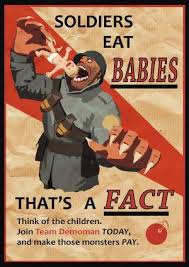
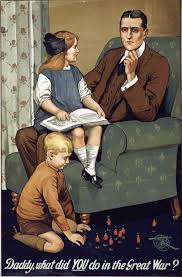
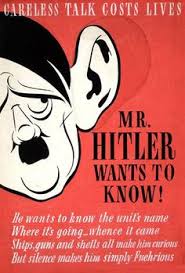
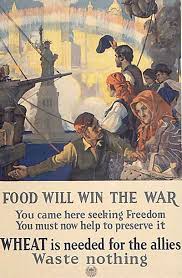
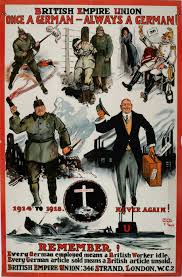
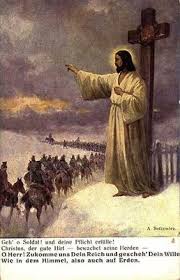
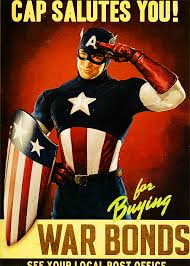
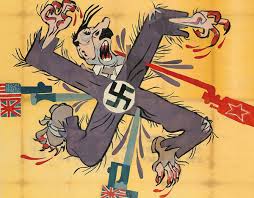
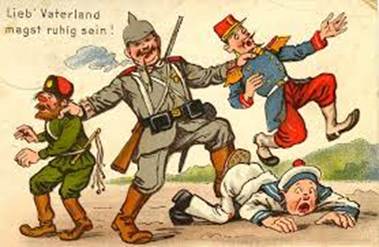
During World War I, advertising became a medium for propaganda. Governments used advertising to convince their citizens to join the military. This period also saw increased mechanization of the industry, making ads more costly.
a. Why do the war perpetrators use propaganda?
Each of the nations that participated in World War One from 1914 to 1918 used propaganda posters.
They used posters to:
Justify their involvement to their own population
As a means of recruiting men
A way to raise money and resources to sustain the military campaign.
To urge conservation
b. Why Posters?
Television had not yet been invented
Not everyone owned or had access to a radio
Posters were the most effective means of getting a message across
3. The Emergence of New Media
The major media types or groups that have been introduced since the beginning of the twentieth century include film, sound recordings, radio, television, personal computers, videocassettes, video games, and the Internet. During this time, new mass media, radio, and cinema became commercially available in the first part of the 20th century; the advertising industry quickly took advantage of their reach, spread, and popularity.
New media are forms of media that are native to computers, computational, and rely on computers for redistribution. Some examples of new media are telephones, computers, virtual worlds, single media, website games, human-computer interfaces, computer animation, and interactive computer installations.
New media are often contrasted to “old media,” such as television, radio, and print media, although scholars in communication and media studies have criticized rigid distinctions based on oldness and novelty. New media does not include television programs (only analogue broadcast), feature films, magazines, or books, unless they contain technologies that enable digital generative or interactive processes.
Wikipedia, an online encyclopaedia, is a good example of new media, combining Internet-accessible digital text, images, and video with web links; creative participation of contributors; interactive feedback of users; and formation of a participant community of editors and donors for the benefit of non-community readers.
Facebook is another type of new media, belonging to the category of social media model, in which most users are also participants. Another type of new media is Twitter, which also belongs to the social media category, through which users interact with one another and make announcements that the public receives. Both Facebook and Twitter have risen in usage recently and have become an online resource for acquiring information.
4. The Creative Advertising Revolution
At that time there was not a great deal of competition for an advertising message. Television was just beginning; people had time to read. But it was clear to us that there would soon be tremendous competition for the attention of the consumer. And that unless the advertising message was put down in a fresh way that made people select it out of a bombardment of messages and that made people care and respond to it, it was not even going to be perceived.
Before 1949, typically advertising copywriters would write ad copy and then take the text to their art department to lay out the ad. Bernbach’s advertising firm, Doyle Dane Bernbach, combined copywriters and graphic designers into one collaborative creative team that sought to produce ads that were original, fresh, and imaginative. Doyle Dane Bernbach’s ads were prominent drivers of a creative revolution in U.S. advertising.
Competition for attention today has reached a level that Bill Bernbach probably never imagined. A creative revolution in advertising today requires deep changes in business organization and integrating sense in communication across words, images, and personal actions.
The ad that changed advertising
Carl Hahn had contracted his agency, Doyle Dane Bernbach (DDB), to promote a car called the Volkswagen in the United States. Bernbach’s problem was that Hahn’s call came at the end of the fifties, when America was in a deep love affair with stylish vehicles made in Detroit, USA. How could DDB sell a small, ugly, cheap, foreign car that Hitler had a hand in creating to the American public? Luckily for Hahn, Bill Bernbach was the most innovative ad man of his time, being a key player in what is today known as the Creative Revolution.
The campaign that DDB put together for Volkswagen in 1959 would not only make their car “as American as apple pie” but also be recognized by Advertising Age as being the greatest ad of all time and change the industry forever.
4. Contemporary Advertising
Contemporary advertising attracting customers to their product range has become more difficult because consumers have become more literate in technology and, therefore, can research items before purchase. Nowadays remote controls are in the hands of every individual, and the access to hundreds of cable channels means that advertising must generate interest among the viewers. Along with these experiments, there are also new leading edges, such as Internet and social media marketing. In contemporary times advertisers and agencies today see innovations like digital ads and interactive advertising as challenges and opportunities rather than difficulties.
Contemporary advertising are methods of advertising that are basically generic in nature and are widely used. It can be used to build the relationship with the client through market sensing and recognizing categories of clients according to their choice. It also helps to bridge the gap via the use of digital inbound marketing techniques.
The Future of Advertising
Yulia Khansvyarova, Head of Digital Marketing at SEMrush,
“I have no doubts that the future of advertising lies in the digital world. Traditional marketing channels have exhausted themselves and are now stepping back. In my opinion, the future of digital advertising is about personalization, multi-device targeting, and building a unified user-centered ecosystem. Right now such ecosystems are just appearing.
There is a lot of talk about cross-device tracking, mobile ads, and different marketing channels used as a complex. But in reality, if you want to build a system that will be able to keep an eye on user behavior and follow all user steps in decision-making, you will still need to code a lot and build a custom solution yourself. In the nearest future, I guess, this situation will change for the better.”
There’s no question that technology will continue to shape the future of advertising. We’ve already seen dramatic shifts in form and factor, powered by technologies such as 3D, artificial intelligence, augmented reality, and virtual reality. As the landscape continues to change, advertisers that don’t follow suit risk getting left behind.
Artificial intelligence will eliminate the loopholes in the existing digital advertising processes. AI relies on data-driven accumulated information; the AI-based neural networks are capable of experience-based self-learning. This means that with more interaction or repeated application, they evolve to become better and better. To put it into perspective, in the context of advertising, AI can provide the consumer behavior patterns with more precision; it can help create better campaigns by identifying more focused target consumer groups and more.
It is tough to forecast what form advertising will take in the future. But one thing is sure: it will continue to advance and strive to become more useful to business and to the consumer.
B. Importance of Advertising
Introduction
We come across the different types of advertisements in our day-to-day life. In these times of social, economic, and political change, it’s more important than ever to build trust using reputable, respected communications and channels in your marketing. The success of any business, large or small, depends on that business’s ability to market their products and services effectively. Having a great product and great customer service, but if people don’t know your business exists, you are not going to have any sales!
Consumer expectations remain higher than ever when it comes to advertising, or rather, the lack of it. The effectiveness of advertising depends on the assessment of the consumer’s motivation in buying and a direct or indirect appeal to that motivation; sometimes it depends on the creation of that motivation by an appeal to a range of consumers’ natures. Advertisements are of countless importance for any business activity, as they appeal to people to use the particular service.
Now let’s find out why advertising is important for any business.
1. Launch of new product or services
Introducing a new product to the market gives a company the chance to endorse its new offering and encourage its reputation and image at the same time. Launching a new product can be an exciting time for any company. Whether it is the first product the company has offered or an addition to an already existing line, the eagerness is catching the dreams of instant success.
Example:
a. Pingit by Barclays
In 2012, Barclays launched the mobile app Pingit, a mobile payment service that lets users transfer money easily through their mobile phones. Available only for U.K. residents, the service allows users to transfer money to other people using only their phone numbers. Soon after the app was launched, Barclays made the most of its social media buzz to collect real-time user feedback.
b. Chrome by Google (Thailand Launch)
Google wanted to introduce its Chrome browser to a more diverse market by bringing it to Thailand. But launching a product in a diverse market comes with its own challenges, as you need to adapt your strategy according to cultural preferences. Realizing that people in Thailand appreciate traditional storytelling, Google decided to implement that into their product launch campaign.
They chose to tell the story of Ramakien, a national epic that stems from the Hindu story of Ramayana and focuses on the triumph of good over evil. The idea was to use visual storytelling to demonstrate the features of Chrome while bringing the ancient story to life. This helped users understand the browser’s capabilities without having to watch a long, boring tutorial. They even added in-story games so that the audience remained intrigued throughout the interactive experience.
2. Source of income
Advertising revenue is the monetary income that individuals and businesses earn from displaying paid advertisements on their websites, social media channels, or other platforms surrounding their internet-based content. In September 2018, the U.S. Internet advertising market was estimated to be worth $111 billion, with market share being held mostly between Google, Facebook, Amazon, and Microsoft. These companies earn revenue through online advertising but also have initiated pathways for individual users and social media “influencers” to earn an income. Individuals and businesses can earn advertising revenue through advertisement networks such as Google AdSense, YouTube monetization, and others.
3. Advertisement and Sales Promotion
Sales promotion is implemented to attract new customers, to hold present customers, to counteract competition, and to take advantage of opportunities that are revealed by market research. It is made up of activities, both outside and inside activities, to enhance company sales. Outside sales promotion activities include advertising, publicity, public relations activities, and special sales events. Inside sales promotion activities include window displays, product and promotional material displays, and promotional programs such as premium awards and contests.
Sale promotions often come in the form of discounts. Discounts impact the way consumers think and behave when shopping. The type of savings and its location can affect the way consumers view a product and affect their purchase decision. The two most common discounts are price discounts (“on sale items”) and bonus packs (“bulk items”). Price discounts are the reduction of an original sale by a certain percentage, while bonus packs are deals in which the consumer receives more for the original price. Many companies present different forms of discounts in advertisements, hoping to convince consumers to buy their products.
4. Increases sales
Advertising increases the visibility of your brand. This attracts prospects who need your product. Whether you are trying to encourage new customers to buy an existing product or launching a new service, there are many advertising channels to choose from.
It’s important to choose an advertising strategy that suits your business and targets the right audience, and you have to choose the right type of advertising, which will increase sales.
5. Maximizes profit
Advertising is a technique used by firms in monopolistic competition to create product differentiation and gain some control of the market, and as a result, charge a higher price. Excessive advertising will serve to inform consumers about the physical difference in the product, and the perceived difference will lead to increased product differentiation. If advertising convinces customers that the product is superior to the competitor’s, then the firm would charge a higher price
6. Advertisement make aware and educate them.
Advertising helps to make consumers aware of a product and aims to build preference for that product over its competitors. If advertising succeeds in those two tasks, consumers will choose the advertised product when they make their next purchase. Advertising helps to protect consumers against false advertisements, which improves the information consumers can use to make decisions about which products and services to buy.
An advertisement benefits both the seller and the consumer. Sellers can promote their goods through ads. On the other hand, consumers can know the information of goods and discount deals available in the market, so they can make informed decisions.
7. Is Art, Science, and Profession
Is advertising an art or a science? This debate continues to rage endlessly. According to Bill Bernbach, “Advertising is fundamentally persuasion, and persuasion happens to be not a science, but an art.” Advertising is all about the art of persuasion, of selling products and services. An advertiser is a salesperson creating sales for business by making people want to buy things.
“The more creative an ad is, and the better it works, the harder it is to actually pre-test that using conventional methods like question and answer,” Pynta said. “The ads are often indirect, they’re quirky, they’re different, and the traditional sort of methods struggle to capture that.
To succeed in the fast-paced world of today’s marketing, the modern marketer must be multi-dimensional, with multifaceted knowledge ability. Although art and science tend to lean toward different ends of the creative spectrum, the modern marketer must channel both artistry and science. Social media today reported on an infographic by Matt Wesson from Pardot that explains the dual role of the modern marketer.
According to the infographic, marketers today need to find a balance between art and science. In the ever-evolving marketing landscape, the role of the marketer is no longer reliant upon an ad campaign’s level of catchiness. It’s simply not enough. Marketers must harness both the left brain and the right brain to communicate successfully.
Social media today suggests that modern marketers “have a strategic and analytical mind dedicated to measurable metrics but that is always craving a creative outlet.” As the infographic suggests, the modern marketer is one part artist and one part scientist. Create a seamless blend of creativity and analytics, and marketing success is attainable.
8. Element of a marketing mix
The marketing mix consists of four important variables of marketing, or the 4 Ps: Product, Price, Promotion, and Place. Aside from the traditional 4 Ps, there are also other variables like packaging, position, and pace.
9. Persuasion for results
Advertising uses persuasion to make people act in a desired direction.
It pursues people to:
Purchase (buy) products,
Subscribe a service,
Invest in ideas,
Attend events, and so on.
10. Monitor demand and supply
Advertising spending is one of those ambiguous areas of supply and demand theory where we don’t really know exactly what will happen, but we can make a pretty good guess. Advertising is an effective way to build brand awareness and to tell consumers about the benefits of your product or service.
Creating targeted advertising campaigns can help businesses increase demand for their offerings. But advertising also costs firms money. The distinction we have to keep in mind is whether or not advertising affects the marginal cost of production or whether their advertising budget is fixed. The difference between these two methods decides whether or not to supply the side. However, if an advertising campaign is unsuccessful, it can also reduce the demand for the products or services. It’s important to understand how advertising works and the ways it can change the demand or supply for your product.
11. Build’s brand image
Brand advertising is a form of advertising used to establish connections and build strong, long-term relationships with consumers over time. Companies that use brand advertising aim to get long-term positive recognition by establishing brand identity, credibility, and loyalty and connecting with prospects intellectually and emotionally to motivate them to take action in the future.
For example: BMW
Better customer experiences mean happier customers, and happier customers mean better brand equity! So how do leading brands find that sweet spot with local marketing?
BMW is one of the best examples of a brand doing this right. As one of the most well-known brands in the automotive industry, today BMW is synonymous for car buyers with both refined elegance and blistering performance. Featuring a diverse line of luxury sedans, convertibles, and coupes, BMW offers the very finest in automotive engineering. You’re probably thinking of one or two of their “Ultimate Driving Machine” ads just hearing about it.
But the true piece de resistance for BMW’s brand equity is the customer’s dealership experience. Through powerful local marketing—advertisements, on-premise marketing materials, direct mail campaigns, co-op programs, and more—the organization’s unique values are delivered right to the brand’s customers where they already are. In this article, we’re going to dive right into how BMW makes this all happen to learn how a great brand builds up brand equity through exceptional local marketing.
Targeted advertising is a form of online advertising that is directed towards audiences with certain traits, based on the product or person the advertiser is promoting. These traits can either be demographic, which are focused on race, economic status, sex, age, level of education, income level, and employment, or they can be psychographic, which are focused on the consumer’s values, personality, attitudes, opinions, lifestyles, and interests. They can also be behavioral variables, such as browser history, purchase history, and other recent activity. Targeted advertising is focused on certain traits, and the consumers who are likely to have a strong preference will receive the message instead of those who have no interest and whose preferences do not match a product’s attribute. This eliminates wastage.
13. Generate employment
Advertising is a type of marketing communication used to promote or sell something—like goods, services, or ideas. Because there are so many steps to creating an advertisement, and given the varied types of jobs in the industry as a whole, there are many advertising job titles and descriptions.
Advertising is usually paid for by sponsors and viewed through various media such as websites, newspapers, magazines, television, radio, outdoor advertising, or direct mail. An advertising firm might create advertising campaigns for various clients or for one company. Advertising gives companies the opportunity to differentiate themselves and highlight their unique selling points.
Advertising increases the sale of goods, which enables the advertisers to produce goods on a large scale. Advertising thus provides employment to a huge number of people and raises their standard of living.
C. Features of Advertising
Introduction
An advertisement is a way of marketing a brand, a product, or a service. Everything needs to be popularized and promoted by way of an advertisement. Hence, understanding advertising is very necessary. Here are some features of advertisements:
1. Advertisement must have paid form
Advertising is an art, and it requires skills. There are advertising companies that offer advertising services to companies and charge them heavily for the services that they provide. However, sometimes companies end up paying billions on an advertising campaign and don’t get effective results in return. Effective advertising is that which generates much more profit than what a company has paid to get the service. Advertising is always a paid form of communication and hence commercial in nature.
2. It is nonpersonal. The person need not be present
Advertising should be impersonal. You can make an ad for a targeted group of people. That does not mean you can direct a message towards an individual through advertising.
For example, if an ad agency of some product, on its own, advertises a brand about a particular product, it will convey to the consumers necessary information regarding that product, but no expenditure has been incurred by the seller for these advertisements.
3. Advertising has to promote goods, services & ideas
It is directed towards increasing the sale of the products and services of a business unit. Advertising is aimed at promoting and selling not only tangible and physical goods but also ideas and services like banking and insurance companies.
4. There must be an identified sponsor
Another feature of advertising is that its sponsor can be identified. Whenever we come across an advertisement, its sponsor is easily identified. Advertising discloses or identifies the source of the opinions and ideas it presents. On the other hand, the sponsor for publicity or propaganda can remain unidentified.
D. Benefits of Advertising
Introduction
According to C.L. Bolling, “Advertising can be described as the art of creating a demand for an article or a service. From the various definitions of advertising mentioned above, the key elements of advertising are:
It is the non-personal selling of goods or services or ideas to the public in general.
It carries a message to the customers and reminds them carefully.
It informs the existing and prospective customers about the quality and utility of the goods or service.
It builds interest in new products, new technology, new business concerns, etc.
It is sponsored and paid for.
It creates awareness regarding the products, etc.
The main benefits of advertising are as under:
Benefits to Manufacturers
It increases sales volume by creating attraction towards the product.
It helps with the easy introduction of new products into the markets by the same manufacturer.
It helps to create an image and reputation not only of the products but also of the producer or advertiser. In this way, it creates goodwill for the manufacturer.
Retail price and maintenance are also possible by advertising where price appeal is the promotional strategy.
It helps to establish direct contact between manufacturers and consumers.
It leads to smoothing the demand of the product. It saves the product from seasonal fluctuations by discovering new and new usages of the product.
It creates a highly responsive market and thereby quickens the turnover that results in lower inventory.
Selling cost per unit is reduced because of increased sale volume. Consequently, product overheads are also reduced due to mass production and sale.
Advertising gives the employees a feeling of pride in their jobs and in being in the service of such a concern of repute. It thus inspires the executives and workers to improve their efficiency.
Advertising is necessary to meet the competition in the market and to survive.
Benefits to Wholesalers
Advertisements facilitate easy sale of product; they reduce the selling efforts and the selling expenses of the wholesalers.
It increases the stock turnover rate of the wholesalers.
The reputation for a product created by the manufacturer through advertisements is shared by the wholesalers.
Advertising provides product information to the wholesalers.
Benefits to retailers
Advertisements reduce the sales efforts and the selling expenses of the retailers, as the consumers are already aware of the availability and the features of the advertised products.
It contributes to large sales volume.
It increases the stock turnover rate of the retailers.
The reputation of the product created by the manufacturer through advertisement is shared by the retailers.
It enables the retailers to have product information.
Advertising builds up prestige for the retailers’ shops
It stabilizes the prices and thereby protects the retailers against any loss resulting from price fluctuations.
A small retailer cannot afford to employ salesmen for canvassing to get orders. But because of the advertisements placed by the manufacturer, he can get orders easily.
Benefits to salesman
Introducing the product becomes quite easy and convenient because the manufacturer has already advertised the goods, informing the consumers about the product and its quality.
Advertising prepares necessary ground for a salesman to begin his work effectively. Hence, sales efforts are reduced.
The contact established with the customer by a salesman is made permanent through effective advertising because a customer is assured of the quality and price of the product.
The salesman can weigh the effectiveness of advertising when he makes direct contact with the consumers.
Benefits to consumers
An advertisement brings the new products to the notice of the consumers and helps them satisfy their wants.
It raises the standard of living of the consumers by stimulating their desire for a variety of new products.
It provides protection against deception, because advertised products are, generally, of good quality.
It saves time, effort, and money for the consumers in obtaining information about the product.
Advertisements contribute to the reduction in the selling prices of goods for the consumers by encouraging increased sales and production.
By providing information about the relative merits of the various goods available in the market, advertising helps the consumer in intelligent buying.
Prices of advertised goods are known to the consumers. As such, the consumers can get the goods at the advertised retail prices and protect themselves against the higher prices that may be charged by the dealers.
Modern advertisement is highly informative. Through it, the consumers can know the varied uses of the products.
Benefits to society
Advertising, in general, is educative in nature.
Advertising leads to large-scale production, creating more employment opportunities for the public in various jobs directly or indirectly.
It initiates a process of creating more wants and their satisfaction, a higher standard of living. For example, advertising has made more popular and universal the uses of such inventions as the automobile, radio, and various household appliances.
Newspapers would not have become so popular and so cheap if there had been no advertisements. The cheap production of newspapers is possible only through the publication of advertisements in them. It sustains the press.
It assures employment opportunities for the professional men and artists.
Advertising does provide a glimpse of a country’s way of life. It is, in fact, a running commentary on the way of living and the behavior of the people and is also an indicator of some of the future in this regard.
E. Limitation of advertising
The following are the main limitations of advertising:
1. Less Forceful
Absence of personal touch makes advertising less forceful. Paying attention to the message is not compulsory for the customers. For example, jewelry advertisements do not give a personal touch to male viewers.
2. Lack of Feedback
It is very difficult to judge the effectiveness of an advertising message, as there is no accurate feedback regarding its impact. For example, in times of political surveys, respondents are not clear about the political parties, their agenda, or work, and sometimes the biased nature of respondents also limits the feedback.
3. Inflexibility
Advertising messages are standardized and hence cannot be changed according to the requirements of different customers. This is a limitation of advertising because society is divided into a number of segments like demographic, geographic, psychographic, etc. However, the market is diversified by large different viewers; hence, one particular product advertisement targets a limited specific group. For example, baby diaper advertisements (Pampers, Huggies, etc.) are mainly targeted to newborn babies.
4. Low Effectiveness
An increase in the volume of advertising has made it difficult to make any advertising message in general be received properly by the target customers. Many messages don’t really get even noticed, not to speak of being effective, etc. For example, on the TV channel or on the road in India, there are more advertisements than content, which is irritating and distracting us, and we look for advertisement-free channels.
F. Effects of Advertising
The image of definite, attractive, unique, memorable, and encouraging advertisements has all the time had a deep impact on the society, be it positive or negative. So, if an advertisement is positive and has good principles, it helps to better the society we exist in. However, on the other hand, if an advertisement is ambiguous or undesirable, it strongly affects the society in a negative manner. So, there are thousands of advertisements produced every year, and most of them disappear with a certain impact, intentionally or unintentionally, in the minds of the public.
There are many advertisements that have a positive impact on the minds of people, such as the advertisement promotion of “TATA Tea” with its tagline “jaago re,” which is significantly cheering to the public, as it has a positive communication to “awaken” the people of India in the direction of their real aims and duties. P&G advertisement promotion also has a positive impact on the society, as it donates a piece of the sales earned to an NGO named “Shiksha.”
This advertising campaign inculcates a sense of awareness and care among the masses. Even the advertisement campaigns of certain financial firms serve to be helpful to the society, as they make the public aware of how certain significant and useful financial matters work. Such advertisement campaigns include that of LIC, Manappuram Gold Loan, bank advertisements, SEBI, etc.
Thus, there are a variety of such advertisements that have a positive impact on the society we live in and are therefore advantageous as well. However, there is a greatly more shady and grave side of this field, which is a serious matter of concern. While there are definite advertisements that have a positive outcome on the society, there are many more advertisements that have a very negative impact on the society and drag it towards the wrong direction.
For example, the Center Fruit advertisement shows that, immediately by considering the name of the product, one’s tongue starts lisping and goes out of control. Another example of such overstatement is the recent 5 Star advertisement campaign, which shows that, on eating the chocolate, due to its flimsiness, one gets lost into the world of his own…!! Also, in the Fevistick ad campaign, they show that whatever thing can be joined by using the product, just anything, and that too in no time! Even if the coin given for change while buying the Fevistick is kept on the product, it gets fixed to it! In Happydent White’s advertisement, one’s teeth start shining the moment he/she chews the product, and then the teeth can serve as an alternative to tube lights…!!
There are a variety of such advertisements that show an extremely overstated use of the product/service to be marketed. Due to such advertisements, even if the public knows the real usefulness of the product, they will go and buy the product. Looking at the nationwide point of view, this is a total waste of resources. In a way, it is fooling the public to sell the products.
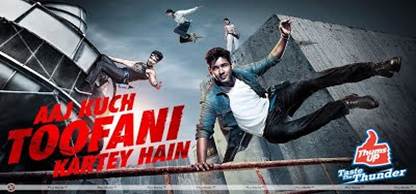
The major aim of approximately all firms to sell their products is the youth. Thus, nearly all advertisements made today are youth-centered. While making the advertisements, they comprise certain matter that no doubt attracts the youth but is frequently harmful for them and others. For example, advertisements of Thums Up, Mountain Dew, Bajaj Pulsar, etc., show a convincing deadly stunt, which increases the “cool quotient” of the product. Though there is a small mark of disclaimer at the underside of the screen while the advertisement is broadcasted, the youth jumps to copy the stunts, and the penalty of such actions may be deadly. So, the youth tries to copy the stunts shown in the advertisements in pleasure, and then insensitive penalties follow.
Thus, various advertisements direct attention to the social evils that are well-known in the nation. The most horrible example is the treatment of women. The way women are projected in the advertisements today has led to certain terrible stereotypes. They are just kept to grab the interest of the public in the direction of the product. Nowadays, instead of giving sufficient information about the product, the makers choose to keep women for the sake of attainment of attention.
If women are offended in the society today, much of it is due to such advertisements! Just for the sake of exceeding the sales, the dignity of a gender is put at risk. You must have seen all the advertisements for “AXE” deodorants. It is the most awful example of how women are used to give the wrong impression to the public towards the product to be sold. There are many more such examples of advertisements, like those of Set Wet, Engagement Deodorants, Wild Stone, Fair and Handsome, Gillette, Mahindra Centro Bike, etc., which project women just as a symbol of seduction to draw more customers in the direction of the product.
Thus, the advertisements mainly influence the society both positively and negatively, and also the society affects the advertisements being made in the country, up to a convinced extent. However, as accountable to citizens of India, we should feel free to convey our thoughts against any such advertisement that we find deceptive or unwanted and try to recover the condition of our society with little but with the best we can do! Anyways, we can never run away from this outcome of advertisements. We will remain on altering the advertisements they make and will keep on changing us.
CRITICISM OF ADVERTISING
Introduction
The shaping of the most frequent criticism of advertising depends on who is doing the criticizing. Advertisers complain about the high cost to advertise. Consumers criticize ambiguous claims and products that don’t live up to their advertising. Advertising has been criticized as long as it has existed. Several objections have been raised to advertising, and some people criticize advertising as a social waste. The following is the criticism of advertising:
1. Elevated Price: It is said that large amounts used up on advertising raise the cost of distribution, which is transferred to customers in the form of higher prices. This disagreement may be true in the case of inelastic demand, when advertising just transfers demand from one producer to another. But efficient advertising frequently creates demand and increases the level of production. Large-scale operations result in lower costs and lower prices. In developed countries, businessmen have condensed costs and prices while spending millions on advertising every year.
2. Uneconomical Consumption: Advertising increases the needs of people and encourages harmful consumption. By exploiting human sentiments, it persuades people to buy products that they do not need or cannot have enough money to buy. Advertising promotes artificial living and wastefulness and creates demand for unimportant goods. This claim may be true to some level, but it is based on the statement that satisfaction of psychological needs is not as significant as that of physiological needs. Moreover, new tastes and better emotional experiences of life are necessary for the growth of civilization. By itself, advertising cannot force people to buy things that they consider needless.
3. Misleads the Consumer: It is said that advertising is frequently misleading and misrepresents facts to the consumer. Overstated and elaborate languages are used to fool innocent consumers. They are induced or defrauded through fake testimonials and false comparisons to buy goods of doubtful value. There is no denying the detail that some firms spoil in false and misleading advertising, and dishonest use of advertising by them destroys public confidence in advertising. But just because a few people use wrong advertising, it does not mean that advertising itself is bad or unnecessary.
4. Creates domination: Advertising creates brand preferences and restricts open competition. Large firms, which can pay for huge amounts of money on advertising, remove small firms by creating brand domination. Advertising thus encourages the continued existence of the mightiest rather than the best. But promotion creates only a temporary brand monopoly, as after some time other brands offer competition. For instance, the ‘Amul’ brand of butter enjoys domination of the brand but has to face competition from Vita, Neutralite, Go, and other brands of butter.
5. Wastage of National Resources: In order to make use of advertising, producers create unimportant differences in their products. The expensive resources that can be used to create new industries are exhausted in the production of needless varieties and designs. Appearance, design, and style have become more significant than the physical usefulness of the product. Manipulative and aggressive advertising leads to criminal wastage of resources.
6. Undermines Social Values: Advertisement is a kind of daydreaming for the people. These days it is pleasing the people away from actuality and into the kingdom of artificiality. Through its medium, people get information about new products.
7. Confuses the Buyers: Many a time a twisted description of reality is shown in the advertising. Believing in advertising, consumers buy the product. They come to understand later that the information given in the advertisement was something else, whereas the actual product was quite different from it. On its use, they feel cheated.
8. Encourages Sale of Inferior Products: Every company projects its product as the greater one in the advertisement. Therefore, the buyer is incapable of deciding as to which product is actually good. It affects other sellers also. Therefore, it is said that advertisement encourages the sale of low-grade products.
9. Some Advertisement Is in Bad Taste: Many times, unclean language and unpleasant pictures are used in advertising in order to be a focus for a particular class. They may be offensive to a particular class. It causes decay of social values.
10. Annoyances and Cautions: Other criticisms of advertising are that most of it is ridiculous or abusive and often entices people to buy things they don’t need or want. What’s ridiculous or abusive to one person, however, may be funny or heading for to another. So before running an advertisement, advertisers sometimes rely on focus groups to give their impartial opinions.
G. 5M’s of advertising
Introduction
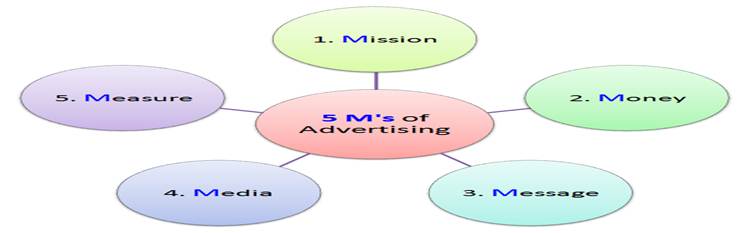
The five M’s of advertising are described by Philip Kotler in his book Marketing Management, Eleventh Edition (Prentice Hall). Advertising is any paid form of non-personal presentation and promotion of ideas, goods, or services by an identified sponsor.
In developing an advertising program, always start with identifying the target market and the buyer’s motives. Advertising is one of the most popular and powerful tools of market promotion. It involves several decisions. Some experts explain advertising decisions and activities in the form of five ‘M’s as under: mission, money, message, media, and measurement.
1. The first ‘M’ stands for Mission – Advertising Objectives
Advertising objectives can be classified as to whether their aim is:
To inform: This aim of advertising is generally true during the pioneering stage of a product category, where the objective is building a primary demand.
This may include:
Telling the market about a new product.
Suggesting new uses for a product.
Informing the market of a price change.
Informing how the product works.
Describing available services.
Correcting false impressions.
Reducing buyers’ fears.
Building a company image
To persuade: Most advertisements are made with the aim of persuasion. Such advertisements aim at building a selective brand.
To remind: Such advertisements are highly effective in the maturity stage of the product. The aim is to keep the consumer thinking about the product.
2. The second ‘M’ stands for Money – Advertising Budget
As time is important in the advertisement, how can you ignore your budget? Money is also a critical decision while going for advertisement.
Different media charge different costs. The Internet is cheap media to advertise, but everyone cannot use the Internet in his advertisement strategy.
TV is a more costly but effective medium for advertisements. Most of the companies reserve media budgets separately.
Every type of media has different package for advertisements; for example, newspapers have so many packages for advertisements, and TV channels also have different budget packages according to time
3. The third ‘M’ stands for Message – Creating Advertising Message and Copy
Message generation can be done in the following ways:
Inductive: By talking to consumers, dealers, experts, and competitors. Consumers are the major source of good ideas. Their feeling about the product, its strengths, and weaknesses gives enough information that could aid the message generation process.
Deductive: John C. Meloney proposed a framework for generating advertising messages.
According to him, a buyer expects four types of rewards from a product:
Rational
Sensory
Social
Ego Satisfaction.
Buyers might visualize these rewards from:
Results-of-use Experience
Product-in-use Experience
Incidental-to-use Experience
4. The fourth ‘M’ stands for Media—Advertising Media Selection and Media Scheduling
Definitely, the selection of media is the most important component in the advertisement. There are so many media available for advertisement, but selection is at the same time so much more critical.
The decision of media selection depends on the target market because the organization will first analyze how its target market gets information about the organization, whether they are connected to the internet or through traditional media like the newspaper.
Use of media is also critical because of the money budget and time budget. Different media charge different costs at different times.
It is the promotional manager’s duty to study which time is effective with which media.
5. The fifth ‘M’ stands for Measurement—Measuring and Evaluating Advertising Effectiveness (MEAE)
Evaluating the effectiveness of the Advertisement Program is very important, as it helps prevent further wastage of money and helps make corrections that are important for further advertisement campaigns. Researching the effectiveness of the advertisement is the most used method of evaluating the effectiveness of the Advertisement Program. Research can be in the form of:
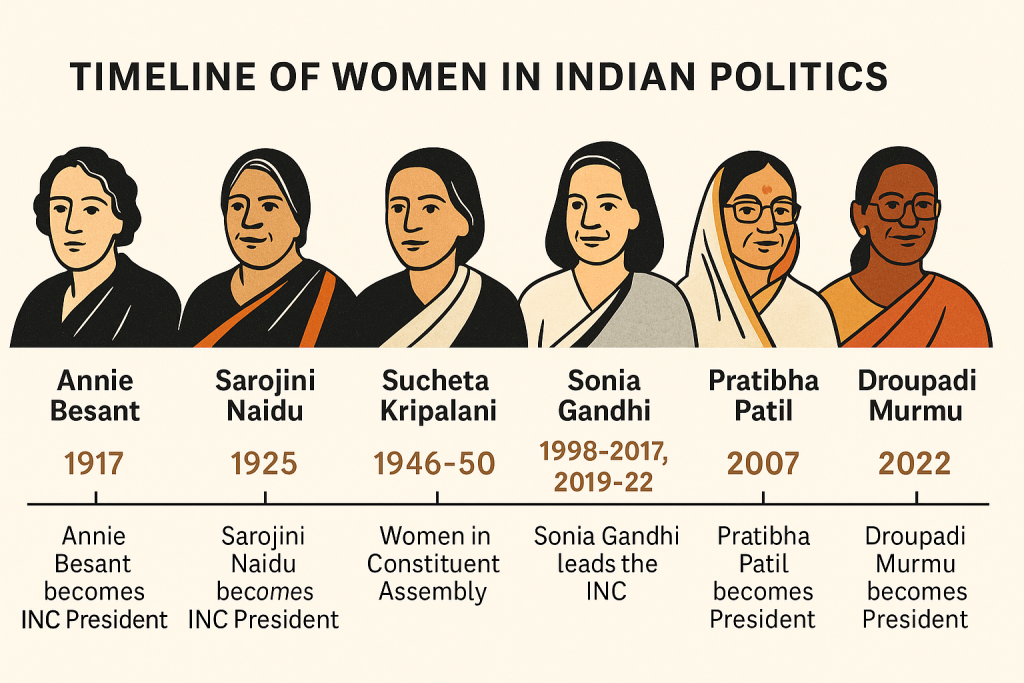
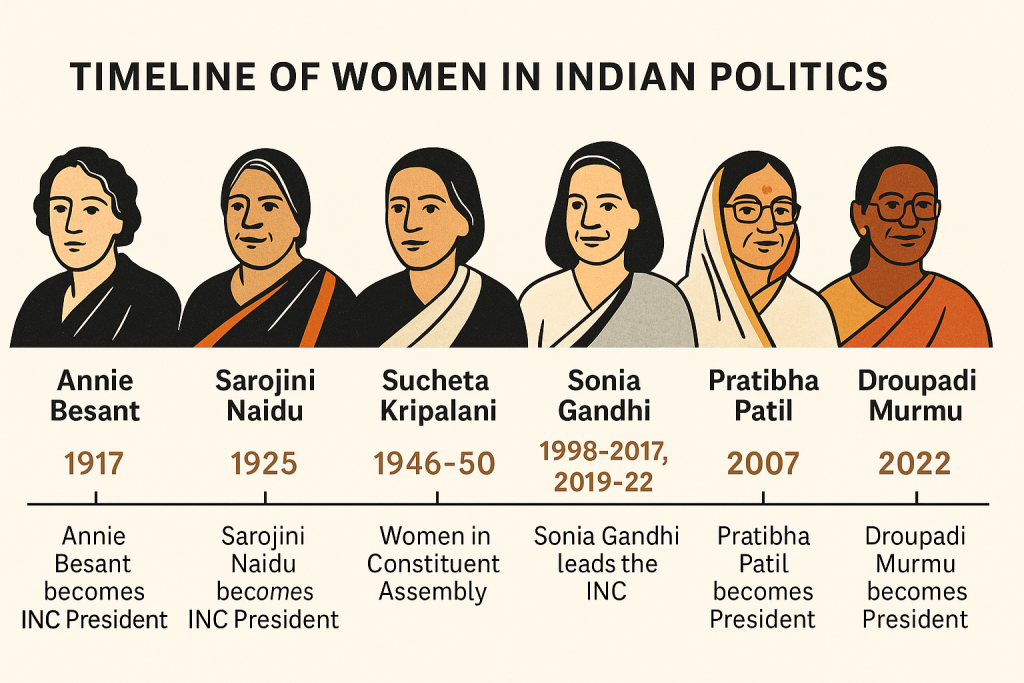
Women are becoming more and more important in Indian politics. They have a big impact on policy, increase democratic involvement, and drive social change, even though there are still problems. Their importance comes from the fact that more and more of them are voting, running for office, being organizers, and becoming leaders at all levels, from local self-government to Parliament.
Role of Women in Indian Politics
Voters and Mobilizers: Women’s voter turnout has seen impressive growth, reaching over 65% in recent national elections. Political parties now actively target “women’s votes,” recognizing their importance in electoral outcomes.
Legislative Representation: Women constitute about 14% of Lok Sabha members and 9% in state assemblies. Although low by global standards, these numbers are increasing steadily.
Leaders and Ministers: Women have held top roles—Prime Minister (Indira Gandhi), Chief Ministers, and union and state cabinet ministers—demonstrating competence in governance, diplomacy, and policy.
Grassroots Leadership: In local self-government, reservation policies (one-third of seats in Panchayats and Urban Local Bodies, with many states having 50% reservations) have resulted in women comprising up to 44% of grassroots representatives, empowering millions across India.
Significance
Deepening Democracy: Women’s presence broadens the perspectives in decision-making, promotes inclusive policies—especially in health, education, and welfare—and strengthens democratic functioning.
Empowerment and Social Change: Women leaders challenge patriarchal norms, drive gender-sensitive reforms, and serve as role models, inspiring new generations to engage in politics and advocacy.
Enhanced Representation: Parliamentary debates and legislation increasingly address issues central to women—such as safety, health, education, and legal rights—because of women’s active representation.
International Commitments: India is a signatory to global conventions (CEDAW, Beijing Declaration) and continues to align domestic policy with global gender equality goals.
Key Developments
Women’s Reservation (106th Amendment, 2023): The Women’s Reservation Act reserves 33% of seats for women in Lok Sabha and State Assemblies, further advancing representation (to be implemented after the next census).
Capacity-building Initiatives: Training, leadership programs, and “pink booths” during elections foster participation and skill development.
Empowerment through SHGs: Over 10 crore women in Self Help Groups are transforming rural economies, gaining economic and political clout.
Challenges
Gender Discrimination & Violence: Social norms, patriarchal attitudes, violence, and resource limitations still hinder women’s full participation in politics.
Underrepresentation: Despite progress, women’s share in higher legislative bodies remains low; effective implementation of reservation policies is needed.
Data at a Glance
Level
Women’s Representation (2024)
Lok Sabha
13.6% (74 MPs)
State Assemblies
9% average
Local Self-Government
44% (Panchayats/ULBs)
Women are thus central to India’s political future—as voters, representatives, leaders, and agents of change—with their role and importance set to increase further with meaningful policy reforms and societal support.
Business creation involves the systematic process of identifying opportunities, developing ideas, and launching a new enterprise through structured steps like feasibility analysis and planning. This entrepreneurial journey transforms concepts into viable, operational businesses that address market needs. Common challenges include securing finance and navigating legal requirements.
Generate and refine ideas through creativity, drawing from personal experience, market surveys, or trends.
Conduct feasibility studies covering market, technical, financial, and socio-economic aspects to assess viability.
Prepare a detailed business plan outlining strategy, operations, marketing, and financial projections.
Launch by handling legal formalities, securing resources, and implementing operations.
Example
Airbnb exemplifies business creation: founders Brian Chesky and Joe Gebbia spotted a hotel shortage during a San Francisco conference in 2007, rented out air mattresses in their apartment, and built a platform connecting hosts with travelers. Despite early funding struggles, persistence led to a $74 billion market cap by solving a common accommodation problem.
Case Studies
Company
Origin Story
Key Success Factors
Square
Co-founder Jim McKelvey couldn’t accept a credit card for a $2,000 glassware sale, prompting a simple mobile POS system with Jack Dorsey.
Bhavish Aggarwal founded it in 2010 to offer reliable rides in India, focusing on customer needs like surge pricing alternatives.
Customer-centric features and adaptation to urban mobility demands boosted market share.
Zomato
Deepinder Goyal started in 2008 as a restaurant database, expanding to food delivery internationally.
Leveraged tech skills for global scaling, diversifying revenue in food tech.
Steps to create a business from idea to launch
Creating a business from idea to launch requires a structured sequence of steps to validate the concept, secure resources, and execute effectively. This process minimizes risks and builds a foundation for growth. Key stages include ideation, planning, legal setup, and market entry.
Core Steps
Follow these sequential steps to transform an idea into a launched business:
Develop the idea: Brainstorm and refine your concept by identifying a market problem and solution.
Conduct market research: Analyze demand, competitors, target audience, and trends to confirm viability.
Create a business plan: Outline strategy, operations, marketing, finances, and projections for guidance and funding.
Choose structure and name: Select a legal form (e.g., sole proprietorship, LLC) and register a unique business name.
Secure funding: Explore options like bootstrapping, loans, investors, or grants to cover startup costs.
Handle legal and admin tasks: Register the business, get licenses/permits, get an EIN/tax ID, open a bank account, and set up insurance.
Build brand and operations: Develop logo, website, source products/supplies, and establish processes.
Market and launch: Promote via social media, SEO, and campaigns; launch the product/service to customers.
Case study of a successful Indian startup journey
Ola Cabs provides a compelling case study of a successful Indian startup, founded by Bhavish Aggarwal, who pivoted from a travel booking site to revolutionizing urban mobility after a frustrating taxi experience in 2010. The company grew from a single-room office in Mumbai to operating in over 250 cities across multiple countries, achieving unicorn status valued at $1.5 billion. Its journey highlights problem-solving, rapid adaptation, and deep market penetration in tier-2/3 cities.
Origin and Idea
Bhavish Aggarwal, an IIT Bombay graduate, left a stable Microsoft job in 2010 to launch OLAtrips.com for holiday packages. A pivotal bad taxi ride—where the driver abandoned him midway—exposed India’s fragmented transport system, prompting a pivot to on-demand cab aggregation. Starting modestly, Aggarwal handed out business cards at upscale spots, aiming for just 100 daily rides.
Growth Milestones
Secured early angel investments from IIT peer Zishaan Hayath and others like Anupam Mittal (~₹5 million), followed by Tiger Global ($4 million then $20 million).
Expanded aggressively post-2013 Uber entry, reaching 100+ cities by 2016 (vs. Uber’s 30), introducing India-specific features like vernacular support and cash payments.
Attracted massive funding from SoftBank ($210 million in 2014), fueling diversification into food delivery, fintech (Ola Money), EVs (Ola Electric), and AI (Krutrim).
Challenges Overcome
Intense price wars with Uber strained finances, while state-specific regulations, driver protests, and union issues created hurdles. Ola countered by localizing solutions, training drivers, and pushing deeper into non-metro markets where competitors lagged. The COVID-19 pandemic hit ride demand, but acceleration into EVs sustained momentum.
Key Lessons Aggarwal’s success stems from solving real Indian problems over copying models, relentless pivots based on data, and betting on “Bharat” beyond metros. Resilience amid family doubts and funding droughts underscores his vision for tech-driven GDP growth.
Government data indicates India’s GDP is US$4.18 trillion, with forecasts suggesting it may exceed Germany’s by 2026, notwithstanding global trade obstacles.
India has surpassed Japan to emerge as the fourth-largest economy globally, with a GDP estimated at $4.18 trillion. The increase signifies a decade marked by swift growth, robust domestic demand, and significant reforms, despite ongoing challenges such as low per capita income, pressures for job creation, and uncertainties in global trade that continue to influence India’s economic path.
India is poised to surpass Germany, emerging as the third-largest economy by 2030, supported by robust growth figures.
“India, with a GDP of $4.18 trillion, has eclipsed Japan to emerge as the fourth-largest economy globally and is on track to overtake Germany within the next 2.5 to 3 years, with a projected GDP of $7.3 trillion by 2030,” as stated in the release.
The United States and China represent the foremost economies globally, as determined by their respective gross domestic product (GDP) figures.
New Delhi’s optimistic evaluation persists in the face of economic concerns following Washington’s imposition of substantial tariffs on its acquisitions of Russian oil in August.
India articulated that its sustained growth is indicative of its fortitude in the face of ongoing global trade uncertainties.
What are the driving forces behind India’s growth narrative?
The central government, in its recent announcement, highlighted India’s growth trajectory, noting that the GDP has reached a six-quarter peak during the July-September period of the financial year concluding in 2025-26.
The nation’s development arises from its steadfastness in the face of ongoing global trade ambiguities. The domestic drivers within India, propelled by private consumption, have been pivotal in bolstering the nation’s GDP growth.
The government has also pointed out that inflation staying beneath the lower threshold, a decrease in unemployment, and enhanced export performance are among the key indicators that bolster India’s growth trajectory.
“The financial landscape has remained favorable, characterized by robust credit inflows to the commercial sector, while demand conditions persist with vigor, bolstered by an additional enhancement of urban consumption,” the government stated. The International Monetary Fund’s forecasts for 2026 estimate India’s economy to reach US$4.51 trillion, surpassing Japan’s projected US$4.46 trillion.
The United States holds the position of the world’s largest economy, while China ranks as the second largest.
The upward trajectory of growth has exceeded expectations, with GDP reaching a six-quarter peak in the second quarter of 2025-26, illustrating India’s robustness in the face of ongoing global trade uncertainties, it noted. The expansion was fundamentally supported by domestic drivers, prominently characterized by strong private consumption.
The announcement indicated that global organizations have reflected this optimism and referenced forecasts provided by multiple sources. The World Bank anticipates a growth rate of 6.5% for the year 2026, while Moody’s forecasts that India will continue to be the fastest-growing economy within the G20, projecting growth rates of 6.4% in 2026 and 6.5% in 2027. The International Monetary Fund has elevated its projections to 6.6% for 2025 and 6.2% for 2026, while the Organisation for Economic Cooperation and Development anticipates a growth rate of 6.7% in 2025 and 6.2% in 2026. Furthermore, the S&P forecasts a growth of 6.5% for the current fiscal year and 6.7% for the subsequent year. The Asian Development Bank has revised its 2025 estimate upward to 7.2%, while Fitch has increased its FY26 projection to 7.4%, attributing this adjustment to heightened consumer demand.
“India stands as one of the most rapidly advancing major economies globally and is strategically poised to maintain this trajectory.” The government stated, “With the aspiration of achieving high middle-income status by 2047, the centenary of its independence, the nation is constructing upon robust foundations of economic growth, structural reforms, and social advancement.”
The announcement underscored that inflation persists beneath the lower tolerance threshold, unemployment is on a downward trajectory, and export performance is steadily enhancing. Moreover, the financial landscape has remained favorable, characterized by robust credit inflows to the commercial sector, while demand conditions persist with resilience, bolstered by an additional enhancement in urban consumption.
The upward trajectory of growth has exceeded expectations, with GDP reaching a six-quarter peak in the second quarter of 2025-26, illustrating India’s robustness in the face of ongoing global trade uncertainties, as noted.
The expansion was fundamentally supported by domestic drivers, prominently featuring strong private consumption.
The announcement additionally indicated that global organizations have resonated with this optimism, referencing forecasts articulated by diverse bodies.
The World Bank anticipates a growth rate of 6.5% for the year 2026, while Moody’s forecasts that India will continue to be the fastest-growing economy within the G20, with projected growth rates of 6.4% in 2026 and 6.5% in 2027.
The International Monetary Fund has adjusted its growth projections to 6.6% for the year 2025 and 6.2% for 2026, while the Organisation for Economic Co-operation and Development anticipates a growth rate of 6.7% in 2025 and 6.2% in 2026.
Furthermore, S&P projects a growth rate of 6.5% for the current fiscal year and 6.7% for the subsequent year; the Asian Development Bank has revised its 2025 forecast upward to 7.2%; and Fitch has elevated its FY26 projection to 7.4% in light of heightened consumer demand.
Before independence, farmers who sold their goods to sellers had to deal with many wrong weights and hacked accounts. The farmers lacked accurate information about prices, which forced them to sell their goods at low prices due to insufficient storage facilities.
The product might sometimes be sold at a weekly village market in the village of the farmer or in a village nearby. If these shops aren’t open, the goods are sold at the mandi or at unofficial markets in a nearby village or town. So, the government did several things to keep the traders in line.
Definition
Agriculture marketing, in a very limited sense, means getting farm products from farmers to people who will buy them. The decision to grow a crop for sale initiates agricultural marketing, according to the National Commission on Agriculture. It includes all parts of the market structure, both functional and institutional, as well as technical and economic factors. It also includes operations before and after the harvest, such as sorting, storing, transporting, and distributing.
A. The wider part of marketing in India
Balancing demand and supply
To transmit macroeconomic signals to farmers and producers.
The strategy involves offering incentives to producers in order to boost their production and output levels.
The aim is to encourage the efficient utilization of resources within the production and distribution system.
B. Challenges in marketing agricultural produce in India.
Insufficient storage and warehouse facilities in India lead to the wastage of farming products and a reduction in farmers’ earnings.
Inefficient transportation infrastructure: India’s transportation infrastructure isn’t up to par, which raises the cost of moving goods and makes Indian farming products less competitive on the world market.
Broken supply chain: In India, the supply chain for agricultural goods is fragmented, involving many middlemen. This can lead to high trade costs, which means farmers can’t make as much money.
Not enough market information: Indian farmers often don’t have enough market information, which makes it challenging for them to decide how to sell their goods.
Quality of Produce: The Green Revolution and other “Lab to Land” programs have expanded the potential for food production. However, with rising incomes and living standards, stricter health and safety rules, and a lot of new processing industries, there is a need to improve both the quantity and quality of food that can be grown. This issue has limited the potential of agriculture for selling food on both the national and international markets.
Less consumer satisfaction: customer loyalty is the most important thing in any marketing system. If farmers don’t grade, sort, standardize, and clean their products properly, they won’t sell for as much on the international market when they ship them.
Prices change all the time: In India, the prices of agricultural products change all the time, which makes it challenging for farmers to plan their production and selling.
C. The Indian government wants to improve marketing in a number of reforms.
Improvements to the infrastructure of the supply chain: The Indian government is spending money to improve the infrastructure of the supply chain, which includes buildings for storage and transportation.
Setting up markets for farming goods: Agricultural Produce Market Committees (APMCs) were set up by the Indian government to make sure that agricultural goods have a safe place to trade.
Promoting contract farming: The Indian government is supporting contract farming, which helps farmers get a better price for their crops and helps them plan how they will grow and sell them.
Supporting direct marketing: The Indian government supports direct marketing for farming products. This helps farmers get a better price for their goods by cutting out middlemen.
Giving farmers information about the market: The Indian government provides farmers information about the market through mobile apps, SMS services, and toll-free helplines.
D. Issues in agricultural marketing
1. Today, Indian farmers can sell their goods at:
The farmgate or local market (haat) is for village aggregators, and the APMC (agricultural product market committee) is for private traders.
So that the government can obtain the minimum support price (MSP),
But there are some problems with all three ways to sell.
2. MSP
The MSP was promised for 23 crops, but it has only been implemented for 3 crops.
Produce that meets the standards for “fair average quality” is the only one that gets MSP.
There aren’t any government procurement centers in every part of the country.
Also, the next step in the rise of agricultural income will be high-yield goods like dairy products, vegetables, fruits, and so on. However, the government is still giving MSP to cereals.
3. APMC
a. In theory, there is more than one buyer for an APMC, but in fact, there is no open auction system for setting prices through transparent bidding.
b. In most APMCs, buyers have to go through licensed aadhatiyas to make purchases.
People in the middle are paid for their “services” by both the buyer and the seller.
The aadhatiya also often lends money to farmers and provides them seeds, fertilizer, and chemicals on credit. Therefore, they have to sell through him and pay their debts forever.
c. Furthermore, mandi fees vary by state and type of goods, but they are usually between 0.5% and 5% of the sale price.
d. Adding more mandi fees to trade between states would be like taxing people twice, which goes against the idea of a single national market.
e. Sale in distress because of a lack of storage space
When it comes to mandis, prices are lowest three to four months after harvest and highest right before harvest.
Farmers make the most sales right after harvest because they need to buy things for the next planting season.
4. To correct this APMC problem
The Model Agricultural Produce Market Committees (APMCs) Act was made by the Union Agriculture Ministry.
The Act wants to provide farmers more options for selling their crops. It does this by letting private markets operate (instead of just APMCs), letting farmers buy in bulk directly from the farm gate, labeling warehouses or cold storages to be markets, and getting rid of the idea of a “market area.”
This is because the definition of “market area” has an effect on how much money APMCs can make.
5. Changes in prices
Uncontrolled patterns of oversupply and shortage are what make prices change all the time.
Price predictions for a certain good are often based on trends from previous years, but these trends might not be accurate this year, potentially leading to oversupply or shortage.
E. Reforms are needed in APMC.
1. Standardized market charges
A consistent mandi tax of either 0.25% or 0.50% is suggested to be imposed statewide on foodgrains, oilseeds, and fruits & vegetables.
The central and state governments could reimburse the losses incurred by APMCs, following the model of the Goods and Services Tax.
2. Abolish Aadhatiya-centered commerce.
All transactions in Agricultural Produce Market Committees (APMCs) should be conducted via open auctions, with participation from numerous bidders for each batch of produce. Trades should occur directly between buyers and sellers, without intermediaries demanding fees.
Aadhatiya can only participate in the capacity of a trader.
3. Activate sample-based sales.
Today, the farmer takes all his produce to the APMC, where buyers do physical inspections before placing bids.
This leads to duplicate transportation, from the farm gate to APMC and then from APMC to the final destination.
If grading and sorting facilities are nearby the farm gate, the farmer merely needs to bring a sample of his crop and the necessary quality certification paperwork to the mandi. It would be a cost-effective and time-saving solution.
4. Storage and banking amenities in close proximity to APMCs
To prevent distress sales, having bagging and storage facilities, as well as offering loans based on warehouse receipts, can help satisfy urgent cash needs. These should be located near APMCs.
Encourage the establishment of Farmer Producer Organizations in marketing.
Encourage farmer producer organizations/companies to engage in direct marketing of their members’ produce to major buyers and processors.
It will lead to increased competition and improved pricing at APMCs.
5. Relax or abolish the Essential Commodities Act (ECA).
ECA imposes limitations on the transportation of goods, inventory management, pricing, and implementation of innovative technologies.
Removing these prohibitions under ECA and other laws will increase commerce and result in improved profits for farmers.
The concept of “ease of doing business” is essential for agriculture as well as other industries.
6. e-NAM
The government established an electronic national agriculture market (eNAM) to link all regulated wholesale produce marketplaces via a nationwide trade site.
Its efficiency relies on the involvement of traders from various markets.
7. Risk management
Crop insurance plans provide farmers with protection against weather-related hazards as part of risk management.
The majority of the premium in the Pradhan Mantri Fasal Bima Yojana is covered by the Government.
Although still being developed, this system is more thorough and user-friendly than any prior ones.
8. Expand the quantity of markets
As per the Ashok Dalwai Committee, India requires a minimum of 30,000 agricultural produce markets, compared to the current number of around 6,500.
A “mini-market” concept is needed to narrow this significant disparity.
The government’s announcement of GRAMs (Gramin rural agricultural market) is a positive step.
With widespread electronic connection and dependable rural roads, GRAMs can develop into sustainable centers for economic activity and job creation.
9. Producer consolidation
Consolidating small and fragmented farms into larger, more sustainable holdings can enhance producers’ ability to obtain financing and high-quality inputs, as well as achieve higher prices for their products.
This will also encourage necessary investments in land development, improvement, and agricultural mechanization.