According to the Legal Dictionary, puffery is a form of advertising in which a product or service is praised as being superior to all others like it, without any evidence to back up the claim. This is done for the sole purpose of attracting buyers that might not otherwise give the product or service any attention.
Puffery can normally be found in advertising or promotional materials about a specific product or service, though it is often employed by politicians and other people attempting to gain favor. Puffery is legal, so long as it does not escalate to what would be considered misrepresentation. For example, undeserved or exaggerated praise; publicity consisting of such praise and others.
What is puffery?
Puffery is a statement or claim that is promotional in nature. It’s usually subjective and not to be taken seriously. Advertisers try to persuade people to buy a product or service through various methods. A company may deliver an entertaining message about its product, compare the product to a similar item, list facts about the product, or make vague claims about the product that cannot be proved or disproved. This last method is known as “puffery”; the advertiser “puffs up” the product to seem like more than it is.
Puffery is not illegal and is a common method used in advertising. Examples of these include claiming that one’s product is the “best in the world” or something completely unbelievable, like a product claiming to make you feel like you’re in space. For example:
Duracell
We all know that a toy rabbit powered by a Duracell battery will not keep going and going and going. Even if puffery’s only function is to entertain, that would be sufficient reason not to discourage it.
Fevicol (“Fevicol ka mazboot jod hai Tootega nahi!” by Fevicol)
The impact of puffery advertisement on the audience is as follows:
Consumers tend to buy the product on the basis of puffed-up ads but at times end up being dissatisfied. The product does not live up to their expectations.
At times, puffery has a negative impact on the consumers, where instead of being brand loyal, they end up being brand averse.
Some other examples of ‘puffery’ in advertising:
“Red Bull Gives You Wings”
“Feels like you’re sleeping on a cloud.”
“It’s a meal fit for a king.”
“It’ll blow your mind.”
“World’s best coffee.”
The above slogans are all ‘puffery’; we don’t know what it’s like to sleep on a cloud. Who knows what a meal fit for a king is? “Blow your mind” is obviously not to be taken literally, and there is no way of substantiating if you’re serving the world’s best coffee.
Puffery enables an advertiser to grab consumers by their collars and say, “Hey, have I got a great product for you!” If firms are discouraged from placing in their ads all but the driest factual claims, consumers will be forced to spend more of their time and resources discovering which products are available.
One consequence will be diminished product innovation. Because consumers are more familiar with established products than with new products, puffery is pivotal to the marketing of new products. Fewer resources will be devoted to product innovation if firms encounter greater legal risks in bringing new products to consumers’ attention. Established products experience less intense competition as fewer products enter the market. Product quality declines.
The producer doesn’t care where consumers buy its product. The aim of the retail advertiser differs from that of the national advertiser. The retailer’s advertisements encourage support by consumers and build store trustworthiness among them. The retailer is primarily focused on promoting their store rather than any specific brand. The general move towards retail advertising is “buying at our store.” The retailer is unconcerned with the sale of any definite brand, unlike the national advertiser.
The retailer must contend in one of the most reasonable arenas of business and move enormous volumes of products. Moreover, retail advertising must convey the store’s image in order to primarily attract specific types of consumers. To attain these objectives, retailers often communicate price information, service and return policies, and the range of products available.
The local retailers, like supermarkets, department stores, etc., have a wide range of products that they wish to render to their potential target market. Now audio-visual media is very helpful for advertising, and the local retailers prefer it for their product assortments. However, they prefer local channels primarily due to cost considerations. The advertising options and media preferences of these retailers ultimately depend on whether they are re-advertising national brands or originally advertising local brands.
The intention of these retailers to advertise these product brands is to let the potential market know about the accessibility and special promotional offers. Newspapers are an excellent medium in terms of cost and complicated space. The brand image has already established itself, so the quality of the advertisement holds no significance here. Moreover, the local advertisers get striking rates from the newspaper.
Original advertisers at the local level have the same purpose as that of the national brand advertisers, but the local retailers have a possibility in three areas regarding their choices:
1. Product versus service selling
2. Extent of product mix
3. Number and geographic distribution of customers
For example, in Kolkata, a supplement on glossy pages comes with every Friday issue of The Telegraph in Salt Lake City. This supplement features all the advertisements of retailers in and around Salt Lake. Direct mail can also be used in cases where the products have a wider mix. Handbills are also used at times for announcements and special promotions. But for both direct mail and handbills, the number of customer prospects should be large enough.
Another significant area of retailers is their store likeness. Though many consider the product advertisement media as primary for retailers and store likeness promotion media as secondary, there are many retailers who depend on the faithfulness of their customers towards their brand name and their footfall. Many retailers argue that getting the customer into the shop is the most complicated job.
Store likeness advertising has the following objectives:
1. Brand remembrance
2. Brand positioning
3. Brand Purchase objective
In India, retailing has caught up in a big way. Today one finds the presence of huge retail stores like Crossroads, Shoppers Stop, and Big Bazaar, etc., that are doing well. It has a bright future and looks all set to grow. Currently, it is an urban phenomenon found in metropolises such as Mumbai, Delhi, and Bangalore. However, this trend is expanding into smaller towns, which represent the market of the future.
We outline the main purposes of retail advertising below.
1. Selling the business: To sell the business, attract customers to the location and, in the case of a shop, enhance what is known as ‘store traffic,’ i.e., try to enhance the number of people passing in the course of the shop. Expecting them to enter could lead them to purchase items they might not have otherwise.
2. Selling special or own-branded goods: Certain retail distributors are selected to serve as dealers for specific brands. An example is that some supermarket retailers sell their own branded goods, which manufacturers pack in the name of the supermarket (for example, D-Mart sells PREMIA). Some enormous department stores have a special brand name for all their products; consistently, they will be cheaper, and they compete with national brands.
Competition between national and own brands is strong, and there is always a risk that the national brands will be delisted in favor of a store’s own branded products. Own-branded products are frequently made to the retailer’s own terms or recipes and are not simply replicas of existing national brands. All the retail outlets are able to use advertising to encourage the sale of their stock.
3. Clearance Sale: To clear the stock of the shop, such as by promoting seasonal products, special offers could be made. Examples are the sale of assured products during winter or the summer sale of air conditioners during winter and water heaters during summer.
Typically, the retailer operates in a geographically limited market. This approach approach allows him to focus his advertising communication on the likes, preferences, and buying habits of the targeted audience. The retailer advertises for an impetuous, relatively quicker response to most of this local advertising, while the national advertiser’s prime attention is in establishing long-run favorable attitudes and building brand equity.
The principal media for retail advertising are:
1. Local weekly newspapers.
2. Local daily newspapers, of which most are ‘evening’
3. Public transport outside posters and inside cards.
4. Direct mail to regular customers.
5. Local commercial television
6. Independent local radio
7. Window bills and point-of-sale displays within the shop and in-store displays
8. Catalogues.
Retail advertising is categorized by four main aspects:
1. Creating an representation
2. Establishing its position
3. Unique kind of goods offered
4. Reasonable price offers
Although telephone ordering and the use of credit accounts and credit cards are rising features, the object of the advertising is to convince people to visit the shop so that they not only buy the desired items but also pay attention to the large assortments of brands and various products, and some cross-selling happens through the well-prepared efforts of the store salespeople.
Industrial advertising, also known as business-to-business advertising, is the appearance of advertising for other businesses. This can include advertising for parts or raw materials used in production, as well as equipment utilized in their mechanized processes.
In a very broad sense, industrial advertising must convey a more purposeful message within one or more relatively narrow sales channels. Its goals may comprise the creation of favorable company and brand awareness and the production of sales leads through inquiry funnelling (sales alteration) steps. Tightening the definition of advertising, industrial marketers expand company- or product-centric ads that are communicated in the course of space in industry print publications or websites.
Other industrial marketing communications options include public relations, direct marketing brochures and company websites, trade shows, and social media.
Advertising typically consumes the majority of an industrial marketing budget because it is a “shotgun” move toward message targeting. The cost of individual advertising reflects a definite percentage of exhausted circulation and advertising distribution—even within specific markets. This is much more so in print media advertising than in search engine advertising, which displays advertisements only to those with a single interest in an advertiser’s keywords.
The approach to endorsement may vary from company to company. The advertisements are used to increase awareness among the target customers about the products. Companies distribute the same information through various channels to enhance their reach.
For example, if there is a small enterprise that bottles mineral water, it will subcontract its packaging, bottles, caps, etc., to other companies. Therefore, it is vital for these companies to have information on those who are providing the packaging services.
Function of Industrial Advertising
Every product, whether a customer product or an industrial one, satisfies a need, solves a problem, or offers a benefit. Thus, industrial advertising must offer the buyers the information that satisfies the need or communicates the indescribable benefits.
Therefore, every industrial promoter must start by identifying the customer’s need gap or the benefit they expect to convey in their message. The choice of headlines, copy, and other elements can significantly affect the impact of advertising. The headlines have to be attractive, and the copy must enclose the information required.
Fundamentals such as advertising size, colors, and pictures are significant in industrial advertising,, too. A minor rearrangement of mechanical basics within the advertising can achieve better attention-getting power. Unlike consumer advertising, fancy language and touching appeals are to be constrained, and the message must be reserved for the specifics. Product details, product pictures, or application pictures tend to attract attention.
Advertising messages can be grouped as shown below in industrial advertising:
1. Testimonials: This feature is highly convincing and agreeable, as it is an expert source endorsing the product. This testimonial could come from a celebrity or a well-known personality in the industry, discussing the product’s benefits based on their experience. In industrial marketing, well-known existing customers provide testimonials.
2. User Experiences: Case histories of users and the benefits they got by purchasing from the supplier are also used to depict the inferences. When a user shares their experiences, the reliability factor increases.
3. Straight Description: A straight description is a straightforward advertisement that highlights the product’s quality and the benefits the user can expect. Industrial advertising most frequently uses this advertisement, which is rich in facts and figures.
4. Short Stories: Though hardly ever used, it can be successful when the company wants to build a case and engage the customer so as to obtain the benefits of using the product.
5. Negative Ads: Emotional appeals are unusual in industrial advertising, but some negative advertising highlights the negative effects of failing to use the company’s products or services.
6. Comparative ads: Some influential advertising has moved into the category of comparative advertising, which seeks to create superiority of one brand through specific comparison of one or more attributes with one or more brands in the product class. For example, JK Tyre claims to be the No. 1 tire manufacturing firm and gives a comparison of the market share details with others in the industry like MRF, Ceat, Apollo, and others. ABP claims to be the NO. 1 news channel (Aapko rakhe Agge) and compares itself with Aaj Tak, Zee News, and others.
7. Social responsibility advertising: Some advertisers use this technique as a standard to bring into focus the activities that they carry out for the well-being of the society and environment. The goal is to bring about a good company image in the minds of the consumer and the general public. These are called social responsibility advertisements. An example of this is Hindalco Aluminum, which has adopted villages and provided them with water, hygiene, schools, and other amenities.
8. Quality initiative: In industrial companies, quality standards like TQM, the ISO 9000 series, and SEI CMM of the software industry play a significant role, and such advertisements shape a major portion of the visibility of the company.
We know it when we see it. We are exposed to it thousands of times every day. Most of us are reasonably proficient, although rarely perfect, at distinguishing it from other kinds of messages. But what is this thing called advertising?
In other words, advertising is the act of calling public attention to an idea, product, or service through paid announcements by an identified sponsor. But there’s more to advertising. An average human is exposed to around thousands of advertising messages in a day. Advertisements come in many different ways, like shapes, sizes, colors, patterns, and forms.
Definition
According to Philip Kotler, “Advertising is any paid form of non-personal presentation and promotion of goods, services, or ideas by an identified sponsor.”
According to Frank Presbrey, “Advertising is a printed, written, oral, and illustrated art of selling. Its objective is to encourage sales of the advertiser’s products and to create in the minds of people, individually or collectively, an impression in favor of the advertiser’s interest.”
According to Wheeler, “Advertising is any form of paid non-personal presentation of ideas, goods, and services for the purpose of inducing people to buy.”
The mediums used are print, broadcast, and direct.
According to William Stanton, “Advertising consists of all activities involved in presenting to a group a non-personal, oral or visual, openly sponsored, identified message regarding a product, service, or idea. The message, called an advertisement, is disseminated through one or more media and is paid for by the identified sponsor.”
A. Evolution of Advertising
Advertisements have come a long way in the past century or so. As it’s had to adapt and change to suit new mediums and audiences constantly. To raise the value of the advertising of today and imagine the advertising of tomorrow, we need to comprehend the origin and evolution of advertising.
Advertising was produced by a market-driven system and developed in a capitalistic, free enterprise market economy in which mass production utilized advertising as an essential tool. Urbanization, transportation expansion, and communication advancements all facilitated the use and growth of advertising, the result of which is that advertising is firmly entrenched as a business function in different societies with deeply rooted economic and cultural foundations.
Advertising is the result of years of development in capitalism and its use in mass communication media. We can define advertising as a form of commercial mass communication designed to promote the sale of a product or service or a message on behalf of an institution, organization, or candidate for political office. That implies concepts such as market, publics, sponsors, persuasion, products, services, mass communication, etc.
1. The Beginning
In the Middle Ages, together with street callers, brands appeared on products for identifying the maker, giving them a sign of individuality from a manufacturer from others, allowing for differentiation, for example, between wines and geographical areas such as Osnabruck and Westphalia.
In this period, a big number of people can’t read. So, signs that today would say “cobbler,” “miller,” “tailor,” or “blacksmith” would use an image associated with their trade, such as a boot, a suit, a hat, a clock, a diamond, a horseshoe, a candle, or even a bag of flour.
Gutenberg’s printing press (1438) really began the era of mass communication in that now printed materials could be mass-produced, whereas prior to the printing press, books and other printed materials had to be made individually. A Londoner printed the first English newspaper in 1622, and the first ad appeared in 1625.
That 1622’s first newspaper was the Weekly News, by Nicholas Brown and Thomas Archer. Other newspapers of this time were the Mercurius Britannicus, in 1665, and La Gazzette from Paris by Théophraste Renaudot in 1630. Those were considered beginners of modern advertising, despite the fact that the first newspaper announcement appeared in 1650 in the Several Proceedings in Parliament; it was about offering a reward for returning twelve stolen horses.
2. Propaganda and Mechanization
Today, the word ‘propaganda’ carries a negative and harmful connotation.
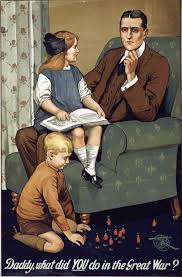
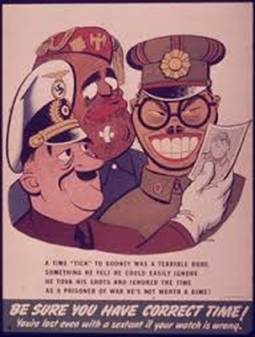
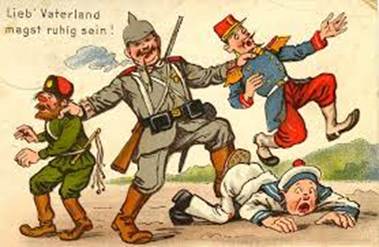
During World War I, advertising became a medium for propaganda. Governments used advertising to convince their citizens to join the military. This period also saw increased mechanization of the industry, making ads more costly.
a. Why do the war perpetrators use propaganda?
Each of the nations that participated in World War One from 1914 to 1918 used propaganda posters.
They used posters to:
Justify their involvement to their own population
As a means of recruiting men
A way to raise money and resources to sustain the military campaign.
To urge conservation
b. Why Posters?
Television had not yet been invented
Not everyone owned or had access to a radio
Posters were the most effective means of getting a message across
3. The Emergence of New Media
The major media types or groups that have been introduced since the beginning of the twentieth century include film, sound recordings, radio, television, personal computers, videocassettes, video games, and the Internet. During this time, new mass media, radio, and cinema became commercially available in the first part of the 20th century; the advertising industry quickly took advantage of their reach, spread, and popularity.
New media are forms of media that are native to computers, computational, and rely on computers for redistribution. Some examples of new media are telephones, computers, virtual worlds, single media, website games, human-computer interfaces, computer animation, and interactive computer installations.
New media are often contrasted to “old media,” such as television, radio, and print media, although scholars in communication and media studies have criticized rigid distinctions based on oldness and novelty. New media does not include television programs (only analogue broadcast), feature films, magazines, or books, unless they contain technologies that enable digital generative or interactive processes.
Wikipedia, an online encyclopaedia, is a good example of new media, combining Internet-accessible digital text, images, and video with web links; creative participation of contributors; interactive feedback of users; and formation of a participant community of editors and donors for the benefit of non-community readers.
Facebook is another type of new media, belonging to the category of social media model, in which most users are also participants. Another type of new media is Twitter, which also belongs to the social media category, through which users interact with one another and make announcements that the public receives. Both Facebook and Twitter have risen in usage recently and have become an online resource for acquiring information.
4. The Creative Advertising Revolution
At that time there was not a great deal of competition for an advertising message. Television was just beginning; people had time to read. But it was clear to us that there would soon be tremendous competition for the attention of the consumer. And that unless the advertising message was put down in a fresh way that made people select it out of a bombardment of messages and that made people care and respond to it, it was not even going to be perceived.
Before 1949, typically advertising copywriters would write ad copy and then take the text to their art department to lay out the ad. Bernbach’s advertising firm, Doyle Dane Bernbach, combined copywriters and graphic designers into one collaborative creative team that sought to produce ads that were original, fresh, and imaginative. Doyle Dane Bernbach’s ads were prominent drivers of a creative revolution in U.S. advertising.
Competition for attention today has reached a level that Bill Bernbach probably never imagined. A creative revolution in advertising today requires deep changes in business organization and integrating sense in communication across words, images, and personal actions.
The ad that changed advertising
Carl Hahn had contracted his agency, Doyle Dane Bernbach (DDB), to promote a car called the Volkswagen in the United States. Bernbach’s problem was that Hahn’s call came at the end of the fifties, when America was in a deep love affair with stylish vehicles made in Detroit, USA. How could DDB sell a small, ugly, cheap, foreign car that Hitler had a hand in creating to the American public? Luckily for Hahn, Bill Bernbach was the most innovative ad man of his time, being a key player in what is today known as the Creative Revolution.
The campaign that DDB put together for Volkswagen in 1959 would not only make their car “as American as apple pie” but also be recognized by Advertising Age as being the greatest ad of all time and change the industry forever.
4. Contemporary Advertising
Contemporary advertising attracting customers to their product range has become more difficult because consumers have become more literate in technology and, therefore, can research items before purchase. Nowadays remote controls are in the hands of every individual, and the access to hundreds of cable channels means that advertising must generate interest among the viewers. Along with these experiments, there are also new leading edges, such as Internet and social media marketing. In contemporary times advertisers and agencies today see innovations like digital ads and interactive advertising as challenges and opportunities rather than difficulties.
Contemporary advertising are methods of advertising that are basically generic in nature and are widely used. It can be used to build the relationship with the client through market sensing and recognizing categories of clients according to their choice. It also helps to bridge the gap via the use of digital inbound marketing techniques.
The Future of Advertising
Yulia Khansvyarova, Head of Digital Marketing at SEMrush,
“I have no doubts that the future of advertising lies in the digital world. Traditional marketing channels have exhausted themselves and are now stepping back. In my opinion, the future of digital advertising is about personalization, multi-device targeting, and building a unified user-centered ecosystem. Right now such ecosystems are just appearing.
There is a lot of talk about cross-device tracking, mobile ads, and different marketing channels used as a complex. But in reality, if you want to build a system that will be able to keep an eye on user behavior and follow all user steps in decision-making, you will still need to code a lot and build a custom solution yourself. In the nearest future, I guess, this situation will change for the better.”
There’s no question that technology will continue to shape the future of advertising. We’ve already seen dramatic shifts in form and factor, powered by technologies such as 3D, artificial intelligence, augmented reality, and virtual reality. As the landscape continues to change, advertisers that don’t follow suit risk getting left behind.
Artificial intelligence will eliminate the loopholes in the existing digital advertising processes. AI relies on data-driven accumulated information; the AI-based neural networks are capable of experience-based self-learning. This means that with more interaction or repeated application, they evolve to become better and better. To put it into perspective, in the context of advertising, AI can provide the consumer behavior patterns with more precision; it can help create better campaigns by identifying more focused target consumer groups and more.
It is tough to forecast what form advertising will take in the future. But one thing is sure: it will continue to advance and strive to become more useful to business and to the consumer.
B. Importance of Advertising
Introduction
We come across the different types of advertisements in our day-to-day life. In these times of social, economic, and political change, it’s more important than ever to build trust using reputable, respected communications and channels in your marketing. The success of any business, large or small, depends on that business’s ability to market their products and services effectively. Having a great product and great customer service, but if people don’t know your business exists, you are not going to have any sales!
Consumer expectations remain higher than ever when it comes to advertising, or rather, the lack of it. The effectiveness of advertising depends on the assessment of the consumer’s motivation in buying and a direct or indirect appeal to that motivation; sometimes it depends on the creation of that motivation by an appeal to a range of consumers’ natures. Advertisements are of countless importance for any business activity, as they appeal to people to use the particular service.
Now let’s find out why advertising is important for any business.
1. Launch of new product or services
Introducing a new product to the market gives a company the chance to endorse its new offering and encourage its reputation and image at the same time. Launching a new product can be an exciting time for any company. Whether it is the first product the company has offered or an addition to an already existing line, the eagerness is catching the dreams of instant success.
Example:
a. Pingit by Barclays
In 2012, Barclays launched the mobile app Pingit, a mobile payment service that lets users transfer money easily through their mobile phones. Available only for U.K. residents, the service allows users to transfer money to other people using only their phone numbers. Soon after the app was launched, Barclays made the most of its social media buzz to collect real-time user feedback.
b. Chrome by Google (Thailand Launch)
Google wanted to introduce its Chrome browser to a more diverse market by bringing it to Thailand. But launching a product in a diverse market comes with its own challenges, as you need to adapt your strategy according to cultural preferences. Realizing that people in Thailand appreciate traditional storytelling, Google decided to implement that into their product launch campaign.
They chose to tell the story of Ramakien, a national epic that stems from the Hindu story of Ramayana and focuses on the triumph of good over evil. The idea was to use visual storytelling to demonstrate the features of Chrome while bringing the ancient story to life. This helped users understand the browser’s capabilities without having to watch a long, boring tutorial. They even added in-story games so that the audience remained intrigued throughout the interactive experience.
2. Source of income
Advertising revenue is the monetary income that individuals and businesses earn from displaying paid advertisements on their websites, social media channels, or other platforms surrounding their internet-based content. In September 2018, the U.S. Internet advertising market was estimated to be worth $111 billion, with market share being held mostly between Google, Facebook, Amazon, and Microsoft. These companies earn revenue through online advertising but also have initiated pathways for individual users and social media “influencers” to earn an income. Individuals and businesses can earn advertising revenue through advertisement networks such as Google AdSense, YouTube monetization, and others.
3. Advertisement and Sales Promotion
Sales promotion is implemented to attract new customers, to hold present customers, to counteract competition, and to take advantage of opportunities that are revealed by market research. It is made up of activities, both outside and inside activities, to enhance company sales. Outside sales promotion activities include advertising, publicity, public relations activities, and special sales events. Inside sales promotion activities include window displays, product and promotional material displays, and promotional programs such as premium awards and contests.
Sale promotions often come in the form of discounts. Discounts impact the way consumers think and behave when shopping. The type of savings and its location can affect the way consumers view a product and affect their purchase decision. The two most common discounts are price discounts (“on sale items”) and bonus packs (“bulk items”). Price discounts are the reduction of an original sale by a certain percentage, while bonus packs are deals in which the consumer receives more for the original price. Many companies present different forms of discounts in advertisements, hoping to convince consumers to buy their products.
4. Increases sales
Advertising increases the visibility of your brand. This attracts prospects who need your product. Whether you are trying to encourage new customers to buy an existing product or launching a new service, there are many advertising channels to choose from.
It’s important to choose an advertising strategy that suits your business and targets the right audience, and you have to choose the right type of advertising, which will increase sales.
5. Maximizes profit
Advertising is a technique used by firms in monopolistic competition to create product differentiation and gain some control of the market, and as a result, charge a higher price. Excessive advertising will serve to inform consumers about the physical difference in the product, and the perceived difference will lead to increased product differentiation. If advertising convinces customers that the product is superior to the competitor’s, then the firm would charge a higher price
6. Advertisement make aware and educate them.
Advertising helps to make consumers aware of a product and aims to build preference for that product over its competitors. If advertising succeeds in those two tasks, consumers will choose the advertised product when they make their next purchase. Advertising helps to protect consumers against false advertisements, which improves the information consumers can use to make decisions about which products and services to buy.
An advertisement benefits both the seller and the consumer. Sellers can promote their goods through ads. On the other hand, consumers can know the information of goods and discount deals available in the market, so they can make informed decisions.
7. Is Art, Science, and Profession
Is advertising an art or a science? This debate continues to rage endlessly. According to Bill Bernbach, “Advertising is fundamentally persuasion, and persuasion happens to be not a science, but an art.” Advertising is all about the art of persuasion, of selling products and services. An advertiser is a salesperson creating sales for business by making people want to buy things.
“The more creative an ad is, and the better it works, the harder it is to actually pre-test that using conventional methods like question and answer,” Pynta said. “The ads are often indirect, they’re quirky, they’re different, and the traditional sort of methods struggle to capture that.
To succeed in the fast-paced world of today’s marketing, the modern marketer must be multi-dimensional, with multifaceted knowledge ability. Although art and science tend to lean toward different ends of the creative spectrum, the modern marketer must channel both artistry and science. Social media today reported on an infographic by Matt Wesson from Pardot that explains the dual role of the modern marketer.
According to the infographic, marketers today need to find a balance between art and science. In the ever-evolving marketing landscape, the role of the marketer is no longer reliant upon an ad campaign’s level of catchiness. It’s simply not enough. Marketers must harness both the left brain and the right brain to communicate successfully.
Social media today suggests that modern marketers “have a strategic and analytical mind dedicated to measurable metrics but that is always craving a creative outlet.” As the infographic suggests, the modern marketer is one part artist and one part scientist. Create a seamless blend of creativity and analytics, and marketing success is attainable.
8. Element of a marketing mix
The marketing mix consists of four important variables of marketing, or the 4 Ps: Product, Price, Promotion, and Place. Aside from the traditional 4 Ps, there are also other variables like packaging, position, and pace.
9. Persuasion for results
Advertising uses persuasion to make people act in a desired direction.
It pursues people to:
Purchase (buy) products,
Subscribe a service,
Invest in ideas,
Attend events, and so on.
10. Monitor demand and supply
Advertising spending is one of those ambiguous areas of supply and demand theory where we don’t really know exactly what will happen, but we can make a pretty good guess. Advertising is an effective way to build brand awareness and to tell consumers about the benefits of your product or service.
Creating targeted advertising campaigns can help businesses increase demand for their offerings. But advertising also costs firms money. The distinction we have to keep in mind is whether or not advertising affects the marginal cost of production or whether their advertising budget is fixed. The difference between these two methods decides whether or not to supply the side. However, if an advertising campaign is unsuccessful, it can also reduce the demand for the products or services. It’s important to understand how advertising works and the ways it can change the demand or supply for your product.
11. Build’s brand image
Brand advertising is a form of advertising used to establish connections and build strong, long-term relationships with consumers over time. Companies that use brand advertising aim to get long-term positive recognition by establishing brand identity, credibility, and loyalty and connecting with prospects intellectually and emotionally to motivate them to take action in the future.
For example: BMW
Better customer experiences mean happier customers, and happier customers mean better brand equity! So how do leading brands find that sweet spot with local marketing?
BMW is one of the best examples of a brand doing this right. As one of the most well-known brands in the automotive industry, today BMW is synonymous for car buyers with both refined elegance and blistering performance. Featuring a diverse line of luxury sedans, convertibles, and coupes, BMW offers the very finest in automotive engineering. You’re probably thinking of one or two of their “Ultimate Driving Machine” ads just hearing about it.
But the true piece de resistance for BMW’s brand equity is the customer’s dealership experience. Through powerful local marketing—advertisements, on-premise marketing materials, direct mail campaigns, co-op programs, and more—the organization’s unique values are delivered right to the brand’s customers where they already are. In this article, we’re going to dive right into how BMW makes this all happen to learn how a great brand builds up brand equity through exceptional local marketing.
Targeted advertising is a form of online advertising that is directed towards audiences with certain traits, based on the product or person the advertiser is promoting. These traits can either be demographic, which are focused on race, economic status, sex, age, level of education, income level, and employment, or they can be psychographic, which are focused on the consumer’s values, personality, attitudes, opinions, lifestyles, and interests. They can also be behavioral variables, such as browser history, purchase history, and other recent activity. Targeted advertising is focused on certain traits, and the consumers who are likely to have a strong preference will receive the message instead of those who have no interest and whose preferences do not match a product’s attribute. This eliminates wastage.
13. Generate employment
Advertising is a type of marketing communication used to promote or sell something—like goods, services, or ideas. Because there are so many steps to creating an advertisement, and given the varied types of jobs in the industry as a whole, there are many advertising job titles and descriptions.
Advertising is usually paid for by sponsors and viewed through various media such as websites, newspapers, magazines, television, radio, outdoor advertising, or direct mail. An advertising firm might create advertising campaigns for various clients or for one company. Advertising gives companies the opportunity to differentiate themselves and highlight their unique selling points.
Advertising increases the sale of goods, which enables the advertisers to produce goods on a large scale. Advertising thus provides employment to a huge number of people and raises their standard of living.
C. Features of Advertising
Introduction
An advertisement is a way of marketing a brand, a product, or a service. Everything needs to be popularized and promoted by way of an advertisement. Hence, understanding advertising is very necessary. Here are some features of advertisements:
1. Advertisement must have paid form
Advertising is an art, and it requires skills. There are advertising companies that offer advertising services to companies and charge them heavily for the services that they provide. However, sometimes companies end up paying billions on an advertising campaign and don’t get effective results in return. Effective advertising is that which generates much more profit than what a company has paid to get the service. Advertising is always a paid form of communication and hence commercial in nature.
2. It is nonpersonal. The person need not be present
Advertising should be impersonal. You can make an ad for a targeted group of people. That does not mean you can direct a message towards an individual through advertising.
For example, if an ad agency of some product, on its own, advertises a brand about a particular product, it will convey to the consumers necessary information regarding that product, but no expenditure has been incurred by the seller for these advertisements.
3. Advertising has to promote goods, services & ideas
It is directed towards increasing the sale of the products and services of a business unit. Advertising is aimed at promoting and selling not only tangible and physical goods but also ideas and services like banking and insurance companies.
4. There must be an identified sponsor
Another feature of advertising is that its sponsor can be identified. Whenever we come across an advertisement, its sponsor is easily identified. Advertising discloses or identifies the source of the opinions and ideas it presents. On the other hand, the sponsor for publicity or propaganda can remain unidentified.
D. Benefits of Advertising
Introduction
According to C.L. Bolling, “Advertising can be described as the art of creating a demand for an article or a service. From the various definitions of advertising mentioned above, the key elements of advertising are:
It is the non-personal selling of goods or services or ideas to the public in general.
It carries a message to the customers and reminds them carefully.
It informs the existing and prospective customers about the quality and utility of the goods or service.
It builds interest in new products, new technology, new business concerns, etc.
It is sponsored and paid for.
It creates awareness regarding the products, etc.
The main benefits of advertising are as under:
Benefits to Manufacturers
It increases sales volume by creating attraction towards the product.
It helps with the easy introduction of new products into the markets by the same manufacturer.
It helps to create an image and reputation not only of the products but also of the producer or advertiser. In this way, it creates goodwill for the manufacturer.
Retail price and maintenance are also possible by advertising where price appeal is the promotional strategy.
It helps to establish direct contact between manufacturers and consumers.
It leads to smoothing the demand of the product. It saves the product from seasonal fluctuations by discovering new and new usages of the product.
It creates a highly responsive market and thereby quickens the turnover that results in lower inventory.
Selling cost per unit is reduced because of increased sale volume. Consequently, product overheads are also reduced due to mass production and sale.
Advertising gives the employees a feeling of pride in their jobs and in being in the service of such a concern of repute. It thus inspires the executives and workers to improve their efficiency.
Advertising is necessary to meet the competition in the market and to survive.
Benefits to Wholesalers
Advertisements facilitate easy sale of product; they reduce the selling efforts and the selling expenses of the wholesalers.
It increases the stock turnover rate of the wholesalers.
The reputation for a product created by the manufacturer through advertisements is shared by the wholesalers.
Advertising provides product information to the wholesalers.
Benefits to retailers
Advertisements reduce the sales efforts and the selling expenses of the retailers, as the consumers are already aware of the availability and the features of the advertised products.
It contributes to large sales volume.
It increases the stock turnover rate of the retailers.
The reputation of the product created by the manufacturer through advertisement is shared by the retailers.
It enables the retailers to have product information.
Advertising builds up prestige for the retailers’ shops
It stabilizes the prices and thereby protects the retailers against any loss resulting from price fluctuations.
A small retailer cannot afford to employ salesmen for canvassing to get orders. But because of the advertisements placed by the manufacturer, he can get orders easily.
Benefits to salesman
Introducing the product becomes quite easy and convenient because the manufacturer has already advertised the goods, informing the consumers about the product and its quality.
Advertising prepares necessary ground for a salesman to begin his work effectively. Hence, sales efforts are reduced.
The contact established with the customer by a salesman is made permanent through effective advertising because a customer is assured of the quality and price of the product.
The salesman can weigh the effectiveness of advertising when he makes direct contact with the consumers.
Benefits to consumers
An advertisement brings the new products to the notice of the consumers and helps them satisfy their wants.
It raises the standard of living of the consumers by stimulating their desire for a variety of new products.
It provides protection against deception, because advertised products are, generally, of good quality.
It saves time, effort, and money for the consumers in obtaining information about the product.
Advertisements contribute to the reduction in the selling prices of goods for the consumers by encouraging increased sales and production.
By providing information about the relative merits of the various goods available in the market, advertising helps the consumer in intelligent buying.
Prices of advertised goods are known to the consumers. As such, the consumers can get the goods at the advertised retail prices and protect themselves against the higher prices that may be charged by the dealers.
Modern advertisement is highly informative. Through it, the consumers can know the varied uses of the products.
Benefits to society
Advertising, in general, is educative in nature.
Advertising leads to large-scale production, creating more employment opportunities for the public in various jobs directly or indirectly.
It initiates a process of creating more wants and their satisfaction, a higher standard of living. For example, advertising has made more popular and universal the uses of such inventions as the automobile, radio, and various household appliances.
Newspapers would not have become so popular and so cheap if there had been no advertisements. The cheap production of newspapers is possible only through the publication of advertisements in them. It sustains the press.
It assures employment opportunities for the professional men and artists.
Advertising does provide a glimpse of a country’s way of life. It is, in fact, a running commentary on the way of living and the behavior of the people and is also an indicator of some of the future in this regard.
E. Limitation of advertising
The following are the main limitations of advertising:
1. Less Forceful
Absence of personal touch makes advertising less forceful. Paying attention to the message is not compulsory for the customers. For example, jewelry advertisements do not give a personal touch to male viewers.
2. Lack of Feedback
It is very difficult to judge the effectiveness of an advertising message, as there is no accurate feedback regarding its impact. For example, in times of political surveys, respondents are not clear about the political parties, their agenda, or work, and sometimes the biased nature of respondents also limits the feedback.
3. Inflexibility
Advertising messages are standardized and hence cannot be changed according to the requirements of different customers. This is a limitation of advertising because society is divided into a number of segments like demographic, geographic, psychographic, etc. However, the market is diversified by large different viewers; hence, one particular product advertisement targets a limited specific group. For example, baby diaper advertisements (Pampers, Huggies, etc.) are mainly targeted to newborn babies.
4. Low Effectiveness
An increase in the volume of advertising has made it difficult to make any advertising message in general be received properly by the target customers. Many messages don’t really get even noticed, not to speak of being effective, etc. For example, on the TV channel or on the road in India, there are more advertisements than content, which is irritating and distracting us, and we look for advertisement-free channels.
F. Effects of Advertising
The image of definite, attractive, unique, memorable, and encouraging advertisements has all the time had a deep impact on the society, be it positive or negative. So, if an advertisement is positive and has good principles, it helps to better the society we exist in. However, on the other hand, if an advertisement is ambiguous or undesirable, it strongly affects the society in a negative manner. So, there are thousands of advertisements produced every year, and most of them disappear with a certain impact, intentionally or unintentionally, in the minds of the public.
There are many advertisements that have a positive impact on the minds of people, such as the advertisement promotion of “TATA Tea” with its tagline “jaago re,” which is significantly cheering to the public, as it has a positive communication to “awaken” the people of India in the direction of their real aims and duties. P&G advertisement promotion also has a positive impact on the society, as it donates a piece of the sales earned to an NGO named “Shiksha.”
This advertising campaign inculcates a sense of awareness and care among the masses. Even the advertisement campaigns of certain financial firms serve to be helpful to the society, as they make the public aware of how certain significant and useful financial matters work. Such advertisement campaigns include that of LIC, Manappuram Gold Loan, bank advertisements, SEBI, etc.
Thus, there are a variety of such advertisements that have a positive impact on the society we live in and are therefore advantageous as well. However, there is a greatly more shady and grave side of this field, which is a serious matter of concern. While there are definite advertisements that have a positive outcome on the society, there are many more advertisements that have a very negative impact on the society and drag it towards the wrong direction.
For example, the Center Fruit advertisement shows that, immediately by considering the name of the product, one’s tongue starts lisping and goes out of control. Another example of such overstatement is the recent 5 Star advertisement campaign, which shows that, on eating the chocolate, due to its flimsiness, one gets lost into the world of his own…!! Also, in the Fevistick ad campaign, they show that whatever thing can be joined by using the product, just anything, and that too in no time! Even if the coin given for change while buying the Fevistick is kept on the product, it gets fixed to it! In Happydent White’s advertisement, one’s teeth start shining the moment he/she chews the product, and then the teeth can serve as an alternative to tube lights…!!
There are a variety of such advertisements that show an extremely overstated use of the product/service to be marketed. Due to such advertisements, even if the public knows the real usefulness of the product, they will go and buy the product. Looking at the nationwide point of view, this is a total waste of resources. In a way, it is fooling the public to sell the products.
The major aim of approximately all firms to sell their products is the youth. Thus, nearly all advertisements made today are youth-centered. While making the advertisements, they comprise certain matter that no doubt attracts the youth but is frequently harmful for them and others. For example, advertisements of Thums Up, Mountain Dew, Bajaj Pulsar, etc., show a convincing deadly stunt, which increases the “cool quotient” of the product. Though there is a small mark of disclaimer at the underside of the screen while the advertisement is broadcasted, the youth jumps to copy the stunts, and the penalty of such actions may be deadly. So, the youth tries to copy the stunts shown in the advertisements in pleasure, and then insensitive penalties follow.
Thus, various advertisements direct attention to the social evils that are well-known in the nation. The most horrible example is the treatment of women. The way women are projected in the advertisements today has led to certain terrible stereotypes. They are just kept to grab the interest of the public in the direction of the product. Nowadays, instead of giving sufficient information about the product, the makers choose to keep women for the sake of attainment of attention.
If women are offended in the society today, much of it is due to such advertisements! Just for the sake of exceeding the sales, the dignity of a gender is put at risk. You must have seen all the advertisements for “AXE” deodorants. It is the most awful example of how women are used to give the wrong impression to the public towards the product to be sold. There are many more such examples of advertisements, like those of Set Wet, Engagement Deodorants, Wild Stone, Fair and Handsome, Gillette, Mahindra Centro Bike, etc., which project women just as a symbol of seduction to draw more customers in the direction of the product.
Thus, the advertisements mainly influence the society both positively and negatively, and also the society affects the advertisements being made in the country, up to a convinced extent. However, as accountable to citizens of India, we should feel free to convey our thoughts against any such advertisement that we find deceptive or unwanted and try to recover the condition of our society with little but with the best we can do! Anyways, we can never run away from this outcome of advertisements. We will remain on altering the advertisements they make and will keep on changing us.
CRITICISM OF ADVERTISING
Introduction
The shaping of the most frequent criticism of advertising depends on who is doing the criticizing. Advertisers complain about the high cost to advertise. Consumers criticize ambiguous claims and products that don’t live up to their advertising. Advertising has been criticized as long as it has existed. Several objections have been raised to advertising, and some people criticize advertising as a social waste. The following is the criticism of advertising:
1. Elevated Price: It is said that large amounts used up on advertising raise the cost of distribution, which is transferred to customers in the form of higher prices. This disagreement may be true in the case of inelastic demand, when advertising just transfers demand from one producer to another. But efficient advertising frequently creates demand and increases the level of production. Large-scale operations result in lower costs and lower prices. In developed countries, businessmen have condensed costs and prices while spending millions on advertising every year.
2. Uneconomical Consumption: Advertising increases the needs of people and encourages harmful consumption. By exploiting human sentiments, it persuades people to buy products that they do not need or cannot have enough money to buy. Advertising promotes artificial living and wastefulness and creates demand for unimportant goods. This claim may be true to some level, but it is based on the statement that satisfaction of psychological needs is not as significant as that of physiological needs. Moreover, new tastes and better emotional experiences of life are necessary for the growth of civilization. By itself, advertising cannot force people to buy things that they consider needless.
3. Misleads the Consumer: It is said that advertising is frequently misleading and misrepresents facts to the consumer. Overstated and elaborate languages are used to fool innocent consumers. They are induced or defrauded through fake testimonials and false comparisons to buy goods of doubtful value. There is no denying the detail that some firms spoil in false and misleading advertising, and dishonest use of advertising by them destroys public confidence in advertising. But just because a few people use wrong advertising, it does not mean that advertising itself is bad or unnecessary.
4. Creates domination: Advertising creates brand preferences and restricts open competition. Large firms, which can pay for huge amounts of money on advertising, remove small firms by creating brand domination. Advertising thus encourages the continued existence of the mightiest rather than the best. But promotion creates only a temporary brand monopoly, as after some time other brands offer competition. For instance, the ‘Amul’ brand of butter enjoys domination of the brand but has to face competition from Vita, Neutralite, Go, and other brands of butter.
5. Wastage of National Resources: In order to make use of advertising, producers create unimportant differences in their products. The expensive resources that can be used to create new industries are exhausted in the production of needless varieties and designs. Appearance, design, and style have become more significant than the physical usefulness of the product. Manipulative and aggressive advertising leads to criminal wastage of resources.
6. Undermines Social Values: Advertisement is a kind of daydreaming for the people. These days it is pleasing the people away from actuality and into the kingdom of artificiality. Through its medium, people get information about new products.
7. Confuses the Buyers: Many a time a twisted description of reality is shown in the advertising. Believing in advertising, consumers buy the product. They come to understand later that the information given in the advertisement was something else, whereas the actual product was quite different from it. On its use, they feel cheated.
8. Encourages Sale of Inferior Products: Every company projects its product as the greater one in the advertisement. Therefore, the buyer is incapable of deciding as to which product is actually good. It affects other sellers also. Therefore, it is said that advertisement encourages the sale of low-grade products.
9. Some Advertisement Is in Bad Taste: Many times, unclean language and unpleasant pictures are used in advertising in order to be a focus for a particular class. They may be offensive to a particular class. It causes decay of social values.
10. Annoyances and Cautions: Other criticisms of advertising are that most of it is ridiculous or abusive and often entices people to buy things they don’t need or want. What’s ridiculous or abusive to one person, however, may be funny or heading for to another. So before running an advertisement, advertisers sometimes rely on focus groups to give their impartial opinions.
G. 5M’s of advertising
Introduction
The five M’s of advertising are described by Philip Kotler in his book Marketing Management, Eleventh Edition (Prentice Hall). Advertising is any paid form of non-personal presentation and promotion of ideas, goods, or services by an identified sponsor.
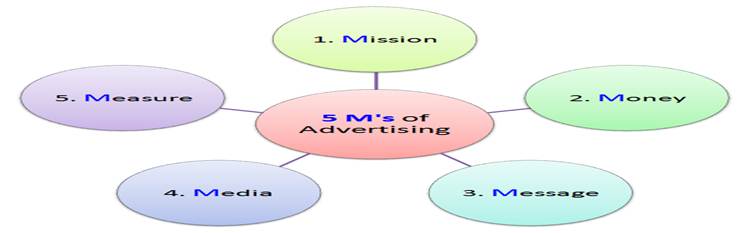
In developing an advertising program, always start with identifying the target market and the buyer’s motives. Advertising is one of the most popular and powerful tools of market promotion. It involves several decisions. Some experts explain advertising decisions and activities in the form of five ‘M’s as under: mission, money, message, media, and measurement.
1. The first ‘M’ stands for Mission – Advertising Objectives
Advertising objectives can be classified as to whether their aim is:
To inform: This aim of advertising is generally true during the pioneering stage of a product category, where the objective is building a primary demand.
This may include:
Telling the market about a new product.
Suggesting new uses for a product.
Informing the market of a price change.
Informing how the product works.
Describing available services.
Correcting false impressions.
Reducing buyers’ fears.
Building a company image
To persuade: Most advertisements are made with the aim of persuasion. Such advertisements aim at building a selective brand.
To remind: Such advertisements are highly effective in the maturity stage of the product. The aim is to keep the consumer thinking about the product.
2. The second ‘M’ stands for Money – Advertising Budget
As time is important in the advertisement, how can you ignore your budget? Money is also a critical decision while going for advertisement.
Different media charge different costs. The Internet is cheap media to advertise, but everyone cannot use the Internet in his advertisement strategy.
TV is a more costly but effective medium for advertisements. Most of the companies reserve media budgets separately.
Every type of media has different package for advertisements; for example, newspapers have so many packages for advertisements, and TV channels also have different budget packages according to time
3. The third ‘M’ stands for Message – Creating Advertising Message and Copy
Message generation can be done in the following ways:
Inductive: By talking to consumers, dealers, experts, and competitors. Consumers are the major source of good ideas. Their feeling about the product, its strengths, and weaknesses gives enough information that could aid the message generation process.
Deductive: John C. Meloney proposed a framework for generating advertising messages.
According to him, a buyer expects four types of rewards from a product:
Rational
Sensory
Social
Ego Satisfaction.
Buyers might visualize these rewards from:
Results-of-use Experience
Product-in-use Experience
Incidental-to-use Experience
4. The fourth ‘M’ stands for Media—Advertising Media Selection and Media Scheduling
Definitely, the selection of media is the most important component in the advertisement. There are so many media available for advertisement, but selection is at the same time so much more critical.
The decision of media selection depends on the target market because the organization will first analyze how its target market gets information about the organization, whether they are connected to the internet or through traditional media like the newspaper.
Use of media is also critical because of the money budget and time budget. Different media charge different costs at different times.
It is the promotional manager’s duty to study which time is effective with which media.
5. The fifth ‘M’ stands for Measurement—Measuring and Evaluating Advertising Effectiveness (MEAE)
Evaluating the effectiveness of the Advertisement Program is very important, as it helps prevent further wastage of money and helps make corrections that are important for further advertisement campaigns. Researching the effectiveness of the advertisement is the most used method of evaluating the effectiveness of the Advertisement Program. Research can be in the form of:
The advent of digital media and the rise of social platforms have significantly transformed the dynamics of agenda setting, usage, and gratification. Today, individuals have unprecedented access to a vast array of media sources and platforms, enabling them to curate their news consumption experiences. Social media platforms, in particular, have become powerful tools for both agenda setting and gratification fulfillment. Users can actively engage with content, participate in discussions, and share information, shaping the broader public agenda and finding gratification in the process.
Journalists, too, have adapted to this changing landscape by utilizing social media platforms to disseminate their work, engage with audiences, and gather insights into public preferences and concerns. By harnessing the power of social media, journalists can effectively set agendas by amplifying important stories, encouraging dialogue, and meeting the diverse preferences of their audience.
Understanding the theories of agenda setting and uses and gratifications offers useful perspectives on the dynamics of media influence and audience engagement. Aspiring journalists must grasp the role of media in shaping public discourse and the active role audiences play in seeking and consuming media content. By utilizing these theories, journalists can navigate the evolving media landscape, effectively engage with their audiences, and contribute to a media ecosystem that informs, entertains, and empowers the public. By understanding how agenda setting and gratification fulfillment work together, journalists can write stories that are important to their readers and meet their needs and wants. This creates a meaningful and mutually beneficial relationship between the media and society.
Case study
The global coverage of the George Floyd protests in
Introduction
The theory of media framing provides valuable insights into how news organizations shape public perception by emphasizing certain aspects of an event while downplaying or excluding others. The global coverage of the George Floyd protests in 2020 serves as a pertinent example that highlights the significant role of media framing in shaping public opinion and mobilizing social movements. This incident demonstrated the power of media in influencing public discourse, policy changes, and societal transformation.
1. Background
In May 2020, the tragic killing of George Floyd, an African American man, by a white police officer in Minneapolis, Minnesota, sparked outrage and protests across the United States and the world. The media played a crucial role in disseminating information, amplifying the voices of protesters, and catalyzing a movement for racial justice and police reform.
2. Media Framing
Media framing involves selecting and emphasizing specific aspects of an issue or event to shape public perception and understanding. During the George Floyd protests, media framing played a pivotal role in influencing public opinion, mobilizing support, and catalyzing political and social changes. Two prominent frames emerged during the coverage: the “Protest” frame and the “Riot” frame.
3. Protest Frame
Many media outlets, particularly those sympathetic to the cause, framed the events as peaceful protests against police brutality and racial injustice. This framing highlighted the demands for justice, systemic change, and equality. News stories often featured peaceful demonstrations, poignant speeches, and interviews with activists, emphasizing the legitimacy of the movement and the urgent need for reform.
4. Riot Frame
Conversely, some media outlets, especially those seeking sensationalism or prioritizing law and order narratives, framed the protests as riots and instances of civil unrest. This framing focused on violence, property destruction, and clashes with law enforcement. News stories highlighted looting, fires, and confrontations, which reinforced negative stereotypes and detracted from the underlying message of the protests.
5. Effects of Media Framing
Media framing during the George Floyd protests had several notable effects:
Shaping Public Opinion: The framing choices made by media organizations influenced public opinion and perception of the protests. Those exposed to the “Protest” frame were more likely to support the demands for justice and reform, while those exposed to the “Riot” frame might have had a more negative view of the movement.
Mobilizing Social Movements: Media coverage played a vital role in mobilizing widespread support for the protests. The “Protest” frame, particularly when shared on social media, facilitated the dissemination of messages, images, and videos that resonated with individuals across the globe. This led to increased participation, solidarity, and the amplification of the movement’s goals.
Policy Changes: The extensive media coverage and public response to the protests prompted significant policy changes. The calls for police reform, defunding, and racial justice gained momentum and led to tangible actions at the local, state, and national levels. The media framing contributed to the visibility and urgency of these demands, pushing policymakers to address systemic issues.
Journalistic Implications: From a journalistic standpoint, the coverage of the George Floyd protests highlights several important considerations:
Responsibility and Accuracy: Journalists have to be responsible when they choose how to frame a story, making sure that it is accurate, fair, and gives a full picture of what happened. The selection of frames should align with the principles of truth, objectivity, and the pursuit of justice.
Media Ethics: Ethical considerations should guide journalists when reporting on sensitive and polarizing issues. Sensationalism and bias can hinder the quest for truth and understanding. Journalists should strive for balanced reporting, offering multiple perspectives and giving voice to marginalized communities.
Media Literacy: The incident demonstrates the value of media literacy among the general public and especially among students. Media literacy empowers individuals to critically analyze news coverage, identify biases, and understand the impact of media framing on public perception. By fostering media literacy skills, journalists can contribute to a more informed and discerning society.
The way the media covered the George Floyd protests shows how important framing is in shaping public opinion, getting people to join social movements, and making changes to policies. Media organizations’ use of the Protest and Riot frames significantly influenced the public’s perception of the protests. This incident serves as a reminder of the responsibility journalists have to report on sensitive issues in a fair and accurate way. It also shows how important it is for people to be media literate so they can understand media stories. By understanding and critically analyzing media framing, students can become informed citizens who actively engage with the media and contribute to a more inclusive and just society.
Business creation involves the systematic process of identifying opportunities, developing ideas, and launching a new enterprise through structured steps like feasibility analysis and planning. This entrepreneurial journey transforms concepts into viable, operational businesses that address market needs. Common challenges include securing finance and navigating legal requirements.
Generate and refine ideas through creativity, drawing from personal experience, market surveys, or trends.
Conduct feasibility studies covering market, technical, financial, and socio-economic aspects to assess viability.
Prepare a detailed business plan outlining strategy, operations, marketing, and financial projections.
Launch by handling legal formalities, securing resources, and implementing operations.
Example
Airbnb exemplifies business creation: founders Brian Chesky and Joe Gebbia spotted a hotel shortage during a San Francisco conference in 2007, rented out air mattresses in their apartment, and built a platform connecting hosts with travelers. Despite early funding struggles, persistence led to a $74 billion market cap by solving a common accommodation problem.
Case Studies
Company
Origin Story
Key Success Factors
Square
Co-founder Jim McKelvey couldn’t accept a credit card for a $2,000 glassware sale, prompting a simple mobile POS system with Jack Dorsey.
Bhavish Aggarwal founded it in 2010 to offer reliable rides in India, focusing on customer needs like surge pricing alternatives.
Customer-centric features and adaptation to urban mobility demands boosted market share.
Zomato
Deepinder Goyal started in 2008 as a restaurant database, expanding to food delivery internationally.
Leveraged tech skills for global scaling, diversifying revenue in food tech.
Steps to create a business from idea to launch
Creating a business from idea to launch requires a structured sequence of steps to validate the concept, secure resources, and execute effectively. This process minimizes risks and builds a foundation for growth. Key stages include ideation, planning, legal setup, and market entry.
Core Steps
Follow these sequential steps to transform an idea into a launched business:
Develop the idea: Brainstorm and refine your concept by identifying a market problem and solution.
Conduct market research: Analyze demand, competitors, target audience, and trends to confirm viability.
Create a business plan: Outline strategy, operations, marketing, finances, and projections for guidance and funding.
Choose structure and name: Select a legal form (e.g., sole proprietorship, LLC) and register a unique business name.
Secure funding: Explore options like bootstrapping, loans, investors, or grants to cover startup costs.
Handle legal and admin tasks: Register the business, get licenses/permits, get an EIN/tax ID, open a bank account, and set up insurance.
Build brand and operations: Develop logo, website, source products/supplies, and establish processes.
Market and launch: Promote via social media, SEO, and campaigns; launch the product/service to customers.
Case study of a successful Indian startup journey
Ola Cabs provides a compelling case study of a successful Indian startup, founded by Bhavish Aggarwal, who pivoted from a travel booking site to revolutionizing urban mobility after a frustrating taxi experience in 2010. The company grew from a single-room office in Mumbai to operating in over 250 cities across multiple countries, achieving unicorn status valued at $1.5 billion. Its journey highlights problem-solving, rapid adaptation, and deep market penetration in tier-2/3 cities.
Origin and Idea
Bhavish Aggarwal, an IIT Bombay graduate, left a stable Microsoft job in 2010 to launch OLAtrips.com for holiday packages. A pivotal bad taxi ride—where the driver abandoned him midway—exposed India’s fragmented transport system, prompting a pivot to on-demand cab aggregation. Starting modestly, Aggarwal handed out business cards at upscale spots, aiming for just 100 daily rides.
Growth Milestones
Secured early angel investments from IIT peer Zishaan Hayath and others like Anupam Mittal (~₹5 million), followed by Tiger Global ($4 million then $20 million).
Expanded aggressively post-2013 Uber entry, reaching 100+ cities by 2016 (vs. Uber’s 30), introducing India-specific features like vernacular support and cash payments.
Attracted massive funding from SoftBank ($210 million in 2014), fueling diversification into food delivery, fintech (Ola Money), EVs (Ola Electric), and AI (Krutrim).
Challenges Overcome
Intense price wars with Uber strained finances, while state-specific regulations, driver protests, and union issues created hurdles. Ola countered by localizing solutions, training drivers, and pushing deeper into non-metro markets where competitors lagged. The COVID-19 pandemic hit ride demand, but acceleration into EVs sustained momentum.
Key Lessons Aggarwal’s success stems from solving real Indian problems over copying models, relentless pivots based on data, and betting on “Bharat” beyond metros. Resilience amid family doubts and funding droughts underscores his vision for tech-driven GDP growth.
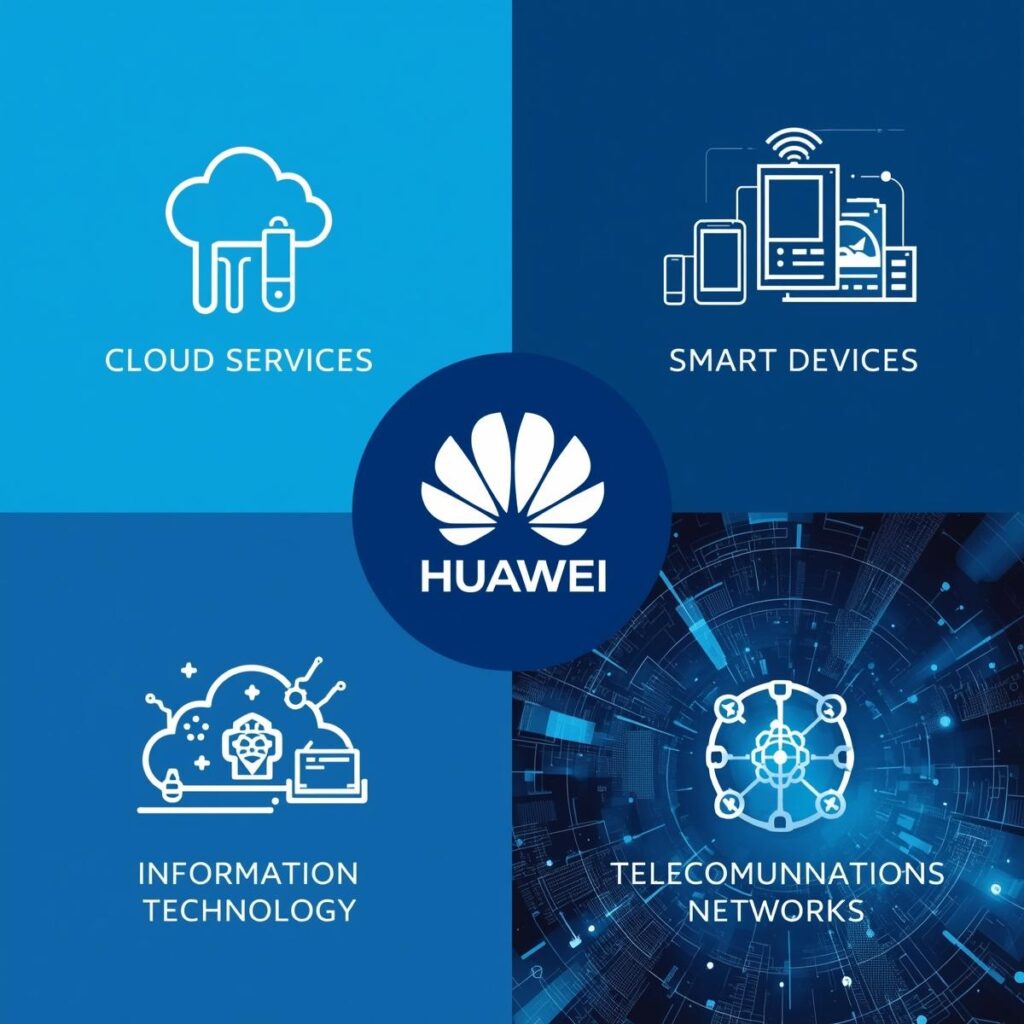
The corporation known as Huawei TechnologiesCo., Ltd. is based in China. These days, Huawei is becoming a highly well-known firm all over the world as a result of the high technological quality of its goods and the innovations it has introduced. The Chinese corporation in question is the most prominent provider of information and communications technology infrastructure as well as intelligent gadgets on a global scale. Huawei achieves this by providing integrated solutions across four essential sectors: cloud services, smart devices, information technology, and telecommunications networks.
Huawei is dedicated to bringing digital technology to every individual, household, and business to create a world that is completely connected and intelligent. The purpose of our proposal is to investigate the international strategies that Huawei has been using to achieve its success. What distinguishes this corporation from its rivals? Could you elucidate why clients or customers choose Huawei over other organizations known for their technological capabilities? And what are some ways in which they might enhance their business to increase the number of customers they serve, as well as to expand their reach into new areas and make their products more competitive?
<A comprehensive study examines how Huawei Technologies made strategic decisions about when and how to enter an established market facing intense competition.</A> In addition to this, the study investigates the significant aspects of their business model, which include the precise pricing strategy, market segmentation, and the moment at which they entered the market.
1. Company profile
Huawei is a privately held firm that has more than 180,000 workers and conducts business in more than 170 countries across the globe. Huawei is a significant global provider of information and communication technology infrastructure as well as smart devices. They offer cloud services, smart devices, infrastructure for telecommunicatitos, and information technology. Their goal is to fulfill their commitment to providing digital technology to every individual, household, and bustoder to create a world that is fully linked and intelligent. They have a vision and objective to bring digital to every person, home, and organization in order to create a world that is fully linked and intelligent, and at the moment, they are concentrating on information and communication technology (ICT) and intelligent gadgets. According to Interbrand International, a renowned worldwide brand consultancy, Huawei experienced a growth of 21% in 201 in the rankings compared to the previous year, and the company’s brand value increased by 14%, which is approximately this year. Huawei moved up several places in the rankings from the previous year, and the company’s brand worth increased by 14%, which is equivalent to an estimated 7.6 billion US dollars.
A number of nations, including Silicon Valley and Dallas in the United States of America, Stockholm in Sweden, Moscow in Russia, Bangalore in India, and Beijing, Shanghai, Nanjing, Shenzhen, Hangzhou, and Guangzhou in China, are home to Huawei’s research and development facilities on a global scale.
2. Background
Huawei Technologies is the foremost global provider of telecommunications technologies and the second-largest privately held firm in China, with a vision “to enrich life through communication.” Huawei has established itself as one of the most active, rapidly expanding, and inventive global technology firms today. Their tactics have enabled the company to attain a status as one of the most significant and esteemed firms globally, behind Apple and Samsung. Moreover, their communication channels and logistics have also contributed to Huawei’s development and facilitated its expansion into new areas.
Huawei is a worldwide telecommunications solutions supplier primarily centered on customer requirements and innovation. With its distinctive comprehensive provision of equipment in telecom networks, global services, and devices, it has garnered a global reputation in wireline, wireless, and IP technologies, serving roughly one-third of the world’s population.
However, nations skeptical of Huawei’s transparency deficiencies voiced security apprehensions that hindered its globalization initiatives. ansion endeavors. However, Huawei’s globalization initiatives were hindered by security apprehensions voiced by nations dubious of its transparency deficiencies. The United States has strongly opposed Huawei’s expansion efforts within its borders. For Huawei to attain the status of a genuinely global enterprise, it was imperative to cultivate its market presence in the United States. This case study will examine Huawei’s expansion. Huawei has developed different entry modes based on the impact of US security concerns on its global development.
3. Entry mode to different markets
Different entry modes have been developed by Huawei, depending on the geographical distance between countries, different markets, and different products. Huawei is constantly thinking about the needs of their customers and what they can do to satisfy those needs and make them possible to obtain , Huawei has established a all people around the world. As a result, Huawei is also competing in terms of price. Among these unique approaches are the following:
In the Russian market, a joint venture. The market selection strategy employed by Huawei focuses on expanding into markets that have a limited telecommunications infrastructure but have significant potential for growth.
Export entry mode in countries such as south America, Asia and Africa, Huawei use the export method as an input mode, due to factors of great influence on both sides, these factors such as geographical distance and local market conditions, within this point is important to highlight that in countries such as Colombia, Huawei just offer smartphones and tablet, they have not exporting laptops and some others products they use to offer, the price also plays an important role within countries like Colombia, Ecuador and some others, because the products are high quality ones and consider as luxury and they are not as expensive as some others brand, so Huawei have gained lot of market within this countries.
There is a different entry mode for North America. Huawei had to face some challenges in order to penetrate this market, so they decided to use the same strategy to get into the American market as the one they use in Western Europe. this method include franchising, co-research, co-production (OEM) and co-sales (helping each other to sell products in each of their own markets). the table below reflects these alliances
Additionally, Huawei utilizes a variety of entrance techniques in a flexible manner for a variety of products, particularly those that do not offer any advantages. For example, in the field of 2G mobile networks, Huawei used to collaborate with established companies. In addition, the company employs the methods of joint ventures, franchising, or co-research for the products that they feel to be advantageous. These products have a technological advantage but do not have any commercial resources. Furthermore, Huawei’s astute strategy of brand collaborations throughout its development has been a crucial contributor to the company’s emergence from a regional player to a worldwide leader.
4. Promotional channels
According to Huawei, its services and products are currently being utilized in close to one hundred and forty nations all over the world. Additionally, the company provides its services to the five leading telecom sector operators in the global market.
76,000 of the company’s 170,000 employees are employed in the research and development department, which is responsible for ensuring that the company’s operations are carried out in an effective manner. China, Canada, the United States of America, Pakistan, Germany, Sweden, Colombia, Turkey, Russia, and other countries are among the countries that Huawei has established 21 research and development institutions in.
From the beginning, Huawei’s distribution channels have consistently been exceedingly efficient. It has a strong belief in the development of joint ventures with local authorities, and as part of this connection, it offers dividends to local authorities in exchange for their use of Huawei goods.
Due to the fact that Huawei believes in building an appropriate route of distribution that comprises distributors, a sales networking team, enterprises, and consumers, the brand Huawei does not currently deal directly with customers. At this point in time, it is of utmost significance for the corporation to produce a certain quantity of products on a specific day at a specific location. Location, market coverage, mobile phones, and the online market are all examples of what “place” refers to. It possesses two channels that are quite important. In the first place, there is a seller’s channel that establishes an office in the target market for the purpose of direct product sales. In the second place, there is a joint venture that is used to construct additional brand channels.
5. R&D Management System
The groundwork for all other advancements at Huawei is provided by their innovative management. To quickly seize fleeting market opportunities, the organization has implemented R&D management methods and fortified the support of its common platforms. A technology sharing system comprising multiple levels such as system design, platform, modules, and components has been built by Huawei with CBB, a hardware and software sharing module.
In addition to streamlining their processes and organizational framework to avoid technology leaks, Huawei advocates for standardized, component-based, and platform-specific management in their R&D. Huawei manages the time-to-market of goods, speeds up their response time to market demands, and organizes development progress at multiple levels using an asynchronous new product development process. Final product delivery is often possible within four days after contract signing. As a major competency, Huawei integrates breakthroughs in numerous sectors, which allows it to achieve the top in its field.
6. Market Share of Huawei
Global Smartwatch Shipments Market Share, Q2 2024 vs Q2 2025
Apple will take the top spot in worldwide shipment leadership for the first time. With more than three-quarters of its shipments centered in China and the bulk of its portfolio priced between $100 and $400, Huawei continues to provide a compelling range of smartwatches that appeal to a wide spectrum of consumers. Beyond that, Huawei has been gradually increasing its presence in other regions such as Europe, the Middle East, and Asia Pacific in order to broaden its worldwide customer base. Its growing smartphone user base in China, combined with its integrated ecosystem strategy, fueled this expansion.”
At the same time, Apple’s worldwide smartwatch shipments fell for the seventh consecutive quarter, resulting in the brand losing its position at the top of the global market. Nevertheless, it maintained its position at the forefront of the advanced smartwatch market, supported by the robustness of its iOS ecosystem and enduring user loyalty.
Xiaomi and Imoo experienced significant growth in their shipments during the quarter, each effectively targeting unique market segments among the top five players. Xiaomi dominated the basic smartwatch market, propelled by its focus on value and extensive geographic presence. Meanwhile, Imoo maintained its stronghold in the kids’ smartwatch market, utilizing its unique features and solid brand reputation among both young users and their parents. Samsung, a significant contender in the global market, experienced a 3% year-over-year decrease in shipments. The recent declines for both Apple and Samsung were largely influenced by consumers delaying purchases in expectation of new-generation devices anticipated to debut in Q3 2025.
7. Huawei Core Values:
Customers Come First: Huawei exists to meet the needs of its customers, whose wants and needs drive our growth. Our buyers always get long-term value from us because we listen to their needs and wants. Because we can only be successful if our customers are successful, we judge our work by how much worth we bring to them.
Dedication: Customers value and trust us because we work hard at what we do. It includes everything we do to make our services better and give our users more value. We appreciate what our employees do and reward them properly.
Always Getting Better: We need to keep getting better so that we can be better partners for our customers, make our business better, and grow as people. To get better, we have to constantly listen and learn during this process.
Be open and take the lead: Because we care about what our customers want, we are always looking for new ways to make things better for them. We think that business success is the best way to judge the worth of any new technology, product, solution, or method.
Being honest: Honesty is the most important thing we have. We are honest and keep our promises because we want to earn the trust and respect of our customers.
Working together: We can only do well if we work together. By working together closely through good and bad times, we set the stage for successful cross-cultural teamwork, streamlined departmental cooperation, and processes that work well.
8. Human resources
Ren Zhengfei is the principal shareholder of Huawei, possessing a 1.4% stake. The remaining 98.6% is owned by Huawei personnel. By the conclusion of 2014, out of 170,000 employees, 80,000 possessed an equity interest in the company, with no external stakeholders present. Interviews with over 100 Huawei executives indicate that the majority endorse the employee shareholding arrangement, fostering a collective ownership mentality of “fighting the fight together.”
9. Finance
Based on the exchange rate at the end of that reporting period, Huawei’s revenue for the first half of 2018 was 325.7 billion yuan, or approximately $49 billion. Based on year-end exchange rates, the Chinese company recorded $92.5 billion in revenue for the entire year of 2017. Strong success in a number of industries, particularly the consumer sector, which has been steadily increasing, has been the main driver of the expansion thus far. By market share, Huawei has surpassed Apple to become the second-largest smartphone manufacturer in the world.
10. Challenges and competition analysis
Despite Huawei’s remarkable success over the past three decades, it faces distinct business obstacles. In the rapidly evolving digital and technology sector, it remains crucial for Huawei to prioritize innovation within its strategy.
Despite maintaining an innovative trajectory, Huawei confronts numerous challenges stemming from intense competition within the industry and the historical failures of comparable enterprises. History demonstrates that monopolistic dominance is ephemeral; structural dynamics in every sector have evolved and will persist in changing, as exemplified by BlackBerry’s decline from its former prominence. The foremost error of successful organizations is complacency. For Huawei, merely advancing research and development is inadequate. Nokia allocated tenfold resources to R&D compared to Apple over an extended duration, erroneously focusing on items that catered to its primary market segment while neglecting the limited consumer interest in prospective touch-screen technology. Likewise, Huawei must consistently endeavor to fulfill and anticipate future consumer demands rather than merely addressing present ones. Moreover, a current benefit of Huawei is its status as a wholly employee-owned private enterprise, which will undoubtedly draw interest from investors seeking to capitalize on its remarkable growth.
A significant challenge Huawei encountered in its transition from a Chinese technological firm to a global entity was its brand image in the United States, where the most formidable obstacle in Huawei’s global strategy was the disparagement campaign orchestrated by the U.S. government. Intelligence officials have advised American companies against engaging in business with Huawei owing to probable Chinese state influence and security apprehensions. Furthermore, this company has been actively seeking an opportunity to expand into North America, which constitutes approximately 20% of global telecommunications expenditure. Since a 2007 article revealed CEO Ren Zhengfei’s military history, Huawei has been designated as a political target. Prior to establishing Huawei in 1987, Ren served as a civil engineering director for the Chinese military. Huawei presently supplies telecommunications equipment to prominent Internet service providers, who then transmit data for nearly all government entities. The U.S. intelligence committee advised that American telecommunications companies refrain from engaging in business with Huawei due to probable Chinese governmental influence and security risks.
In response, Huawei has initiated a strategic outreach to analysts, journalists, and lawmakers to alleviate doubts. Huawei additionally revealed the constituents of its Board of Directors. The aforementioned B2B problems partially elucidate why the smartphone is poised to be pivotal for Huawei’s expansion in America. Huawei cannot concede defeat or entirely relinquish the U.S. market, as it constitutes approximately 20% of worldwide telecommunications expenditure. Although it need not dominate the U.S. market, it must gain acceptance as it expands as a smartphone brand. If Huawei executes this effectively, it may serve as a substantial demonstration of corporate citizenship and secure the brand a position among other prominent Asian technology companies in the United States, including Samsung, Lenovo, and LG. Going forward, Huawei should disclose further financial and corporate information to enhance openness.
Huawei has initiated a deliberate effort to enhance international and diverse experience within its managerial ranks, encompassing both the board and various senior and mid-management positions. This strategy has facilitated the company’s transition towards a brand-oriented global leadership. Additionally, Huawei has begun recruiting prominent Western executives to diversify its senior management team. This plan must be executed comprehensively to ensure that different, global perspectives and experiences are deeply integrated into the organization’s structure. A genuinely international senior management team is crucial for Huawei’s success in outside markets.
11. Conclusion
The conclusion is that a significant portion of Huawei’s success can be attributed to the implementation of an appropriate and well-chosen strategy to penetrate new markets and develop their business around the globe. The strategic decision that the company made, as well as their policies and practices, served to analyze and identify the advantages that the company will have if they use different entry modes to penetrate specific markets with a large portfolio of their products. These factors contributed to the rapid growth of the company, which ultimately resulted in the company becoming one of the most important and recognized brands in the technological sector all over the world.
The partnership that Huawei has formed with the LEICA camera company and the utilization of their technology to enhance the camera capabilities of Huawei’s smartphones to compete with products like the iPhone and Samsung Galaxy are noteworthy aspects that should be highlighted. This partnership has added value to Huawei’s smartphones, which is a result of the company’s desire to innovate at a rapid pace. In order to fine-tune each of those components, make design decisions, and develop the entire photography experience of Huawei phones, Leica and Huawei have a team of engineers who are dedicated to working together.
However, the most important factors that contributed to the company’s success in overcoming these challenges were the constant analysis of the environment and the well-understood and known industry and sector. This caused the company to improve their practices and find a solution to their situation. Despite the fact that the company has presented moments of difficulty and challenges, one of the most relevant ones will be the American case.
Rural consumer behavior refers to the buying patterns, preferences, and attitudes of people living in rural areas. It is influenced by unique characteristics of rural society, which differ significantly from urban markets.
2. Demographic Perspective
Features:
Population: Over 65% of India’s population lives in rural areas.
Age: Rural populations often have a higher proportion of young people and children.
Income: Generally lower and more seasonal (dependent on agriculture).
Education: Lower literacy rates than urban India, though improving.
Occupation: Dominated by agriculture, allied activities, and small businesses.
Example:
A rural family may delay purchasing a tractor until after the harvest season, when their income is highest.
3. Sociological Perspective
Features:
Community Orientation: Decisions are often influenced by family, neighbors, and village elders.
Role of Opinion Leaders: Sarpanch (village head), teachers, and successful farmers can shape opinions.
Joint Family System: Purchase decisions may be made collectively, not individually.
Gender Roles: Men often make major buying decisions, but women influence purchases related to food, clothing, and household needs.
Example:
A woman may influence the family’s choice of detergent or food brand, while men decide on agricultural equipment.
4. Cultural Perspective
Features:
Tradition & Customs: Festivals, rituals, and traditions strongly impact consumption (e.g., buying gold during Diwali).
Religion: Dietary choices, clothing, and celebrations are influenced by religious beliefs.
Language: Local languages and dialects significantly contribute to marketing communication.
Brand Loyalty: Once rural consumers establish trust in a brand, they tend to remain loyal.
Example:
During harvest festivals like Pongal or Baisakhi, sales of consumer durables (TVs, motorcycles) spike.
5. Lifestyle Perspective
Features:
Simple Living: Preferences for practical, durable, and value-for-money products.
Media Consumption: Rapidly increasing access to TV, mobile phones, and digital platforms, but word-of-mouth remains vital.
Limited Access: Fewer retail outlets; weekly markets (haats) are common shopping hubs.
Aspirations: Growing aspirations due to exposure to media and urban migration, yet strong ties to traditional values.
Example:
Haats are central to rural shopping; a local FMCG brand may distribute sample sachets at the weekly haat to boost awareness.
6. Case Studies
Case Study 1: HUL’s Project Shakti
Background: Hindustan Unilever Limited (HUL) trained rural women to become direct-to-home sales agents for FMCG products.
Demographic: Targeted women in villages with limited income opportunities.
Sociological: Leveraged community trust and women’s social networks.
Cultural: Women agents understood local customs and language.
Outcome: Increased brand reach and empowered rural women.
Here is an illustrative image representing HUL’s Project Shakti: It shows a group of rural Indian women dressed in traditional attire, smiling and standing together in a village setting. They are holding baskets and promotional materials featuring household products, symbolizing their role as Shakti entrepreneurs who distribute HUL products in rural areas. This image captures the essence of women’s empowerment and rural entrepreneurship that Project Shakti promotes.
Case Study 2: Mahindra’s Tractor Sales
Background: Mahindra & Mahindra, a leading tractor manufacturer, customized its sales approach for rural markets.
Demographic: Focused on small and marginal farmers.
Sociological: Organized demonstration camps and involved local opinion leaders.
Cultural: Scheduled promotions around harvest festivals.
Lifestyle: Offered finance schemes to align with seasonal cash flows.
Here is a visual case study representation: Imagine a vibrant rural Indian landscape where farmers are actively using a red Mahindra tractor in lush green fields. The scene includes farmers in traditional attire working together and discussing it near the tractor, with rural homes in the background. This image highlights Mahindra’s strong presence and success in rural tractor sales, making it ideal for educational or marketing case studies focused on rural India.
Case Study 3: Coca-Cola’s Rural Strategy
Background: Coca-Cola introduced smaller, affordable bottles and deepened its distribution in villages.
Demographic: Targeted lower-income groups with affordable pricing.
Sociological: Used local influencers and village retailers.
Cultural: Advertised using regional languages and festival themes.
Lifestyle: Sold products through local kirana stores and haats.
Sample Visual: Rural Lifestyle
Here is an illustration depicting Coca-Cola’s rural strategy: it shows a rural Indian village scene where a small local shop features Coca-Cola branding and refrigerators stocked with Coke bottles. Villagers, including women and children in traditional attire, are gathered around, some enjoying bottles of Coca-Cola. The background includes mud houses, a dusty road, and green fields, effectively representing how Coca-Cola has reached and integrated into rural markets.
Case 4: ITC e-Choupal
Description: ITC set up internet kiosks in villages to provide farmers with information on weather, prices, and best practices, changing how rural consumers access information and make decisions.
Here is an illustrative image representing the ITC e-Choupal case study: It shows a rural Indian farmer using a computer terminal inside a simple village setup, with an ITC e-Choupal signboard in the background. The screen displays agricultural information that other farmers gather around to discuss. The setting includes traditional elements like fields, agricultural tools, and villagers in typical rural attire, highlighting how technology is empowering farmers through ITC’s initiative.
Key Features of the e-Choupal Strategy
Aspect Details
Technology: Internet kiosks in villages, often managed by a trained local farmer (Sanchalak).
Information: Daily updates on market prices, weather forecasts, best farming practices, and news.
Disintermediation: Reduces the role of middlemen, allowing farmers to sell directly to ITC at better prices.
Community Focus: Centers serve as gathering points for education, healthcare awareness, and agricultural advice.
Empowerment: Sanchalaks (local coordinators) are trained and earn commission, driving local employment.
Implementation Steps
Identify Villages: Target areas with significant agricultural potential.
Set Up Kiosks: Equipped with computers, internet, and power backup.
Select & Train Sanchalaks: Educate local leaders to manage kiosks.
Build Trust: ITC focuses on transparency and farmer welfare.
Continuous Support: Regular training, technical support, and updates.
Conclusion
Understanding rural consumer behavior requires a nuanced approach considering the demographic, sociological, and cultural differences. Brands that recognize these unique characteristics and adapt their strategies accordingly—like Unilever, ITC, and Coca-Cola—have seen success in rural India.
Urban migration and schemes like MGNREGA boost disposable incomes, enabling premium buys during festivals. Aspirational shifts lead to two-wheelers over cycles in Punjab villages.
Example 1: HUL’s Lifebuoy campaigns modernized hygiene norms in Uttar Pradesh, increasing soap usage 3x through community demos aligned with evolving lifestyles.
Here is a visual representation of HUL’s Lifebuoy campaign modernizing hygiene norms in Uttar Pradesh: the image features rural children and mothers in traditional attire washing their hands with Lifebuoy soap at a community handwashing station. A colorful Lifebuoy campaign banner and educational posters about handwashing are visible, set against a backdrop of typical rural North Indian houses and trees. This scene highlights health awareness and community participation, reflecting how Lifebuoy has helped promote improved hygiene practices in the region.
How it affects rural consumer behavior:
Exposure to new products and brands: Rural consumers are increasingly exposed to urban lifestyles, global brands, and new products through television, the internet, and migrants returning from cities.
Changing aspirations: Modernization leads to changes in preferences, with rural consumers aspiring for better quality, branded goods, and modern amenities.
Shift in consumption patterns: Traditional preferences may give way to global trends, changing food habits, fashion, and entertainment choices.
Example 2: A rural family that previously wore only traditional clothing now desires branded T-shirts and jeans after seeing advertisements and relatives wearing them.
Case Study: Hindustan Unilever’s Project Shakti
Background: HUL launched Project Shakti to empower rural women as direct-to-consumer sales agents for its products.
Impact: Products like Lifebuoy soap, Fair & Lovely, and Wheel detergent reached remote villages. Through micro-entrepreneurship, rural consumers were exposed to modern hygiene and beauty products, altering their buying patterns and preferences.
Result: The project not only increased product accessibility but also modernized consumption habits in rural India.
2. Technological Factors
Smartphones (72% rural penetration) and UPI enable COD e-commerce, with 36% digital payments from villages. Jio’s affordable data spurred online research, doubling rural online buys from 4% to 8% (2015-2016).
Example 1: BCG’s rural surveys across 14 states showed connected consumers like “Vikas” upgrading data packs, influencing 80% of purchases via apps in Maharashtra.
Here is a visual representation based on BCG’s rural surveys in Maharashtra: The image shows a young rural man, representing “Vikas,” using his smartphone in a village setting to upgrade his data pack through a mobile app. On his phone screen, icons of popular shopping apps are visible. In the background, other villagers are watching and discussing, illustrating how his actions influence their purchase decisions. The scene includes typical elements of a rural Maharashtra village, such as traditional houses, motorcycles, and lush greenery, highlighting digital adoption and peer influence among rural consumers.
How it affects rural consumer behavior:
Access to information: Mobile phones and the internet allow rural consumers to compare prices, learn about products, and access services previously unavailable.
Online transactions: Growth of digital payments and e-commerce introduces villagers to new ways of shopping.
Awareness and education: Technology spreads awareness about modern agricultural practices, healthcare, and financial products.
Example 2: A farmer uses a mobile app to check weather forecasts and compare crop prices in different markets before deciding when and where to sell his produce.
Case Study: ITC e-Choupal
Background: ITC set up e-Choupal digital kiosks in villages, giving farmers access to real-time information on crop prices, weather, and best farming practices.
Impact: Farmers became more informed, reduced their dependence on middlemen, and improved their income by selling their produce at better rates.
Result: This technological intervention transformed decision-making and purchasing behavior among rural farmers, making them more empowered and market-driven.
In summary:
Globalization/modernization brings new aspirations and products to rural consumers, changing what they buy and how they buy it (e.g., Project Shakti).
Technology empowers rural consumers with information and accessibility, enabling smarter choices and new consumption habits (e.g., ITC e-Choupal).
A. Understanding basic difference between Rural and urban consumers’ behavior
B. Understanding the nature of competition in rural marketing.
Introduction
In India, rural consumers value quality, durability, and community involvement more than urban consumers who seek ease, brands, and trends. This is because rural spending (68.84% of population) is higher than urban spending (31.16%). Because their wages change with the seasons, people in rural areas like small packs and local shops, while people in cities choose high-end, tech-driven purchases. In rural areas, loyalty is shown through symbols, and in cities, it’s shown through ads.
Key Differences
Aspect
Rural Consumers
Urban Consumers
Purchase Frequency
Weekly, small packs for affordability
Less frequent, bulk/economy packs
Brand Loyalty
High via color/logo, less ad-driven
Brand-conscious, influenced by trends
Shopping Channels
Village shops, haats for credit/bargains
Malls, online for convenience
Decision Factors
Family/elders, price sensitivity
Individual, tech/products
Product Preference
Durables for utility, sachets
Advanced gadgets, fast food
Examples
Rural: Bihar villagers buy FMCG sachets post-Digital India exposure, valuing presence over ads. Urban: Delhi youth prefer online fast food via apps, prioritizing speed. Rural favors two-wheelers for practicality; urban opts luxury cars for status.
Case Studies
Godrej’s “Godrej Ki Doli” campaign reached 1 crore+ rural consumers in 28,000 UP/AP/Maharashtra villages via door-to-door, contacting 1.7 lakh retailers and building loyalty without heavy ads. Bihar online buying study showed rural 35% rise via YouTube, but urban leads in tech adoption due to infrastructure. Migrants from rural to urban retain haat habits initially but shift to malls.
A. BASIC DIFFERENCES BETWEEN RURAL AND URBAN CONSUMER BEHAVIOR
1. Income and Spending Power
Rural Consumers: Usually have lower and more irregular incomes, leading to cautious spending and preference for affordable products.
Urban Consumers: Typically have higher, more stable incomes, allowing greater discretionary spending and willingness to try premium or new products.
2. Product Awareness and Information Sources
Rural Consumers: Rely more on word-of-mouth, local opinion leaders, and traditional media (radio, regional TV). Advertising impact is limited unless localized.
Urban Consumers: Exposed to multiple information channels like digital media, TV, print, social networks. More aware of brands and product options.
3. Buying Behavior
Rural Consumers: Prefer small pack sizes (sachets, single-use), buy less frequently, and make purchases mostly from local kirana stores or markets. Price sensitivity is high.
Urban Consumers: Buy in bulk or larger packs, shop more frequently in supermarkets, malls, and online platforms. More brand and quality conscious.
4. Brand Loyalty
Rural Consumers: Less brand loyal; will switch brands for price or availability.
Urban Consumers: More likely to be brand loyal, influenced by advertising and perceived quality.
5. Influencers
Rural Consumers: Influenced by family, community leaders, and local traditions.
Urban Consumers: Influenced by celebrities, social media influencers, peer groups, and advertising.
6. Payment Methods
Rural Consumers: Prefer cash; digital payment adoption is growing but still limited.
Urban Consumers: Comfortable with digital payments, cards, and wallets.
Example
Shampoo Purchase:
Rural Consumer: Buys ₹1 sachet from a kirana shop, influenced by neighbor’s recommendation.
Urban Consumer: Buys a branded family-size bottle from a supermarket or online, influenced by TV/online ads.
Case Study 1: Sachet Revolution (Hindustan Unilever Limited)
Problem: HUL’s shampoo bottles were too expensive for rural consumers, who were hesitant to spend a large amount at once.
Solution: HUL introduced ₹1 shampoo sachets, making the product affordable and accessible for rural consumers who preferred buying in small quantities.
Impact:
Massive increase in rural sales.
Urban consumers continued buying large bottles, valuing convenience and long-term savings.
Learning: Rural consumers prioritize affordability and immediate needs, while urban consumers value convenience and are less sensitive to price per unit.
Case Study 2: Mobile Phones – JioPhone vs. Smartphones
Situation: Urban consumers demand smartphones with advanced features for communication, work, and entertainment.
Solution for Rural Markets: Reliance Jio launched the JioPhone, an affordable internet-enabled feature phone, catering to rural needs for basic connectivity and long battery life.
Urban buyers continued purchasing high-end smartphones (Samsung Galaxy, iPhone).
Learning: Urban consumers seek technology and status, while rural consumers focus on essential functions and affordability.
Case Study 3: Media Consumption and Advertising
Scenario: A detergent brand wants to reach both rural and urban markets.
Approach:
Urban: Runs TV and digital ad campaigns featuring celebrities, and partners with e-commerce sites.
Rural: Sponsors local events, uses folk media, and organizes product demonstrations at village fairs, relying on word-of-mouth.
Impact: Urban sales rise due to aspirational advertising; rural sales grow through trust-building, personal interaction, and localized messaging.
Conclusion:
Rural consumer behavior is driven by price, accessibility, and local influence, while urban consumer behavior is shaped by higher income, brand value, modern retail, and digital exposure. Successful businesses tailor their strategies to these fundamental differences.
B. UNDERSTANDING THE NATURE OF COMPETITION IN RURAL MARKETING
Nature of Competition in Rural Markets
Fragmented Market: Many small players and unorganized local brands compete with large national brands.
Low Brand Loyalty: Rural consumers often switch brands based on price, availability, or local influence.
Price Sensitivity: Price is a key factor; even a small difference can sway consumers.
Distribution Challenges: Companies compete to reach remote locations and ensure product availability.
Communication Barriers: Marketing must overcome language, literacy, and cultural diversity.
Trust and Relationship Building: Local relationships and word-of-mouth are vital; brands often compete for trust as much as for sales.
Product Adaptation: Competition may lead to product modifications (smaller packs, local flavors, etc.) to suit rural needs.
Non-traditional Promotions: Competitors use fairs, melas, van campaigns, and local influencers instead of only mass media.
Case Studies and Examples
Case Study 1: HUL vs. Local Brands – Detergent Market
Scenario: Hindustan Unilever Limited (HUL) markets Wheel detergent in rural India, but faces competition from local, unbranded detergents sold at lower prices.
Competitive Strategies:
HUL introduced smaller, affordable sachets.
Launched rural-specific promotions (e.g., “Wheel Lucky Draw” at village fairs).
Built a robust rural distribution network using local wholesalers.
Outcome: Wheel became a leading rural brand, but HUL had to continually innovate on price, pack size, and promotions due to persistent competition from local brands.
Case Study 2: Colgate vs. Neem Sticks
Scenario: Rural India traditionally used neem sticks for oral hygiene.
Competitive Approach:
Colgate marketed toothpaste in small sachets to make it affordable.
Ran educational campaigns in villages about dental hygiene, sometimes partnering with local health workers.
Sponsored rural events and distributed free samples.
Outcome: Colgate became the No.1 toothpaste in rural India, but competition from traditional practices and local brands remains strong, requiring ongoing education and adaptation.
Case Study 3: Britannia vs. Local Bakeries
Scenario: Britannia aimed to grow biscuit sales in villages where local bakeries sold loose, unpackaged biscuits.
Competitive Moves:
Introduced low-priced “Tiger” biscuits in small packs (₹2–₹5).
Partnered with rural retailers and offered incentives.
Used mobile vans to reach remote villages, creating brand visibility.
Outcome: Britannia gained a strong rural presence, but continues to face price and availability competition from local bakers.