netflix

Introduction

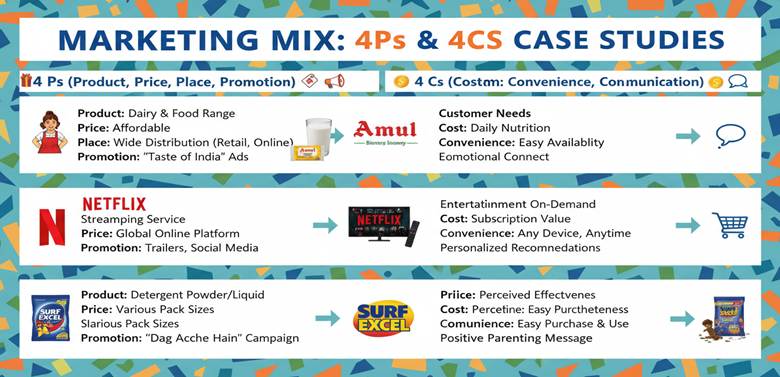
The marketing mix is a foundational model for businesses, guiding them to effectively market their products and services. Traditionally composed of the 4P’sProduct, Price, Place, and Promotion—this model has evolved into the more customer-centric 4C’s—Customer Solution, Cost, Convenience, and Communication. Understanding both frameworks and how they interrelate is vital for designing successful marketing strategies in today’s dynamic marketplace.

The 4 Ps of Marketing

The 4 Ps represent the controllable elements businesses use to satisfy customer needs, influence demand, and achieve their objectives.


1. Product

Definition:
The tangible good or intangible service offered to satisfy customer needs and wants.

Example:
Apple’s iPhone is a product dethat features regular updates, aleek design, and advanced technology.

Key Product Decisions:

  • Key product decisions include features, quality, design, brand name, packaging, services, and guarantees.

2. Price

Definition:
The amount of money customers must pay to acquire the product or service.

Example:
Netflix uses tiered subscription pricing, catering to different audience segments.

Key Price Decisions:

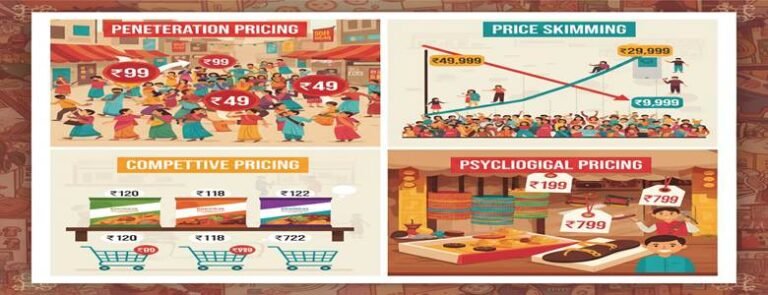
  • Key price decisions include pricing strategy (premium, competitive, penetration), discounts, payment plans, and psychological pricing.

3. Place (Distribution)

Definition:
The channels and locations that make the product available to customers.

Example:
Amazon’s vast distribution network ensures that it delivers products quickly, even to remote Indian towns.

Key Place Decisions:

  • Distribution channels, market coverage, inventory, logistics, retail locations, and e-commerce.

4. Promotion

Definition:
The activities that communicate the product’s value and persuade customers to purchase.

Example:
Cadbury’s Diwali campaigns use emotional storytelling and media to boost chocolate sales during festivals.

Key Promotion Decisions:

  • Advertising, sales promotions, public relations, direct marketing, digital marketing, and influencer partnerships.

The 4 Cs of Marketing

The 4C’s framework shifts focus from the business to the customer, emphasizing value creation, cost, convenience, and open communication.


1. Customer Solution (vs. Product)

Definition:
Understanding and providing solutions to customer problems rather than just selling a product.

Example:
BYJU’S offers interactive learning solutions, not just educational content, making online study engaging for students.


2. Cost to Customer (vs. Price)

Definition:
The total cost that a customer incurs, including price, shipping, time, and psychological costs.

Example:
Flipkart’s “No Cost EMI” and hassle-free returns reduce the financial and mental cost of online shopping for customers.


3. Convenience (vs. Place)

Definition:
Making it as easy as possible for customers to acquire and use the product or service.

Example:
Swiggy’s user-friendly app and quick delivery make ordering food extremely convenient.


4. Communication (vs. Promotion)

Definition:
Two-way dialogue with customers, focusing on engagement, listening, and relationship-building.

Example:
Zomato uses social media not only for promotion but also to respond to feedback and connect with users.


Table: 4P’s vs. 4C’s

4P’s4C’sExample
ProductCustomer SolutionBYJU’S learning platform
PriceCostFlipkart’s No Cost EMI, free shipping
PlaceConvenienceSwiggy’s doorstep food delivery
PromotionCommunicationZomato’s social media engagement

Case Study 1: Amul—Mastering the 4P’s and 4C’s

Background:
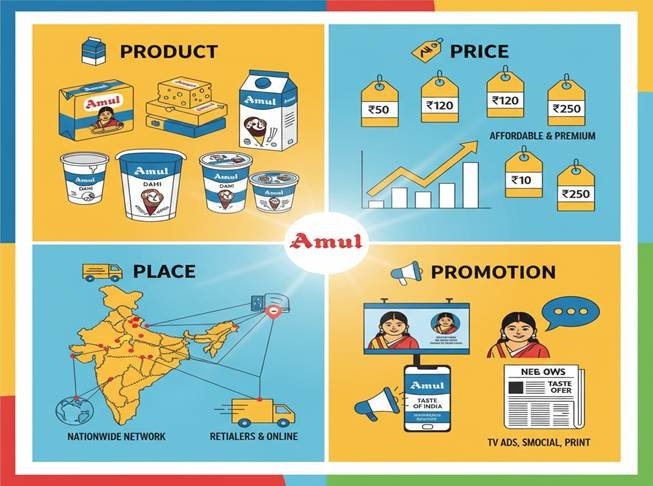
Amul is India’s largest dairy brand, known for its diverse product range, strong rural network, and iconic advertising.

Application of 4 Ps:

  • Product: Offers a wide range—milk, cheese, butter, yogurt, ice cream. Constant innovation (e.g., Amul Kool, Amul Dark Chocolate).
  • Price: Affordable pricing to reach all segments, with value packs and festival discounts.
  • Place: Nationwide distribution, from major cities to rural villages, through 10,000+ distributors and 1 million+ retailers.
  • Promotion: Famous Amul Girl ad campaigns, topical billboards, TV ads, digital presence.

Application of 4C’s:

  • Customer Solution: Healthy, affordable dairy options that address Indian dietary needs.
  • Cost: Focuses on affordability, easy availability, and bundling to reduce customer expense.
  • Convenience: Products available everywhere—from supermarkets to local kirana stores.
  • Communication: Engages with consumers through clever ads, social media, and public events.

Result:
Amul has built unmatched brand loyalty, expanded across India and abroad, and uplifted millions of rural dairy farmers through its cooperative model.


Case Study 2: Netflix – Customer-Centric Marketing

Background:
Netflix revolutionized entertainment with its on-demand streaming model.

4P’s:

  • Product: Vast, diverse content library; regular new releases.
  • Price: Multiple subscription levels; affordable plans for the Indian market.
  • Place: Available worldwide, accessible on any internet-enabled device.
  • Promotion: Digital ads, social media, personalized recommendations.

4C’s:

  • Customer Solution: Solves the problem of limited entertainment choices and rigid TV schedules.
  • Cost: No long-term contracts, affordable monthly payments, free trials.
  • Convenience: Watch anytime, anywhere; offline downloads.
  • Communication: Uses viewer data to recommend shows, invites user feedback, and adapts content per audience tastes.

Result:
Netflix’s customer focus has made it the global leader in streaming, with growing market share in India through local content and pricing.


Case Study 3: Surf Excel – Emotional Marketing

Background:
Surf Excel, a detergent brand from Hindustan Unilever, excels at connecting with its audience through emotional storytelling.

4P’s:

  • Product: High-quality detergent, various variants (liquid, powder, bar).
  • Price: Competitive pricing, discounts during festivals.
  • Place: Widely distributed—urban supermarkets, rural shops, e-commerce.
  • Promotion: The “Daag Acche Hain” (Stains are Good) campaign uses emotional stories of children learning values.

4C’s:

  • Customer Solution: Removes tough stains, cares for clothes, and resonates with family values.
  • Cost: Value packs, affordable refills, and promotional offers.
  • Convenience: Available everywhere and in different sizes.
  • Communication: Two-way engagement via social media and customer care.

Result:
Surf Excel is a market leader in India, known for its memorable campaigns and strong customer loyalty.


4P’s and 4C’s in Practice: Real-World Applications

Digital Startups

  • Example: Paytm
    • Product/Customer Solution: Secure, rapid digital payments.
    • Price/Cost: Free wallet, low charges for merchants.
    • Place/Convenience: Accepted at millions of stores; app-based.
    • Promotion/Communication: Cashback offers, festival campaigns, customer support.

Global FMCGs

  • Example: Coca-Cola
    • Product/Customer Solution: Variety of beverages for every taste.
    • Price/Cost: Small packs for price-sensitive markets.
    • Place/Convenience: Available in every major country, even in remote locations.
    • Promotion/Communication: Localized ads, global campaigns, community engagement.

Conclusion

The 4P’s and 4C’s frameworks remain central to modern marketing. The 4P’s help businesses structure their offerings, pricing, reach, and messaging, while the 4C’s ensure the focus remains on solving customer problems, minimizing cost, maximizing convenience, and fostering open communication.

Indian brands like Amul and Surf Excel, and global leaders like Netflix and Coca-Cola, succeed because they seamlessly blend both approaches—offering great products at the right price, making them easy to access, and communicating in a way that builds trust and loyalty.

Aspiring marketers should master both the 4P’s and 4C’s—adapting them to new technologies, market dynamics, and customer behaviors for success in the ever-changing world of business.
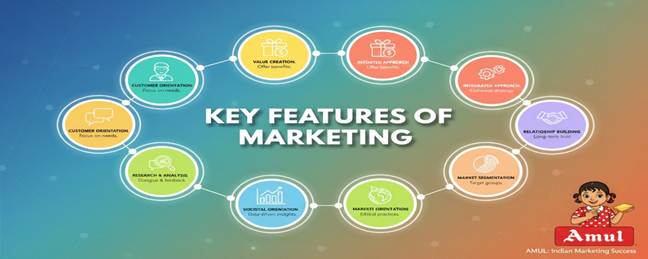
A. Definition of Marketing

Marketing is the process of creating, communicating, delivering, and exchanging offerings that have value for customers, clients, partners, and society at large. It is a comprehensive activity that encompasses market research, product design, pricing, distribution, promotion, and after-sales service.

The American Marketing Association (AMA) defines marketing as:

“The activity, set of institutions, and processes for creating, communicating, delivering, and exchanging offerings that have value for customers, clients, partners, and society at large.”

Key Points:

  • Marketing is not just selling or advertising.
  • It is about understanding and fulfilling customer needs.
  • It involves a relationship between the company and its stakeholders.

B. FEATURES OF MARKETING

Introduction

Marketing is far more than just selling or advertising a product. It is a holistic process that involves understanding, creating, and delivering value to customers, as well as maintaining long-term relationships with them. The features of marketing explain the essential characteristics that make marketing an indispensable part of any successful business.

1. Customer Orientation

Explanation:
Marketing starts and ends with the customer. Understanding customer needs, wants, preferences, and behaviors is central to marketing. All activities—from product development to promotion—are designed to satisfy the customer.

Example:
Amazon’s recommendation system uses customer data to personalize shopping experiences, increasing satisfaction and loyalty.

2. Value Creation and Exchange

Explanation:
Marketing is about creating value for customers and facilitating the exchange of that value for money or other benefits. Value is not just in the product, but in the experience, after-sales service, and brand trust.

Example:
Apple creates value by offering high-quality, innovative products and a seamless ecosystem, which customers are willing to pay a premium for.

3. Integrated Approach

Explanation:
Marketing involves the coordination of many activities (product, price, place, promotion) to ensure a unified and effective approach. This integration is known as the marketing mix or the 4Ps.

Example:
Coca-Cola coordinates product launches, pricing strategies, wide distribution, and global advertising for consistent brand messaging.

4. Continuous and Dynamic Process

Explanation:
Marketing is ongoing and must adapt to changing consumer preferences, competitor actions, and technological advancements. It requires continuous market research and feedback.

Example:
Netflix regularly updates its content library and recommendation algorithms in response to viewer data and trends.

5. Relationship Building

Explanation:
Modern marketing emphasizes building long-term relationships with customers, rather than focusing only on one-time sales. Relationship marketing aims to create customer loyalty and advocacy.

Example:
Starbucks maintains customer relationships through its rewards program, personalized offers, and mobile app engagement.

6. Market Segmentation and Targeting

Explanation:
Not all customers are the same. Marketers segment the market based on demographics, geography, psychographics, or behavior, and then target specific segments with tailored products and messages.

Example:
Maruti Suzuki targets different segments with various models: Alto for entry-level buyers, Swift for youth, and Ciaz for the premium segment.

7. Societal Orientation

Explanation:
Marketing today is expected to balance company profits with consumer needs and societal welfare. This includes ethical responsibility, sustainability, and social impact.

Example:
Unilever’s “Sustainable Living” campaign promotes eco-friendly products and responsible consumption.

8. Two-Way Communication

Explanation:
Marketing is a dialogue, not a monologue. Companies now engage in two-way communication with customers through social media, reviews, and feedback channels.

Example:
Zomato uses Twitter and Instagram not just for announcements, but also to listen and respond to customer feedback instantly.

9. Research and Analysis

Explanation:
Decisions in marketing are based on systematic research and data analysis. This helps in understanding the market environment, competition, and consumer trends.

Example:
FMCG companies like ITC use extensive market surveys before launching new products.

10. Profit and Non-Profit Orientation

Explanation:
While most marketing is profit-driven, NGOs and government bodies also use marketing principles to promote ideas, causes, or behavior changes.

Example:
The “Swachh Bharat Abhiyan” campaign in India uses marketing tools (ads, celebrity endorsements) to promote cleanliness.

Case Study: Amul—A Model of Marketing Excellence

Background:
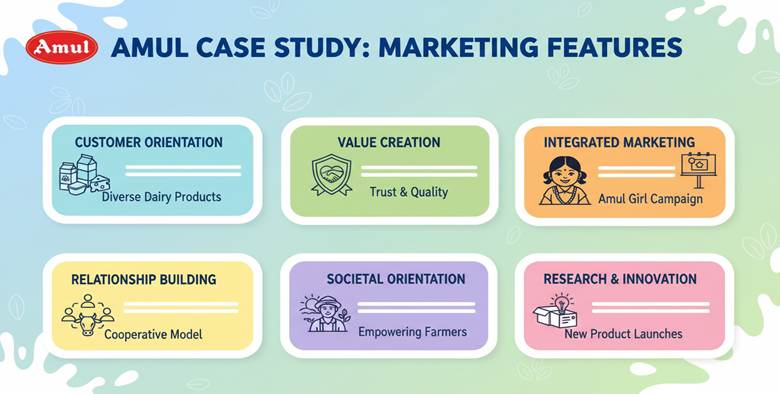
Amul, an Indian dairy cooperative founded in 1946, has become one of the most recognized brands in India. Its success is attributed to the effective application of marketing features.

Customer Orientation

Amul’s wide range of products addresses the varied needs of Indian consumers, from urban to rural, and from children to the elderly. Its pricing strategy ensures affordability without compromising on quality.

Value Creation & Exchange

Amul’s value proposition is high-quality, affordable dairy products. The value exchange is not just monetary—the brand offers trust, consistent quality, and nostalgia.

Integrated Approach

Amul’s legendary “Amul Girl” advertising campaign is consistent across TV, print, and digital, ensuring a unified message. Distribution is extensive, reaching even remote villages.

Continuous Process

Amul constantly innovates—launching new products like flavored milk, ice creams, and health drinks to suit changing tastes and health trends.

Relationship Building

Amul’s relationship with farmers is as strong as with consumers. Its cooperative model ensures fair prices to milk producers, building loyalty and trust on both fronts.

Societal Orientation

Amul’s business model empowers rural farmers, particularly women, by giving them a steady source of income and making them stakeholders in the company’s success.

Two-Way Communication

Amul actively engages with its audience on social media, responding to trends and consumer feedback with witty, topical ads.

Market Segmentation and Targeting

Amul segments by product use (cooking, direct consumption, health) and targets different age groups and regions, tailoring products and campaigns accordingly.

Research and Analysis

Before launching any new product, Amul conducts in-depth research on consumer preferences, regional tastes, and market demand.


Results and Impact

Amul is not only the market leader in the Indian dairy sector, but also a beloved brand with a positive societal impact. Its success showcases the power of customer focus, value creation, continuous innovation, and responsible marketing.


Conclusion

The features of marketing—customer orientation, value creation, integration, dynamism, relationship building, research, and societal orientation—are essential to building successful brands and organizations. Amul’s case exemplifies how consistent application of these features leads to both business success and positive social change. By studying such examples, students and professionals can learn to apply these features to a variety of industries and marketing challenges.

OTT & Theatrical Synergy

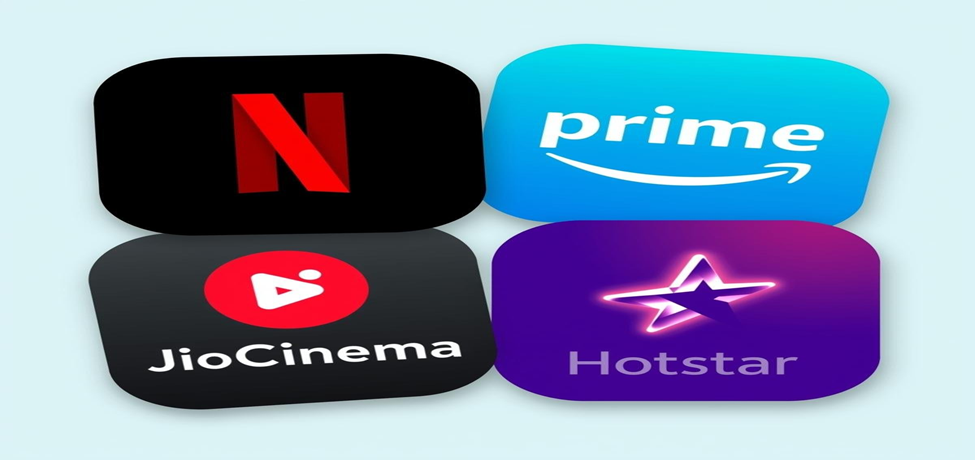
  • Netflix, Amazon Prime Video, JioCinema, Hotstar strategies
  • Pre-release buzz vs. post-release engagement

Introduction

The entertainment industry has undergone a significant transformation with the rise of over-the-top (OTT) streaming platforms alongside traditional theatrical releases. OTT platforms, such as Netflix, Amazon Prime Video, and Disney+, deliver content directly to viewers via the internet, bypassing conventional distribution channels. Meanwhile, theatrical releases continue to offer the communal, big-screen experience that remains a cornerstone of the film industry.

The synergy between OTT platforms and theatrical releases represents a dynamic shift in content distribution and consumption. Rather than existing as mutually exclusive options, these two modes increasingly complement each other. Theatrical releases can serve as high-profile events that build anticipation and buzz, while OTT platforms offer films a longer lifecycle, reaching wider and more diverse audiences.

This synergy enables filmmakers and studios to maximize revenue, enhance audience engagement, and experiment with new release strategies, such as simultaneous or staggered premieres. As consumer preferences evolve, the collaboration between OTT and theatrical channels is reshaping the future of entertainment, offering greater flexibility and accessibility while preserving the unique value of both experiences.

A. NETFLIX, AMAZON PRIME VIDEO, JIOCINEMA, HOTSTAR STRATEGIES

Here’s a refined and structured overview of OTT & theatrical synergy, including strategic approaches by Netflix, Amazon Prime Video, and JioHotstar (successor to JioCinema and Hotstar), along with illustrative case studies and film examples.


1. OTT & Theatrical Synergy: A New Distribution Paradigm
OTT platforms and theatrical releases are increasingly viewed not as competing channels, but as complementary tools. Theatrical runs can build cultural impact and prestige, while OTT ensures wider reach and longer tail viewership. This synergy allows studios and platforms to optimize both revenue and audience engagement.


2. Netflix Strategies

  • Awards-Driven Limited Theatrical Runs
    Netflix frequently employs short theatrical releases to qualify for awards while prioritizing streaming.  Roma (2018), for example, premiered in select theaters across 42 countries just three weeks before streaming, earning 10 Oscar nominations and winning Big Three awards.
  • “Sneak-Preview” Hybrid Model
    More recently, Netflix experimented with a hybrid model for Glass Onion: A Knives Out Story—a 17-day theatrical run in 696 U.S. theaters, followed by a blackout period before streaming.
  • Major Blockbusters on IMAX
    In 2025, Netflix announced a pivot toward large-scale theatrical engagement with Greta Gerwig’s The Chronicles of Narnia reboot. The film will play exclusively on around 1,000 IMAX screens across 90 countries for up to four weeks before debuting on Netflix, supported by a robust marketing campaign.

3. Amazon Prime Video Strategies

  • Traditional Wide Release for Prestige
    Amazon broke ground earlier with Manchester by the Sea (2016), which secured a wide theatrical release (over 1,200 theaters) before streaming, earning critical acclaim and Best Picture nominations.
  • Hybrid Releases with Short Windows
    A more recent example is Red One, which had a 28-day theatrical window before streaming on Prime Video. The film grossed $175 million globally and maintained strong box office retention.
  • Expanding Indian Theatrical Footprint
    Starting in 2026, Amazon MGM Studios plans to release 3–4 Indian films theatrically each year before streaming, signaling a renewed focus on theatrical-first strategies in India.

4. JioHotstar (formerly JioCinema & Hotstar)

  • Platform Consolidation and Vertical Integration
    In February 2025, JioCinema and Disney+ Hotstar merged under the JioStar joint venture, launching JioHotstar, which now combines extensive content libraries and sports rights with vertical distribution control.
  • OTT-After-Theatrical Model in Indian Cinema
    Several Indian films have followed a traditional theatrical-first release before transitioning to streaming on JioHotstar:

• Subham (Telugu horror-comedy) – theatrical release on May 9, 2025; OTT debut on JioHotstar from June 13, 2025.
• DNA (Tamil thriller) – theatrical release on June 20, 2025; OTT streaming from July 19, 2025.
• Ronth (Malayalam crime thriller) – theatrical release mid-June 2025; OTT from July 22, 2025.
• Sweetheart! (Tamil romantic comedy)—theatrical release March 14, 2025; OTT from April 11, 2025.

  • Direct OTT Releases & Mixed Strategies
    Sarzameen (Hindi action drama) skipped theatrical release and launched directly on JioHotstar on July 25, 2025.
    Soothravakyam (Malayalam suspense thriller) was released theatrically on July 11, 2025; its OTT rights were acquired by Lionsgate Play and Amazon Prime Video in August.

5. Key Insights and Comparative Analysis

  • Netflix focuses on prestige and cultural buzz through strategic theatrical windows, with recent expansion into large-scale blockbusters to amplify global impact.
  • Amazon Prime Video balances prestige (wide releases) with efficiency (short theatrical windows), especially in markets like India.
  • JioHotstar benefits from full vertical integration, enabling flexible release strategies—from traditional theatrical runs to direct OTT premieres—tailored to regional content and audience preferences.

6. Case Study Highlights

  • Roma (Netflix): Prestige-driven theatrical release, Oscar recognition.
  • Glass Onion: Hybrid sneak-preview model.
  • Narnia Reboot: IMAX-first strategy.
  • Manchester by the Sea (Amazon): Traditional theatrical-first success.
  • Red One: Short-window hybrid release.
  • Subham, DNA, and Ronth: Indian films with clear theatrical-to-OTT trajectories.
  • Sarzameen: Direct OTT premiere.
  • Soothravakyam: Theatrical release with multi-platform OTT licensing.

B. PRE-RELEASE BUZZ VS. POST-RELEASE ENGAGEMENT

Below is a structured analysis of OTT & Theatrical Synergy: Pre-release Buzz vs. Post-release Engagement, including international and national (Indian) case studies, film examples, and a summary.


OTT & Theatrical Synergy:

Pre-release Buzz vs. Post-release Engagement

1. The Concept

  • Pre-release Buzz:
    The excitement and anticipation generated before a film’s release are driven by marketing, trailers, social media, star cast, and exclusive previews—especially through theatrical premieres.
  • Post-release Engagement:
    The sustained interaction and discussion after the film’s release, primarily supported by OTT availability, social media trends, user reviews, memes, and repeat viewing.

Synergy:
Theatrical releases create event-like anticipation (buzz), while OTT ensures the film remains in the cultural conversation, accessible to broader audiences for a longer period (engagement).


2. International Case Study: Glass Onion: A Knives Out Mystery (Netflix, 2022)

  • Pre-release Buzz:
    Netflix gave the film a limited one-week theatrical run in major markets before streaming. The star-studded cast, mystery genre, and director Rian Johnson’s reputation generated massive media and social media attention.
    Result: Sold-out shows, headlines about Netflix’s rare theatrical move, and Oscar buzz.
  • Post-release Engagement:
    After streaming began, the film trended globally on Netflix, sparking meme culture, fan theories, and extensive online discussion. The accessibility on OTT enabled viewers who missed the theatrical window to watch and discuss it, keeping the film relevant for weeks.

3. National (Indian) Case Study: Jawan (2023)

  • Pre-release Buzz:
    Starring Shah Rukh Khan, Jawan had a massive promotional campaign, with trailers, music launches, and nationwide media coverage. The theatrical release was treated as a cultural event; advance bookings broke records.
  • Post-release Engagement:
    After an extremely successful theatrical run, the film debuted on Netflix. The OTT release sparked renewed conversations, with fans dissecting plot twists, sharing clips, and introducing the film to new audiences who hadn’t seen it in theaters. The #JawanOnNetflix trend brought the film back into the spotlight, amplifying its lifecycle.

4. Comparative Examples

  • International:
    • Roma (Netflix): Limited theatrical run for Oscar buzz, then global post-release discussion upon streaming.
    • Dune (Warner Bros.): Simultaneous release in theaters and HBO Max. Pre-release anticipation for visuals, post-release engagement focused on accessibility and rewatchability online.
  • National (India):
    • RRR (2022): Extensive theatrical campaign, followed by viral OTT popularity on Netflix and ZEE5, which reached international audiences and fueled post-release social media trends.
    • Shershaah (2021): Skipped theatrical release due to COVID-19 but leveraged OTT (Amazon Prime Video) for post-release engagement, with songs and scenes trending long after launch.

5. Summary

  • Pre-release Buzz is most effectively built through theatrical events, media campaigns, and exclusivity, making the release an “event.”
  • Post-release engagement thrives on OTT platforms, which provide longevity and accessibility and encourage ongoing discussions, memes, and repeat viewing.
  • The synergy of these strategies maximizes both box office returns and long-term popularity, as seen in both international and Indian contexts.

In essence:
Theatrical releases ignite anticipation and cultural excitement, while OTT platforms ensure films remain relevant, discussed, and accessible—prolonging their impact well beyond opening weekend.

INSTAGRAM