

Introduction
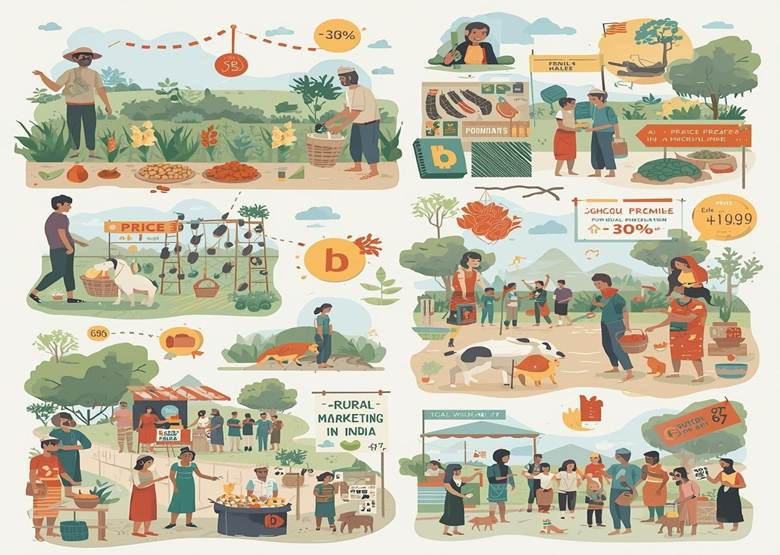
Rural marketing in India offers particular difficulties and opportunities due to the distinct characteristics of rural consumers, such as lower purchasing power, diverse cultural backgrounds, and limited access to mainstream media. As a result, companies must adopt specialized pricing and promotional strategies to effectively reach and engage this vast market segment.
Pricing strategies for rural marketing focus on making products affordable and accessible. This often involves introducing smaller pack sizes, value-based pricing, flexible credit options, and installment payment schemes tailored to the financial realities of rural households.
Promotional strategies in rural areas leverage local culture, traditions, and communication channels. Companies employ methods like participation in village fairs, wall paintings, folk media, mobile vans, and collaborations with local influencers to build trust and create product awareness.
Together, these strategies are essential for building brand presence, driving adoption, and achieving long-term success in rural markets. Here’s a detailed yet concise explanation of pricing strategies and promotional strategies for rural marketing in India, with examples and case studies:
A. Pricing Strategies for Rural Marketing
1. Affordable/Low-Unit Pricing
- Strategy: Offer products in small, low-priced packs to match rural consumers’ purchasing power.
- Example: FMCG companies like Hindustan Unilever (HUL) sell shampoos and detergents in sachets priced as low as ₹1-₹2.
- Case Study:
Clinic Plus Shampoo sachets by HUL became a rural staple, making shampoo affordable and accessible, driving massive volume sales.
2. Value-based Pricing
- Strategy: Price products according to perceived value, often focusing on utility and durability in rural contexts.
- Example: Godrej’s “ChotuKool” refrigerator was priced much lower than conventional fridges, targeting rural households needing affordable cooling solutions.
3. Flexible Credit and Installment Payments
- Strategy: Enable rural customers to buy on credit or via easy installments.
- Example: Mahindra’s “Mahindra Finance” offers tractors and vehicles to farmers with flexible payment plans, boosting adoption.
B. Promotional Strategies for Rural Marketing
1. Local Festivals and Melas
- Strategy: Use rural gatherings, fairs, and festivals as platforms for product promotion and demonstration.
- Case Study:
Coca-Cola organized “Coke Melas” in Uttar Pradesh, where villagers could sample drinks, engage in games, and win prizes, increasing brand awareness and sales.
2. Use of Rural Influencers and Opinion Leaders
- Strategy: Partner with schoolteachers, panchayat leaders, and local shopkeepers to build trust and endorse products.
- Example: Colgate partnered with village school teachers for oral health education programs, increasing toothpaste adoption.
3. Mobile Vans and Door-to-Door Campaigns
- Strategy: Deploy mobile vans for live demonstrations and direct selling in villages.
- Case Study:
ITC e-Choupal used mobile vans to educate farmers on agri-products and buy-back schemes, boosting both product knowledge and sales.
4. Wall Paintings and Local Media
- Strategy: Use wall paintings, local cable ads, and folk media due to low print literacy and limited digital penetration.
- Example: Lifebuoy soap uses wall paintings and street plays (“nukkad natak”) to demonstrate handwashing.
Summary Table
| Strategy Type | Example/Case Study | Description/Impact |
| Low-unit pricing | HUL’s Clinic Plus sachets | Affordable, increases penetration |
| Value pricing | Godrej ChotuKool | Meets rural affordability and need |
| Installments | Mahindra Finance | Makes durable goods accessible |
| Local events | Coca-Cola Coke Melas | Drives sampling and engagement |
| Opinion leaders | Colgate in schools | Builds trust through influencers |
| Direct campaigns | ITC e-Choupal vans | Education and sales through demonstrations |
| Folk media | Lifebuoy wall paintings | Effective awareness in low-literacy areas |
In summary:
Rural marketing in India requires tailored pricing and promotional strategies that fit local needs, purchasing power, and communication channels. Successful brands use creative, affordable, and trust-based approaches to reach and win rural consumers.
About the Author