भारतीय जनता पार्टी के लिए संगठन पर्व केवल एक प्रक्रिया नहीं, बल्कि लोकतंत्र का उत्सव है। जहाँ अन्य दल परिवार-केंद्रित राजनीति तक सीमित रहे हैं, वहीं भाजपा एकमात्र ऐसी पार्टी है, जो बूथ स्तर से लेकर राष्ट्रीय स्तर तक पारदर्शी, सहभागी और लोकतांत्रिक तरीके से अपने नेतृत्व का चयन करती है।
जनसंघ की स्थापना से लेकर भारतीय जनता पार्टी के गठन और अब तक चुने गए राष्ट्रीय अध्यक्षों की परंपरा इस सच्चाई का जीवंत प्रमाण है कि भाजपा में बड़े पद और बड़ी ज़िम्मेदारियाँ किसी परिवार से नहीं, बल्कि परिश्रम, समर्पण, जनसेवा और देशसेवा के आधार पर तय होती हैं।
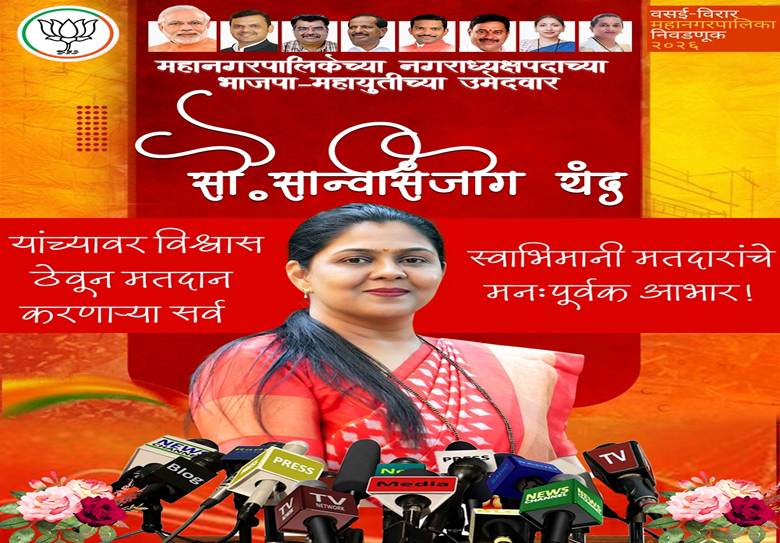
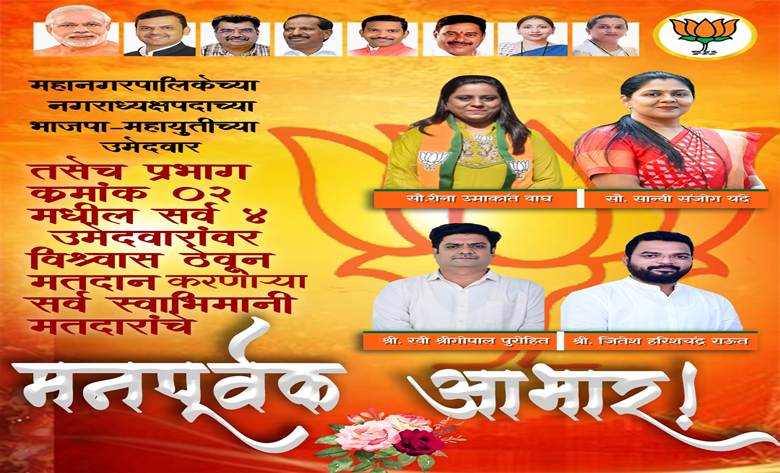
आज हम वार्ड क्रमांक 2 की बात कर रहे हैं, जहां भाजपा ने विरार पश्चिम ग्लोबल सिटी की सभी चार सीटों पर जीत हासिल की है।
आज हम विरार वेस्ट ग्लोबल सिटी के बारे में बात करने जा रहे हैं। ग्लोबल सिटी जहां भाजपा उम्मीदवार ने ग्लोबल सिटी में ऐतिहासिक बदलाव की नींव रखी एक ऐसी जगह जहाँ लोग अपने जीवन में बदलाव लाना चाहते हैं और इसी वजह से यहां की जनता ने भारी परिपक्वता के साथ भाजपा उम्मीदवार को मतदान किया।
ग्लोबल सिटी की आबादी अपने-अपने क्षेत्रों में कई समस्याओं का सामना कर रही है, खासकर यहाँ पानी की समस्या। यहां लोग मानव की मूलभूत आवश्यकताओं का सामना कर रहे हैं। यहां ग्लोबल सिटी की पूरी आबादी पानी के टैंक पर निर्भर है और इससे दैनिक जीवन में कई समस्याएं पैदा होती हैं। उदाहरण के लिए, पानी के टैंक पर निर्भरता प्रत्येक समाज या प्रत्येक व्यक्ति के भरण-पोषण के खर्च को बढ़ा रही है। इस क्षेत्र में खराब पानी की वजह से लोगों को कई बीमारियों का सामना करना पड़ रहा है और यह ग्लोबल सिटी में एक बड़ी समस्या है।
खराब पानी के अलावा, यहाँ के लोगों को और भी कई समस्याओं का सामना करना पड़ रहा है और यही कारण है कि लोग बदलाव के लिए वोट देते हैं। यहां भाजपा उम्मीदवार ग्लोबल सिटी के आम नागरिकों से वादा किया है कि वे निकट भविष्य में इन सभी समस्याओं का समाधान करेंगे और यही कारण है कि लोग भाजपा उम्मीदवार और उनके वादों पर भरोसा जताते हुए भाजपा उम्मीदवार के पक्ष में मतदान किया।
वार्ड क्रमांक 2 में भाजपा उम्मीदवारों ने चारों सीटों पर शानदार जीत हासिल की है, जो उनके प्रति जनता के समर्थन और उनके वादों को दर्शाती है। यहां लोगों ने भाजपा पर भरोसा दिखाया और भाजपा उम्मीदवार के पक्ष में मतदान किया।
पार्टी सदस्यों, सभी बड़े नेताओं और उम्मीदवारों की कड़ी मेहनत के कारण ही बहुजन विकास अघाड़ी पार्टी के सदस्यों के खिलाफ जीत हासिल करने में मदद मिली। यहां भाजपा उम्मीदवार ने काफी मेहनत की और इसी मेहनत की बदौलत उन्हें वार्ड क्रमांक 2 में भारी बहुमत से जीत हासिल हुई। भाजपा उम्मीदवार और पार्टी सदस्यों के अथक प्रयासों के कारण, जिन्होंने भाजपा के समर्थन में जीत दिलाने के लिए दिन-रात संघर्ष किया, यह संभव हो पाया।
विरार वेस्ट ग्लोबल सिटी वार्ड क्रमांक 02 के सभी विजयी उम्मीदवारों को ondemandnewz.com की तरफ से बधाई।
A jingle is a short piece of music or tune used in advertising or any other commercial use. They are a form of sound branding. A jingle contains one or more phrases that are used in music to make it more appealing and meaningful to promote the product in advertising through many slogans. Jingles are also created using popular songs wherein the lyrics are modified in such a way to match the product for advertising.
Example: a. McDonald’s: I’m lovin’ it.
b. Red Hot: We Deliver Audiencess
Why are jingles important in business advertising?
Easy to remember
A proper jingle is fun and easy to remember. A product will be forgotten by the consumer, as there are tons of advertisements, but with the help of jingles, the product will be remembered by the consumer, as they are short and, most importantly, easily memorable and attractive.
Jingles help you clarify what you have to offer.
Like other advertising methods, a jingle should tell the customers about the product you have to offer them. As attention-grabbing music, a jingle can be used to attract the customers. A well-crafted jingle will ingrain itself into the customers’ minds, compelling them to purchase your product due to its unique features. It will also leave a drastic impact on the public after listening to it.
Attracts customers
Jingles serve another important purpose: they attract customers. A memorable jingle can create an impact in the listener’s mind in such a way that it will create an emotion in the customer towards the product. With a perfect jingle, that is, by providing all the required information to the public, you can create a new customer base for your product.
Creates a lasting notion
A jingle creates an outward appearance in the minds of the customer. Euphony is a very effective tool when it comes to advertising. A memorable tune will create an impact in the mind and so will also create a long-lasting impression. If a brand selects a memorable jingle for its product, it will stay in the audience’s mind for a long, long time.
A tune influences the mind
Music touches us the way no other thing can! By creating a powerful tune, you can easily influence the minds of the public. It can lift anyone’s mood and make them interested in your product. Let the music speak more than your words.
A logo is a graphic mark, emblem, or symbol used to aid or promote public identification and recognition. It may be an abstract or figurative design or include the text of the name it represents, as in a wordmark. A logo is defined as a small symbol or design adopted by an organization to identify its products, uniforms, vehicles, etc.
Role of Logo in Business Advertising:
When advertising a particular kind of business, there are many different types of methods that are used to ensure a brand is properly visible to its highest prospects. Many businesses overlook the power of logos as an advertising method, despite their potential to yield significant results.
Firms use logo designs as commercial enterprises and institutions do to encourage or advance prominence. Throughout the years, logos have been an important part of brand marketing and identity.
Visual representation of a logo can support a brand and effectively communicate its principles and values, commonly referred to as the symbolic benefits of the business. Advertising using logos carries immense importance.
Why are logos important in business advertising?
Creates a corporate personality and trust
brands,Including your brand’s logo in advertising campaigns can build the brand’s corporate personality and trust in the eyes of the customers and public. In advertising efforts, the more the brand’s logo is displayed, the more you will gain the trust of the potential customers and public, which will in turn result in more sales, production, profits, and revenues. Many popular brands like McDonald’s, Pizza Hut, etc., have made their endeavor a great success through their logo showing it via all their advertising methods.
Connects with the customers:
On a personal level, integrating your brand’s logo in the advertisements helps your customers learn about the product on a much deeper level. It is one of the best ways you can connect with the customers and create a positive impact and response from your customers. Your customers need to relate to the product you are selling, and the logo serves this purpose by creating a connection between the business and the consumer.
Long-term advertising
The firm must remember that the product logo will be the brand’s face and foundation for years to come. If the company dislikes the logo, it will be hard to change after it’s made. So one should always think about the long-term advertising when creating a logo for the brand.
Visualizing what the customers will consider
Your logo is your business’s and product’s face, so design it with the customer’s view in mind. Your customer will be the one who relates to your brand and product, so make sure you design it according to what matters most to the consumers.
Comparing other contenders’ logos:
It is always best to know what the contender is doing and how they have designed their brand logo in the same industry. By doing this, it will give you a deeper understanding or a clear perception of what should be and what should not be done while designing your brand logo. The most symbolic logos are the ones with minimal design, less complicated, easy to understand, etc. The easier the logo, the more it creates savviness among the public. When comparing logos, consider the colors, fonts, shapes, and designs used by other contenders, as these elements can make a logo more attractive to the public.
Elemental, yet influential.
To attract customers, you need to create a simple yet influential eye-catching logo to drive their attention to your brand. FedEx is the best example of the logos here. If you closely look at the white space between the E and the X, you can see an arrow. It’s a subliminal message conveying speedy service. So always keep it simple yet intensive.
Businesses like KFC and McDonald’s are all known by their brand’s logo itself. They carry enormous importance, and therefore getting a logo is critical.
The product planning and development process is an idea for a product that can meet a need, deliver a service, or solve a problem. It starts with a known consumer need or with a basic product idea recognized through market research or other sources. The stages can vary depending on the specifics of the market and business. There are eight major steps in the new product development processes.
1. Idea generation
The new product development process starts with idea generation. It refers to the systematic search for a new product. Idea generation is a step of the creative problem-solving process that involves the entrepreneur generating and detailing ideas.
Usually, the process of developing a new product involves identifying a specific audience and determining which needs the product should address. The idea stage is the process of creating a solution to a particular problem. At the end of this step, the entrepreneur will have a list of innovative ideas. However, when an entrepreneur applies many ideas to a particular problem, it requires evaluating each one carefully before implementation.
2. Idea screening
The succeeding step in the new product development process is idea screening. This step is also called screening, and the key point is to set some criteria for new ideas and pick out beneficial ones. In other words, all ideas generated are screened to spot beneficial ones and drop poor ones as soon as possible. The purpose of this stage was to create a large number of ideas, and succeeding stages are to reduce that number. During this product planning process, entrepreneurs need to prove that the idea has a market to sell to.
3. Concept development and testing
After crossing two steps of the new product development process, you need to build a concept and confirm that there is a place in the market for the newly invented product. In this step, the entrepreneur needs to develop new attractive ideas into a product concept. Evaluate the costs of manufacturing, designing, distribution, and others that are required for leading product concepts and testing.
Concept development and testing steps are required to identify the human and capital resources as per the entrepreneur’s need and the essential features that must exist for a functioning product. In addition, begin to break out a potential marketing plan and larger business strategy, including revenues and market share for this product.
4. Marketing strategy development
In the marketing strategy development phase, a promising idea has been established and validated; now, it is time to create an initial marketing plan for the new product, which will be based on the product concept for its market introduction.
5. Business analysis
In this stage, once it finalizes the marketing strategy and product concept, the organization starts assessing the business appeal of the projected new product.
6. Product development
Product development involves the real manufacture and design of the product. It begins with the manufacture of a sample that eases the market testing. Grounded on the results of the tests, the business owner decides on whether to undertake large-scale production or not.
7. Commercialisation
Encouraging results in the product development stage pave the way for large-scale manufacture and commercialization. Here, the organization launches its promotion campaign for the new product. The market research conducted during the formation stage affects the location and timing of the product launch.
The brainstorming method yields measurable significance by generating a large quantity of thoughts and ideas. This collection provides a diverse range of possible answers to the problem.
3. Problem inventory analysis
The problem inventory method is a method for obtaining new ideas and solutions by focusing on problems. Here, instead of creating new ideas, the consumers are provided with a list of problems and discuss them. After discussing various issues with consumers, this method either addresses all problems with solutions or helps develop an entirely new product and idea.
4. Focus group
In this technique, a group of individuals provide information in a structured format. Mediators lead a group through an open discussion and ask direct questions or ask for member responses and actions.
5. Reverse thinking
This problem-solving method or technique asks us to think differently. Instead of working on the problem in front of us, problem solvers work on the opposite of it.
6. Mind mapping
Mind mapping is a technique of presenting the information. It is very common in various creative fields. In this technique, an individual or leader writes down the problem on a whiteboard and then surrounds it with words that point out the things that you feel you may need in order to solve it.
7. Synectic
George M. Prince and William J.J. Gordon established this technique. In this technique, an individual takes a thing apart and then puts it back together. In this way, it helps to have a healthier idea of how things work. It is generally categorized as a creative problem-solving method along with lateral thinking and brainstorming.
8. Lateral thinking
Lateral thinking is a method of philosophy that looks for a solution to a determined issue through conventional methods that would generally be ignored by logical thinking. It may also be defined as a way to solve problems by an indirect approach.
An idea creation skill is the creative process of coming up with solutions and accepted knowledge. The concept of creating a new venture idea needs to know how new business ideas can change the level of venture processes that regularly will lead to more success and productivity.
Idea creation is one of the main factors that contribute to the success of any business prospect. Usually, great business ideas are always around the entrepreneur. Here, you just need to open the inside creativity and open all possibilities to find the best within. The creative self is more important because the business’s potential energy at start-up levels depends on the ideas that need to be implemented and put into reality. Considering entrepreneurship? Look to these places for some potential business ideas.
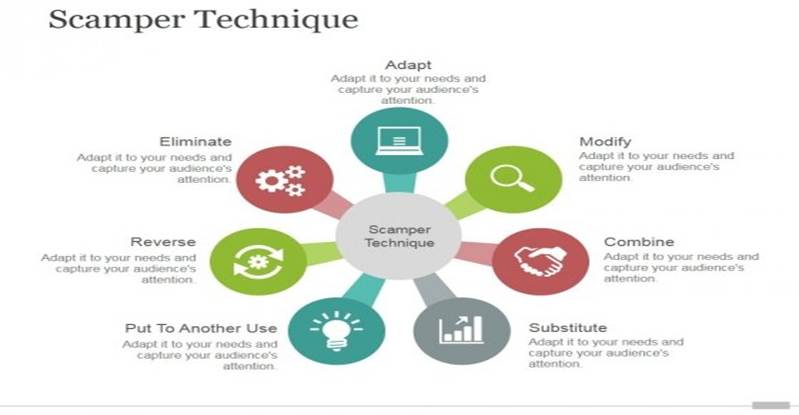
1. SCAMPER
Each alphabet of SCAMPER symbolizes another delicate term that then discusses other steps that need to follow for carrying those necessary new ideas. Here is SCAMPER, and each letter stands for:
Substitute
Combine
Adapt
Modify
Put to another use
Eliminate
Reverse
2. Past work experience
An idea generation comes from the past success and failure experience of an entrepreneur. For example, an individual might have experience in public relations through occasional involvement with client relation development.
3. Market surveys
An idea can also be generated from recognition of what customers need in the market. The customer’s choices are varying according to current market trends. The most essential market trend is based on technological advances, economic development, standard of living, social developments of society, and others. Changes in these areas often provide the impetus for new business ideas.
4. Role-playing
In this technique entrepreneurs take up roles to play in different situations. These roles are usually different from the present role. For example, in this technique, instead of playing the role of an owner, an entrepreneur could take up the roles of customers, consumers, suppliers, the government, and others. These roles could lead to stumbling upon some good ideas.
5. Prospective consumers
A prospective consumer distinguishes what they want as per their regular habit and interests. Mostly, new product or service idea creation may come from the consumer’s reactions to existing products and what changes they want within.
6. Existing organisation analysis
An analysis of the capability consumption of various industries offers information about the possibilities for further investment. Many ideas for successful businesses come from people who have worked in a particular market and industry.
7. Consultations or advice from the experts
“Consultations” generally means to seek advice or meet with an expert. Usually, the experts have many years of involvement and experience in the businesses. Therefore, seeking expert advice will help us understand the pros and cons of businesses. The business experts also help set realistic goals and future prospects for businesses.
8. Market gap investigation
Necessity has always been the mother of invention. Here, an entrepreneur just needs to observe what goes on around them. For example, an idea or new product launched in the USA but not yet tried in India.
9. Research and development An entrepreneur can also conduct research on existing products and services that are available in the market with high demand. There are many areas where entrepreneurs explore, like digital platforms, medicines for various viruses, equipment, tools, and others.
The Supreme Court of India had mandated that Maharashtra conduct local body elections—including for Zila Parishads, Panchayat Samitis, and municipal corporations—by January 31, 2026. This came after significant delays due to litigation over OBC reservation and delimitation issues. The court emphasized that elections must proceed irrespective of ongoing delimitation, giving a one-time extension only.
According to official records, the election process unfolded in phases:
Municipal council and Nagar Panchayat elections were held between December 2 and December 15, 2025.
Elections for 29 Municipal Corporations took place on January 15, 2026, with results counted on January 16.
2. Key Results & Political Outcomes
2.1. Overall Results
The BJP-led Maha Yuti alliance achieved a sweeping victory across the state, securing majorities in 25 of the 29 municipal corporations. They won approximately 1,425 seats out of nearly 2,868 contested.
2.2. Brihanmumbai Municipal Corporation (BMC)
In a historic shift, the alliance broke the decades-long dominance of the Thackeray-led Shiv Sena:
BJP: 89 seats
Shinde-led Shiv Sena: 29 seats
UBT Shiv Sena: 65 seats
MNS: 6 seats
Congress: 24 seats
AIMIM: 8 seats
NCP/SP/others: various small counts
The alliance crossed the majority mark with 118 seats out of 227, marking a major urban power shift.
2.3. Other Major Cities
Pune Municipal Corporation: BJP won 116 of 165 seats, far ahead of NCP (20) and Congress (15).
Navi Mumbai: BJP won 65 of 111 seats; Shiv Sena secured 43.
Nashik: BJP won 72 of 122 seats.
Nagpur: BJP emerged as the single largest party with 102 of 151 seats; Congress followed with 34.
2.4. AIMIM Gains
The All India Majlis-e-Ittehadul Muslimeen (AIMIM), led by Asaduddin Owaisi, made substantial gains—winning 126 seats across municipal corporations, up from just 56 previously. Their strongest performance was in Chhatrapati Sambhajinagar, where they secured 33 seats.
2.5. Unopposed Wins & Turnout
A notable 65–68 candidates (reports vary) were elected unopposed, mostly from the BJP (43–44), followed by Shiv Sena and NCP. The SEC is investigating the circumstances surrounding these uncontested victories.
Voter turnout remained modest at 54–55%, with urban centers like Mumbai, Pune, and Thane showing lower engagement. Analysts attributed this to urban apathy and administrative disconnect.
3. Political Reactions & Broader Implications
Chief Minister Devendra Fadnavis described the results as an “unprecedented endorsement” of the BJP–Maha Yuti alliance and credited development-focused governance and effective ground mobilization.
Prime Minister Narendra Modi hailed the results as a deepening bond between the NDA and Maharashtra’s electorate, praising the pro-people governance narrative.
The Supreme Court’s earlier directive, the scale of unopposed wins, and the low turnout in metros continue to fuel debates about democratic participation and administrative transparency.
Summary Table
Category
Key Highlights
Legal Mandate
SC ordered elections by Jan 31, 2026; phased polls in Dec 2025–Jan 2026
Overall Outcome
BJP-led alliance dominates 25/29 municipal corporations, wins ~1,425 seats
Mumbai (BMC)
BJP-Shinde alliance wins 118/227 seats; the Thackerays are ousted from dominance
Other Cities
BJP strong in Pune, Nashik, Nagpur, Navi Mumbai
AIMIM Performance
Gains to 126 seats; strong in Sambhajinagar and Vidarbha
Unopposed Wins
65–68 candidates won unopposed, mostly from BJP; SEC investigating
Voter Turnout
Around 54–55%, lower in urban centers
Political Impact
Boost for BJP narrative; questions on democratic engagement
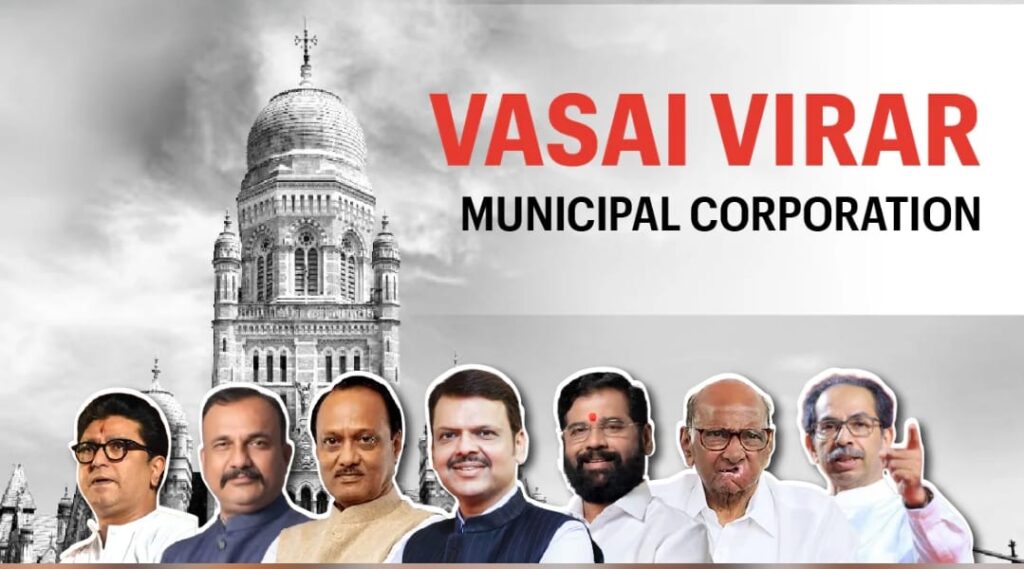
वसई-विरार नगर निगम (वी. वी. सी. एम. सी.) चुनाव जनवरी 2026 में हुए थे। हितेंद्र ठाकुर ने बहुजन विकास अघाड़ी (बीवीए) का नेतृत्व किया जिसने स्पष्ट बहुमत हासिल किया और अपना आधार बनाए रखने में सफल रहा।
2026 के चुनाव परिणामों का सारांश
सबसे हालिया गणना के अनुसार, जो 16 जनवरी, 2026 को हुई थीः
बहुजन विकास अघाड़ी (बीवीए) ने क्षेत्र पर अपना दीर्घकालिक नियंत्रण बनाए रखते हुए 71 सीटें जीतीं।
भारतीय जनता पार्टी (भाजपा) ने 43 सीटें जीती थीं। भले ही वे बीवीए से हार गए, लेकिन भाजपा का नगर निकाय में अब तक का सबसे अच्छा प्रदर्शन रहा, जिसने पिछले चुनावों की तुलना में बहुत अधिक सीटें हासिल कीं।
शिवसेना (एकनाथ शिंदे समूह) एक जगह मिली।
अंतिम परिणामों के आधार पर, शिवसेना (यूबीटी) कांग्रेस और राकांपा को कोई भी महत्वपूर्ण सीट नहीं मिली।
महत्वपूर्ण बिंदु
मतदाता मतदानः लगभग 57.12% लोग जो मतदान करने के योग्य थे, उन्होंने गुरुवार, 15 जनवरी, 2026 को चुनाव में ऐसा किया।
राजनीति के संदर्भ में, इस जीत को ठाकुर परिवार के लिए एक बड़ी वापसी के रूप में देखा जा रहा है, क्योंकि हितेंद्र ठाकुर और उनके बेटे क्षितिज ठाकुर दोनों 2024 के चुनावों में भाजपा से अपनी विधानसभा सीटें हार गए थे।
बड़े आश्चर्यः भले ही बीवीए ने समग्र रूप से चुनाव जीता हो, लेकिन कहा जाता है कि रूपेश जाधव और अन्य शीर्ष नेता और पूर्व महापौर अपने-अपने वार्डों में हार गए हैं।
निर्विरोध जीतः इससे पहले चुनाव चक्र में, बीवीए की प्रवीना ठाकुर को बिना किसी प्राथमिक चुनौती के वार्ड 98 से चुना गया था क्योंकि उनके खिलाफ चुनाव लड़ रही भाजपा उम्मीदवार बाहर हो गई थी।
सभी 29 वार्डों की सभी 115 सीटों की गिनती शुक्रवार, 16 जनवरी, 2026 को की गई थी। इसने पुष्टि की कि बीवीए के पास अगला महापौर चुनने की शक्ति है।
English Translation
The Vasai-Virar City Municipal Corporation (VVCMC) elections
As of the most recent count, which happened on January 16, 2026:
The Bahujan Vikas Aghadi (BVA): won 71 seats, keeping its long-term control over the area.
43 seats were won by the Bharatiya Janata Party (BJP). Even though they lost to the BVA, the BJP had its best showing in the civic body ever, picking up a lot more seats than in previous elections.
Shiv Sena (Eknath Shinde group): Got one place.
Based on the final results, the Shiv Sena (UBT), Congress, and NCP did not get any seats that were important.
Important Points
Voter Turnout: About 57.12% of people who were eligible to vote did so in the election on Thursday, January 15, 2026.
In terms of politics, this win is seen as a big comeback for the Thakur family, since Hitendra Thakur and his son Kshitij Thakur both lost their assembly seats to the BJP in the 2024 elections.
Major Surprises: Even though the BVA won the election as a whole, Rupesh Jadhav and other top leaders and former mayors are said to have lost in their own wards.
Unopposed Win: Earlier in the election cycle, Pravina Thakur of the BVA was chosen from Ward 98 without a primary challenge because the BJP candidate who was running against her dropped out.
All 115 seats in all 29 wards were counted on Friday, January 16, 2026. This confirmed that the BVA has the power to choose the next mayor.
Party-wise tally across Maharashtra
The BJP-led Mahayuti alliance is maintaining a comfortable lead with an edge on over 1,400 seats across the 29 municipal corporations in Maharashtra. Here is a party-wise tally, according to TV reports at 2:30pm:
YouTube, as the world’s largest video-sharing platform, is the primary destination for official trailers, teasers, behind-the-scenes footage, and cast interviews. The viral potential of YouTube content means that a well-crafted trailer can reach millions within hours, sparking global conversations and building anticipation.
Short video platforms capitalize on snackable, shareable content—such as quick clips, challenges, or memes—that can trend rapidly. Studios often collaborate with influencers or create official challenges to encourage user-generated content, enhancing organic reach and engagement.
Examples:
RRR (2022): The film’s trailer release on YouTube garnered over 100 million views, while dance challenges on TikTok and Instagram Reels helped the film trend internationally.
Barbie (2023): Warner Bros. used YouTube for trailer drops and partnered with TikTok for themed filters and challenges, generating viral buzz and massive pre-release interest.
Pathaan (2023): The official YouTube trailer broke records for most views in 24 hours, and short behind-the-scenes clips and dance challenges spread widely on Instagram Reels.
By harnessing the reach and engagement of YouTube and short video platforms, film promotions can build excitement, create viral moments, and drive audiences to theaters or streaming platforms.
A. TRAILER LAUNCHES, REACTION VIDEOS, INFLUENCER WATCH PARTIES
Here’s an overview of how YouTube and short video platforms are used for trailer launches, reaction videos, and influencer watch parties, with examples from international, national (Indian), and local/regional films.
1. Trailer Launches
International Example:
Avengers: Endgame (2019):
Marvel Studios launched the official trailer on YouTube, which broke viewership records with over 289 million views in 24 hours. The trailer’s release became a global event, shared across Instagram Reels and TikTok as fans remixed scenes and audio.
National (India) Example:
KGF: Chapter 2 (2022):
The trailer premiered on YouTube and amassed over 100 million views in just a few days, trending nationwide. Clips from the trailer were widely shared on Instagram Reels and Moj (an Indian short video platform).
Local/Regional Example:
Minnal Murali (Malayalam, 2021):
The trailer was released on YouTube and promoted via short clips on ShareChat and Josh (popular in South India), helping the film reach a broad regional audience.
2. Reaction Videos
International Example:
Spider-Man: No Way Home (2021):
Fans and influencers worldwide posted real-time reaction videos on YouTube within hours of the trailer launch. Some channels received millions of views, adding to the hype and spreading the trailer organically.
National (India) Example:
RRR (2022):
The movie’s trailer inspired countless Indian and international YouTubers to upload reaction videos, many trending in YouTube’s Top 10. We further clipped these reactions and shared them as short videos across Instagram Reels.
Local/Regional Example:
Sairat (Marathi, 2016):
Regional YouTube creators posted reaction and review videos, which boosted the film’s reach beyond Maharashtra, especially among the Marathi-speaking diaspora.
3. Influencer Watch Parties
International Example:
The Gray Man (2022, Netflix):
Netflix hosted YouTube and TikTok watch parties with international influencers who streamed their live reactions, encouraging fans to join and discuss in real time.
National (India) Example:
Gehraiyaan (2022, Amazon Prime Video):
Leading Bollywood influencers and digital creators were invited to virtual watch parties, sharing snippets of their reactions on Instagram Stories and Reels, boosting post-release engagement.
Local/Regional Example:
Jathi Ratnalu (Telugu, 2021):
Telugu YouTubers and local Instagram creators organized online watch parties, sharing highlights and memes on short video platforms, making the film viral within the Telugu-speaking community.
Summary Table
Platform
Trailer Launch
Reaction Videos
Influencer Watch Parties
International
Avengers: Endgame
Spider-Man: No Way Home
The Gray Man
National (India)
KGF: Chapter 2, RRR
RRR, KGF: Chapter 2
Gehraiyaan
Local/Regional
Minnal Murali, Sairat
Sairat, Jathi Ratnalu
Jathi Ratnalu
Conclusion: YouTube and short video platforms play a pivotal role in modern film promotion at every level—amplifying reach, building hype, and encouraging community participation through innovative digital experiences.
B. INDIAN PLATFORMS: SHARECHAT, CHINGARI, ROPOSO
Here’s a focused answer on how Indian short video platforms—ShareChat, Chingari, and Roposo—are used for film promotion, with illustrative case studies and examples from Indian and local films.
YouTube & Short Video Platforms for Film Promotion: Indian Platforms
1. ShareChat
About: ShareChat is a leading Indian social media and short video app available in 15+ regional languages, popular in Tier 2 and 3 cities.
Film Promotion Usage:
Case Study: Pushpa: The Rise (2021)
The film’s catchy songs and dialogues were promoted via ShareChat stickers and short video challenges in Telugu, Hindi, and other languages.
Users created thousands of lip-sync and dance videos to the song “Srivalli,” pushing organic reach even to non-metro audiences.
Example: KGF: Chapter 2 (2022)
ShareChat users widely shared the trailer and “Rocky Bhai” dialogues as short clips, memes, and status updates, contributing to the film’s trend in multiple languages.
2. Chingari
About: Chingari is a homegrown short video platform, popular for its viral content and “trending challenges.”
Film Promotion Usage:
Case Study: Bhool Bhulaiyaa 2 (2022)
The “Hare Ram” dance challenge was officially launched on Chingari, with influencers and users participating in the trend, leading to millions of views and boosting the song’s popularity.
Example: Local Films (e.g., Gujarati or Marathi releases)
Regional movie promotions often run hashtag challenges (e.g., “#DanceLikeHero”) on Chingari, leveraging local influencers to create buzz for film releases in their respective language belts.
3. Roposo
About: Roposo is a video-sharing social media platform that focuses on entertainment content across India’s major languages.
Film Promotion Usage:
Case Study: Liger (2022)
The film’s promotion included exclusive behind-the-scenes content and actor interactions on Roposo. Fans could duet with stars or create their own short videos using official film audio and stickers.
Example: Local Films (e.g., Kannada, Tamil)
Roposo partnered with film producers to offer early access to music tracks and exclusive snippets, encouraging user-generated content and meme creation, which helped local films gain visibility.
Summary Table
Platform
Case Study (National)
Local/Regional Example
ShareChat
Pushpa: The Rise, KGF 2
Status clips, memes for local films
Chingari
Bhool Bhulaiyaa 2
Marathi/Gujarati challenges
Roposo
Liger
Kannada/Tamil music launches
Conclusion: ShareChat, Chingari, and Roposo are vital for film promotion in India, especially for reaching vernacular and regional audiences. These platforms foster viral trends, influencer collaborations, and user-generated content, making them powerful tools for both national blockbusters and local films to build buzz and engagement across diverse Indian markets.
The synergy between OTT platforms and theatrical releases represents a dynamic shift in content distribution and consumption. Rather than existing as mutually exclusive options, these two modes increasingly complement each other. Theatrical releases can serve as high-profile events that build anticipation and buzz, while OTT platforms offer films a longer lifecycle, reaching wider and more diverse audiences.
This synergy enables filmmakers and studios to maximize revenue, enhance audience engagement, and experiment with new release strategies, such as simultaneous or staggered premieres. As consumer preferences evolve, the collaboration between OTT and theatrical channels is reshaping the future of entertainment, offering greater flexibility and accessibility while preserving the unique value of both experiences.
A. NETFLIX, AMAZON PRIME VIDEO, JIOCINEMA, HOTSTAR STRATEGIES
Here’s a refined and structured overview of OTT & theatrical synergy, including strategic approaches by Netflix, Amazon Prime Video, and JioHotstar (successor to JioCinema and Hotstar), along with illustrative case studies and film examples.
1. OTT & Theatrical Synergy: A New Distribution Paradigm OTT platforms and theatrical releases are increasingly viewed not as competing channels, but as complementary tools. Theatrical runs can build cultural impact and prestige, while OTT ensures wider reach and longer tail viewership. This synergy allows studios and platforms to optimize both revenue and audience engagement.
2. Netflix Strategies
Awards-Driven Limited Theatrical Runs Netflix frequently employs short theatrical releases to qualify for awards while prioritizing streaming. Roma (2018), for example, premiered in select theaters across 42 countries just three weeks before streaming, earning 10 Oscar nominations and winning Big Three awards.
“Sneak-Preview” Hybrid Model More recently, Netflix experimented with a hybrid model for Glass Onion: A Knives Out Story—a 17-day theatrical run in 696 U.S. theaters, followed by a blackout period before streaming.
Major Blockbusters on IMAX In 2025, Netflix announced a pivot toward large-scale theatrical engagement with Greta Gerwig’s The Chronicles of Narnia reboot. The film will play exclusively on around 1,000 IMAX screens across 90 countries for up to four weeks before debuting on Netflix, supported by a robust marketing campaign.
3. Amazon Prime Video Strategies
Traditional Wide Release for Prestige Amazon broke ground earlier with Manchester by the Sea (2016), which secured a wide theatrical release (over 1,200 theaters) before streaming, earning critical acclaim and Best Picture nominations.
Hybrid Releases with Short Windows A more recent example is Red One, which had a 28-day theatrical window before streaming on Prime Video. The film grossed $175 million globally and maintained strong box office retention.
Expanding Indian Theatrical Footprint Starting in 2026, Amazon MGM Studios plans to release 3–4 Indian films theatrically each year before streaming, signaling a renewed focus on theatrical-first strategies in India.
4. JioHotstar (formerly JioCinema & Hotstar)
Platform Consolidation and Vertical Integration In February 2025, JioCinema and Disney+ Hotstar merged under the JioStar joint venture, launching JioHotstar, which now combines extensive content libraries and sports rights with vertical distribution control.
OTT-After-Theatrical Model in Indian Cinema Several Indian films have followed a traditional theatrical-first release before transitioning to streaming on JioHotstar:
• Subham (Telugu horror-comedy) – theatrical release on May 9, 2025; OTT debut on JioHotstar from June 13, 2025. • DNA (Tamil thriller) – theatrical release on June 20, 2025; OTT streaming from July 19, 2025. • Ronth (Malayalam crime thriller) – theatrical release mid-June 2025; OTT from July 22, 2025. • Sweetheart! (Tamil romantic comedy)—theatrical release March 14, 2025; OTT from April 11, 2025.
Direct OTT Releases & Mixed Strategies Sarzameen (Hindi action drama) skipped theatrical release and launched directly on JioHotstar on July 25, 2025. Soothravakyam (Malayalam suspense thriller) was released theatrically on July 11, 2025; its OTT rights were acquired by Lionsgate Play and Amazon Prime Video in August.
5. Key Insights and Comparative Analysis
Netflix focuses on prestige and cultural buzz through strategic theatrical windows, with recent expansion into large-scale blockbusters to amplify global impact.
Amazon Prime Video balances prestige (wide releases) with efficiency (short theatrical windows), especially in markets like India.
JioHotstar benefits from full vertical integration, enabling flexible release strategies—from traditional theatrical runs to direct OTT premieres—tailored to regional content and audience preferences.
6. Case Study Highlights
Roma (Netflix): Prestige-driven theatrical release, Oscar recognition.
Glass Onion: Hybrid sneak-preview model.
Narnia Reboot: IMAX-first strategy.
Manchester by the Sea (Amazon): Traditional theatrical-first success.
Red One: Short-window hybrid release.
Subham, DNA, and Ronth: Indian films with clear theatrical-to-OTT trajectories.
Sarzameen: Direct OTT premiere.
Soothravakyam: Theatrical release with multi-platform OTT licensing.
B. PRE-RELEASE BUZZ VS. POST-RELEASE ENGAGEMENT
Below is a structured analysis of OTT & Theatrical Synergy: Pre-release Buzz vs. Post-release Engagement, including international and national (Indian) case studies, film examples, and a summary.
OTT & Theatrical Synergy:
Pre-release Buzz vs. Post-release Engagement
1. The Concept
Pre-release Buzz: The excitement and anticipation generated before a film’s release are driven by marketing, trailers, social media, star cast, and exclusive previews—especially through theatrical premieres.
Post-release Engagement: The sustained interaction and discussion after the film’s release, primarily supported by OTT availability, social media trends, user reviews, memes, and repeat viewing.
Synergy: Theatrical releases create event-like anticipation (buzz), while OTT ensures the film remains in the cultural conversation, accessible to broader audiences for a longer period (engagement).
2. International Case Study: Glass Onion: A Knives Out Mystery (Netflix, 2022)
Pre-release Buzz: Netflix gave the film a limited one-week theatrical run in major markets before streaming. The star-studded cast, mystery genre, and director Rian Johnson’s reputation generated massive media and social media attention. Result: Sold-out shows, headlines about Netflix’s rare theatrical move, and Oscar buzz.
Post-release Engagement: After streaming began, the film trended globally on Netflix, sparking meme culture, fan theories, and extensive online discussion. The accessibility on OTT enabled viewers who missed the theatrical window to watch and discuss it, keeping the film relevant for weeks.
3. National (Indian) Case Study: Jawan (2023)
Pre-release Buzz: Starring Shah Rukh Khan, Jawan had a massive promotional campaign, with trailers, music launches, and nationwide media coverage. The theatrical release was treated as a cultural event; advance bookings broke records.
Post-release Engagement: After an extremely successful theatrical run, the film debuted on Netflix. The OTT release sparked renewed conversations, with fans dissecting plot twists, sharing clips, and introducing the film to new audiences who hadn’t seen it in theaters. The #JawanOnNetflix trend brought the film back into the spotlight, amplifying its lifecycle.
4. Comparative Examples
International:
Roma (Netflix): Limited theatrical run for Oscar buzz, then global post-release discussion upon streaming.
Dune (Warner Bros.): Simultaneous release in theaters and HBO Max. Pre-release anticipation for visuals, post-release engagement focused on accessibility and rewatchability online.
National (India):
RRR (2022): Extensive theatrical campaign, followed by viral OTT popularity on Netflix and ZEE5, which reached international audiences and fueled post-release social media trends.
Shershaah (2021): Skipped theatrical release due to COVID-19 but leveraged OTT (Amazon Prime Video) for post-release engagement, with songs and scenes trending long after launch.
5. Summary
Pre-release Buzz is most effectively built through theatrical events, media campaigns, and exclusivity, making the release an “event.”
Post-release engagement thrives on OTT platforms, which provide longevity and accessibility and encourage ongoing discussions, memes, and repeat viewing.
The synergy of these strategies maximizes both box office returns and long-term popularity, as seen in both international and Indian contexts.
In essence: Theatrical releases ignite anticipation and cultural excitement, while OTT platforms ensure films remain relevant, discussed, and accessible—prolonging their impact well beyond opening weekend.