Introduction
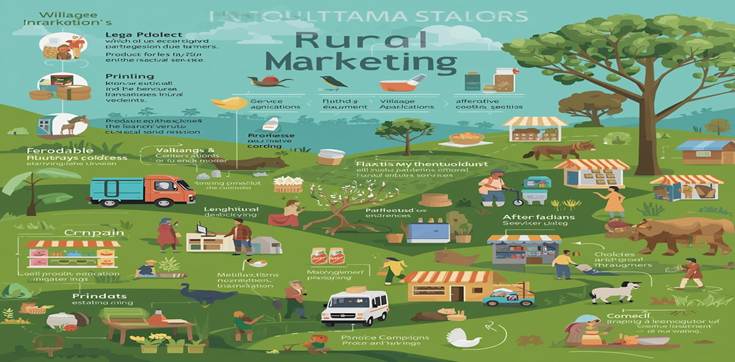
Rural marketing in India emphasizes adapting products and services to low-income, infrastructure-challenged areas using the 4As: Acceptability, Affordability, Availability, and Awareness. Product strategies focus on smaller packs and durable designs, while service strategies leverage micro-entrepreneurship and digital tools for last-mile reach.
Product Strategies
Companies modify products for rural needs by introducing small, affordable sachets (Low Unit Packs or LUPs) to enable trials, enhancing durability for tough conditions, and localizing branding for cultural resonance. Examples include CavinKare’s 4 ml Chik shampoo sachets at 50 paise and Coca-Cola’s Rs.5 bottles to compete with local drinks like tea. LG’s Sampoorna TV with Devanagari script displays catered to vernacular language users.
Service Strategies
Services prioritize empowerment and tech-enabled distribution, training locals as agents for door-to-door delivery and using apps for retailer access. HDFC Bank’s “Har Gaon Hamara” campaign deploys IVR toll-free numbers for banking education and loans in villages. Digital tools like ITC’s Unnati App and Virtual DS help stockists reach remote retailers efficiently.
Key Case Studies
| Case Study | Description | Impact |
| HUL Project Shakti | Trains rural women (Shakti Ammas) as micro-entrepreneurs to sell HUL FMCG products door-to-door, customizing small packs for affordability. | Reaches 165,000+ villages, empowers 130,000+ women, and boosts hygiene and brand loyalty. |
| ITC e-Choupal | Sets up internet kiosks for farmers to access crop prices, buy inputs, and sell produce, extending to FMCG distribution via hubs. | Serves 4 million farmers across 40,000 villages, increases soy planting by 40%, and cuts middlemen costs. |
| Coca-Cola Rural Push | Launches Rs.5 bottles, pop-up stores at 47,000 haats/melas, and wall paintings for awareness. | Rural penetration rises from 9% to 25%, with sales up 37% by 2003. |
1. Product Customization and Innovation
Strategy: Tailor products to meet the unique needs and preferences of rural consumers, often focusing on affordability, durability, and simplicity.
Example: Hindustan Unilever’s “Wheel” detergent powder.
Case Study: Hindustan Unilever Limited (HUL) recognized that rural consumers wanted affordable detergents suited for handwashing in hard water conditions. They introduced “Wheel,” a low-cost detergent in small sachets. This packaging fit the rural buying pattern (small, frequent purchases), and the product was formulated to work with local water conditions. As a result, “Wheel” became a market leader in rural India.
2. Affordable Packaging (Small Packs)
Strategy: Offer products in small, affordable packaging to suit the lower purchasing power and consumption patterns of rural customers.
Example: Shampoo sachets (e.g., Clinic Plus, Chik Shampoo).
Case Study: CavinKare pioneered the sale of Chik Shampoo in sachets for just Rs. 1, making it affordable for rural consumers who couldn’t buy large bottles. This revolutionized shampoo sales in rural India, leading to massive market penetration and encouraging other companies to adopt similar strategies.
3. Distribution Innovations
Strategy: Develop unique distribution models to reach remote rural markets where traditional supply chains may not be feasible.
Example: ITC’s “e-Choupal” initiative.
Case Study: ITC set up e-Choupal internet kiosks in villages, enabling farmers to access market prices, weather forecasts, and agricultural information. This not only boosted ITC’s agribusiness but also empowered farmers to make better decisions, increasing loyalty and trust towards ITC’s branded products (e.g., agri-inputs).
4. Community Engagement and Education
Strategy: Build trust by engaging rural communities through education, demonstration, and relationship-building activities.
Example: Nestlé’s “Project Shakti” (with HUL).
Case Study: HUL’s “Project Shakti” trained rural women as entrepreneurs to sell HUL products in their communities. This not only generated local employment and empowered women but also increased product reach and awareness through trusted local figures. Project Shakti now covers thousands of villages in India.
5. Service Extension and After-Sales Support
Strategy: Provide reliable after-sales service and support in rural areas to build long-term customer loyalty.
Example: Mahindra & Mahindra’s outreach for tractors.
Case Study: Mahindra & Mahindra set up a widespread network of service centers and mobile service vans to provide timely after-sales support for its tractors in rural areas. This strategy reduced farmers’ downtime during critical agricultural seasons and built strong brand loyalty, making Mahindra the market leader in rural farm equipment.
6. Bundled Products and Value Packs
Example: Tata Tea’s “Jaago Re” Campaign
Case Study: Tata Tea bundled its tea with awareness campaigns on social issues relevant to rural India, such as voting and education. This approach not only sold the product but also connected emotionally with rural consumers, increasing brand loyalty. By aligning the product with social causes, Tata Tea became a household name in many villages, demonstrating how value-addition and bundling can drive engagement.
7. Credit Facilities and Easy Financing
Example: Hero MotoCorp’s Rural Bike Financing
Case Study: Hero MotoCorp collaborated with local banks and microfinance institutions to offer easy, low-interest loans for rural customers purchasing motorcycles. This strategy overcame the affordability barrier and led to a sharp increase in sales in rural areas. By addressing the financial constraints of rural buyers, Hero MotoCorp strengthened its position as India’s leading motorcycle brand.
8. Localized Communication and Advertising
Example: Coca-Cola’s “Thanda Matlab Coca-Cola” Campaign
Case Study: Coca-Cola used local languages, dialects, and rural celebrities in their ad campaigns, such as “Thanda Matlab Coca-Cola.” The messaging was simple and relatable, resonating with rural audiences and making the brand easily recallable. The company also sponsored local fairs and events to increase visibility, helping Coca-Cola become a popular beverage even in remote villages.
9. Partnerships with Local Retailers
Example: Colgate’s Partnership with Rural Kirana Stores
Case Study: Colgate Palmolive built strong relationships with local kirana (grocery) stores, providing them with promotional materials and product displays. They trained shopkeepers to educate customers about oral hygiene and the benefits of Colgate products. This grassroots approach increased trust and product uptake, making Colgate the preferred toothpaste brand in many rural households.
10. Mobile-Based Services and Digital Outreach
Example: Nokia Life Tools
Case Study: Nokia launched Life Tools, a mobile-based information service offering rural farmers updates on weather, market prices, and agricultural tips via SMS. The service was affordable and didn’t require internet access, making it perfect for rural users. This added value to Nokia’s handsets, increased customer loyalty, and helped Nokia maintain its lead in rural mobile markets until the smartphone revolution.
11. After-Sales Service and Mobile Support
Strategy: Provide reliable after-sales service even in remote rural areas.
Example: Mahindra & Mahindra Tractors
Case Study: Mahindra & Mahindra established a network of service centers and mobile vans to provide quick repairs and maintenance for farm equipment in villages. This support minimized farmer downtime during critical harvest seasons, increased satisfaction and loyalty, and made Mahindra the most trusted tractor brand in rural India.
12. Use of Rural Brand Ambassadors
Example: Emami Fair and Handsome’s Use of Local Influencers
Case Study: Emami collaborated with local village leaders and influencers to promote Fair and Handsome cream in rural areas. By leveraging the trust villagers had in these local figures, Emami increased product credibility and adoption. This strategy helped the brand break into regions where urban celebrity endorsements had little impact, proving the power of localized branding.
13. Seasonal and Festival Offers
Example: Samsung’s Festival Discounts on Home Appliances
Case Study: Samsung launched special discounts and bundled offers on televisions and refrigerators during harvest and festival seasons, when rural incomes are higher. By timing promotions with local festivals, Samsung tapped into periods of higher spending and saw a significant boost in rural sales, demonstrating the value of aligning marketing strategies with rural economic cycles.
14. Experiential Marketing and Product Demonstrations
Example: Syngenta’s Crop Demonstration Camps
Case Study: Syngenta, an agrochemical company, organized field demonstration camps in villages to show the effectiveness of their seeds and crop protection products. Farmers could see results firsthand, ask questions, and receive technical guidance. This hands-on approach built trust, educated farmers, and led to increased adoption of Syngenta’s products across rural regions.
15. Collaborations with Government and NGOs
Example: Lifebuoy’s Handwashing Campaign with Schools
Case Study: Lifebuoy partnered with government schools and NGOs to run hygiene awareness programs in rural areas. Free soap samples were distributed, and children were taught proper handwashing. The campaign educated millions, created positive brand associations for Lifebuoy, and boosted soap sales in rural households as hygiene awareness grew.
16. Mobile Vans and Rural Outreach Programs
Example: Maruti Suzuki’s Mobile Service Vans
Case Study: Maruti Suzuki deployed mobile vans equipped with service staff and spare parts to offer on-the-spot servicing for cars in rural areas. These vans traveled to remote villages, providing convenience for customers who lacked access to service centers. This initiative not only improved customer satisfaction and loyalty but also increased Maruti’s brand presence in India’s vast rural landscape.