Introduction
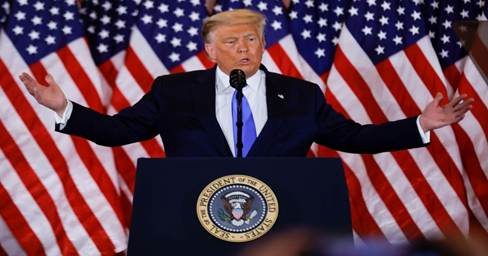
The role of media in shaping political landscapes cannot be underestimated, especially in the context of election campaigns. Donald Trump’s presidential campaigns in America were marked by a unique relationship with the media, characterized by controversy, polarization, and unprecedented coverage. In this section, we will explore the complicated nature of media influence on Trump’s election campaigns, examining key strategies employed, their impact, and the broader implications for journalism.
1. The Power of Media Amplification
Donald Trump, a businessman turned politician, astutely recognized the media’s potential to amplify his messages. Through strategic use of social media platforms, particularly Twitter, Trump bypassed traditional media gatekeepers and directly engaged with his supporters. His unfiltered and provocative tweets became headline news, setting the agenda for public discourse and captivating both his supporters and detractors.
2. The Era of Infotainment
Trump’s campaign capitalized on the convergence of media and entertainment. His background as a reality TV personality had a major influence on his campaign style. The media, hungry for high ratings and engagement, treated the election as a captivating drama, focusing on sensational sound bites, controversial remarks, and divisive rhetoric. The blurring of lines between news and entertainment contributed to the spectacle surrounding Trump’s candidacy.
3. Media Bias and Polarization
The coverage of Trump’s election campaigns exposed the issue of media bias and its impact on public perception. Some media outlets were accused of favoring Trump, providing him with excessive airtime and uncritical coverage. Conversely, others adopted a more adversarial stance, relentlessly scrutinizing his every move. This polarization in media coverage further deepened the ideological divide among the electorate, reinforcing existing partisan narratives.
4. Fact-Checking and Truth Decay
Trump’s campaigns witnessed an unprecedented challenge to the notion of objective truth. The rise of “alternative facts” and “fake news” blurred the boundaries between accurate reporting and misinformation. Journalists and fact-checkers faced the daunting task of sifting through an influx of dubious claims and verifying or debunking them. The erosion of trust in media institutions presented a critical challenge for responsible journalism and highlighted the importance of media literacy.
5. Social Media Echo Chambers
The prevalence of social media platforms and their algorithms contributed to the creation of echo chambers, where individuals were exposed primarily to content that reinforced their existing beliefs. This led to the formation of online communities fervently supporting or opposing Trump, further polarizing public discourse and making it challenging to foster constructive dialogue.
Donald Trump’s election campaigns revolutionized the relationship between media and politics. His unconventional methods, which included using social media, sensationalism, and breaking journalistic rules, changed the way the media works. This case study shows how important it is for journalists to think critically about their work, follow ethical reporting guidelines, and stay neutral. Aspiring journalists must navigate the complexities of media influence, polarization, and the pursuit of truth in the face of evolving political landscapes.
By understanding the intricacies of media influence in Trump’s campaigns, journalism students can gain valuable insights into the challenges and responsibilities they will face in their future careers as objective and ethical communicators in the ever-changing realm of politics and media.
For example:
These examples illustrate how media coverage and strategies employed by Donald Trump’s campaign team influenced public opinion, shaped political discourse, and contributed to the success of his campaigns. They underline the complex relationship between media and politics, showcasing the influence media can have on election outcomes and the subsequent implications for democracy.
1. Extensive Media Coverage: Donald Trump’s campaign events and rallies received extensive media coverage, often broadcasting his speeches in their entirety. This allowed Trump to dominate the news cycle, ensuring his messages reached a broad audience. The media’s focus on his provocative statements and controversial policies generated constant public attention and discussion.
2. “Trump Show” Phenomenon: The media’s fascination with Trump’s unconventional and unfiltered style contributed to the “Trump Show” phenomenon. News outlets provided extensive coverage of his rallies, treating them as entertainment spectacles rather than purely political events. This approach helped Trump generate a sense of excitement and engage voters who were disillusioned with traditional politics.
3. Social Media Presence: Trump’s strategic use of social media platforms, particularly Twitter, played a pivotal role in his campaigns. He leveraged these platforms to communicate directly with the public, bypassing traditional media gatekeepers. His provocative and attention-grabbing tweets often made headlines, allowing him to set the narrative and control the media discourse.
4. Media Controversies: Trump’s controversial statements and actions were highly appealing to media outlets seeking ratings and readership. Journalists often provided extensive coverage of his controversial remarks, amplifying his messages and generating public debate. This attention, regardless of whether it was positive or negative, helped Trump maintain a prominent position in the media landscape.
5. Media Bias Allegations: Throughout his campaigns, Trump frequently criticized the media, accusing it of bias against him. This narrative resonated with his supporters and reinforced their skepticism toward mainstream media. Conversely, some media outlets were accused of providing favorable coverage to Trump, focusing on his rallies and speeches while downplaying or omitting critical analysis.
6. Fact-Checking Challenges: Trump’s campaigns posed significant challenges for fact-checkers due to the proliferation of false or misleading statements. Journalists and fact-checking organizations faced the task of debunking misinformation while maintaining objectivity. This highlighted the need for rigorous fact-checking practices and the responsibility of media outlets to counter falsehoods with accurate reporting.